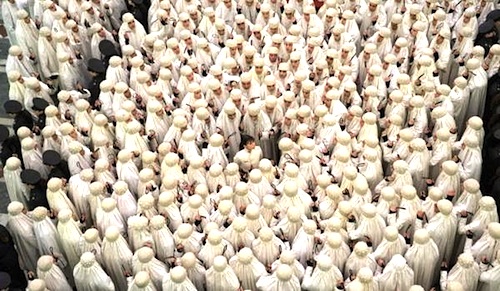
LFM Reviews Tazza: The Hidden Card

By Joe Bendel. Just like the old Kenny Rogers song, Kim Go-ni knew when to walk away. He went out on top, retiring from the gambler’s life after winning a large pot. However, he had a nephew. Unfortunately, Ham Dae-gil inherits one of his uncle’s old enemies along with his luck and dexterity in Kang Hyeong-cheol’s Tazza: the Hidden Card (a.k.a. Tazza 2), which opens this Friday in the Tri-State area.

Ham might be comfortable with a deck of cards, but he still has much to learn about human nature. He tasted a bit of success playing for gambling den proprietor Kko-jang, until he is taken by his own mark, the rather merry widow Woo. With his boss flat-busted, Ham tries to raise some cash in loan-shark Jang Dong-sik’s private game, but once again he is set up. This time, it is his hometown crush Heo Mi-na who plays him. Deeply in debt to Jang (and suddenly short one kidney), Ham manages to escape his clutches thanks to Heo’s intervention, but it will cost her dearly.

Regrouping in the exurbs, Ham convinces his uncle’s former mentor to take him under his wing. Returning character Ko Kwang-ryeol knows all the high-rollers, but he prefers to keep a low profile, eking out a modest living in low stakes games. Of course, lying low will not be much of an option, given Ham’s unfinished business with Jang and Heo. Eventually, his path will also cross that of Aw-kwi, a mysterious gambler of almost mythic ferocity, who holds a grudge against Uncle Go-ni.

With not one but two femme fatales and shadowy nemeses in the mix, Taz 2 has no shortage of double-crosses and shifting alliances. There is a lot of picaresque bluffing and cheating, but it is considerably darker than The Sting or even Rounders. It is tough to be a woman in this film, even (or especially) for Woo, the jaded seductress. Frankly, some of the scenes in question kill the buzz of the caperish conning and backstabbing.

From "Tazza: The Hidden Card."

Although he made quite a credible action lead as the North Korean high school sleeper assassin in Commitment, rapper T.O.P. seems far too light weight for a cat like Ham. Fortunately, he is surrounded by a first rate supporting cast, who chew up all the scenery he disdains to touch. Yu Hae-jin is a particularly nice surprise as Ko, Ham’s Obi-wan. While he has played his share broadly shticky characters before (see The Pirates as an example), he balances humor with a good deal of world weary wisdom, while crafty veteran Lee Kyoung-young adds some class as Kko-jang.

Yet, Taz 2 is really all about its villains. Former Miss Korea (Honey) Lee Ha-nui is appropriately sultry and disconcertingly dangerous as Woo, even when her character’s decisions defy all sense. Yet, the real battle is between Kwak Do-won’s Jang and Kim Yun-seok’s Aw-kwi to see which can outdo the other’s stone cold malevolence.

Despite callbacks to the original Korean box-office smash, Taz 2 is easily accessible for audiences walking in cold. Kang keeps it moving along briskly, nimbly juggling the large cast of characters. It is fully stocked with appealingly devious twists and turns, but at times it is a little too gritty for its own good. Recommended for fans of gambler and grifter movies, Tazza: the Hidden Card opens this Friday (9/26) at the AMC Bay Terrace in Flushing and the Edgewater Multiplex in New Jersey.

LFM GRADE: B

Posted on September 24th, 2014 at 5:25pm.
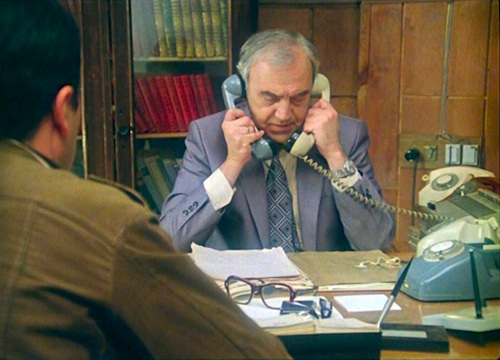
Discovering Georgian Cinema: LFM Reviews Blue Mountains, or an Unbelievable Story

From "Blue Mountains, or an Unbelievable Story."

By Joe Bendel. Georgian book publishers were probably not amused by this portrayal suggesting they were mostly a bunch of self-absorbed loons, who lolly-gagged around the office, pretending they had read manuscripts they never touched. As a publishing professional myself, I can safely say: “no comment.” Initially, the Soviet authorities were what you might call “circumspect,” prohibiting director-co-writer Eldar Shengelaia from attending the international film festivals that had happily accepted it (despite his Party membership). Roughly thirty years later, with a freer, more enlightened government now elected in Georgia, Shengelaia will be in New York to present Blue Mountains, or an Unbelievable Story when it screens as part of MoMA’s latest film series, Discovering Georgian Cinema, Part 1: A Family Affair.

Soso has just finished his next novel, Blue Mountains or Tian Shan. Yes, it has two titles, like Melville’s Pierre: or the Ambiguities—a fact that constantly vexes the Director of Soso’s publishing house, when he remembers it. Soso will make the rounds, duly dropping off copies of the manuscript to staff throughout the office, all of whom are delighted to have it and pledge to read it immediately, including the Director.  Yet, each time Soso returns, he makes the same circuit through the house, getting largely the same empty promises. Meanwhile, only the mining engineer eternally waiting to pitch his collection of folk stories notices the cracks in the ceiling growing at an alarming rate.

Thirty years have passed, but Blue Mountains is as razor sharp as ever. It is a masterfully constructed satire, that repeats large tracts of dialogue, but the implications become ever more absurd as the seasons and circumstances change. Poor Soso does everything by the book (if you will), yet he can never jump through enough bureaucratic hoops.

Although Blue Mountains does not address politics per se, it is easy to see how an apparatchik could decide Shengelaia’s ruthless send-up of bureaucracy, paperwork, and meetings was just bad for Party business. Nevertheless, it eventually won several Soviet film awards (presumably because they had to give them to something credible). Evidently, even if you were a cultural commissar, the humor of Shengelaia and Rezo Cheishvili’s screenplay was still quite potent stuff.

From "Blue Mountains, or an Unbelievable Story."

As Soso, Ramaz Giorgobiani might be the greatest cinematic straight-man ever, perfectly facilitating the comedic chaos, while serving as a sympathetic audience surrogate. Gosh darn it, we would really like to see Blue Mountains or Tian Shan get published in the end, but don’t get your hopes up. Likewise, Teimuraz Chirgadze deftly modulates the Director’s madness, at times almost coming across reasonably, given the bedlam erupting around him.

The subtitles are absolutely no hindrance to a wickedly droll skewering of paper-pushery. In all truth, Blue Mountains is a masterwork of international cinema, bordering on outright masterpiece status. Shengelaia is also a fascinating figure in his own right, who had a long and tumultuous political career, leading up to his support for the Rose Revolution. It is an altogether fitting selection for MoMA’s Georgian retrospective and his presence at its initial screening there should be considered a real event. Very highly recommended, Blue Mountains, or an Unbelievable Story screens this Wednesday (9/24) and next Monday (9/29) at MoMA.

LFM GRADE: A+

Posted on September 24th, 2014 at 4:05pm.

Discovering Georgian Cinema: LFM Reviews Will There Be a Theatre Up There?!

By Joe Bendel. When celebrated actor Kakhi Kavsadze states he came of age in a country that no longer exists, he perhaps should not speak so soon. Putin clearly has designs to reassert the USSR’s old spheres of domination and Kavsadze’s native Georgia was one of the first nations he trained his military crosshairs on. Yet, current events make Kavsadze’s reminiscences of the Stalin era even more poignant in Nana Janelidze’s documentary, Will There Be a Theatre Up There?!, which screens during MoMA’s new film series, Discovering Georgian Cinema, Part 1: A Family Affair.

Kavsadze came from a long line of well respected traditional Georgian singers, as Stalin himself would attest. A letter from the dictator to his revered grandfather has a special place of irony in his family’s history. Kavsadze’s father was also an accomplished vocalist and choir-master, but WWII was not kind to him, or Kavsadze’s family by extension. The senior Kavsadze managed to save scores of Georgian POWs by organizing a camp choir, but such benign survival strategies would earn him the label: “enemy of the people.”

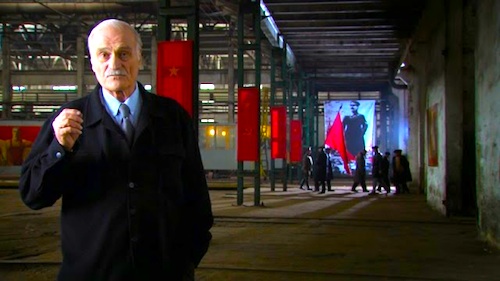
Through his words and occasional songs, Kavsadze revisits his early childhood years, paying tribute to his parents for enduring their endless tribulations. Technically, it all takes place in one location, but the hanger-like industrial building re-purposed as a film studio is remarkably versatile. Janelidze will often stage dramatic tableaux to illustrate Kavsadze’s recollections, which frequently seem to stir legitimate emotions deep within the grand thespian.

From "Will There Be a Theatre Up There?!"

Kavsadze’s stories are about as personal as they get, yet they offer tremendous insight into the nature of the Communist system. Perhaps most telling is the episode in which a pair of KGB agents came to the Kavsadze home looking for an incriminating document, but tried to carry off their dinner table instead (fun fact: Putin was a veteran KGB agent).

Kavsadze is a forceful presence who truly commands the viewer’s attention. Likewise, Janelidze’s sparse but elegant approach gives rise to some striking images that often bring to mind Eastern European cinematic classics, like Wajda’s Everything for Sale. Despite its relatively short running time (fifty-five minutes), Theatre offers viewers quite a bit to take in. It is especially fitting that it had a special screening during this summer’s Odessa International Film Festival, since Georgia has been informally advising Ukraine how to respond when Russia invades their sovereign territory. Very highly recommended, Will There Be a Theatre Up There?! screens this Thursday (9/25) and Sunday (10/5) as part of MoMA’s upcoming Georgian film series.

LFM GRADE: A

Posted on September 24th, 2014 at 4:05pm.

Cheng Pei-pei in the Spotlight: LFM Reviews Lilting

By Joe Bendel. Accurate translations are important in summit conferences and business meetings, but the ethics are a bit trickier on the personal level. A first time translator interpreting for an elderly nursing home couple will grapple with questions of how much and faithfully she should relay their words to each other. However, there are even greater unresolved personal issues lingering between the man who hired her and the Cambodian-Chinese woman utilizing her services in Cambodian-born British filmmaker Hong Khaou’s Lilting, which opens this Friday in New York.

Junn’s time in the nursing home was supposed to be temporary, but her son Kai was tragically killed in a traffic accident before he could arrange a new living situation for her. Unfortunately, she could not have moved in with him, because she never would have accepted his relationship with Richard. After Kai’s death, Richard tries to look after Junn out of a sense of loyalty, but she begrudges his presence, mistakenly blaming him for her current circumstances.

At least the home brought her together with Alan, a British pensioner who cannot speak any Chinese or Cambodian dialects. Nonetheless, they seem to enjoy each others’ company. Wanting to help facilitate their romance, Richard recruits Vann to translate. It works well for a while, perhaps even softening Junn’s attitude towards her late son’s “roommate,” but the mourning mother might be too set in her ways to allow any of her inter-personal relationships to deepen or evolve.

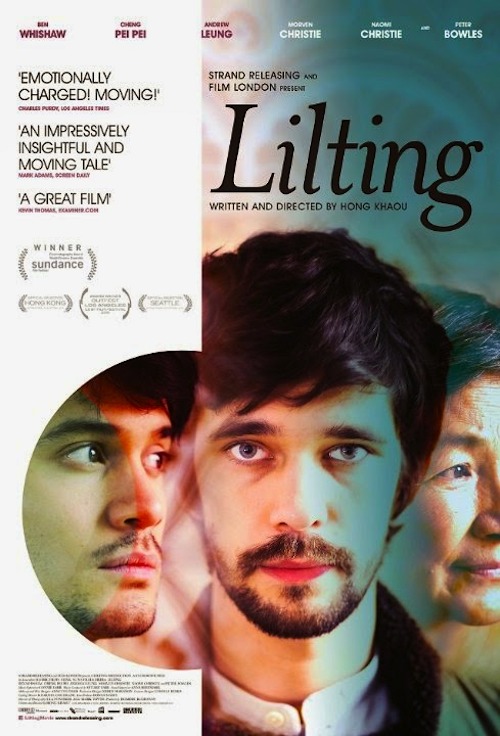
Cheng Pei-pei never flashes her kung-fu moves in Lilting, which is somewhat disappointing, but the Come Drink with Me star’s straight-forward acting chops are impressive enough. It is a restrained but devastating portrayal of grief and resentment. Never sugarcoated, Cheng’s performance shuns sentimentality and theatrics, quietly going to some very deep and dark places.

While many will also focus on James Bond franchise alumnus Ben Whishaw’s co-starring turn, the film’s real discovery is Naomie Christie. Her acutely perceptive work as Vann in many ways functions as the viewer’s entry point. She is even more of an outsider to the proceedings than Richard, yet she too finds herself forming judgments and allowing herself to become emotionally involved.

Lilting represents quite an accomplished feature directorial debut from Hong, who masterfully maintains a mood of exquisite sorrow, nicely abetted by the sensitive, Sundance award-winning cinematography of Ula Pontikos. It is a graceful film with understanding for all and malice towards none. Recommended for Cheng’s fans who wish to see the icon in a whole new light, Lilting opens this Friday (9/26) in New York at the Angelika Film Center.

LFM GRADE: B+

Posted on September 24th, 2014 at 4:04pm.

LFM Reviews: Norway @ The 2014 Fantastic Festival

By Joe Bendel. Zano is the worst sort of over the hill hipster. He is a vampire. Technically, he is not getting any older, but he is still not maturing much, either. Yet he somehow comes across rather world weary and sad. Much to his own surprise, Zano will learn that even he has an ethical line he will not cross in Yannis Veslemes’ feverishly odd Norway, which screens during the 2014 Fantastic Festival.

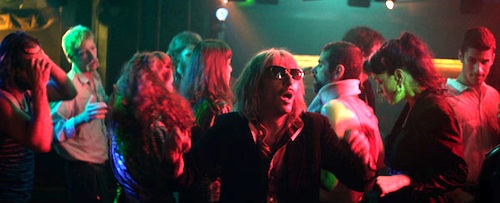
It is 1984 and disco still rules Athens’ nightclubs. Zano has come for some hedonism, but he cannot connect with the mortician friend who is supposed to be his host. Making his way to a low-rent discotheque, Zano drinks, dances, and strikes out with live-bodied women he puts the moves on. In the process, he crosses paths with a former actor-turned gangster and a fellow vampire who looks even sicklier than he does. However, things really get complicated when he meets Alice, an earthly party girl, who is also a bit of a predator herself.

Frankly, they have a rather awkward introduction, considering the way Zano chomps down on the neck of her Norwegian drug dealer, Peter. Yet, somehow they both go off into the night together, pulling along the zombie-like Peter as he undergoes the undead transformation. It seems Zano will eventually get what he wants from Alice, but he suspects she might have a secret agenda, which of course she does.

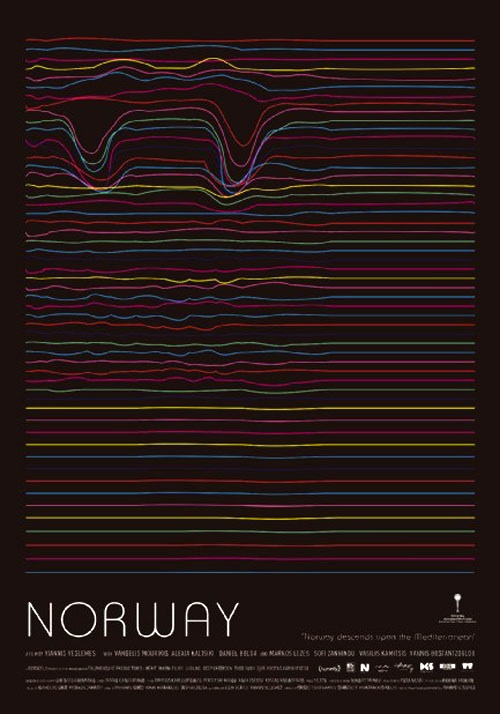
It is hard to believe Norway and popular franchises like Twilight, True Blood, and Vampire Diaries share any sort of kinship, despite their common ostensible subject of vampires. From the trance-inducing music to the hazy ultra-1980s cinematography, Norway is more of a contact-buzz than a proper horror film. There is no denying the stylishness of Veslemes’ approach, particularly his undisguised use of model trains during Zano’s travel sequences. Cinematography Christos Karamanis gives it all an unusually striking look that evokes classic film noir and vintage comic art.

Yet, probably Veslemes’ most bizarre ingredient is the scruffy hound dog Vangelis Mourikis, head-bobbing his way through the film as Zano. Somehow Mourikis and Veslemes successfully walk a fine line, making their protagonist vampire a total loon, but not so far out there we can’t relate to him on some hard to define level.

From "Norway."

This is the sort of film that will have you thinking to yourself “this is so weird” from start to finish. Arguably, the plot is not so over-the-top when compared to other genre films (although it takes a seriously outrageous turn), but it is just executed in such a distinctively whacked-out (but mostly accessible) manner. In fact, the vibe is so overpowering, viewers might not fully realize how strangely good Mourikis is. Highly recommended for adventurous genre fans, Norway will screen this Sunday (9/21) and Wednesday (9/24) during this year’s Fantastic Fest in Austin, Texas.

LFM GRADE: A-

Posted on September 20th, 2014 at 10:11pm.

LFM Reviews: Jacky in The Kingdom of Women @ The 2014 Fantastic Fest

By Joe Bendel. Islamist apologists always assure us that Muslim women feel more comfortable and empowered in restrictive clothes. Here’s their chance to try the burqa on for size. In the backward fictional nation of Bubunne, women have all legal authority and subjugate their uneducated men like chattel. One sad sack man-victim harbors a deep crush on the supreme leader’s heir apparent-daughter, but he has lost his ticket to the grand ball in Riad Sattouf’s satirical Cinderella-riff, Jacky in the Kingdom of Women, which screens during the 2014 Fantastic Fest.

As a male “pleb,” Jacky is about as low as it gets in Bubunne, but women find him attractive (there’s no accounting for taste in this militarist theocracy), so he has always hoped General Bubunne XVI’s daughter, logically known as The Colonel, would choose him to be her “Big Dummy.” Unfortunately, when Jacky’s mother dies, his mean aunt and uncle give his ticket to the cattle-call ball to his ugly cousin. Yet, through a series of misadventures, Jacky will somehow gatecrash the soiree, disguised as a woman, Twelfth Night style.

Although the official religion of Bubunne venerates horses instead of a prophet, it is not hard to see what it is based on. Given the chadors worn by men, the frequent denunciations of blasphemy, public executions, and rampant sexism and homophobia, if you cannot recognize Bubunne as an analog for the Islamist regimes, you are willfully blind enough to work children’s protective services in Rotherham.

It is therefore little exaggeration to describe Sattouf’s screenplay as extraordinarily bold, but twenty-first century viewers might wish his satire came with more jokes. However, the audience that could probably stand to gain the most from seeing the gender tables turned is not exactly known for its collective funny bone. Subtlety can also be an iffy proposition, but Kingdom’s depiction of religiously justified oppression should be in-your-face enough to register some kind of response (like a fatwa).

From "Jacky in The Kingdom of Women."

Charlotte Gainsbourg’s performance as the Colonel is also rather brave, for a host of reasons that would be spoilery to explain. It is safe to say she is a good sport, whose mysterious screen presence perfectly suits the film. However, Vincent Lacoste’s Jacky is so passive and pathetic, viewers will want to bully him along with the rest of the film’s villains. At least Michel Hazanavicius brings some redemptive verve as Julin, an underground propagandist who was close friends with Jacky’s late father. Anémone (co-star of the beloved holiday classic, Santa Stinks) also shows a flair for physical humor as the miserable old General.

Kingdom earns considerable points for satirizing subjects that consider themselves off limits to such treatment, but the characters and narrative never really engage on an emotional level. Still, when it is funny, the jokes also land with a sting. Recommended on balance for free-thinkers, Jacky in the Kingdom of Women screens again this coming Monday (9/22) as part of this year’s Fantastic Fest.

LFM GRADE: B-

Posted on September 20th, 2014 at 10:11pm.