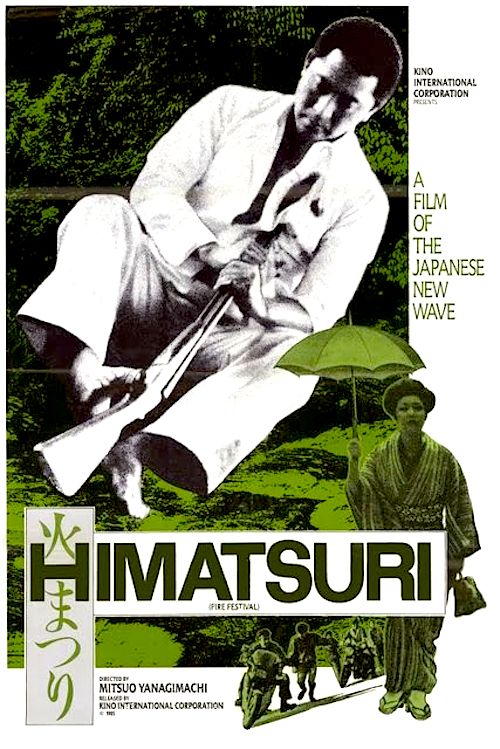
A Tribute to Donald Richie: LFM Reviews Himatsuri

By Joe Bendel. Tatsuo is a lumberjack, but he’s not okay. He does not live in harmony with nature or his neighbors. There will come a reckoning sometime soon from either karma or the village’s patron goddess in Mitsuo Yanagimachi’s Himatsuri, which screens during the Japan Society’s tribute to the late great film scholar, critic, and historian Donald Richie.

Tatsuo is the alpha male among the woodsmen working the rocky hills above the village. Openly defiant of propriety, the married man has recently relocated his not so former mistress Kimiko to the village. He mostly thinks of women in sexual terms, including the mountain goddess. Most villagers are anticipating a windfall from a proposed marine tourist park, but Tatsuo is the fly in their ointment, refusing to sell his land smack dab in the middle of the project. To make matters worse, he is the prime suspect in a rash of oil spills deliberately targeting rival fishermen. Then something significant happens to him during a storm in the woods.

Deeply steeped in Shinto symbolism, Himatsuri represents the Japanese art cinema tradition at its most rarified. Visually it is absolutely arresting, but the on-screen action, such as it is, can be hard to follow. Frankly, the celebrated Tōru Takemitsu’s score—characteristically straddling musical composition and soundscape—communicates most directly to viewers the uncanny malevolence afoot.

One of the younger filmmakers championed by Richie (who also helped translate Himatsuri’s subtitles), Yanagimachi is clearly inclined to leave much of the film’s mystery unresolved. Indeed, that uncertainty makes the shocking climax even more unsettling. However, the process of getting from point A to point not-A will tax many viewers.
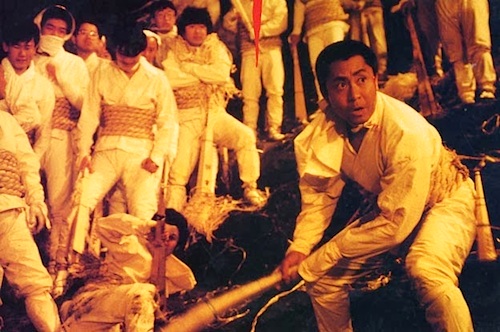
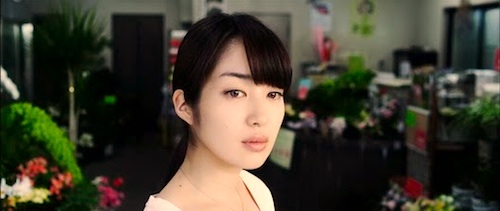
From "Himatsuri."

Like a manly throwback to Mifune, Kinya Kitaoji gives a loud and lusty tour de force performance as Tatsuo, refusing to be dwarfed by cinematographer Masaki Tamura’s overpowering vistas. Between Kitaoji and the awe-inspiring wrath of nature, nobody else stands much of chance in Himatsuri. Nevertheless, Kiwako Taichi makes quite an entrance as Kimiko.

Do not wait for Yanagimachi to spoon feed meaning to viewers, because it will not happen. However, those who appreciate the experience of having a film wash over them will be enraptured by Himatsuri. It is a hot or cold proposition, with the hots largely bunched up towards the high end of the bell curve. Recommended for highly discriminating cineastes, Himatsuri screens Friday night (1/24) in New York, as part of the Japan Society’s Richie tribute.

LFM GRADE: B

Posted on January 24th, 2014 at 3:13pm.
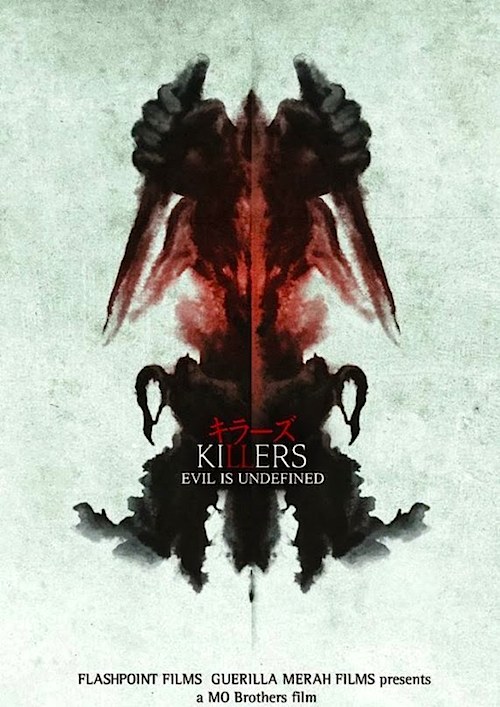
LFM Reviews Killers @ The 2014 Sundance Film Festival

By Joe Bendel. Presumably, this is not what Al Gore had in mind when he invented the internet. A Jakarta journalist obsessed with the death videos posted online by a Tokyo serial killer starts following suit when he crosses into vigilante slayings. Soon thereafter, they strike up an unlikely IM dialogue, but it is not what you would call a friendly rivalry. Things will get bloody in the Mo Brothers (Timo Tjahjanto & Kimo Stromboel)’s Killers, which screens during the 2014 Sundance Film Festival.

Bayu’s unsuccessful attempts to bring down a well-heeled, politically connected sexual predator short-circuited his career and indirectly caused his separation from his wife. Watching the videos posted by Shuhei Nomura only further stokes his anger management issues. It all finally boils over during an attempted mugging (and worse). Suddenly, Bayu is in the Bronson business.

In contrast, the sadistic and precise Nomura is a cold blooded killer. He gets sick satisfaction from killing, but he plans each prolonged murder out to the last detail. However, Nomura will make an uncharacteristic mistake or two, making their months of correspondence a rather chaotic time for them both.

Frankly, Killers might be too much even for veteran midnight movie patrons. Some of the sequences with Nomura are downright scarring, as well as scary. Nevertheless, the Mo Brothers certainly know how to stage a hyper-violent action sequence. For instance, Bayu has a hotel getaway melee scene that ranks with the hallway fight scene in Park Chan-wook’s Oldboy (the real one, not the cheap remake). About as tense as genre films can get, Killers is an unrelenting white knuckle viewing experience from the first frame up to the last.

From "Killers."

Despite its unseemly milieu, Killers features a top drawer cast working at the peak of their powers. Japanese TV heartthrob Kauzki Kitamura is disturbingly cold and creepy as Nomura, while Oka Antara’s Bayu broods like nobody’s business. However, the finely nuanced Rin Takanashi (so exquisitely vulnerable in Kiarostami Like Someone in Love) gives the film some heart and soul as the prospective victim who starts to awaken emotions in Nomura (which is definitely one of those goods news-bad news kind of things).

With Killers, the Mo Brothers definitely announce themselves as adrenaline charged filmmakers to be reckoned with. Unfortunately, long stretches of the film are just no fun to watch. Brutal but effective, Killers is specifically recommended for experienced cult film connoisseurs when it screens again this Saturday (1/25) in Salt Lake as part of this year’s Sundance Film Festival.

LFM GRADE: B-

Posted on January 24th, 2014 at 1:05am.

Vengeance is Shohei Imamura: LFM Reviews Vengeance is Mine @ New York’s Asia Society

From "Vengeance is Mine."

By Joe Bendel. Those who had a run-in with con man Akira Nishiguchi were fortunate if they only lost a few hundred thousand Yen. He also left behind a trail of bodies. It was precisely the sort of case that appealed to Shohei Imamura’s artistic sensibilities, inspiring his return to narrative filmmaking after a string of legit documentaries. Appropriately, Imamura’s Vengeance is Mine screens in New York during the similarly titled Vengeance is Shohei Imamura film series now underway at the Asia Society.

Henceforth known as Isao Enokizu, Imamura’s Nishiguchi proxy never had a good relationship with his devoutly Catholic father, Shizuo. He was somewhat closer to his mother, but her persistent health problems largely keep her out of the picture. He was a punk as a kid and graduated to full blown criminality as an adult. Nevertheless, his father convinces his wife Kazuko to remarry him during his first prison stretch, for religious reasons. Frankly, she will not see very much of him, even after his release.

As the audience witnesses in graphic detail, Enokizu will murder two former truck driving colleagues on their collection day, launching a seventy-eight day crime spree that will thoroughly embarrass the Tokyo police. Given the in media res opening, it is clear Enokizu’s luck will eventually run out. The question is how long he can last and how much damage he can do in the meantime.

As it happens, he finds the perfect hiding spot: a discretely tucked away suburban no-tell motel, run by proprietor Haru Asano and her mother, who specialize in procuring prostitutes for their guests. Posing as a visiting professor, Enokizu maintains a professional relationship with Asano during his initial stay, only becoming her lover later, when his secret is out.

Motivations are a strange thing in Vengeance. There is no accounting for them, beyond the usual lust, wrath, and resentment. While on the surface Vengeance functions as a manhunt procedural thriller, an atmosphere of moral decay hangs over the entire film. It opens with one of the messiest, clumsiest murder sequences perhaps ever and proceeds to show viewers several of Enokizu’s furtive assignations, where sex and violence are provocatively intertwined, so you should probably leave the kids home for this one.

In a career defining performance, Ken Ogata is convincingly seductive within Enokizu’s on-screen world, but he leaves viewers deeply creeped out. He is a pure sociopath, whose emotional range spans from cold blooded calculation to spitting rage.

From "Vengeance is Mine."

Ogata’s Enokizu is a practically a force of nature, like a hurricane, but his father and assorted lovers are not merely generic victims. Rentarō Mikuni expresses in vivid terms just how the elder Enokizu’s moral failings are exacerbated by the stress and disgrace generated by his son. Likewise, Mitsuko Baisho is achingly pitiable but still remarkably sensuous as his long suffering wife Kazuko. Mayumi Ogawa is also equally haunting as Asano, a woman condemned to a life of Dickensian struggle by the scandals of others.

Both in terms of its themes and scope, Vengeance is one of the great films of the 1970’s, sitting comfortably beside the likes of Coppola’s The Conversation and Polanski’s Chinatown. It is definitely a muscular noir, but it has a bitingly existential chaser. Highly recommended for all movie lovers, it screens free of charge this Friday (1/24) as part of the Vengeance is Shohei Imamura mini-retrospective at the Asia Society.

LFM GRADE: A

Posted on January 24th, 2014 at 1:01am.

LFM Reviews Cold in July @ The 2014 Sundance Film Festival

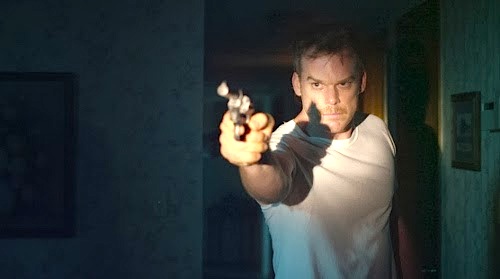
By Joe Bendel. In Texas, they do not need “stand your ground laws.” Instead, they apply the “did he have it coming” standard. As a result, not too many people are concerned when Richard Dane accidentally kills a home intruder, least of all the police. However, the deceased’s ex-con father seems somewhat put-out by it all in Jim Mickle’s Cold in July, which screens during this year’s Sundance Film Festival.

Dane is hardly an action hero. He truly did not intend to kill Freddy Russell when he interrupted the burglar at work. The situation just made him understandably jumpy. Ray Price (the cop on the case, rather than the Nixon speechwriter) is happy to sweep the entire incident under the rug, but not Ben Russell. Released just in time for his estranged son’s funeral, he soon starts threatening Dane and his family. At first, Price assumes he is just posturing, but things escalate quickly.  Then the first game-changing shoe drops.

Adapted from Joe R. Lansdale’s novel, July starts out as a conventional home invasion-revenge thriller, but radically shifts gears in the second act, veering into Andrew Vachss territory. While it appropriately has the dusty noir look of Jim Thompson films, it is way darker than even The Killer Inside Me. There are scenes here that sensitive viewers might wish they could “unsee.”

Regardless, it is brutally effective when it gets down to business. The late 1980’s period details also help the film’s thriller dynamics, taking the internet and cell phones (aside from a running Gordon Gekko style gag) out of the picture. It all ends in a bloody and ironic place that should satisfy genre fans.

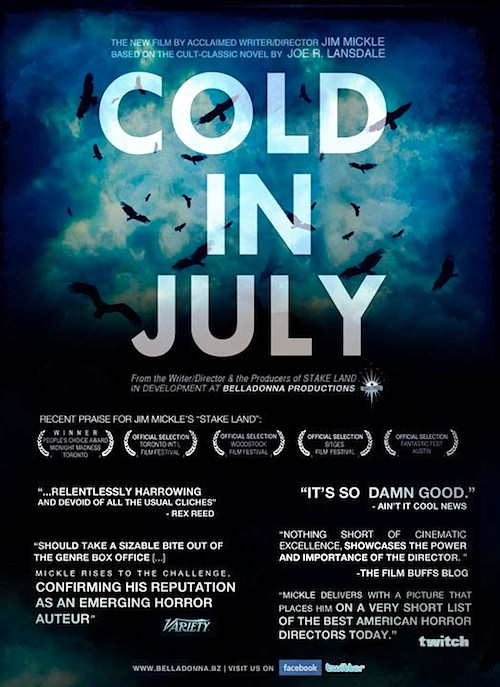
From "Cold in July."

Michael C. Hall does decent work as Dane, but he is simply overwhelmed by the seriously hardboiled Sam Shepard, seething like mad as the senior Russell. Yet, Don Johnson chews more scenery and out hardnoses everyone as Jim Bob Luke, a sort of gunslinger recruited into the bloody family feud. As a further bonus, Mickle’s co-writer Nick Damici adds some distinctively noir seasoning as Price, the shady copper.

Stylish, intense, and at times blackly comic, July is a slickly executed criminal morality play. However, it might be too strong for Lifetime and Hallmark Channel viewers. Recommended for hardy film noir connoisseurs, Cold in July screens today (1/20) in Salt Lake and tomorrow (1/21), Thursday (1/23), and Saturday (1/25) in Park City, as part of the 2014 Sundance Film Festival.

LFM GRADE: B+

Posted on January 20th, 2014 at 9:25pm.

LFM Reviews Sepideh Reaching for the Stars @ The 2014 Sundance Film Festival

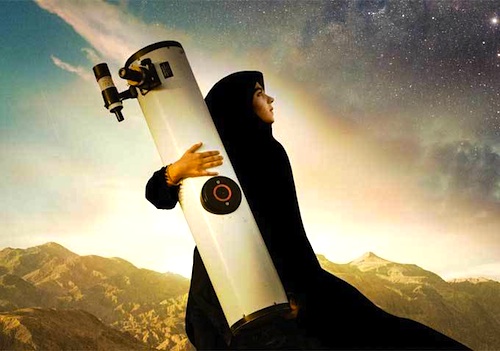
By Joe Bendel. In the provincial Iranian foothills, an astronomy club sets up a portable telescope outside a skeletal observatory, abandoned halfway through the construction process. Meanwhile, it is full speed ahead for Iran’s nuclear reactors. Such are the scientific priorities in today’s Iran. For a teenage girl harboring astronomical dreams, the cultural climate is even trickier. Documentary filmmaker Berit Madsen quietly observes her subject plugging away in Sepideh Reaching for the Stars, which screens during this year’s Sundance Film Festival.

Star-gazing has profound personal significance for Sepideh Hooshyar. It is a form of meditation and a way to commune with the spirit of her beloved late father. As an intelligent student blessed with an independent streak, she has been tapped as a leader of her extracurricular astronomy club. Naturally, her patriarchal deadbeat uncles do not think very much of young women practicing astronomy. For reasons of greed and pettiness, they have jeopardized the financial position of Hooshyar’s mother. Still, the young woman is not inclined to kowtow to anybody.

While Hooshyar never directly addresses any political or ideological controversies, it would still be fair to describe her as a free-thinker. Throughout the film, she addresses her diary entries to her muse, Albert Einstein, and takes inspiration from her idol, Iranian American astronaut Anousheh Ansari (whom she erroneously considers the “first woman in space”).

From "Sepideh Reaching for the Stars."

Intellectually, most viewers understand Iran is far from a progressive society, but there are scenes of unabashed misogyny in Sepideh that will drop their jaws and boil their blood. Clearly, young Hooshyar is nearly always the smartest person in the room, but her government, society, and extended family all seem determined to squander her talents.

Given her fly-on-the-wall style, Madsen never offers any commentary or context, but it is transparently evident where these attitudes come from. The men and assorted female authority figures are all swimming in Islamist rhetoric. Filmed in a rather flat, colorless HD, Sepideh is not particularly cinematic looking, but there are real stakes to the drama that unfolds.

In many ways, Sepideh could be considered a fitting documentary companion to Haifaa Al Monsour’s narrative feature, Wadjda. It is a timely film, but also a deeply personal story. Highly recommended, Sepideh Reaching for the Stars screens again tomorrow (1/21), Thursday (1/23), and Friday (1/24) in Park City, as part of the 2014 Sundance Film Festival.

LFM GRADE: A-

Posted on January 20th, 2014 at 9:22pm.

LFM Reviews Goldberg & Eisenberg @ The 2014 Slamdance Film Festival

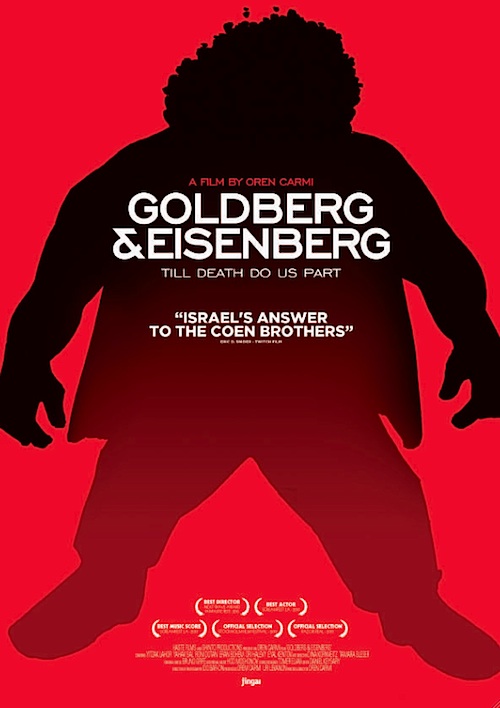
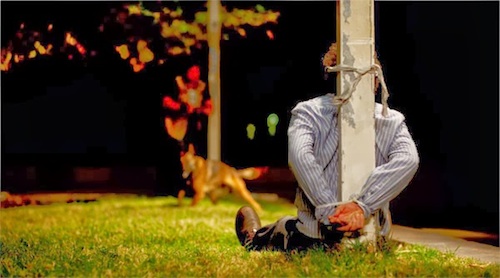
By Joe Bendel. They sound like a law firm or an architectural partnership, but their relationship is far from collegial. It starts with revulsion on the former’s part and obsession for the latter, but quickly goes downhill from there. There will be plenty of stalking and assorted mind games in Oren Carmi’s Goldberg & Eisenberg, which screened last night at the 2014 Slamdance Film Festival in Park City.

Tel Aviv is a happening city, but you would hardly know it from these two very different losers. Goldberg is exactly the sort of awkward computer programmer he looks like, who spends all of his free time getting rejected on internet dating services. Eisenberg is just off. The slovenly thug just seems to loiter about Meir Park all day. When he sees Goldberg, he immediately wants to be friends, or perhaps something more.

Goldberg wants none of that. He is definitely straight. He just isn’t very good at it. Unfortunately, rejection only makes Eisenberg more aggressive and erratic. Things will get ugly and the cops will be as useless as all the other cops in previous psycho-stalker movies. Yet, to his credit, Goldberg plugs away in his search for Ms. Right.

Given the not so ambiguous nature of Eisenberg’s interest, it is highly doubtful G&E could be produced in America, lest GLAAD be offended. It is decidedly un-PC, but old school indie scenesters will dig its grungy 1980’s-Lower Eastside vibe. Cinematographer Ido Bar-On gives it a murky, dirty look, befitting the tunnel vision of its characters. Frankly, the first hour or so largely consists of standard cat-and-mouse stuff, but Carmi totally pulls the rug out from under the audience’s feet with an inspired third act. It goes from dark to pitch black, cranking up the macabre irony.

From "Goldberg & Eisenberg."

As Goldberg, Yitzhak Laor completely looks and acts the part of a nebbish, low rent Frasier Crane. Likewise, Yahav Gal’s Eisenberg is uncomfortably intense and clammy. They fit their roles perfectly, but you wouldn’t want to spend much time with either of them. On the other hand, the charismatic Ronny Dotan shines in her too brief appearances as Noa, Goldberg’s potential geekly chic girlfriend.

Initially viewers might think they have seen G&E many times before, but it is worth staying with it. While it does not have the same manic energy and sinister edge of Aharon Keshales & Navot Papushado’s Big Bad Wolves or Rabies, Carmi proves he has plenty of filmmaking potential. Indeed, it should be the perfect film to see with an appreciative Park City crowd when it screens again tomorrow (1/21) during this year’s Slamdance.

LFM GRADE: B

Posted on January 20th, 2014 at 9:19pm.