LFM Reviews The Samurai that Night @ The 2013 Japan Cuts

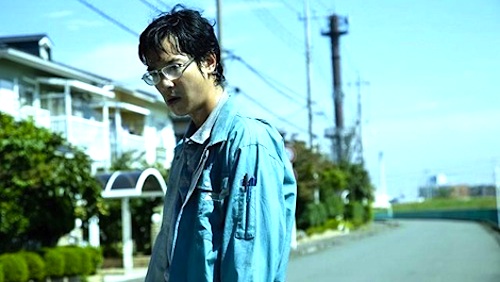
From "The Samurai That Night."

By Joe Bendel. Japan gave the world one of the greatest revenge stories of all time. Sadly, Hollywood is reportedly returning the favor by butchering Keanu’s 47 Ronin into some kind of cheesy Frankenstein’s Monster. It turns out vengeance-taking is a trickier proposition than people realize. A grieving husband understands this only too well in Masaaki Akahori’s The Samurai that Night (trailer here), which screened last night as part of the 2013 Japan Cuts: The New York Festival of Contemporary Japanese Cinema.

Kenichi Nakamura was always socially awkward, but the hit-and-run death of his wife Hisako reduces him to a scant shell of a man. Nearly five years later, Hiroshi Kijima, the violent petty thug responsible for her death, has been released from jail. He is neither reformed nor remorseful, but he is a little unnerved by the daily death threats he receives from Nakamura promising to kill him on the fast approaching anniversary of Hisako’s death. Yet, he still has the presence of mind to use the poison pen letters to extort money from Nakamura’s earnest brother-in-law.

A moodier, slower burner than even the original, misunderstood Death Wish, Samurai hardly gives viewers any consolation whatsoever. Nakamura is a profoundly damaged soul, Kijima is absolutely rotten to the core, and neither is likely to change. Still, agonizingly touching moments spring up in the most surprising places, such as when the rough hewn employees of Nakamura’s metal works express affection for their disintegrating boss.
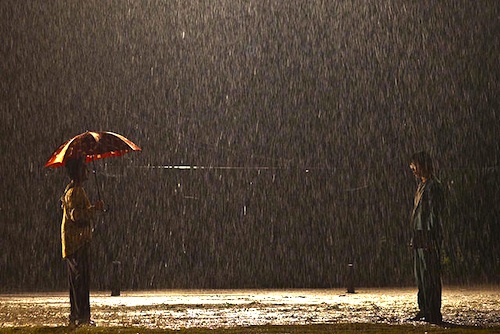
From "The Samurai that Night."

Far from a genre crowd-pleaser, Samurai vividly depicts the ugly, awkward, and messy realities of violence. Viewers are not likely to forget the climatic showdown, precisely because of the ways it undercuts expectations and payback genre conventions.

As the sweat-drenched, tighty-whitey wearing Nakamura, Masato Sakai fearlessly put himself out there. At times, he is absolutely painful to watch, like a huge open sore picking itself apart on-screen. In contrast, Takayuki Yamada’s Kijima is a study in fiercely controlled aggression. Mercifully, Kinuwo Yamada and Tsutomu Takahashi add a deeply humane dimension to the film as bystanders sympathetic to Nakamura.

You have to admire the integrity of writer-director Akahori’s vision. His unforgiving depiction of human nature never gives his characters anyplace to hide. It is a world of drab colors and humdrum homes that loses nothing in the translation. This is a writer’s film much more than a director’s film, matter-of-factly presenting the angst and cruelty of his characters. Powerfully brought to life by an accomplished cast, The Samurai that Night is highly recommended for those not intimidated by everyday tragedy, as this year’s Japan Cuts concludes at the Japan Society.

LFM GRADE: B

Posted on July 22nd, 2013 at 3:04pm.

LFM Reviews Only God Forgives

By Joe Bendel. Evidently, expat Julian Thompson had a spot of legal trouble back home. He and his drug-running brother Billy now assume Bangkok is their oyster and act accordingly. However, Thompson might just miss those coppers with their due process. The family business will get ugly in Nicolas Winding Refn’s Only God Forgives, which opens today in New York.

Julian is the sensitive Thompson brother. He runs the legit side of their Muay Thai boxing club front and keeps his regular prostitute Mai on-call, even though he never fully avails himself of her services, if you get the drift. Billy Thompson was always his mother’s favorite. Unfortunately, he is now dead, but he sure had it coming.

After raping and killing an under-aged prostitute, the elder Thompson brother was locked in a room with her guilt ridden father, who knew what to do. Chang was the one who told him to. The mysterious retired police officer still seems to call all the shots on the Bangkok force. Although he sometimes appears eerily bad-assed, Chang is probably just a metaphorical “Angel of Death.” Of course, Thompson is just as dead either way.

Given the circumstances of his brother’s death, little Julian has trouble ginning-up sufficient outrage to seek vengeance. This is not the case for their Oedipus Complex-on-wheels mother, Crystal. She blows into town like a hurricane, determined to avenge her preferred son. Crystal will also take every opportunity to mess with Julian’s head, while re-asserting control of her far-flung illicit businesses. Killing a cop is no big deal to her, but Chang is no ordinary flatfoot.

For what it’s worth, Only is nowhere near the train wreck Cannes reviewers made it out to be. The film has its memorable moments and performances. Yet there is no denying Winding Refn’s approach is rather self-indulgent. There are so many long slow David Lynchian shots of empty hallways, viewers will half expect a giant and a dwarf to eventually pop out of a door. There is also an oppressively misogynistic vibe to the film. Thai actress Ratha Phongam is a lovely woman, who does what she can with Mai’s pencil thin character, but the way the Thompsons treat her is rather appalling—and she gets off easy compared to others.

From "Only God Forgives."

Of course, some might call Crystal Thompson a strong female character. That is certainly true, but a foul mouthed, sexually manipulative, woman-hating, sociopathic mommy-monster should not exactly constitute a feminist role model. Kristin Scott Thomas is rather awe-inspiring in the role, hardening her tart-tongued imperious image in a forge of hellfire.

To the film’s credit, it finally finds Ryan Gosling’s comfort range: sullen and emasculated. The film also delivers vicarious payback during Julian’s massive beatdown scene. Audiences will start to cheer in their heads “that was for the interminable Blue Valentine and that was for the pretentious The Place Beyond the Pines, and that was for its ridiculously awkward title.”

Frankly though, Vithaya Pansringarm is the star of the film, following-up his breakout performance as the murder-solving Buddhist monk in Tom Waller’s Mindfulness and Murder. An intensely righteous screen presence, his Chang is like a Dirty Harry with a divine mandate. As the president of the Thailand Kendo Club, he also swings a sword with authority.

Throughout Only, Winding Refn’s directorial hand is so heavy it nearly crushes everyone on screen, except KST and Pansringarm—they never wilt. Too laborious and too stylized, it still serves as a dramatic showcase for its fine supporting players. Only recommended as a curiosity piece for cult film veterans, Only God Forgives opens today (7/19) in New York at the Angelika Film Center.

LFM GRADE: C

Posted on July 19th, 2013 at 11:34am.

LFM Reviews I Have to Buy New Shoes @ The 2013 Japan Cuts

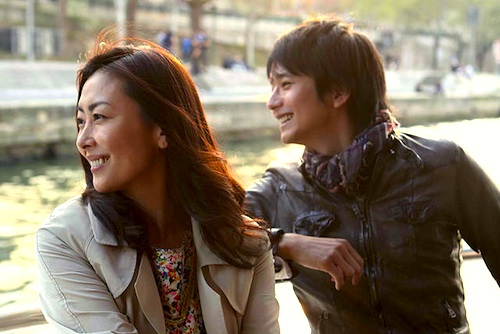
By Joe Bendel. A young photographer finds romance where he least expects it: Paris. Sure, it is the City of Lights, but he assumed his short sight-seeing trip would only entail some brotherly chaperoning. Instead, he spends some ambiguous quality time with an attractive older Japanese woman in Eriko Kitagawa’s I Have to Buy New Shoes, which screens tonight as part of the 2013 Japan Cuts: The New York Festival of Contemporary Japanese Cinema.

Sen Yagami only came to Paris at the insistence of his younger sister, Suzume. However, she contrives a way to ditch her indulgent brother along the banks of the Seine before they even reach their hotel. She has plans of her own, involving her long-distance artist boyfriend. This is rather inconvenient for Yagami, since he does not even have their hotel information. Fortunately, a broken heel precipitates a meet-cute with expat magazine editor Aoi Teshigahara, at the expense of his ground-up passport.

Initially, Teshigahara helps him navigate Paris as a friendly fellow countryman abroad, but a mutual attraction slowly grows between them. Surprised and confused by their feelings, Teshigahra and Yagami engage in a halting courtship dance that is refreshingly chaste compared to most films. Nonetheless, Yagami will not see much of his hotel, wherever it might be.

Following in the tradition of Brief Encounter, Shoes has already been widely compared to Linklater’s Before trilogy as well as the 1990’s Japanese television work of Kitagawa and producer Shunji Iwai. Yet, this is a much quieter film, saying more with a look than a page self-consciously clever dialogue. The title may sound like chic lit, but Kitagawa maintains a vibe of mature sadness that is anything but.

From "I Have To Buy New Shoes."

It is impossible to overstate what Miho Nakayama brings to the film as Teshigahara. A long time Paris resident herself, she is a smart, sophisticated, and beautiful presence throughout the film. Yet, when she lowers the dramatic boom, it is simply devastating. Poor Osamu Mukai’s Yagami is just no match for her, even though he has some nice moments expressing the younger man’s very real disappointments in life. He is no boy toy, not by any stretch. Mirei Kiritani also brings unexpected depth to seemingly coquettish Suzume late in the third act.

Just about every scene of Shoes has a subtle surprise, yet invariably rings true. It is a classy package, capitalizing on the Parisian backdrops and sparingly incorporating Ryûichi Sakamoto’s evocative piano themes in just the right moments. Above all else, it is a stunning showcase for Nakayama that would elevate her to the absolute top tier of international stardom in a more just world. Very highly recommended for those who appreciate intelligent, grown-up relationship films, I Have To Buy New Shows screens tonight (7/18) as this year’s Japan Cuts continues at the Japan Society.

LFM GRADE: A

Posted on July 18th, 2013 at 1:19pm.

Analog Dreams of a Digital Future: LFM Reviews Computer Chess

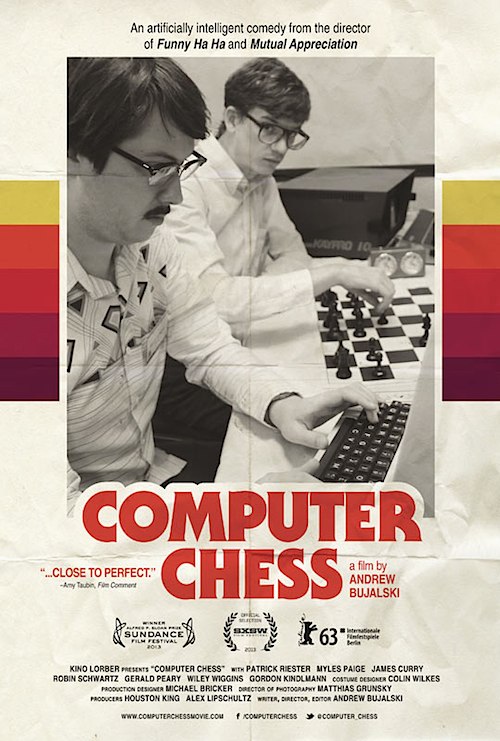
By Joe Bendel. In 1980, all music was analog. So was just about everything else. Computers were generally recognized as the coming thing, but they were still too large, bulky, and slow to be a part of most peoples’ daily lives. However, these zero-point-zero generation computers could be programmed to play chess. A motley assortment of early computer pioneers will pit their chess programs against each other in Andrew Bujalski’s retro Computer Chess, which opens this Wednesday at Film Forum.

In a tacky suburban chain motel, some of computer science’s shabbily dressed elite have come together for a computer chess tournament. The winner will face off against the arrogant human host, Pat Henderson, who has never lost a match to a machine—at least not yet. He and his opening night panel predict that will end by 1984, a year rife with significance. The defending champs from Cal Tech are still the presumed favorites, but their TSAR program is acting decidedly buggy. It is so bad, the project director, geek superstar Dr. Tom Schoesser, hastens his arrival for an emergency diagnostic session.

Things seem to be going well for the MIT contingent, with Shelly Flintic receiving an inordinate amount of attention as the first woman team-member in the competition. In contrast, nobody wants to deal with the prickly, borderline homeless Michael Pappageorge, even if he is a mad genius.

Bujalski fully embraces the technology of the era, shooting Chess in black-and-white, on now archaic late 1970’s video cameras. The film is even rougher and grainier than viewers will expect, yet Bujalski’s nostalgic vision will win them over. Indeed, it is clear throughout the inspired first four-fifths of Chess that the game of chess is really just a stand-in for innumerable AI applications to come. We can also recognize Pappageorge as the sort of social drop-out who either became the Bill Gateses of the world, or more likely remained marginal figures, haunting tech clearance auctions, buying bizarre obsolete hardware to continue building their mad visions.

Myles Paige arguably deserves award consideration as Pappageorge, finding pathos in his obnoxious behavior. Texas-based film editor Robin Schwartz also gives Chess some soul as Flintic, one of the few competitors with any facility to make human connections. University of Chicago professor Gordon Kindlmann’s Schoesser has a knack for making his theory-heavy dialogue sound smart and accessible, while in his on-screen debut, film critic Gerald Peary chews the scenery nicely as the pompous Henderson.

Considered one of the godfathers of Mumblecore, Bujalski now demonstrates how handy it is to have some plot and an underlying concept supporting a film. Still, he overplays his hand in some respects. Initially, the hippie-dippy encounter group sharing the motel is a rather brilliant piece of era-appropriate cultural satire that could have been lifted from 1980’s uber-zeitgeisty Serial. However, whenever Bujalski contrives ways for the two groups to intersect, the forced comedy falls flat. Likewise, the genre payoffs he offers late in the third act are head-scratchers that make little sense in the film’s overall context.

Frankly, Chess works best when suggesting TSAR might just be the not so distant ancestor of WarGames’ Joshua and 2001’s HAL 9000. Nonetheless, Bujalski presents a consistently compelling time-capsule that captures the innocent fascination and single-minded commitment to innovation that drove the digital revolution. A sly period production with a keen understanding of early computing, Computer Chess is recommended for Wired readers when it opens this Wednesday (7/17) at New York’s Film Forum.

LFM GRADE: B

Posted on July 16th, 2013 at 10:58pm.

LFM Reviews PostHuman @ The 2013 Comic-Con International Independent Film Festival

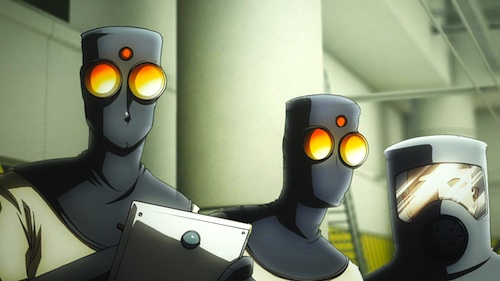
By Joe Bendel. We might be in for a dystopian future, but there are those among us who won’t go down without a fight, perhaps including Terrance the hacker. He will demonstrate his talents to a mysterious woman and potential audiences for further and longer exploits when Cole Drumb’s animated short film PostHuman screens at the 2013 Comic Con International Independent Film Festival.

Evidently, the beautiful but deadly Kali was once an involuntary test subject in a secret government ESP lab. She intends to rescue her last surviving fellow guinea pig, with Terrance’s help at the keyboard, while his faithful dog Nine looks on. There’s your backstory, now it’s go time.

PostHuman is the perfect short for fans of the original Heavy Metal movie and magazine, both in terms of the hardboiled action and Kali’s wardrobe. It is short, but it is violent, in a good anti-authoritarian sort of way. Co-produced and co-edited by Jennifer Wai-Yin Luk, PostHuman is a muscular film with a striking anime-ish look that could easily serve as the prelude for a longer film or an ongoing series, like the 21st century indie version of a backdoor pilot.

From "PostHuman."

There are three reasons Comic-Con attendees should queue up for PostHuman. It is short, so it will not take too much time away from standing in other lines. It is action-driven, so it is easily processed. Perhaps most notably, it also stars the voice of geek pin-up Tricia Helfer from Battlestar Galactica.

PostHuman is a cool short film that hopefully leads to future follow-ups. It is exactly the sort of screening that press attending Comic-Con should be covering.

Fans on-the-ball enough to have gotten their tickets in the ten minutes they were on-sale, and then organized enough to arrange lodging, should check out whatever they wish and get plenty of guilt-free swag. However, they should also bear in mind that fanboy favorites like Christopher Nolan were once indies (those who were in front of the curve on Following probably feel pretty smart now), and that the CCI-IFF has a lot of talented filmmakers who have the potential to become big names – definitely including the team behind PostHuman. Highly recommended, it screens this Thursday (7/18) in San Diego, along with Dawn Brown’s charmingly nostalgic House of Monsters and Lee Dae-hee’s surprisingly bittersweet and mature Padak, as part of Comic Con’s 2013 Independent Film Festival.

Posted on July 16th, 2013 at 10:57pm.

LFM Reviews The Rooftop @ The 2013 New York Asian Film Festival; Opens Friday, 7/19

By Joe Bendel. That’s right, “Wax” is the word. Named for his hair styler, Wax is a singing kung fu motorcycle gang member, who is out to win the heart of the innocent ingénue. There will be dancing, fighting, and swooning in Jay Chou’s The Rooftop, the closing night film of the 2013 New York Asian Film Festival (and also part of the Well Go USA spotlight), which opens theatrically in New York this Friday.

Wax and his bowling biker buds live in the Rooftop section of Galilee, under the shadow of the huge outdoor billboards. They do not mind the scenery, though. In fact, they are rather fond of the one featuring Starling, a budding starlet and supermodel. Wax’s three stooges, Tempura, Egg, and Broccoli refer to her as “Sister-in-Law” to needle the big smitten lug. Everyone assumes nothing will ever come of his impossible crush until the day Wax picks up some part-time stuntman work getting the snot beat out of him on the set of her next picture.

Of course, she notices him. As their chaste courtship heats up, William (the one-named), Starling’s mobbed-up movie star patron, contrives to sabotage their romance. We know he is bad news because he is an associate of Red, one of Tempura’s unfriendly rent-collecting rivals working for the corrupt housing authority. That’s right, some of the villains are Taiwanese HUD bureaucrats, albeit decidedly more flamboyant than our homegrown variety.

From "The Rooftop."

For his second outing in the director’s chair, pop idol and action super-star Chou channels his inner Baz Lurhmann, unleashing a kaleidoscope of colors and staging big, flashy, razzle-dazzling musical numbers. Clearly not afraid of a little sentiment, Chou indulges one big melodramatic set piece after another. One minute Wax and Starling are strolling through a carnival, next they are dancing in the rain, and shortly thereafter they stare into each other eyes in his quaint rooftop neighborhood as fireworks explode in the background. It’s all good.

Chou and the radiant Li Xinai look like an attractive couple and develop some half decent romantic chemistry together. She even does some legit acting in her own scenes. However, the crafty old HK vet Eric Tsang often steals the show as Dr. Bo, the lads’ martial arts mentor and local snake oil salesman. Alan Ko also has his moments as Tempura, the enforcer trying to go straight. Unfortunately, the shticky comic relief delivered by Egg and Broccoli becomes embarrassing over time.

Still, Rooftop has a few gags that will have viewers laughing in spite of themselves. Truly, this is kitchen sink filmmaking. Chou throws it all in, including a way over the top framing device. Yet, Mark Lee Ping Bin, considered one of the world’s finest cinematographers for his work on films like Norwegian Wood, makes it all look bright and sparkly. If you want spectacle, Chou has your spectacle right here. Recommended for those who thought The Great Gatsby was too staid and did not have enough martial arts, The Rooftop officially closed this year’s NYAFF last night, but will open this Friday (7/19) in New York at the AMC Empire.

LFM GRADE: B-

Posted on July 16th, 2013 at 10:57pm.