LFM Reviews Jake Shimabukuro: From Hawaii to Sendai on Four Strings; Premieres on PBS Friday, 5/10

By Joe Bendel. Although the ukulele is descended from Portuguese instruments, Japan has long been the instrument’s second home outside Hawaii. Likewise, Japan had always been an important market for the fifth generation Japanese Hawaiian virtuoso Jake Shimabukuro. Filmmaker Tadashi Nakamura documents Shimabukuro’s post-2011 Japanese tour and other career highlights in his profile Jake Shimabukuro: Life on Four Strings, which airs on PBS this Friday.

Shimabukuro was a shy kid who was understandably troubled by his parents’ divorce. He did not have a privileged upbringing, so it is hard to begrudge the good fortune he experienced early in his career. As a mere teen, Shimabukuro established a following, fronting a Hawaiian fusion band. He struggled a bit at the start of his solo act, but a video of Shimabukuro performing George Harrison’s “While My Guitar Gently Weeps” (posted without the musician’s knowledge) became one of YouTube’s first viral sensations.
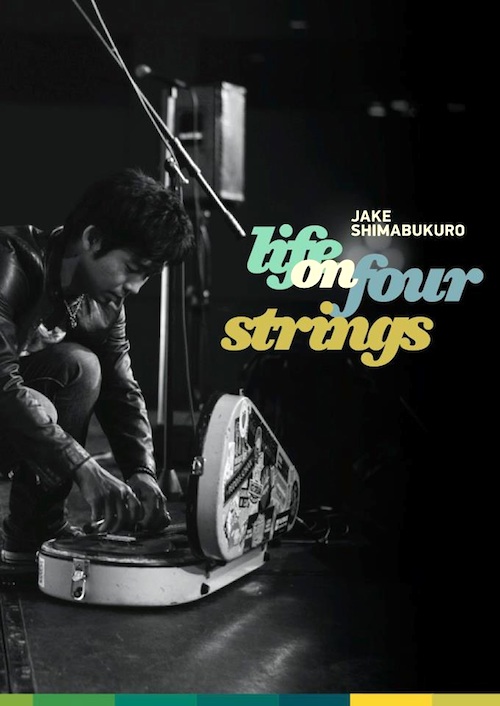
From that point on, Shimabukuro became the reigning king of ukulele crossover-breakouts. While not jazz per se, he incorporates extensive jazz and rock influences. It would be interesting to hear him play a session with Lyle Ritz, the original jazz ukulele player, especially considering Shimabukuro’s knowledge and respect for his instrument’s history. In fact, Strings often shows Shimabukuro acting as an educational ambassador—like a Wynton Marsalis of the ukulele.

When dark clouds gather in the third act, Shimabukuro is not directly affected. However, as a native of Sendai, his loyal longtime manager is deeply distressed by damage and tragedy left in the wake of the tsunami and earthquake. Shimabukuro does his part, performing for displaced survivors, while remaining all too conscious that there is only so much his spirit-raising efforts can do.

Indeed, throughout Strings, Shimabukuro never falls into any shallow celebrity traps. If that makes him sound likably boring, at least his music is dynamic and vivid. Nakamura showcases his performances well. Of course, his famous Central Park Beatles rendition is included, but the film’s defacto theme “Blue Roses Falling” is actually a more interesting piece. Frequent festival patrons and Indy Lens viewers might be more familiar with Shimabukuro’s music than they realize. He composed music for Hula Girls (set in the hardscrabble Fukushima prefecture) and some of his tunes were licensed for Debbie Lum’s Seeking Asian Female.

Essentially, Strings paints a portrait of a nice guy, with a nice story, performing some impressive music. However, the third act carries a bit of emotional heft. Recommended for open ears, Jake Shimabukuro: Life on Four Strings has its national broadcast this Friday (5/10) on most PBS outlets (following a special presentation on Hawaii’s PBS station this past March).

LFM GRADE: B

Posted on May 6th, 2013 at 8:57pm.
Opera Singers Acting Naughty: LFM Reviews 1st Night

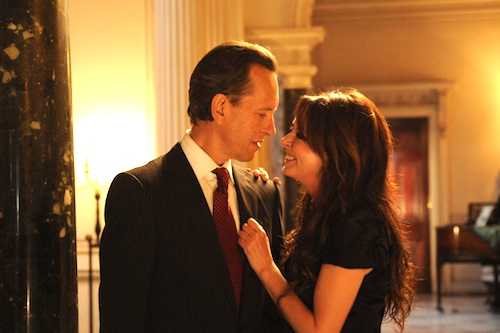
By Joe Bendel. The cultural elite sure can get randy. Some of England’s greatest opera stars have come to perform in a high paying vanity production of Mozart’s Così Fan Tutte, but the real action happens after rehearsals in Christopher Menaul’s 1st Night, which opened yesterday in New York.

The fabulously wealthy Adam plans to show his shallow social circle he can truly sing opera with a special command performance at his country estate. Secretly, though, he really intends to use the production as a means of wooing Celia, a conductor he has long carried a torch for. Naturally, through a contrived misunderstanding, he concludes she is not as available as he hoped. In a sour mood, he makes a caddish bet with the social climbing tenor Tom regarding the soprano, Nicoletta. Of course, when the leads start falling for each other, the bet hangs over their romance like Damocles sword.

Meanwhile, fellow diva Tamsin is having dysfunctional issues with her husband, the director – while Debbie, a budding star, goes all D.H. Lawrence, toying with the earnest young groundskeeper’s affections. There will be assignations in the forest and all kinds of comedy of errors, but don’t worry, the show will go on.

After Luciano Pavarotti’s notorious Yes, Giorgio, it took almost thirty years for someone to cast another opera singer in a musical comedy. Some purists might say Sarah is too crossover-pop, but it seems strange regardless to watch her in a largely non-singing part. Still, she is reasonably spirited scolding and flirting with Richard E. Grant’s Adam. Grant basically falls back on his standard British Fraser Crane tool kit, but there is a reason that persona has worked so well for him.

From "1st Night."

Poor Emma Williams endures numerous embarrassments as Tamsin, while Oliver Dimsdale fares little better as her predictably problematic husband. For their part, Mia Maestro and Julien Ovenden look distinctly uncomfortable trying to pull off Nicoletta and Tom’s Moonlighting style courtship. At least Susannah Fielding adds some decorative value as Debbie and Nigel Lindsay exudes likability as the gay featured tenor Martin, which is frankly what 1st Night most aspires to.

1st Night (formerly First Night) is not terribly ambitious, largely content to parade some lovely scenery and an attractive cast past viewers. Of course, the music is great too, even if the singing is conspicuously dubbed. In a way, it is a lot like Quartet, except its characters are all hale and hearty (which precludes any cheap heart-string tugging). A distracting trifle, 1st Night opened yesterday (5/3) in New York at the Quad Cinema and is also available of VOD platforms.

LFM GRADE: C

Posted on May 4th, 2013 at 12:46pm.

LFM Reviews A Grand Canal @ The 2013 Columbia University Film Festival

By Joe Bendel. A sailor is never particularly comfortable on land, even under the best circumstances. As a result, they are decidedly unsuited to dealing with system-rigging gangsters, or at least such was the case for one boy’s father in the hybrid short film A Grand Canal, which screens during the 2013 Columbia University Film Festival, an annual showcase for Columbia MFA students’ thesis films and screenplays.

The narrator tells us his father resembled and sounded like Chinese pop singer Liu Huan. Singing Liu’s signature tunes was one of the captain’s few pleasures that did not involve navigating the rivers and canals near their provincial port town. Largely an absentee father, his young son still idolizes him. Unfortunately, when the local “boss” refuses to pay an invoice, it jeopardizes his father’s small fleet.

From "A Grand Canal."

One of the biggest surprises of Canal is the way it becomes a meditation on the healing potential of art (especially cinema). Ma frequently upends audience expectations, playing ironic games with the flashback structure. Yet, it never feels showy or excessively hipsterish. In fact, it is quite touching, in good measure due to a remarkable lead performance from Mei Song Shun, who delivers dignity and gravitas in spades. He can also sing.

Although Canal is set some twenty or so years in the past, its story remains quite timely as China struggles with increasingly predatory manifestations of crony-capitalism (within an avowed socialist system, which is quite the trick). It is quite an impressive looking production and a completely absorbing film. Highly recommended, A Grand Canal will doubtlessly intrigue China watchers but also resonate as a paternal drama. It screens tomorrow (5/4) at the Walter Reade Theater as part of Program C at this year’s Columbia University Film Festival. Southern Californians should also note details on the 2013 Los Angeles edition of the fest will be announced shortly.

LFM GRADE: A

Posted on Posted on May 4th, 2013 at 12:46pm.

Henry James Modernized & Sweetened: LFM Reviews What Maisie Knew

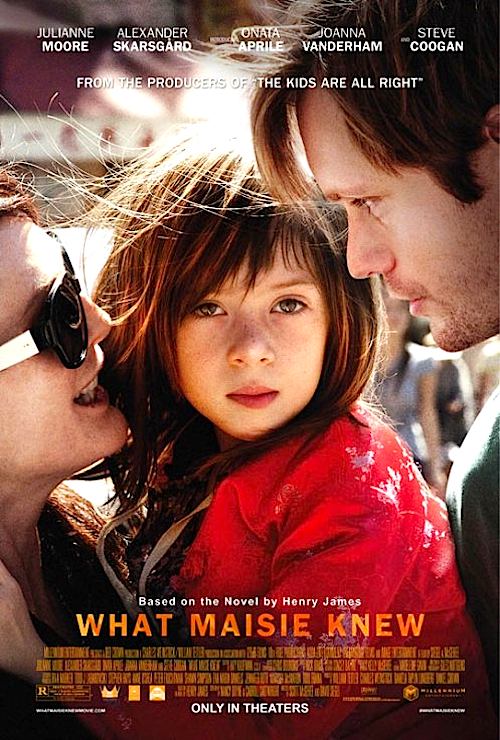
By Joe Bendel. This must have been a hard pitch. One would suspect Henry James’ novel of narcissistic, self absorbed parents of privilege would hit close to home for many decision-makers working in the movie business (studio or indie, it hardly matters anymore). Yet somehow, the poor little rich girl will indeed wrestle with her parental issues in Scott McGehee & David Siegel’s What Maisie Knew, which opens tomorrow in New York.

Beale and Susanna are Maisie’s parents, if we can really use that word. He is a dodgy art dealer and she is an over-the-hill rock star angling for a comeback. Both are more interested in their careers than their daughter. When they think of Maisie, it is mostly as a potential club to bludgeon each other with during their divorce proceedings.

Since he is able to present a more stable front, Beale wins considerable custody rights. However, this is not all bad. He is also taking her nanny Margo as his trophy wife. She actually cares about Maisie, willingly giving her the time and attention she cannot get from her parents. Meanwhile, Susanna marries the working class Lincoln, apparently to have a live-in sitter for Maisie. Like Margo, he quickly develops a paternal affection for his step-daughter that the ragingly insecure Susanna perversely resents. Hmm, does anybody see the potential building blocks of a more functional family unit in here somewhere?

Poor Mrs. Wix. Maisie’s frumpy second nanny really gets the shaft from screenwriters Nancy Doyne and Carroll Cartwright’s adaptation. While the James novel rebukes the shallow indulgence he considered endemic in society, McGehee and Siegel’s WMK seems to suggest blonds make better parents. The proceedings are also marked by a heightened class consciousness, with the nanny and bartender showing superior character than Maisie’s privileged biological parents.

Regardless of what James might think of his novel modernized and transported to New York, McGehee and Siegel have an unbeatable trump card in their young lead. As Maisie, Onata Aprile is completely unaffected and wholly engaging. She covers a wide emotional spectrum, carrying the audience every step of the way.

Likewise, Joanna Vanderham is charismatic and surprisingly vulnerable as Margo, while Alexander Skarsgård’s understated nice guy Lincoln is likable enough. Julianne Moore labors valiantly to humanize the self-centered and psychologically erratic Susanna, but Steve Coogan is largely stuck playing a caricatured straw-man as the arrogant Beale.

Maisie’s cast and co-director definitely stack the deck, but at least they do it thoroughly and compellingly. Viewers will absolutely care about the bright and precociously self-aware Maisie, which is the acid test for any film focused on a young protagonist. The upscale New York locations also add a dash of élan. Anchored by several well turned performances, What Maisie Knew is surprisingly satisfying. Recommended kind of affectionately for fans of literary melodrama, it opens tomorrow (5/3) in New York at the Angelika Film Center.

LFM GRADE: B+

Posted on May 2nd, 2013 at 11:31am.

They’re Dying to Checkout: LFM Reviews Happy House

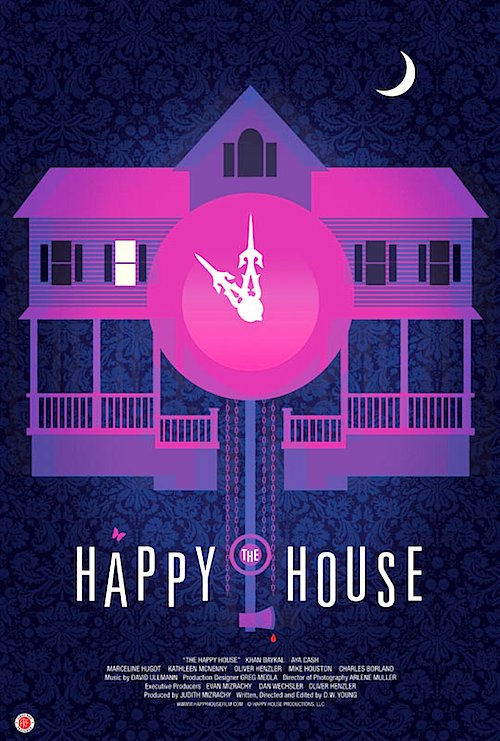
By Joe Bendel. If you can’t afford the local wannabe Bates Motel, you can probably get hacked up for less at a bed & breakfast. B&B’s are homier and more personal. That’s why we stay in hotels. One quarreling Brooklyn couple checks into a Hudson Valley B&B largely out of spite and passive aggression. It would have been a terrible weekend anyway, but things take a deadly turn in screenwriter-director D.W. Young’s horror movie send-up The Happy House, which opens tomorrow in New York.

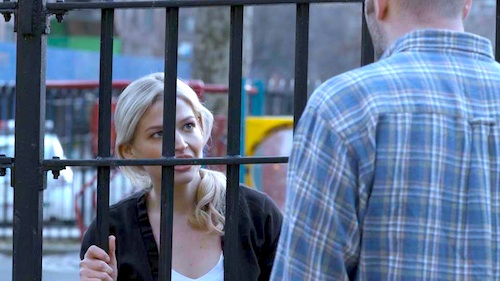
Hildie and her son Skip run the Happy House B&B with a strict set of rules their guests must abide by. Wendy would not be inclined to follow them even under the best of circumstances. Barely on speaking terms with her slacker boyfriend Joe (who had the bright idea to take this trip in the first place), she will be a somewhat difficult guest. Hildie will not appreciate that, not one little bit. She duly warns the couple that there are consequences for amassing “three strikes.”

Decidedly slow out of the blocks, Happy mostly forces its early attempts at laughs, but it makes an interesting pivot about halfway through. The red district (you can’t say “red state” in New York), gun-owning, God fearing rubes might not be as crazy as Wendy and Joe had first thought. Odder still, the film essentially evolves into what it had previously mocked, becoming a surprisingly presentable And then There were None style cat and mouse game.

Happy was shot within a functioning B&B in a region of New York State that had just been pummeled by Hurricane Irene, so it earns good karma for bringing some business to town. Indeed, the Happy House looks authentic and lived-in, because it was (Young and his co-leads even stayed there as guests during filming). The cuckoo clocks are also a nice touch, but it seems like there ought to be more taxidermy.

It is a bit overstuffed with colorful characters, though. Marceline Hugot brings considerable depth and nuance to the seemingly authoritarian Hildie. Likewise, Kathleen McNenny is a stitch as Linda, her leftwing English professor sister. However, Happy lays it on a bit thick with the absent-minded Swedish lepidopterist staying at the fateful B&B in hopes of finding a rare butterfly. Perhaps more problematically, Khan Baykal and Aya Cash just make a boring couple as Joe and Wendy.

In terms of execution, Happy is a dramatically mixed bag. The DIY look does not help much, either. Still, Young incorporates some interesting ideas, consistently avoiding or subverting clichés. It will not be a breakout film, but horror movie fans might enjoy the ways it tweaks genre conventions, especially an inspired bit at the climax. For the intrigued, The Happy House opens tomorrow (5/3) in New York at the Cinema Village.

LFM GRADE: C+

Posted on May 2nd, 2013 at 11:30am.

LFM Reviews When Sunny Gets Blue @ The 2013 Columbia University Film Festival

By Joe Bendel. Musicians are like athletes. An injury can potentially end a brilliant career. Like Evan Horne, the protagonist of Bill Moody’s jazz mysteries, Jonathan Clay is a pianist struggling with injured hands, who suddenly finds himself involved with the criminal element in Oded Naaman’s When Sunny Gets Blue, which screens in New York as part of the 2013 Columbia University Film Festival, an annual showcase for Columbia MFA students’ thesis films and screenplays.

Clay is not a good patient. Suffering from acute carpal tunnel syndrome, he is frustrated by the slow rehabilitation process. In fact, he has given up on physical therapy. When he returns from a session of self-pitying and boozing, he is surprised to find a woman in his apartment. She is there to warn him about the thugs who show up shortly thereafter.

Yes, her name is Sunny, as in the title Jack Segal & Martin Fisher standard that seems to have great meaning for Clay. It is a good one, recorded by the likes of Dexter Gordon, Sarah Vaughan, and Nat King Cole, but it is not exactly overplayed and fits the vibe of Naaman’s film quite well. (The credits inspired by Blue Note Records graphic designer Reid Miles are also a nice touch.)

From "When Sunny Gets Blue."

Indeed, Sunny has a hip sensibility that should please jazz fans. In a strange way it manages to be both ambiguous and completely satisfying. Naaman deftly establishes a distinctive mood that is too light-hearted to be called noir, but too dark to be considered anything else. It certainly fits the jazz life, as does Jonathan Monro’s standout performance. He gets a convincing case of the blues, yet remains sincere and grounded, even when doing some odd things. As someone who knows a lot of musicians, his performance always feels right to me.

A great short film, the nineteen minute When Sunny Gets Blues is an Indiewire Project of the Week that actually panned out. It should serve as quite a positive representative for Columbia as it gets festival play. Highly recommended for jazz fans and film programmers, When Sunny Gets Blue screens this Saturday (5/4) as part of the Columbia Film Festival’s Program D at the Walter Reade Theater.

LFM GRADE: A

Posted on May 2nd, 2013 at 11:28am.