Ukrainians in the West Bank: LFM Reviews The Territory

By Joe Bendel. Everyone wants to sell them out and nobody wants you to see them up close and personal: they are the Israeli settlers living in both official and unofficial settlements within the West Bank. A great number of them also happen to be Ukrainian and Russian immigrants. Filmmaker Dmitriy Khavin continues to document the Ukrainian Diaspora, giving viewers a rare unfiltered look at the Israeli settlement experience in The Territory, which premieres this coming Tuesday at the JCC in Manhattan as part of the Generation R film program.

The settlements are not what you might expect. Where once there were dormitories and trailers there are now pleasant looking middle class homes. Granted, they are often found in gated communities, not uncommonly with armed guards out front. The land around them looks rather harsh and arid—hardly terrain worth fighting for. However, the fortifications are clearly there for a reason.

These first and second generation Soviet immigrants are products of the Refusenik movement. Their families’ experiences under Communism directly shaped their Zionist convictions. Still, they might not exactly be what viewers expect, either. Some are simply taking advantage of the inexpensive housing. Yes, Khavin also talks to some who express less than edifying opinions on their hostile Arab neighbors. Yet, many are clearly inclined to live in peace and harmony with all residents of the territory. Nonetheless, they consciously chose the risks involved in forming a buffer to protect the rest of Israel.

From "The Territory."

Throughout The Territory, Khavin challenges preconceptions across the political spectrum, beginning with film’s calm, peaceful tone. There are no bombs exploding here. His interview subjects go about their daily business like people anywhere, adopting a God-is-my-copilot attitude. Occasionally there are ugly reminders of the terrorism for which the territory is infamous for. One of Khavin’s guides takes viewers to the shrine dedicated to a tiny infant murdered by a sniper. Residents assume the young innocent was deliberately targeted by the Palestinian murderer and it is hard to argue with them, given the results.

The West Bank settlements will always be a thorny issue to untangle. However, the media would like people to blindly assume they are all lunatic Kahane clones, which simply is not the case. Indeed, many are part of the epic Russian and Ukrainian stories starting tragically in the early Twentieth Century. A real example of documentary filmmaking journalism, the forty-one minute The Territory ought to be broadcast on PBS, perhaps as part of a series with Khavin’s other films (like Artists of Odessa), but do not hold your breath. A balanced and intriguing look at one of the world’s most misunderstood tracts of land, The Territory is recommended for all inquisitive viewers when it screens Tuesday (1/15) at the JCC in Manhattan.

Posted on January 11th, 2012 at 10:24am.
‘Elections’ in Putin’s Russia: LFM Reviews Winter, Go Away @ First Look 2013

By Joe Bendel. Ten graduate students from Marina Razbezhkina and Mikhail Ugarov’s Documentary Filmmaking and Theater School did what the Russian media establishment was largely incapable of: they covered the 2012 Russian presidential election and the surrounding protests fairly and accurately. Inseparable from their cameras over the dramatic two month span, the ten budding documentarians captured some chilling moments of “democracy at work” in Winter, Go Away, which screens this Saturday in Astoria, Queens, as part the Museum of the Moving Image’s second annual First Look film series.

For the record, the ten filmmakers are: Elena Khoreva, Denis Klebleev, Dmitry Kubasov, Askold Kurov, Nadezhda Leonteva, Anna Moiseenko, Madina Mustafina, Sofia Rodkevich, Anton Seregin, and Alexey Zhiryakov. Remember those names (that’s a dare). Although none of Winter’s scenes are specifically credited to a contributing filmmaker, the sheer volume of newsworthy footage speaks highly of them as a group.

Two painful realities quickly emerge in Winter: the Putin campaign is highly organized, while the divided opposition is not. With the not-so-quasi state media firmly in his pocket, Putin probably need not have fixed the election. Yet, it is pretty darn clear he did exactly that, based on the video recorded in poll sites on election.

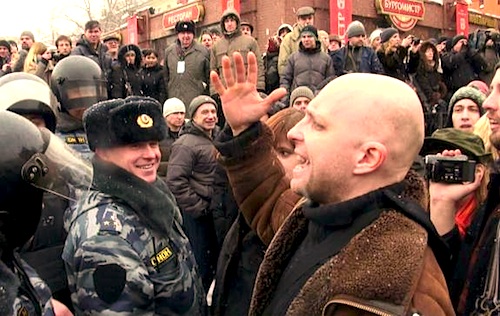
From "Winter, Go Away."

Obviously cooking the voter rolls, local election officials refuse to turn over documentation to poll watchers. Mysterious buses show up with ostensive voters, who are a bit touchy about being filmed. When opposition groups stage protests, the police respond with violence. In one jaw-dropper of an incident, they literally grab an opposition spokesman in mid-sentence while he is giving an on-camera interview to a reporter.

Winter should instill shock and outrage in viewers, but let us not forget that there were similar instances of election shenanigans and intimidation reported here in the U.S. in 2012. Indeed, the suspicious busloads of “voters” in Winter demonstrate why stricter voter ID laws might actually serve the interests of democracy.

Watching Winter, Go Away is a wildly frustrating experience, but the truly independent filmmakers deserve enormous credit for their journalistic integrity. They documented actual crimes the Russian and international media has cravenly ignored. Highly recommended for all Russophiles, Russophobes, journalism students, and media critics, Winter, Go Away screens this Saturday (1/12) during the 2013 First Look at the Museum of the Moving Image.

LFM GRADE: A

Posted on January 10th, 2012 at 11:58am.

LFM Reviews Sleepless Night @ First Look 2013

By Joe Bendel. Everyone says marriage requires hard work, but nobody ever wants to show it on film. Yet there is certainly plenty of dramatic fodder there. A young married couple will prove the point when they navigate some tricky issues in Jang Kun-jae’s Sleepless Night, which screens this Sunday as a selection the Museum of the Moving Image’s second annual First Look film series.

They have been married two years without getting pregnant. This may have been either a conscious or subconscious decision. Money is a concern. He works in a warehouse and she is yoga instructor. Perhaps more significantly, he is still not sure he is ready to be a parent. Both clearly understand this is an important difference of opinion, leading to anxiety over the state of their union. They will have to do that everyday couple’s work to stay together, especially with more and more of their married friends divorcing or having children.

Like many films programmed at this year’s First Look, Sleepless is a quiet, moody film. However, it is also wholly engrossing for viewers willing to invest in it. This film is far too honest for anyone whose idea of movie romance is Gerard Butler planting a sloppy kiss on an impeccably blow-dried Jennifer Aniston. By the same token, it is also considerably more erotic.

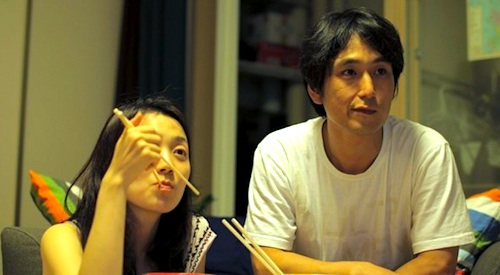
From "Sleepless Night."

Kim Soo-hyun and Kim Joo-ryeong make an attractively down-to-earth couple. Together they share a genuine, lived-in chemistry that rings true in every scene. While Jang’s two dream sequences are not well delineated on-screen, his patience and sensitivity allow some telling moments to develop organically.

Deceptively simple, the sixty-five minute Sleepless Night is surprisingly deep and rewarding. Recommended for those who want to see a movie relationship presented in an intelligent and very real manner, it screens with the longish short As the Flames Rose this Sunday (1/13), the final day of First Look 2013, at the Museum of the Moving Image in Astoria, Queens.

LFM GRADE: A-

Posted on January 10th, 2012 at 11:57am.

The Singularity is Nigh: LFM Reviews Welcome to the Machine

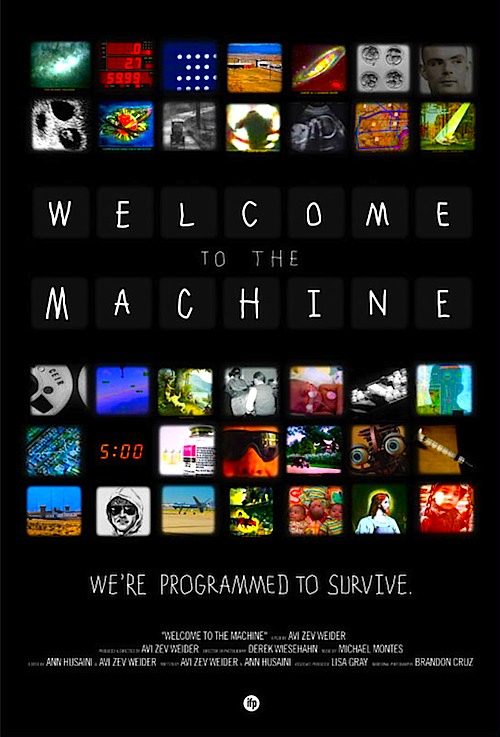
By Joe Bendel. It is like the Rapture for geeks. The Singularity is the not so theoretical point at which artificial intelligence eclipses the old school human variety. For some, it summons dystopian images of The Matrix. Others anticipate a golden age of brain implants and downloaded consciousnesses. It may well be the world filmmaker Avi Zev Weider’s newborn triplets inherit. Weider explores the evolving relationship between man and technology on their behalf in Welcome to the Machine, which opens this Friday in Brooklyn.

Delivered ten weeks premature, Weider’s daughter and two sons spend the first months of their lives connected to machines. The products of in vitro fertilization, their lives are truly defined by technology. Most of Welcome’s experts argue that this is a good thing. First and foremost is Ray Kurzweil, the developer of the famous synthesizer and the reading machine for the blind, who now serves as the leading evangelist for the Singularity. Kurzweil argues that this scary sounding turning point might even offer a means to pseudo-immortality.

Others are not so sure. MIT technological ethicist Sherry Turkle is cautiously cautious about the implications of blurring the distinctions between humanity and technology. Philosophy lecturer David Skrbina goes further, often citing the work of his notorious correspondent, Ted Kaczynski. Skrbina suggests that the Unabomber is something of a prophet regarding the dehumanizing effects of technology. While undeniably learned in his field, the extent to which Skrbina adopts Kaczynski’s arguments is problematic. Aside from the Unabomber’s lethal methods (largely unremarked upon in Welcome), it seems highly dubious that the pre-industrial serfs eking out a subsistence existence lived richer, more examined lives than the majority of those in the contemporary industrialized West – including the working class.

By periodically tracking the development of his triplets, Weider provides a pointed, if perhaps inadvertent rejoinder to the borderline Luddite premises of Skrbina and his pen pal. Without the advancements of modern medicine, Weider’s three babies could never survive (and would not have been conceived in the first place). Oddly enough, Welcome could be a big hit with the pro-life community. According to the filmmaker, he and his wife were not so subtly encouraged to abort one of the triplets. Although their first year is an exhausting struggle, it was clearly worth the effort for their parents. Along the way, Weider also provides a behind the scenes look at the U.S. military’s Unmanned Aerial Vehicle program, which certainly ought to interest the same audience.

Anyone who watches Welcome will wish all the best to Weider and his lovely children. For the same reason, they will shake their heads in disbelief when he also attempts to correspond with Kaczynski. This is not someone who ought to have your contact info – just ask the three people killed by his mail bombs. Regardless, there is enough discussion of artificial intelligence, military drones, and robotics to keep the Wired magazine crowd consistently engaged. At least one cut above a Discovery Channel special, Welcome to the Machine is worth considering should you happen to be in Brooklyn over the coming week. It opens at the ReRun Gastropub this Friday (1/11).

LFM GRADE: B-

Posted on January 9th, 2012 at 12:05pm.

Amish Country Noir: LFM Reviews Banshee on Cinemax

By Joe Bendel. Bufurd T. Pusser would appreciate the new get-tough sheriff of Banshee, PA – were the new sheriff not an ex-con, living under an assumed identity. It sounds like a clever Cornell Woolrich set-up, but Alan (True Blood) Ball’s new Cinemax series, created by Jonathan Tropper & David Schickler, is more about action than suspense. Whatever works. As it happens, the first two episodes of Banshee work pretty well. There will be plenty of mayhem for relatively grown-up audiences when Banshee premieres this Friday on Cinemax.

His name is not really Lucas Hood. That was the name of the honest loner who had accepted the position of Banshee’s sheriff sight unseen. The recently released thief on the run from a shadowy Ukrainian gangster happened to be on-hand when Hood met his untimely end. He even threw his lot in with the lawman. It was not sufficient to save the real Hood, but it means there will be no witnesses, aside from Banshee’s sympathetic barkeep and former Cruiser weight champion Sugar Bates.

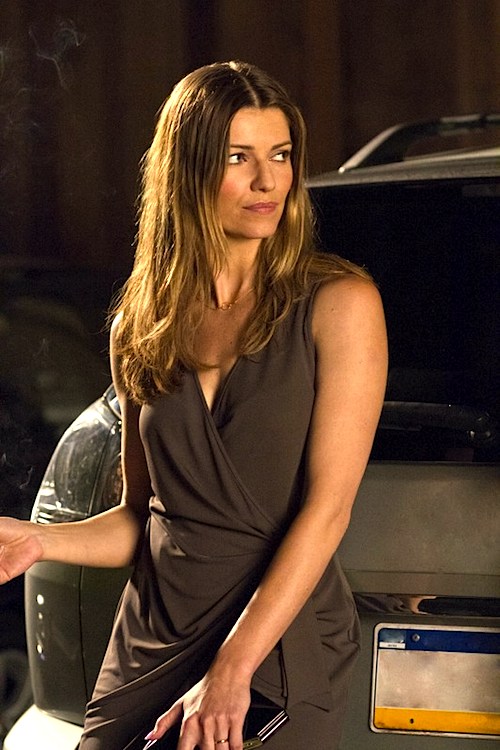
Ivana Milicevic in "Banshee."

The man now masquerading as Sheriff Hood came to Banshee to confront his former lover and accomplice, now known as Carrie Hopewell, the wife of the crusading district attorney. Perhaps he will stay to take down Kai Proctor, the local slaughterhouse owner and vice kingpin, who happens to be the blacksheep son of an Amish patriarch. Meanwhile, the ominous Rabbit’s henchmen are hot on the trail of the ostensive Hood and his reluctant transvestite hacker accomplice, Job. (Who knew Harry Angstrom was a super-villain?) Potentially, Hood could find himself juggling two nemesis figures, while ambiguously pursuing his ex-lover and bedding all of Banshee’s willing party girls.

As set-ups go, Banshee’s looks solid enough to sustain at least a full season. The first episode origin-smackdown is particularly well executed, although it might represent some rather unfortunate product placement for A1 steak sauce. To judge by the first two installments, there should be plenty of Walking Tall style action. Cinemax’s horny teenager demographic will also appreciate Ivana Milicevic’s nude scenes as the presumed Hopewell.

Certainly looking the part, Milicevic does a nice job in the early going serving as both femme fatale and soccer mom. In the lead, Anthony Starr is surprisingly manly and hardnosed, especially by Hollywood’s standards. He could become a go-to guy for an industry suffering from a masculinity deficit. Although Ulrich Thomsen has played plenty of heavies in his American outings, he seems to enjoy Proctor more. The Amish angle probably helps. Ben Cross is certainly on familiar territory as the malevolent Rabbit, but Hoon Lee’s shticky Job trades on some tired stereotypes.

Banshee clearly has enough violence and mature stuff to keep it going for a while, but the underlying premise also shows considerable promise. It certainly has the right tone to appeal to fans of Cinemax’s breakout hit, Strike Back. Effectively cast and nicely paced by directors Greg Yaitanes (Episode 1) and S.J. Clarkson (Episode 2) Banshee is worth taking a shot on. It premieres this Friday night (1/11) on Cinemax.

Posted on January 9th, 2012 at 12:04pm.

LFM Reviews The Assassins on DVD/Blu-ray

By Joe Bendel. Though he died early in the third century, Cao Cao continues to be a potent figure in Chinese culture. To bolster his legitimacy, Mao invited open comparisons between himself and the legendary general. In 2009, Cao Cao’s tomb was supposedly discovered, but many archaeologists have questioned its authenticity. Viewers get a glimpse inside Cao Cao’s tomb-in-progress as part of Linshan Zhao’s late Romance of the Three Kingdoms epic, The Assassins, which releases today on DVD and Blu-ray from Well Go USA.

You didn’t unify a large swath of China while protecting arguably the worst (and last) emperor of the Eastern Han Dynasty without making enemies. Cao Cao has plenty, some of whom are abducting orphans, training them to become assassins. Their only target will be the Chancellor himself. Young lovers Ling Ju and Mu Shun will have the best opportunity to complete the mission. She will serve as a consort in Cao Cao’s Black Sparrow Tower, while he will be placed as a eunuch in the Imperial court. Unfortunately, the shadowy cabal is willing to do what it takes to protect Mu Shun’s cover.

Ling Ju loves a eunuch, but she also begins to admire the crafty old general she is supposed to kill. The common people’s esteem for Cao Cao and the stability he preserves is eye-opening for her. She can also appreciate his knack for thwarting assassination attempts. He seems to make all the right enemies, including the ungrateful slime-bucket of an emperor. Yet, killing him might be the only way to free herself and Mu Shun. Adding urgency, a prophecy about the four stars coming into alignment would seem to foretell the fall of the Han Dynasty and Cao Cao’s rise as their successor.

Liu Yifei in "The Assassins."

Frankly, Cao Cao is the best role Chow Yun-fat has had in years. At his best, he nicely conveys the regrets and isolation of the warlord at the end of his career, while projecting an appropriate sense of badness, like a revisionist Eastwood wuxia figure. He can be a bit stiff during the quiet scenes, though. In contrast, Zhang Fengyi is far more enjoyably villainous as Cao Cao in John Woo’s Red Cliff (which Chow reportedly bailed out of at the last minute). Yet Jiang Wen’s world-weary but still Machiavellian Cao Cao in Alan Mak & Felix Chong’s The Lost Bladesman remains the richest screen interpretation of the role in recent years.

While there are a few adequately staged large scale action sequences, Assassins really is more of a romantic tragedy. Zhao exercises surprising tear-jerking restraint, but Ling Ju and Mu Shun’s stolen moments together have real bite nonetheless. (Crystal) Liu Yifei plays the former with a porcelain-like fragility, while Hiroshi Tamaki broods effectively as the emasculated Mu Shun.

Thanks to accomplished contributors like art director Yohei Taneda and cinematographer Xiaoding Zhao (whose credits include Kill Bill and House of Flying Daggers, respectively), Assassins is quite an impressive looking period production. Although action fans might get frustrated with Assassins’ stately moodiness, there is something about Ling Ju and Mu Shun’s star-crossed love that resonates deeply. Recommended for fans of historical melodrama more than swordplay, The Assassin is now available on home viewing formats from Well Go USA.

LFM GRADE: B

Posted on January 8th, 2012 at 11:14am.