LFM Reviews Center Stage

By Joe Bendel. She was one the biggest stars of her generation but the press was out to get her. Eerily, Ruan Lingyu’s short life paralleled the trajectories of her most tragic roles. Her career was marked by scandal, making her story a natural for big screen adaptation. Mixing narrative with documentary snippets, Stanley Kwan sympathetically profiles Ruan in Center Stage, which fittingly concludes the Asia Society’s Goddess film series tomorrow.

There are two divas in Stage, Ruan and Lily Li, played by two divas of a later generation: Maggie Cheung and Carina Lau, respectively. A gifted actress, Ruan is often called the Greta Garbo of Republican China. She gained fame as a romantic heroine, but is now best remembered for her more politically charged films. Unfortunately, she fell for the wrong man at an early age. Arguably, it was a mistake Ruan significantly repeated once, perhaps twice. Ultimately, her ne’er do well ex would serve as the media’s willing tool.

Stage can be quite maddening, because it recreates scenes from many of Ruan’s films that are now considered lost. Many of them look like they were really darn good, but we can only hope they eventually turn up in a mysterious film vault someplace. Naturally, Kwan also gives the audience a behind-the-scenes look at the surviving classics, Goddess and New Women, which kicked off the Asia Society’s retrospective last month.

Cheung is not a bad likeness for Ruan, perfectly expressing her brittle vulnerability. Her Ruan struggles to maintain a placid façade, but she obviously feels the sleights of others on a very deep level. Indeed, screenwriter Peggy Chiao clearly ascribes a great deal of her success as an actress to her remarkable empathy. It is a star turn from Cheung, justly awarded best actress at the 42nd Berlinale.
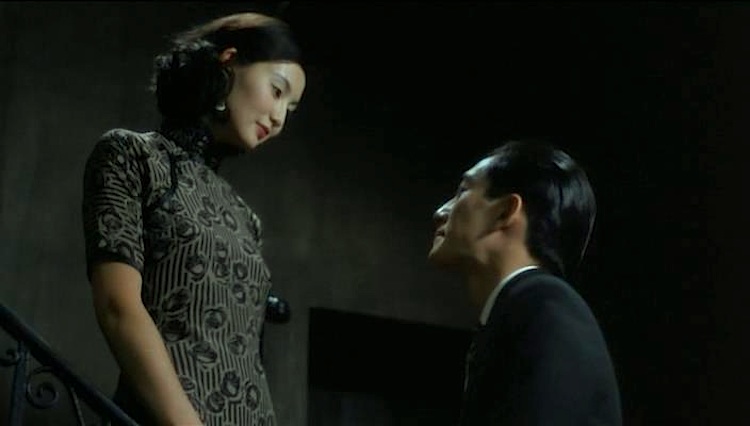
Kwan’s talking head segments, both archival and original black-and-white interviews with cast and crew, give the film a stop-and-start rhythm that can be distracting. Still, much of this commentary is rather interesting stuff, including the final sit-down granted by Li Lily, Ruan’s friend and fellow diva (represented in the Goddess series with Daybreak). Cheung’s sympathetic take on Ruan adds an intriguing meta-dimension to the film. Her candid segments also serve as a reminder how striking she is, considering how pale and drawn she often looks when appearing in character as Ruan.

At well over two and a half hours, Stage truly brims with ambition. Sort of the HK equivalent of Jessica Lange’s Frances Farmer bio-pic, it is a finely crafted period production that should satisfy Ruan’s fans with its earnest ardor for their star. Viewers will come to feel like they understand the exquisitely morose idol, yet suspect there is something about her that will always remain unknowable. Anchored by a great lead performance, Center Stage is highly recommended for fans of Ruan, Cheung, and Hong Kong cinema in general when it screens tomorrow (12/8), wrapping up the Goddess film series at the Asia Society.

LFM GRADE: A-

Posted on December 7th, 2012 at 11:09am.
Long Island Cheer: LFM Reviews The Fitzgerald Family Christmas

By Joe Bendel. Where are the Griswolds when you need them? It is the season for sentimentality and Edward Burns intends to indulge. He returns to Long Island for a big Irish family get together in The Fitzgerald Family Christmas, which opens today in New York.

Their mother’s birthday is two days before Christmas, but aside from Gerry, her favorite, none of the grown Fitzgerald children want to come home to celebrate. Grown might be too strong a word. Let’s say they are over twenty-one. Gerry is the professional martyr who still lives at home. He has four sisters whose names are impossible to keep straight. It is easier to just number them in accordance with how annoying they are, number four being the most insufferable. He also has two brothers, one of whom would have been forgotten were it not for a handy set of press notes.

There is still a Fitzgerald father out there, but he is dead to Rosie Fitzgerald after he walked out on her when the brood was still quite young. Unfortunately, Jim Fitzgerald will be dead to everyone soon. His final wish is to spend his last Christmas with the family. Gerry tries pleading his case, but his mother and assorted siblings remain steadfastly opposed.

Various other family dramas crop up, including Sister #1’s pregnancy with her abusive husband. Brother Quinn and Sister #4 are pursuing significantly younger and older romantic partners, respectively, while Sister #3 sent her husband packing in favor of their landscaper. Sister #2 actually has a presentable husband and young baby, but she is still absolutely miserable to be around. Meanwhile, completely forgettable Brother Cyril just got out of rehab. Right, good luck with that.

From "The Fitzgerald Family Christmas."

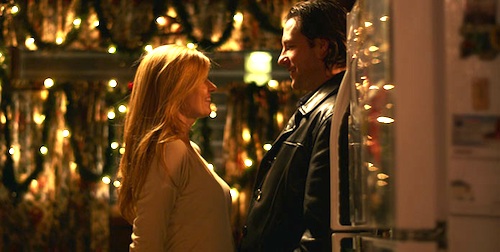
Christmas with the Fitzgeralds will make viewers convert to Buddhism. The only appealing scenes involve Brother Gerry’s awkward courtship of Nora Daugherty, the nurse of a longtime family friend. It is nice to see realistically flawed, everyday looking (slightly worn even) people develop a down-to-earth relationship. Reuniting from The Brothers McMullen, Burns and Connie Britton display real romantic chemistry together. He helms these sequences with a sensitive touch the rest of the middling family chaos lacks.

Granted, it should also be noted Ed Lauter might just give a career performance as the remorseful absentee father. In fact, there are several very nice supporting turns peppered throughout this overstuffed holiday feast of subplots, each of which is neatly resolved, lest they spoil the turkey. While not an outright affront to cinema, The Fitzgerald Family Christmas is unlikely to become anyone’s holiday tradition. More liable to test viewers’ patience, it opens today (12/7) in New York at the Village East.

LFM GRADE: C-

Posted on December 7th, 2012 at 11:08am.

Awkward Moments: LFM Reviews Wagner & Me

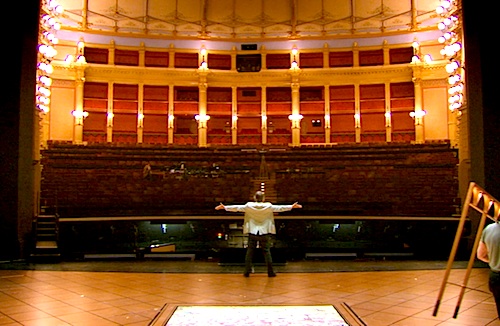
By Joe Bendel. Can you separate an artist’s work from their offensive ideology? Hollywood asks Middle America to do exactly that nearly every weekend. Granted, the case of Richard Wagner is of a much higher magnitude. After all, we know whose favorite composer he was. Stephen Fry is also an ardent admirer, who tries to reconcile his beloved music with the man’s problematic legacy in Patrick McGrady’s Wagner & Me, which opens this Friday in New York.

Fry is clearly a civilized man of the arts, who actually lost family members in the Holocaust. He also loves Wagner’s music. Love might be an understatement. Touring the celebrated Bayreuth concert hall built to the composer’s specifications as it prepares for its annual Wagner festival, Fry is absolutely giddy. All his sophistication deserts him. It is a total fanboy geek out.

Frankly, Fry might cringe at some of this footage in years to come, but on the other hand, cynicism is overrated. Fry conveys his passion for the music and God bless him for it. To his credit, though, he does not ignore the dark side of Wagner. While he does not delve too deeply into the composer’s documented anti-Semitic sentiments, he fully explores the way Hitler and the National Socialists used the long deceased Wagner to legitimize their reign of insanity. W&M is particularly eye-opening when addressing the support Wagner’s heirs lent to Hitler at a very early stage in his career. Fry also visits a violinist who survived the concentration camps to get her considered judgment on Wagner, which is indeed quite reasonable and reflective.

From "Wagner and Me."

Wagner will always be a tricky figure to come to terms with. On a basic level, an artist like Wagner or a veteran of film and television like Fry cannot help it if some unsavory characters become fans of their work. Yet, many will fairly argue there were chauvinistically nationalistic themes in Wagner’s operas that were all too compatible with National Socialism. Fry somewhat tries to rehabilitate his idol (while wisely refraining from the “he was a big fan of Mendelssohn and some of his best friends were Jewish” defense the Wagner establishment has floated), but he never closes the deal.

In fact, viewers might walk away from W&M more critical of Wagner the man than when they walked in. That is a testament to Fry’s honesty if not necessarily his persuasiveness. Sometimes interesting but hardly essential, Wagner & Me opens this Friday (12/7) in New York at the Quad Cinema.

LFM GRADE: C+

Posted on December 6th, 2012 at 11:02am.

LFM Reviews Ashes of Time Redux

By Joe Bendel. Ouyang Feng is an agent for freelance swordsmen looking for some dirty work. You could call him a cutthroat’s cutthroat. Likewise, when it comes to love, he is a cynic’s cynic. If you suppose a woman was the cause of his hardened heart, you would be correct. It is a logical guess, considering Wong Kar Wai’s Ashes of Time Redux screens this Friday as part of the Asia Society’s film series Goddess: Chinese Women on Screen.

Instead of adapting Louis Cha’s epic novel The Eagle-Shooting Heroes, Wong conceived of an original pseudo-prequel that can be fully appreciated without prior familiarity with its inspiration. Every year, the swashbuckler Huang Yaoshi pays a visit to his friend Ouyang’s desert home. Both are men with complicated pasts. For his latest visit, Huang brings a bottle of supposedly enchanted wine that is said to induce forgetfulness. Huang imbibes. Ouyang does not.

After Huang disappears, apparently under the effects of the potent drink, Ouyang carries on with business. However, his next clients are somehow involved with his soul-sick friend. Clan leader Murong Yang recruits Ouyang to murder Huang in retribution for spurning his sister, Murong Yin. Soon thereafter, the sister tries to hire Ouyang to murder her compulsively controlling brother. In a hallucinatory evening (which is par for the course in Ashes), Ouyang realizes Yin and Yang are the same divided person.

The seasons pass, but it is hard judge time in the desert. Ouyang recruits a wandering swordsman to defend the village from a band of outlaws. His skills are formidable, but he is rapidly losing his sight. The man’s one desire is to see his native land once again before going completely blind. Eventually, Ouyang also yearns for home, where the woman he once loved lives as his brother’s wife.

Redux is the restored and reworked de facto director’s cut of Ashes Wong oversaw when he realized how many dubious copies of the film were in circulation. Featuring fight choreography by Sammo Hung, it is quite stylistically daring by martial art film standards, bordering on the outright experimental. There is indeed a fair amount of combat, but the action is rendered impressionistically and blurred, almost like a series of freeze frames.

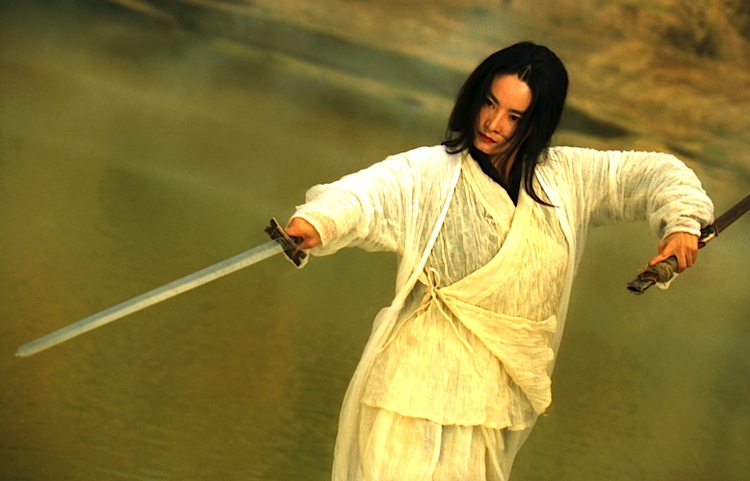
As promised, there are also several divas, including Brigitte Lin in sort of a dual role as the Murongs. Although she is always recognizable, Lin brings a conviction to both personas that keeps the audience off-balance. Yet it is Maggie Cheung who really lowers the diva boom as the woman from Ouyang’s past. Emotionally devastating but never indulgent or showy, it might represent the best second-for-second cameo ever. As a bonus, Charlie Young is a genuinely haunting presence as the peasant girl out to avenge her brother.

While the film’s color palette reportedly varies depending on its various editions, any retrospective of cinematographer Christopher Doyle’s work ought to start or finish with Ashes. The golds and burnt-umbers of Redux are absolutely striking. Frankly, Ashes Redux is a daring classic of the genre that might be new to a lot of people who might think they have seen it already (like a wuxia Blade Runner). Highly recommended, Ashes of Time Redux screens this Friday (12/7) at the Asia Society.

LFM GRADE: A-

Posted on December 6th, 2012 at 11:00am.

The Cold War for American Public Opinion: LFM Reviews Restless

By Joe Bendel. Who would benefit from keeping America out of the war in Europe? It is a question that will preoccupy a former British secret agent all her life. She was supposed to be set-up in a manner that would badly discredit the British intelligence community with the American public. She was also supposed to be dead. However, the Russian exile has more lives than a cat in the Sundance Channel’s two part mini-series adaption of William Boyd’s Restless, which kicks off this Friday night.

When professional Cambridge student Ruth Gilmartin pays a visit to her mother’s country home, she finds the woman in the throes of paranoia, or so she presumes. Sally Gilmartin claims there are people watching the house from the surrounding tree-line. It all has something to do with her service as a spy during WWII. At the time, she went by her real name, Eva Delectorskya. Initially, this is all too much for Gilmartin to accept, but the site of a shadowy figure in the woods gives her pause. Reading her mother’s file, she gets the gist of the story viewers see in periodic flashbacks.

A former Russian aristocrat, Delectorskya is recruited by British intelligence in France after her brother is murdered by Fascist thugs. Lucas Romer will be her handler. Although he is not inclined towards any sort of emotional involvement, sparks will eventually fly between them. Delectorskya turns out to be a natural agent, but her missions are often rather dodgy. Yet somehow disaster always turns into success, at least within the agency bureaucracy.

Transferring to New York, they both assume roles at a dubious wire service that specializes in releasing disinformation to mislead the Germans. From time to time, a little field work is required to plant an especially sensitive story. Delectorskya assumed that was all she was doing when she accepts her fateful assignment to Albuquerque. Unfortunately, she soon discovers someone at the agency sold her out. The consequences of that ill-fated mission will linger for decades.

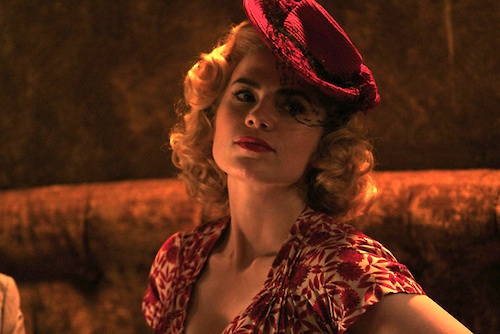
Hayley Atwell in "Restless."

What more can you ask of a miniseries that gives you Charlotte Rampling buying a shotgun? She plays Delectorskya/Gilmartin like the strong, intelligent woman she would have to be. Downton Abbey’s Michelle Dockery also looks the part of her daughter, but her shocked incredulity goes on far too long. In fact, the first installment does not lack for exposition, but the second part pays off with interest.

When the elements are all in place, Restless becomes quite a rich feast of skullduggery, helmed with a fair degree of style by Edward Hall. As young and old Romer respectively, Rufus Sewell and Michael Gambon might not exactly be the spitting image of each other, but they are definitely at home with the murky intrigue. A strong ensemble from top to bottom, character actor Adrian Scarborough makes a particularly strong impression as Delectorskya’s ally, Morris Devereux. However, as the resilient young Delectorskya, Hayley Atwell is a bit pedestrian, lacking the Mata Hari allure one would expect from her. Still, she becomes Charlotte Rampling, which is something.

While Boyd’s screen adaptation of his own novel is smart and tense down the stretch, his nondescript title never seems particular apt, but no matter.  Restless is a quality period production long on atmosphere that should satisfy for regular viewers of Masterpiece Mystery and BBC America’s mystery-thrillers. Recommended for fans of British television and espionage junkies, Restless begins this Friday (12/7) on the Sundance Channel and concludes one week later (12/14).

LFM GRADE: B

Posted on December 4th, 2012 at 2:49pm.

The Martial Arts Treasure Hunt is On: LFM Reviews Wu Dang

By Joe Bendel. Every five hundred years or so, a prestigious martial arts tournament is held at the Taoist monastery on Wu Dang Mountain. It might sound like the perfect set up for a kung fu movie, but it is really just a pretext to allow its sponsor to hunt for seven mystical treasures hidden throughout the exotic environs. Call it distraction by Kumite. Prof. Tang Yunlong might be an adventurer, but he has a pressing need for the mythic treasures in former John Woo protégé Patrick Leung’s Wu Dang, which Well Go USA releases today on DVD, Blu-ray, and various digital platforms.

A western dressing, modern man, Prof. Tang could be considered Republican China’s Indiana Jones, except for his daughter Tang Ning, whom he has schooled in the martial arts. He does not need the treasures for financial reasons. Instead, he hopes their storied power can cure the rare genetic disease his daughter inherited from her late mother.

Tian Xin is also after the treasures, or at least one of them. An Excalibur-like sword forged from a meteorite once belonged to her father and she is honor-bound to reclaim it. Prof. Tang will not need it for long, so he is happy to make a deal with her (especially since she is played by Yang Mi). Unfortunately, there are others after the treasures, whose motives are far less noble.

Action choreographer Corey Yuen (director of the original Transporter) really ups the ante with some spectacular fight scenes. There are some nifty matches staged for the tournament’s ring, picturesquely perched precariously on the edge the mountaintop. Yet, when Prof. Tang and Tian Xin start fighting together, in a scorching sort of martial arts tango, Wu Dang really puts films like Mr. & Mrs. Smith to shame. These are sequences genre fans will immediately re-watch and enjoy just as much a second and third time around.

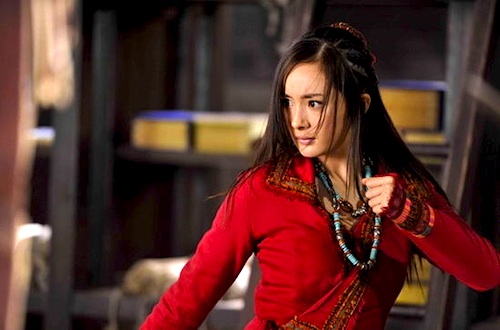
Yang Mi in "Wu Dang."

Stepping out for the first time as the co-lead of a martial arts film, Yang is fantastic as Tian Xin. Deceptively flirty and all kinds of lethal, she puts her stamp on the action heroine role. In the rare event a Hollywood actress takes on such a part, it is hyped to the heavens as something extraordinary, but every HK and Mainland star of note eventually gets an opportunity to flex their kung fu chops. That’s one of the reasons we like these movies.

Likewise, as Tang Ning, Jiao (Josie) Hu kicks butt pretty darn well too, at the youthful age of thirteen. So endearing in Tom Shu-yu Lin’s Starry Starry Night, she is definitely a movie star of the future. While she looks somewhat older than her limited years, the admittedly chaste pseudo-romantic relationship between her and Louis Fan’s doofus novice still seems a bit inappropriate. However, the father-daughter rapport between her and Wenzhuo (Vincent) Zhao’s Prof. Tang is surprisingly touching. A veteran of the Once Upon a Time in China franchise, Zhao knows how to conduct himself in a fight scene and also develops real chemistry with effervescent Yang.

Granted, Wu Dang ends in a smorgasbord of New Agey sentimentality, but that happens sometimes. Yuen’s fight choreography and the two appealing central relationships more than compensate. A kung fu film more or less suitable for family viewing, Wu Dang will still thoroughly satisfy genre connoisseurs. Recommended with surprising affection, it is now available in home viewing formats from Well Go USA.

LFM GRADE: B+

Posted on December 4th, 2012 at 2:49pm.