Fear is the Whole Point: LFM Reviews Citadel

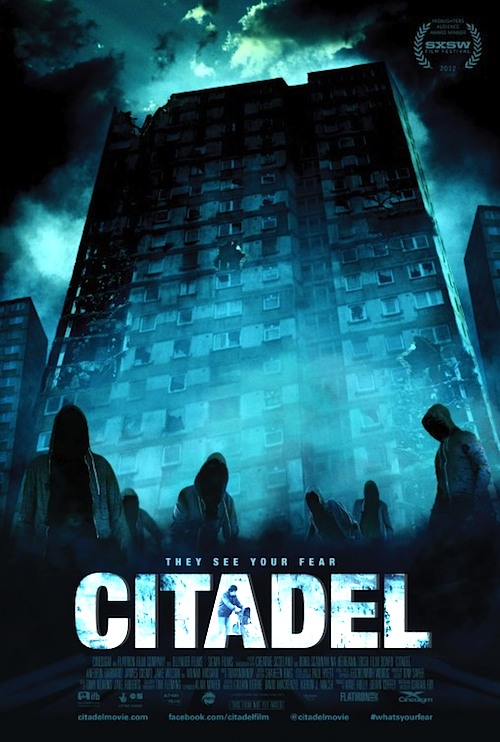
By Joe Bendel. They are not merely the misunderstood and marginalized. The hellions inhabiting a shunned Irish housing project thrive on fear. In fact, they can literally see it. Whether they are truly supernatural creatures or not is left rather ambiguous, but their feral savagery is beyond doubt throughout writer-director Ciarán Foy’s Citadel, which opens this Friday in New York.

Tommy Cowley and his pregnant wife were the last decent people to move out of their ominous looking housing project. Unfortunately, they waited too long. While trapped in the typically malfunctioning elevator, Cowley witnesses the fatal assault on his wife. However, their infant daughter Elsa survives. The incident deeply scars Cowley. An agoraphobic basket case, he becomes convinced that the hoodie shrouded thugs are after Elsa. He might be a nervous wreck, but he is not paranoid.
During several harrowing nighttime home invasions, Cowley barricades himself and Elsa in the bathroom as the hooded hooligans rampage through their flat. Cowley finds a sympathetic ear and temporary shelter with Marie, a kindly nurse. She insists that the delinquents living in the title high rise are just disadvantaged youths, who lash out to vent their frustration with the system. Unfortunately, she will be proved dead wrong. However, the misanthropic parish priest understands what they are only too well.

Aneurin Barnard is almost too convincing as Cowley. Every twitch of his body language screams victim. To see him is to want to mug him. He is so put-upon, viewers almost, but don’t quite lose patience with him. Conversely, James Cosmo tears into the scenery and everything not nailed down with rip-roaring relish as the caustic priest.

While Foy eventually drops some pretty clear hints regarding the nature of the Citadel dwellers, it hardly matters. They are simply mindless tormentors. As anyone who has watched Room 237 (the cinematic deconstruction of Kubrick’s The Shining) understands, authorial intent is irrelevant to critical theory. With that in mind, Citadel can clearly be interpreted as an allegory for the War on Terror, regardless of Foy’s conscious intent. Clearly.

So let’s have a little fun with this, shall we? Like al-Qaeda and their ilk, the hooded ones spread terror for its own sake. There is no reasoning with them. The West can lock itself in the bathroom and hope they go away, but that strategy is obviously doomed to failure over time. Marie is attractive and conciliatory, like a classic appeaser, but her course only leads to death. So to protect the future of liberal democracy for Elsa and the rest of our children, we need to follow the advice of the priest – call him the Dick Cheney figure – and hook up the plastic explosives to the car battery.

Right … or possibly not. Who’s to say? The point is that Citadel taps into some profound fears, burrowing under the skin like a bionic tick. It has to be the grittiest, grimiest, grimmest horror film you are likely to see in a good long time. Cinematographer Tim Fleming’s oppressively grey look sets the mood of foreboding right from the start, while Foy steadily builds the tension as he repeatedly cranks Cowley through the wringer. Despite the absence of a strong focal villain, it is a chillingly effective horror film. Highly recommended for genre fans, Citadel opens this Friday (11/9) in New York at the Angelika Film Center.

LFM GRADE: B+

Posted on November 6th, 2012 at 9:39am.
Economic Inequality in China: LFM Reviews The Mosuo Sisters @ DOC NYC

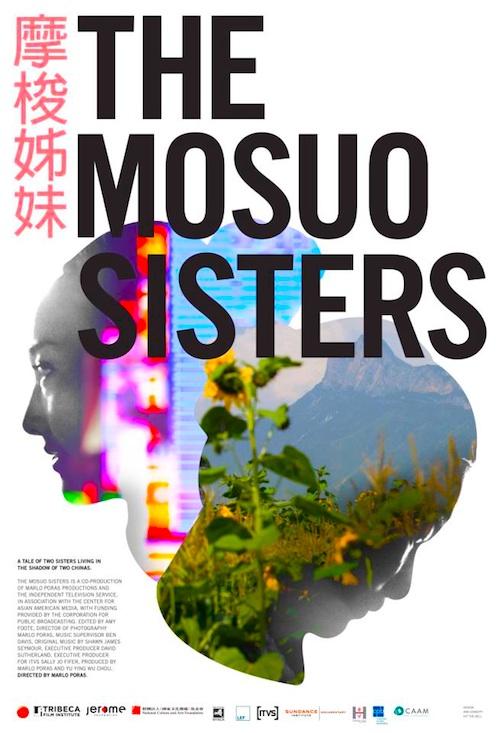
By Joe Bendel. The Mosuo people are considered somewhat exotic in China, but that is a decidedly mixed blessing. Their traditional matriarchal way of life is slipping away, but there are opportunities to perform in Tibetan themed bars and dancehalls – at least for the pretty ones. This again is a dramatically mixed blessing. When the impact of the global financial crisis forces the siblings to return home from Beijing, they start to rethink their long term plans in Marlo Poras’s The Mosuo Sisters, which screens during the proceeding-as-scheduled DOC NYC 2012.

Juma and Latso’s Himalayan Village is close to exactly nowhere. Returning home after their employer shutters her Beijing bar is an arduous, depressing journey. For Latso, the younger sister, it is a particularly bitter pill to swallow. Having enrolled in an accounting class, she had hoped to support her family with a more professional career. Now she is returning, knowing full well it will be difficult to leave again. Indeed, it is Juma, the superior earner who is sent out (this time for Chengdu), while her mother keeps her home to work on their hardscrabble farm.

One hopes the sisters will reap some benefit from Poras’s film, especially if it airs on public television. After production wrapped, their village was shook by an earthquake, which leveled their family’s home. Currently living in tents according to the film’s Facebook page, their family could use some of those Kickstarter funds.

Even before disaster struck, the year and a half Poras spent with the sisters dramatically illustrates Socialist China’s vast economic inequalities. Being an ethnic minority is also a dubious distinction for the sisters; it is considered intriguing, but often for the wrong reasons, to the wrong people. For instance, Juma must often endure misconceptions about Mosuo “Walking Marriages.” Roughly, those are procreative arrangements, in which the wife and husband live in their mothers’ households, but jointly raise their children during evenings spent together. Often deliberately misunderstood as an institution fostering promiscuity, they are anything but.

Of course, the status of China’s ethnic minorities has always been rather tenuous, particularly during the Cultural Revolution. However, Poras keeps the focus exclusively on the sisters’ here and now. Blessed with natural screen presence, viewers will definitely root for them. They might be from the middle of nowhere, but they are not bumpkins. In fact, they are quite intelligent and extremely sensitive. Yet the way they evolve and mature over this period of time is surprising.

While not even covered in the film’s post-script, the current condition of the sisters’ family speaks volumes about the nature of the Chinese government. We witness first-hand how unabashed gangsters thrive in a city like Chengdu, but education is practically a luxury. Poras’s frequent shots of Chairman Mao’s portrait staring down on the proceedings add an unmistakable layer of irony to their difficult struggle for survival.

A number of unvarnished documentaries addressing China’s social ills have been released internationally in recent years, but Mosuo Sisters has a somewhat different angle. It captures a vanishing culture and features two primary POV figures who completely win over audience sympathies. Strongly recommended, particularly for China watchers, Mosuo Sisters screens this Saturday (11/10) at the IFC Center. If you go, also bring some cash in case they pass the hat for the sisters’ family. Consider it a helping hand extended from one disaster area to another.

LFM GRADE: A-

Posted on November 5th, 2012 at 9:35am.

LFM Reviews Gypsy Davy @ DOC NYC

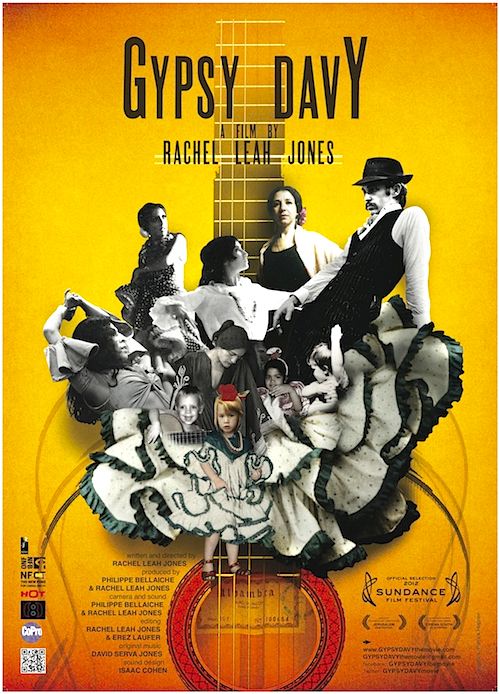
By Joe Bendel. Rachel Leah Jones has issues with her father. She is not the only one. Flamenco guitarist David Serva [Jones] is only good at playing music and reproducing. Disingenuous apologies come in a distant third when Jones takes on her more or less absentee father in Gypsy Davy (trailer here), her documentary profile/examination of family dysfunction, which screens during the still on-schedule 2012 DOC NYC at the IFC Center.

Born the blond white trash David Jones of Alabama, Serva transformed himself into the first American flamenco guitarist accepted by the Spanish old guard. He did it by abandoning his wife and two children (the director-co-producer-co-everything, and an older brother from a previous marriage). Serva is a self-absorbed creep, who displays almost no redeeming virtues throughout Davy. For obvious reasons, Jones openly questions whether she should be documenting her irresponsible father – yet persists, clearly hoping the exercise will have a therapeutic effect.

Shockingly inarticulate, Serva Jones only buries himself deeper as the film continues. Nonetheless, it is fascinating to trace the five women and five children (that he knows of) whose fates would become intertwined with his. There is some stylish flamenco and Roma-influenced guitar music as well, but Serva Jones’ undeniable musical gifts are not impressive enough to compensate for his boorishness.

It is impossible to turn away from the uncomfortable messiness of Gypsy Davy, just like a traffic accident or a Joe Biden stump speech. Jones raises family disorder to the level of performance art, but there is never any question where the blame lies.  The only real surprise is the relative emotional health displayed by many of Serva’s grown children.

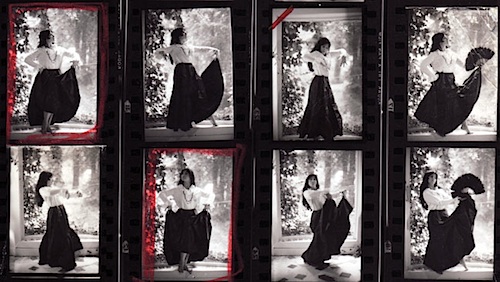
From "Gypsy Davy."

Gypsy Davy is almost unique among music-related documentaries because it leaves viewers less kindly disposed to its subject after a full viewing. However, many critics and programmers will probably play up the Counting Crows hook. Yes, David Serva Jones is the inspiration for that Mr. Jones. In fact, his son Martin co-founded the band, but walked away from a career in music out of fear he would become like his father.

While it looks rather DIY, Gypsy Davy is scathingly honest and quite shrewdly constructed. Recommended for viewers in the mood for an anti-musical doc, Gypsy Davy screens this Friday (11/9) and the following Monday (11/12) as part of this year’s DOC NYC, which is still proceeding on course.

LFM GRADE: B

Posted on November 5th, 2012 at 9:35am.

Ruan Lingyu, a True Diva of Chinese Cinema: LFM Reviews The Goddess

By Joe Bendel. Ruan Lingyu was often called the “Chinese Greta Garbo,” but unfortunately Marilyn Monroe might be a more tragically apt comparison. Dogged by scandal, the celebrated actress would take her own life in 1935. Awareness of her fate adds even more poignancy to her work in Wu Yonggang’s The Goddess (which can be seen in its entirety above), a classic of silent Chinese cinema, which inspired the title of the Asia Society’s latest film series, Goddess: Chinese Women on Screen. Fittingly, it launches their retrospective this Friday.

Ruan’s character has no name. Nor does she have a husband – but she has Shuiping, a baby boy for whom she will do anything. With no other resources, the woman is forced to sell herself on Shanghai’s predatory streets. There are no codes or euphemisms, here – she is a prostitute, plain and simple. Operating outside the law, she has no recourse when “the boss” appoints himself her pimp. While she tries to escape his clutches, he threatens to take the only bright spot in her life: Shuiping.

Nevertheless, as Shuiping matures, his mother sets aside money at great risk to pay for his education, at great personal risk. Unfortunately, intolerant parents complain to the progressive headmaster, claiming the presence of a prostitute’s son would threaten their children’s morals.

Released the year before Ruan’s sad demise, Goddess is arguably like an Oprah pick for 1930’s Shanghai. It forthrightly deals with issues of gender victimization and class exploitation, working towards a bittersweet conclusion, with the emphasis on the bitter. Yet Ruan elevates the film well beyond the realm of social issue melodrama.

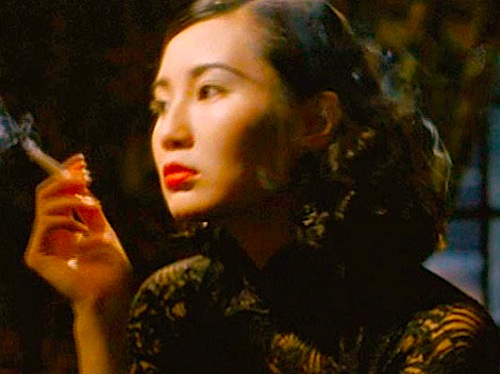
Classic Chinese cinema star Ruan Lingyu.

While the appeal of some silent stars, is not always compatible with contemporary tastes, Ruan has a timeless beauty and projects a devastating vulnerability as the unnamed woman. She also has heartbreakingly touching chemistry with young Li Keng as the sweet-tempered Shuiping. Li Juunpan, a stage actor who crossed over to silent movies, also brings remarkable presence and dignity to the film as the John Dewey-esque headmaster, while Zhang Zhizhi personifies sweaty odiousness as “the Boss.”

Ruan’s work in Goddess is so honest and powerful, it transcends time and fashion. In fact, there are none of the grossly exaggerated performances that often date silent cinema. A true classic in any era, The Goddess will leave viewers deeply moved, in a fully satisfying way. Highly recommended, it screens this Friday (11/9) at the Asia Society. The touchstone figure for the series, Ruan also stars in New Women screening this Sunday (11/11) and is the subject of Stanley Kwan’s biopic Center Stage, which concludes the series on Saturday, December 8th.

LFM GRADE: A+

Posted on November 5th, 2012 at 9:34am.

Kung Fu Hip Hop from RZA: LFM Reviews The Man with the Iron Fists

By Joe Bendel. Thaddeus the Blacksmith is a builder, not a fighter. Nonetheless, the Lion Clan is messing with the wrong tradesman when they chop off his arms. Yes, it is time to rumble in Nineteenth Century China. Kung fu, Hip Hop, spaghetti westerns, and blaxploitation will be mashed-up in the RZA’s The Man with the Iron Fists, which really did open this week in New York—honest it did.

The Lions were not always so bad. That was before the Emperor sought their services to help secure his shipment of gold. Succumbing to greed, Silver Lion and Bronze Lion betray their respected clan leader Gold Lion, with the intention of hijacking the imperial gold. Of course, they will have to take care of one loose end: Gold Lion’s son, Zen Yi, who has left his mountain retreat and lovely wife for some old school revenge. Unfortunately, he is no match for Brass Body, the Kung Fu equivalent of the X-Men’s Colossus.

Stripped of his armor, Zen Yi is rescued from certain death by the Blacksmith and his lover, Lady Silk, one of the “employees” of Madame Blossom’s house of pleasure. Troubled by the death and destruction wrought by his handiwork, the Blacksmith throws his lot in with Zen Yi. Needless to say, this leads to a rather nasty encounter with Silver Lion, Brass Body, and a very sharp blade. Yet, as the title indicates, he still knows his way around a forge. He also has an unlikely ally in Jack Knife, the opium addicted British ex-pat serving as the Emperor’s secret emissary.

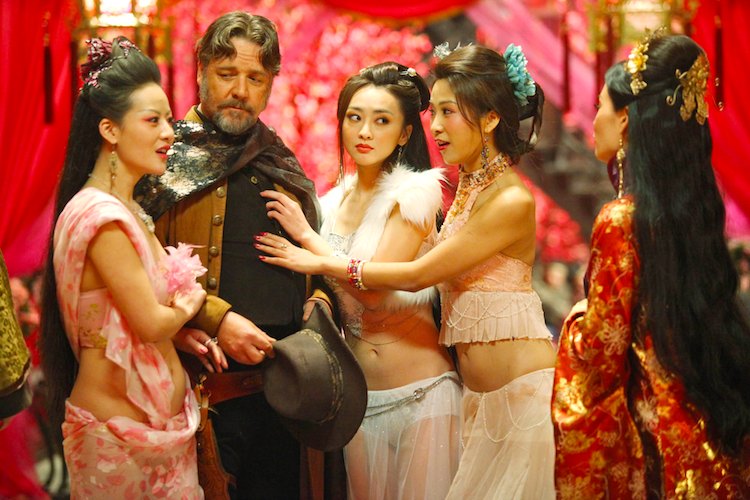
Jamie Chung in "The Man With the Iron Fists."

If you’re looking for Oscar bait, Iron Fists probably isn’t your cup of tea. Not exactly subtle or refined filmmaking, the RZA basically just lets the chaos fly. He “borrows” liberally from scores of previous martial arts films, even including Enter the Dragon’s oft imitated finale. Still, the film’s energy is admirable. Corey Yuen’s fight choreography is consistently inventive and there is plenty of eye candy. In fact, the large supporting cast brings all kinds of genre credibility, starting with the Cung Le, sporting the Yahoo Serious coif as Bronze Lion. On-the-brink-of-stardom Grace Huang (so cool in the short film Bloodtraffick) also kicks butt convincingly as part of the duo known as the Gemini Killers.

Probably the biggest surprise of Iron Fists is Russell Crowe’s rip-roaring scenery-chewing portrayal of Jack Knife. He obviously understood what sort of film he was making and was willing to just go with it. As Madame Blossom, Lucy Liu essentially reprises her turn from Kill Bill, but that is not necessarily a bad thing. Frankly, the RZA isn’t terrible as the Blacksmith, brooding well enough. The villains are more of a mixed bag, though. Former wrestler David Bautista certainly looks the part of Brass Body, but Byron Mann’s Silver Lion is more flamboyant than menacing.

Look, what do you want from a Kung Fu smackdown directed by a rapper, even if it is “executive produced” by Quentin Tarantino? It might be chocked full of genre clichés and clumsy flashbacks, but if the prospect of watching RZA beat the Lion Clan silly while Crowe cavorts with a bevy of Asian prostitutes strikes you as entertaining, then Iron Fists totally delivers the goods. Let’s call it a guilty pleasure and leave it at that. It really is currently playing in New York, above 34th Street, at the Regal E-Walk.

LFM GRADE: B-

Posted on November 3rd, 2012 at 12:18pm.

With No Apologies to Mellencamp: LFM Reviews Jack and Diane

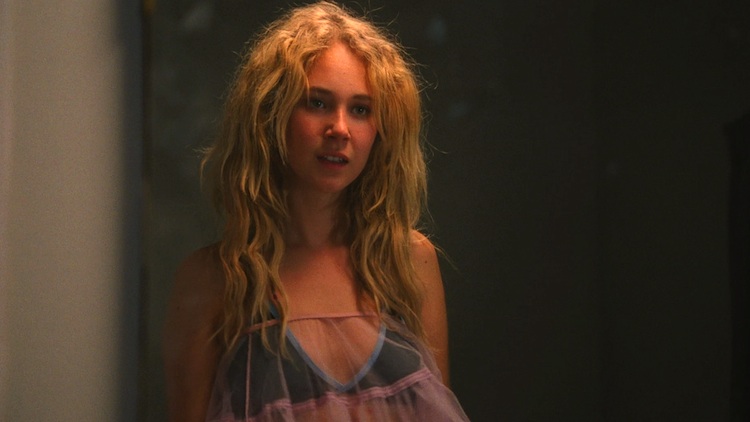
Juno Temple in "Jack & Diane."

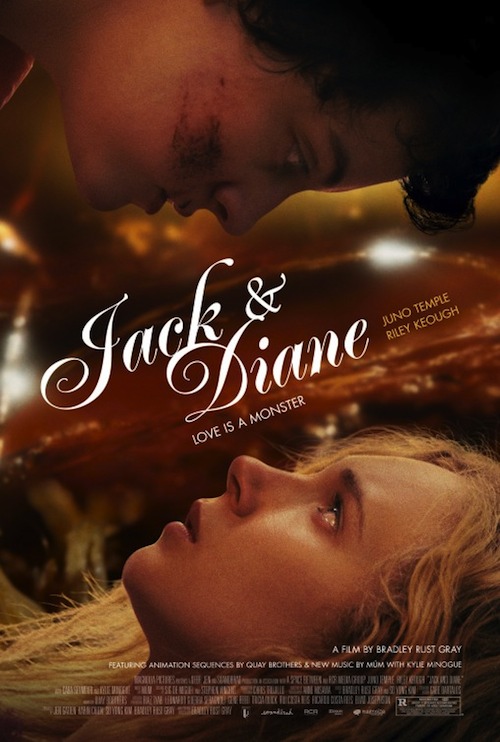
By Joe Bendel. You could possibly liken lycanthropy to puberty – because they both involve dramatic physical transformation. It is a dubious comparison, but evidently it was enough for writer-director Bradley Gray Rust to build a film around. As a result, love is rather messy in several ways for two young women in Jack & Diane (trailer here), which was supposed to open yesterday in New York.

Diane dresses like Goldie Hawn on Laugh-In. Tomboyish Jack dresses like Tim Allen on Home Improvement. However, when the two hipsters see each other, it is love at first gawk. Lost in Manhattan not far from Evacuation Zone A, the visiting Diane accepts Jack’s offer of hospitality. The British Diane seems to exist in a state of arrested development, but it evidently works for the tough-on-the-outside-needy-on-the-inside Jack. Yet, just as their whirlwind romance begins, miscommunication and Diane’s meddling aunt threaten to tear it asunder.

Coming between these kids might be dangerous, though. In moments of extreme emotional agitation Diane transforms into a werewolf—but, not really. For the most part, the lycanthropy is metaphorical, with only occasional hints that these trippy interludes have real consequences. At least they look distinctive, animated by the celebrated Quay Brothers in a style that is better described as macabre than frightening.

Frankly, it is a wonder Rust has not been picketed by the Hollywood thought police, considering J&D essentially equates its characters’ lesbianism with something explicitly monstrous. However, he handles their relationship with keen sensitivity and reasonably good taste. Indeed, J&D is being touted as the lesbian werewolf movie, but it is likely to disappoint fanboys hoping for either sort of exploitation.

Instead, J&D is your basic downtown indie. It is not mumblecore, but you can see it from here. Still, the earnest sincerity co-leads Juno Temple and an unrecognizable Riley Keough (Elvis’s granddaughter) bring to their characters shines through strikingly. Unfortunately, they are not well served by some overripe dialogue and the rather laborious pace.

If you were wondering, the Mellencamp song never appears on the J&D soundtrack and the ex-Johnny Cougar is reportedly not thrilled by the association. Be that as it may, the film itself is not terrible, but it is far from a cohesive whole. The Quays and particularly Keough did some fine work, but the concept remains only half-developed. Fans of the animators should find it worth checking out, but they can safely wait for Netflix and the like. For the curious, Jack & Diane is now playing at the Sundance Cinema in West Hollywood.

LFM GRADE: C+

Posted on November 3rd, 2012 at 12:17pm.