The New York Korean Film Festival 2012: LFM Reviews Late Autumn

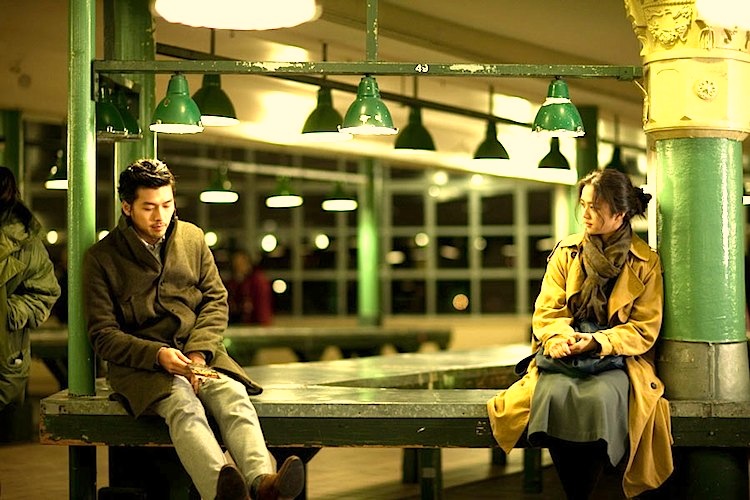
By Joe Bendel. The setting is Seattle and the lead actress is Chinese, but it is based on a classic 1961 Korean film. Yet, this is a universal story that might remind viewers of films like Brief Encounter and Before Sunrise. Two not-lovers’ abbreviated relationship will be ambiguous but deeply meaningful in Kim Tae-yong’s Late Autumn (trailer here), which screened at the recently wrapped 2012 New York Korean Film Festival.

Kim’s Late Autumn and Lee Man-hee’s before it should not be confused with Yasujiro Ozu’s classic film of them same name. Still, they are similarly distinguished by their wistful tone and humanistic sympathy for their flawed characters. Anna is serving a seven year prison term for killing her abusive husband. Released on a seventy-two hour furlough for her mother’s funeral, she shares a long bus ride with the caddish Hoon. Initially, the “escort” thinks she might be a soft touch, but she is not impressed with his act. Ironically, she is the one who makes an impression on him.
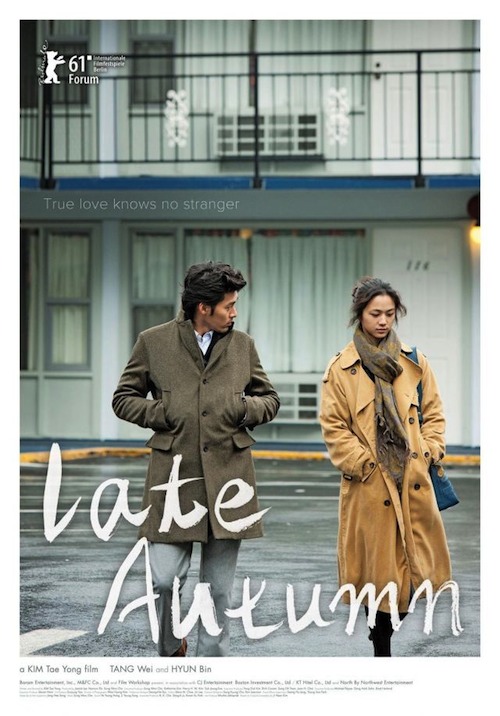
Stifled by the awkwardness of her homecoming, Anna prefers the solitude of walking through Seattle’s historic downtown area, but her path keeps crossing Hoon’s. As they spend guarded time together, something develops between them. Yet, whatever it is cannot last, which is the delicate beauty of the film.

Yes, we have been told before, time is fleeting. Yet it is quite exquisitely expressed in Autumn. However, Kim’s film has a dark side unlike the David Lean classic or a host of sentimental copycats. In addition to Anna’s tragic past, Hoon is running away from something rather ugly. Time may or may not be quite fleeting indeed.

Tang Wei is achingly vulnerable as Anna, showing a remarkable range of emotions while maintaining her frozen façade. Best known for her breakout turn in Ang Lee’s erotically charged Lust, Caution, she was to have appeared in the Chinese Communist Party creation myth propaganda film The Founding of a Party, but reportedly Mao’s grandson had her scenes cut for reasons of ideological philistinism. It is not much of a recommendation for Founding, but another good reason to keep an eye out for Autumn. Tang is a beautiful and remarkably talented actress, who has worked in Chinese cinema since the Founding debacle. Hopefully Korean and American productions will continue to be an option for her as she contends with the Party’s institutionalized dogma.

A true multinational South Korean-American-Chinese-HK coproduction, Late Autumn is an elegantly simple story, even if its funding is head-spinningly complex. Heart-felt and emotionally mature, it is an assured work highly recommended for those who missed its opening night screening at the tenth annual NYKFF. After a double-secret theatrical release, it seems like a strong programming candidate for one of the Asian film showcases in New York.

Posted on February 29th, 2012 at 9:41am.
The New York International Film Festival 2012: LFM Reviews Cinderella Moon

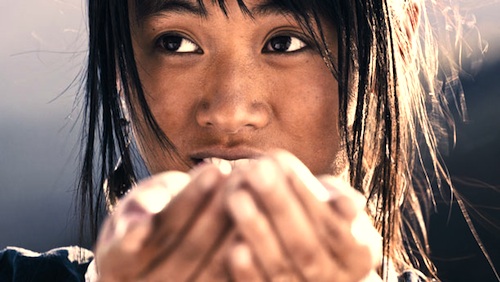
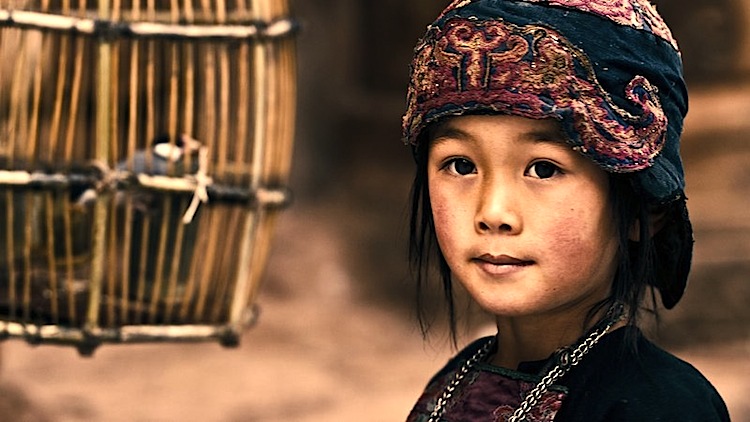
Yang Zhicheng as Mei Mei at age five.

By Joe Bendel. So many little Chinese girls could have used a fairy god-mother. Young Mei Mei only has an ancient matchmaker to counter-balance her rotten step-mother. Though not magical, the old woman certainly has ambitious plans for her. Based on the Chinese legend of Ye Xian that predates Perrault’s Cinderella by about 800 years, Richard Bowen’s Chinese-produced English-dubbed Cinderella Moon has obvious relevance for China today, but should still charm little girls of any cultural background when it screens at the 2012 New York International Film Festival.

Little Mei Mei is a gifted potter, like her mother, her father’s younger second wife. When Mei Mei’s mother dies in child birth and her spiritually ailing father soon follows, she finds herself the de facto servant of her cruel step-mother and idiot step-sister. However, she takes comfort from her mother’s legacy: a pair of bejeweled gold-fish slippers and the promise of a special destiny.

Mei Mei hopes to follow in her mother’s footsteps, finding a love match by dancing in the village festival. Unfortunately, the moon is stuck in the sky, putting life on hold for the kingdom. It also puts pressure on the young defiant king, who is responsible for keeping the heavens in equilibrium.

Xiao Min as Mei Mei at age fifteen.

Moon is surprisingly rich in archetypes, mixing Fisher King mythology with universal Cinderella motifs. In fact, the celestial themes raise the stakes of the story considerably. However, the core of the film involves Mei Mei’s struggle to find her place in a world that essentially treats girls like chattel. Indeed, the parallels with One-Child China, where girls are all too frequently the victim of abandonment and sex-selection abortions, are difficult to overlook. Young Mei Mei is sweet-tempered and vulnerable, but to her credit she refuses to accept the chauvinism around her.

Thanks to the two highly expressive Mei Mei’s, Xiao Min at age fifteen and Yang Zhicheng at five, viewers will feel a strong emotional connection to the young protagonist. Under Bowen’s sensitive direction, they convey a sense of wonder perfectly suited to a fairy tale. Bowen and cinematographer Wang Yu also capture some breathtaking vistas shot on location in the Southwest Yunnan province.

Moon is a finely crafted period production, featuring some striking costumes designed by Laurence Xu. However, the disembodied-sounding dubbed voices will grate on the ears of cineastes. Still, it might be a necessary trade-off for the film to reach audiences of a certain age.

Of course, it is more important for Moon to reach Chinese audiences. Admirably, it is a mission Bowen takes seriously, having cofounded with his wife Jenny the Half the Sky Foundation, which provides support to Chinese orphans (mostly but not entirely girls like Mei Mei). Deeper and richer than most fairy tale films, Moon is highly recommended (for boys too) at this year’s NYICFF.  It screens this Saturday (3/3) at Cantor, Saturday the 17th at the Asia Society, and Sunday the 25th at the IFC Center.

Posted on February 29th, 2012 at 9:40am.

Korean Cultural Service Presents: White Night

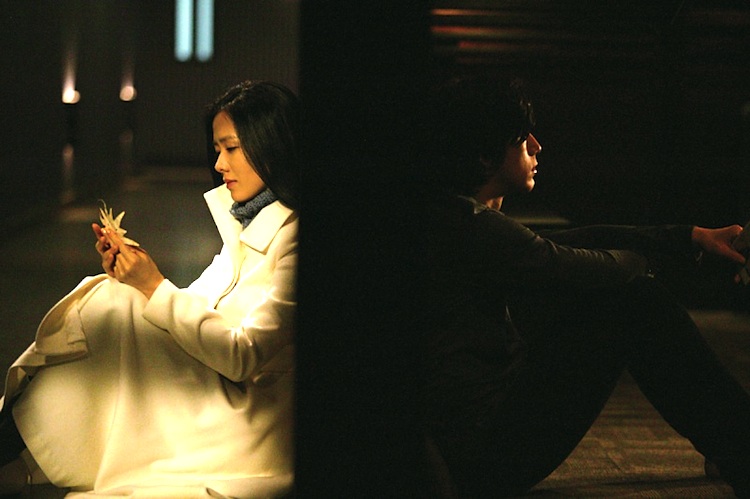
Go Soo and Son Ye-jin in "White Night."

By Joe Bendel. Keigo Higashino’s Byakuyako is the hottest literary property you’ve never heard of. Within a five year span, a Japanese television miniseries and a feature film have dramatized Higashino’s tragic, decade-spanning mystery. In between the two productions, a Korean adaptation shifted the story to the ROK. Faithful to the source material, but radically different in tone from the subsequent Japanese version, Park Shin-woo’s White Night makes its North American debut tomorrow as the latest free screening sponsored by the Korean Cultural Service in New York.

Kim Yo-han’s father and Lee Jia’s mother were thought to be carrying on rather openly. When the senior Lee turns up murdered, she becomes the logical suspect. There are a lot of incriminating circumstances, but little hard evidence. When Lee’s mother apparently commits suicide, the case is conveniently closed. However, Detective Han Doong-soo cannot let it lay.

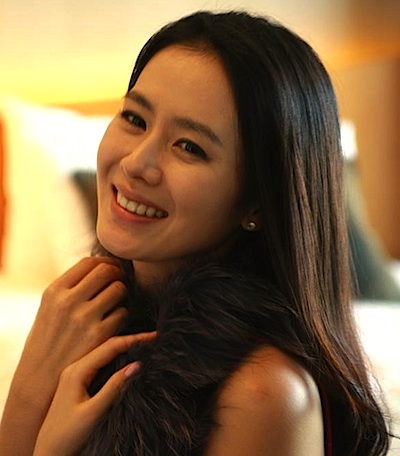
Son Ye-jin in "White Night."

Over the next two decades, the three go in seemingly disparate directions. Han’s career flatlines after the accidental death of his son. Conversely, Lee Jia overcomes the stigma of her infamous mother, with the help of a name change. Now known as Yoo Mi-ho, she is poised to marry a very wealthy man. Kim more or less disappears into anonymity, but he secretly acts as Lee/Yoo’s guardian angel. Anyone threatening her advancement will answer to him.

In both films, Higashino’s two lead characters really have a way of getting into your head. Yoshihiro Fukagawa’s Into the White Night invests more time up front on their traumatic childhood, which pays greater dividends later in the film. It also more fully explains the complex circumstances of the original crime. On the other hand, Park’s version plays up the sex and scandal, making it considerably more accessible to general audiences.

White Night features a strong ensemble, but Go Soo might just take the honors over his Japanese counterpart as the adult Kim Yo-han. It is an intense performance, viscerally projecting his pain and ferocity in equal measure. While her character is icier and less vulnerable here (by design), Son Ye-jin is undeniably a striking and rather nuanced femme fatale (much as she was in the stylistically similar Open City). Indeed, her limited screen time with (or near) Go Soo is powerfully potent stuff.

While Fukagawa’s Night is a tour de force among psychological thrillers, Park’s Night is still a devilishly twisted crime drama.  It also happens to be playing in town for free, which cannot be said for either Japanese version this week.  Highly recommended in its own right, Park’s White Night screens tomorrow (2/28) at the Tribeca Cinemas, courtesy of the Korean Cultural Service.

Posted on February 28th, 2012 at 12:30pm.

A Nonviolent but Dangerous Mind: LFM Reviews How to Start a Revolution

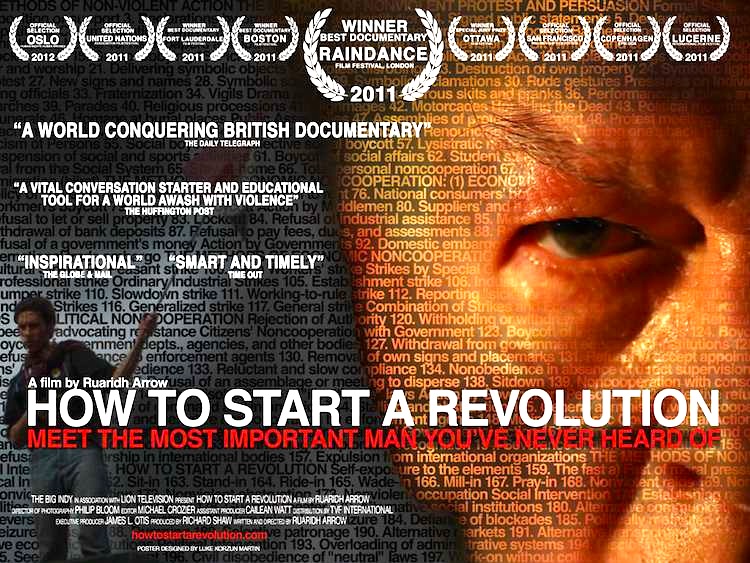
By Joe Bendel. Dr. Gene Sharp has been vilified by Hugo Chavez, the Iranian government, and bizarrely, the Occupy Oakland blog. Whatever such a man has to say is worth listening to, unless of course you are trying to protect the ruling party. In contrast, Dr. Sharp always sides with the revolutionaries, but advocates strictly nonviolent tactics. Journalist-filmmaker Ruaridh Arrow, who reported from Tahrir Square for the BBC, profiles Sharp and documents the applications of his work in How to Start a Revolution, which opens this Friday in Brooklyn at the ReRun Gastropub theater.

Dr. Sharp literally wrote the book on nonviolent revolution. It is called From Dictatorship to Democracy and it is available as a free download from the Albert Einstein Institute he heads. If you ever wondered why so many protests around the globe have signs written in English, it is because Dr. Sharp recommends it. He has a lot of general tactical advice, but eschewing violence is the essential point.

Nonviolence might sound hippy-dippy, but Dr. Sharp comes across as a rather down-to-earth nonpartisan scholar. He has just as readily advised democracy advocates struggling under leftist dictatorships – such as in Venezuela, Burma, Georgia, and Ukraine – as regimes considered friendly to American interests, like Mubarak’s Egypt. Despite the canard that he is a CIA puppet, his independence seems pretty evident, based on the Egyptian and Syrian activists who pay homage to Sharp in the Institute’s shoebox offices.

Arrow lucidly lays out Dr. Sharp’s principles and how various democracy movements have put them into practice. However, the results seem like more of a mixed bag than he would like to admit. In fact, Dr. Sharp’s celebrated volume was originally written for the Burmese, who have yet to shake off their military oligarchy, despite the enormous personal price nonviolently born by Aung San Suu Kyi. While applauding their courage, Dr. Sharp also argues the Tiananmen Square protests lacked proper planning and direction. They certainly were not able to co-opt the police and military, which is a crucial step in his playbook. As for Egypt, the jury is still out, but they seem to have traded a corruptocracy for military rule (if they are lucky, that is).

Probably the strongest material in Arrow’s film logically involves the greatest success: Serbia’s ouster of Slobodan Milošević. Trained in Dr. Sharp’s methods by his unlikely protégé, retired Col. Bob Helvey (who is as colorful an interview subject as ever there was), the opposition youth movement Otpor did everything right. It is a fascinating and inspiring story that remains woefully under-reported in this country.

HTSAR to will not spur wholesale conversions to pacifism. However, it will likely challenge and broaden the way people think about the continuing struggle for freedom and constitutional democracy around the world. Indeed, it is rare that a film offers so much to engage with. Unusually provocative and intellectually rigorous, HTSAR is (surprisingly) recommended quite keenly when it opens this Friday (2/24) at the ReRun Gastropub Theater.

GRADE: B+

Posted on February 24th, 2012 at 3:30pm.

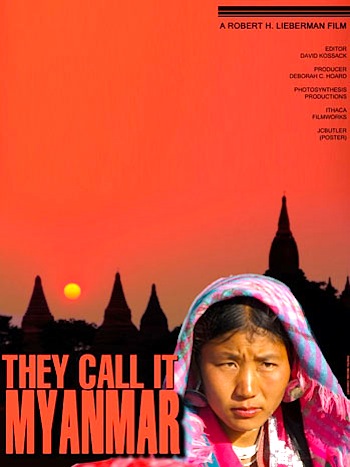
Burma from the Inside: LFM Reviews They Call It Myanmar

By Joe Bendel. Even the Buddhist monks are fed up with Burma’s oppressive military regime. A deeply devout nation, the Burmese people were shocked when the army fired on their peaceful demonstrations. Yet, the junta still rules. Physics professor, novelist, and independent filmmaker Robert H. Lieberman explores the tragic dynamics of the Southeast Asian country from a layman’s point of view in They Call It Myanmar: Lifting the Curtain, which screens for two nights only this coming Monday and Tuesday in New York.

Perhaps because of the wide variety of professional hats Lieberman wears, he was recruited to participate in a State Department sponsored filmmaker mentoring program. Having gained entrée into the “second most isolated country on the planet,” Lieberman recognized what an unusual opportunity he had. Over the next two years, Lieberman furtively filmed the people and their customs, keeping his eyes peeled for anything that might shed light on the nation’s political and social realities. He even scored an on-camera sit-down interview with the recently released Aung San Suu Kyi.

Culled from hours of footage, Call mixes sort of National Geographic-style appreciations of Burma/Myanmar’s stunning temples and their distinctive application of thanaka facial paste for cooling and cosmetic purposes via handheld camcorder, with legitimate muckraking. Indeed, at not insignificant personal risk, Lieberman conveys a real sense of the fear and paranoia fostered by the military police state. Yet, perhaps even more shocking are the truly Sisyphean hand-to-mouth living conditions endured by the overwhelming majority of Burmese, vividly documented in Call.

For obvious reasons, Lieberman scrupulously maintains the anonymity of his interview subjects. Their commentary is consistently illuminating and more often than not depressing, suggesting the regime’s pervasive oppression has even affected the populace’s psychological ability to think as political free agents. Still, for true profundity, it is hard to top Suu Kyi’s parting words: “politicians who think they’ve gone beyond being politicians are very dangerous.” Someone should carve that in marble where the current and future occupants of the Oval Office will see it every day.

There is nothing more frustrating than an ostensibly independent filmmaker producing a puff piece in a notorious closed society (as was the case with Justine Shapiro’s whitewashed Our Summer in Tehran, for instance). To his credit, Lieberman chose to take the tougher path. The result is a solid, boots-on-the-ground overview of contemporary Burma, periodically spiked with moments of shocking outrage. Interested viewers who find it a good general introduction can then fill in the details with more specific case studies, like HBO2’s Burma Soldier and Luc Besson’s upcoming Suu Kyi biopic The Lady. Recommended for general audiences, They Call It Myanmar screens Monday and Tuesday (2/27 & 2/28) at New York’s Landmark Sunshine, with similar two-evening Landmark engagements to follow in Philadelphia, DC, and Boston.

GRADE: B

Posted on February 24th, 2012 at 3:29pm.

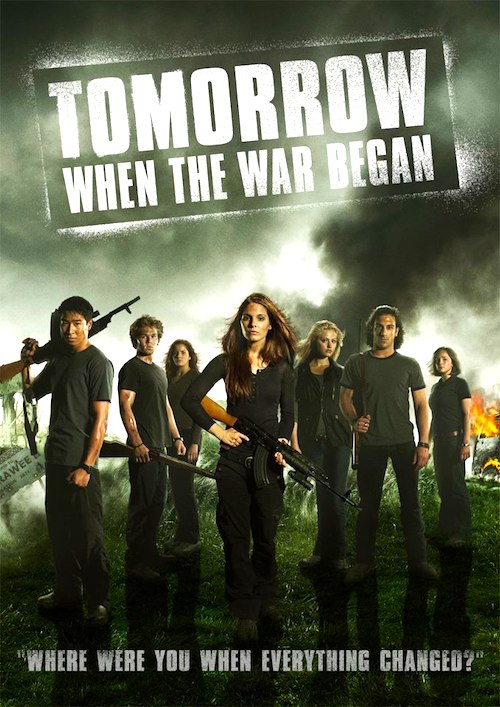
The Aussie ‘Red Dawn’: LFM Reviews Tomorrow, When the War Began

By Joe Bendel. The freedom of Australia depends on a handful of teenagers. Fortunately, they are mostly quite good looking. That means they have even more to lose and will therefore be fiercer fighters. A rag tag band of students duly unleash their inner Wolverines in Stuart Beattie’s Tomorrow When the War Began, which opens this Friday in select cities and streams on demand via Freestyle Digital Media’s Facebook platform.

The time is twenty-for hours from now. The place is coastal New South Wales. It is a nice area to grow up and raise a family. At least it was until a foreign military invaded. Ellie Linton and her friends do not know that yet. They have been camping out in a remote mountain clearing misnamed “Hell.” When they return, cell service is out, the land lines are down, and their families are nowhere to be found.

Eventually, they discover the town’s fairground has been turned into a detention center by a vaguely Asian looking army. After a few narrow escapes and a considerable amount of bickering, they decide it is time to take the fight to their invaders – and that strategically positioned bridge looks like a good place to start.

Based on John Marsden’s bestselling Tomorrow series of YA novels, TWTWB obviously owes a debt to the original old school Red Dawn, but that’s okay. Considering how cool the classic Dawn remains, it is downright bizarre that it has not been emulated more often. Frankly, Beattie somewhat tarries in the first act, establishing full well and good just which teens like whom (Linton has a thing for the Lee Takkan, while the well heeled Fiona Maxwell fancies Homer Yannos, the slightly delinquent son of Greek immigrants).

Still, he juggles a lot of teen angst relatively nimbly. His adaptation also treats evangelical character Robyn Mathers with respect, even when presenting her reverence for life as a source of friction with her less conflicted friends. (Why not just throw some St. Thomas Aquinas books at her? Or better yet, throw them at the enemy.)

On one hand, the conspicuous effort taken to not identify the nationality of the invaders is somewhat problematic (one would think that would be valuable intel to suss out). Based on their rhetoric about natural resources and establishing stability in the Pacific region, China sounds like an obvious suspect. Yet it allows the film to effectively ratchet up the teens’ mood of what-the-heck-is-going-on bewilderment and perhaps sets the scene for big revelations in films to follow.

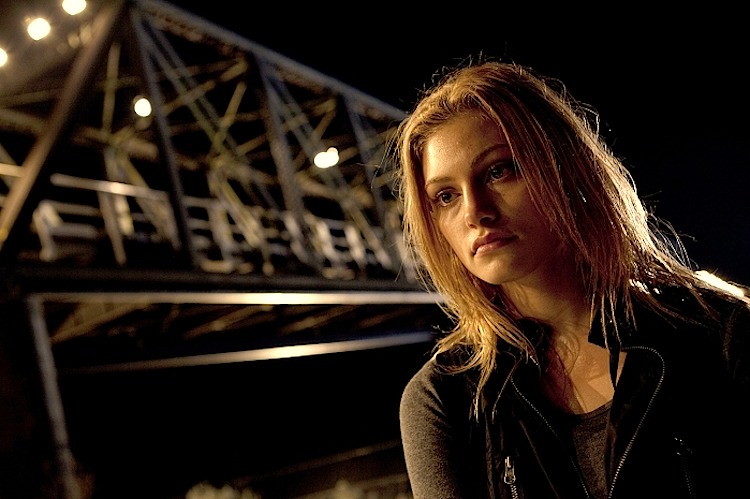
As Linton and Takkan, the more-or-less leads, Caitlin Stasey and Chris Pang are reasonably charismatic presences and wholly credible action figures. Phoebe “The Secret Circle” Tonkin is also surprisingly engaging as the Clueless-esque Maxwell, but Deniz Akdeniz’s Yannos seems to be looking for a Welcome Back Kotter reboot much of the time.

Phoebe Tonkin in "Tomorrow, When the War Began."

Once Linton and her comrades get organized and down to business, the film starts cooking nicely. It certainly sets up viewers, leaving us wanting more. Since TWTWB ranks as Australia’s highest grossing domestically produced release of 2010, more is indeed reportedly on the way. That is rather welcome news. TWTWB is certainly fun and professional grade popcorn fare that also seriously addresses themes of freedom, responsibility, and sacrifice. It is exactly the sort of film that could make a mint for Hollywood, but apparently they are content to leave such money on the table.

As is customary for most imports, TWTWB will only open in select cities this Friday (2/24) including the Criterion 7 in New Haven and the Palace 18 in Miami, but it will also be accessible to audiences nationwide, through Freestyle’s digital distribution on Facebook. Recommended as a non-taxing teen action picture with a good message and the promise of even better installments down the road, TWTWB is definitely worth checking out from the comfort of your own laptop.

Posted on February 21st, 2012 at 12:27pm.