French to the Core: LFM Reviews Mortem

Diana Rudychenko in "Mortem."

By Joe Bendel. Death never takes a holiday. When a young woman’s spectral companion manipulates her into stopping at a desolate hotel, it must be all business. However, things get more complicated than either expects in Eric Atlan’s trippy Mortem (trailer here), which screens during the 2012 edition of Film Comment Selects, hosted by the Film Society of Lincoln Center.

Jena and her fellow rider evidently enjoy feeling the wind in their hair as they motorcycle helmetless down lonely country roads. The fog, though, is a little too much – forcing them to stop at a truly gothic looking hotel. It seems the proprietors have been expecting them, or at least Jena’s companion, whom they can see, but she cannot, yet. It seems the uncanny woman has arranged to do some ominous business at their establishment, once the creepy staff leaves her to it.

Viewers soon learn Jena and the strange woman are profoundly connected – and once she reveals herself, it is supposed to be curtains for the mortal woman. To the surprise of her ghostly captor, however, Jena’s will to live proves quite strong. Much like the knight in The Seventh Seal (a head-smackingly obvious influence on Mortem), Jena shows great resourcefulness navigating the games and rituals of death. As the fateful night advances, the stakes increase for everyone.

Mortem is a very strange stylistic and tonal hodgepodge. The opening scenes play like high camp, but as it cranks up the metaphysics, it gets deadly serious. It is almost like David Lynch took over the helm of Gene Wilder’s Haunted Honeymoon after the first fifteen minutes. Fortunately though, this is no Lost Highway. Atlan actually wants viewers to follow his story, which seems to follow its internal rules well enough once established.

Panchenko Daria and Diana Rudychenko in "Morem."

It will still baffle the lowest common denominator, but at least Atlan offers them some steamy distractions. As it happens, Jena’s mysterious tormentor likes her a lot, which gives her a weakness to exploit. Indeed, for a surreal and cerebral genre movie mash-up, Mortem is rather hot.

Atlan and Marc Bercovitz, the co-producer and co-composer of the deliberately overbearing Bernard Hermann-on-steroids score, were clearly not concerned about going too far over the top with Mortem. In a way, though, that is rather refreshing. It has been a while since a film has really gone for broke, but this one certainly does.

Panchenko Daria and Diana Rudychenko are, yes, attractive – but also pretty compelling as the supernatural chess players. While their characters could easily be reduced to archetypal cut-outs, they suggest each has a real emotional investment in the face-off.

Gorgeously shot by the director-cinematographer in moody black-and-white, Mortem has all kinds of noir going on. No doubt about it, this is a weird film, but mostly in a good way. Frankly, considering how atmospheric and narrative-driven Mortem is (not to mention the other attention-generating aspects), it is surprising it has not been snapped up by an American boutique distributor yet. Recommended for genre audiences looking for something new, Mortem screens again this Tuesday afternoon (2/21) at the Walter Reade Theater, as part of this year’s Film Comment Selects.

Posted on February 21st, 2012 at 12:26pm.

Islamist Persecution of Baha’i Followers: LFM Reviews Iranian Taboo

By Joe Bendel. For some, Dizzy Gillespie’s conversion is they know about the Baha’i Faith. Many believe it to be a denomination of Islam, but that is a misconception. However, it was founded within the Islamic world, which makes its very existence an act of apostasy to hardline Islamists. As a result, Baha’i followers have often been persecuted in Islamic countries, most particularly Iran. Iranian-Dutch expatriate filmmaker Reza Allamehzadeh exposes Iran’s long and progressively escalating oppression of its Baha’i religious minority in Iranian Taboo (trailer here), which opens this Friday in the Los Angeles area.

Taboo may not be the most refined looking documentary, because so much of its footage was crudely recorded and surreptitiously smuggled out of Iran. Ironically, getting out of Iran is relatively easy for Baha’i followers. Living there in peace is another matter entirely. Taboo tracks one unfortunate family on their involuntary immigration to a less than welcoming Turkey.

Incorporating their video diary with the testimony of other Iranian followers, Allamehzadeh compiles a compelling indictment of the Iranian religious and governmental authorities. Perhaps most eye-opening is the story of the Baha’i Institute for Higher Education (BIHE), an underground university founded to serve followers who were denied college admittance solely on the basis of their religion. Internationally recognized, it probably maintained higher standards than Iran’s officially sanctioned universities, until the government forcibly shut it down late last year.

Openly critical of the Islamist regime, Allamehzadeh was not allowed back into Iran, so he relied on a courageous network of professional and amateur filmmakers, who remain anonymous for obvious reasons. At one point, though, he offers up some kneejerk criticism of Israel that might depress more informed viewers. Yet, this criticism makes it difficult to dismiss him as a “Zionist agent.”

In fact, he makes a similar point, arguing that the Israeli-“Palestinian” issue he buys into has nothing to do with the repression of innocent Iranian Baha’i followers, especially those who found themselves absurdly accused of spying for the Mossad, the CIA, or whomever. Still, it is worth noting, as home to the Baha’i World Centre in Haifa, Israel’s tolerance and hospitality stands in marked contrast to the institutionalized discrimination of her neighbors. After all, Allamehzadeh was obviously allowed to freely film there.

Indeed, Taboo vividly illustrates the orchestrated thuggery and systemic prejudice endured by Iranian followers on a daily basis. Though it leans a bit heavily on talking heads during the closing segments, it is overall quite informative and authoritative. Shining a needed spotlight into a hidden corner of contemporary Iran, Taboo is a sobering film, well worthy of audience and media attention when it opens this Friday (2/24) at the Laemmle Music Hall 3 in Beverly Hills and March 13th for a three day engagement at the Landmark Shattuck in Berkeley.

Posted on February 21st, 2012 at 12:24pm.

From Studio Ghibli: LFM Reviews The Secret World of Arrietty

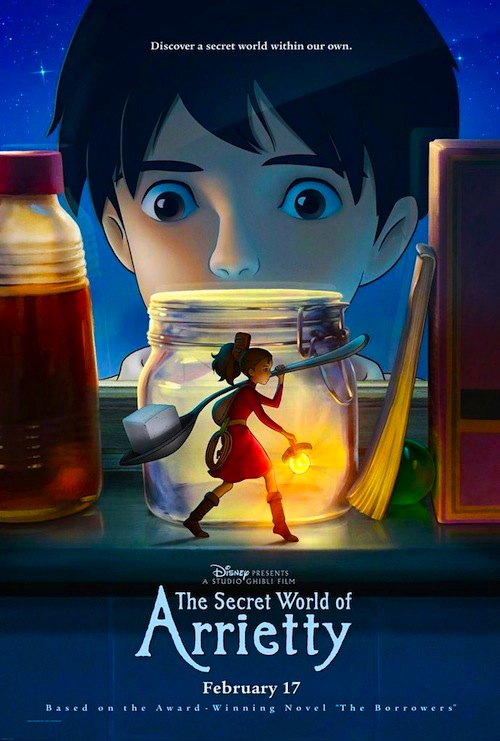
By Joe Bendel. The love for fantastical little people is pretty universal. Perhaps that is why Mary Norton award winning British YA novel The Borrowers transferred rather easily to Koganei, a Tokyo suburb that happens to be home to legendary animator Hayao Miyazaki’s Studio Ghibli. Following several well-received live action adaptations from the likes of Hallmark Hall of Fame and the BBC, Studio Ghibli produced an anime treatment helmed by their youngest feature director to-date and co-written by Miyazki himself. Set to become Disney’s most widely distributed Ghibli release on a reported 1,200 screens, Hiromasa Yonebayashi’s The Secret World of Arrietty opens today nationwide.

The so-called Borrowers are tiny but proportional people who live in the cracks and crevices of country homes. They survive by “borrowing” supplies that will not be missed from the human household, like a sugar cube. Up until now, the borrowing has been the sole responsibility of Arrietty’s quietly protective father Pod, but having reached a certain age, it is time for her to learn how to survive as a borrower. As her high strung mother Homily anxiously awaits, she and her father venture into the big house. However, their foray leads to disaster when a recent arrival spies them.

Shō is a sickly human boy, trundled off to the secluded cottage to rest up for an upcoming operation. He instantly recognizes the borrowers from the family legends of the little people living under the floor boards. Even though the scale is problematic, he is also pretty psyched to talk to a girl. Unfortunately, Arrietty’s father is adamant: once borrowers have been seen, they must move on post-haste. Frankly, his concern is not misplaced. Though Shō means them no harm, Haru, the maid of the house, also suspects their presence and intends to treat them like any conventional infestation.

Aside from some CGI here and there, the mostly hand drawn Secret looks richly detailed and lushly evocative. Indeed, the verdant garden is particular suited to the Ghibli magic. The film has plenty of style, but beyond Ghibli’s considerable circle of admirers, it will largely skew towards younger viewers. Still, it is rather watchable for adults so inclined.Indeed, Arrietty is much more agreeably plucky than cloying. Likewise, Shō might be a bit of a sad sack, but at least he is not an energy drain on the film. Even the original songs by French pop-star Cécile Corbel are surprisingly graceful and distinctive.

The only real drawback is the American dubbing, including an over-the-top Carol Burnett as Haru, the bland Will Arnett as Pod, and several tweeners adults will not recognize. Somehow they just do not sound right. (In contrast, the British release features the voice talent of Mark Strong, Olivia Colman, and Saoirse Ronan, which certainly looks more interesting on paper.)

Secret looks great and parents can feel safe and confident taking their children. Although Haru’s maniacal streak seems a bit excessive (from a credibility standpoint), the overall film is quite gentle and charming. A solid B+ outing from Studio Ghibili, Secret opens today (2/17) in New York at Regal Union Square and AMC 34th Street and in San Francisco at the AMC Van Ness.

Posted on February 17th, 2012 at 9:52am.

A Neo-Communist Youth Movement: LFM Reviews Putin’s Kiss

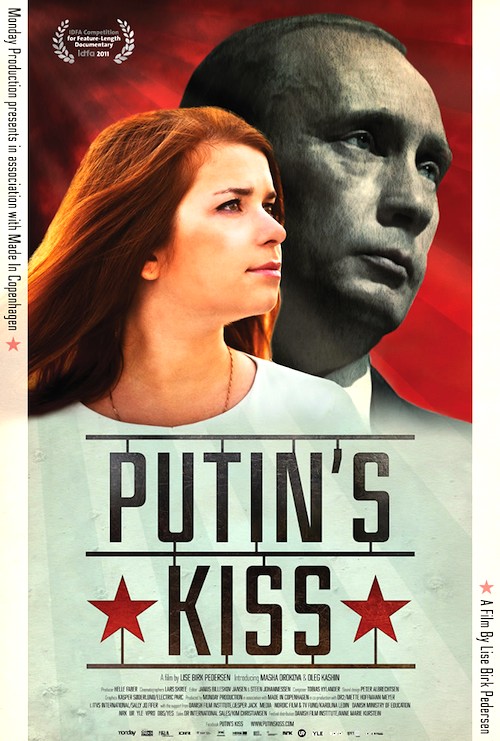
By Joe Bendel. Perhaps nothing signified the all-encompassing totalitarianism of National Socialism better than the Hitler Youth. Likewise, the Komsomol, or Communist Union of Youth, was emblematic of Soviet oppression. According to independent observers, the names are different, but the Komsomol has risen again in the guise of Nashi, a Kremlin-backed youth group fiercely loyal to the current Russian Prime Minister. Though once a prominent spokesperson for the group, one young woman began to understand the realities of the regime she served. Lise Birk Pedersen documents her fascinating story in Putin’s Kiss, which opens this Friday in New York.

Masha Drokova was an ambitious student who believed the government’s propaganda. She joined Nashi, rocketing up the ranks after she famously kissed the titular Russian strongman on state television. She became a national media figure and dogged foe of Putin’s democratic critics. However, her interest in journalism brought her into contact with independent reporters, like Oleg Khasin.

While remaining committed to Nashi, she found she enjoyed the open and robust debates with her new friends. Unfortunately, this did not bode well for her standing within the Putin Youth. When Khasin is brutally beaten thugs considered by everyone except the most willfully blind Nashi loyalists to be acting at the behest of the Kremlin or its allies, Drokova reaches a crossroads.

Only in her early twenties, Drokova is still at an age when peer pressure has very real consequences. To her credit, she stood by her injured friend, joining those demanding a proper inquiry, at no little risk to her well being. Yet she does not repudiate her time serving Putin’s interests. As real journalists say, this story is still developing. Shrewdly, Pedersen never tries to impose a preset narrative, scrupulously recording the messy ambiguities of Drokova’s circumstances instead. Indeed, that is what makes the film so fascinating. Rather than a neat and tidy epiphany, we watch her reservations and doubts begin to stir.

Frankly, Drokova is not yet a fully mature adult, which can lead to viewer frustration with her as their POV protagonist. However, it is important to remember this is exactly why Nashi recruited Drokova and those like her. Indeed, Pedersen conveys a frighteningly vivid sense of Nashi’s reach and influence. After watching Kiss, it is impossible to accept claims that the group is a nonpartisan service movement.

Kiss is an important film that shines an international spotlight on Putin’s youthful enforcers. Pedersen rakes a fair amount of muck, while capturing a very personal story with wider political implications. Mostly scary and only occasionally encouraging, it is highly recommended for viewers concerned and interested in the state of the world. It opens this Friday (2/17) in New York at the Cinema Village.

Posted on February 15th, 2012 at 10:35am.

Oscar Gets Juiced: LFM Reviews Bullhead

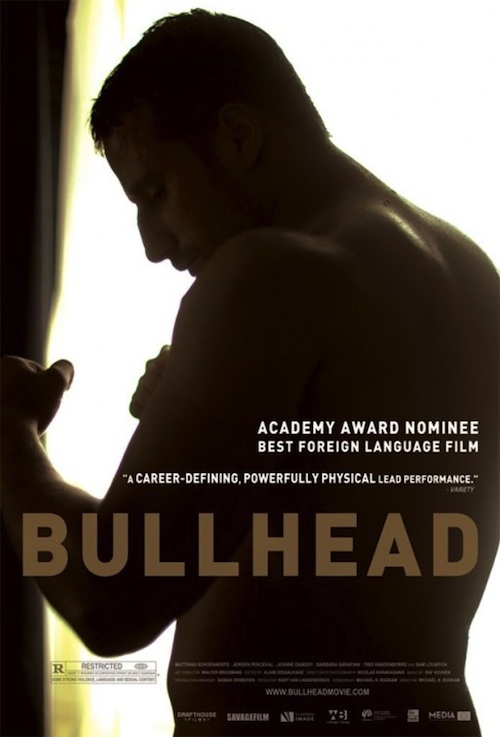
By Joe Bendel. It is hard to believe Belgium has any comparative advantage in the beef packing industry. Regardless, watching the Flemish bovine mafia ply their cattle with hormones will not inspire global consumer confidence. One angry breeder takes massive doses himself. Regrettably, he has a very good reason for such treatments, which viewers see in painful detail early in Michaël Roskam’s Bullhead, Belgium’s surprise best foreign language Oscar nominee, opening this Friday in New York.

Jacky Vanmarsenille resembles the bulls he sullenly tends (hence the title). He looks all man, but an incident in his childhood left him somewhat less so. To compensate, he has built up his body, but the constant cocktails of testosterone and steroids have exacerbated his anger issues. Poorly socialized, Vanmarsenille’s resentment metastasizes over time. When figures from his past suddenly reappear, his behavior becomes more erratic. Unfortunately, this leads his family to discount his warnings not to get involved with Marc De Kuyper, the duplicitous Godfather of growth hormones.

Bullhead is quite an unlikely Oscar contender. Indeed, Belgium raised many eyebrows when it submitted Roskam’s film instead of the Dardenne Brothers’ French language The Kid with a Bike, but they seem to have known what they were doing. This is a tough picture that is difficult to pigeon hole. As a character study, it broods in a class by itself. Indeed, there may be no protagonist that is as equally sympathetic and scary as Jacky Vanmarsenille. Yet, its gangster movie elements are not mere window dressing for the naturalistic morality play. Roksam’s screenplay also reflects Belgium’s Flemish-French divide in ways not especially flattering to the latter, adding a further layer of context for those who can pick up on it.

Without question though, the key to the film is Matthias Schoenaerts, who really is quite extraordinary as Vanmarsenille. His physical transformation into the hulking protagonist has been compared to De Niro’s bulking up for Raging Bull, but that is really the least of it. With little dialogue, he conveys volumes, keeping the audience fully invested in his character, even when he commits terrible deeds. This is ferociously intense work. Jeroen Percival provides an effective counterpoint as the nervous Diederik Maes, Vanmarsenille’s oily childhood friend and polar opposite physically, sexually, and temperamentally.

Bullhead’s deliberate pacing and wince-inducing plot developments might discomfort less adventurous viewers, but under Roksam’s sure hand they become high tragedy. In truth, few films so directly address what it means to be both a man and a monster. On Oscar night, it will be the longest of long shots, but Bullhead can go toe to toe with any of its fellow nominees, including Asghar Farhadi’s A Separation, considered the frontrunner amid a very strong foreign language field this year. Highly recommended, Bullhead opens tomorrow (2/17) in New York at the Angelika Film Center and AMC Empire and next Friday (2/24) in San Francisco at the Bridge Theatre.

Posted on February 16th, 2012 at 10:33am.

From Taipei to Beijing: LFM Reviews Love

By Joe Bendel. They are two cities so alike, but so far apart. Can a man from Taipei find love in Beijing? There are even greater obstacles facing eight interconnected individuals, but somehow love finds a way in Doze Niu Chen-Zer’s Love (trailer here), which opens this Friday in New York, following a special Valentine’s sneak earlier this week.

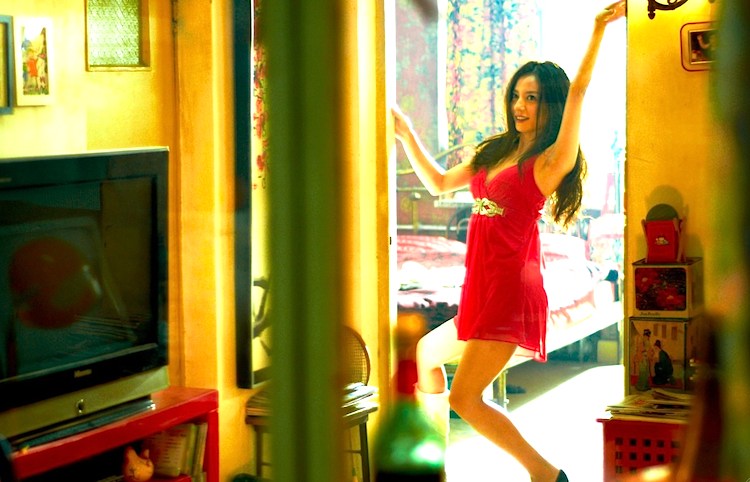
Father of Ni and sugar daddy to the professional celebrity, Zoe Fang, “Uncle” Lu lives well in Taipei. Having just broken off an affair with the beautiful but needy Fang before it could really start, Lu’s business associate Mark leaves for Beijing hoping to buy property. Instead, he meets disastrously/meet-cutes the attractive but disorganized realtor Jin Xiao-ye.

Although Uncle Lu offers stability, Fang is drawn in spite of herself to Kuan, the stammering busboy older brother of Yi-jia, Ni’s best friend who is pregnant by Ni’s boyfriend, Kai. Feeling understandably betrayed, Ni breaks with both, leaving Kuan to look after his sister while his Notting Hill relationship with Fang slowly percolates.

Love clearly sounds like another Chinese-Taiwanese variation on multi-character rom-coms typified by Valentine’s Day and (Heaven forbid) New Year’s Eve. However, Doze Nui’s film and its thematic predecessors such as Wing Shya and Tony Chan’s Love in Space work so much better, perhaps because they are never afraid of a little emotion or melodrama. Unlike Gary Marshall schmaltz, one never gets the sense the cast-members are rolling their eyes off camera. On the contrary, everyone involved with Love seems to understand when you have deep feelings for someone that may not be reciprocal, it is a very serious matter.

Love also has the benefit of legitimate chemistry within its ridiculously attractive ensemble. Perhaps past familiarity helped. After pining for (Ivy) Chen Yi-han in Cheng Fen-fen’s Hear Me, (Eddie) Peng Yu-yan becomes the object of her unrequited affections this time around, as Kai. He makes a credible knucklehead again, while her turn as Yi-jia is just as sweet and vulnerable. Likewise, Amber Kuo is equally sympathetic and engaging as Ni.

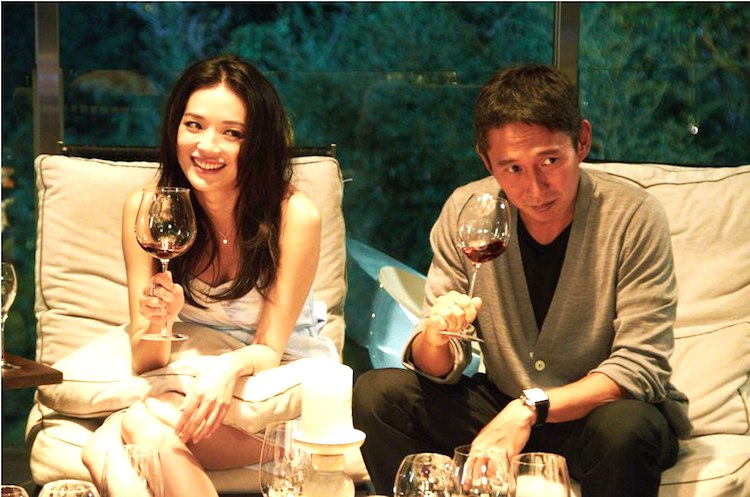
However, the (somewhat) senior cast members really provide the romantic seasoning. Superstar Shu Qi is absolutely radiant, putting Julia Roberts to shame as Fang. She also convincingly expresses her character’s desire to find self worth through productive work, an appealing theme largely foreign to Hollywood and American indie productions (“Work? Huh, wha?”). As in his previous film Monga, Doze Niu provides himself a key assist in a supporting role. Although the comparative old timer, he brings far more charisma to Uncle Lu than can be dismissed as Woody Allen-style vanity casting. One could well imagine a single middle aged woman would be very interested in meeting him.

Aptly titled, Love is/was perfect Valentine’s Day fare, but not unrealistically so. It is pretty clear not every character will have a spot on a loveseat when the music stops. Yet, it is an impossible movie not to like. Recommended for all the secret sentimentalists out there who can safely go to foreign films without losing their cineaste street cred, Love officially opens this Friday (2/17) in New York at the AMC Empire and in San Francisco at the AMC Metreon, from China Lion Entertainment.

Posted on February 16th, 2012 at 10:29am.