LFM Review: Romantics Anonymous @ Tribeca 2011

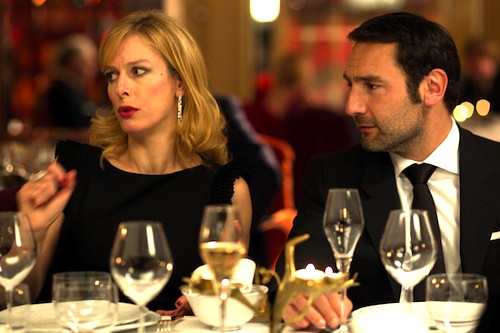
By Joe Bendel. Chocolate is the food of romance and indulgence. Two social misfits still love it anyway. They might just love each other too, if they can psyche themselves up enough to take a chance. That would be a very big “if” in Jean-Pierre Améris’ Romantics Anonymous (trailer above), which screens during the 2011 Tribeca Film Festival.

Isabelle Carré in "Romantics Anonymous."

Angélique Delange is a gifted chocolatier, but she is paralyzed with shyness. Through sheer force of will, she manages to apply for a job at a down-market chocolate company, run by the gruff but ragingly insecure Jean-René Van Den Hugde. Sensing a fellow chocolate devotee, Van Den Hudge hires her on the spot. Unfortunately, it is for a sales position she is spectacularly unsuited for. Having accepted already, Delange tries to timidly carry on as best she can. Eventually though, Delange realizes she must use her true talents to save the floundering company.

Working under a veil of secrecy, Delange once made confections that delighted French gourmets. However, when her protective boss died, the secret of his chocolatier “hermit” died with him.  Yet, resurrecting the old hermit cover proves relatively easy. Going on a date with the boss is devilishly difficult, for both of them.

Like chocolate, Anonymous is a sweet film with a hint of bitterness to make it real. While everyone plays it for laughs, Améris and co-writer Philippe Blasband never minimize the challenges of the would-be couples’ extreme social awkwardness. They are not portrayed as freaks or loons, but as people who need a little more encouragement to come out of their shells (granted though, Van Den Hugde certainly has his eccentricities). Continue reading LFM Review: Romantics Anonymous @ Tribeca 2011
LFM Review: Cinema Komunisto @ Tribeca 2011

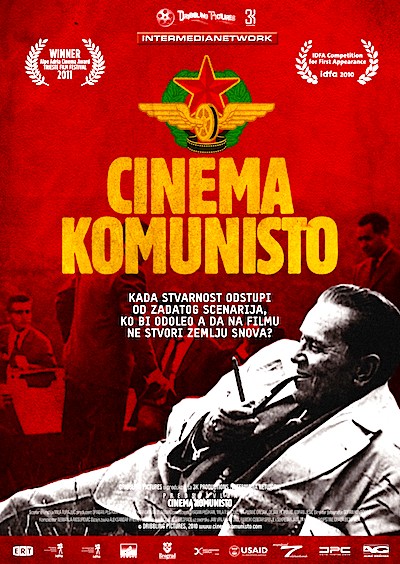
By Joe Bendel. It was a country that never really existed with an economic system that never worked. Obviously, Communist Yugoslavia needed constant distractions. Avala, the now decrepit Yugoslav state film studio responded with a constant stream of propaganda pictures, varying widely in quality. Mila Turajlic revisits the films and filmmakers who brought Tito’s version of reality to Yugoslavia’s movie-houses in Cinema Komunisto (trailer above), which screens during the 2011 Tribeca Film Festival.

It was good to be the Marshal. A lifelong film buff, Josip Broz Tito had a private screening almost every night of his reign. Unlike other Communist strongmen, he enjoyed Hollywood films as well as the Avala productions he took such an active interest in. According to his personal projectionist, one of his favorite actors was none other than John Wayne. He probably appreciated the Duke’s World War II films.

Indeed, the war was nearly ubiquitous in his state propaganda pictures. According to actor Bata Zivojinovic, many of his films simply consisted of him killing Germans from beginning to end. While not exactly ambitious, there is something to be said for the red meat approach. However, Avala also produced some legitimate prestige pictures, including the epic Battle of Neretva, featuring major stars from the West, including Yul Brynner, Orson Welles, and the Zagreb-born Sylva Koscina. A darling on the international festival circuit, Pablo Picasso was convinced to create the film’s poster.

Neretva was not an aberration. Western studios co-financed several productions with Avala and shot a number of films on location in Yugoslavia, often because of the country’s ready supply of vintage WWII era military hardware and their willingness to blow it up when required by the script. The Hollywood-Avala connection arguably reached its pinnacle when Richard Burton agreed to play Tito in the first sanctioned bio-picture of the soon to be declared President-for-Life. (With Elizabeth Taylor in tow, he looks distinctly woozy in vintage publicity footage unearthed by Turajlic.) Continue reading LFM Review: Cinema Komunisto @ Tribeca 2011

LFM Review: My Piece of the Pie @ Tribeca 2011

By Joe Bendel. Steve Delarue is a financial shark. France Leroi is a single mother, who is laid-off when her factory abruptly closes (but what a name she has). The former is so obviously the villain and the latter is so clearly the victim, we can surely put our brains on auto-pilot. Yet, Cédric Klapisch’s latest film is surprisingly more interesting than that (perhaps unintentionally so, but it still counts). Drawing on three year-old headlines, Klapisch tells a messy morality tale in My Piece of the Pie, which screens during the 2011 Tribeca Film Festival.

Karin Viard and Gilles Lellouche.

France Leroi is indeed a victim. That is not a subjective judgment; it is the essence of her identity. A union worker thrown out of work by her factory’s financial collapse, she attempts suicide during a birthday party, with her home filled with children. Fortunately she soon recovers, leaving Dunkirk to seek employment in Paris. Through a friend of a friend, she lands a gig working as the cleaning lady for Steve Delarue, a Bonfire of the Vanities style Master of the Universe recently returned to France the country after a long stint in London. Delarue is the kind of guy who administers the death knell to struggling enterprises, like Leroi’s former employer. In fact, unbeknownst to Leroi, he was exactly that guy.

Delarue dates supermodels, but treats them little better than servants like Leroi. Not surprisingly, he’s terrible father material, but fortunately Leroi is there when Delarue’s three year-old son Alban is dumped in his lap. In fact, as she assumes the duties of a nanny, employer and employee start to warm toward each other. However, a perceived betrayal launches Leroi on a reckless course of action. Continue reading LFM Review: My Piece of the Pie @ Tribeca 2011

ANNOUNCEMENT: Libertas Covers The 2011 Tribeca Film Festival! + LFM Reviews Rabies

[ANNOUNCEMENT: We’re proud to announce today that Libertas’ Joe Bendel will be covering The 2011 Tribeca Film Festival in New York. Joe did tremendous work covering this year’s Sundance Film Festival for Libertas, and we’re thrilled to bring you his coverage of what promises to be an exciting 10 days at Tribeca.]

By Joe Bendel. A country surrounded by homicidal maniacs probably does not have much need for horror movies. Perhaps that is why it took over sixty years for the Israeli film industry to produce its first slasher film. It was worth the wait. Considerably more inventive than the genre standard, Navot Papushado and Aharon Kashales’ Rabies (see the trailer here) is a highlight of the Cinemania (formerly Midnight) selections at this year’s Tribeca Film Festival.

A funny thing happened on the way to the tennis match. A car thick with sexual tension breaks down in a secluded forest. All three of Shir’s teammates (two guys and a girl, Adi) seem have a thing for her. Their lingering jealousies and resentments continue roiling below the surface, but the quartet face more pressing problems, like the twitchy dude they find covered in blood.

Ofer and his sister Tali were running away from home for scandalous reasons implied but never outright stated when she fell into a Hannibal Lecter-worthy mantrap. Obviously this was no hunting accident. Having the drop on Ofer, the psycho responsible bloodies him up good, but not good enough. Waking in the morning, Ofer starts tearing through the forest in search of his dear sister, running straight into the four lost tennis players.

Unfortunately, when they call the cops, no good deed goes unpublished. Emasculated and humiliated by his presumably ex-girlfriend, Danny is sort of the good cop. Yuval on the other hand, is definitely the bad cop. A raging misogynist with simmering class resentments and well-documented anger management issues, his only interest is in sexually harassing Shir. With the guys off wandering through the forest with Ofer, Adi goes Thelma & Louise on the creepy copper. Things get bloody from there.

Israeli hottie Yael Grobglas in "Rabies."

Continue reading ANNOUNCEMENT: Libertas Covers The 2011 Tribeca Film Festival! + LFM Reviews Rabies

The Cure for Malaise? LFM Reviews Square Grouper

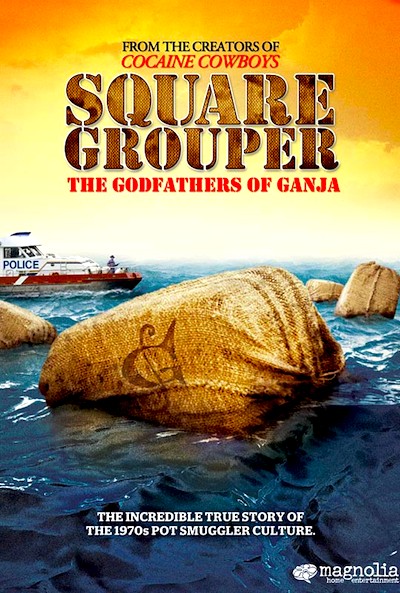
By Joe Bendel. The late 1970’s were a time of stagflation and economic malaise (sound familiar?). However, there was one booming business that offered a chance for any idiot to make serious coin: pot smuggling. Director Billy Corben explores the diversity and eccentricity of the South Florida smuggling scene in its heyday with profiles of three very different sets of co-conspirators in Square Grouper: The Godfathers of Ganja (trailer here), which opened Friday in New York.

Those who were in or around the 1970’s smuggling economy will recognize “Square Grouper” as the term for the bales of marijuana periodically found bobbing in the waters off Florida’s shores. As for the rest of us, well now we know. Needless to say, everyone Corben interviews knows what it means.

The Ethiopian Zion Coptic Church did not have to chase after stray bales. They were probably the most powerful and successful syndicate profiled in Grouper. They were also an officially recognized church, combining the hippie lifestyle with aspects of evangelical Christianity, namely rather judgmental attitudes regarding homosexuality and sexual relations in general. Weed, on the other hand, was a sacred sacrament. With connections running deep into the Jamaican government, the Ethiopian Zions had a professional operation and extensive property holdings. Yet their evangelical zeal proved to be their undoing, when media footage of underage kids toking it up in their compound turned the public against them.

Perhaps Grouper’s middle story is its saddest. Robert Platshorn was a working-class salesman from Philadelphia’s South Street who fast talked his way into a profitable drug-running gig, at least for a little while. However, he became infamous as the leader of the media-dubbed “Black Tuna Gang.” Corben clearly suggests Platshorn was a small fish victimized by an overzealous prosecution and grandstanding in the press by Griffin Bell, Carter’s Attorney General. Perhaps, but even if it is not an outright crime, Platshorn is clearly guilty of some big league stupidity. Continue reading The Cure for Malaise? LFM Reviews Square Grouper

LFM Review: Armadillo & The War in Afghanistan

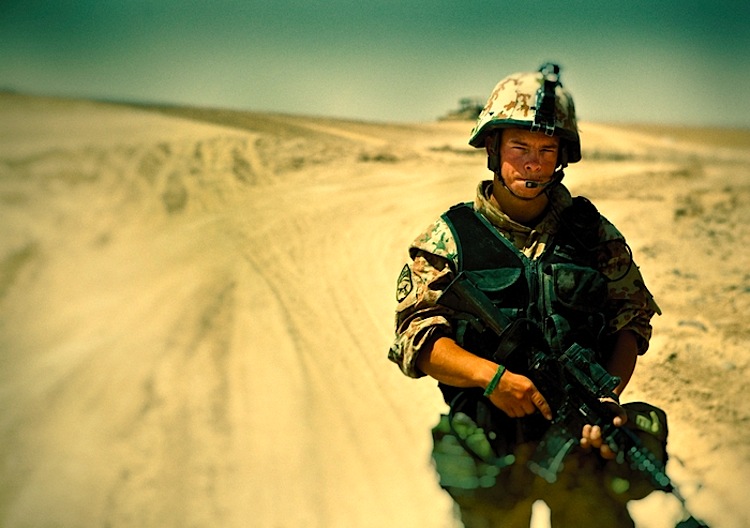
By Joe Bendel. Just because they are Danish soldiers, that does not mean they should trust the media any more than their American counterparts. A group of Danes serving in Afghanistan learns this PR lesson the hard way in Janus Metz’s embed-style documentary Armadillo, which opened yesterday in New York and elsewhere.

Amazingly, as the film opens, the Danish unit stationed at the Helmand forward operating base (nicknamed Armadillo) has yet to suffer a fatal casualty. In fact, when the group of soldiers Metz follows from enlistment and basic training arrive at Armadillo, boredom seems to be their greatest foe. In a rather clumsy effort to be provocative, Metz makes much of their choice of entertainment: violent video games and run-of-the-mill porn, as if this were shocking for a group of twenty-something men serving in the middle of nowhere without any interaction with women.

The Danish soldiers make an effort to reach out to the locals, but they have trouble overcoming the widespread fear of Taliban reprisals. Isolated and untested, the Helmand outpost is simply too tempting a target for the Taliban to resist for long. Eventually they make their move. Unfortunately, it is impossible to really tell what went down in the soon-to-be-controversial incident. Most of the camerawork is a veritable blur, which is understandable considering that bullets were flying. However, Metz never establishes any reference points for area in question, or sets the scene in any way. Continue reading LFM Review: Armadillo & The War in Afghanistan