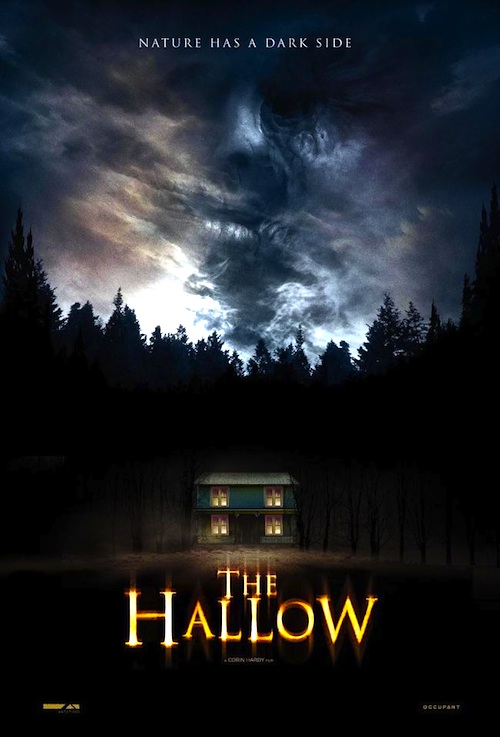
LFM Reviews The Hallow @ The 2015 Sundance Film Festival

By Joe Bendel. Blame the Euro. Since Ireland no longer controls its own monetary policy, it has been forced to sell off its national forest to pay down its budget deficit. To facilitate the sale to a lumber concern, a young forester has temporarily relocated his wife and infant son to remote cabin in the woods. The faery people are none too happy about it, but they would probably be after their baby anyway, because that’s what they do. Dread runs like thick gooey sap in Corin Hardy’s The Hallow, which screens during the 2015 Sundance Film Festival.

The forest is deep, dark, and verdant. Adam Hitchens thinks he is in his element, so he has no qualms about tromping about with his rug rat strapped to his back. Gee, that dropped pacifier sure looks ominous though. Seriously, why doesn’t he just put an ad in the Faery Times that says: “plump baby available for abduction.”

Hitchens hardly has time to toke up at home before things start going bump in the night. Initially, he and his wife Claire assume it is the work of angry farmer Colm Donnelly, who bitterly resents Hitchens’ reason for being there. However, things escalate to a level that is difficult to ascribe to a human agency. Of course, by this point, Claire has already pried the iron bars off the windows. You might wonder why the previous tenant of Victim Cottage felt compelled to put them up in the first place, but not these Londoners. Similarly, he does not think twice about bringing some cool “zombie” tree fungus into hearth and home.

Hardy and cinematographer Martijn van Broekhuizen are strong on atmosphere, so it is a bit of shame the film rushes so quickly into supernatural bedlam. A slower build would have yielded stronger results. He and co-screenwriter Felipe Marino promise a lot of ancient archetypal folklore, but aside from some changeling business, they keep the night terrors relatively conventional. Hardy is also a bit too frugal with Michael Smiley, whose craggy badassery livens up his one scene as Davey, the local Garda (“I’m from Belfast, we had a different sort of bogeyman there”).
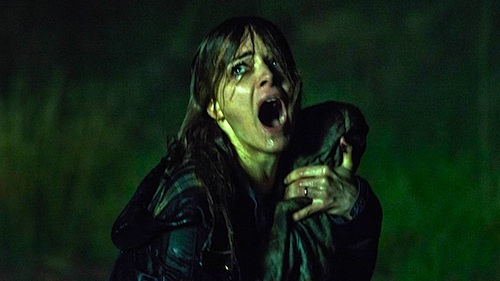
From "The Hallow."

Still, the locations and set design are massively creepy and the ectoplasmic body horror is suitably grotesque. As the Hitchens, Game of Thrones alumnus Joseph Mawle comes across as a bit of a pathetically underwhelming environmental hipster (is there any other kind?), while Bojana Novakovic flashes some welcome assertiveness. Much like Smiley, Michael McElhatton also adds some memorably cranky local color as the sour Donnelly.

For genre fans, The Hallow gets the job done, but it raises expectations early on that it will be somewhat more than it is. Ticket holders should note, rather than a stinger per se, a long parting sequence runs throughout the closing credits, building to a final, quiet gotcha shot. An okay excursion into the evil woods, The Hallow is recommended for those who want to maximize the “Park City at Midnight” experience when it screens as part of this year’s Sundance Film Festival.

LFM GRADE: C+

Posted on February 1st, 2015 at 10:49am.
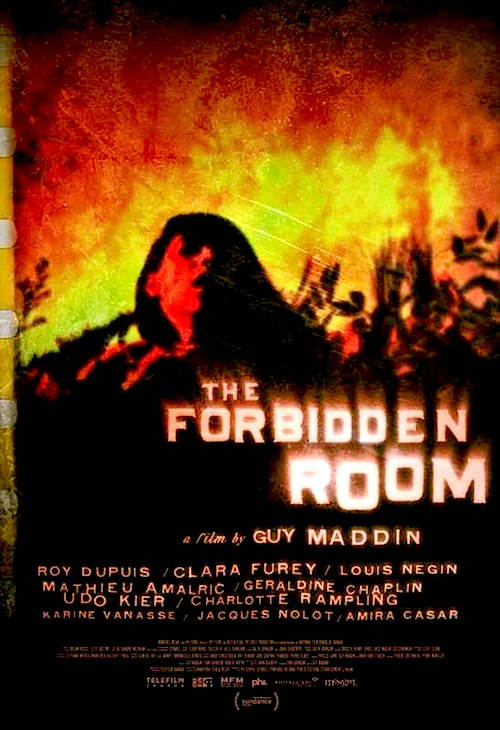
LFM Reviews The Forbidden Room @ The 2015 Sundance Film Festival

By Joe Bendel. It is like Guy Maddin put his collection of vintage silent and early talky prints through a blender and then screened the puree, except none of these films ever existed before. Unlike his Séances project inspired by lost films, these odd (odd is indeed the right term) film fragments are entirely the product of Maddin, his co-writers: co-director Evan Johnson, poet John Ashbery, and co-conspirators Robert Kotyk and Kim Morgan. Yet, as is often true with Maddin’s work, they feel like they must be real on some alternate plane of existence. Prepare for a trip as Maddin’s The Forbidden Room screens during the 2015 Sundance Film Festival.

It is a tall order to summarize Room and it would be impossible to do the many plot strands justice. Just so you know you you’re in the right film (not that you couldn’t tell immediately), Room starts with a lesson on how to take a bath. It then segues into a submarine disaster film, which is interrupted by a woodsman, who has come to tell the suffocating crew his tale, as if he were the Ancient Mariner. Like Thomas Pynchon on speed, Room thus proceeds on tangents to tangents, as each flashback and incidental anecdote begets more of the same.

Eventually, we will meet Mathieu Amalric playing a collector who lives in a swanky elevator and the train psychiatrist working on the Berlin-Bogota Express. In one story arc, a man meets his doppelganger, while Udo Keir continually pops up as different characters in various sub-films, because he’s Udo Keir.

Trying to track the film from point A to point B is a losing proposition. It could almost play in a continual loop as an installation piece, except viewers would miss the realization of the moment Maddin opens up the final “Russian doll” (to use an apt term from the press notes) and begins to re-pack them again.

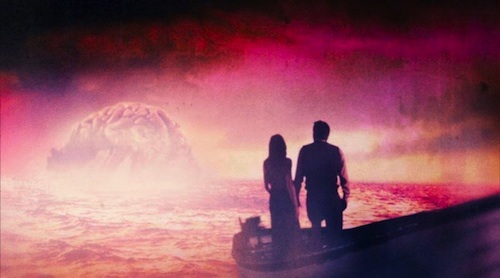
From "The Forbidden Room."

The real point of Room is the mind-blowing artistry of it all. Each constituent film begins with its own credits sequences, which are graphically striking and perfectly representative of their respective eras and genres. Likewise the work of cinematographers Stephanie Weber-Biron and Ben Kasulke is never less than stunning, flawlessly evoking the look of noir black-and-white as well as that early nitrate color. It really is like walking through a cinematic dreamscape.

Granted, Room will baffle less adventurous viewers, even though it has an excess of narrative coming out of its ears. This is truly Guy Maddin raised to the power of Guy Maddin. Without question, it is the work of a genuine auteur who has no close comparison. Highly recommended for fans of the unusual and the aesthetically daring, The Forbidden Room screens in Park City as part of this year’s Sundance Film Festival.

LFM GRADE: A-

Posted on February 1st, 2015 at 9:59am.

LFM Reviews The Witch @ The 2015 Sundance Film Festival

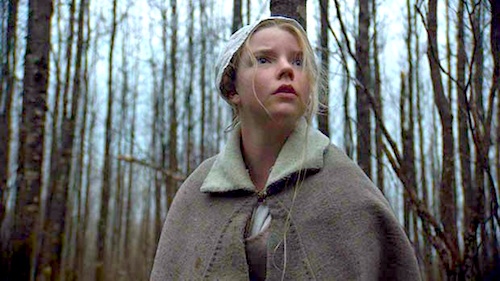
From "The Witch."

By Joe Bendel. If you want to psychoanalyze a culture, look at the horror movies it produces, because that will show you what really scares them. Consider this the exception that proves the rule. In writer-director Robert Eggers’ period chiller, early 1600s Puritan New Englanders feared the Devil could have designs on their souls. Worse still, they might be tempted to deal it away. These are not baseless anxieties in Eggers’ The Witch, which screened during the 2015 Sundance Film Festival.

Thanks to their father’s zealous pride, Thomasin’s family has been expelled from their Puritan community to an isolated hardscrabble farm, where they must fend for themselves entirely. It has not been going well. Their crop failure is bad news in strictly economic and sustenance terms, but it is even more ominous as a sign or portent. Poor teenage Thomasin becomes the family scapegoat after her infant brother uncannily vanishes while she is minding him. Her father is relatively forgiving, but her mother is witheringly judgmental.

Of course, the grieving parents are understandably disturbed, since they believe their unbaptized baby is now surely damned. Unfortunately, Thomasin’s bratty young sister and (now) youngest brother mischievously or perhaps maliciously seem to do everything possible to cast supernatural suspicion on Thomasin, yet they seem to be the ones who are inexplicably drawn to the family goat, Black Phillip.

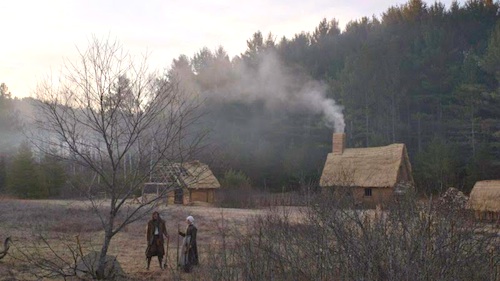
Who would have thought a moody, suggestive period horror film would be the hot ticket at Sundance, but it clearly pays to have a p&i screening on the first full day of the festival. Regardless, it is an unusually effective and historically accurate film. Those are wooden trunnels holding the farmhouse together, not nails. Throughout the film, you can feel a palpable sense of physical and spiritual isolation that malevolent powers may or may not be exploiting. There is indeed a fair degree of ambiguity in The Witch, but it is still safe to say evil is afoot.

From "The Witch."

The cast also looks and sounds perfectly in keeping with the times. There is no hamming it up or hinting at contemporary ironies. As Thomasin, Anya Taylor-Joy comes across as a genuinely tormented soul, while Ralph Ineson and his rich, commanding voice seem to carry the historical weight of Puritanism and all its collected hypocrisies. These are haunted people in more ways than one.

In the movies, good things rarely happen in the deep, dark woods. The Witch is no exception. It is a visually arresting film, sensitively lensed by Jarin Blaschke with a suitably Puritanical, washed-out color palette, but in a way that pulls viewers into the world and intensifies the mounting dread. Enthusiastically recommended for fans of high end genre films, The Witch screened in Park City as a U.S. Dramatic Competition title at this year’s Sundance Film Festival.

LFM GRADE: B+

Posted on February 1st, 2015 at 9:58am.

LFM Reviews The Nightmare @ The 2015 Sundance Film Festival

From "The Nightmare."

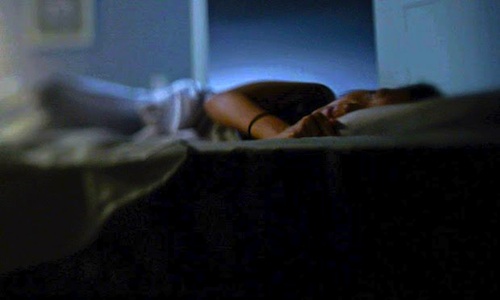
By Joe Bendel. It is not a good idea to nod off during this film. You might encounter one of the subjects. Fortunately, it will be very difficult to drift off during one of the scariest documentaries you will ever see that isn’t about Scientology. Shaking it off at bed time will be a different matter. Filmmaker Rodney Ascher documents the very real phenomenon of sleep paralysis and the terrifying figures often seen by those who suffer from it in The Nightmare, which screened during the 2015 Sundance Film Festival.

Like his interview subjects who agreed to appear on camera, Ascher (the co-director of Room 237) has personally experienced sleep paralysis. Medical professionals generally acknowledge it involves the conscious sensation of rigid immobility, until the afflicted sleeper manages to rouse themselves out of it. Of course, there is more to the story. Those who have endured persistent sleep paralysis often report seeing and sometimes hearing dark, menacing figures. Typically, these are the “Shadow Men,” often observed acting under the direction of the “Hat Man.”

This might sound fantastical, but Ascher has multiple sources attesting to these demonic dream stalkers. Indeed, there is something deeply archetypal about them, especially Hat Man, who can be seen as a forerunner to Freddy Kruger buried deep within our collective subconscious.

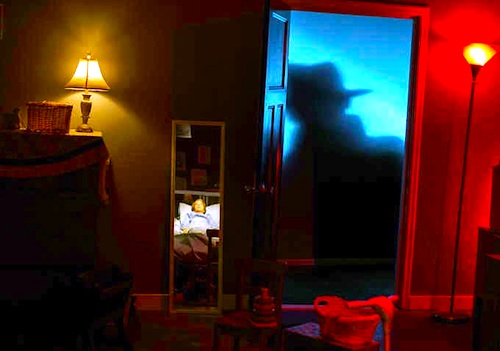
While Nightmare adheres to the standard accepted form of documentary films, Ascher’s dramatic recreations of participants’ nightmare encounters are genuinely frightening. Everything about them represents superior horror film mechanics, from the eerie lighting to the evocative set design. This film will scare you in the moment, but it will also challenge your safe assumptions regarding the nature of reality. Clearly, Hat Man is real enough for a considerable number of people out there, so what does that mean for our world view?

From "The Nightmare."

Yet, Ascher does not leave us bereft of hope and deprived of sleep. Surprisingly, Nightmare will hold considerable interest for evangelical audiences, who are not likely to be amongst the film’s target demographic. Nonetheless, one subsequently empowered Christian discovered she could vanquish her sleep demons by invoking a name. No spoilers, but his initials are “J.C.”

This is the rare sort of film that really gets under your skin and stays there. Ascher takes familiar New Age tropes and transforms them into something profoundly dark and threatening. The suggestion that sleep paralysis can be transmitted from person to person, essentially through the telling, is particularly disturbing for obvious reasons. Conveniently, nobody has time to sleep at Sundance. Presumably, Nightmare harbors no long-term ill effects, but it is exceptionally creepy. Very highly recommended for brave genre fans, The Nightmare screened as part of this year’s Sundance Film Festival.

LFM GRADE: A

Posted on February 1st, 2015 at 9:58am.

LFM Reviews Mississippi Grind @ The 2015 Sundance Film Festival

From "Mississippi Grind."

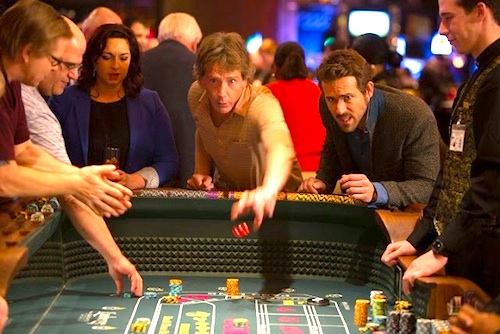
By Joe Bendel. Apparently, Gerry never heard the old Kenny Rogers song. He is the sort of gambler you bet against and feel fine about doing so. He might win for a while, because he spends every spare moment studying various games of chance, but he reeks of losing. However, he believes his fortunes have turned when he teams up with a younger, luckier gambler in Anna Boden & Ryan Fleck’s Mississippi Grind, which screened during the 2015 Sundance Film Festival.

Curtis is just passing through. That’s what he does. Gerry really ought to be leaving soon. He owes a lot of people a lot of money, but just keeps digging a bigger hole for himself. Strangely enough, he wins when playing at Curtis’s table, but he promptly blows all his takings on an ill-advised bet shortly thereafter. When fate subsequently brings them together again, Gerry recognizes a good thing. Determined to keep it going, Gerry convinces Curtis to join forces to play regional games and hole-in-the-wall casinos as they work their way down the Mississippi towards a high stakes poker game in New Orleans.

It sounds like a winning proposition, but the “sign”-obsessed Gerry cannot change his spots. He is still a crummy person and when Curtis is not around, he keeps finding ways to lose. In contrast, Curtis might be slightly commitment-phobic, but he is dramatically healthier than Gerry, often preferring to visit the local blues club over a tacky gambling den. It is really quite considerate of him, since it justifies Grind’s savory blues soundtrack (and some original themes scored by Scott Bomar).

From "Mississippi Grind."

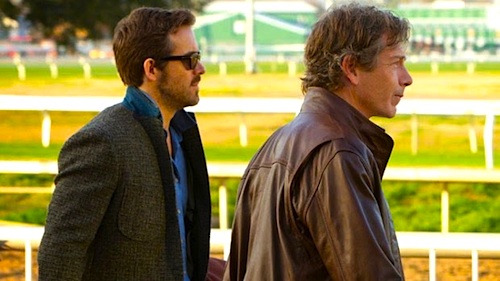
Although Gerry, the aggressive screw-up, is the flashier role, Grind still might prove to be a career pivot for Ryan Reynolds. As Curtis, he plays with and against his pretty-boy type-casting, showing surprising grit down the stretch. Although Ben Mendelsohn is relatively restrained compared to some of his scenery-chomping villainous turns, he fully embraces Gerry’s pathetic, self-deluding, self-centered nature. Frankly, sometimes it is painful to watch his debasement.

Granted, anyone who has seen a gambling road movie will have a general idea where Grind is headed, but Fleck & Boden give the material a few nice twists, including the ironic but wholly fitting third act source of the title. They exhibit a strong sense of place, grounding the film in picturesque Southern-border state locales. It is also certainly safe to say they never glamorize gambling. In fact, the film could almost be a PSA for Gamblers Anonymous and a seedier, more naturalistic corrective to noir-ish The Gambler and Chow Yun-fat’s heroic God of Gamblers franchise. Recommended for fans of gambling films with local flavor, Mississippi Grind screened in Park City as part of this year’s Sundance Film Festival.

LFM GRADE: B

Posted on February 1st, 2015 at 9:57am.

LFM Reviews 2015 Oscar Nominated Animated Shorts

By Joe Bendel. There are ways that parents burden their children, such as decorating their home with hipster Scandinavian furniture. It does not quite work as a unifying theme, but generational debts and inheritances play an important role in at least some of this year’s Oscar nominated animated short films, which opened collectively on Friday in New York.

The first simply will not fit into our artificial framework no matter how hard we try to force it, but it is also the shortest and the slightest of the four nominees provided to the media (again, Disney decided to do their own thing with Patrick Osbourne’s Feast). Marieke Blaauw, Joris Oprins & Job Roggeveen’s A Single Life is sort of a riff on the concept of Adam Sandler’s Click, with a 45 rpm record taking the place of the remote control. It is amusing, but it is hardly a major work.

Daisy Jacobs’ The Bigger Picture certainly deals with serious issues, depicting the struggles of a faithful grown son to care for his ailing mother, even while she persists in favoring his irresponsible brother. Jacobs’ life-size, paper animated figures are undeniably distinctive, but if this were a live action film, we would probably consider the drama manipulative.

Torill Kove’s Me and My Mouton is also a bit sentimental, but in a sweetly nostalgic kind of way. The middle daughter of tragically trendy but well-meaning architect parents must deal with their rather unorthodox aesthetics, which seem strange to her more conventional friends. In fact, Mouton is a rather sly satire of hipster sensibilities as well as an endearing coming of age story. Kevin Dean’s soul jazz trio soundtrack also makes it swing and groove.

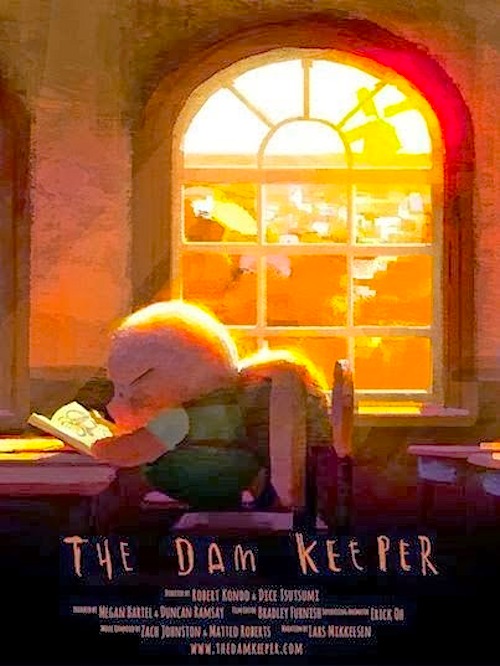
Yet, without question, the class of the field is Robert Kondo & Dice Tsutsumi’s The Dam Keeper. When his father passed away, young Pig assumed his position as the dam keeper, maintaining the windmill that prevents a mass of toxic clouds from overrunning the village. Yet, he is still just a boy, who continues to attend school, where he is often mocked and bullied. One day, a young Fox transfers to his class and the rest of the animal students are quite taken with her (she is a fox, after all). However, she has an artist’s sensitivity, so she soon befriends Pig. Nevertheless, she presumably remains subject to the same peer pressures of other students. When it appears Fox betrays Pig’s trust for the sake of acceptance, the heartbroken dam keeper might just give up entirely, which would have ominous implications for the ungrateful village.

Dam Keeper is a beautiful fable, perfectly served by the stunning painted and hand-drawn animation, but it also resonates on a very personal level. In both visual and narrative terms, it is an extraordinary film. It is worth seeing the entire program just for it, especially since it is the longest of the nominated films. Frankly, if it does not win, the Academy will have some explaining to do.

This year’s nominated short film animated package is augmented with several other films of notable merit, including one selection from the 2015 Slamdance Film Festival. While it is not as graceful and sophisticated as Plympton’s previous Slamdance selection, the feature length Cheatin’, Footprints is a rather clever, postmodern channeling of Peter and the Wolf, rendered in a suitably surreal style.

Without question, The Dam Keeper is the main event here—and hopefully the Oscar favorite. Between it and the addition of the next strongest nominee, Me and My Mouton and the Slamdance alumnus, Footsteps, this year’s presentation of the Academy Award nominated short films is definitely worth seeing. Recommended for animation fans, it opened Friday (1/30) in New York, at the IFC Center.

Posted on February 1st, 2015 at 9:56am.