A Woman’s Art in Iran: LFM Reviews Going Up the Stairs @ The 2013 Human Rights Watch Film Festival

By Joe Bendel. Any women creating art in today’s Iran could be classified as an “Outsider Artist,” because you just cannot get anymore “outside” than a woman trying to express herself artistically in the Islamist state. The devout Akram Sartakhti apparently has no interest in political subject matter, but she still must navigate the institutionalized misogyny. Rokhsareh Ghaem Maghami documents her work and complicated domestic life in Going Up the Stairs: a Portrait of an Unlikely Iranian Artist, which screens during the 2013 Human Rights Watch Film Festival.

At the age of nine, Sartakhti was married off the Heider Rahimi, a colleague of her father’s, who was seventeen years her senior. When the Shah was scheduled to visit her school, Sartkhti and her classmates were told to leave their headscarves at home. Instead, she dropped out before learning how to read. For years, she lived in fear of her domineering husband, but as they advanced in age, her comparative youth somewhat turned the tables. Late in life, she turned the second floor of their townhouse into a studio.

However, Iranian law grants husbands ironclad control over their wives. Throughout Stairs, Sartakhti is worried Rahimi will refuse her permission to travel to Paris, where her grown children have organized an exhibition of her work, as an arbitrary means of asserting his power.

From "Going Up the Stairs."

Sartakhti’s paintings clearly fit within the Outsider rubric. While nowhere near as polished or sophisticated as Iran Darroudi’s surreal landscapes, her surprisingly large canvasses show an intriguing sense of composition and a striking use of color. They are worth seeing, but of course public exhibition will always be a tricky proposition for any woman artist under the current regime.

Serving as her own camera crew, Maghami obviously earned the trust of the artist and her husband. Still, one wonders what happened after she left. Frankly, there is often a pronounced disconnect between the on-screen calm captured on film and the bitter stories Sartakhti tells of the early years of her arranged marriage. Many people will take Stairs as proof that arranged spouses can always grow to love each other, but at what cost? Maghami’s doc is rather ambiguous on this question.

Nevertheless, the fifty-one minute Stairs pretty clearly establishes the mandated gender inequalities of today’s Iran and how they severely hinder even a staunchly traditional woman like Sartakhti. An interesting portrait of an artist marginalized simply because she is a woman, Going Up the Stairs is one of the stronger selections of this year’s Human Rights Watch Fest. It screens on a double bill with Camera/Woman this coming Sunday (6/16) at the IFC Center and the following Tuesday (6/18) at the Francesca Beale Theater.

LFM GRADE: B

Posted on June 11th, 2013 at 3:20pm.

Giallo Madness: LFM Reviews Berberian Sound Studio

By Joe Bendel. This might be the most anti-horror movie genre freak-out, perhaps ever. Do not tell the hapless sound engineer in question he is just working on a movie, or that the violent images he sees are no big deal. The vintage-era Italian giallo will profoundly disturb the nebbish Brit throughout Peter Strickland’s Berberian Sound Studio, which opens this Friday in New York.

Poor Gilderoy assumed he had been hired to engineer the sort of nature documentary that has been his specialty. Unfortunately, The Equestrian Vortex is anything but. This will be the latest gore fest from the notorious giallo auteur, Santini (who does that name remind you of?). The film opens with a girl on a horse, but she will soon find herself in a bacchanal of witchcraft and graphic, sexually charged violence. Gilderoy is not prepared for this material, but nobody refuses Santini.

Right from the start, Santini and the staff of the grimy 1970’s sound studio torment Gilderoy with mind games. The engineer’s mental and emotional health quickly deteriorates as he records the smashing pumpkins and other foley effects that accompany the on-screen tortures. On the plus side, there are elegant Mediterranean bombshells coming in out of the studio to record their screams, but only Silvia, the fading starlet, shows him any kindness. Of course, she is no match for the notorious Santini, or his Mephistophelean producer Francesco.

The fresh produce sacrificed to make Berberian could have made a month of salads for the Italian army, but it all has the desired impact. In a more just world, Berberian should be an Oscar shoe-in for the sound categories. However, the Academy will probably be far too uncomfortable with the film’s premise and implications.

Indeed, Berberian is unusually forthright questioning the cumulative impact of desensitizing imagery, far surpassing Cronenberg’s somewhat thematically related Videodrome. Shrewdly, Strickland never shows the audience the Equestrian horrors slowly boring their way into Gilderoy’s brain. It is far more unsettling to hear them take shape in the studio and to watch the engineer’s pained responses. This is an artfully creepy film that skillfully builds the claustrophobic tension, up until the third act collapses into surreal reality-problematizing bedlam.

Who knew Toby Jones had this in him? As Gilderoy, he quietly but rather spectacularly portrays a shy, reserved man coming apart at the seams, in a marked departure from his supercilious type-casting. As his polar opposite, Cosimo Fusco’s Francesco is a malevolent sleazebag worthy of the giallo tradition.

Yet, the real stars of Berberian are the technical crew who so perfectly recreate the look, sound, and general vibe of the genre. Listening to Broadcast’s original score, one could easily believe it came off a rare vinyl soundtrack (that’s a good thing). Similarly, production designer Jennifer Kernke’s painstaking attention to period detail makes the analog studio feel like a truly real (and really awful) place to work.

This is a superior midnight-genre film that might just challenge regular midnight-genre patrons. Oddly enough, it also happens to be one of the year’s best period productions. Highly recommended for open-minded cult movie fans, Berberian Sound Studio opens this Friday (6/14) at the IFC Center.

LFM GRADE: A

Posted on June 11th, 2013 at 3:19pm.

LFM Reviews House of Good and Evil @ The 2013 Dances With Films

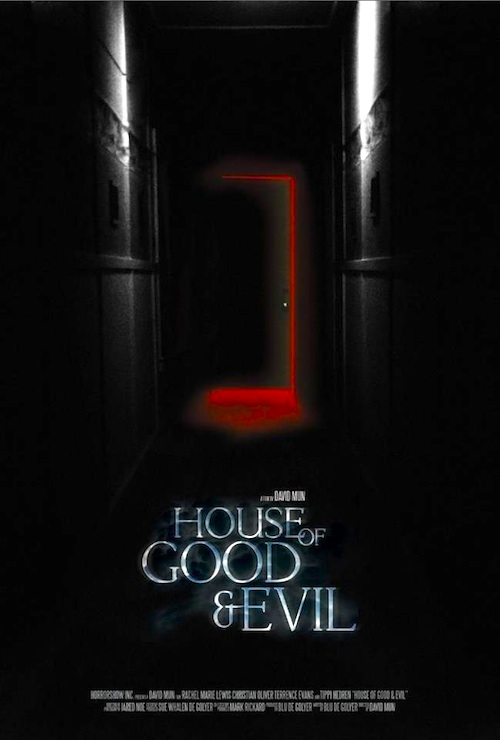
By Joe Bendel. It is a remote fixer-upper with no power or phone lines. The spacious duplex sounds perfect for a young couple hoping to heal their troubled relationship. They will take it, once the realtor duly shows them the remnant of the Indian burial ground and the stake where they used to burn the witches. It is cheap, and best of all, the second unit already has tenants: the wildly anti-social, old Mr. and Mrs. Anderson. Unfortunately, their new surroundings do not have the desired effect in David Mun’s House of Good and Evil (trailer here), which screened as part of this year’s Dances With Films.

Chris Conley has trouble with booze and his temper. When his wife Maggie miscarries, it is his fault. To make it up to her, he buys her a new house in the middle of nowhere. Cell service is spotty out there and the lines go down so often the utilities quit repairing them. However, there is a lovely generator out back. Immediately after moving in, she starts hearing a phone ringing from the Andersons’ side of the house. Of course, her husband just assumes she is being a hysterical woman and promptly disappears for his forest firefighter training.

Strange things start to happen around the creaky old house, but it is the sound of the ringing phone and Mrs. Anderson’s weird conversations (that sound a lot like the old “Shut Up Little Man” recordings) that really get to her. Eventually, she becomes rather preoccupied with her unseen neighbors.

What really distinguishes House from the indie horror pack is the mournful vibe Mun achieves. One gets a powerful sense things would not be right between the Conleys even if they had moved into a “House of Just Plain Good.” Sensitively lensed by Jared Noe and nicely enhanced by Mickey Ray’s detailed sets, House has an unusually strong sense of mise-en-scène compared to the genre standard. The problem is the screenplay. Anyone with a few midnight movies under their belt will predict the ‘third act-Shyamalan’ well before it drops.

From "House of Good and Evil."

Still, Rachel Marie Lewis soldiers on quite compellingly as Maggie Conley and Saved by the Bell refugee Christian Oliver is actually not bad as her frustrated and frustrating husband. Some of their scenes together have real bite. Unfortunately, we know where it is all going, even if they do not.

House should work well as a show reel for Mun, his co-leads, and his technical collaborators. Audiences will recognize considerable talent went into it, even though the sum of its parts is greater than its whole. A passable outing for genre diehards looking for something that has not been talked to death on fan sites, House of Good and Evil concluded the 16th Dances With Films.

LFM GRADE: C+

Posted on June 11th, 2013 at 3:18pm.

LFM Reviews Steve Chong Finds Out that Suicide is a Bad Idea @ The 2013 Dances With Films

By Joe Bendel. Why is Steve Chong so depressed? Maybe it is due to feelings of inadequate facial hair. If so, he probably picked the wrong friends. Nevertheless, the bearded slackers will do their best to prevent their buddy from taking the final exit in Charlie LaVoy’s Steve Chong Finds Out that Suicide is a Bad Idea, which screened this past Friday during Dances With Films at the TCL Chinese Theatres (where the marquee is long enough to fit that title).

Chong was never really suited to his job as a sushi chef, but getting fired hardly helps his mental outlook. When his extreme shyness sabotages what might have been his last best shot with Alice, the waitress he has long carried a torch for, Chong is pretty much ready to cash in his chips. However, he will first invite over his goofball friends for a weekend at his parents’ lake house. Unable to hold his booze like they can, the stink-faced Chong lets his plans slip during a drinking game. The next morning, he does not seem to remember the episode, but his friends do.

Frankly, some of the cleverest bits of SCFOTSIABI involve their attempts to child-proof the lake house. LaVoy and screenwriter-co-star Owen Hornstein III probably could have mined the suicide prevention efforts for more dark physical humor. One cannot help wondering what Jacques Tati’s evil twin could have done with this premise. Rather, LaVoy and his cast of filmmaking collaborators are more interested with exploring themes of friendship and loyalty. That is all very nice, but it could have been funnier.

From "Steve Chong Finds Out that Suicide is a Bad Idea."

Still, there is no question SCFOTSIABI connects with the economic anxiety that has plagued the country (especially recent college graduates) for the last six years or so. Chong may yet find out about suicide, but he understands the reality of a “soft recovery” all too well. Wisely, the film never overplays its hand with fleetingly topical references, focusing instead on perennials bummers – like crummy jobs, difficult bosses, and estranged friends.

Stanley Wong (who also edited SCFOTSIABI) is appropriately awkward and tightly wound as Chong and develops some convincing chemistry with the grizzly trio. Viewers will believe they all have some long, complicated history together. While Hornstein and Tyler Russell’s constant feuding gets a bit tiresome, standout Joe Sökmen has some memorable moments of honesty as John, who passes for the mature one in this Rat Pack.

Speaking of lake houses, if Chong had recently seen the Keanu Reeves-Sandra Bullock remake, it would also explain his suicidal impulses. To the credit of the co-producing cast, they largely avoid such sentimental excesses. While seemingly tailor made for Hangover comparisons, SCFOTSIABI is really more about avoiding a truly awful morning after. A nice, intermittently amusing film about friendship, Steve Chong Finds Out that Suicide is a Bad Idea screened as part of the “Sweet Sixteen” Dances With Films in Hollywood.

LFM GRADE: C+

Posted on June 11th, 2013 at 3:18pm.

Collaboration Anxiety: LFM Reviews In the Fog

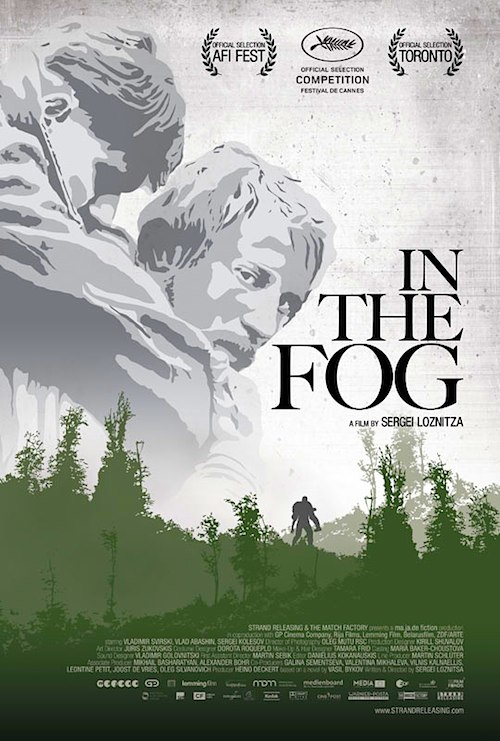
By Joe Bendel. Some people are born to curry favor with successive regimes, regardless of changing ideologies. There are also those who are constitutionally incapable of ingratiating themselves with the powers that be. Sushenya is definitely the latter sort, but through a cruel twist, he finds himself suspected of collaboration in Sergei Loznitsa’s WWII drama, In the Fog, which opens this Friday in New York.

When Burov knocks on his door late one night, Sushenya knows the partisan has come to execute him. Burov would have done the deed right there and then, were it not for the presence of the condemned man’s son. Instead, he and his squirrely comrade Voitek march Sushenya out into the Belorussian forest. However, German patrols are out in force this particular night, drastically altering the course of Burov’s score-settling mission.

For the three main characters, backstory is truly destiny. Through extended flashbacks, Loznitsa shows the audience the ironic events that inevitably led the trio into the fateful forest. There is an inescapably absurdist character to In the Fog, as its characters doggedly tramp through the woods, evading the Germans as best they can, despite the awkward circumstances that brought them together.

Yet, In the Fog is also closely akin to Jean-Pierre Melville’s Army of Shadows. Loznitsa’s adaptation of Vasil Bykov’s novel hardly idolizes the Communist partisans. Frankly, it suggests they are more interested in suspected turncoats like Sushenya than taking the war to the Germans. Neither Sushenya nor Burov are Party people, so to speak. Voitek is not exactly a true believer either, but his craven nature is more compatible with his fellow comrades. Indeed, during Sushenya’s flashback, one of his railroad co-workers observes how their former Communist tormentor had so quickly aligned himself with the new National Socialist occupiers.

Vladimir Svirskiy looks profoundly miserable as Sushenya. It is a performance of striking physicality, perfectly suited to Loznitsa’s taciturn film. As Voitek, Sergei Kolesov also taps into just about every unedifying aspect of human nature, without overplaying any of them. Even with his dramatic origin story, Vladislav Abashin’s Burov remains something of a cipher, but Vlad Ivanov (the abortionist in 4 Months, 3 Weeks, 2 Days) casts a long shadow over the film as the deceitful German officer, Grossmeier.

Yes, once night breaks, there will be plenty of fog to represent to moral murkiness facing the film’s characters. There will be no heroics in the wartime USSR, no matter who holds Sushenya’s village. Loznitsa offers viewers little consolation and his purposeful pacing will be problematic for antsy viewers. Yet, his long tracking shots are quite striking (especially the opening hanging sequence). Impressively bracing, In the Fog is recommended rather highly for adult attention spans when it opens this Friday (6/14) in New York at the Village East.

LFM GRADE: A-

Posted on June 10th, 2013 at 11:41am.

LFM Reviews Architecture 101 @ Korean Movie Night

By Joe Bendel. Does anything say “I love you” better than a high-maintenance low-profile commission? It will be a heck of a house, but whether the architect and his client will rekindle their lost love is far less certain in Lee Yong-ju’s Architecture 101, which screens Tuesday night as part of the Korean Cultural Service’s free Korean Movie Night in New York.

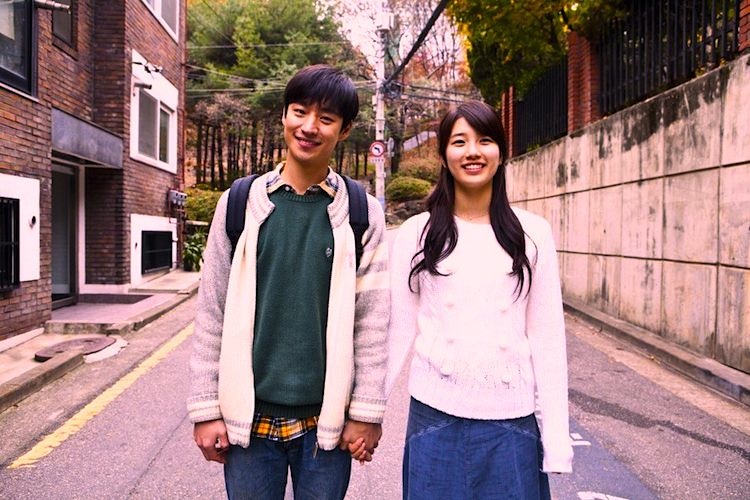
The rough around the edges Lee Seung-min is his firm’s best architect, but his boss is far better dealing with clients. At least he is now somewhat less socially awkward than he was as an undergraduate architecture major. Needless to say, he is quite surprised when Yang Seo-yeon, the girl who broke his heart freshman year, hires him to rebuild her family home on Jeju Island. Despite her hotness and his geekiness, they had partnered together for their intro to architecture class project, which gave them the opportunity to take many long picturesque walks together through Seoul and also thereby providing the film with its title.

Initially reluctant to accept the commission, his work brings back all the painful memories he feared, as the audience sees in flashbacks. Of course, the end of their chaste pseudo-courtship was considerably more complicated than he realized at the time. It sure would make things neat and tidy if Lee and Yang could just pick up where they left off, but he has sort of moved on since freshman year.

Okay, you probably mostly know the score from here. Director Lee delivers most of the anticipated melodramatic goods, flashing forwards and backwards between the pair of star-crossed couples, erecting barriers to their unspoken love in each time period. Still, 101 is notable as a major departure from his previous film, the religiously themed horror movie Possessed. There are no spinning heads here. In fact, Lee exercises admirable restraint, by genre standards, largely trusting the circumstances of the central relationship to carry the film without a lot of added heart-string pulling.

From "Architecture 101."

Uhm Tae-woong is actually rather grounded and reasonably manly as the adult architect Lee, whereas his younger analog can be difficult to watch mope about. Still, it is not hard to understand why he fell for Bae Suzy’s ethereal coed. Han Ga-in also portrays Yang’s grown-up disappointments for affecting honesty and charisma.

Yes, there are all kinds of manipulation going on in 101, particularly with regards to the song that never quite became “their song.” However, the house that Lee builds is quite striking. Architectural Digest readers looking for a weepy love story should inhale this film. While the exact structure was not built to last, the café “Seo-yeon’s House” now stands in its place, remodeled in a style reminiscent of the on-screen domicile.

As a film, 101 never transcends its genre, but viewers in the mood for a sad romance will find it competently done and likely pretty satisfying. Not classic, but better than the cynical might expect, Architecture 101 screens for free, courtesy of the Korean Cultural Service, this Tuesday (6/11) at the Tribeca Cinemas in New York.

LFM GRADE: C

Posted on June 10th, 2013 at 11:39am.