LFM Reviews Beyond the Hills @ The New York Film Festival

By Joe Bendel. Alina is either tragically co-dependent or possessed by the Devil. Radically different measures would be required depending on the diagnosis – but either way, she will visit a host of trials upon her girlfriend Voichita and her fellow Orthodox convent residents in Cristian Mungiu’s Beyond the Hills (see clip above), Romania’s latest official best foreign language Oscar submission, which screens as part of the main slate of the 50th New York Film Festival.

Meek and pious, Voichita appears perfectly suited to a cloistered life. Alina is a different story. However, since her former friend has no real family, Voichita arranges for her to stay temporarily in her quarters. Yet as soon as she arrives, Alina starts badgering her former friend to leave with her (see clip above). Gently rebuffing her, Voichita watches in alarm as her visitor’s behavior becomes increasingly erratic and disruptive, eventually manifesting in several public meltdowns. The priest and the nuns do not want to abandon a soul in need, but after the medical establishment washes their hands of Aline, there seems to be only one remaining course of action: exorcism.

Mungiu implies a great deal in Hills, very definitely including the nature of Aline and Voichita’s relationship, while leaving just as much open to interpretation. It would also have been very easy to portray the priest and good sisters as stereotypical zealots dangerously convinced of their own infallibility. However, Hills constantly reasserts the messy humanity of each character. In fact, the ambiguity of the “possession” gives the film quite a distinctive flavor. Frankly, after about two hours of Aline acting out, most viewers will be ready to throw their lot in with the nuns, holding down the devil-woman as the priest reads the purification scriptures over her.
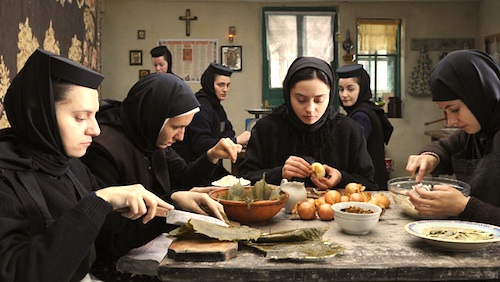
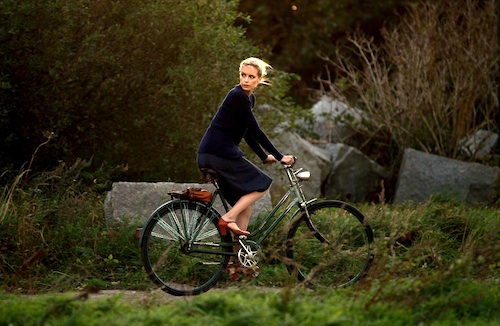
From "Beyond the Hills."

With a running time of 150 minutes, Hills often feels like what it is: a product of the Romanian New Wave of independent filmmaking. It probably would not have killed anyone had Mungiu shaved off twenty minutes or so. Nonetheless, he elicits several riveting performances, the most notable being Cosmina Stratan as Voichita, the confused innocent. As Alina, Cristina Flutur is also scarily convincing engaging in all manner of aggressive, self-destructive behavior. Yet it is Valeriu Andriută’s work as the priest, simultaneously severe and sympathetic, that really forestalls snap audience judgments.

Based on a novelized account of a real life incident in Moldova, Hills is not a kneejerk attack on Eastern Orthodoxy. Nonetheless, as the Russian Orthodox Church hemorrhages international credibility due to its perceived alliance with the Putin regime, it is hard not to invest Hills with an additional layer of meaning, whether or not Mungiu intended it. Given its ambiguous but evocative treatment of monastic life and supernatural possession, Beyond the Hills would be a fascinating film to see in conjunction with Jerzy Kawalerowicz’s Mother Joan of the Angels. Challenging in multiple ways, Beyond the Hills is recommended for hardy cineastes with at least a couple of Romanian New Wave films already under their belts when it screens tomorrow (10/1), next Sunday (10/7), and the following Thursday (10/11), as part of the 2012 NYFF.

LFM GRADE: B+

Posted on October 1st, 2012 at 11:52am.
Escaping East Germany: LFM Reviews Barbara @ The New York Film Festival

By Joe Bendel. Intimacy is based on trust, so is it ever really possible in police state like Soviet-era East Germany? Obviously, that is not the Stasi’s problem. They are out to do everything possible to isolate and demoralize a dissident doctor. Yet, in spite of her better judgment, she will develop ambiguously complicated feelings for her minder in Christian Petzold’s Barbara, Germany’s official best foreign language Academy Award submission, which screens during the 50th New York Film Festival.

As soon as Dr. Barbara Wolff applied for an exit visa, her brilliant career was effectively over. Transferred from a prestigious East Berlin hospital to a provincial backwater, Dr. Wolff is all too aware of the eyes on her. The most obvious set belongs to Andre, Barbara’s ostensive supervisor, whose role as the designated Stasi snitch is an open secret. He has a surprisingly convincing good guy act, though, and he definitely seems to care about their patients – particularly Mario, a young man suffering from a mysterious head trauma that defies diagnosis. Yet, the case that resonates deepest with Dr. Wolff is that of Stella, a recaptured prison camp escapee suffering from meningitis.

Wolff is not inclined to meekly submit to the Stasi’s mounting harassment. Having hatched an escape plan with her West German lover, she believes her time in East Germany is limited, which is why she is so surprised by her growing attraction to Andre and her emotional investment in their patients.

Actress Nina Hoss in "Barbara."

Barbara has been described as Petzold’s response to Florian Henckel von Donnersmarck’s brilliant The Lives of Others. That is true to an extent, but not in a polemical sense. There is no nostalgia here for the Honecker regime, let alone a defense. Petzold’s parents made the flight to freedom Dr. Wolff is anticipating, so he is understandably sensitive to the everyday tribulations endured by East Germans. Indeed, the film is best at conveying the guarded nature required for even the most prosaic of conversations and the jarring sound of that dreaded knock in the night.

Barbara Wolff easily represents Nina Hoss’s best performance to reach our shores.  Outwardly diffident but profoundly uneasy beneath her facade, the good doctor might be the best woman’s lead role of the year (and most years prior).  It is a tricky proposition to convey her character’s roiling inner turmoil as well as her concerted efforts masking it from the world, but Hoss pulls it off remarkably. Former East German Ronald Zehrfield also helps complicate audiences’ emotional responses as the flawed but perhaps still idealistic Andre, who might also be a victim himself, in that manner unique to captive citizens of police states.

Exercising a masterful control of mood and ambient sound, Petzold vividly recreates a sense of life in the GDR, in all its oppressive austerity. It is a lean, tense narrative, yet Petzold derives much of the suspense from within his characters rather than through external cloak-and-daggering. A very accomplished film featuring Oscar-worthy work from Hoss, Barbara is very highly recommended when it screens this coming Monday (10/1), next Saturday (10/6), and the following Tuesday (10/9) as a main slate selection of the 2012 New York Film Festival.

LFM GRADE: A

Posted on September 28th, 2012 at 1:22pm.

LFM Reviews Liv & Ingmar @ The New York Film Festival

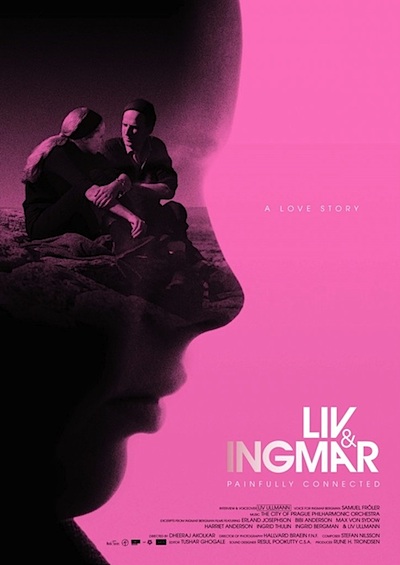
By Joe Bendel. They collaborated on some of the least romantic films ever (see Hour of the Wolf, for instance). Yet Ingmar Bergman and Liv Ullmann became the first couple of international art cinema. The Swedish auteur’s romance with his Norwegian muse would not last, but their relationship continued to evolve and endure. Ullmann reflects on each stage of her career-defining association with Bergman in Dheeraj Akolkar’s Liv & Ingmar, which screens as part of the 50th New York Film Festival’s Cinema Reflected sidebar.

What a difference a few years and a more northern latitude make. Whereas Ingrid Bergman was pilloried for leaving her husband to take up with Roberto Rossellini, Ullmann essentially did the same thing with Bergman, but with no attendant outrage from the world press. As she tells it, she was widely encouraged by friends to do so. Indeed, the film is entirely presented from Ullmann’s perspective, relying almost entirely on her narration and extended interview sequences to tell their story.

Nevertheless, there is no score settling in L&I. Even after the dissolution of their intimate cohabitation, the legends of Scandinavian cinema remained on good terms, eventually becoming the closest of friends. There is definitely a lesson in that, especially if you think documentary crews will one day be interviewing your former lovers. However, it might not make the most compelling viewing.

Ullmann still offers some insight into the dark places manifested in Bergman’s films, but that is about as far as the film goes. As a result, L&I is permeated with a fatal sense of respectability. Granted, nobody wants or needs to see a great filmmaker like Bergman trashed by an ex. The fact that he and Ullmann continued to mean so much to each other is quite touching and nearly the extent of the film’s takeaway.

Scenes of Ullmann revisiting Bergman’s Fårö Island home give the documentary a vivid sense of place and there are plenty of tellingly illustrative clips from their films. L&I is quite a heartfelt tribute, but as a work of cinema in its own right it is hardly essential (though it is an interesting film to see in conjunction with Francesco Patierno’s thematically related War of the Volcanoes, also screening during this year’s NYFF). Mostly recommended for dedicated Bergman and Ullmann admirers, Liv & Ingmar screens this coming Monday (10/1) and Tuesday the 10th during the 2012 New York Film Festival.

LFM GRADE: C+

Posted on September 28th, 2012 at 1:21pm.

LFM Reviews The War of the Volcanoes @ The New York Film Festival

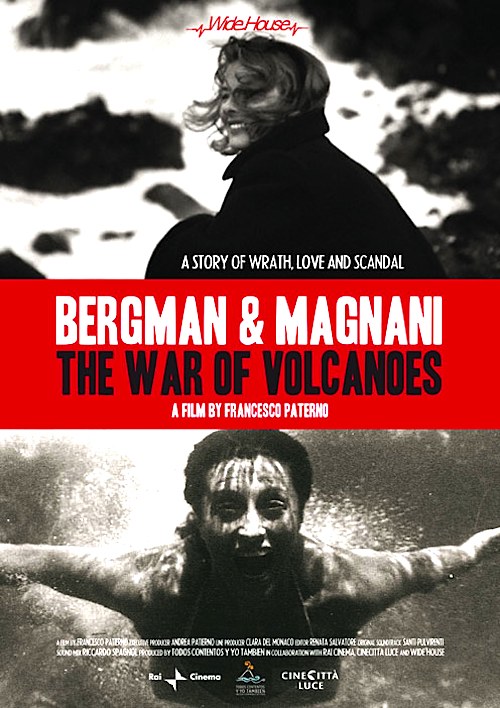
By Joe Bendel. Before Pitt, Jolie, and Aniston dragged their relationships through the tabloids, Ingrid Bergman, Roberto Rossellini, and Anna Magnani thoroughly outraged the filmmaking world. However, they did it with exponentially more talent. Francesco Patierno documents their headline-making scandal and the competing film sets on which it played out in The War of the Volcanoes (trailer here), a selection of the Cinema Reflected sidebar at the 50th New York Film Festival.

Rome, Open City was an international triumph for both Magnani and her director, Rossellini. They quickly became close collaborators and lovers, despite their differences in temperament. Magnani was the passionate, ever faithful diva. Rossellini was the charmed smooth talker. It probably would not have lasted, even without Rossellini’s mutual admiration for the unhappily married Ingrid Bergman.

Looking for a break from the Hollywood system, Rossellini’s Stromboli appeared to be the perfect project. A morality play set against the exotic backdrop of the volcanic Aeolian Islands, Stromboli was largely lifted from a proposal developed by Rossellini’s cousins—or at least that is how they saw it. Slightly put out by the appropriation, the budding filmmakers produced their film anyway, with Hollywood director William Dieterle at the helm and none other than the spurned Magnani herself as the star. Guess which director brought their film in on-time and within budget.

As production began on the isolated Stromboli Island, thanks to Howard Hughes, the relationship between Rossellini and Bergman intensified. With rumors swirling and pictures of PDA’s splashed across the newspapers, she became radioactive for her former Hollywood colleagues, leading to no end of stress for the Swedish movie star. The narrative elements of both competing films, featuring disgraced women shunned by narrow-minded islanders, did not exactly help either, but it certainly represents fertile soil for film critics and historians to analyze.

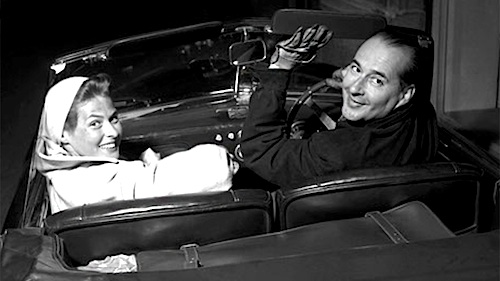
Bergman and Rossellini.

Most movie fans will know the broad strokes of this infamous story, but the details are fascinating. Patierno completely eschews talking heads, telling the tale through anonymous voiceover narration, archival publicity footage, and shrewdly selected clips from the principles’ films that thematically fit the events under discussion (like for instance, Hitchcock’s Notorious). Almost entirely black-and-white as a result, Volcanoes captures a vivid sense of the era’s sophistication.

While rather a shorty at fifty-two minutes (preceded by a ten minute short following the eternal Manoel de Oliveira during the filming of The Strange Case of Angelica), War of the Volcanoes is nonetheless quite informative and entertaining, like a gossip show for upscale cineastes. Recommended for fans of Italian cinema and Hollywood’s golden age, War of the Volcanoes screens this Saturday (9/29) and the following Wednesday (10/3) as part of the 2012 NYFF.

LFM GRADE: B+

Posted on September 27th, 2012 at 12:21pm.

LFM Reviews Final Cut @ The New York Film Festival

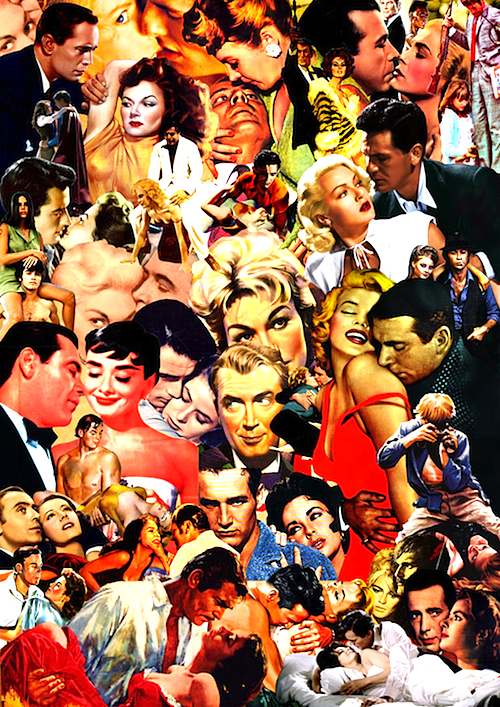
By Joe Bendel. It is the classic Hollywood story. Everyman meets everywoman, with everycomplication ensuing. One-upping Chuck Workman, György Pálfi aggregates clips from some of the greatest milestones of international cinema, as well as two of his own previous films, into the loose narrative form that is Final Cut—Ladies & Gentleman (trailer here), which screens as part of the Cinema Reflected sidebar at the 50th New York Film Festival.

As Charlie Chaplin, the protagonist wakes up and stretches. As Gene Hackman he shaves and knots his tie – as Leonardo DiCaprio, amongst others. A chance encounter on the street will lead him to pursue a mystery woman, who turns out to be a nightclub singer, played by the likes of Liza Minelli and Jessica Rabbit. Despite the efforts of a jealous ex-boyfriend(s), they fall in love and marry. Yet, domestic life presents its own challenges.

Final Cut is light years removed from the somewhat unpleasant Taxidermia, Pálfi’s last film to have an American theatrical release—and it’s a good thing that it is. What started as a creative response to the Hungarian film industry’s economic doldrums became the 2012 Cannes Classic’s closer. However, his love letter to cinema is not likely to ink a distribution deal anytime soon, since Pálfi was never bourgeoisie enough to actually seek permission to use his constituent snippets. Considering that Walt Disney and George Lucas films are well represented in the mix, one would not be shocked if there are a few cease & desist letters in its future.

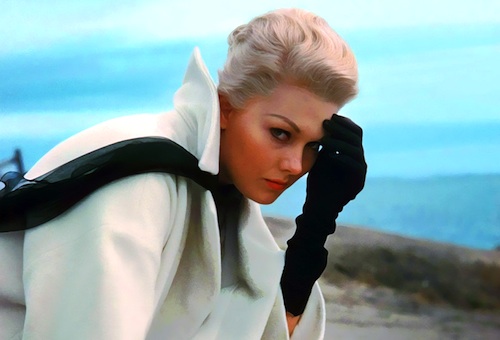
Kim Novak in "Vertigo."

Make no mistake, we all recognize intellectual property rights here, but it is sort of shame a home DVD release is not likely for Final Cut. It could be quite the party game for movie buffs, looking for bragging rights for how many more films they can recognize than their friends. While many of us will recognize the Kurosawa and Godard excerpts, some of the Eastern European selections might be a little tricky. The idiosyncrasies of Pálfi’s editorial sensibility are also sometimes surprising (Angel Heart, again?). For those wondering, Hitchcock’s Vertigo did indeed make the cut, at the risk of drawing another eyebrow-raising statement from Kim Novak, a la The Artist.

Granted, Final Cut is hardly groundbreaking. There are several short films floating around the internet based around similar concepts, but Pálfi takes it further, even tossing in the occasional full frontal for comedic effect. If nothing else, it brings back a flood of movie memories and should spur wide ranging post-screening did-you-ever-see discussions. Not particularly deep or perhaps even legally defensible, Final Cut—Ladies & Gentleman is still a fair amount of film geek fun. It screens this coming Monday (10/1) at the Francesca Beale Theater during the 2012 NYFF.

LFM GRADE: B-

Posted on September 27th, 2012 at 12:20pm.

The Man Behind the Russ Meyer Myth: LFM Reviews Up the Valley and Beyond @ The New York Film Festival

By Joe Bendel. He has been called the most successful independent filmmaker of his era. Yet there was no secret formula to his films. The hallmarks, so to speak, of Meyer’s oeuvre are impossible to miss. Todd Rosken dramatizes the sexploitation pioneer’s creation story in Up the Valley and Beyond (trailer here), which screens as part of Shorts Program 1 at the 50th New York Film Festival.

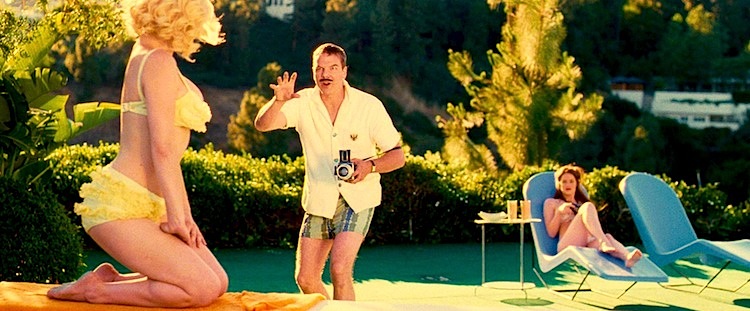
Meyer was a war hero, as he is happy to explain to anyone who asks. During the post-war/pre-Mad Men era, he sets out to reinvent himself as a pin-up photographer. However, he has difficulty finding a subject that truly excites his artistic sensibility, if you will. Then a colleague refers him to Eve Turner, a diva model whose qualities are unmistakable—both of them.

From "Up the Valley."

Meyer fans will be surprised the grindhouse auteur never even picks up a movie camera in Valley, so there will be no behind-the-scenes treatment of Faster, Pussycat! Kill! Kill! Still, Rosken and co-screenwriter “Bobby D. Lux” cleverly hint at the roots of frequent Meyer motifs. As Meyer, Jim Parrack’s performance is somewhat akin to Johnny Depp’s Ed Wood, portraying his earnest gusto with almost guileless naiveté. In contrast to Wood, though, Meyer’s cinematic vision is easy to “get,” continuing to reverberate with fans decades after his glory years.

Although it is part of the shorts program, Valley would also be a good fit for NYFF’s Cinema Reflected sidebar. It certainly captures the enthusiasm of a particularly idiosyncratic filmmaker. Quite a presentable period production with a number of affectionate laughs, Up the Valley and Beyond is recommended for all cult movie fans when it screens this coming Monday (10/1) and Sunday, October 14th, as part of the first short film programming block at the 2012 NYFF.

LFM GRADE: B

Posted on September 27th, 2012 at 12:10pm.