LFM Reviews Nasi Lemak 2.0 @ The 2012 New York Asian Film Festival

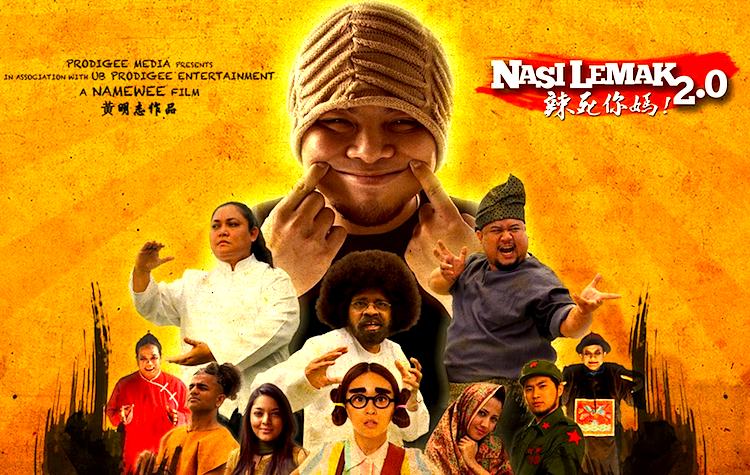
By Joe Bendel. Every country has its native rice dish. In Malaysia, it is nasi lemak. They also have their local political rabble-rousing rapper, known by his handle Namewee. The Malaysian government was not thrilled at the prospects of the latter extolling the virtues of the former, which is why they were less than supportive of this foodie movie. It was a hit nonetheless. Prepare yourself for generous helpings of multi-ethnic humor (that you might not fully get) when Namewee’s Nasi Lemak 2.0 (trailer here) screens at the 2012 New York Asian Film Festival.

Having studied abroad with a master, Hero Huang is an uncompromising specialist in Chinese cuisine. He is beloved in the neighborhood because he stands up to all the punks, but everyone prefers the street vendors’ Malaysian food. However, Xiao K. has need of a skilled Chinese chef. Control of her family’s upscale restaurant depends on a Chinese cooking competition instigated by her greedy aunt, who hopes to turn the establishment over to her lover, Lan Qiao.

Xiao K. and her father need a champion like Huang, but he has never beaten his old class rival Lan before. After enduring a few beatings and some official harassment at the behest of Xiao K’s aunt, Huang gets with the program and sets off on a roadtrip with her to discover the mystical secrets of Malaysian cuisine in all its ethnic varieties.

Supposedly there are a lot of jokes in Lemak that only Malaysians will understand, but the silly slapstickiness of it all is hard to miss. Reportedly, a few local professionally-offended Muslims were upset with the film, but it is hard to understand why unless you happen to be barking mad. The film could also have more cameos than Around the World in Eighty Days, but many of them will be lost on Western audiences. For instance, former Miss Malaysia Nadine Ann Thomas appears as Curry Daughter, whom Huang and Xiao constantly press to enter the Miss Malaysia contest while they stay with her curry-master father.

From "Nasi Lemak 2.0."

Namewee might have his Public Enemy moments in Malaysia, but Lemak is all rather gentle and well intentioned stuff. Essentially, it extols unity and tolerance through Don Rickles and Jerry Lewis style humor. Most of the musical numbers are comedic novelty numbers, such as the Bollywood parody, but the closing hip hop version of the Malay folk song “Rasa Sayang” is pretty cool.

Given his comfort with physical comedy and his big lummoxey screen presence, Namewee acquits himself just fine as Huang. Malaysian pop idol Karen Kong is also quite a good sport, buried under prosthetic Dukakis eye-brows, Pippi Longstocking pigtails, and Clark Kent glasses, but still projecting a vivacious earnestness.

Innocently goofy, Nasi Lemak 2.0 is ultimately more interesting to international audiences for what it represents for Malaysia than the on-screen humor. It is not the only film at this year’s NYAFF to mix music with beatdowns. Grandmaster Y.K. Kim & Park Woo-song’s The Miami Connection (video here) also screens at the festival, ahead of its in-your-face re-release later this year, courtesy of Drafthouse Films. The Miami Ninjas pick a fight with the wrong band when they try to roust Dragon Sound from their new gig at “Central Florida’s hottest new night club.” The ninjas and drug dealers might have formed an alliance, but they are no match for the one-two punch of Tae Kwon Do and cheesy 80’s synthesizer rock.

The plot is maybe a touch hackneyed (you know when a Dragon Sound member puts on a fancy new suit for a special occasion, he is in for a world of hurt) and the dialogue is what it is, but the fighting is pretty awesome—and since co-director and motivational speaker Grandmaster Kim will be attending the screening (demonstrating the power of Tae Kwon Do and motivating your lazy butt), you had better agree, if you know what’s good for you.

This is why we love NYAFF. You don’t see films like this at most other snobby festivals. So take note, Miami Connection screens this Thursday (7/12) as the New York Asian Film Festival continues at the Walter Reade Theater.

LFM GRADE: C+

Posted on July 10th, 2012 at 2:04pm.
LFM Reviews Collaborator

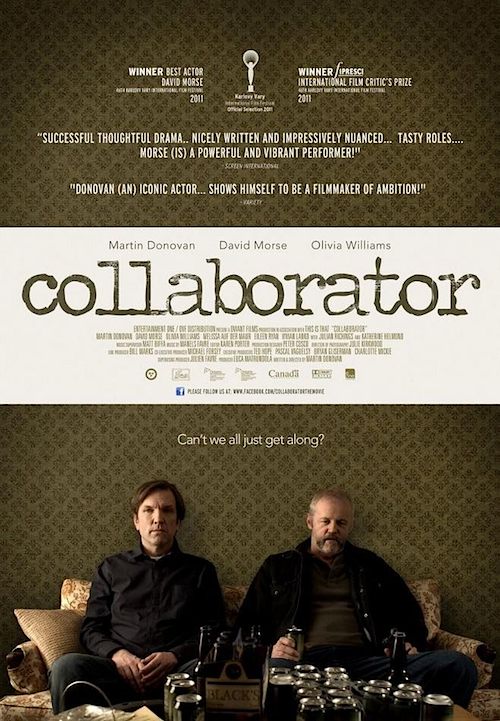
By Joe Bendel. If you are ever taken hostage, start doing acting exercises. Anyone that annoying is sure to be quickly released. It does not quite work that way for snobby leftwing playwright Robert Longfellow, but it is debatable just how much danger his captor really represents in Martin Donovan’s directorial debut and star vehicle, Collaborator, which opens today in New York at the IFC Center.

Smarting from the critical drubbing unleashed on his latest play (the appropriately pretentious sounding American Excursion), Longfellow left New York and his ever patient wife to visit his aging mother. As luck would have it, he is also able to re-connect with his former romantic interest, Hollywood actress Emma Stiles. His childhood acquaintance still living across the street also wants to hang. One of those right-wing ex-cons, Gus Williams has not made good. In trouble with the law again, Williams shows up with a gun and a shopping bag full of beers. Thus begins Longfellow’s hostage ordeal.

Donovan might have been Hal Hartley’s bro-muse in all those great 1990’s indies, but as a director-screenwriter he does not exhibit a natural talent for pacing or characterization. While he deserves credit for his relatively sympathetic treatment of Williams, we never really believe the hostage-taker would pull the trigger, at least with Longfellow on the receiving end. As a result, instead of a taut cat-and-mouse game, the deliberately stagey and static Collaborator feels more like forty-plus minutes of extended endgame, grinding along laboriously.

In lieu of plot progression, Longfellow engages Williams in a series of actors’ improvs designed to show the intellectual superiority of a New York elitist to the bitter red-stater. Yet, the truth is that both characters are just talking in clichés when they debate hot-button issues, such as the Viet Nam War. This is all supposed to reveal the fundamental essences of their psyches, but it really just leaves viewers shrugging, so what then?

Frankly, Donovan’s emotional frozen Longfellow, as well as David Morse’s wounded, anti-social Williams are only too familiar, following predictable development arcs. We have seen similar from both of them before. However, Olivia Williams has some intriguing moments as Stiles. Ironically, in Collaborator, the movie star is the most human character of the lot.

While the premise of Collaborator had potential, the execution never really clicks. There are some well turned moments here and there, especially from Ms. Williams, but it is clearly the product of an insular environment, much to its detriment. Highly skippable, Collaborator opened Friday in New York at the IFC Center.

LFM GRADE: D+

Posted on July 10th, 2012 at 2:02pm.

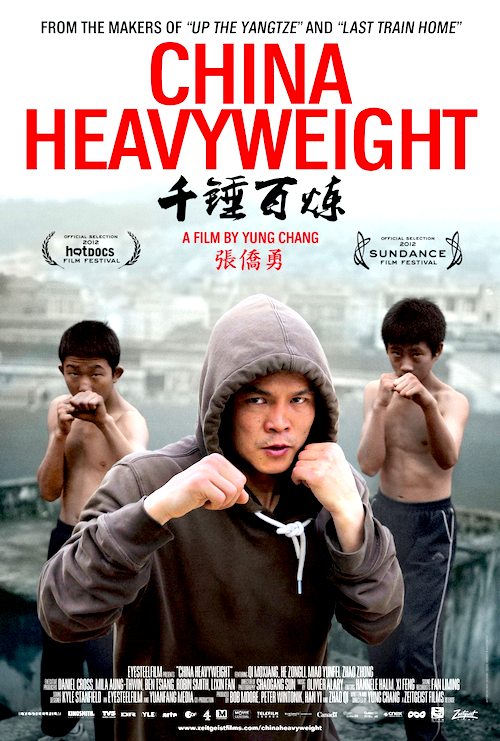
Looking for Rocky in Sichuan: LFM Reviews China Heavyweight

By Joe Bendel. Life in China must be improving. They now have round-card girls. Decades ago, Mao banned Olympic-style boxing on the grounds it was too western and excessively violent. He then launched the Cultural Revolution. Legalized in 1986, the Chinese boxing authorities are now taking a long view, recruiting potential Olympians at the middle school level. Yung Chang follows a contender turned coach and two of his fighters in China Heavyweight, which opens this Friday in New York at the IFC Center.

Boxing is an attractive alternative to working in the tobacco fields for many of the students in the Sichuan countryside. The sport has become a way of life for Coach Qi Moxiang. He recruits young boxers, both boys and girls, and directly oversees their training. He is tough, but popular with his charges.

At first, Chang’s primary POV figures appear to be He Zongli and Miao Yunfei, two boxers about to graduate to the regional level of competition. We see a fair amount of training and the mean condition of life in the province that they hope to escape. However, Heavyweight kicks into narrative gear about halfway through, when Qi decides to return to the ring to face a Japanese belt-holder. Suddenly, there is a traditional underdog boxing story unfolding in Sichuan.

Heavyweight is highly attuned to the economic disparities of contemporary China as well as the conflicts between tradition and the drive to modernize. However, Chang largely overlooks Sichuan’s recent tragic history. Rocked by an earthquake in May of 2008, anger boiled over at the local authorities for allowing the shoddy construction practices that acerbated its deadly toll. Sichuan could use a champion, but that might not be in the interests of the vested establishment.

Still, Chang has a good handle on the conventions of boxing movies, capturing some dramatic ringside action. There is even a scene of Qi’s boxers running up a series of ancient steps that echoes a certain film from 1976. He and cinematographer Sun Shaoguang also convey the harsh and lonely beauty of the surrounding terraced landscape. Viewers get a sense of the milieu, but besides Qi, the boxers’ personalities are not so strongly delineated (He is the shy one, while Miao is the slightly more confident one).

Shifting from an observational doc into old fashioned sports story, Heavyweight becomes more engaging as it goes along. The development of organized boxing post-Maoist insanity is a story worth telling, but as a socio-economic investigation, it is not nearly as telling as a raft of recent depressing Chinese documentaries, such as Zhao Liang’s jaw-dropping expose Petition, or the uncomfortably intimate Last Train Home, helmed by Heavyweight co-executive producer Lixin Fan. Oddly recommended more for the audience of HBO’s Real Sports than for serious China watchers, China Heavyweight opens this Friday (7/6) at the IFC Center.

LFM GRADE: B-

Posted on July 3rd, 2012 at 2:43pm.

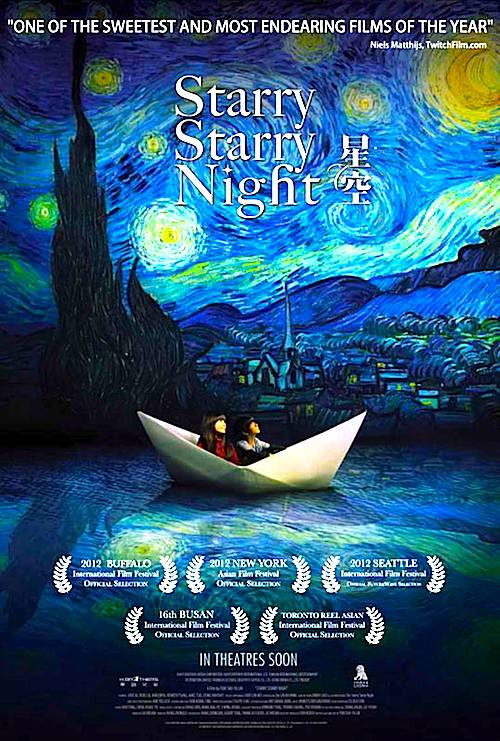
A Coming of Age Story for All Ages: LFM Reviews Starry Starry Night @ The 2012 New York Asian Film Festival

By Joe Bendel. It is tough being the kid with an artistic temperament in school. Having trouble at home is a double whammy for both Mei and Jay. At least they have each other’s support in Tom Shu-yu Lin’s Starry Starry Night, an exquisitely sensitive portrait of young love that opens this Friday in New York following its 2012 New York Asian Film Festival screening this afternoon.

Jay is a shy kid with a remarkable talent for creating art. He has a hard time making friends, because he and his mom must constantly move to new addresses. Mei has many friends, but is not particularly close to any of them. Her mother has taught to appreciate fine art through the jigsaw puzzles they use to put together as a family. Unfortunately, her parents are now too busy fighting to spend quality time with her. She feels her closest connection to her aging grandfather, who lives in a Kinkadean cabin in the woods, until she meets Jay.

At first it is a case of fascination for Mei, but as she and Jay share their mutual interests, an innocent friendship blossoms into innocent love. Grieving her grandfather and upset by the announcement of her parents’ impending divorce, she leads Jay on a journey to the late woodworker’s cottage nestled deep in the mountains.

In a nutshell, Starry could be considered the Taiwanese Moonrise Kingdom, except its young protagonists are far more endearing and their troubles are considerably more real. The closing credits even feature illustrations from Jimmy Liao’s picture book, upon which the film is based. Yet despite the more liberal use of CGI, bringing to life origami animals animated by the duo’s purity of spirit, Starry is much more grounded. Indeed, the emotional stakes involved in growing up and caring for others are quite real throughout Lin’s sympathetic screenplay.

Young Josie Xu carries a disproportionate share of the film’s dramatic load, but she is fantastic as Mei. Charming and vulnerable as circumstance demand, it is a remarkably assured screen performance. While his character is more reticent and reserved, Eric Lin Hui Ming is also quite compelling in Jay’s big revelatory scenes. Starry also boasts a special, too-significant-to-be-a-cameo appearance by Kwai Lun Mei in an epilogue completely one-upping anything Nicholas Sparks ever wrote.

True, Starry is not afraid of a little sentiment, but it earns its pay-off, every step of the way. Firmly but elegantly helmed by Lin, the film treats its young characters and their dilemmas with refreshing respect. Its lush, animated backdrops are truly striking, but the film never really engages in magical realism, per se. It is merely amplifying the feelings of its charismatic leads. Nonetheless, it is quite visually dynamic (with particular credit due to Penny Tsai Pei-ling’s design team), capturing the essence of Liao’s book. Enormously satisfying and hugely commercial, it is precisely the sort of international film that can break into the mainstream. Highly recommended for general audiences, Starry Starry Night opens this Friday (7/6) in New York at the AMC Empire and in Seattle at the AMC Pacific Place, courtesy of China Lion Entertainment.

LFM GRADE: A+

Posted on July 3rd, 2012 at 2:42pm.

Robert Flaherty & The Origins of the Documentary: LFM Reviews A Boatload of Wild Irishmen

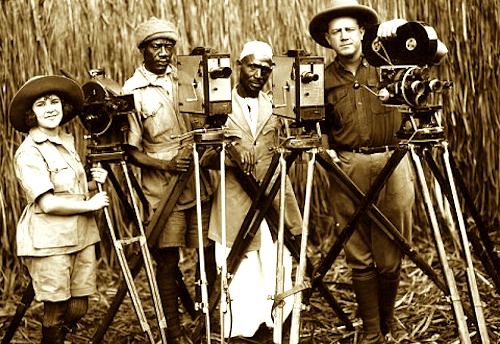
By Joe Bendel. Robert Flaherty is considered the father of documentary filmmaking. With Nanook of the North, he not only launched the modern documentary film genre, he also introduced the ethical questions that continue to dog non-fiction filmmakers. The legacy of Flaherty and the relatively small handful of films he actually completed is explored in Mac Dara Ó Curraidhín’s A Boatload of Wild Irishmen, which screens as part of this week’s Robert Flaherty series at the Anthology Film Archives.

Boatload opens with the dramatic closing scene of Flaherty’s masterwork, Man of Aran (see above). Struggling against a powerful surge, the salt-of-the-earth fishermen fight their way to shore. Flaherty did not just happen to be in the right place at the right time to capture the action, however. He either sent them out into the roiling tide, or they volunteered to go. Accounts differ, but everyone seems to agree the money Flaherty was offering played a role. Even then it would not have been much by Hollywood standards, but to residents of the Ireland’s hardscrabble Aran Island, it was significant.

Indeed, Boatload’s various on-screen commentators make it clear that staging scenes was a major part of Flaherty’s working method. Opinions regarding the Irish-American filmmaker appear to be mixed at best amongst contemporary Aran Islanders and Irish film scholars. However, such criticism of Flaherty’s authenticity is largely based on current standards of documentary filmmaking, which are rather selectively applied.

Groundbreaking documentary filmmaker Robert Flaherty (far right).

Ó Curraidhín paints a picture of Flaherty as more of an adventurer than an auteur. Rather than Jacob Riis, P.T. Barnum would be better considered his forerunner. So what if he did stage a scene, or a dozen? It was for the sake of a good show. In contrast, when recent documentaries like Gasland play veracity games, it is far more serious, because they are advocacy broadsides, arguing for punitive measures targeting specific companies and industries.

Clearly, Flaherty was not a take-only-pictures-leave-only-footprints kind of documentarian, as the interview with his Inuit granddaughter fully attests. Yet the Samoans still regularly screen Flaherty’s Moana, enjoying the sight of their ancestors on-screen, even if the episodes they are recreating were from generations before them. Obviously, the point is that there are many different ways to come to terms with Flaherty’s small oeuvre.

Refraining from passing judgment on Flaherty, Boatload emphasizes his larger than life persona and the lasting audience for his films. Ultimately, the people have spoken. Considerably more film patrons will attend screenings of Flaherty’s films this year than those of silent western superstar Tom Mix by a wide margin, a trend that continues this week at AFA. Informative and evenhanded, A Boatload of Wild Irish is a satisfying survey of Flaherty’s work and controversies. Recommended for those who enjoy films about filmmaking, it screens this Saturday through next Monday (7/7-7/9) in New York at the Anthology Film Archives.

LFM GRADE: B

Posted on July 3rd, 2012 at 2:41pm.

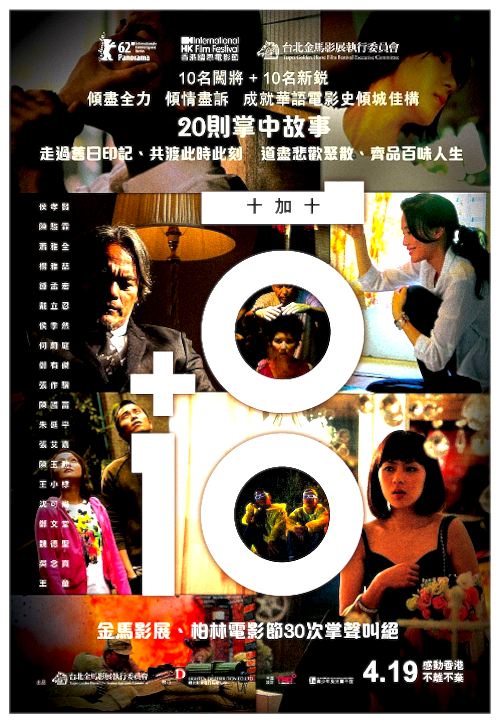
LFM Reviews 10+10 @ The 2012 New York Asian Film Festival

By Joe Bendel. Taiwan is a country with a tragic history and rich legacy of pop music. Both factor prominently when ten established Taiwanese filmmakers and ten emerging new talents were commissioned by the Taipei Golden Horse Film Festival to create a five minute films expressing the country’s unique character. The resulting anthology 10+10 screens this coming Thursday as an official selection of the 2012 New York Asian Film Festival.

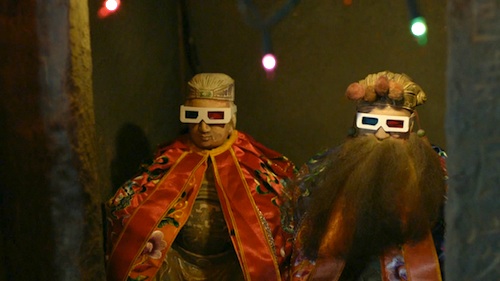
Viewers going into 10+10 should not get hung up on consistency. These twenty filmmakers will cover a lot of emotional and thematic ground. The tension between tradition and modernization will be a recurring motif, beginning with Wang Toon’s opener, in which a bickering pair of cousins treks up to a remote shrine. They intent to curry favor with the spirits by showing them the 3-D DVD of Avatar. It is a quiet but clever piece.

Nostalgia is also on tap in Wu Nien-jen’s A Grocery Called Forever. Depicting a spirited elderly woman who insists on keeping her family’s corner store open, it is a pleasant slice of life. Taiwan’s aging population play central roles in several constituent films, perhaps most touchingly in Cheng Wen-tang’s Old Man and Me. Told from the persona of a now deceased man suffering from Alzheimer’s, it serves as his thank-you to the townspeople who searched the countryside for him when he wandering off to his demise.

Given the approximate five minute durations, many of the installments are rather sketch-like. Indeed, entries like Wang Shaudi’s Destined Eruption and Yang Ya-che’s The Singing Boy seem to end just as they are getting started. However, several pack quite a bit of narrative into their limited running times. Somehow, Chang Tso-Chi’s Sparkles shoehorns the entire 1949 Battle of Kinmen Island into less than ten minutes. A powerful war film, it follows an innocent girl being escorted to the island’s doctor by the Nationalists, as they desperately try to hold off the invading Communists.

From "The Debut."

Featuring plenty of explosions, Sparkles is probably one of the most NYAFF-esque films in 10+10. The other would be Chung Mong-hong’s satisfyingly dark Reverberation. What starts as a teenaged bullying drama takes a dramatic u-turn into gangster territory. Karma will be a hard thing.

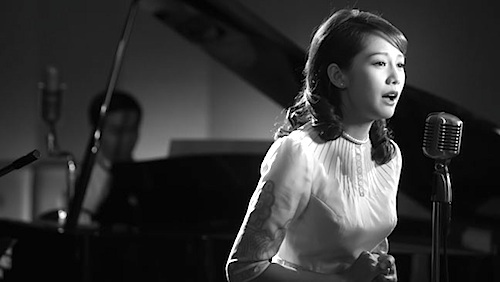
Easily the strongest shorts are those directly inspired by music. Chen Kuo-fu’s The Debut is a lovely ghost story, portraying the spectral encouragement offered to a discouraged pop ingénue by one of the great torch singers from yesteryear. Likewise, Rendy Hou Chi-jan pays tribute to the sentimental ballads of the 1960’s, depicting one song’s power to transcend time. Ranking just a notch below the lyrical pair, Cheng Yu-chieh’s Unwritten delivers some ironic laughs satirizing the concessions made by the Taiwanese film industry to the mainland market. Frankly, it is increasingly relevant to Hollywood as well.

Not every film works particularly well. Wei Te-sheng’s Debut ought to be a DVD extra for his aboriginal war drama Seediq Bale, essentially following his first-time actor Lin Ching-tai as they take the epic to the Venice Film Festival. Arguably, the low point comes with Kevin Chu Yen-ping’s uncomfortably manipulative and awkwardly didactic The Orphans.

From Wang Toon’s opening short in "10+10."

Surprisingly, there is a fair amount of star power in 10+10, including Shu Qi looking typically radiant in marquis contributor Hou Hsiao-hsien’s slight but nonetheless engaging closer La Belle Epoque. Kwai Lun Mei also graces Leon Dai’s oomph-lacking Key. Despite attempts to glam her down, she remains a vivid screen presence.

By their nature, anthology films are inherently uneven. Yet there are enough good things going on in 10+10 to satisfy connoisseurs of either short films or Asian cinema. On balance, it is an effective sampling of Taiwanese cinema, well worth a look when it screens this coming Thursday (7/5) at the Walter Reade Theater, as part of this year’s New York Asian Film Festival.

LFM GRADE: B-

Posted on July 2nd, 2012 at 1:31pm.