LFM Reviews Sammo Hung’s Seven Warriors; Now Available on DVD

By Joe Bendel. Seven is an auspicious number. There are the Wonders of the World and Deadly Sins. It also only takes seven hardnosed mercenaries to rally a small village’s defenses. The template created by Akira Kurosawa and burnished by John Sturges’ classic western is transplanted to Republican China in Terry Tong’s Seven Warriors, notably co-directed by Sammo Hung, which releases today on DVD from Well Go USA.

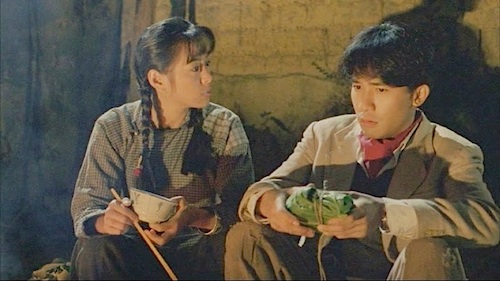
Right, you know how this goes. The women of a provincial village regularly plundered by outlaws shame their men into recruiting some hired guns. They find seven volunteers: Commander Chi, five of his former comrades-in-arms, and the over-eager country bumpkin Wong Way-wu. It quickly gets personal when Chi discovers an old colleague happens to be the chief warlord in question. The stakes also increase for Wong when he secretly shelters the sister of Hung Sap Kan, the leader of an aborted rebellion in a nearby village, who meets a premature end during the prologue.
From "Seven Warriors."

Viewers should have a pretty clear idea what they are dealing with from the old school foley effects and heroic synthesizer music. Compared to its two notable predecessors, Warriors is definitely the lesser of the Trio of Seven, but it still delivers plenty of high spirited period action. Also serving as action choreographer, Master Hung stages some nifty fight scenes. The overall body count is also rather impressive. Yet, what might standout most are the frequency and severity of mistakes made by the home team. You certainly cannot accuse them of comic book invincibility.

Master Hung also shows his moves that defy the laws of physics during his cameo smackdown as his namesake. It is also rather amusing to see a young “Little” Tony Leung Chiu Wai (now so familiar to us as the mature smoothie) as the rustic Wong. Both he and Wu Ma (best known for supernatural fare, like A Chinese Ghost Story) overdo the comic relief, but there will be plenty of tragedy to offset it.

There are some surprisingly striking visuals in Warriors, as well as some genuinely earnest performances. Hung keeps the action gritty and grounded and Tong maintains a respectable pace. Altogether, it works pretty well, especially for those for whom it will appeal to a sense of nostalgia. Recommended for genre fans, Seven Warriors is now available on DVD and Blu-ray from Well Go USA.

LFM GRADE: B

Posted on April 22nd, 2014 at 11:15pm.
LFM Reviews The Battered Bastards of Baseball @ The 2014 Tribeca Film Festival

From "The Battered Bastards of Baseball."

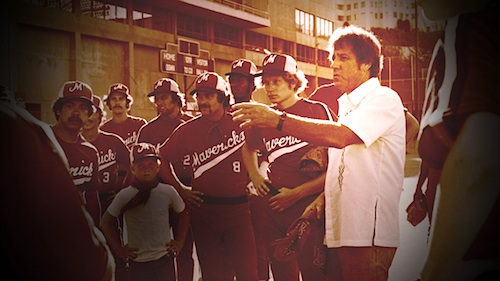
By Joe Bendel. They were like an adult version of the Bad News Bears. The Portland Mavericks were the last independent team to compete in Major League Baseball’s minor league system. Instead of simply developing prospects for big league affiliates, the Mavericks played to win. They also did their best to put on a show for the fans. Nearly thirty-seven years after their final game the Mavericks will entertain audiences once again when Chapman & Maclain Way’s documentary The Battered Bastards of Baseball screens at the 2014 Tribeca Film Festival.

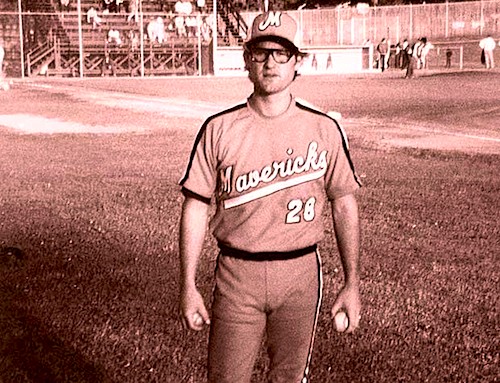
Bing Russell was a working actor still probably best known as Deputy Clem on Bonanza, but baseball was his first love. About the time the Cartwrights were finally canceled, Portland’s AAA farm club left the city for Spokane. To the bemusement of just about everyone, Russell decided to launch an independent Single-A club and announced open tryouts to fill out his roster. The sports establishment laughed, but a whole lot of people showed up. However, Russell was able to recruit one veteran minor leaguer: his son Kurt Russell, a.k.a. Snake Plissken. Oddly enough, the makeshift Mavericks started winning—and drawing. Of course, that rather embarrassed the baseball establishment.

A young Kurt Russell in "The Battered Bastards of Baseball."

Years later, Russell still chuckles at his father’s showmanship. In fact, Battered is one of the rare documentaries with no dirty family linen to air. Clearly, he thinks old man Bing was a cool cat and has the rest of us convinced in about thirty seconds. Without question, the senior Russell set the tone for the Mavericks, who consistently lived up to their names.

Yes, Battered is a sports doc, but it is also a show biz story, a family history, and a great big slice of Americana. Of special interest to cineastes, Oscar nominated director Todd Field also extensively reminisces throughout the film about his experiences as the Mavericks’ batboy. It is about rooting for the underdogs and defying the old boys’ network. Most importantly, Battered is even more fun than an Elvis bobble-head.

The Ways were blessed with a great story that is already being talked about as a potential narrative feature, but they make some shrewd presentation choices throughout the film. There are the odd poignant moments in Battered, but they generally revel in the madcap spirit of the team. Few docs ever fly by at such a breezy gallop. Very highly recommended for fans of baseball, either Russell, and defiantly idiosyncratic entrepreneurship, The Battered Bastards of Baseball screens this Wednesday (4/23) and Saturday (4/26) during the Tribeca Film Festival.

LFM GRADE: A

Posted on April 21st, 2014 at 9:10pm.

LFM Reviews Black Coal, Thin Ice @ The 2014 Tribeca Film Festival

By Joe Bendel. China’s working poor are regularly ignored and exploited, but from their ranks will emerge an unlikely black widow that even James Cain would appreciate. Wu Zhizhen toils thanklessly in a provincial dry cleaner, but the last three men to be romantically linked to her met with early demises. Her suspicious misfortune attracts the attention of a disgraced ex-cop in Diao Yinan’s Black Coal, Thin Ice, which screens during the 2014 Tribeca Film Festival.

In 1999, hard boozing Det. Zhang Zili is called to investigate the discovery of multiple body parts at the local coal processing plant. Learning other pieces have turned up at other facilities, Zhang connects the dots to the Liu brothers, two drivers with a sketchy past. However, his routine inquiry goes spectacularly bad. The case is presumed solved, but that will not save his career.

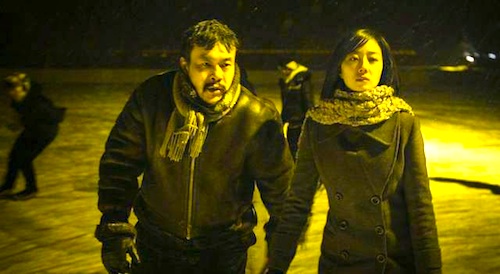
Five years later, an old colleague comes to Zhang for an off the books consultation. The widow of the dismembered coal corpse has just lost her third significant other to foul play. The two more recent bodies were both found wearing ice skates, suggesting an obvious pattern. Seeking some sort of personal satisfaction, Zhang starts following Wu, but she is neither careless nor easily intimidated. However, as she gets used to his presence, she starts to entertain his overtures.

Like a Taiwanese Bette Davis, Gwei Lun Mei is a deceptively innocent looking femme fatale, but still a powerfully seductive screen presence. Well suited for Wu, she keeps audience sympathies sharply divided and expectations off-balance throughout Coal. She is also probably the biggest international movie star gracing Tribeca screens this year.

From "Black Coal, Thin Ice."

Conversely, Liao Fan revels in Zhang’s anti-heroics and degenerate binging. In fact, his flaws run so deep he had to be cashiered out of the police force to satisfy the Chinese censorship board. Intriguingly off-kilter in a hardnosed kind of way, Liao deservedly won the Silver Bear at Berlin for his work.

In a way, Coal bridges the gap between Chinese “indie films” and commercial releases to a surprising extent. Everything that goes down in Diao’s narrative is ultimately attributable to systemic injustice and inequity. Wu may very well be involved in something nefarious, but it is impossible to judge her harshly. Yet, this pointed social commentary proved to be a monster hit at the Chinese box office.

Coal could be considered a Chinese noir in the tradition of Fargo. The weather is cold, the landscape is grim, and people often behave in a dark and unpredictable manner. It is all definitely good stuff. Highly recommended, Black Coal, Thin Ice is a head-and-shoulders stand-out at the 2014 Tribeca Film Festival, where it screens again tomorrow (4/22), Thursday (4/24), and Saturday (4/26).

LFM GRADE: A

Posted on April 21st, 2014 at 9:03pm.

LFM Reviews Journey to the West @ The 2014 Tribeca Film Festival

By Joe Bendel. Pilgrimages are supposed to be slow and arduous. That also seems to be the case for experimental cinema. Xuanzang, the iconic monk protagonist of Wu Cheng’en’s classic Ming-Era novel, led quite the adventurous life – but Tsai Ming-liang slows it down dramatically for his avant-garde contemporary riff, Journey to the West, which screens during the 2014 Tribeca Film Festival.

Tsai regular Lee Kang-sheng returns as ambling focal character from the director’s recent short, The Walker, but given the loaded title, we can also think of him as the second coming of fictional Xuanzang (or the historical Xuanzang on whom he was based). There will be no Monkey Kings for him to battle, but Denis Lavant will literally follow in his footsteps through the streets of Marseilles.

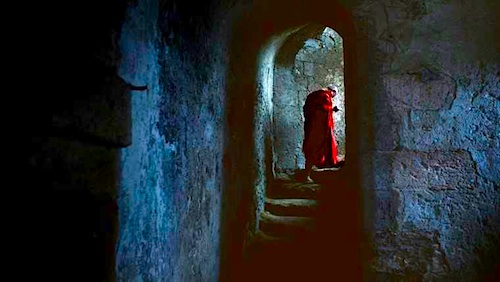
Tsai’s sense of composition is often slyly witty and cinematographer Antoine Heberle gives each frame the luster of Renaissance Old Masters, but there is no denying its static nature. This Journey is best considered in the tradition of film installations, such as Isaac Julien’s Ten Thousand Waves (soon to grace the San Francisco International Film Festival). However, the British filmmaker’s ode to Chinese goddesses is considerably more cinematic thanks to the spectacle of Maggie Cheung hovering above the Shanghai skyline in the guise of the goddess Mazu and Zhao Tao’s eerie recreation of scenes from tragic actress Ruan Lingyu’s definitive film, The Goddess.

From "Journey to the West."

Let’s be honest, extreme close-ups of Zhao and Cheung make much more sense than Lavant’s haggard countenance. Lee’s physical discipline is commendable and his featured calligraphy is quite elegant. It also just nice to see he and Tsai still share their close collaborative bond, but that is something one can glean from the festival write-up.

Frankly, it is mind-boggling to think the same source novel kind of-sort of inspired Tsai’s fifty-six minute Journey to the West and Stephen Chow’s breakneck apocalyptic smackdown of the same name. More interesting on paper than on screen, this is the sort of film you can duck into for a few minutes and pretty fully get its gist (whereas Waves genuinely sucks viewers in). Festival goers will have a chance to do exactly that when the Tribeca Film Festival presents Tsai’s Journey free of charge at MoMA PS1, playing continuously from noon to 6:00 this Thursday, Friday, and Saturday (4/24-4/26). It also screens conventionally this Tuesday (4/22) at the SVA Theater, but only those who deem plot and characterization optional should consider it.

Posted on April 21st, 2014 at 8:55pm.

LFM Reviews Bends @ MoMA’s ContemporAsian 2014

By Joe Bendel. Anna Li is a lady who lunches. She is not Marie Antoinette. She simply is unprepared for the speed at which fortunes can reverse in Hong Kong. Her Mainland chauffeur is not a revolutionary. He simply wants a safe delivery for his pregnant wife, but they cannot afford the punitive second child fee. Each will face an economic crisis, but Fai’s will be exacerbated by geography in Flora Lau’s Bends (more sensibly known as “Crossing the Border” in Chinese language territories), which launches the new season of ContemporAsian at MoMA.

Li organizes charity events and looks good on her husband’s arm at business functions. She seems quite satisfied with how things have turned out, even if her spouse is a bit of a shark and a player. The fact that he has not been home for several days does not seem to raise any red flags for her, but she definitely takes notice when her credit cards are declined. Finding their accounts drained or frozen, Li starts hocking the family art collection to keep up appearances in her social circle.

Meanwhile, Fai has his own problems. Although he has been granted HK citizenship, his wife Ting is still Mainland PRC. To hide her advanced pregnancy, she becomes a veritable prisoner in their Shenzhen flat. It is all very confusing for their little girl Haihai. Fai needs money to smuggle her across the border and a hospital admission letter to secure her a bed for delivery, but both are hard to come by for a man of his position.

Bends sounds about as hot-button as it gets, indicting HK’s laissez-faire economy on the right and the Communist Party’s unforgiving family planning on the left. Yet, the execution is decidedly quiet and intimate. Happily, Lau offers viewers character studies rather than white papers, but the first time director’s sense of pacing is still a bit flat. However, she gets a key assist from superstar cinematographer Christopher Doyle, who makes it all look coolly elegant.

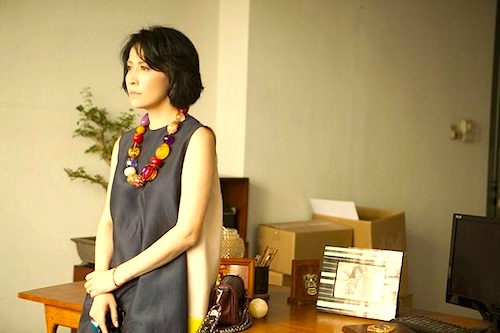
From "Bends."

Yet, it is unquestionably Carina Lau who makes the film. Approaching legendary status, Lau still makes a convincing trophy wife, but it is her chops that truly impress in Bends. Despite Li’s outward reserve, Lau clearly expresses her mounting confusion and anxiety. At the risk of belaboring the point, Lau brilliantly pulls viewers into Li’s inner turmoil rather than resorting to the sort of bug-eyed arm-flailing Meryl Streep over-indulged in throughout, for example, Osage. What else can we say? Lau is simply much better at her craft.

Understatement is all very well and good, but Chen Kun nearly wilts into the background as Fai. Nevertheless, a strong supporting cast keeps him propped up in key scenes. Even with limited screen time, Stephanie Che makes a lasting impression as Lulu, Fai’s old HK flame, who now works as a maternity nurse. As Ting and Haihai, Tian Yuan and young Tu Jiamen also humanize the story rather compellingly.

There is no denying the wider issues raised by Bends, but it is only zeitgeisty after the fact. In the moment, it is unflinchingly intimate in its focus. Recommended for fans of Lau and those who appreciate films helmed by women, with great roles for women, Bends screens tonight through Sunday (4/21-4/27) as part of MoMA’s regular ContemporAsian film series.

LFM GRADE: B+

Posted on April 21st, 2014 at 8:50pm.

LFM Reviews Last Passenger

By Joe Bendel. Driving is the American way to commute. It suddenly does not look so bad for a handful of Brits trapped on a runaway train. The end of the line looms ominously in Omid Nooshin’s surprisingly spry thriller Last Passenger, which opens this Friday in New York.

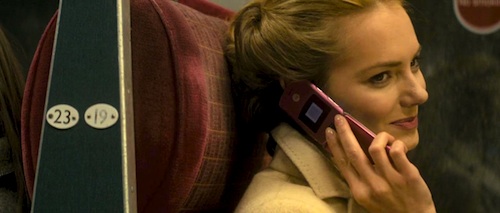
Lewis Shaler tries to be a conscientious single father, but the demands of his emergency room practice often tax his young son Max’s patience. They are headed home from London on a redeye express, so Dr. Shaler can perform an emergency operation. At least they have a volunteer to help them pass the time. There might even be a halting attraction brewing between Shaler and the charming Ms. Sarah Barwell.

Unfortunately, events will interrupt them when Shaler starts to suspect something is amiss. Initially, nobody wants to get involved in matters like the disappearance of the porter. However, when the train starts blowing through scheduled station stops they quickly start to care. It turns out a mystery man has barricaded himself in the control room and disabled the emergency brakes. Of course, the outside authorities are slow to react, but it hardly matters. This is a diesel train, so there is nothing they can do to cut the power.

Perhaps transportation safety engineers could poke dozens of holes in Nooshin and Andrew Love’s screenplay, but its internal logic holds together pretty well for mere mortals. Obviously, there is a massive ticking clock counting down in the background, but the quiet moments work just as well. Nooshin vividly captures the eerily detached vibe of a late night train whooshing through nocturnal blackness. The mix of personality types and tics amongst Shaler’s fellow passengers also nicely follows in the tradition of great train suspense stories, going all the back to Hitchcock’s The Lady Vanishes.

From "Last Passenger."

Dougray Scott has become something of an overlooked leading man since the days of Ever After and MI: 2, but he anchors the film with understated strength and sensitivity. He definitely comes across as the sort of surgeon who would inspire confidence in patients. He also develops some relaxed but convincing chemistry with Kara Tointon’s Barwell. The supporting cast also feels right, particularly Iddo Goldberg (in a complete change of pace from Kat Coiro’s And While We Were Here) as an Eastern European immigrant transit worker.

Obviously, the question of who would do such a thing is hard to ignore, despite the narrative’s considerable tension. Nooshin & Love suggest (and never refute) a hypothesis that evades hot button ideological issues, but might be even more disturbing for what it implies regarding human nature. Regardless, they keep the train hurtling down the track. Frankly, there is something refreshingly old school about the smaller scope and corresponding emphasis on character. Recommended with unexpected affection for general thriller audiences, Last Passenger opens this Friday (4/25) in New York.

LFM GRADE: B+

Posted on April 21st, 2014 at 8:42pm.