Cantor Fitzgerald & 9/11: LFM Reviews Out of the Clear Blue Sky @ DocuWeeks 2012

By Joe Bendel. A prestigious Wall Street firm specializing in Treasury securities, Cantor Fitzgerald suffered more losses on September 11th than any other organization, including the New York Police and Fire Departments. The numbers are staggering: 658 of their 960 New York employees died that morning. However, Cantor’s story did not end there. Filmmaker Danielle Gardner, whose brother Doug was one of the 658, documents CEO Howard Lutnick’s efforts to support the anguished Cantor families while desperately working to keep the firm afloat during its darkest hours in Out of the Clear Blue Sky (see clip above), which is currently screening as part of the 2012 DocuWeeks New York.

Had it not been the morning of his young son’s first day of school, Lutnick surely would have been at Cantor at the time of the attack. With offices several floors above the initial impact zone, Cantor employees never had a chance. Rushing to the scene only to witness the Towers’ collapse, Lutnick and a handful of senior staff began scrambling to determine who survived. With the enormity of their loss weighing on him, a distraught Lutnick became the public face of the tragedy. Yet, as some family members lashed out Lutnick in frustration, the media turned on Cantor, hard.
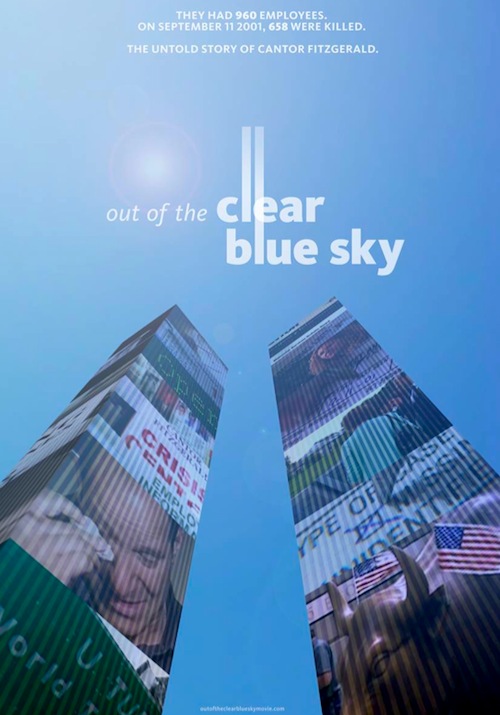
Blue’s stories of grief and remembrance are truly heartrending. Surprisingly, though, it is also a compelling business documentary, providing an inside account of Cantor’s fight to survive during the precarious days following the fateful Tuesday. Their resourcefulness is quite extraordinary, conducting Twenty-First Century financial transactions with scrounged office supplies. Of course, the stakes were high. Had the firm folded, Lutnick’s ability to help Cantor families would have been severely limited. Indeed, that behind-the-scenes look at Cantor’s tenacious rebound is what sets Blue apart and above other well meaning 9-11 documentaries.

As a member of their ranks, Gardner clearly earned the trust of Cantor families, eliciting some unusually eloquent testimony from her interview subjects. While there are many emotionally charged scenes, the film never feels intrusive or exploitative. (The only exception might be Lutnick’s tearful television interviews recorded within days of the attack, which have already been replayed innumerable times in the media.) Indeed, Gardner deftly walks the tightrope, directly conveying the rawness of survivors’ pain, without reveling in it.

While the media does not cover itself in glory for uncritically recycling complaints against Lutnick, the overall film is scrupulously nonpartisan. Too many misguided people would prefer to forget or deny the horrific events of September 11th. Worse still, some might even be inclined to dismiss Cantor as an instrument of the “1%” amid the current polarized climate. Blue acts as a valuable corrective to such impulses, reminding viewers the Cantor employees lost at the World Trade Center were all individuals from diverse backgrounds, who left behind friends and loved ones. Poignantly engaging but also quite an enlightening portrait of corporate resiliency, Out of the Clear Blue Sky screens through Thursday (8/16) at the IFC Center in New York, with a week’s run at the Laemmle Noho to follow (8/17-8/23) in Los Angeles, as part of this year’s DocuWeeks.

LFM GRADE: A-

Posted on August 13th, 2012 at 1:39pm.
LFM Reviews Ricky on Leacock @ DocuWeeks 2012

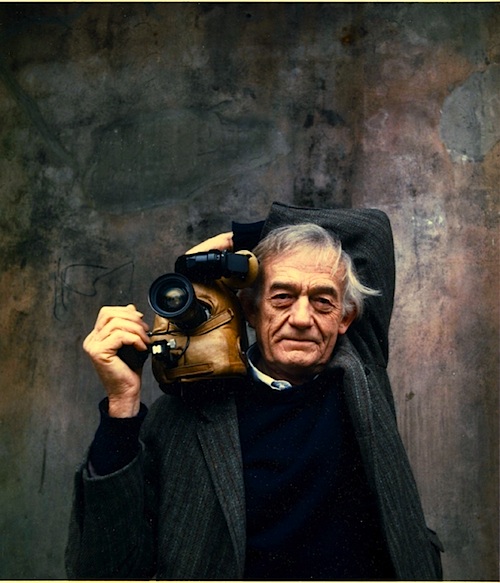
Documentarian Richard Leacock.

By Joe Bendel. For many, Richard Leacock was Mr. Documentary, directly inheriting the title from Robert Flaherty, with whom he once worked. Since his name is attached to many of the Twentieth Century’s acknowledged exemplars of the field, his reputation was not without merit. Longtime friend, colleague, and protégé Jane Weiner collects decades of footage she shot of the verité pioneer in her documentary profile Ricky on Leacock, which screens as part of the 2012 DocuWeeks showcase.

Leacock shot his first documentary as a teenager to serve as a PR film for his father’s banana plantation. Decades later, Canary Island Bananas is still regularly screened at Leacock tributes and retrospectives. Obviously not exactly from humble roots, Leacock was educated at private boarding schools. It was at one such institution Leacock happened to meet Flaherty, who promised to hire Leacock after viewing Bananas. Though Leacock dismissed the pledge at the time, he did indeed find himself side by side Flaherty shooting footage for Louisiana Story.

Frankly, Flaherty’s 1948 classic boasts some of the strongest images collected in Weiner’s documentary, along with the uber-cool visuals of Roger Tilton’s smoking short, Jazz Dance, on which Leacock served as a cinematographer with Jimmy McPartland’s combo providing the music (with Willie “the Lion” Smith on piano, Pee Wee Russell on clarinet, and the great slap bassist Pops Foster, oh yes indeed). Yet problematically, many of his grungy later super-eight micro-docs that fired Leacock’s passion are not so powerful looking when collected on-screen.

Leacock back in the day.

Granted, there are some interesting making-of stories about Leacock’s films, including his collaborations with D.A. Pennebaker, who shares some on-camera reminiscences. Yet, the fact is that Leacock’s oft repeated calls to “democratize” documentary filmmaking sound awfully dated in the digital age, as does the invective he directs towards television. His frustration might be understandable, but frankly if you cannot get anyone with a financial stake to share your vision for a project, perhaps that ought to tell you something – especially considering his filmography includes the sharply critical Ku Klux Klan—the Invisible Empire produced for CBS in 1965.

Regardless, Weiner cannot seem to get enough of her teacher’s words of wisdom. Granted, Leacock had a distinctive voice, but his opinions are not always as timeless as his best films. She also loves to watch him cook, which is fine the first few times we watch him putter about the kitchen.

The result is a moderately interesting oral history of documentary filmmaking probably best suited to the television Leacock so brusquely dismissed. Tilton’s Jazz Dance is highly recommended for all audiences (check out Jeff Van Gundy getting down around the 8:06 mark), whereas Ricky on Leacock is strictly for those who have an abiding fascination with the work of Leacock and select collaborators, like Pennebaker and Flaherty. It screens through Thursday (8/16) at the IFC Center in New York and then runs for a week (8/17-8/23) at the Laemmle Noho 7 in Los Angeles as part of the 2012 edition of DocuWeeks.

LFM GRADE: C

Posted on August 13th, 2012 at 1:37pm.

LFM Reviews Painted Skin: The Resurrection

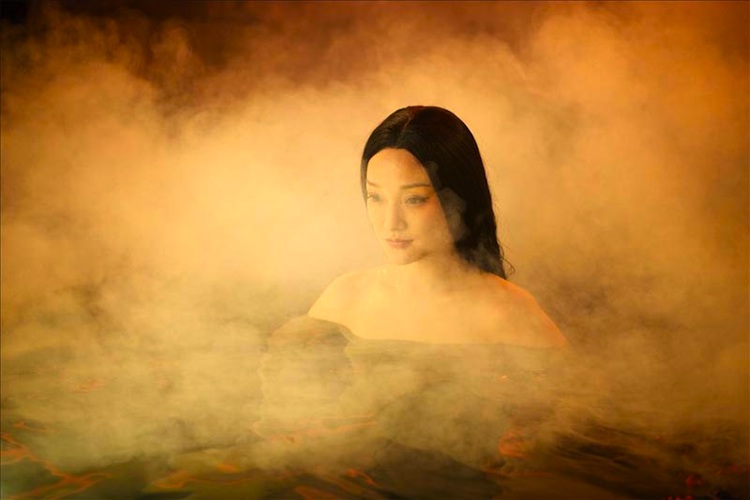
Xun Zhou in "Painted Skin 2: The-Resurrection."

By Joe Bendel. Can you have sympathy for a demon like Xiao Wei? You might if she looked like Zhou Xun. Her story is indeed a tragic one, rooted in heartaches past. Nonetheless, as a fox demon, she must constantly consume human hearts. Still, she yearns to become human herself in Wuershan’s wuxia paranormal romance Painted Skin: The Resurrection (trailer here), which opens this Friday in New York.

Those who have not seen the previous Painted Skin (or King Hu’s prior adaptation of the Pu Songling story) should not be concerned. The sequel is practically a complete reboot. Xiao Wei is doing her thing once again, tearing men’s hearts out (literally), with only the bird demon Quer for companionship. As she preys on powerful men, she hopes in vain someone will willingly and knowingly offer theirs up to her, so that she may become human again. The clock is ticking, though. A looming solar eclipse may spell the end of her.

Suddenly deliverance might have arrived in an unlikely form, when a warrior with a smoldering heart “rescues” Xiao Wei from marauders. However, this is no hero—this is the Princess Jing, masking herself to hide the scars she received in a rather nasty teenaged encounter with a bear. General Hou Xin blames himself for that incident. He also still harbors a forbidden love for the Princess he failed, which she reciprocates. Yet, even the true blue palace guard is no match for a fox demon’s bewitchments, setting the stage for a supernatural love triangle. Meanwhile, the rival Tian Liang clan is making threatening noises. Unfortunately, the Princess and her General are distracted by the agitation caused by Xiao Wei’s presence. That’s what happens when you have a demon in your midst.

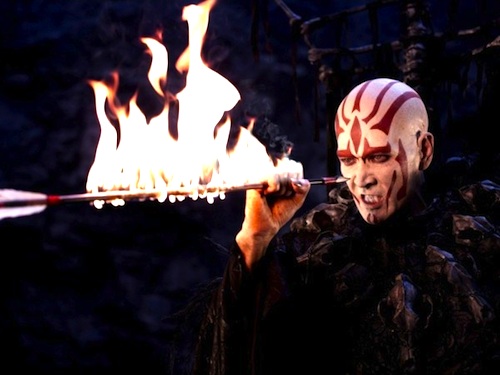
From "Painted Skin 2."

Then again, Xiao Wei is not really the villain in this story. Her yearning to live is somewhat akin to Larry Talbot’s search for the secret of death in the classic Universal Wolfman films, except Zhou Xun is obviously no Lon Chaney, Jr. to look at – not by a long shot. As Quer the bird demon Mi (Mimi) Yang is also cute as a button. In fact, she develops some surprisingly sweet romantic chemistry with Pang, an unprepossessing demon hunter, by virtue of his bloodline. It is a surprisingly appealing turn by Feng Shaofeng, evolving from somewhat cringy comic relief into a legit secondary hero.

For a special effects-laden tale of demons and swordplay, Resurrection has unexpected depth of feeling and a third act reversal that works quite well, at least before Wuershan resorts to the Harry Potter-esque thunder-and-wrath climax. The real fireworks involve the two alluring co-leads. Blessed with an extraordinary expressiveness (check her out in Equation of Love and Death, if you can), Zhou renders the fox demon as a fully dimensional, deeply tragic figure. Though Zhao Wei occasional flirts with melodramatic excess, as Princess Jing, she effectively expresses romantic longing while totally rocking the Phantom of the Opera-style mask. Chen Kun’s Hou broods and pines well enough, while Yang and Feng consistently inject energy and verve into the proceedings. Unfortunately, the evil Tians are not well defined, though Chen Tincha and Fei “Kris Phillips” Xiang certainly look menacing as the dastardly clan princess and sorcerer, respectively.

Featuring several dangerous women, a few men who are a bit slow on the uptake, and a whole lot of frustrated ardor, Resurrection is a far better date movie than most wuxia epics. It is also a great showcase for Zhou. Recommended for her fans and those who appreciate big, dark uncanny spectacles with a strong human element, Painted Skin: The Resurrection opens this Friday (8/17) in New York at the AMC Empire and in San Francisco at the AMC Metreon and Cupertino.

LFM GRADE: B

Posted on August 13th, 2012 at 1:35pm.

LFM Reviews It is No Dream: The Life of Theodor Herzl

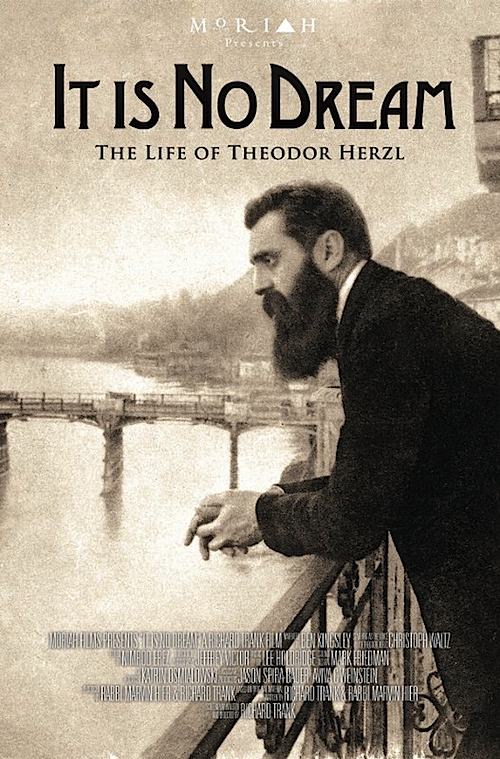
By Joe Bendel. Theodor Herzl once advocated mass Jewish conversion to Christianity, but would nonetheless become a unifying leader for the Jewish Diaspora. Profoundly concerned about the rise of anti-Semitism, his fears would be dreadfully justified in the years soon following his death. Yet, they provided the early impetus for the Zionist movement that ultimately led to the founding of the State of Israel. His life and mission are documented in Richard Trank’s It is No Dream: The Life of Theodor Herzl, which opens this Friday in New York.

Herzl believed that if an anti-Semitic wave could sweep across France, the cultural capitol of Europe in the 1890’s—and it was—it could happen anywhere. Never particularly religious, covering the Dreyfus Affair as a journalist forced Herzl to take stock of his own Jewish heritage and seriously address the increasing volume of European anti-Semitism. His early ideas proved impractical on further reflection, but the notion of a sovereign Jewish state (not original to Herzl) remained a viable option.

For the remaining years of his life, Herzl became the preeminent leader of the movement to forge a Jewish homeland, making his case to some of Europe’s most influential power brokers, including the Kaiser. For Herzl, the only question was where. Eventually, the colonial territory entrusted to England by a League of Nations mandate, known at the time as “Palestine,” became the obvious choice, given the Jewish people’s deep roots to the region. However, Herzl was appalled by the backwardness and poverty of the British Mandate during his first visit. Still, this did not disqualify the small tract of land from consideration. Arguably, it made even more sense on several levels.

Produced by Moriah Films, the Simon Wiesenthal Center’s film production subsidiary, Dream is a welcome and necessary antidote to malicious attempts to make “Zionism” a dirty word in the media. Trank and co-writer-co-producer Rabbi Marvin Hier clearly illustrate the alarming nature of anti-Semitism during Herzl’s lifetime, largely leaving unspoken (but ever-present in viewer’s minds) the enormity of the Holocaust, which would tragically vindicate all his fears.

Narrated by Academy Award winner Sir Ben Kingsley, with fellow Oscar winner Christoph Waltz giving voice to Herzl’s letters and writings, Dream has a fair amount of star power for a serious historical documentary. With an elegant score composed and conducted by the Emmy winning Lee Holdridge (whose credits including Moonlighting), Dream is a pretty prestigious package, but the real attraction is Herzl’s short but epic life-story, which will probably come as a revelation to many viewers outside the Jewish faith. Though perhaps not the target market, it is those viewers of good will not especially schooled in Jewish history who would get the most out of the film.

Consistently fascinating and never dry, Dream tells a compelling story that remains only too timely for the world today. Well paced and informative, It is No Dream is recommended for general audiences, regardless of religion or political affiliation, when it opens this Friday (8/10) in New York at the Quad Cinema.

LFM GRADE: B+

Posted on August 8th, 2012 at 1:05pm.

Bring Your iPad: LFM Reviews Spike Lee’s Red Hook Summer

By Joe Bendel. For the final cut of Pulp Fiction, Quentin Tarantino deleted a scene of Uma Thurman talking to John Travolta through the lens of a camcorder. It was already too clichéd. That was nearly twenty years ago. In his latest film, Spike Lee heavily relies on a similar device, hoping the upgrade to an Apple iPad makes it seem fresher. Such a strategy perfectly represents the tired blood of Red Hook Summer, which opens this Friday in New York.

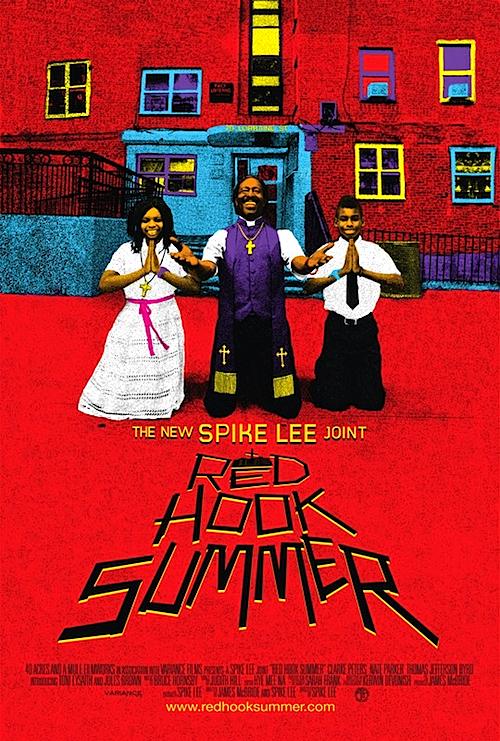
Colleen Royale can hardly stand her father, Enoch Rouse, introduced to viewers as “Da Good Bishop” of the Little Piece of Heaven church, or his old time religion. Nonetheless, she deposits her anti-social suburban son Flik in her father’s Red Hook housing project apartment for the summer. Like a little Spike Lee, Flik has a compulsive need to film the world around him, but no faith. Thus begins a generational cold war, with the minister determined to bring the young cuss to Jesus.

Frankly, Hook’s first two sluggish acts are downright laborious, but grandfather and grandson seem to be building a relationship by meeting each other halfway. That would be a worthy enough lesson we could all stand to be reminded of again, if the film followed through on it. Instead, Lee foists one of the laziest, most obvious third act revelations on viewers, completely undermining any good will he might have built up thus far. Remember Enoch Rouse is a man of the cloth. Anyone who has seen a Hollywood film in the last twenty years should be able to guess the rest.

Yet, since Hook clearly implies Rouse’s daughter has a good idea what her father’s deep dark secret is, it is absolutely baffling why she would send her son to stay with him unsupervised, with only his annoying sense of entitlement for protection, unless she is just understandably sick of the sullen brat. No matter, Lee is determined to pull Rouse through the gauntlet, which he does in punishing, Grand Guignol style.

To be fair, Clarke Peters does his best to maintain Rouse’s basic humanity, working like his soul depends on it, but Lee stacks the deck against him. Nonetheless, his performance stands head and shoulders above the rest of the cast. That includes Lee himself, briefly appearing in the guise of Do the Right Thing’s Mr. Mookie, clearly hoping viewer enthusiasm for his defining film will rub off on this wan return to the County of Kings.

Hook is a bad movie, but it is not the fault of the musicians. New Orleans’ Jonathan Batiste performs some stirring Hammond B-3 solos and brings some refreshing energy to film when appearing in character as “Da Organist” TK Hazelton. Likewise, Bruce Hornsby draws on his jazz chops for a pleasing gospel influenced instrumental soundtrack.

Yes, Hook sounds great, but the paucity of originality is honestly depressing. Perhaps it is time for Lee to follow Woody Allen’s lead and leave his beloved New York to make a psychological thriller with social climbing Londoners. At least then he would not have the overpowering temptation to fall back on his predictable Spikisms. Not recommended, Red Hook Summer will disappoint even Lee’s most dogged champions when it opens this Friday (8/10) in New York at the AMC Empire.

LFM GRADE: D-

Posted on August 8th, 2012 at 1:04pm.

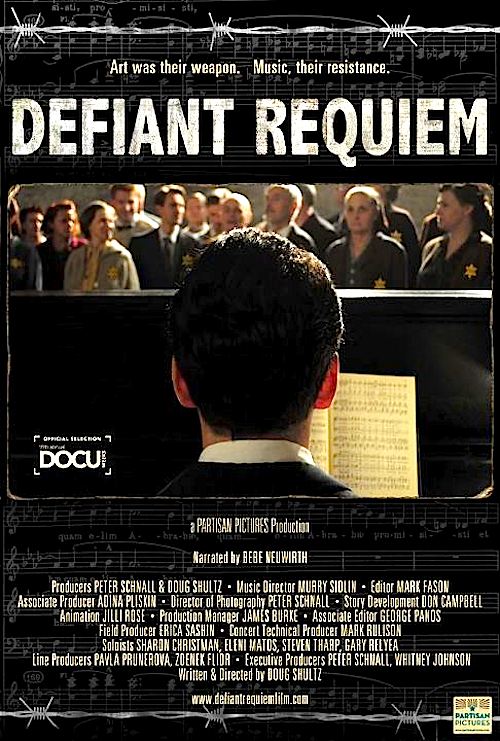
LFM Reviews Defiant Requiem @ DocuWeeks 2012 in NY & LA

By Joe Bendel. A Catholic requiem in a concentration camp might sound like a problematic endeavor. So it was, but not necessarily for the reasons one might assume. It was actually the programming choice of a group of prisoners, led by a remarkable maestro. The story of the Terezin performances of Verdi’s Requiem and the subsequent on-site re-staging for survivors decades later are documented in Doug Shultz’s Defiant Requiem, which screens as part of the 2012 DocuWeeks in New York and Los Angeles.

Verdi’s Requiem is a draining chorale work, in many ways. It would not seem like a natural piece of music to unwind with after a hard day of labor—slave labor to be more accurate. However, these were far from normal times for the Terezin (a.k.a. Theresienstadt) concentration camp captives. These Czech citizens had been swept up by the conquering National Socialists and held at Terezin until they were deported to a death camp. Nonetheless, many died at Terezin due to the inhuman conditions, but a determined young conductor harnessed the power of music to keep their spirits up.

Gathering those interested around an old upright providentially discovered in the basement of his barracks, Rafael Schächter started his make-shift chorus off with Czech popular songs and Smetana operas, but he eventually coaxed them into the Requiem. The key might have been his translation of Verdi’s Latin into Czech. As Murry Sidlin, the conductor of the commemorative Requiem concerts observes, the Requiem’s lyrics hold tremendous meaning for anyone unjustly denied their liberty and dignity. Rife with prophesies of judgment from above, Verdi’s opus is not just a requiem. It became a J’Accuse—an indictment of the National Socialist crimes so bold, only the International Red Cross inspectors could miss its significance.

Yes, the Requiem was performed at that Terezin, the concentration camp temporarily remodeled into a Potemkin village to fool the Red Cross. It was there that Sidlin brought members of Catholic University of America chorale ensemble and a full orchestra, for an emotional performance.

In fact, mounting Verdi’s Requiem and telling the story of Schächter has become a mission for Sidlin, who serves as the film’s musical director and one of its primary commentators. It is an important story, but the film also fosters a greater appreciation for Verdi’s work. Wisely, Shultz takes a rather traditional documentarian approach, largely approximating the shape of Sidlin’s music-with-historical-context concert presentations of the Requiem, filling in here and there with tastefully recreated scenes in the rehearsal cellar and some animated sequences adapted from surviving Terezin drawings. This is hardly the place to get experimental, after all.

Granted, anyone who knows anything about the Holocaust and the fate of the Terezin prisoners in particular will sadly know exactly what to expect from the film. Nonetheless, it deepens our understanding of life at Terezin and offers up an example of music as an instrument of survival. Frankly, hearing some of the stormier passages promising divine justice will likely make viewers’ hair stand on end. Highly recommended precisely for such memorable moments, Defiant Requiem screens through Thursday (8/9) in New York at the IFC Center as part of DocuWeeks New York as well the week of August 17-23 during DocuWeeks LA.

Posted on August 6th, 2012 at 12:58pm.