LFM Reviews Beltracchi: The Art of Forgery

By Joe Bendel. Family is important to notorious art forger Wolfgang Beltracchi. His closest accomplice was his wife Helene and his documentarian is the son of his lawyer, Reinhard Birkenstock. Beltracchi’s best forgeries were not copies of known works, but rather “newly discovered” works from important early Modernists, designed to fill holes in their oeuvres. This was not a new approach to art fraud, but Beltracchi was unusually successful at it. Even now, the art world still does not know how many of his “originals” have penetrated into museums and galleries. The rather unrepentant forger has no intention of revealing those secrets in Arne Birkenstock’s Beltracchi: The Art of Forgery, which opens this Wednesday in New York at Film Forum.

Thanks to a lenient work release program, the Beltracchis still enjoyed the fruits of their criminal endeavors during the day, puttering around their villa before returning to prison in the evening (supposedly they are employed by a friend’s photography studio). Wolfgang Beltracchi is now required to paint solely under his own name, but he shows Birkenstock how it is done, for old times’ sake. He is happy to explain the process, but plays it coy when asking for specifics on his past forgeries.

It is a shame Art of Forgery was not released while the Beltracchis were serving their sentences, because it could have spurred the court to revoke their privileges. Clearly, Birkenstock expects viewers to consider Beltracchi a roguishly jolly Falstaffian fellow, but instead we see someone who always manages to flaunt the rules. Frankly, it is annoying. There are also predictable questions raised regarding the fundamental value of art. Beltracchi and Birkenstock are definitely right about one thing, the current market climate gave experts every incentive to give his forgeries a pass, rather than digging into them with a fine tooth comb.
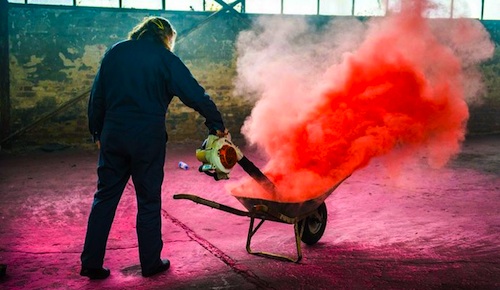
From "Beltracchi: The Art of Forgery."

There is no question Art of Forgery would have been a more compelling film if it had taken a more narrative-focused true crime approach, in the tradition of Smash & Grab and The Life and Crimes of Doris Payne. Art and Craft, the documentary profile of the socially awkward forger Mark Landis might be an obvious comparative film, but filmmakers Sam Cullman & Jennifer Grausman give nearly equal time to Landis’s Javert, thereby establishing conflict. Instead, Birkenstock’s film is like one long boasting session for Beltracchi.

Between Beltracchi and Landis, it is hard to have confidence in the integrity of any art you might find in most respectable institutions. That is not good for fine art’s place in the wider universe. Beltracchi’s story is indeed fascinating, but Birkenstock never fully tells it, omitting for instance a former business partner’s allegations he burgled their gallery (a nice bit of sensationalism surely worth re-dredging). Unfortunately, Birkenstock is just too thoroughly charmed by his subject. Beltracchi: the Art of Forgery has its intriguing moments, but it is too much like an artist’s working process doc, like Gerhard Richter Painter, which is a tad problematic for a film about a convicted forger. A mixed bag best enjoyed by those who bear a grudge against the established art world, it opens this Wednesday (8/19) at New York’s Film Forum.

LFM GRADE: C+

Posted on August 17th, 2015 at 9:25pm.
LFM Reviews Cut Out the Eyes @ Cinema on the Edge

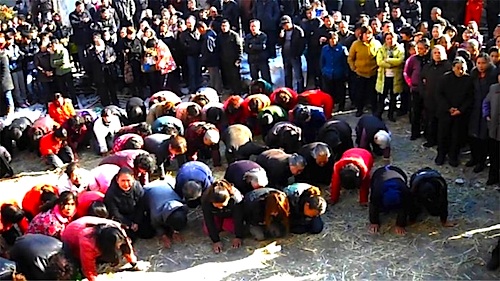
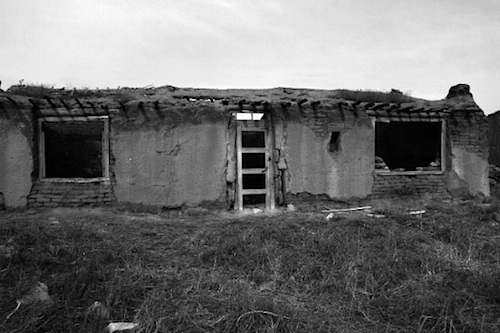
From "Cut Out the Eyes."

By Joe Bendel. He is part ancient troubadour and part Andrew Dice Clay. Er Housheng is a rambling performer of Er Ren Tai “folk opera,” who has something of a folk following in Inner Mongolia. The instrumentation is different, but American audiences well-steeped in rap music should be able to relate to the sexually charged, one-upping duets the blind Er performs with his ambiguous partner. Xu Fong follows Er through the unhomogenized, rough-and-tumble Northern Chinese province in Cut Out the Eyes, which screens as part of Cinema on the Edge, the retrospective tribute to the Beijing Independent Film Festival.

Before he was blinded, Er Housheng was apparently quite the ladies’ man. There was indeed a cause-and-effect relationship between these two states of being, as the title suggests and Er himself explains in a no-holds-barred closing performance. He is still a dirty old man, who excels at improvising lyrics so suggestive they really do not qualify as double entendre. He also talks pretty explicitly to his various lovers. His relationships are rather complex, but informal. That definitely includes the arrangements with his current duet partner, Liu Lanlan.

If Er Housheng were not such a salty old dog, one might be tempted to describe him as an inspirational figure. However, Er does not want anyone’s sympathy and he hardly sees himself as a role model. He is an unrepentant scoundrel and he is not done yet. One could probably make an epic Flashman-like film out of his exploits, but Xu opts for an intimate approach. Logically, it is through his revealing lyrics that we can best get to know the earthy raconteur.

Seriously, this is not a film for children or the easily offended. Er could go toe-to-toe with 2 Live Crew. Yet, his life of passion and lawlessness seems like a throwback to the Wild West. Some of his makeshift performance stages even have a medicine show vibe. Needless to say, Er might not be the most reliable of narrators, but the most significant parts of his story are obviously true.

Accompanied by the dizi flute, hammered yangqin, and sometimes the trumpet like suona, Er Ren Tai clearly privileges lyrical interpretation and extemporization over instrumental virtuosity, which is unfortunate for some of the very talented musicians who get brief solo spotlights in Eyes. World music listeners should nonetheless find plenty to enjoy, but Xu’s doc is more of a character study—and Er is quite the character.

It is hard to believe an itinerant musician and self-styled reprobate like Er can still exist in modern China. The fact that he does is strangely reassuring. It is a big country that remains highly diverse, despite the Party’s long campaign to wash away cultural differences. Xu documents the flinty edge and idiosyncrasies of Er and his Er Ren Tai colleagues with appropriate irony and sensitivity. Recommended for adventurous patrons of world music and music documentaries, Cut Out the Eyes screens this Tuesday (8/18) at the Maysles Documentary Center, as part of Cinema on the Edge.

LFM GRADE: B+

Posted on August 17th, 2015 at 9:25pm.
LFM Reviews The Man from U.N.C.L.E.

By Joe Bendel. In the 1960s, the MGM-produced Man from U.N.C.L.E. was one of the few TV shows that was successfully repackaged for American theatrical release. A little bit more action and seduction was added to two-part episodes that were then distributed in color, at a time when most televisions were in low def black-and-white. Frankly, it is rather surprising it has taken this long for the franchise to get the Hollywood reboot treatment. Happily, Guy Richie and co-screenwriter-co-producer Lionel Wigram harken back to the original first season more than the three shtickier years that followed. Nor do they attempt to update it for younger, dumber generations. The sixties are swinging and the Cold War is slowly boiling in Richie’s The Man from U.N.C.L.E., which opens today nationwide.

Napoleon Solo is a suave as it gets. The roguish CIA agent reluctantly agreed to put his talents at Uncle Sam’s disposal, when his career as an international art thief was thwarted through dumb luck. His latest mission will be smuggling Gaby Teller out of East Berlin.

Illya Kuryakin is an ardent Communist. That means he is not suave at all, but as a KGB agent, he is decidedly lethal. His latest mission will be keeping Teller in East Berlin. He will fail, but he will soon meet Solo and Teller again in Rome, ostensibly working together.

In a rare case of Cold War collaboration, the rival intelligence services will combine forces to stop a rogue element from building a super potent nuclear weapon with the help of Teller’s long estranged scientist father (Teller is indeed a credible name for a nuclear physicist, after all). Of course, it will be every spy for himself when it comes to retrieving this Teller’s research.

Like the source television show, the new U.N.C.L.E. kind of-sort of represents an idealist manifestation of détente during the height of the Cold War. However, Kuryakin’s backstory of doggedly striving to compensate for his family’s fall from grace during the Stalinist Purges would hardly earn Alexander Cockburn’s seal of approval. However, it adds a note of clear-headed historical context and makes Kuryakin’s proletarian plugger considerably more compelling.

Frankly, he needs the help, because Henry Cavill’s Solo eats Armie Hammer’s Kuryakin for lunch time and again during the film. Cavill’s scenery chewing work represents a star-establishing turn that out-Bonds James Bond, without descending into outright camp. Further upstaging Hammer, Alicia Vikander finally lives up to her hype as the next big thing smoldering up the screen as Gaby Teller.

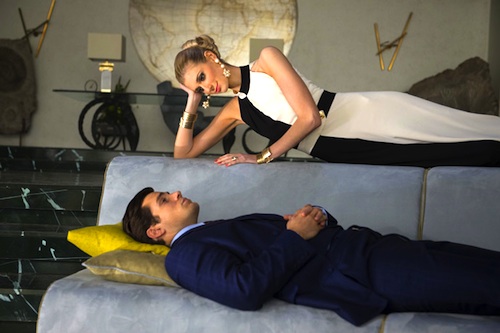
From "The Man from U.N.C.L.E."

Unfortunately, Elizabeth Debicki and Deutschland ‘83’s Sylvester Groth are just okay as the standard issue Euro-villains, but Rome sure looks fab. Arguably, Richie is the most stylish director whom a major studio would trust with the keys to their shiny new prospective franchise reboot—and his sensibilities are perfectly attuned to the look and tenor of vintage Fellini Rome. His U.N.C.L.E. just oozes attitude and sophistication. He also has a hip ear for music (even though Les McCann & Eddie Harris’s rendition of “Compared to What” would have been even cooler for the opening titles than Roberta Flack’s).

Thanks to Richie’s disciplined flamboyance and key contributions from cinematographer John Mathieson and costume designer Joanna Johnston, U.N.C.L.E. is retro but not kitschy. Altogether, it is rather a good deal of throwback fun. Recommended for fans of the old school spy thrillers, The Man from U.N.C.L.E. opens wide today (8/14), including the AMC Empire in New York.

LFM GRADE: B+

Posted on August 14th, 2015 at 8:54pm.

LFM Reviews Tashi and the Monk on HBO

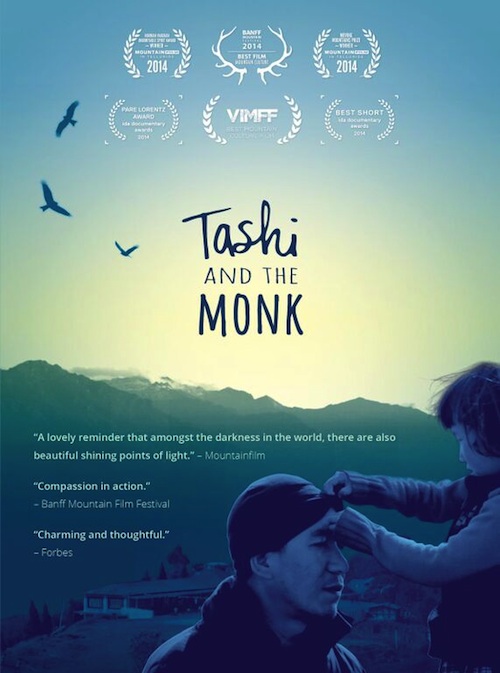
By Joe Bendel. Lobsang Phunstok is sort of the Father Flanagan of Tibetan Buddhism. At the foot of the Indian Himalayas, he founded Jamtse Gatsal, or “The Garden of Love and Compassion,” an orphanage and school for abandoned children. He might be a former Buddhist monk, but he has the patience of a saint when it comes to difficult children like Tashi Drolma. However, you have to feel for the five year old, considering how much she has already faced up to in her young life. Lobsang Phunstok and his staff will help her find her place in Jamtse Gatsal and start to heal her trauma in Andrew Hinton & Johnny Burke’s Tashi and the Monk, which premieres this coming Monday on HBO.

Drolma’s alcoholic father abandoned her sometime after her mother died at a tragically young age. That is more than any kid should have to deal with, so it is hardly surprising her behavior tends towards the aggressive. There is no question she is disruptive, but when you hear her make-up revealing stories about little girls just like her that are haunted by ghosts, it is easy to see she is hurting. Lobsang Phunstok understands only too well. He was also abandoned during childhood. That is why he will not give up on a trouble-maker like Drolma, even while he wrestles with difficult administrative dilemmas, especially his admissions process.

Clocking in well under an hour, T&M is comparatively brief, but it pummels viewers’ heartstrings. The disarmingly innocent looking Drolma will activate every protective instinct the audience might have, so it is rewarding to see her finally settle in, thanks in large measure to Raju, her “big brother.” However, the film also makes it painfully clear the good monk simply cannot save every child in need, showing us the tragic consequences for one child he was unable to admit.

We often think of Tibetan Buddhist monasteries as exotic places of spiritual sequestration. In contrast, T&M and Frederick Marx’s Journey to Zanskar paint a dynamic portrait of Tibet Buddhism as an activist faith, very much engaged with the welfare of the young and desperately disadvantaged. Both documentaries capture deeply moving human stories, while acting as a corrective to Lost Horizon-style exoticism.

After watching T&M for forty-some minutes, you will ardently care about what happens to both Tashi and her guardian. Hinton & Burke also have a good eye for visuals, giving viewers a vivid sense of the stunning Himalayan environs. It is a truly inspirational film that never feels saccharine or manipulative. Highly recommended for those interested in Himalayan culture and faith in action, Tashi and the Monk airs this Monday (8/17) on HBO.

LFM GRADE: A

Posted on August 14th, 2015 at 8:54pm.

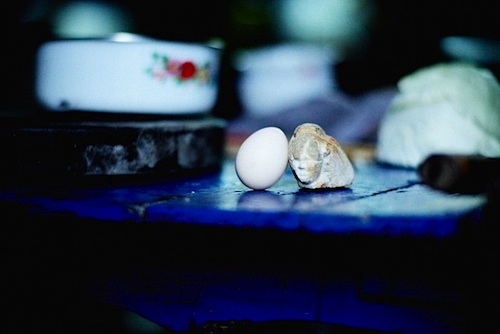
LFM Reviews Egg and Stone @ Cinema on the Edge

By Joe Bendel. Interrupting an intensely personal, deeply emotional film about sexual abuse with some organized thuggery would be embarrassingly crass and heavy-handed, but that is exactly what happened to Huang Ji’s film at the Beijing Independent Film Festival. Halfway through her screening, the power to the maverick-dissident fest was not so mysteriously cut. Inspired by her own unfortunate experiences, Huang Ji shines a spotlight on contemporary Chinese gender inequity in Egg and Stone, which screens as part of Cinema on the Edge, the retrospective tribute to the Beijing Independent Film Festival.

Honggui was only supposed to stay with her aunt and uncle for two years, but she has spent the last seven in their hardscrabble Hunan village. Her aunt clearly resents her continued presence, but her uncle is suspiciously fine with it. The fourteen year-old is indeed pregnant, putting her in a precarious position within the judgmental society. However, if she has a boy, it becomes a marketable commodity.

For Honggui, life is profoundly complicated by two pernicious social dynamics, the illegal urban migration caused by extreme rural poverty and an intractable cultural preference for boys over girls. Of course, the Party is not eager to discuss any of this, particularly in light of their only slightly relaxed One Child policy.

Still, Egg is far from an overtly political film, yet it is still one of the bravest films programmed during Cinema on the Edge. Huang Ji shot the film on location in the same provincial town where she herself was sexually abused by her uncle. She also has a different uncle play Honggui’s predatory guardian in Egg.

From "Egg and Stone."

There are powerful images in Egg, but the film’s preoccupation with menstrual blood becomes increasingly unsettling, in the wrong way. Frankly, it distracts from the viscerally honest performance of first-time thesp Yao Honggui as her namesake. She really looks like a barely teenaged girl who has had to grow up quicker than she should. Yet, despite everything Yao does to pull us into her heart and headspace, many of Huang Ji’s coldly severe stylistic choices push us away.

Egg and Stone is a challenging film in numerous ways. Arguably, it could very well be too oblique for its own good at times, but the film deserves an opportunity for viewers to fully process it. The Beijing Independent was precisely the right sort of venue for it, which is why it is so regrettably the festival could not indefinitely withstand the government’s pressure. At least adventurous patrons will have the opportunity to watch it uninterrupted when it screens this coming Monday (8/17) at the Made in NY Media Center, as part of Cinema on the Edge.

LFM GRADE: B-

Posted on August 14th, 2015 at 8:53pm.

LFM Reviews Ping’an Yueqing @ Cinema on the Edge

By Joe Bendel. Experts contend the greatest degree of corruption in American government happens at the local level, because that is where most land use decisions are made. Apparently, it is the same in China, but more lethally so. The late Qian Yunhui was a rare breed—a village chief who actually protested the government’s land appropriation schemes. That may very well be why he is now the late Qian Yunhui. Ai Weiwei and his filmmaking team investigate the suspicious circumstances surrounding his death in Ping’an Yueqing, which screens as part of Cinema on the Edge, a retrospective tribute to the Beijing Independent Film Festival now playing in New York at Anthology Film Archives.

If you were still unclear how independent the Beijing Independent festival was and why the Communist government so resented their maverick programming, just start watching Ping’an Yueqing. Sadly, the village of Yueqing is anything but “peaceful.” Qian was imprisoned for over four years, but the village refused to elect another headman, because he was faithfully representing their concerns. Then one morning, Qian was conveniently struck and killed by a heavy truck owned and operated by the local power authority.

After an unseemly short investigation, Qian’s death was ruled an accident and his two deputies were arrested for obstruction of justice. Sensing a cover-up, the internet quickly took up the case. As the citizen investigators explain to Ai Weiwei, the traffic surveillance camera was ever so strangely offline for maintenance exactly during the so-called accident. However, video recorded by Qian’s smart-watch device (like his own, personal Zapruder film) did not match the description of the scene in police reports. The few eye witnesses willing to testify also contradict the official story in various ways. Yet, perhaps the most damning circumstantial evidence is the pattern of troublesome Zhejiang officials who were previously done in by similar traffic accidents.

Teacher Ai and his team do their best to put the dissembling officials on the spot. It is not always pretty, but the state mouthpieces generally conduct themselves more shrewdly than the apparatchiks in his classic Disturbing the Peace and So Sorry. However, the most disturbing sequences are the dozens of Yueqing villagers who tell Ai’s camera crews “if I talk to you, they will make me disappear tonight,” in exactly those terms. Regardless of the Qian case, this is obviously a profoundly ailing community, suffering from oppressive corruption.

From "Ping’an Yueqing."

Ping’an uses the same straight, unfiltered approach as seen in other Ai Weiwei documentaries, but in this particularly complicated case, it would have been helpful to have an on-camera presence to help marshal the often contradicting testimony and to occasionally provide context. Of course, Teacher Ai would have been perfect for such a role, but he is not inclined to inject himself into other people’s stories.

Regardless, Ping’an is a courageous example of independent filmmaking and investigative journalism. It shines a searing spotlight on a tawdry episode the Party would love the world to forget. Yet, thanks to Ai Weiwei and the Beijing Independent fest, cineastes who have never heard of Qian Yunhui will keep revisiting the events in Yueqing. A bold and chilling work of non-fiction filmmaking, Ping’an Yueqing is highly recommended for anyone who really wants to see what speaking truth to power really looks like when it screens again this Thursday (8/13) at the Anthology Film Archives and as part of the forthcoming tour of the Cinema on the Edge retrospective.

LFM GRADE: A

Posted on August 12th, 2015 at 10:11pm.