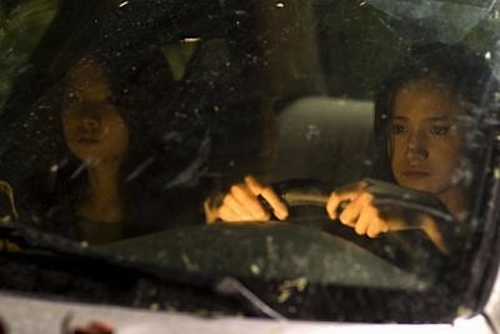
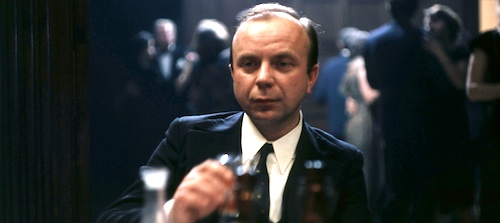
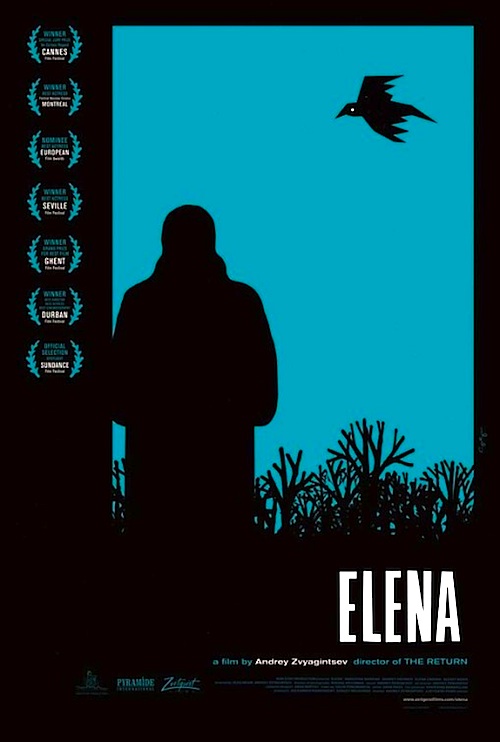
By Joe Bendel. Elena could have been an old world Russian babushka. She even still wears the traditional head scarves. Yet, she has married into the world of oligarchic privilege. It is a pleasant if loveless marriage, but fundamental disagreements with her wealthy husband will take a dark turn in Andrey Zvyagintsev’s Elena, which begins a special two week engagement at New York’s Film Forum this Wednesday.
The working class Elena met the sophisticated Vladimir while working as a nurse during his convalescence two years ago. They have little in common except their dismal records as parents. His grown daughter Katerina is an entitled party girl emblematic of New Russia’s excesses. Elena’s slobby, unemployed son Sergey is only fit for queuing in lines and getting drunk. That might have been perfectly fine during the Soviet era, but it does not cut the mustard any more. While Vladimir readily underwrites Katerina’s high-flying lifestyle, he begrudges any support Elena offers her deadbeat family.
If anything, Elena’s thuggish grandson Sasha is even less accomplished than his father. In order to forestall his military service, Sergey will have to bribe Sasha’s way into college, but Vladimir is not having any of it. After collapsing in the gym, issues of inheritance come to the fore, provoking Elena to action for the sake of her proletariat family.
Such “action” is a relative term in Zvyagintsev’s deliberately paced film. He is much more interested contrasting the dramatic class distinctions of contemporary Russian than engaging in Double Indemnity style suspense. Frankly, viewers need to pay attention throughout Elena, because it is easy to miss the crossing of the Rubicon.
In contrast, it is impossible to not notice the differences between the two Russias. One is a world of glass and steel luxury (perfectly underscored by sparing excerpts from Philip Glass’s 1995 Symphony No. 3), whereas the other is a grubby suburb of Brutalistic socialist era architecture dominated by noxious looking nuclear containment domes. There is also a pronounced psychological difference, as well. Vladimir harshly dismisses Sergey as a lazy drunken slacker, but he is not exactly wrong.
Indeed, a mother’s love may oftentimes be blind (it might have been clever to have opened Elena over the weekend, but it is hard to imagine any son taking mom to see it) and Elena is arguably indulgent to a fault. However, it is her relationship with Vladimir that is most intriguing. Nadezhda Markina palpably conveys a complicated lifetime of struggle as the title protagonist, while developing some ambiguous yet very real chemistry with actor-director Andrey Smirnov’s Vladimir. The precise nature of their union remains hard to pigeonhole, with several scenes supporting disparate interpretations.
Elena certainly shines a spotlight on the inequalities of Putin’s Russian – still a playground for compliant oligarchs. Yet, as a film it is really a showcase for Markina’s remarkable, unadorned performance. Though the tempo is undeniably leisurely, there is a real point to it all, as it heads towards a very specific destination. Recommended for viewers with adult attention spans, Elena opens this Wednesday (5/16) at Film Forum.
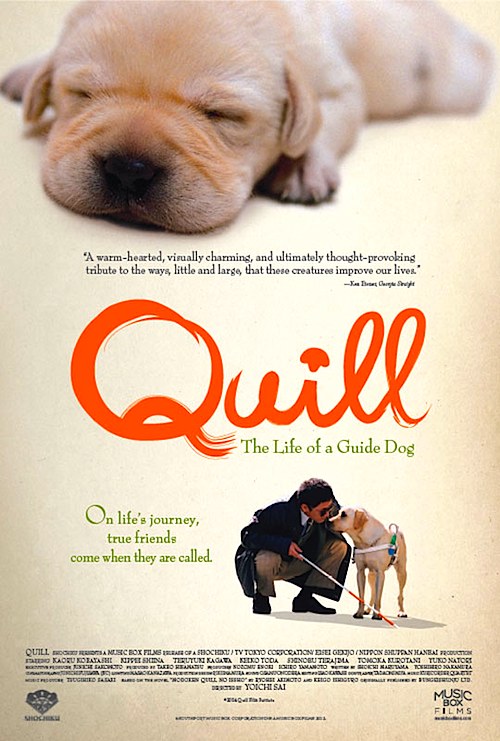
By Joe Bendel. As cute as he is, Quill is a dog with a role in life. By virtue of his intelligence and empathetic intuition, the golden retriever will become a guide dog for the blind. His eventful dog’s life is lovingly depicted in Yoichi Sai’s Quill: the Life of a Guide Dog, which opens this Friday in New York.
Out of a litter of five pups, Quill is the shrewdest. His owner wanted them all to become guide dogs, but only Quill makes the grade. As a result, he will experience his first parting, leaving his puppy home to live with the Isamu and Mitsuko Nii, a couple who care for prospective guide dogs until they reach the age training commences. Considering how the Niis dote on him, Satoru Tawada’s training kennel requires quite an adjustment, but again Quill adapts.
Tawada has Quill in mind for Watanabe, the irascible chairman of a local nonprofit support organization, but the middle-aged man is resistant. Of course, Quill wins him over, but Watanabe’s health problems will complicate their time together.
Sai once served as an assistant director to Nagisa Ôshima on In the Realm of the Senses, a film about as dissimilar to Quill as one can possibly imagine. Not afraid of a little manipulative sentiment, Shoichi Maruyama and Yoshihiro Nakamura’s screenplay hits all the dog-lover bases good and hard. However, Quill’s adorableness at all ages is an undeniable ace in the hole. By the time the aged Quill comes full circle back to the Niis, even the brawniest of men will find themselves getting choked up.
No question, the canine cast is truly endearing, with the film’s trainer Tadami Miya maximizing their cinematic charm. The human ensemble is also rather pleasing, including Teruyuki Kagawa (recognizable from far darker Japanese imports, like Tokyo Sonata and the 20th Century Boys trilogy) and Shinobu Terajima (unforgettable in Wakamatsu’s disturbing Caterpillar), who are genuinely touching as the Niis.
Featuring a sensitive soundtrack by the Kuricorder Quartet, Quill has a gentle, humane vibe not unlike the work of Kore-eda. Though Sai’s film has been kicking around the festival circuit since 2004, its belated American release coincides with the dramatic increase in the social and commercial organization of U.S. dog lovers. Frankly, post-Marley and Me, it has enormous crossover potential. Recommended for canine fanciers and Japanese cinephiles, Quill opens this Friday (5/18) in New York at the Cinema Village.
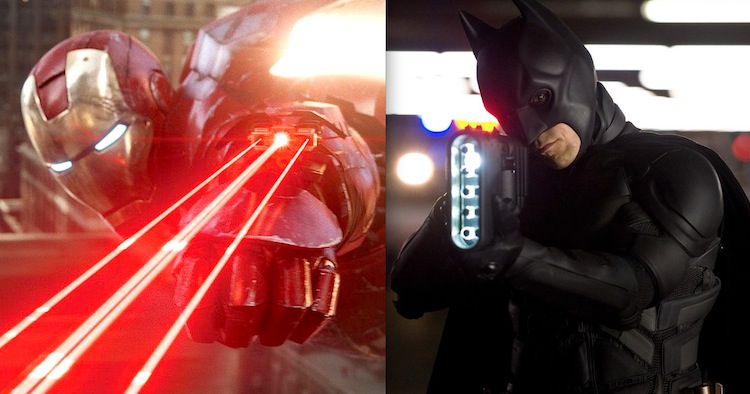
"The Avengers" was photographed digitally, whereas "The Dark Knight Rises" was shot on film.
[Editor’s Note: the piece below was featured today on the front page of The Atlantic.]
Digital moviemaking is on the rise, but some high-profile directors still shoot popcorn flicks the old way.
By Jason Apuzzo & Govindini Murty. This summer, Hollywood’s blockbusters are engaging in a high-stakes format war between cutting-edge digital technology and old-fashioned, photochemical film. Digitally photographed thrillers like The Avengers, Prometheus, and The Amazing Spider-Man will be battling it out with equally epic movies shot on film such as The Dark Knight Rises, Men in Black 3, and Battleship. Indeed, no summer in recent memory boasts so much variety in terms of how films are photographed and exhibited.
Yet with studios looking to trim costs on increasingly expensive “tentpole” movies, traditional celluloid film—easily the more expensive of the two formats—may be on its way out as the cinema’s medium of choice. Still, advocates of film continue to make compelling arguments about why theirs is the more enduring medium, even as both sides pull out their biggest guns this summer in an effort to prove definitively the commercial value of their respective formats.
Right now, advocates of film have numbers on their side. Of this summer’s major blockbusters, more were shot on film than digitally. Aside from The Dark Knight Rises, Men in Black 3, and Battleship, other summer tentpole movies filmed photochemically include Snow White and the Huntsman, G.I. Joe: Retaliation, and The Bourne Legacy.
But digital technology has the momentum and the prestigious advocates who will likely help it win out eventually.
For the rest of the article please visit The Atlantic.
Wearing dark shades, and clutching my plastic media badge and a $7 bag of greasy popcorn, I stealthily ducked into a Chelsea multiplex to watch some of my youth flicker by across the big screen.
When I say ‘my’ youth, I’m also talking about the youth of millions of other guys who were teenagers during the late 1980s and tuned into politics. If you were around at that time, there’s probably one name you’ve never forgotten – no matter how hard you’ve tried: Morton Downey, Jr.
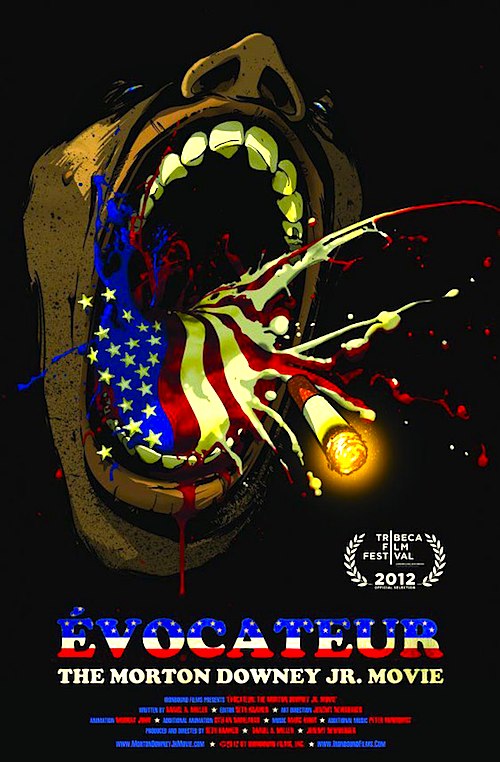
The movie I was watching was the probing and hilarious new documentary, Évocateur: The Morton Downey Jr. Movie. If you never had the chance to experience Downey in his prime, you really missed something. Downey was easily the most popular and controversial TV talk show host of his day – although that’s sort of like saying Genghis Khan was the most popular and controversial equestrian of his day. It doesn’t really capture the scale or the savagery of the phenomenon.
Downey was the id of the 1980s – a real-life Howard Beale, if you remember Paddy Chayefsky’s Network. Like some wild, genetic fusion of Howard Stern, Michael Savage and Howard Cosell, Downey invented the modern political talk show almost overnight during his colorful, meteoric career in the late 1980s – while becoming a tongue-in-cheek folk hero for political junkies like myself, especially (but not exclusively) for those of the teenage male persuasion.
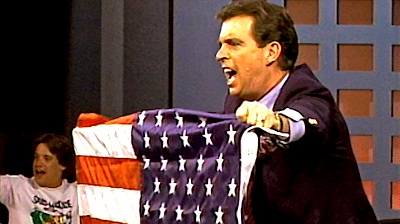
Part rock star (he was a former singer, like his famous father), part populist firebrand, part stand-up comedian, Downey transformed political debate on TV from the staid, genteel disquisitions of David Brinkley’s “This Week” program into something closer to a Vegas floor show – or a night with the Rat Pack. Dangling his trademark cigarette, and wielding a cutting wit, Downey turned the political talk show into the kind of uninhibited, boozy, late-night pleasure it had never been before – and has never really been since.
Watching Downey do his routine all over again in Évocateur (more on the film below), several ideas came to mind about how to liven-up today’s creaky political talk shows:
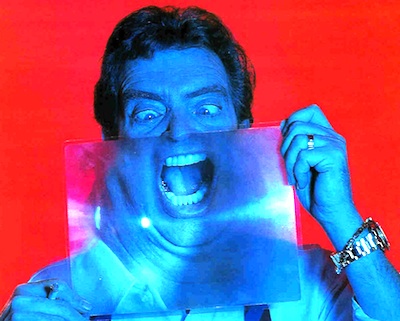
Talk show maverick Morton Downey, Jr.
1. Encourage In-Studio Fistfights.
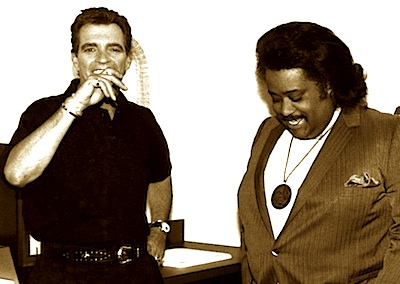
Let’s face it: most guests on today’s talk shows look like they’re just going through the motions – like they’re only concerned with their hair, and with being invited back. When was the last time someone upended a table, or stormed off a cable news show? It never happens anymore. Before Downey’s show, no one had ever seen political activists throw chairs at each other on national television, or watched ACLU lawyers battle screaming teenagers with mohawks, or watched Hollywood directors get dragged off stage – their legs flailing helplessly, as Downey’s working-class crowd hooted with joy. Downey’s guests were passionate, and always willing to put their bodies on the line when it counted (watch the legendary Al Sharpton-Roy Innis throwdown). There should be more fistfights, and table- and chair-throwing on political talk shows today – then maybe we’ll believe more of the nonsense these shows are spouting.
2. Bring Back Live Studio Audiences!
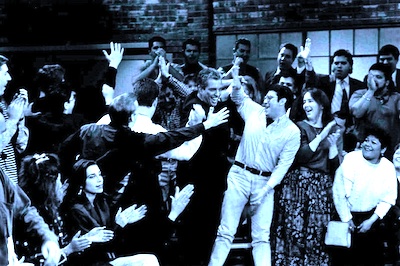
Why are today’s political talk show hosts so afraid of live studio audiences? Downey began his shows by high-fiving his crowd, even kissing the women in his studio audience. Downey’s hyped-up, seemingly inebriated audience (they often dressed in Halloween costumes) was encouraged to talk back to the show’s guests from a lectern known as ‘The Loudmouth.’ It was at ‘The Loudmouth’ that the audience lived out the primal fantasy of speaking truth to power – as teenagers, truck drivers, dental assistants and other regular folk got their chance to berate corrupt officials, phony celebrities, radical professors or gasbag political activists. It was this cathartic opportunity to abuse and humiliate the powerful that gave Downey’s show its special electricity. (“Step up to the Loudmouth” even became a catchphrase of the day.)
Downey with Al Sharpton.
3. Invite Actual Human Beings on as Guests.
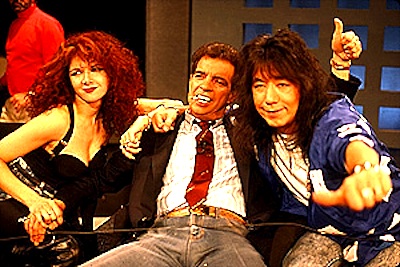
This is an important point: consultants, political strategists and journalists should be replaced by actual human beings on political talk shows. Although media figures of today like Al Sharpton, Gloria Allred and Alan Dershowitz got their first big breaks on Downey’s show (alongside even wilder guests like Joey Ramone of The Ramones, or Ace Frehley of Kiss), Downey rarely played it easy by inviting on the usual pundits – or even people conversant in the English language – to talk about issues. He instead found people who were colorful, off-beat, or in some way good foils for him and his hyper-charged studio audience. As a result, a lot of all-too-real people made their way onto his show: street hustlers, pro wrestlers, strippers, UFO conspiracy theorists, communists, small-time evangelists. Not even Fox News covers as much ground in this respect as Downey once did.
4. Boot Bad Guests Off the Show – Frequently.
This is the flipside of #3. Downey took great relish in booting dull or belligerent guests off his show – and this is really something today’s political shows should consider doing. Although Downey invited the most radical, combative and often freakish public figures of his day onto his show, sometimes their schtick didn’t work and the guest had to be cut loose – quickly. As an example from today, Fox News keeps bringing on some guy who’s listed as a ‘conservative comedian’ – but the guy’s never made me laugh once. He should be barked-at and ridiculed by Bill O’Reilly, then hauled off by security guards while a live studio audience throws wads of Kleenex at him. Then he might be fun to have around.
Firing up the crowd.
5. Get Up Off Your Behind!
Downey was rarely seated on his show; he prowled around the set for the full hour, gesticulating with a cigarette, pointing at the camera, hovering over his guests and bantering with the studio audience. It brought pizzazz and theatricality to the show. Plus, Downey understood that he was the real star of his show, which he why his guests as a rule stayed firmly planted in their seats – under threat of getting booted. Today’s hosts should get off their asses, get out from behind their desks, and start moving around more.
6. Drop the Dress Code.
Part of why people are so inhibited on today’s shows is that everybody dresses like they’re at a GE stock holders meeting. It’s boring. Downey frequently came onto his show in jeans, sans coat or tie. He also dressed up as Dracula once, and even wore war paint and army fatigues. Plus, his audience members sometimes dressed as gorillas, carnival clowns, or Cuban revolutionaries. It set the tone, and people loosened up.
7. Learn to Ignore the News Cycle.
This is a big one with me. The term ‘news cycle’ is really just another way to say: ‘whatever somebody else is talking about.’ It’s tedious to turn on the big cable news networks and see them covering identical subjects, day in and day out. Branch out! Be creative, the way Downey was (he once did a show on “Strippers for God”). Find news stories nobody else is covering, like: “Oil Drillers Who Dig with Their Teeth,” or “Green Technology You Can’t Afford.” It would liven things up.
8. When You Say Something Stupid, Apologize.
It’s inevitable that a host will say something stupid or otherwise regrettable over the course of doing a daily political TV show. Downey certainly did, and apologized when necessary. What’s annoying is when today’s hosts, in an effort to save their careers, double-down on stupid comments later – pretending that their inane remark (“Senator Smith’s wife has skin like a Maine lobster”) was actually a carefully considered policy statement (“Actually, my critics aren’t aware that before I was a TV talk show host, I worked at The American Crustacean Society. So I know what I’m talking about!”). It’s embarrassing. When you say something inappropriate, fess up, apologize and move on – in other words, be a human being.
Downey with rockers Honey One Percenter and Ace Frehley.
9. Feature Live Music.
A former singer himself, Downey occasionally brought live bands – mostly hard rock acts – onto his show to great effect. It gave the show a late-night, uninhibited vibe that today’s political shows desperately need. (Side note: in the absence of music, such primitive group behavior as chanting or catcalls should be encouraged from the studio audience.) Downey understood that the enemy of political talk shows is stuffiness – and nobody ever called his show stuffy.
10. Bring Cigarettes & Liquor Back to Late Night.
OK, admittedly this one is never going to happen – but it should.
Évocateur: The Morton Downey Jr. Movie
The suggestions above are just a few examples of what Morton Downey, Jr. would likely do to liven up political talk shows, were he around today. And who knows? Maybe somebody will actually take some of this advice and turn today’s dull, grimly earnest shows into the glorious, Rabelaisian carnivals of human excess that they could be.
In the meantime, thanks to Évocateur: The Morton Downey Jr. Movie, we can look back at how cathartic and liberating it once was to “step up to the Loudmouth.”
A populist at heart.
In Évocateur, filmmakers Seth Kramer, Daniel A. Miller, and Jeremy Newberger dig into Downey’s personal story, beginning with his privileged youth as the son of popular singer Morton Downey and actress Barbara Bennett (the sister of actresses Constance and Joan Bennett). We learn, in an incredible irony, that Downey was actually raised next door to the Kennedy compound at Hyannis Port – and was a lifelong friend of Ted Kennedy, with whom he clearly shared the same salty sense of humor.
Downey rambled through a series of careers as a singer and radio announcer until he finally hit his stride as a New Jersey TV host in the late ’80s, channeling mostly working class resentments against liberal cultural elites. (Sound familiar?) The moment his opera buffa-style talk show went national in 1988 it became an overnight hit – although it would last less than two years. After jumping the shark a few too many times – at one point even staging a fake assault on himself by neo-Nazis in an airport bathroom stall – his show petered out, his audience moving on to more sedate fare.
Évocateur does a fabulous job of bringing Downey’s cracked brilliance back to life with a slew of archival clips from his show, and interviews with former guests and co-workers. It’s clear that even liberals loved the guy – Gloria Allred and Alan Dershowitz have especially warm words for him, in particular.
Colorful and groundbreaking.
After the Tribeca screening I asked Jeremy Newberger, one of the film’s directors, what made Downey different from today’s talk show hosts of either the conservative or liberal variety. “The [hosts] today … there’s more machinery in place to protect them,” Newberger said. “They have more infrastructure … a lot of these guys are in a vacuum, where no one gets to come across and have a different opinion without being edited out.”
“This guy [Downey] was tough, he was willing to speak his mind, and he had an interactive show – and he was pretty brave to do what he did.”
Newberger is right – Downey was brave. His show was a far cry from the stale, corporate programs of today that seem intent on insulating their high-priced hosts from criticism, awkward questions or interaction with regular citizens. Downey didn’t avoid such public exposure – he thrived on it.
Downey’s raucous show may not have been particularly noble or elevating – no doubt he turned political debate into something more vulgar and carnivalesque than it had ever been. But he also made political TV more earthy, entertaining and human – and nobody’s equaled him in that way since.
By Joe Bendel. It is a familiar horror movie convention—one wrong turn can lead to a grisly death, so get yourself some GPS and join triple A. Alas, the misdirected teens who wander onto this stretch of pavement will become permanently lost in Yam Laranas’ Filipino horror film The Road, which opens this Friday in New York.
This has been going on for a while. In 1998, two sisters vanished without a trace on the road to nowhere. Ten years later, their grieving mother approaches a decorated rookie officer specializing in making everyone else look bad, convincing him to re-investigate the case. Yet, it quickly becomes apparent that the circumstances of their disappearance parallel an active, high priority investigation involving two cousins and their slacker guy friend.
As if two time frames were not sufficient, Laranas then flashes even further back, showing the audience how the tragic childhood of the thus far unseen psychopath destroyed his innocence and set in motion a chain reaction of bad karma. It turns out his father’s hyper-Christianity was a contributing factor. To be fair, dear old dad is really not a bad guy at heart, but the future killer’s shrewish mother enthusiastically adopted his strict rules governing the boy, simply out of meanness.
From "The Road."
Laranas actually sets the creepy scene quite well, hinting at the supernatural, but never quite delivering on it. Still, he palpably evokes the ominous dread of grudge-like remnants haunting the proceedings. His big twist also comes as something of a surprise, if only because it creates huge logical problems for the film in retrospect.
More fundamentally, it is just not a lot of fun to see the Roadie tormenting the young girls who fall into his web. These are not E.C. Comics characters that more or less have it coming. Frankly, horror movies like The Road would be much more entertaining if Laranas and his colleagues would pick on people more their size.
As the cop with chain-of-command issues, TJ Trinidad is an intense screen presence who sells the third act bedlam rather well. Unfortunately, the onerously slow pace becomes downright mind-numbing over time. Serving as his own cinematographer, Lanaras gives the film an interesting look and the dramatic work of his ensemble cast is considerably better than the genre standard, but that is about as far as The Road goes. A joyless and exhausting film, The Road is not recommended for horror movie fans. For those intrigued nonetheless, it opens today (5/11) in New York at the AMC Empire.
By Joe Bendel. During Poland’s Communist era, there was no quicker way to an industrial minister’s heart than a spot of deforestation. Slavishly ambitious Michal Toporny learns this lesson as he rises through the bureaucratic ranks, jettisoning such trivialities as his family and his soul along the way. Not exactly a fable or a morality tale, Grzegorz Królikiewicz’s The Dancing Hawk is more like a visual barrage. It would not be the same film without Zbigniew Rybczyński’s inventive work behind the camera, making it the perfect companion to Gerald Kargl’s Angst during Shot by Rybczyński, the Spectacle Theater’s two-film tribute to the future Oscar winner’s cinematography starting this Thursday.
Hawk’s first twenty minutes or so are like the best cinematic adaptation of James Joyce never filmed. Toporny enters the cold, snowy world during a time of war. He comes from hardscrabble peasant stock, but evidently they were also minor property “holders,” an inconvenient fact that requires Toporny to be more Communist than thou in order to get ahead. He certainly has the necessary moral flexibility, throwing one wife overboard in favor of his politically connected classmate.
This opportunistic pattern of behavior will repeat throughout Hawk. In fact, there are repetitive loops throughout the film, intended to emphasize the Kafkaesque absurdity of the bureaucracy, or perhaps just to make the Communist censors’ heads explode. Frankly, it is rather staggering this one slipped past the state film authorities. Like matter and anti-matter, it seems impossible for Hawk and Socialist Realism to coexist in the same world.
Franciszek Trzeciak as Toporny in "The Dancing Hawk."
Indeed, as feverish and bizarrely expressionistic as Rybczyński’s cinematography undeniably is, Królikiewicz’s critiques of the Socialist state remain impossible to miss. Central state planning takes it in the shins throughout the film, perhaps even harder than in Frank Beyer’s East German classic Trace of Stones. The Communist Youth of Toporny’s college years are also depicted as foaming-at-the-mouth bullies, who duly grow up to be vicious, petty, in-fighting apparatchiks.
As Toporny, Franciszek Trzeciak is surely small and banal, but he still finds a sad clown pathos within the character, even performing a surreal variation on the old Harpo Marx mirror gag. Toporny’s eventual realization that he has spent his entire life serving a cold and capricious master (much like the protagonist of Andrzej’s Wajda’s Without Anesthesia) is palpably heavy stuff, even with all the madness swirling around him.
Hawk represents incredibly bold filmmaking, in both stylistic and political terms. Defying conventional description, Rybczyński’s cinematography gives the loose narrative a hallucinatory shimmer with an appropriately drab socialist color scheme. A masterwork of protest cinema, The Dancing Hawk is a viscerally defiant product of its time: late 1970’s Poland, an era that would culminate with the imposition of Martial Law. Highly recommended, it screens this Thursday (5/10), Sunday (5/13), and Friday (5/25) as part of Shot by Rybczyński at the Spectacle Theater in the County of Kings.
 If anything, Elena’s thuggish grandson Sasha is even less accomplished than his father. In order to forestall his military service, Sergey will have to bribe Sasha’s way into college, but Vladimir is not having any of it. After collapsing in the gym, issues of inheritance come to the fore, provoking Elena to action for the sake of her proletariat family.