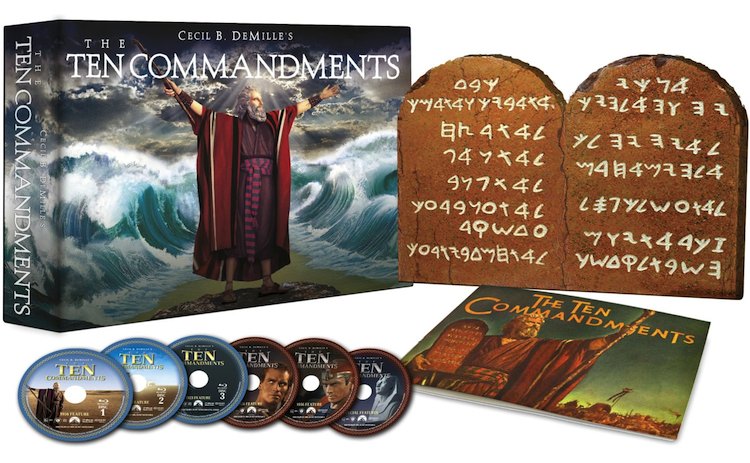
By Jason Apuzzo. The new Ten Commandments Blu-ray comes out this Tuesday, March 29th (see the trailer for the Blu-ray at the bottom of this post). Paramount will be releasing a 2-disc Blu-ray set of the classic film, and also a Limited Edition 6-disc DVD/Blu-ray Combo set, that features both Cecil B. DeMille’s 1956 and 1923 versions of the film – and a host of goodies, including a handsome archival booklet that may be worth the price of the set on its own.
The Ten Commandments is a special favorite of mine. Not only is the film one of Hollywood’s greatest epics of the 1950s, the film is also a timeless and enduring ode to human freedom – and one which seems to grow only more timely and urgent as the years go by. The Ten Commandments is a film that will always remain powerful and ‘relevant’ so long as there are souls yearning for freedom – even, as we’ve seen recently, in contemporary Egypt and North Africa where so much of The Ten Commandments was filmed.
We had the pleasure of showing what was then the best existing print of The Ten Commandments at our first Liberty Film Festival in 2004, when we invited cast member Lisa Mitchell to talk about her recollections of Mr. DeMille – and how influential he was in her life. Several years later Govindini and I spent time with Cecilia DeMille Presley, granddaughter of Cecil DeMille and a caretaker of his legacy – who shared some wonderful memories of her grandfather with us. Most special, however, was the opportunity Govindini and I had years ago to meet Charlton Heston himself at The Egyptian Theatre in Hollywood, when he introduced a special screening of The Ten Commandments. (We actually sat right behind him during the screening – and watched his reactions to the film, which he still seemed to take great delight in so many years later.) It was an extraordinary thrill to meet him; even late in life, he was still handsome and rugged, with a biting wit – but also a warm and generous spirit. He was the consummate gentleman.
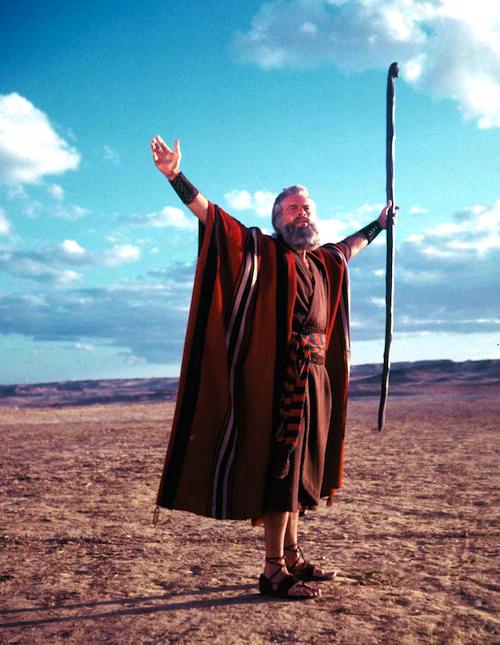
Charlton Heston in "The Ten Commandments."
The Ten Commandments is without a doubt one of the best films Hollywood has ever produced, and a carrier of important ideas about freedom, so I thought we’d take a little look back at it today. It also happens to be a magnificent showpiece for the Blu-ray medium – with the film’s rich, saturated colors, beautiful costumes and production design, endless desert vistas, and iconic visual effects sequences. To put it mildly, The Ten Commandments is not only an emotional spectacle of the heart … it’s also an eyeful.
Interestingly,The Ten Commandments happens to be the fifth highest-grossing film of all time, adjusted for inflation. When the film was released in 1956, theater tickets cost about 50 cents – and the film still grossed over $65 million. What this means is that at today’s ticket prices, The Ten Commandments would have grossed over $1 billion at the domestic box office. In the history of American moviemaking, only Gone With the Wind, Star Wars, The Sound of Music and E.T. have fared better at the box office than did DeMille’s extraordinary film.
I don’t mention The Ten Commandments‘ box office success because that denotes anything in particular about the film’s merits – success at the box office can always be misleading – but to suggest the kind of powerful bond this film has with the public. The Ten Commandments is, as it turns out, a beautifully written, directed, acted, photographed and scored film – a majestic and emotional voyage into one of the primary myths of Western religious life. It’s also the crowning achievement of one of America’s greatest moviemakers. At the same time, The Ten Commandments is something else: it’s a part of American popular mythology, as important to America’s filmic conversation about freedom and individual dignity as Casablanca, Gone With the Wind or On the Waterfront. Continue reading For Easter & Passover: A Review of The Ten Commandments on Blu-ray
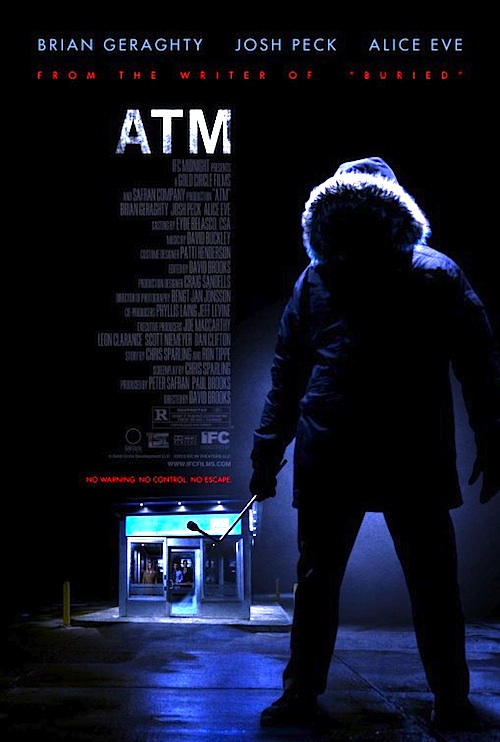
By Joe Bendel. Brace yourself for Parka Dude. The latest would-be horror movie franchise figure is so bland and boring he does not even have a name or a face. However, he will thoroughly terrorize three young corporate drones stranded inside a stand-alone automated teller in David Brooks’ ATM , which opens tomorrow in New York at the IFC Center.
David Hargrove always feels like a pathetic loser at his firm’s annual Christmas party, because he never can work up the courage to talk to his big time crush Emily Brandt. Yet, since this is Brandt’s final day with the company (and perhaps on Earth in general), his loud mouth buddy Corey Thompson successfully goads him into making one last try. However, just when Brandt agrees to let Hargrove drive her home, Thompson decides to play third wheel, insisting they drop him off too, but first stop for a slice of pizza. Of course, he has to hit a cash machine on the way, potentially signing their death warrant in the process.
Some large cat in a hooded parka evidently has a thing about terrorizing people in remote ATM islands. He has all the blueprints for the fateful kiosk Thompson chooses, but he does not have a bank card to get inside. Thus begins a game of cat and mouse, as Parka Dude lays siege to the ATM.
Naturally, everyone’s cell phone is either out of juice or out of reach. Still, that’s more or less an acceptable horror movie convention. How sad is it, though, that three able-bodied grown-ups cannot rush one faceless dude with a hooded coat and a tire iron? Instead, they stand around in said ATM, letting hunger and the freezing temperatures do Parka Dude’s work for him.
The most irritating thing about ATM is that is does not bother to give us the smallest pretense of resolution. Instead, after a climax involving a ludicrously contrived set of circumstances, we are assured Parka Dude is out there planning his next industrial park ATM outing. Maddeningly, screenwriter Chris Sparling gives viewers absolutely no reward for sitting through this exercise in stupid stalking, except the promise of more of the same to come.
As Brandt, Alice Eve nicely turns the film’s one well written scene. Before the entire mess comes crashing down, she attempts to alleviate Hargrove’s guilt over getting her into this fix. Rather philosophically, she argues it was a myriad of decisions she made over the course of years that led her to be in that ATM on that night. It might be a valid point, but viewers will not be pinning the responsibility on Hargrove. We blame Thompson, just for being such an annoying jerkheel.
This is the kind of film that makes an audience audibly groan in frustration. However, it does not have enough character to at least be campy. In fact, both the lead protagonist and his malevolent nemesis are irredeemably generic. Completely unsatisfying, ATM should definitely be skipped when it opens tomorrow (4/6) in New York at the IFC Center.
LFM GRADE: D-
For those of you following Earth’s seemingly endless conflicts with alien invaders, a new clip of Battleship just went online featuring alien ‘shredders’ attacking a Marine base (see above), plus there are some new promos out for the next season of TNT’s Falling Skies (including the first 3 1/2 minutes of the Season premiere). Battleship opens May 18th (Men in Black 3D opens a week later, btw), while Falling Skies Season 2 debuts June 17th.
There’s also a new image out today of Master Chief and Cortana from the forthcoming Halo 4. Cortana’s certainly looking sexier than ever.
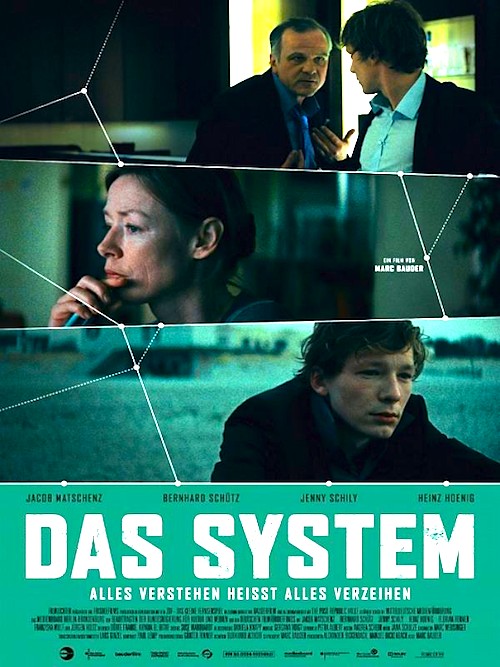
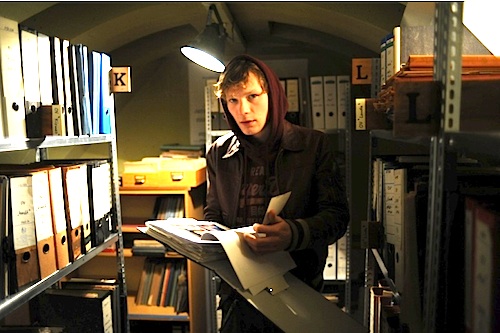
By Joe Bendel. Communism ripped apart scores of German families. Perhaps the Hillers were one of them. Aimless twentysomething Mike Hiller cannot say, because his mother refuses to speak of his late father’s shadowy past. The murky ambiguity of the former East German elites’ post-reunification experiences are explored in Marc Bauder’s intriguing thriller The System (trailer here), the opening film of Disappearing Act IV, the annual New York showcase of European films unjustly overlooked after their well received festival runs, co-presented by the Czech Center, the Romanian Cultural Institute, and the Group of European Cultural Institutes.
Mike Hiller suspects his father’s death was no ferry accident and his mother’s silence only stokes his resentment. Still, as a former low level Stasi clerical worker, she has her reasons for reticence. She was married to Rolf Hiller, a hotshot confidential operative charged with acquiring hard currency for the state through dodgy international transactions. Ironically, he would have been one of the few East Germans well positioned to prosper after the fall of the Wall, just like his ex-partner, wheeler-dealer Konrad Böhm. When through the machinations of fate Böhm interrupts Hiller and his punk buddy burglarizing his home, he decides to take the young underachiever under his wing, out of respect for his late father. Or perhaps he is just playing Hiller.
Quickly Hiller is immersed in the world of Russian pipelines, kickbacks, and blackmail. Yet, it is clear East Germany’s corrosive Communist past eats away at the characters in the present, like a lingering toxin. Intelligently written by Dörte Franke (who will take Q&A with Bauder after the screening) and Khyana El Bitar, System’s storyline is often murky and morally ambiguous, but never overly complicated in the obscure Le Carré tradition. Frankly, it critiques crony capitalism as much as it does Soviet era socialism, explicitly linking the two.
From "The System."
Jacob Matschenz (outstanding in the inter-connected Dreileben trilogy) is certainly convincingly petulant and rebellious as Hiller, sometimes at the risk of overdoing the Holden Caulfieldisms. However, Bernhard Schütz is totally riveting as the manipulative and mercurial Böhm. Watching him spar and toy with Matschenz’s Hiller is jolly good cynical entertainment. Yet, there is an ethical center to the film represented by Jenny Schily, quite compelling as Hiller’s widowed mother, always a victim of circumstances beyond her control.
It is rather bizarre this will be The System’s premiere American screening, because it is the sort of smart, sophisticated political thriller that ought to have been a cinch for mucho festival play. Of course, Disappearing Act is all about catching up with such inexplicably neglected films. Enthusiastically recommended, The System will be the only paid admission during Acts IV when it opens the festival-showcase this coming Wednesday (4/11) at the IFC Center. All other selections are presented free of charge, including Mila Turajlic’s Cinema Komunisto, a fascinating documentary survey of Yugoslavian cinema under Tito, screening at Bohemia National Hall this coming Thursday (4/12).
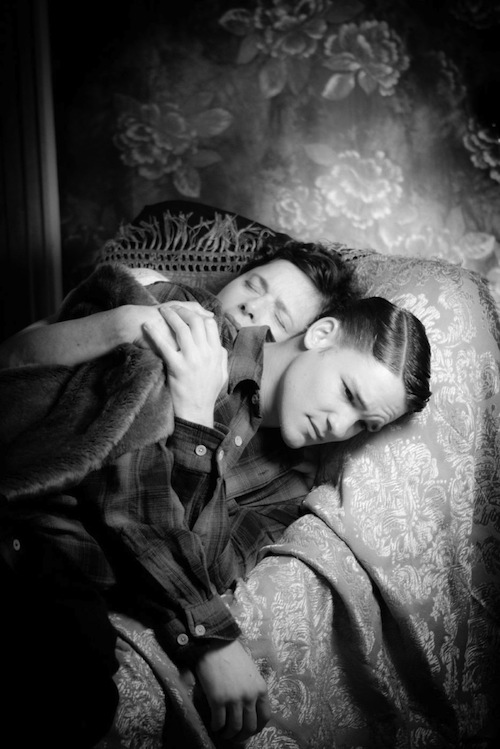
By Joe Bendel. It was a dark and stormy life. Just as the Pick family was haunted by their psychological torments in life, so are they still in death. Yet, their gangster father Ulysses Pick has returned to his haunted home for a sort of exorcism/intervention – and perhaps a spot of redecorating – in Guy Maddin’s Maddinesque Keyhole (trailer here), which opens this Friday in New York.
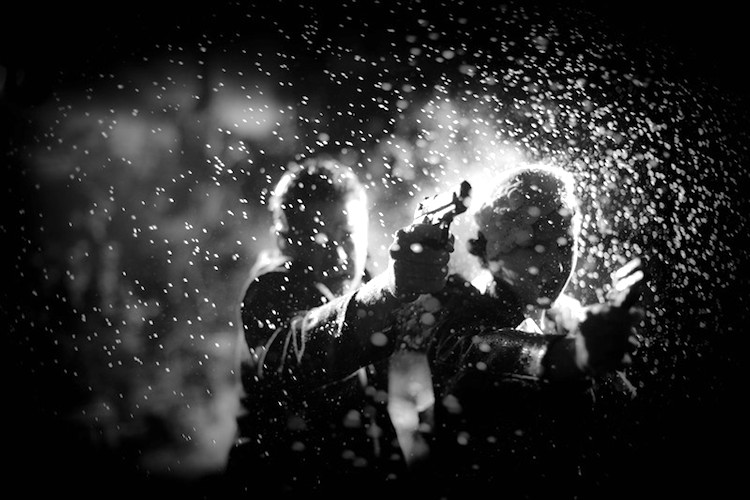
The police have the house surrounded, but the Pick Gang shoots their way in anyway, much to the consternation of his henchmen. Their griping means little to Pick, arriving through the backdoor with Denny, a waterlogged psychic slung over his shoulder. She is to help him reach some sort of spiritual rapprochement with the ghost of his wife Hyacinth haunting the floor above with the spirit of her naked father chained to her bedpost.
To reach his wife Pick will have to pass through door after door of their Escher house, accompanied by Denny, while dragging the man his gang just kidnapped, lashed securely to a chair. That would be Pick’s youngest son Manners, but for some strange reason he does not recognize him as such, despite the efforts his increasingly restive men made to get him. Then things get a little surreal.
From "Keyhole."
Keyhole is definitely a Guy Maddin film, which is cool, because the Canadian auteur might be the single most distinctive visual stylist working in film today. True, events in Keyhole do not always make strict logical sense, but it is consistently rewarding just watching Maddin subvert and reinvent Old Dark House movie motifs. Even Manners Pick’s name pays homage to David Manners, the blue-blooded Canadian actor remembered as the ineffectual protagonist of Universal’s original Dracula and The Mummy features.
Considering how important the look and atmosphere is to Keyhole’s overall viewing experience, Maddin’s’ gets some critical assists from his crew. Benjamin Kasulke’s shimmering black-and-white cinematography is quite Maddin-worthy, but also true to the wonderful 1930’s and 1940’s bump-in-the-night films that inspired Keyhole. Production designer Ricardo Alms and set decorator Matt Holm have also created a richly detailed and thoroughly spooky environment, generously appointed with Freudian knickknacks throughout.
Jason Patric plays the Homeric gangster with perfectly steely resolve and world-weary resignation. However, it is a bit difficult to see him and Isabella Rossellini as a couple, though their awkward chemistry is rather appropriate given the dramatic context. Frankly, by its nature Keyhole is not an actor’s film per se, largely using its supporting cast more as props than as flesh and blood characters. Yet Brooke Palsson somehow conveys something human and vulnerable about Denny, before Maddin completely pulls the rug out from under everyone. To the joy of genre fans everywhere, Lars Von Trier and Uwe Boll regular Udo Kier is also on-hand, actually taking a straight and effective dramatic turn as the grieving Dr. Lemke.
If you like Maddin’s work (and you should), than you will like Keyhole. However, it is probably not the best starter film those previous unfamiliar with his bizarre quasi-genre fabulations (check out the often brilliant My Winnipeg first). Maddin is one of the few filmmakers with a genuinely unique vision and there are an awful lot of his visions in Keyhole. There is plenty of storyline as well, that is mostly linear and easy to follow, even if it does not completely fit together. Still, audiences should not sweat the details here. Keyhole is enthusiastically recommended to anyone looking to take a fever-trip on a cold winter’s night. A film for a real movie screen, Keyhole opens this Friday (4/6) in New York at the IFC Center.
By Jason Apuzzo. I come to praise Sword & Sandal movies – not to bury them.
But with Wrath of the Titans and the Sword & Sandal/sci-fi mash-up John Carter not exactly setting the world on fire – along with recent disappointments like Immortals and Conan – it’s getting more difficult by the day to believe that the Sword & Sandal movie can survive the recent fumbling of this otherwise great genre.
And that’s a shame, because the Sword & Sandal movie – known for its gladiatorial games, pagan orgies, depraved emperors, and the occasional snarling cyclops – may represent the most colorful and enduring movie genre of all time.
Like its cousin the Biblical epic, a Sword & Sandal movie – or ‘peplum,’ named after a type of ancient Greek garment – is typically set in the ancient Mediterranean world, and dramatizes the fight for freedom. Think of Kirk Douglas fighting to free slaves in Spartacus.
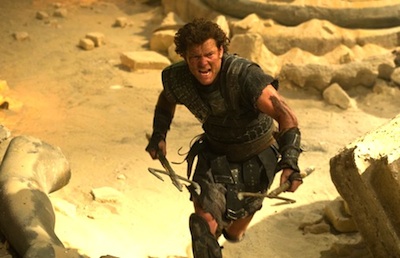
Sam Worthington as Perseus in "Wrath of the Titans."
The hero of a Sword & Sandal movie is usually muscle-bound (think Steve Reeves) and able to deliver passionate speeches about freedom (think Charlton Heston). The villain is normally a wicked tyrant, preferably played by a silky British actor (think Christopher Plummer) – and the hero typically has a few slave girls, wicked queens or curvy sorceresses thrown his way before he settles down with his true love, often played by an Italian brunette (think Sophia Loren).
From as far back as 1914’s Italian epic Cabiria – the first movie ever screened at the White House – Sword & Sandal movies have been delivering huge entertainment value with their muscle men, exploding volcanoes, sacrifices to Moloch and marching Roman armies.
Cecil B. DeMille and D.W. Griffith took the genre to its early heights from the 1910s-1930s, with spectacular films like Intolerance (1916) and Cleopatra (1934). In the years before the Production Code, these films often pushed the boundaries of sex and carnivalesque violence. In DeMille’s infamous The Sign of the Cross (1932), for example, Claudette Colbert takes a sexy milk bath (see below), and the film wraps with a lurid finale featuring Amazon women fighting pygmies, and nubile Christian martyrs (including one played by burlesque queen Sally Rand) served up to gorillas and crocodiles.
Hail Caesar!
Claudette Colbert in "The Sign of the Cross."
The genre’s heyday, however, was in the 1950s and early ’60s – the era of ‘Hollywood on the Tiber,’ when the studios decamped to Rome to recreate the ancient world. This period was dominated by American-made Biblical epics and Italian-made serials about Hercules or other burly, mythical heroes like Maciste. Lavish spectacles like Ben-Hur, The Robe and Quo Vadis saved Hollywood from the economic encroachments of television, and minted a new generation of masculine stars like Charlton Heston, Kirk Douglas and Richard Burton. And the movies themselves got bigger, with new formats like CinemaScope and VistaVision filling movie houses with sumptuous panoramas of ancient lands.
Capping off the era was Elizabeth Taylor’s magnificently grandiose Cleopatra (1963), a movie so big that today it would’ve cost over $330 million to produce – possibly because the film’s dubious Italian accountants claimed Liz Taylor ate twelve chickens and forty pounds of bacon each day for breakfast.
Nothing about peplum movies – not even their catering – is small.
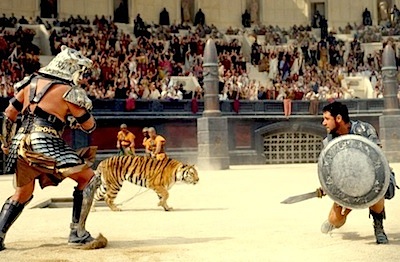
Russell Crowe (right) in "Gladiator."
After a long drought, broken by only a handful of films like Ray Harryhausen’s magical Clash of the Titans (1981) – and Conan the Barbarian (1982), featuring Arnold Schwarzenegger as the bone-crushing Cimmerian warlord – the Sword & Sandal genre was revived splendidly in 2000 by Ridley Scott and Russell Crowe in Gladiator. Gladiator took advantage of new digital technology to convincingly recreate the ancient world in telling a blood-soaked tale of Rome’s slide into imperial tyranny. Frank Miller’s 300 then ‘modernized’ the genre in 2006 – recreating the Battle of Thermopylae with video game-style action, post-9/11-style speeches about the value of freedom, and Gerard Butler providing the most impressive display of abs since Franco Columbu was Mr. Olympia.
Fortunately, although recent projects like Wrath of the Titans and John Carter are doing little to build off the momentum of those films, Hollywood still seems to have confidence in peplum movies. Brett Ratner and The Rock are plunging ahead with their adaptation of Hercules: The Thracian Wars, and Russell Crowe recently signed to star in Darren Aronofsky’s Sword & Sandal-esque movie about Noah. The 300 prequel Battle of Artemisia still moves forward, and Wrath of the Titans director Jonathan Liebesman wants to direct movies about Julius Caesar and Odysseus. Plus Mel Gibson’s Maccabee movie is still in development (a bit awkward, that one), Ridley Scott and Paul W.S. Anderson are both doing Pompeii projects, Angelina Jolie is still circling around an expensive Cleopatra film – and Steven Spielberg is even considering directing Gods and Kings, an epic telling of the life of Moses.
While it’s heartening that these projects are still going forward, no one wants them to suffer the same fate as John Carter or other recent, lackluster efforts. Audiences probably deserve better than what they’ve been getting, so with that in mind it’s time to take an unflinching look at what’s working – and not working – about this latest crop of Sword & Sandal movies.
Kronos gets fired-up in "Wrath of the Titans."
WHAT’S WORKING ABOUT THE NEW SWORD & SANDAL MOVIES:
1) Boffo Digital Creatures
Movie creatures haven’t been quite the same since Ray Harryhausen retired, but his legacy is still alive and kicking (and growling) into the digital age. Recent creatures like Wrath of the Titans‘ Kronos or the club-wielding cyclops, or the White Apes in John Carter, are awesome beasts to behold – especially in IMAX 3D and 7.1 channel sound. And whereas back in the 1950s and ’60s only Harryhausen’s movies had credible creatures (even the wonderful Italian peplum movies so often got dragged down by paper mache dragons and rubber lizards), nowadays most Sword & Sandal flicks can be expected to feature a decent mythical beast or two.
2) Great Use of Weaponry
Today’s Sword & Sandal stars like Conan‘s/Game of Thrones‘ Jason Momoa or Immortals‘ Henry Cavill (who’s also the next Superman) really look like they can fight, or at least like they’re trained and know their way around weaponry. And while that isn’t a prerequisite for peplum heroics – Tony Curtis never needed it – the ability to use a sword, spear or hammer axe convincingly is one of the key selling points of any Sword & Sandal hero.
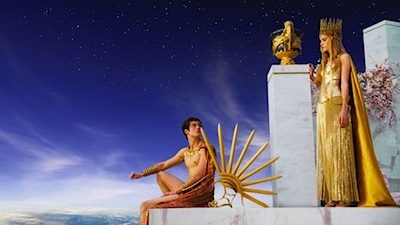
Wild costume and production design in "Immortals."
3) Bold Costumes & Production Design
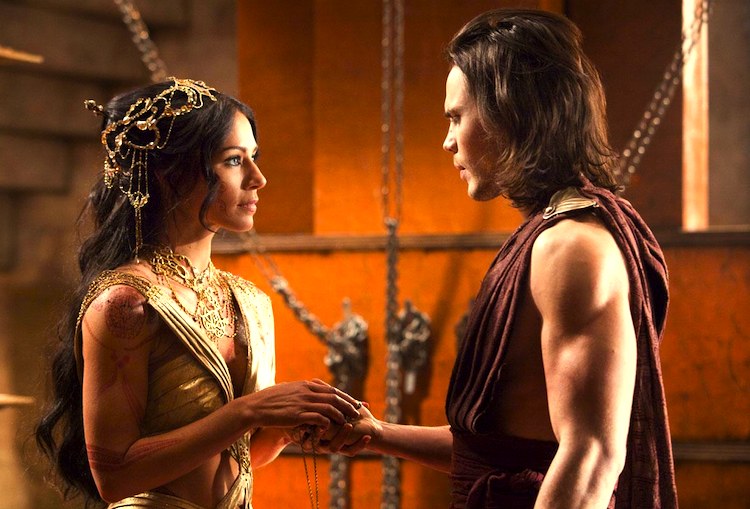
Tarsem’s Immortals featured some wildly imaginative costume and production design, blending North African, Indian, Persian and Greek influences that enlivened the look of Sword & Sandal cinema for the first time in years. Plus, Disney’s John Carter managed some fabulous retro/19th century sci-fi designs, for the few people in the audience still awake after the first hour.
4) British Accents
Let’s face it: the Brits, along with the Aussies and the Irish, just sound better doing this stuff right now than their American counterparts, and are saving a lot of otherwise sub-par films. In Wrath of the Titans, for example, stodgy dialogue is routinely rescued by the redoubtable Liam Neeson and Ralph Fiennes – both of whom could probably make an ad for shaving cream seem portentous.
5) 3D & IMAX
When it comes to Sword & Sandal movies, size really does matter. And while today’s 3D/IMAX-sized movies can’t compare in scale to films like Howard Hawks’ 1955 CinemaScope epic Land of the Pharaohs (one scene in that film featured over 9,000 extras), new films like the IMAX 3D version of John Carter still offer a reasonable facsimile of what those widescreen spectacles of old were like.
WHAT’S NOT WORKING ABOUT THE NEW SWORD & SANDAL MOVIES:
Sophia Loren in "The Fall of the Roman Empire."
1) Where did all the Love Goddesses go?
Easily the biggest problem with today’s Sword & Sandals movies – although this is less of a problem on cable TV shows like Spartacus or Game of Thrones – is the lack of good female characters. The wicked queens, love goddesses and slave girls that once made peplum movies so famous (and scandalous) are almost completely gone – leaving little for the men in these films to do other than chop each other to pieces. No more dancing girls, pagan orgies, or virgin sacrifices – what fun is that? In the ’50s and ’60s, tantalizing (and usually Italian) women like Sophia Loren, Rossana Podesta, Gina Lollobrigida and Sylva Koscina appeared routinely in Sword & Sandal epics and made life exciting for the gods and mortal men who coveted them – or feared them. They should be welcomed back.
2) Spoiled Heroes with Super-powers and Abs
The big new trend nowadays – from peplum films to comic book movies – is to have annoying, demigod heroes with abs who fret over their supernatural powers. Petulant guys like John Carter or Perseus in Wrath or Theseus in Immortals who can’t decide whether the world is cool enough for them to save. It’s tiresome. Kirk Douglas didn’t fret over his ‘powers’ or his abs in Spartacus, Ulysses or The Vikings, probably because he didn’t have any – he just had courage (also the cinema’s best chin). Today’s peplum heroes should have fewer powers and flabbier abs (like Victor Mature), and more backbone. They should be more stoic, and stand for something beyond their own narcissism – like freedom.
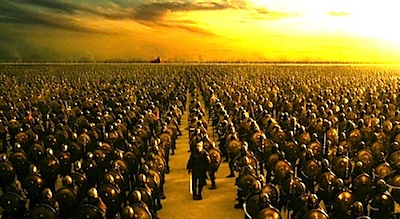
Another fake digital army in "Immortals."
3) Fake Digital Armies
You know the kind I’m talking about, because they’re in every new Sword & Sandal film: the fake digital armies, with endless rows of digital soldiers wearing digital armor – marching and grunting into battle as one. They always appear in a scene that’s supposed to be ‘awe-inspiring,’ but that instead comes across as software-driven and phony. Memo to Hollywood: spend the money and hire some real extras.
4) Characters Who’ve Never Taken a Bath
In an effort to create ‘edgier,’ more ‘realistic’ Sword & Sandal movies, some filmmakers have come up with the idea of populating the ancient world with guys who’ve never bathed, shaved, or washed their clothes. Wrath has one such guy, an unshaven dude with matted hair named Agenor, who looks like he spent the last six months occupying Zuccotti Park. He actually gets more on-screen time than actress Rosamund Pike (seemingly the only female cast member), who plays the film’s pretty blonde heroine. A related idea in today’s peplum cinema is to have everything – buildings, armor, vegetable stands – sprayed with mud and dirt for that ‘authentic,’ antediluvian feel. It may come as a shock to some filmmakers to learn that people in the ancient world actually had access to water, and were able to wash themselves.
5) Movies That Skimp on the Big Themes: Freedom, Romance, Religious Faith
Here’s the key to a good Sword & Sandal movie: it wears its heart on its sleeve. Classics like Robert Wise’s Helen of Troy, Kirk Douglas’ Ulysses or Anthony Mann’s The Fall of the Roman Empire not only had more intelligent, literate scripts; not only were they better researched, and more faithful to the spirit of their original stories. There was also an element of sincerity and passion to them in how they depicted the big Sword & Sandal themes of freedom, romance and religious faith. In more recent years, for example, a film like 300 took the theme of freedom seriously, and cleaned-up at the box office. By contrast, I read recently that in Disney’s early meetings on John Carter, the first things executives discussed about the film were … the merchandizing and the sequels. It showed.
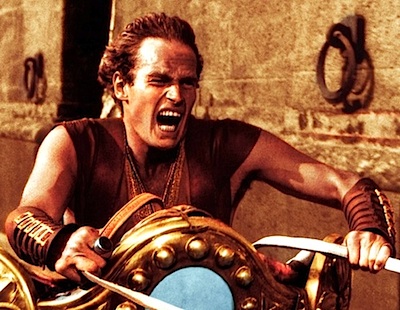
Chalton Heston in "Ben-Hur."
THE BOTTOM LINE:
While today’s 3D/IMAX-sized Sword and Sandal movies have modern technology and other advances going for them, they don’t always understand the human element that made classics like Ben-Hur or Spartacus work. Of course, assuming Hollywood doesn’t want more $200 million write-downs on its books, perhaps that will start to change.
The good news is that when Sword & Sandal movies are done right, people still love them. Movies about the ancient world stir our imaginations, and give us a sense of continuity with the past. They also speak to our most cherished values of liberty and faith – often while providing scandalous fun. Hollywood is right to believe in these projects – Cecil B. DeMille did, and made a career out of them for 40 years – so let’s hope filmmakers can up their game over the next few years, and make the ancient world as exciting as it used to be.