From Studio Ghibli: LFM Reviews The Secret World of Arrietty

By Joe Bendel. The love for fantastical little people is pretty universal. Perhaps that is why Mary Norton award winning British YA novel The Borrowers transferred rather easily to Koganei, a Tokyo suburb that happens to be home to legendary animator Hayao Miyazaki’s Studio Ghibli. Following several well-received live action adaptations from the likes of Hallmark Hall of Fame and the BBC, Studio Ghibli produced an anime treatment helmed by their youngest feature director to-date and co-written by Miyazki himself. Set to become Disney’s most widely distributed Ghibli release on a reported 1,200 screens, Hiromasa Yonebayashi’s The Secret World of Arrietty opens today nationwide.

The so-called Borrowers are tiny but proportional people who live in the cracks and crevices of country homes. They survive by “borrowing” supplies that will not be missed from the human household, like a sugar cube. Up until now, the borrowing has been the sole responsibility of Arrietty’s quietly protective father Pod, but having reached a certain age, it is time for her to learn how to survive as a borrower. As her high strung mother Homily anxiously awaits, she and her father venture into the big house. However, their foray leads to disaster when a recent arrival spies them.
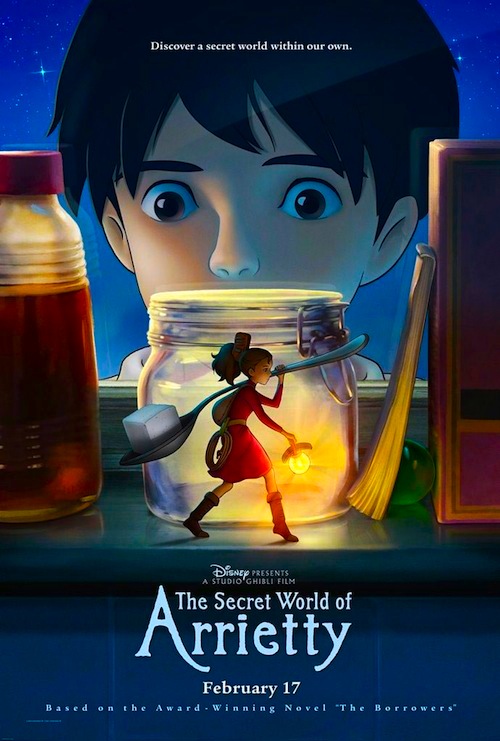
Shō is a sickly human boy, trundled off to the secluded cottage to rest up for an upcoming operation. He instantly recognizes the borrowers from the family legends of the little people living under the floor boards. Even though the scale is problematic, he is also pretty psyched to talk to a girl. Unfortunately, Arrietty’s father is adamant: once borrowers have been seen, they must move on post-haste. Frankly, his concern is not misplaced. Though Shō means them no harm, Haru, the maid of the house, also suspects their presence and intends to treat them like any conventional infestation.

Aside from some CGI here and there, the mostly hand drawn Secret looks richly detailed and lushly evocative. Indeed, the verdant garden is particular suited to the Ghibli magic. The film has plenty of style, but beyond Ghibli’s considerable circle of admirers, it will largely skew towards younger viewers. Still, it is rather watchable for adults so inclined.Indeed, Arrietty is much more agreeably plucky than cloying. Likewise, Shō might be a bit of a sad sack, but at least he is not an energy drain on the film. Even the original songs by French pop-star Cécile Corbel are surprisingly graceful and distinctive.

The only real drawback is the American dubbing, including an over-the-top Carol Burnett as Haru, the bland Will Arnett as Pod, and several tweeners adults will not recognize. Somehow they just do not sound right. (In contrast, the British release features the voice talent of Mark Strong, Olivia Colman, and Saoirse Ronan, which certainly looks more interesting on paper.)

Secret looks great and parents can feel safe and confident taking their children. Although Haru’s maniacal streak seems a bit excessive (from a credibility standpoint), the overall film is quite gentle and charming. A solid B+ outing from Studio Ghibili, Secret opens today (2/17) in New York at Regal Union Square and AMC 34th Street and in San Francisco at the AMC Van Ness.

Posted on February 17th, 2012 at 9:52am.
A Neo-Communist Youth Movement: LFM Reviews Putin’s Kiss

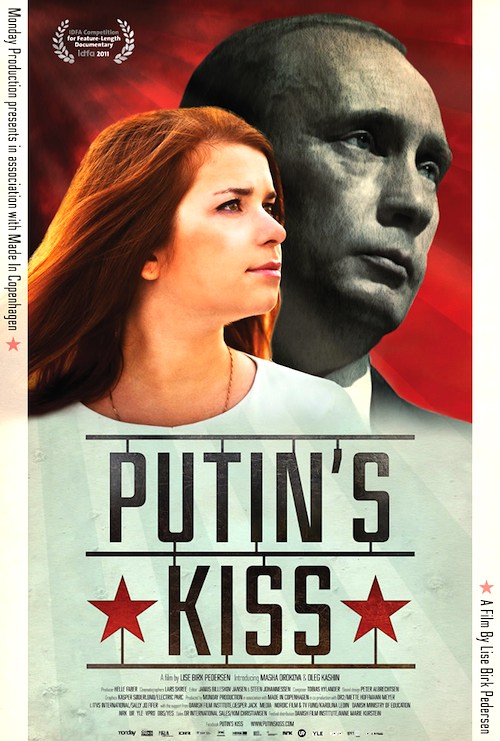
By Joe Bendel. Perhaps nothing signified the all-encompassing totalitarianism of National Socialism better than the Hitler Youth. Likewise, the Komsomol, or Communist Union of Youth, was emblematic of Soviet oppression. According to independent observers, the names are different, but the Komsomol has risen again in the guise of Nashi, a Kremlin-backed youth group fiercely loyal to the current Russian Prime Minister. Though once a prominent spokesperson for the group, one young woman began to understand the realities of the regime she served. Lise Birk Pedersen documents her fascinating story in Putin’s Kiss, which opens this Friday in New York.

Masha Drokova was an ambitious student who believed the government’s propaganda. She joined Nashi, rocketing up the ranks after she famously kissed the titular Russian strongman on state television. She became a national media figure and dogged foe of Putin’s democratic critics. However, her interest in journalism brought her into contact with independent reporters, like Oleg Khasin.

While remaining committed to Nashi, she found she enjoyed the open and robust debates with her new friends. Unfortunately, this did not bode well for her standing within the Putin Youth. When Khasin is brutally beaten thugs considered by everyone except the most willfully blind Nashi loyalists to be acting at the behest of the Kremlin or its allies, Drokova reaches a crossroads.

Only in her early twenties, Drokova is still at an age when peer pressure has very real consequences. To her credit, she stood by her injured friend, joining those demanding a proper inquiry, at no little risk to her well being. Yet she does not repudiate her time serving Putin’s interests. As real journalists say, this story is still developing. Shrewdly, Pedersen never tries to impose a preset narrative, scrupulously recording the messy ambiguities of Drokova’s circumstances instead. Indeed, that is what makes the film so fascinating. Rather than a neat and tidy epiphany, we watch her reservations and doubts begin to stir.

Frankly, Drokova is not yet a fully mature adult, which can lead to viewer frustration with her as their POV protagonist. However, it is important to remember this is exactly why Nashi recruited Drokova and those like her. Indeed, Pedersen conveys a frighteningly vivid sense of Nashi’s reach and influence. After watching Kiss, it is impossible to accept claims that the group is a nonpartisan service movement.

Kiss is an important film that shines an international spotlight on Putin’s youthful enforcers. Pedersen rakes a fair amount of muck, while capturing a very personal story with wider political implications. Mostly scary and only occasionally encouraging, it is highly recommended for viewers concerned and interested in the state of the world. It opens this Friday (2/17) in New York at the Cinema Village.

Posted on February 15th, 2012 at 10:35am.

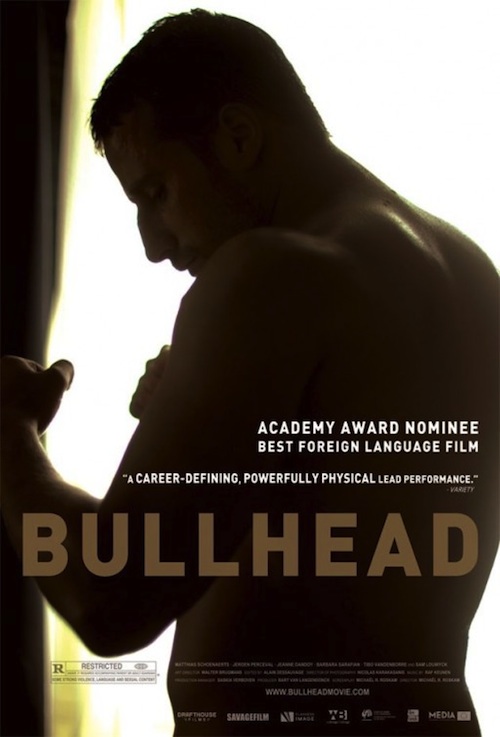
Oscar Gets Juiced: LFM Reviews Bullhead

By Joe Bendel. It is hard to believe Belgium has any comparative advantage in the beef packing industry. Regardless, watching the Flemish bovine mafia ply their cattle with hormones will not inspire global consumer confidence. One angry breeder takes massive doses himself. Regrettably, he has a very good reason for such treatments, which viewers see in painful detail early in Michaël Roskam’s Bullhead, Belgium’s surprise best foreign language Oscar nominee, opening this Friday in New York.

Jacky Vanmarsenille resembles the bulls he sullenly tends (hence the title). He looks all man, but an incident in his childhood left him somewhat less so. To compensate, he has built up his body, but the constant cocktails of testosterone and steroids have exacerbated his anger issues. Poorly socialized, Vanmarsenille’s resentment metastasizes over time. When figures from his past suddenly reappear, his behavior becomes more erratic. Unfortunately, this leads his family to discount his warnings not to get involved with Marc De Kuyper, the duplicitous Godfather of growth hormones.

Bullhead is quite an unlikely Oscar contender. Indeed, Belgium raised many eyebrows when it submitted Roskam’s film instead of the Dardenne Brothers’ French language The Kid with a Bike, but they seem to have known what they were doing. This is a tough picture that is difficult to pigeon hole. As a character study, it broods in a class by itself. Indeed, there may be no protagonist that is as equally sympathetic and scary as Jacky Vanmarsenille. Yet, its gangster movie elements are not mere window dressing for the naturalistic morality play. Roksam’s screenplay also reflects Belgium’s Flemish-French divide in ways not especially flattering to the latter, adding a further layer of context for those who can pick up on it.

Without question though, the key to the film is Matthias Schoenaerts, who really is quite extraordinary as Vanmarsenille. His physical transformation into the hulking protagonist has been compared to De Niro’s bulking up for Raging Bull, but that is really the least of it. With little dialogue, he conveys volumes, keeping the audience fully invested in his character, even when he commits terrible deeds. This is ferociously intense work. Jeroen Percival provides an effective counterpoint as the nervous Diederik Maes, Vanmarsenille’s oily childhood friend and polar opposite physically, sexually, and temperamentally.

Bullhead’s deliberate pacing and wince-inducing plot developments might discomfort less adventurous viewers, but under Roksam’s sure hand they become high tragedy. In truth, few films so directly address what it means to be both a man and a monster. On Oscar night, it will be the longest of long shots, but Bullhead can go toe to toe with any of its fellow nominees, including Asghar Farhadi’s A Separation, considered the frontrunner amid a very strong foreign language field this year. Highly recommended, Bullhead opens tomorrow (2/17) in New York at the Angelika Film Center and AMC Empire and next Friday (2/24) in San Francisco at the Bridge Theatre.

Posted on February 16th, 2012 at 10:33am.

From Taipei to Beijing: LFM Reviews Love

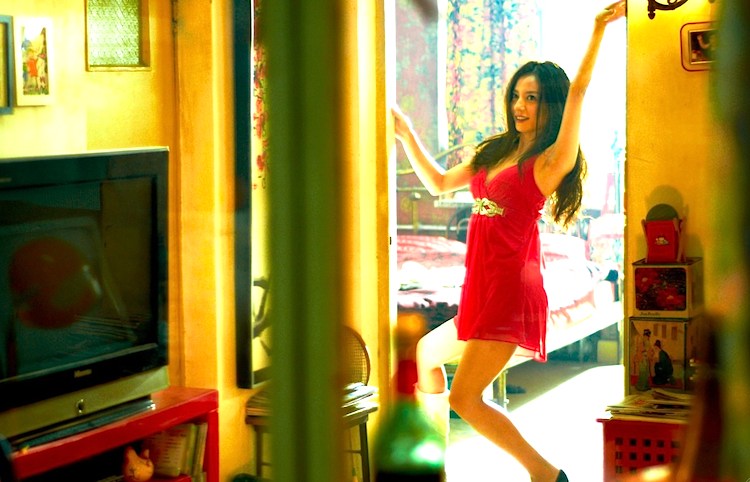
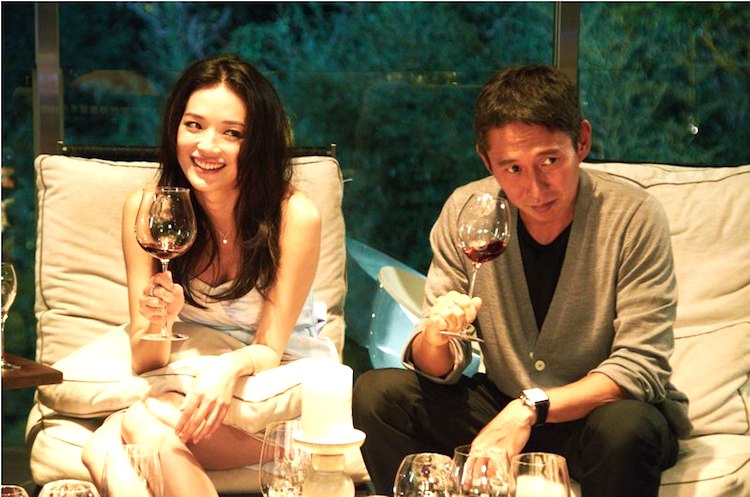
By Joe Bendel. They are two cities so alike, but so far apart. Can a man from Taipei find love in Beijing? There are even greater obstacles facing eight interconnected individuals, but somehow love finds a way in Doze Niu Chen-Zer’s Love (trailer here), which opens this Friday in New York, following a special Valentine’s sneak earlier this week.

Father of Ni and sugar daddy to the professional celebrity, Zoe Fang, “Uncle” Lu lives well in Taipei. Having just broken off an affair with the beautiful but needy Fang before it could really start, Lu’s business associate Mark leaves for Beijing hoping to buy property. Instead, he meets disastrously/meet-cutes the attractive but disorganized realtor Jin Xiao-ye.

Although Uncle Lu offers stability, Fang is drawn in spite of herself to Kuan, the stammering busboy older brother of Yi-jia, Ni’s best friend who is pregnant by Ni’s boyfriend, Kai. Feeling understandably betrayed, Ni breaks with both, leaving Kuan to look after his sister while his Notting Hill relationship with Fang slowly percolates.

Love clearly sounds like another Chinese-Taiwanese variation on multi-character rom-coms typified by Valentine’s Day and (Heaven forbid) New Year’s Eve. However, Doze Nui’s film and its thematic predecessors such as Wing Shya and Tony Chan’s Love in Space work so much better, perhaps because they are never afraid of a little emotion or melodrama. Unlike Gary Marshall schmaltz, one never gets the sense the cast-members are rolling their eyes off camera. On the contrary, everyone involved with Love seems to understand when you have deep feelings for someone that may not be reciprocal, it is a very serious matter.

Love also has the benefit of legitimate chemistry within its ridiculously attractive ensemble. Perhaps past familiarity helped. After pining for (Ivy) Chen Yi-han in Cheng Fen-fen’s Hear Me, (Eddie) Peng Yu-yan becomes the object of her unrequited affections this time around, as Kai. He makes a credible knucklehead again, while her turn as Yi-jia is just as sweet and vulnerable. Likewise, Amber Kuo is equally sympathetic and engaging as Ni.

However, the (somewhat) senior cast members really provide the romantic seasoning. Superstar Shu Qi is absolutely radiant, putting Julia Roberts to shame as Fang. She also convincingly expresses her character’s desire to find self worth through productive work, an appealing theme largely foreign to Hollywood and American indie productions (“Work? Huh, wha?”). As in his previous film Monga, Doze Niu provides himself a key assist in a supporting role. Although the comparative old timer, he brings far more charisma to Uncle Lu than can be dismissed as Woody Allen-style vanity casting. One could well imagine a single middle aged woman would be very interested in meeting him.

Aptly titled, Love is/was perfect Valentine’s Day fare, but not unrealistically so. It is pretty clear not every character will have a spot on a loveseat when the music stops. Yet, it is an impossible movie not to like. Recommended for all the secret sentimentalists out there who can safely go to foreign films without losing their cineaste street cred, Love officially opens this Friday (2/17) in New York at the AMC Empire and in San Francisco at the AMC Metreon, from China Lion Entertainment.

Posted on February 16th, 2012 at 10:29am.

LFM’s Sundance Diary & Final Thoughts on the Festival

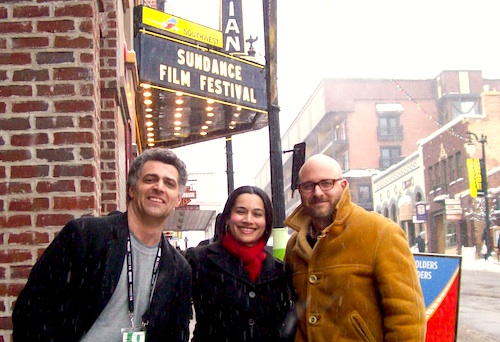
LFM's Joe Bendel, Govindini Murty & Jason Apuzzo at the 2012 Sundance Film Festival.

By Govindini Murty. Sundance sets the tone for the entire film industry in North America. Its spirit of supporting creativity, talent, and scrappy innovation is one we heartily applaud here at Libertas. We also applaud the fact that in recent years Sundance has become a home to so many pro-freedom films. To name just a few, these have included Mads Brügger’s daring expose of North Korean Communism The Red Chapel (2010), Chris Morris’ brilliant satire of Islamic terrorism Four Lions (2010), and Lee Tamahori’s intense anti-Saddam Hussein thriller The Devil’s Double (2011).

The 2012 Sundance Film Festival continued this tradition. Pro-freedom films screened at the festival included: Ai Weiwei: Never Sorry, about dissident Chinese artist Ai Weiwei’s efforts to expose the brutality of the Communist Chinese government; The Other Dream Team, about the Lithuanian basketball team and their struggle to overcome Soviet influence; Putin’s Kiss, about the turn toward authoritarianism amongst the Nashi youth movement in Putin’s Russia; and Mads Brügger’s The Ambassador, a witty and politically-incorrect expose of corruption in central Africa. There were also a host of entertaining and well-made narrative dramas and comedies this year. A few we at Libertas enjoyed included The Raid, Grabbers, and Shadow Dancer.

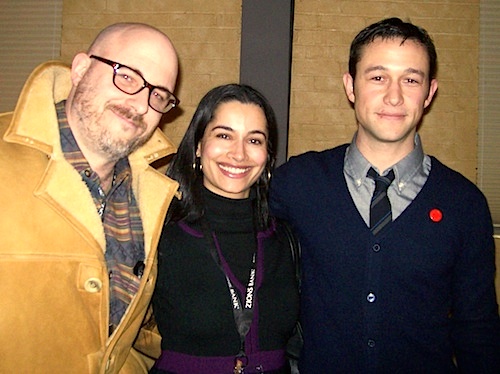
LFM's Jason Apuzzo & Govindini Murty with Joseph Gordon-Levitt at Sundance 2012.

Jason and I arrived at Sundance on Monday, January 23rd. Libertas super-contributor Joe Bendel had already been at the festival since opening night on January 19th, and had managed to fit in an astounding number of films that first weekend. Because we admire the Zen warrior-monk focus Joe brings to writing movie reviews, the first thing we did when we arrived in Park City was meet up with Joe on Main Street – the central artery through which all things Sundance flow. Snow flakes were falling and the lights were twinkling on the picturesque street as we all met up in front of the famed Egyptian Theatre.

Slipping and sliding through the snow and invigorated by the air of good cheer around us, we headed with Joe down the street through the crush of festival goers and filmmakers to plan our film-going strategy. With approximately 180 films showing at Sundance, many playing simultaneously in multiple venues, careful coordination is integral to having a successful Sundance experience. As we hurried down Main Street, we ran into Paul Giamatti (looking avuncular with a fuzzy beard), and Jason spotted Kate Bosworth (there promoting her thriller Black Rock). Jason wanted to ask her whether she did her own surfing in Blue Crush, then thought better of it.

The first Sundance film we had scheduled for that night was an 11:45pm screening of Grabbers – a campy, sci-fi Irish alien-invasion movie. Sundance’s Park City at Midnight screenings are where the festival shows its genre films, and the raucous crowds that attend these screenings often provide a lively show of their own. The screening of Grabbers was great fun, with the mostly drunken crowd hooting and hollering throughout the screening, and we agreed the film had a good chance at getting distribution. In fact, Jason spotted some distribution execs he recognized walking into the theater. We would have stayed for the Q & A with the filmmakers, but it was 2:00am and we were scheduled to attend the coffee chat with Stan Lee at 9:00 the next morning. This was something we would have to get used to at Sundance: sleep deprivation.

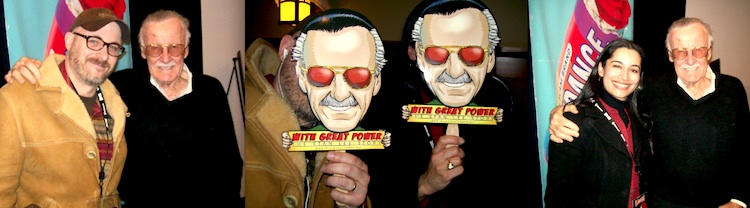
LFM's Jason Apuzzo & Govindini Murty with Stan Lee at the 2012 Slamdance Film Festival.

Tuesday, January 24th’s highlights were most definitely Slamdance’s two-hour coffee chat with Stan Lee in the morning, followed by the screening of his film With Great Power: The Stan Lee Story that afternoon. Slamdance is the fun, ‘alternative’ festival to Sundance, and is really worth a visit.  Jason has already described this wonderful event with Stan Lee in detail, but let me just add how charming, witty, and delightful Stan is in person. He was truly gracious when we met him, with a big smile on his face and a roguish twinkle in his eye. We bonded with him over our mutual love of classic film and all things Errol Flynn, and had fun asking him questions about his work and inspiration during the course of the two-hour master class/coffee chat. We would have loved for Joe to have attended this event with us, but Joe was scheduled to leave Sundance Tuesday morning for New York, so we bid him adieu the night before. Continue reading LFM’s Sundance Diary & Final Thoughts on the Festival

LFM Reviews Shadow Dancer @ The Berlin/Sundance Film Festivals: A Timely Drama on the Dangers of Ideological Fanaticism

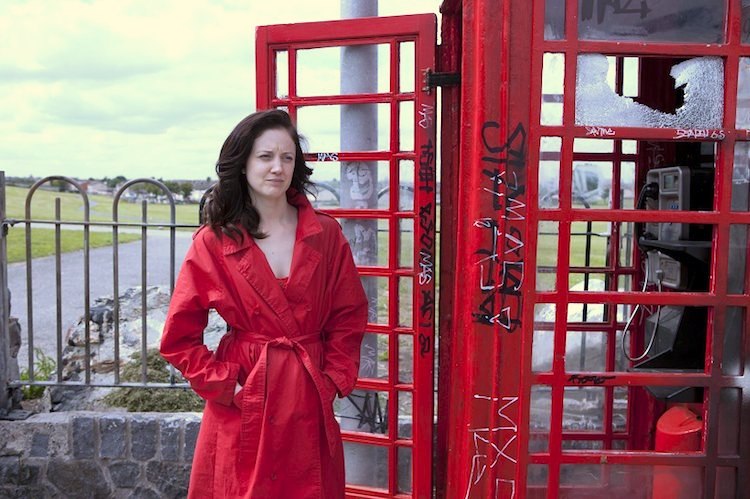
Andrea Riseborough in "Shadow Dancer."

By Govindini Murty. The internecine conflict in Northern Ireland has provided potent cinematic subject matter for decades. Shadow Dancer, starring Clive Owen, Andrea Riseborough, and Gillian Anderson, is the latest film to dramatize this fraught topic. Directed by James Marsh (Man on a Wire) and currently screening at the Berlin Film Festival, Shadow Dancer tells the story of a young woman torn between loyalty to her radical IRA family and her efforts to protect her young son by becoming a spy for the British.

What is so striking about Shadow Dancer is that it portrays the British government in a positive light as it attempts to negotiate peace with the IRA – while portraying the radical IRA cadres who oppose the British as unregenerate fanatics.

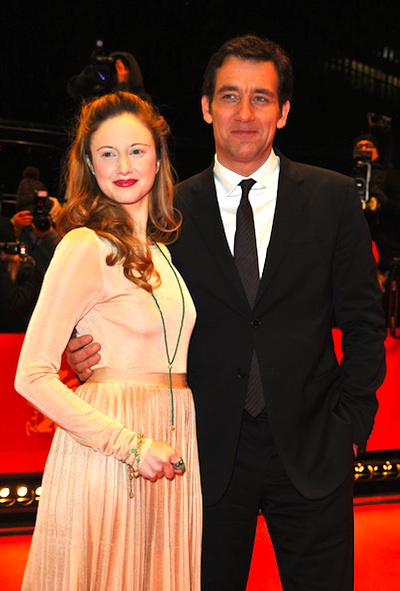
Andrea Riseborough & Clive Owen at The Berlin Film Festival.

When I recently saw the film at Sundance I asked director James Marsh and actress Andrea Riseborough if they intended the film to have a pro-British message. Marsh immediately assured me that the film was non-political and was intended purely as a drama examining the predicament of one particular IRA family. Riseborough differed from him, saying that she thought the film was sympathetic to the IRA.

This discrepancy suggests how hard it is to remain neutral in depicting political subject matter in the movies; one inevitably has to make choices about what to show or not show on-screen, and these choices in turn affect the perceived politics of a film.

As for the film’s meaning, it will be viewers ultimately who will be the ones to decide.

In Shadow Dancer, Andrea Riseborough (of Madonna’s W.E.) plays Colette McVeigh, a young single mother caught up in the terrorist activities of her staunchly IRA family in Belfast during the waning years of “the Troubles” in the early 1990s. Radicalized by the death of her little brother years before, Colette has been aiding her two IRA brothers, Gerry and Conor, in a series of bombings, shootings, and assassinations against the British and their loyalists. Unbeknownst to her family, Colette has been having second thoughts about the violence she is perpetuating – especially since she is now the mother of a small boy. When she half-heartedly drops off a bomb in a London subway without setting off the detonator, British intelligence picks her up.

British MI5 agent Mac (Clive Owen) persuades Colette it’s time to renounce her IRA terrorist ways and become a secret agent for the British. It’s either that or go to jail for twenty-five years and give up hope of raising her young son herself. Colette chooses to become a British agent, but her brothers’ continued terrorist activities, combined with the paranoia of a sadistic local IRA boss, place Colette in one moral quandary after another. Does she help the British and prevent further killings – but endanger the life of her family at the hands of the suspicious IRA? Or does she keep working for the IRA and take part in more assassinations, only to be arrested and locked away in jail by the British? A budding romance with Mac – her decent, well-intentioned MI5 handler – makes things even more complicated for Colette. Continue reading LFM Reviews Shadow Dancer @ The Berlin/Sundance Film Festivals: A Timely Drama on the Dangers of Ideological Fanaticism