By Joe Bendel. Imagine the world’s first 3D erotic film coming from the Disney studios while the Old Man himself was still running the show. It is almost as shocking that Hong Kong filmmakers would blaze that trail (particularly post 1997 hand-over), but such is the case. As a result, all serious film historians must surely take due note of Christopher Sun’s Sex and Zen 3D: Extreme Ecstasy (trailer here), currently playing in mainstream New York theaters.
Based on Li Yu’s novel The Carnal Prayer Mat, something of the Ming Dynasty equivalent of Fanny Hill, S&Z tells the story of the talented but shallow scholar Wei Yangsheng, who chunks away his respectable married life to partake in the hedonism of the nefarious Prince Ning’s secret vice lair. In return for his expertise with antiquities, the Prince allows him nearly free reign with the women. Unfortunately, his shortcomings, if you will, lead to considerable embarrassment for the faithless scholar. Not one to take things laying down, Wei Yangsheng approaches the outwardly beautifully (but androgynous where it counts) Elder of Bliss to teach him the cosmic secrets of carnal pleasure. The first step: a transplant, in 3D. You’ve been warned.
Of course, everyone is probably wondering the same thing about S&Z: just how much Zen does it really have? In truth, only a bit. The scholar’s old teacher is a Buddhist monk, whose piety draws the ire of Prince Ning. There is a lot of sex, though.
Kind-of-sort-of rebooting the early 1990’s HK softcore Sex and Zen franchise, the 3D S&Z’s nudity is almost entirely from the waist up, except for what might be described as comedic prosthetics. However, there is a lot of simulated action going on (which in a bit of a miscalculation, gets rather dark in nature down the stretch), so it should probably be considered more of an NC-17 film than a hard R. Continue reading New Dimensions in Sexual Freedom: LFM Reviews China’s Sex & Zen 3D
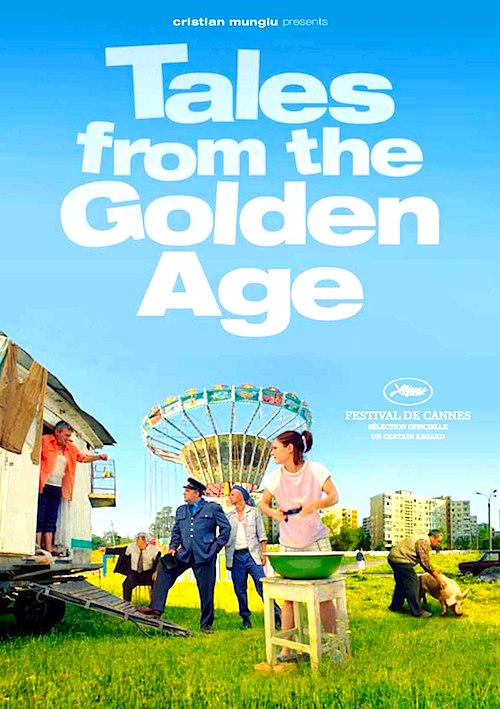
By Joe Bendel. The oppressive Ceausescu regime tightly controlled the flow of information in Romania. Yet somehow, stories of official corruption and incompetence secretly spread like wildfire, perhaps even getting embellished here and there, as good anecdotes often are. Cristian Mungiu and his four credited co-directors collect six iconic urban legends of life during the Ceausescu era in their inspired anthology film, Tales from the Golden Age (trailer here), which opens this Friday in New York at the IFC Center.
The Communist propaganda machine constantly insisted Romanians were living in a “Golden Age.” Since they were literally starving, average citizens were far from convinced. In fact, the so-called journalists at the state-controlled Scinteia newspaper are among those taking their lumps as part of Tales’ sardonic nostalgia. In The Legend of the Party Photographer a front page story on French President Giscard d’Estaing’s state visit causes no end of trouble for the staff. For whatever reason, Ceausescu took his hat off during the official reception, but d’Estaing did not. To the panicked propagandists, this implies socialism showing improper deference to capitalism—something the workers cannot be allowed to see.
Indeed, petty absurdity runs rampant throughout Tales. Sometimes it explicitly skewers the apparatchiks of old, as in the opening episode, The Legend of the Official Visit. Sort of an Orwellian rewrite of The Inspector General, it depicts the arbitrary and often contradictory demands placed on a provincial village ahead of an impending motorcade drive-by. Of course, as legend has it, things did not go according to plan.
Other episodes are more circumspect in their criticism of the previous regime, but the prominent role played by foodstuffs speaks directly to the acute shortages experienced under the glorious years of socialism. It is eggs that preoccupy the characters of The Legend of the Chicken Driver, a not-so fond ode to a time when clerks and deliverymen often illicitly exploited their access to food. Likewise, the title character demonstrates the absolute worst method to kill an ill-gotten hog in The Legend of the Greedy Policeman. Continue reading Collectively Laughing at Communism: LFM Reviews Tales from the Golden Age
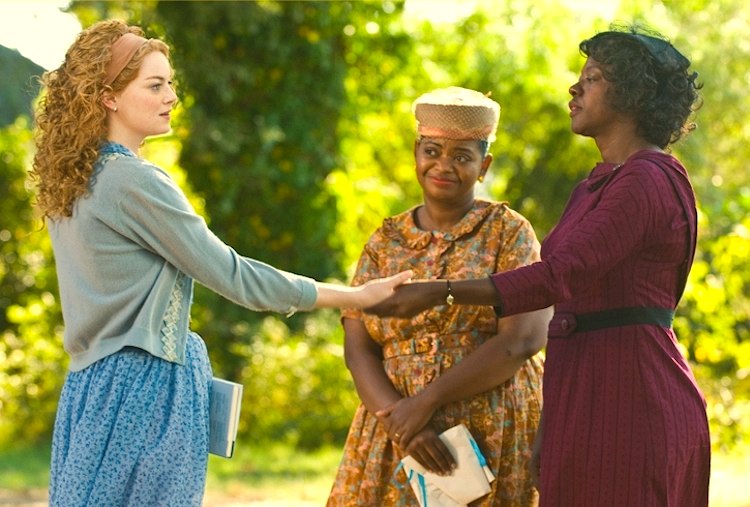
Humanistic reconciliation: Emma Stone, Octavia Spencer, and Viola Davis in "The Help."
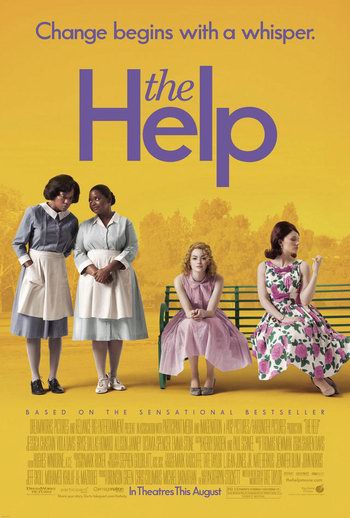
By Govindini Murty.The Help has been a truly surprising hit this summer. In a season full of alien invaders and spandex-clad superheroes, audiences are flocking to see a female-driven domestic melodrama. Based on Katherine Stockett’s best-selling novel (with over five million copies sold to date), The Help dramatizes the plight of black maids working for white families in the racially divided society of early ’60s Mississippi. The film features engaging performances from a talented cast that includes Viola Davis, Octavia Spencer, Emma Stone, Allison Janney, Jessica Chastain, and Cicely Tyson. What truly makes the film appealing, though, is its heartfelt, optimistic spirit, which ultimately suggests that reconciliation is possible even in the midst of the worst racial intolerance.
The Help is a welcome real-world antidote to the extravagant CGI fantasy films of this summer. It may not depict earth-shaking cataclysms, but the real life injustice the film depicts is just as consequential. The Help shows what happens when people allow themselves to be co-opted by group pressure into acting in inhuman ways. The white women in The Help may not all be naturally evil, but through social pressure they acquiesce to evil behavior. Their weakness, malice, and cowardice is motivated by the most mundane of reasons: the desire to be included in a bridge party, to get a medal from a women’s organization, to have the best dress or the best cook in town. Yet the decisions they make have a catastrophic effect on their fellow black citizens, depriving them of their civil rights, their livelihoods, their dignity, and even their families and their freedom.
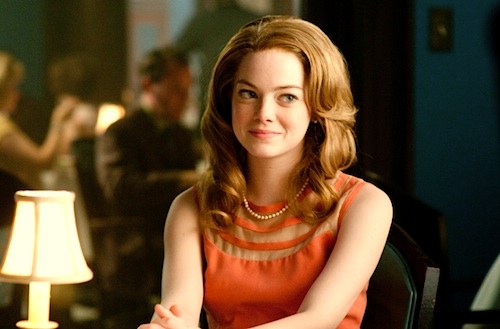
Not your traditional Southern belle: Emma Stone as Eugenia "Skeeter" Phelan.
The Help centers on the story of Eugenia “Skeeter” Phelan (Emma Stone), a well-to-do white girl who returns home to Jackson, Mississippi after graduating from college. Unlike her childhood friends who have gotten married and had children, Skeeter dreams of pursuing a career as a writer. She’s applied for a job as an editor at Harper & Row in New York, but when she’s turned down, Skeeter interviews at the local newspaper and is assigned the task of ghost-writing a house-cleaning column. Skeeter’s desire to write bewilders her mother and her friends, all of whom are apparently satisfied with their lives as decorative society wives. Skeeter’s wish to have her own career is one of the most appealing aspects of the film, one that pretty much any woman can identify with. It doesn’t hurt that the New York publishing world is depicted in such a glamorous way in the film, with the editor Skeeter writes to, Elain Stein (Mary Steenburgen), living a life of independence with a fabulous office and apartment, dressed in sleek black cocktail dresses and surrounded by handsome, well-tailored young men.
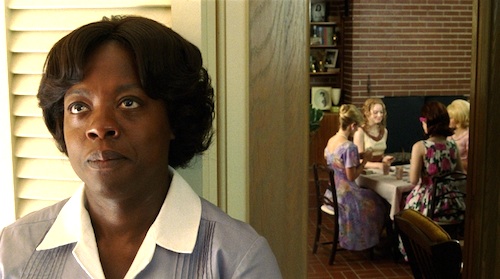
In any case, since Skeeter knows nothing about housecleaning, she turns for advice to the black maids who work for her friends. Skeeter starts talking to Abileen Clark (Viola Davis) and then meets Abileen’s best friend Minnie Jackson (Octavia Spencer). As Skeeter gets to know the maids, she witnesses first-hand the humiliating way they are are treated by the women who are her friends. In particular, Skeeter sees that her childhood friend Hilly Holbrook (Bryce Dallas Howard) has become a hectoring full-time racist who uses her position as head of the Junior League to bully the young women of Jackson into treating their black maids abusively. Skeeter is deeply pained by this. You see, Skeeter herself was raised by a black maid, Constantine, who was actually more of a mother to her than her own mother Charlotte. Constantine has mysteriously disappeared, and part of Skeeter’s quest to record the lives of the maids is motivated by her own wish to make sense of the central role that Constantine played in her life – and to figure out why Constantine would have left her family.
Viola Davis as Abileen Clark.
The Help thus explores the central dichotomy that faced many black women in the South when they were forced to work as maids because of a lack of any other opportunities. These hard-working and dignified women did the valuable work of raising the white children in their communities, yet were treated as third-class citizens who couldn’t sit on the same bus seats, eat in the same restaurants, drink from the same water fountains, send their children to the same schools, or walk in through the same entrance in a movie theater as the whites they had raised.
Such black women were exploited by a monopolistic white power structure in the South that apparently couldn’t survive if it allowed free competition and free enterprise in the black community. Thus, black Americans who could have succeeded on their own merits were systematically restricted to low-paying, menial labor, physically assaulted if they attempted to register to vote, denied loans to send their children to college or to start businesses, subjected to police brutality, and robbed of their constitutional rights. This was contrary to both the founding principles of America and to the Enlightenment ideals that form the backdrop of our Western political tradition. Continue reading LFM Review: The Help and The Importance of Individual Conscience
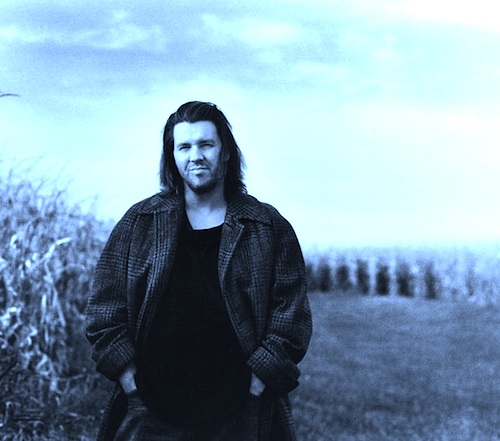
By David Ross. Every so often I dip into contemporary literature to confirm my sense that I’m not missing very much. I recall forays into the work of Paul Auster, Angela Carter, Douglas Coupland, Dave Eggers, Bret Easton Ellis, Jonathan Franzen, Michel Houellebecq, Jay MacInerney, Cormac McCarthy, Rick Moody, Chuck Palahniuk, Salman Rushdie, Jeanette Winterston, and other passing fancies of Time and Newsweek. Zadie Smith waits her turn on my shelf. All this sifting of silt has produced only a few glinting nuggets. I discovered in Houellebecq a fierce and welcome fellow despiser of modernity (see my comments here), and something even more in David Foster Wallace: a vast nineteenth-century mind struggling to find itself.
The “covering cherub,” in Blake’s parlance, was the postmodernism that DFW formally embraced against the grain of his personality. He was profoundly sincere, empathetic, and humane, a believer in “the sub-surface unity of things,” as he puts it in his famous Kenyon graduation address of May 2005, and yet devoted his career to self-conscious intricacies of irony and gamesmanship. He made great art in this mode – only Nabokov and Borges are his postmodern betters – but it was not, I can’t help feeling, the art he was born to make.
I have additional misgivings about his prose, though he is the only prose writer of his generation even worth noting. While meticulously attentive to his art, he was ambivalent about the formality of his art, the ideal of the well-wrought urn. His language is often splendid, but always splendid despite a certain scruffiness and loose-limbed sprawl. My eye is always instinctively performing the function of an editor, pruning, reshaping. He was too invested in his own unpretentiousness, too much infected with the modern American ideal of jeans and sandals, which ultimately expresses a yearning to be liked, to be no better or different than the rest of the crowd. I suppose this is the symbolic meaning of DFW’s hallmark bandana, an accouterment of kitchen and field workers, housewives and athletes. Great writers don’t care about being liked. They scorn our right to judge. They discover themselves amid the execrations of the crowd.
Even with his foibles and arguable failings totted up, DFW was the redeemer of his literary generation. He saved it from the humiliation of being the first generation in American history to lay nothing – not the least nosegay – on the graves of Emerson, Thoreau, and Whitman. He saved it from the gaping wound of a great naught.
DFW’s rightly famous Kenyon Commencement Speech (here and here) has become a pop-cultural touchstone. Perhaps enthusiasm for it has already become a bit of a cliché. Yet I defy anybody to listen attentively without succumbing to its moral seriousness and sinking into an inner hush just as the initially boisterous Kenyon audience stills into an outer hush. In the guise and moment of his speech, DFW defies the default setting of the culture. He sheds his celebrity – the unpeelable skin of the Oprah era – and becomes the conduit and servant of a message more urgent than himself. Thus Emerson spoke from the podium of the Concord lyceum.
By Govindini Murty. • There’s been a lot of interesting news today, so let’s dive right in. At the weekend box office, The Help continued its impressive run, becoming the #1 film in America this past weekend with a $20 million gross that brings its twelve-day total up to an excellent $71.3 million. I’m delighted, because The Help is a warm, humanistic drama with a terrific cast of strong actresses that shows that you don’t have to rely on computer-animated creatures to draw in audiences during the summer. Of course, that isn’t true of the second-place film, Rise of Planet of the Apes, which very much prefers its computer-animated apes to its human characters. Its $16.1 million take shows that for a certain segment of the audience, misanthropic themes are always in. (Perhaps the film was also aided by its recent endorsement by PETA?)
However, the Conan remake, which made a terrible $10 million, and Fright Night (starring Colin Farrell), which only made $8.1 million, were major box office disappointments. I’m surprised these both did so poorly, since it seemed that they both had a certain built-in genre audience. Fright Night even got reasonably good reviews. Perhaps people are just tired of ’80s remakes?
Also under performing was Anne Hathaway’s romantic drama One Day, which made only $5.1 million (though on half the number of screens as Conan and Fright Night). I have to tell you, I saw the problems with One Day coming a mile away, even though I’m a big fan of romantic dramas. The problem from the trailer was that you couldn’t tell what the story was really about and Jim Sturgess’ character came across as a complete cad. It was hard to understand what Anne Hathaway’s character would see in him. That’s a problem because for any good love story to work, you have to fall a bit in love with the characters yourself. That just didn’t seem possible with One Day.
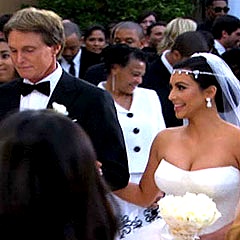
• In other important news that I know will greatly interest our Libertas readers, Kim Kardashian got married over the weekend. There’s apparently been a lot of controversy both over her dress and her hairstyle. Did Kim play it dowdy and safe, or does she look va-va-voom? You be the judge.
Another Kardashian ties the knot.
• Turning now to another brunette siren, someone has written yet another article claiming that Angelina Jolie is thinking of retiring from the movies and devoting herself to humanitarian activities. That’s wonderful, but isn’t it also a humanitarian activity to make good movies? Jolie has acted in a lot of well-made films, but she’s yet to make a truly great film. She should take the time now to search around for good scripts and try to make at least one unforgettable film so that her legacy is secure before she retires – if she really does intend to retire, that is.
• Then, there’s movie news about a truly great lady – one whose fame is not based on something as fleeting as being a Hollywood movie star, but on her work as a courageous democracy activist suffering under one of the most brutally repressive regimes on earth. I’m referring to the Burmese democracy leader Aung San Suu Kyi, winner of the 1991 Nobel Peace Prize. Despite the fact that the party she leads, the National League for Democracy, won 59% of the national vote in Burma’s last open national elections in 1990, Suu Kyi has spent fifteen of the past twenty-one years under house arrest by that country’s ruling military junta. Aung San Suu Kyi has long been a personal heroine of mine. I admire strong, principled women like her who are willing to risk everything to stand up for freedom.
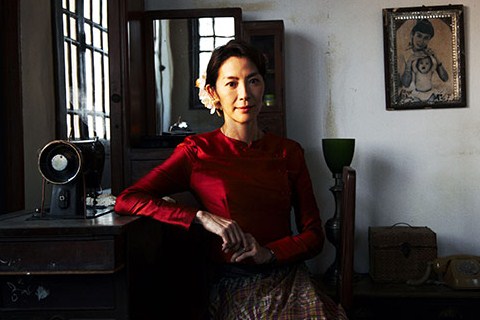
Michelle Yeoh as Burmese democracy activist and Nobel Laureate Aung San Suu Kyi
Now it seems that Luc Besson has taken a break from his usual action movie fare to make a movie about Aung San Suu Kyi titled The Lady. The film stars Michelle Yeoh and will be screening at the upcoming Toronto International Film Festival. I think Yeoh is an excellent choice to play Suu Kyi. Yeoh is a striking physical match for her, and she also conveys the grace, strength, and intelligence that have characterized Suu Kyi’s conduct through her multi-decade ordeal on behalf of democracy. If The Lady has the kind of pro-democracy message we hope it will, then we’ll be strongly promoting the film here at Libertas. Continue reading The Help Rules the Box Office, A Kardashian Wedding, Angelina Jolie, Aung San Suu Kyi + The Wachowskis Return to Sci-Fi
Mongol General:What is best in life? Conan:To crush your enemies, to see them driven before you, and to hear the lamentations of their women.
– from Conan the Barbarian (1982).
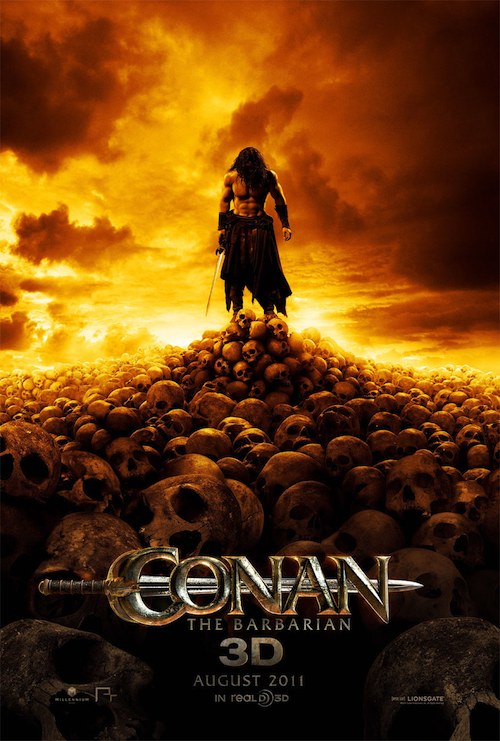
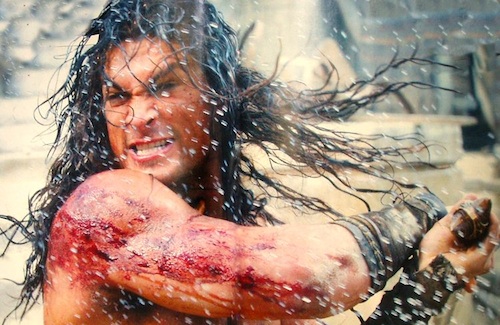
THE PITCH: Lionsgate reboots the Conan the Barbarian series – or tries to – without either Arnold Schwarzenegger or director John Milius on board. In Arnold’s place comes Jason Mamoa, buff former star of Stargate: Atlantis and the recent Game of Thrones. Pretty Rachel Nichols, not-so-pretty Stephen Lang (buried in make-up) and Rose McGowan as an insane witch with metal claws round out the cast.
THE SKINNY: As Conan says in the film, “No man should live in chains,” but also no man should confuse this new movie for the 1982 cult classic produced by Dino De Laurentiis and co-written by John Milius and Oliver Stone – the film that effectively launched The Austrian Oak’s career as a major star. Hawaiian newcomer Jason Mamoa scowls wickedly and swings a mean sword, but he can’t match the humor and cracked intensity of Arnold’s original take on the Cimmerian warlord. This mediocre, History Channel-level Conan only beats out the original in action, gore and 3D bare breasts.
WHAT WORKS: • The 6’5” Jason Mamoa, a kind of poor man’s Dwayne “The Rock” Johnson, manages to sell the action scenes and look formidable and athletic as Conan.
• Rose McGowan as the insane/bloodthirsty/incestuous witch Marique is arguably the only cast member at home in this type of film, as she struts around in wild headdresses – and with no eyebrows – tasting the blood of virgins by pricking their necks with metal claws. Think of her as a hellish, antediluvian Nurse Ratched. This is also a good moment to mention that this film is rated ‘R.’
• The film’s lavish production design and costumes – that effectively mix North African, Middle Eastern, Persian and Indian influences – create the distinct-yet-familiar feel of ‘The Hyborian Age’ as Robert Howard envisioned it (more or less).
Jason Momoa as Conan.
WHAT DOESN’T WORK: • Again Jason Mamoa, who’s given some cool lines to deliver (“I live. I love. I slay … I am content.”) but can’t summon any humor or pizazz in doing so. As smoothly as he chops heads, Mamoa lacks the over-the-top persona required to sell this basically silly material.
• It wasn’t until the end credits were rolling that I realized that the actor buried in make-up playing the ruthless villain ‘Khalar Zym’ was actually Stephen Lang. It seems like a waste to hire somebody that good and make him totally unrecognizable to the audience.
• The movie is in desperate need of a sense of humor. Rachel Nichols’ character Tamara seems like a wasted opportunity here, as she should’ve been back-talking Conan more throughout the film – or else Conan needed a worthier sidekick, like Mako from the original film. Continue reading “No Man Should Live in Chains!” LFM Mini-Review of Conan the Barbarian
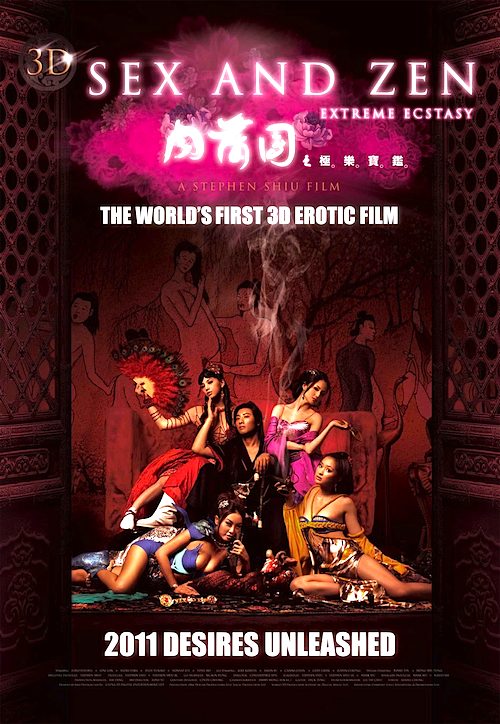 By Joe Bendel. Imagine the world’s first 3D erotic film coming from the Disney studios while the Old Man himself was still running the show. It is almost as shocking that Hong Kong filmmakers would blaze that trail (particularly post 1997 hand-over), but such is the case. As a result, all serious film historians must surely take due note of Christopher Sun’s Sex and Zen 3D: Extreme Ecstasy (trailer here), currently playing in mainstream New York theaters.
 Even with his foibles and arguable failings totted up, DFW was the redeemer of his literary generation. He saved it from the humiliation of being the first generation in American history to lay nothing – not the least nosegay – on the graves of Emerson, Thoreau, and Whitman. He saved it from the gaping wound of a great naught.