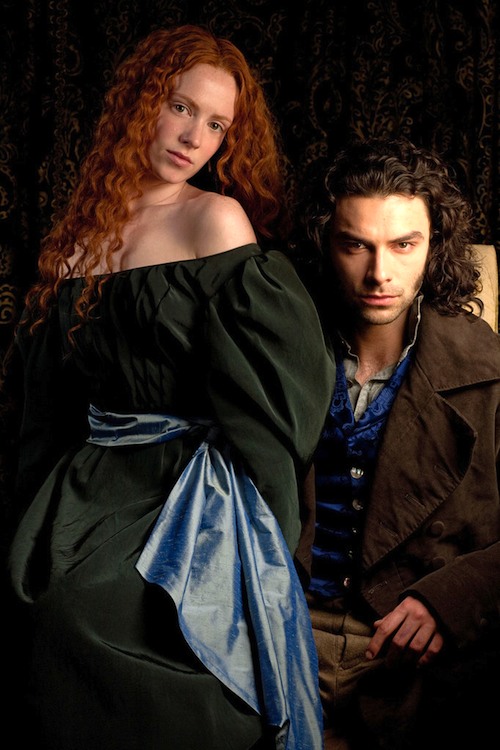
By David Ross. In my comments from last year on the Keats biopic Bright Star I opined that “film has no idea how to approach lives that are largely interior, with driving purposes that are inconveniently invisible and inscrutable. In consequence, film tends to emphasize the gossipy and scandalous, dwelling on the externals of sexual deviancy, alcoholism, and nervous breakdown.” This certainly describes the BBC’s Desperate Romantics (2009), but such a zesty and funny travesty is hard to resist, especially if, like me, you tend to think the twentieth century was rather a mistake.
The six-hour miniseries tells the story of John Everett Millais, Dante Gabriel Rossetti, and William Holman Hunt – the “Pre-Raphaelite Brotherhood” – as they scheme and bumble in pursuit of eternal art and sub-eternal flesh. Rounding out the dramatis personae are John Ruskin, the sexually neurotic titan of Victorian art criticism and incidentally one of the greatest prose stylists in the history of English; Effie Ruskin, the great man’s warm-blooded young wife, disconsolately intacta after five years in the marriage bed; the flame-haired milliner-cum-muse Lizzie Siddal, the “original supermodel”; and the milksoppy hanger-on Fred Walters, a fictional contrivance who narrates the whole business from a perspective of exasperation and vicarious titillation. Rossetti and Fred competitively love Siddal (what’s not to love!), while Ruskin is disgusted by his wife’s post-pubescent nether parts and schemes to fob her off on the virginal Millais. Meanwhile, the prostitute-model Annie Miller – a buxom, lusty lass – places the inconsistently evangelical Hunt in a series of difficult, shall we say, positions.
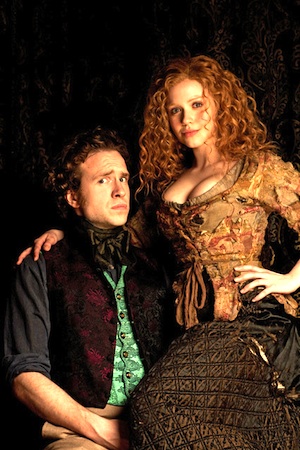
Edward Burne-Jones and William Morris make a late appearance as nerdy idolaters of Rossetti, the former vaguely epicene, the latter fat, manic, and socially incompetent. This ignores Morris’ polymath command, the hard will of the inveterate and consummate creator, but it serves a dramatic purpose, I suppose, providing Rossetti with a foil and the show with a cuckold-ready goof.
Unlike the BBC’s reverent and impeccable interpretation of Pride and Prejudice (see my comments here), Desperate Romantics is a cheese fondue of pros and cons. It takes liberties with the biographical record (Wikipedia totals up the damage); it has no interest whatsoever in the substance of the Pre-Raphaelites’ art or ideas; it depicts Rossetti – an artistic and poetic giant – as a charming but shiftless skirt chaser, which is at best a partial truth; it takes a particularly sunless view of Ruskin, depicting him as coldly repressed rather than as gloriously nuts; and its theme song, a thumping folk-rock jig, is the most annoying piece of TV music since the Seinfeld bass segue. On the other hand, the series is full of impish humor and salacious shenanigans, and the brotherhood’s banter abounds in dry British wit. Especially delicious are the episodes in which the Ruskins and Millais bumble toward what we’ll delicately call a physical outcome. We might ask: “How many Victorian geniuses does it take to screw in a -.” Apparently it takes quite a few. Continue reading The BBC’s Desperate Romantics