Graham Greene’s Intrigue and Depression: LFM Reviews Dangerous Edge on PBS; Film Airs Friday 3/29

Watch Preview on PBS. See more from Dangerous Edge: A Life of Graham Greene.

By Joe Bendel. During his tenure with the British intelligence, Graham Greene reported directly to the notorious Soviet mole Kim Philby. It was rather fitting the espionage novelist and chronic adulterer would be so closely associated with such a significant betrayer. Yet, Greene consistently offered tortured defenses of his friend. He was “complicated” that way. Thomas P. O’Connor surveys the writer’s work and ironic life in Dangerous Edge: A Life of Graham Greene, which airs this Friday night on most PBS outlets.

Greene was never awarded the Nobel Prize for Literature, but he was nominated for an Oscar. Indeed, with so many of Greene’s books and screenplays produced for the big screen, O’Connor has a wealth of cinematic imagery available to illustrate Greene’s oeuvre, without ever scraping the bottom of the barrel. In fact, at least two of Greene’s scripts became outright masterpieces: The Third Man and Fallen Idol, both directed by Carol Reed.
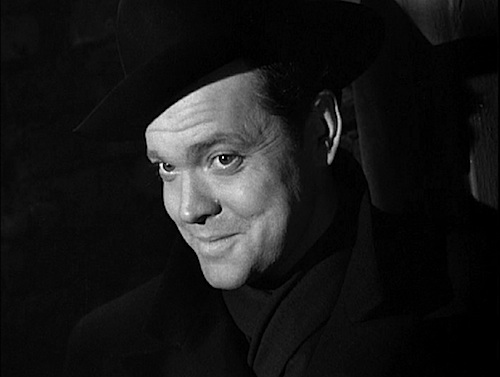
Orson Welles as Harry Lime in Graham Greene's "The Third Man."

Essentially, O’Connor focuses on three sides of Greene’s persona: the writer, the adventurer, and the adulterous, spiritually doubting manic depressive. Much is made of Greene’s persistent “boredom,” his euphemism for depression, as well as his conversion to a decidedly flawed but earnest brand of Catholicism. Greene’s biographers point to Greene’s reluctant status as the preeminent “Catholic novelist” of his time, while rather openly carrying-on with a woman who was not his wife, as one of the many great contradictions defining his life. Fair enough.

O’Connor incorporates talking head interviews with some top shelf literary figures, including Sir John Mortimer, Paul Theroux, David Lodge, and John Le Carré, who (quite surprisingly) blasts Philby for coldly and deliberately causing the deaths of numerous colleagues. Again, O’Connor was fortunate to have considerable audio recordings of Greene, sounding like quite the acidic raconteur. Bill Nighy also serves as the supplemental voice of the author, reading his letters and documents when the archival Greene is not available. It is a rather classy package, narrated by Sir Derek Jacobi.

Aside from Le Carré, Edge’s participants largely give Greene a pass on Philby and related Cold War issues. Great pains are taken to portray him as an equal opportunity geopolitical gadfly, but it is far from convincing. Nonetheless, the complexity of Greene’s relationship to his Catholic faith should interest readers and viewers across the spectrum. A well paced examination of a flawed but fascinating figure, Dangerous Edge follows Philip Roth: Unmasked (another unsuccessful Nobel contender, thus far), this Friday (3/29) on PBS stations nationwide.

LFM GRADE: B-

Posted on March 26th, 2013 at 11:17am.
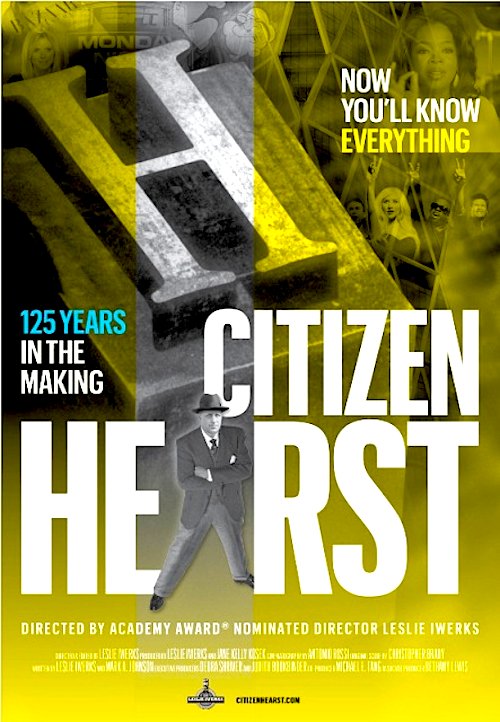
The Original Media Mogul: LFM Reviews Citizen Hearst

By Joe Bendel. His name has become synonymous with yellow journalism, conspicuous consumption, and raw power. The son of a self-made mining tycoon, William Randolph Hearst always fancied himself a champion of the working people and to his credit, he usually had a good sense of what they wanted to read. Director-editor-co-writer-co-producer Leslie Iwerks profiles the man and the media empire he launched in Citizen Hearst, which begins a run of special nationwide screenings this Thursday to celebrate the one hundred twenty-fifth anniversary of the Hearst empire.

As Indiewire’s Leonard Maltin observes in Citizen, Charles Foster Kane was not exactly Hearst, but it was not that far off. On the other hand, Citizen Kane’s treatment of his actress-lover Marian Davies was pretty harsh. Dropping out of the Ivy League, Hearst started his empire with the San Francisco Examiner, which his father had won as part of a gambling debt. Hearst built what had always been the shabby second fiddle to the Chronicle into the model of his brand of yellow journalism. It was a formula he expanded nationwide, eventually expanding into newsreels and early television stations. Of course, there was also San Simeon, the compulsive collecting, his mostly unsuccessful political campaigns, and his scandalous relationship with Davies.

Citizen emphasizes the up-and-down nature of Hearst’s fortunes within his lifetime. While never destitute, he was humbled at times. That is certainly good dramatic fodder, but only about a third of Iwerks’ film is dedicated to Hearst proper (and completely ignores his principled anti-Communism). The rest of the story follows the company after the death of its larger than life founder. The most fascinating post-Hearst development by far was the fate of the Examiner, a consistent voice of Hearst’s brand of populism, brought to a standstill by a violent union strike. With Examiner advertisers openly intimidated and employees attacked, the 1968 conflict led to one death. Ultimately, the Examiner would be absorbed by its old non-union rival, which in turn was absorbed back into Hearst.

At this point, Citizen Hearst essentially becomes a promotional film for the Hearst of today, celebrating its profitable business decisions, such as changing the A&E network from an arts showcase into a reality programming freak show. Sure, it made money, but what would an art collector like old man Hearst think? Still, there are some interesting conversations with Norman Foster, the architect of their new, innovatively green New York headquarters – but he has his own documentary available, How Much Does Your Building Weigh, Mr. Foster for those intrigued by his geodesic style.

Beyond Maltin, Citizen Hearst talks with many of the Hearsts still involved in the family business. Dan Rather also appears, presumably representing contemporary disgraced/facts-optional yellow journalists. Iwerks even gets celebrity assists from frequent Hearst cover model Heidi Klum and Oprah Winfrey, a television host who once had an afternoon show that was very popular but has since largely disappeared from view. Indeed, the final third of the documentary has the tone of an E! network special.

Hearst, the self-styled progressive, would likely approve of most of the media conglomerate bearing his name today. However, the further Citizen Hearst strays from the enigmatic title figure, the less interesting it will be to non-Hearst employees. Though there is good stuff in the first hour, it is probably best saved for subsequent home viewing. For those soon interviewing with a Hearst division, it screens this Thursday (3/14) in New York at the Clearview Chelsea and 1st & 62nd Street Theatres.

LFM GRADE: C+

Posted on March 12th, 2013 at 10:09am.

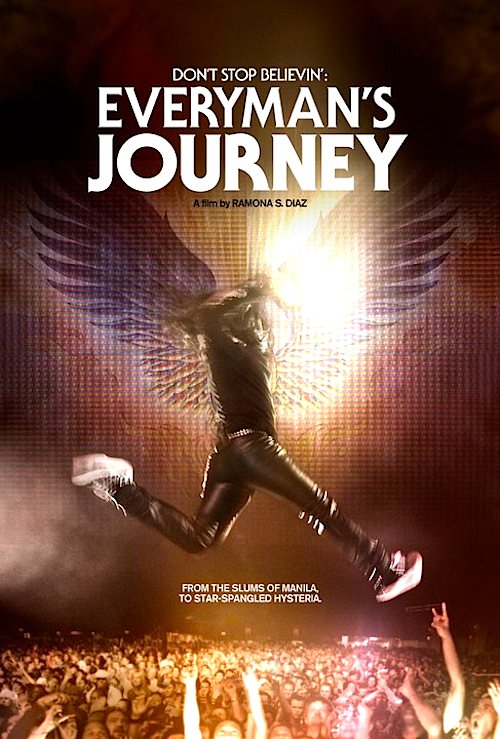
LFM Reviews Don’t Stop Believin’: Everyman’s Journey

By Joe Bendel. What is the ratio of jobs lost to positions gained from tweets or any other internet postings? It must be astronomically negative. Arnel Pineda is the exception. Based on performance clips uploaded to YouTube, he would find himself trying out for the biggest prospective gig of his career: filling Steve Perry’s shoes as the lead singer of Journey. Ramona S. Diaz documents a true rock & roll Horatio Alger story in Don’t Stop Believin’: Everyman’s Journey, which opens this Friday in New York.

Pineda was a Filipino bar singer, barely eking out a subsistence living. He had one super-fan posting videos to YouTube. Scouring the internet for a new vocalist, Journey lead guitarist Neal Schon stumbled across Pineda’s covers and fell out of his chair. The other band members could hear what he was talking about, but were a little skeptical of going so far out of the box. Nonetheless, they arranged to bring a flabbergasted Pineda over for an audition.

Presumably, a documentary about how a scuffling singer from the streets of Manila failed his audition for the big time would not get much distribution or festival play, so it is safe to assume Pineda overcomes his initial jitters and earns his shot in the band. Diaz follows the newly reconstructed Journey as they spend their first year on the road together. She had “rockstar” access right from the start, capturing the entire audition process, Pineda’s debut concert, and the wear and tear of a punishing tour schedule.

While Believin’ is all about Pineda’s rags-to-riches story, it is a pretty effective infomercial for Journey, as well. Evidently they started out as an early jam-band, but became more radio friendly to placate their label. It worked. Viewers who are not diehard fans of the stadium-rockers will be surprised by how many recognizable songs are heard throughout their sets. It is more than just the title song, which Diaz shrewdly holds in reserve for the big climatic payoff.

Naturally, the focus is on Pineda and his family, but founding-member Schon also gets his due and considerable camera time as Pineda’s biggest booster and a rock & roll survivor in his own right. And audiences can tell they have real chemistry on-stage.If their band-mates do not get as much attention in the doc, they are still reaping the rewards of a rejuvenated Journey, at least according to Billboard’s figures, ranking them at #12 on the 2012 moneymaking chart, right ahead of Elton John and Katy Perry. The way they have also embraced their legions of new Filipino fans is also a cool subplot.

It is impossible to resist Pineda’s feel-good story, especially when you see the impoverished neighborhoods where he once lived. It might be predictable, but is immensely satisfying. A rare happy look “Behind the Music,” recommended both for the band’s Baby-Boomer fan base and the Facebook generation that will more likely identify with Pineda, Don’t Stop Believin’ opens this Friday (3/8) in New York at the Quad Cinema.

LFM GRADE: B

Posted on March 5th, 2013 at 12:13pm.

The Story of a Song: LFM Reviews Hava Nagila

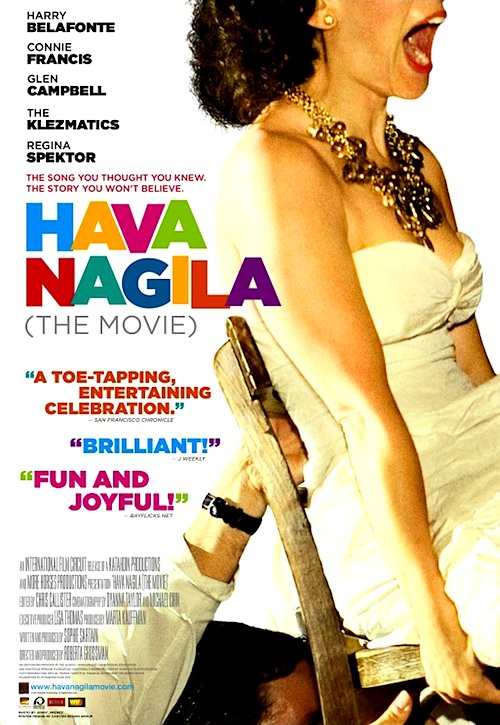
By Joe Bendel. Like Abel Meeropol’s “Strange Fruit,” “Hava Nagila” is a song worthy of its own biographical treatment. It started in the Ukraine and became a staple of Jewish American celebrations, but the identity of its composer remains a controversy. Documentary filmmaker Roberta Grossman tells the story of the song and those who sing it in Hava Nagila: the Movie, which opens this Friday in New York.

It was based on a nigun, a wordless prayer chant incorporated into the services of the Nineteenth Century Ukrainian Hasidic community. To commemorate the Balfour Declaration, it was adapted into the song now commonly heard at weddings and bat/bar mitzvahs. Just who adapted it depends on whether you talk to the Idelson or Nathanson families. Likewise, it means different things to different musicians. To a serious Klezmer artist like Frank London, it is rather a cliché. Yet to old school entertainers like Glen Campbell and Irving Fields, it is a rhythmic crowd-pleaser. Yes, that Glen Campbell. He recorded “Hava” as the B-side to his “True Grit” single and shares some pleasant reflections with Grossman during an interview recorded at his synagogue a few years back.

Indeed, Hava will certainly change many viewers perception of Campbell, but it is the ageless Irving Fields who truly demands his own documentary. Known for fusing traditional Jewish music with Latin dance music, the ninety-four year-old Fields still gigs as a leader six nights a week in Manhattan—and could easily pass for a man at least twenty-five years his junior. The music must keep him young, naturally including “Hava.”

Hava boasts some impressive musician-commentators, including Harry Belafonte (interviewed in the Village Vanguard, where he once performed when Max Gordon also booked folkies), Johnny “They Call Me Bruce” Yune, and Russian indie singer-songwriter Regina Spektor, who relates “Hava” to the Russian Refusenik experience.

Less successful is the rather muddled 1960’s section, in which we are told the Jewish children of the suburbs embraced the song as some kind of folky communal something or other. The film’s chatty tone also becomes somewhat problematic over time. Co-produced by Friends co-creator Marta Kauffman, Hava’s shticky title cards and comedy sketch interludes often feel like a sitcom trying too hard to be irreverent.

Although plenty of talking heads consider “Hava” corny, it is hard to dislike a song so deeply associated with celebration and the early founding of the State of Israel. It is also hard to argue with the likes of Campbell, Elvis Presley, and longtime Israel booster Lionel Hampton, all of whom covered “Hava.” Despite its weirdly inconsistent tone, Hava puts “Hava” in the proper historical context. Recommended for those interested in the intersection of Jewish history and musical tradition, Hava Nagila: the Movie opens this Friday (3/1) in New York at the Lincoln Plaza.

LFM GRADE: B-

Posted on February 27th, 2013 at 9:26am.

LFM’s Govindini Murty @ HuffPost Live Talks About Women Directors at The Oscars

LFM’s Govindini Murty appeared on HuffPost Live today to talk about the issue of women filmmakers being left out of the Oscars, and also about women in the film industry, in general. The entire 25 minute segment is available above. Thanks to HuffPost Live for inviting her on.

Yesterday Govindini had a piece in The Atlantic on women filmmakers breaking into the mainstream film world through Sundance and independent film.

Posted on February 22nd, 2013 at 2:54pm.

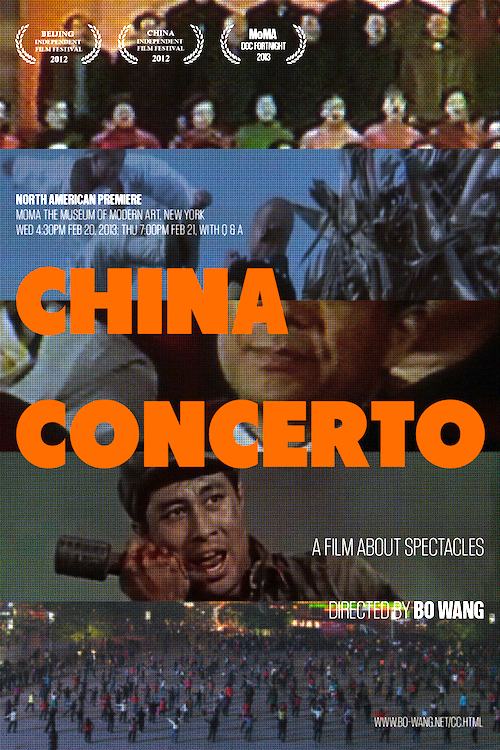
LFM Reviews China Concerto @ MoMA’s 2013 Documentary Fortnight

By Joe Bendel. Something as profoundly traumatic as the Cultural Revolution cannot simply be papered over. It hangs over the national psyche, like a malevolent ghost. As much as present day China embraces globalism and crony capitalism, the excesses of the Mao years still have a bearing on it. Indeed, it is part of the internal contradictions Bo Wang analyzes in his documentary-essay China Concerto, which screens as part of MoMA’s 2013 Documentary Fortnight.

A film of observation and rumination, Concerto has a pseudo-epistolary structure, featuring a woman’s disembodied voice reading a man’s dispatches from China. The writer is not a passive viewer, having trained himself to dissect imagery and look for the telling details nobody is supposed to notice. He is in the right place for it. Aside from the movie clips and newscast excerpts incorporated for illustrative purposes, Concerto was almost entirely shot in Chongqing, the China’s version of Chicago. While Bo Wang was shooting, Bo Xilai’s neo-Maoist “Red Culture” campaign was in full swing, but the Chongqing party secretary would soon be removed after the Wang Lijun scandal brought international media attention to rumors of extensive corruption.

He certainly captured images that are both striking and ironic. Perhaps his richest vein of material is the park where viewers witness couples dancing under a model of Mount Rushmore and an elderly man reclining near a Statue of Liberty. Yet, tucked away, there is also a cemetery dedicated exclusively to Red Guards that remains padlocked and shunned. According to the woman’s tantalizingly vague narration, it seems many of those interned were involved in an incident of cannibalism, which has since been consigned to the memory hole. One suspects this park could easily be the subject of an entire documentary feature.

It is absolutely fascinating to watch Concerto apply the techniques of deconstruction to official state propaganda. The stand-in for the filmmaker’s stand-in explicitly argues that China’s obsession with spectacle is intended to mask and empower it Communist rulers. It also offers trenchant analysis of the capitalism promoted by the state, a mutation described as “collective capitalism,” in contrast to the western individualistic variety. The implications for the individual in Chinese society are obvious. That is one reason the correspondent always focuses on a single individual when watching sprawling propaganda pageants.

Indeed, Concerto’s concern for the overwhelmed individual is rather noble, in a genuinely subversive way. As if its indie bona fides needed more burnishing, China Concerto holds the distinction of being a selection of the 2012 Beijing Independent Film Festival, which was shutdown not once, but three times by the government. This is a film that simply encourages audiences to think, but some might find that threatening. Highly recommended for sophisticated viewers, China Concerto screens during MoMA’s Documentary Fortnight this Wednesday (2/20) and Thursday (2/21), with the director present for Q&A both nights. For Georgians, it also screens March 27th at Kennesaw State and March 28th at Emory, as part of the well curated Independent Chinese Film Series.

LFM GRADE: A

Posted on February 18th, 2013 at 2:48pm.