Martial Arts Noir: LFM Reviews Dragon

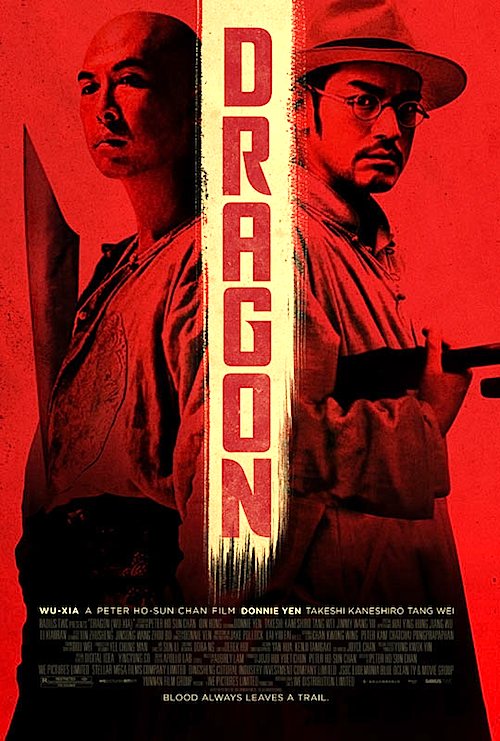
By Joe Bendel. China is a big country. In 1917, a man could get lost there if he had a reason to. A court investigator suspects an unassuming paper-mill worker is such a person in Peter Ho-sun Chan’s martial arts historical-procedural Dragon (a.k.a. Wu Xia), which opens this Friday in New York.

One day, Liu Jin-xi wandered into town, catching the eye of Ayu, a single mother deserted by her husband. Liu married her, adopting her clan name and providing the sort of stability she yearned for. Then one day two escaped convicts start terrorizing the community. Liu dispatches them with a series of “lucky shots” in an unlikely melee that could have been choreographed by one of the great silent film comedians. Or perhaps not.
Xu Bai-jiu is not buying it. Highly skilled in arcane knowledge, the investigator can practically see Liu radiating chi. Putting two and two together, Xu deduces Liu is actually Tang Long, the presumptive heir of the ruthless 72 Demons criminal clan. Unfortunately, Xu’s efforts with the corrupt judiciary attract the attention of the 72 Demons, who come reclaim their turncoat brother, one way or another.

Considering Wu Xia (as Dragon was then known) broke Michael Jackson’s record for the largest public billboard, one might expect it to be a big sprawling epic. Yet, Dragon is a moody character driven piece, dominated by the cat-and-mouse game played by Donnie Yen’s Liu and Takeshi Kaneshiro’s Xu. Of course, action director Yen does his thing when the Demons show up – including late 1970’s Shaw Brothers superstar Kara Hui, who appears as the Demon Master’s lethal wife. Fans will be happy to hear he stages some great smack-down action, including a super finale smartly incorporating the film’s holistic themes.

Yen has the right mix of affability and earnestness for Tang-trying-to-be-Liu. Yet it is Xu who emerges as the film’s truly tragic figure. Cerebral and intense to the point of snapping, Kaneshiro makes a great movie anti-hero. A man who uses acupuncture to deaden his emotions and holds regular dialogues with his subconscious, Xu’s unyielding fealty to the letter of the law bears bitter fruit for everyone, most definitely including himself. Tang Wei is also right on the money as the sensitive Ayu, still struggling with abandonment issues.

Chan knows his way around the set of a large scale action film, having helmed The Warlords and produced Teddy Chen’s high octane Bodyguards and Assassins. He certainly delivers the martial arts goods, but it is his early scenes establishing Liu as a family man, filmed with a pastoral beauty by Jake Pollock or Lai Yiu-fai, that set-up the film’s dramatic essence so effectively. It is a life viewers will agree is worth fighting for. Smarter and more emotionally engaging than most wuxia period action films, Dragon (or Wu Xia) is highly recommended for genre fans when it opens this Friday (11/30) in New York at the Village East.

LFM GRADE: A-

Posted on November 27th, 2012 at 11:22am.

The End is Near, Meditate Quickly: LFM Reviews The Mystical Laws

By Joe Bendel. An expansionist Eastern regime is dead set on war with Japan, at a time when America’s defense capacity and influence in the UN are both at all time lows. They say it’s the near future, but it feels only too near. Still, there may yet be hope in Isamu Imamake’s apocalyptic anime feature The Mystical Laws, created by executive producer Ryuho Okawa (founder of the controversial Japanese religious fusion movement, Happy Science) which opens this Friday in New York.

In an authoritarian country not identified as China, a shadowy military science officer named Tathagata Killer assumed power in a coup. Now known as the Godom Empire, his kingdom becomes the dominant super-power, thanks to the remarkable technology provided by the beautiful but mysterious industrialist Chan Leika.

The world slept while the demonic dictator consolidated power, except Hermes Wings. Partly a Doctors Without Borders-style NGO and partly a secret society dedicated to preserving free democratic values, Hermes Wings is considered the greatest threat to the Godom overlord, so he targets them accordingly. Through tragic circumstances, Sho Shishimaru rises to the top of Hermes Wings. There is a reason people have confidence in him: according to prophecies, he might be both the savior and the second coming of Buddha, which is an awful lot for any dude to live up to.

From "The Mystical Laws."

Mystical Laws could be described as a Buddhist Left Behind, with generous helpings of Christian symbolism thrown in for good measure. It is also anime. In truth, just about every conception of divinity is covered in Mystical, including the embodiment of the “Spirit of Japan,” who looks rather attractive. Some of the symbolism is impossible to miss, such as the swastikas the Godom army marches under, or the crosses on which they crucify enemies of the state. Still, if the slightly odd film represents an attempt to proselytize, it is dashed hard to tell what for.

Okay, so subtlety really isn’t Mystical’s thing. Nonetheless, the first two acts constitute a rather intriguing end-of-the-world/sci-fi conspiracy thriller. The relationship between Shishimaru and Leika is also nicely developed, and the Buddhist elements give it all a distinctive flavor. Unfortunately, the third act is largely given over to a Harry Potter-esque clash of fireballs and god-rays.

You have to take satisfaction from a Japanese film that bemoans the lack of American military bases. Indeed, it takes notions of faith, freedom, and sacrifice profoundly seriously. With art and characterization well within the anime industry standard, perhaps even slightly higher, it might be the most effective end-of-days religious thriller, well maybe ever (for what that’s worth). It certainly puts to shame impassioned but clunky evangelical films, like Jerusalem Countdown.

Mystical probably is not your Cheetos-eating fanboy’s anime. However, anyone interested in a film arguing that religion plays an essential role in a healthy society (and also implying a need for a strong military) might just get sucked in, in spite of themselves. Recommended for fans of challenging anime, aesthetically adventurous evangelicals, and nontraditional Buddhists (collectively a woefully underserved market), The Mystical Laws opens this Friday (11/23) in New York at the Cinema Village.

LFM GRADE: B

Posted on November 23rd, 12:07pm.

LFM’s Jason Apuzzo at The Huffington Post and AOL-Moviefone: What a Surveillance State Looks Like: Barbara Revisits Cold War East Germany

[Editor’s Note: the post below appears today at The Huffington Post and at AOL-Moviefone.]

By Jason Apuzzo. Imagine being subjected to 24-hour secret police surveillance, or being surrounded by informers at your place of work – whose mission is to gain your confidence in order to evaluate your loyalty to the state.

Or imagine being subjected to random body searches, conducted by capricious security officials with too much time on their hands. (OK, admittedly we already have that – even if only at our nation’s airports.)

For the most part, however, Americans only have a dim sense of what it’s like to live in a truly repressive society – such as East Germany was behind the Iron Curtain during the Cold War. And this, ultimately, is the true value of director Christian Petzold’s gripping new film Barbara, which starts its U.S. theatrical run in December and recently screened at the AFI Festival in Hollywood. Germany’s official submission for the Best Foreign Language Film Oscar, Barbara is the most compelling depiction since The Lives of Others of day-to-day life in a modern surveillance state, in this case the communist East Germany of the early 1980s.

2012-11-15-barbarahoss.jpg
Nina Hoss as Barbara.

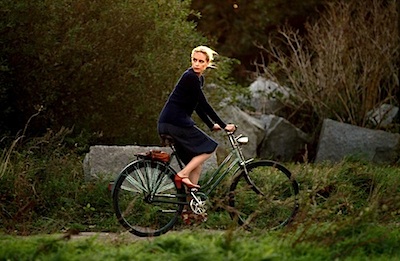
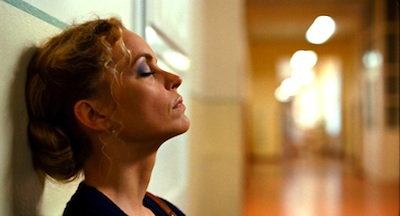
Already the winner of the Silver Bear for Best Director (Christian Petzold) at the Berlin Film Festival, Barbara stars Nina Hoss in the title role as a pediatric surgeon whose promising career at the prestigious Charité hospital in East Berlin is cut short when she files for an Ausreiseantrag, officially expressing her desire to leave East Germany. A terse and enigmatic blonde, Dr. Barbara Wolff also happens to be in the midst of a torrid, secret affair with a West German businessman – who’s quietly arranging for her escape to the West, as he makes officially sanctioned business trips into East Germany.

As punishment for her desire to leave East Germany, Barbara is sent to a rural hospital near the Baltic Sea, where she works under the watchful eye of Dr. André Reiser (actor Ronald Zehrfeld), who heads a modest pediatric unit. André tries to get chummy with Barbara, which she resists – suspecting him of being an informant for the Stasi (the East German secret police), who periodically arrive at her front door to strip search her or otherwise harass her.

Just another day in East Germany’s worker-paradise, you might say.

As the story unfolds, however, Barbara slowly warms up to André, as she gradually comprehends his quiet, understated resistance to the inhumanity around them. She also grows absorbed in her clinical work with children – especially Stella, a pregnant escapee from a socialist labor camp, whose only wish is to raise her child in the freedom of the West. Barbara’s feelings of professional and personal responsibility for Stella complicate her own plans to defect, leading to the film’s suspenseful finale.

2012-11-15-barbarahoss2.jpg
A climate of fear.

‘Understated’ really is the word for Barbara. Don’t expect lengthy speeches about tyranny, or furniture-smashing sex scenes in this film. More like an austere German drama from the 1970s (Volker Schlöndorff’s The Lost Honour of Katharina Blum comes to mind), Barbara gets most of its mileage out of quiet moments of drama between people who by force of circumstance are incapable of trusting each other.

As such, the film becomes a profound indictment against the type of society in which allegiance to a political system overwhelms common humanity.

Having myself visited East Germany and the Soviet Union prior to the fall of the Berlin Wall, and having known Soviet dissidents (including one who worked in the Kremlin), my sense is that Barbara gets the details right in terms of depicting the inauthentic, paranoid lives people led behind the Iron Curtain – particularly those with secrets to keep. The film also captures the creepy voyeurism that fuels the modern surveillance state – where the bogus imperatives of political fanatics justify shocking levels of access into people’s private lives.

Nina Hoss is already getting Oscar buzz for her performance as Barbara, and with good reason: she brings a distinctly European mixture of intelligence, world-weariness and discreet sexiness to her role. (It’s easy to imagine Deborah Kerr or Eleanor Parker playing her role in another era.) The rest of the cast fares similarly well – particularly Rainer Bock as the chief Stasi officer. By contrast, Ronald Zehrfeld sometimes seems too soft and cuddly as André, a man ostensibly doing double-duty as head of a clinic and state’s informer – but in the film’s sweeter, more intimate moments he shines.

The cost of a conscience.

The main takeaway of Barbara is that we don’t want our own society ever looking like East Germany does in this film – dreary, lifeless and deeply fearful. It’s a punitive, masochistic world lacking any defining features beyond those associated with mindless (and heartless) political conformity.

Of course, the totalitarian society shown in Barbara is also one that was doomed to collapse, in no small measure due to the type of quiet heroism and compassion depicted in the film. That’s Barbara‘s other big takeaway – the importance of individual heroism, and fidelity to one’s conscience – and it’s a message that’s as important today as it was when the Wall came down.

Posted on November 19th, 2012 at 12:47pm.

Escaping Russia: LFM Reviews Purge, Submitted by Finland for the Oscars

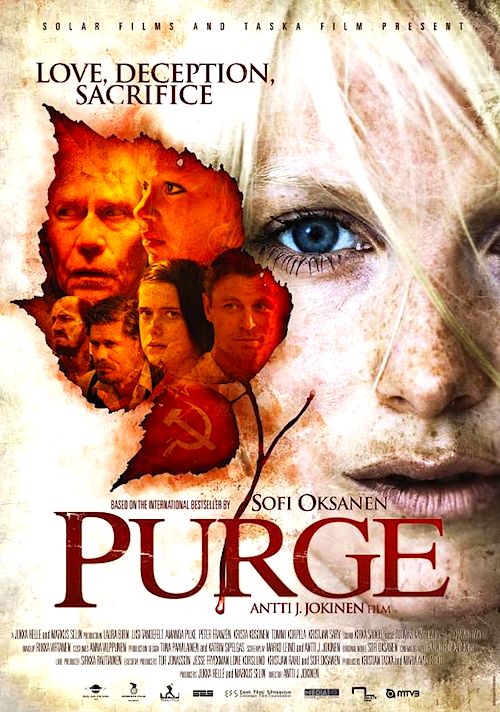
By Joe Bendel. Finland and the Soviet Union shared some complicated history over the last hundred years or so. They fought at least two wars against each other, give or take, and then brought the world the term “Findlandization.” In contrast, Estonia and the U.S.S.R.’s relations were more straight-forward. The latter forcibly dominated the former, and the Baltic Republic did not like it one little bit. Although it tells an Estonian story, Sofi Oksanen’s novel has had great resonance for Finnish readers. In fact, former East Carolina University basketball recruit Antti J. Jokinen’s adaptation of Oksanen’s international bestseller Purge has been selected by Finland as their official foreign language Academy Award submission.

One fateful night, Zara, a sex slave fleeing her Russian mobster captors, seeks refuge at Aliide’s remote farm house. The old woman is instantly suspicious, but she takes in the exploited woman nonetheless. As it happens, Zara did not make her way there by accident. Their tragic histories are intertwined, as the audience learns in a series of flashbacks.

Aliide was always a little strange. While she fell head over heels for the dashing Hans Pekk, it is her sister Ingel who turns his head. Yet Aliide is more than willing to help Ingel shelter her former freedom fighter brother-in-law from the Soviet authorities. Frankly, she kind of likes knowing exactly where he is at all times. Decades later, that secret hiding space under the floor boards will come in handy again.

In a case of ironic symmetry, both women will suffer tremendously at the hands of Russians. Even though Aliide eventually marries a true believer, she still cannot avoid seeing the inside of a Communist torture chamber. Despite all the humiliations Zara endures as an unwilling prostitute, Aliide’s torments are probably even worse. As a result, Purge is often a difficult film to watch, but it is never exploitative or morally ambiguous in the ways it presents such horrors. Whether motivated by ideology or sadism, the reality of rape and assault remain the same.

Laura Birn gives an incredible performance as the mid-twentieth century Aliide. A twitchy young woman in an apparent state of arrested development, she is not the sort of victim figure viewers can easily embrace. In truth, she has a bit of a Machiavellian streak, yet she still experiences more pain and degradation than anyone could possibly deserve.

Jokinen is not afraid to confront his audience with all manner of atrocities. Nonetheless, he also shows a deft touch with the quiet moments occasionally stolen by the Estonian lovers. He clearly differentiates each time period without resorting to distracting visual gimmicks, balancing each narrative relatively evenhandedly.

Purge might be a dark horse contender, but Jokinen has Hollywood ties, having directed Hillary Swank-Kadyrov and Jeffrey Dean Morgan in The Resident, so who knows? Purge is certainly a quality period production, which often counts for something with Academy voters. It might be a bit too honest for their tastes, though. Regardless, Purge would be an enormously worthy nominee, definitely recommended for patrons who have a chance to catch it on the festival circuit.

LFM GRADE: A-

Posted on November 19th, 2012 at 12:46pm.

Occupation and Collaboration in France: LFM Reviews La Rafle (The Round Up)

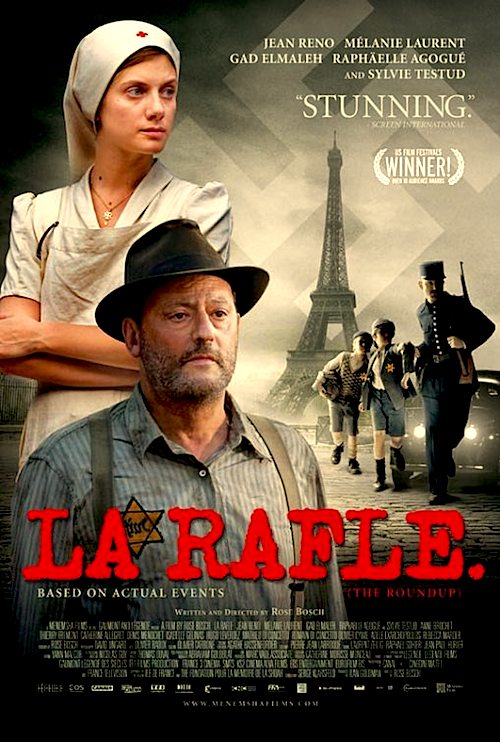
By Joe Bendel. Conveniently, the infamous Winter Velodrome no longer stands in Paris. Yet, perversely, cycling races were still held in the venue as late as 1958, well after it served as a temporary holding facility for 13,000 Jewish Parisians, forcibly “rounded up” at the request of the occupying National Socialists. It was an episode of history France preferred to forget, since it was the Vichy authorities doing the rounding-up. While the actual event went scrupulously undocumented, Rose Bosch dramatizes the tragic events in La Rafle (The Round Up), which opens today in New York.

The fatality rate of those imprisoned in the Velodrome was nearly one hundred percent. Viewers will have no illusions where the captives are ultimately headed, but those in the Velodrome held out hope their next accommodations would be better. We come to meet many of the roughly detained, including children like Joseph Weismann and his friends, the Zygler brothers. While they used to run free through the streets of Montmartre, the boys suddenly find themselves enduring the heat and inadequate water and sanitation of the Velodrome. Fellow prisoner Dr. David Sheinbaum is the sole extent of the medical treatment available until the arrival of solitary Protestant charity nurse Annette Monod.

Based on years of research, Bosch takes pains to show both the good and bad sides of the French national character. While the Weismann’s anti-Semitic neighbors cheer their deportation, the Parisian fire department reacts with shock and empathy, struggling to improve conditions in the Velodrome, against the gendarmerie’s express wishes.

Those who have seen Sarah’s Key or read the novel on which it is based will be familiar with the 1942 Roundup. Designer Olivier Raoux’s recreated Velodrome has the look and feel of a real life, slightly past its prime building, collapsing under the weight of its involuntary guests. Bosch’s scenes within its confines have a visceral you-are-there impact. However, the intermittent depictions of Hitler and the craven Petain lack the same power, only serving as a wan indictment of their banal evil.

In a bit of a surprise, it is Jean Reno who masterfully serves as the film’s moral center, portraying Dr. Sheinbaum with a profound spirit of world weary humanity. The impossible romantic tension that develops between him and Mélanie Laurent’s Monod is also deeply touching. That sense of “if only thing were different” palpably hangs in the air between them as they labor to ease the suffering around them as best they can.

Post-Schindler’s List, there have been a number of well-meaning dramas that have addressed the Holocaust, with varying degrees of success. La Rafle ranks as one of the more accomplished due to its technical merit and Reno’s assured, anchoring performance. Recommended for connoisseurs of French cinema and WWII films, it opens today (11/16) in New York at the Quad Cinema.

LFM GRADE: B

Posted on November 16th, 2012 at 10:38am.

LFM Reviews Anna Karenina

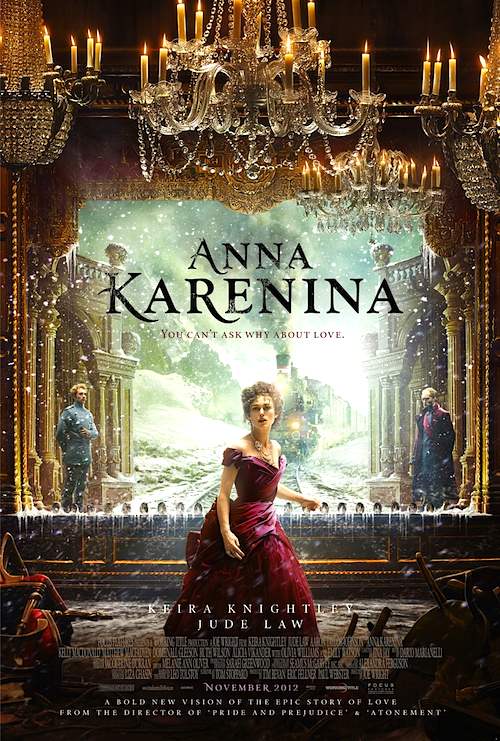
By Joe Bendel. Anna Karenina won the game of Russian birth roulette. Born into privilege, she initially enjoyed all the benefits of her well structured life, but lost everything due to a reckless love affair. Such was the price of offending Russian society at a time when it was trying to act French. Notions of social role-playing have now inspired the hyper-stylization of Joe Wright’s take on Tolstoy’s classic Anna Karenina, which opens this Friday in New York.

Everyone is playing their socially expected role you see, so why not set Anna Karenina in a creaky old theater? From time to time, Wright will break away from the stagey confines, particularly when checking in on Levin, the rustic landowner and long suffering friend of Karenina’s ne’er do well brother. Of course, there are also trains – like the one taking the title character to Moscow, where she hopes to provide emergency marriage counseling for said brother and his justly aggrieved wife Dolly. It is sort of a pleasant trip spent in the company of the Countess Vronsky, whose cavalry officer son meets her at the station.

The mutual attraction between Karenina and Vronsky are immediately evident, only intensifying at an eventful Moscow society ball. Having thrown over the plodding Levin in hopes of landing Vronsky, Dolly’s younger sister Kitty is deeply hurt when the officer ignores her in favor of the married Karenina. Spooked by the prospect of scandal, she hastens back to St. Petersburg and her husband Karenin, a progressive but culturally traditional government official. As everyone should know, Vronsky follows her—and so does scandal.

There have been enough movie and television treatments to support a lengthy compare and contrast session here. In many ways, Tom Stoppard’s adaptation is quite distinctive, establishing a strong contrast between country simplicity and urban hypocrisy, while finally giving Levin his due. However, Wright’s stylistic conceit is far too distracting, taking viewers out of the story time and time again. The theatrical device is not even particularly original, having been used to greater effect in Manoel de Oliveira’s Satin Slipper, Louis Malle’s Vanya on 42nd Street, and several Shakespearean films. Frankly, it is a rather baffling aesthetic choice, considering the whole appeal of a novel like Anna Karenina is the big messy sweeping grandeur of it all.

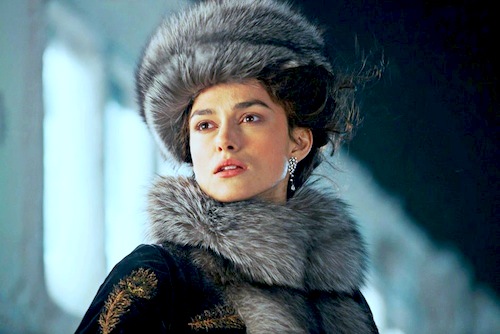
Nonetheless, there are several outstanding performances in Wright’s film, especially from his lead, Keira Knightley. It is hard to think of anyone else with the same brittle beauty and aristocratic bearing, who can convey burning self-destructive passion and guilt-ridden anguish with comparable power. Yet the real surprise of Wright’s Karenina is Jude Law’s performance as Karenin, the wronged husband. Even though he looks considerably younger than the Karenin as described in the source novel (about twenty years older than his wife), Law creates a deeply sympathetic portrait of a fundamentally decent man, trying to act accordingly, despite the painful embarrassment of the circumstances.

Keira Knightley in "Anna Karenina."

In contrast, the casting of Aaron Taylor-Johnson as Vronsky is a head-scratcher. In truth, Wright lets his Vronsky off rather easily. In previous versions, Vronsky is something of a shallow cad, but here he is more or less a dumb kid who fell in love too young, but that creates a host of dramatic problems. Essentially, Anna Karenina is supposed to fall for Vronsky, because he is manlier than her husband, not vice versa. What she sees in this Vronsky is hard to fathom. I got stuff in the fridge that looks older than Taylor-Johnson and I’m not ready to throw it out yet.

Granted, Wright’s visual approach lends itself to some dramatic transition shots, but it never lets the film settle in and put down roots. Watching it makes one wonder what the director had in mind. Perversely, it is like Wright elicited award caliber performances from Knightley and Law, but then deliberately undermined them the postmodern theatricality and a maddening case of miscasting. There is room for some experimentation when tackling Tolstoy, but it should serve the interests of the picture. For instance, Sergei Solovyev’s relatively recent Russian production of Anna Karenina was considerably more expressionistic than traditional costume dramas, while staying true to the novel’s tone and story.

It is a shame Wright had to be so showy, because there is quite a bit of good stuff in Stoppard’s screenplay and the mostly impressive work from the accomplished ensemble cast. Recommended mostly for Knightley and Law’s diehard fans, Wright’s frustrating Anna Karenina opens this Friday (11/16) in New York at the AMC Loews Lincoln Square.

LFM GRADE: C+

Posted on November 14th, 2012 at 11:14am.