LFM Reviews Unforgivable

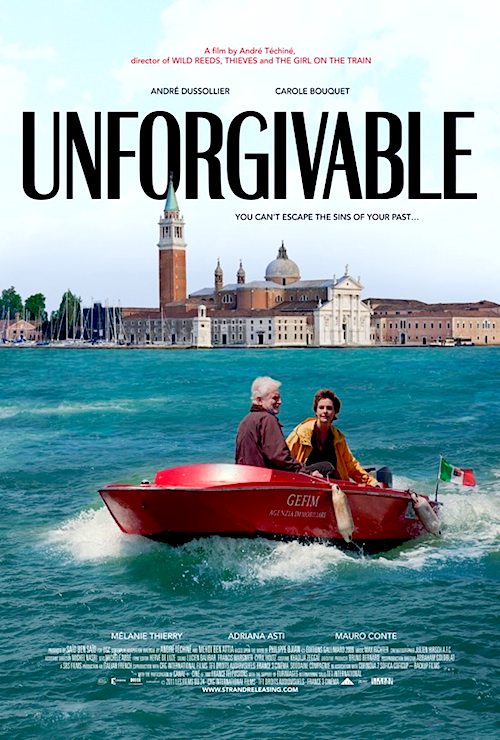
By Joe Bendel. Evidently Venice is a lot like New York. You will find a lot of writers and realtors there. One fateful day, a French mystery novelist walks into a former fashion model’s real estate agency. It will be the start of a very complicated relationship for the lead characters in André Téchiné’s latest pseudo-thriller, Unforgivable, which opens this Friday in New York.

There seems to be an inverse relationship between Francis’s creative productivity and his domestic happiness. He came to Venice to write in seclusion, but took up with Judith instead. At least she had the perfect rental for him: a secluded old villa on the island of Sant’Erasmo. Happy with his new home and lover, Francis has not written a word in months. Fortunately or unfortunately, that will all change when his ostensibly grown daughter Alice comes to visit.
Either to get back at Francis or her vastly more responsible ex, Alice disappears without warning, apparently taking up with a penniless aristocratic drug dealer. Not inclined to let things be, Francis hires the half-retired private detective Anna Maria, Judith’s former lover turned awkward platonic friend, to shadow his daughter across the continent. As Francis’s escalating emotional neediness turns to jealousy, he hires Anna Maria’s delinquent son to shadow Judith in turn.

Based on Philippe Djian’s novel, Unforgivable is a perfect example of Téchiné’s knack for skirting the boundaries of the thriller genre without fully crossing over. He toys with plenty of noir conventions, such as a mysterious disappearance, a smarmy underworld figure, and a whole lot of skulking about the streets of Venice. Yet Téchiné is more concerned with his characters’ extreme emotions—the passion, jealousy, and contempt driving their actions.

Perfectly cast as Francis, André Dussollier projects the appropriate sophistication, arrogance, and insecurity, while still connecting with something fundamentally human and sympathetic about the character. However, the real pleasure of Unforgivable is seeing Carole Bouquet (the most under-appreciated “Bond Girl” ever, from the pinnacle film of the Roger Moore era, For Your Eyes Only) as Judith, the mature femme fatale. Indeed, it is a smart, delicately calibrated performance.

Capitalizing on the mysterious Venetian backdrop, Unforgivable is like a film noir for those who avoid on-screen violence and cynicism. It is literate and worldly, yet compassionately forgiving of its characters’ self-defeating foibles (title notwithstanding). Highly recommended for French film connoisseurs, it opens this Friday (6/29) in New York at the IFC Center downtown and the Beekman Theatre uptown.

LFM GRADE: A-

Posted on June 25th, 2012 at 11:39pm.
LFM Reviews The Sword with No Name

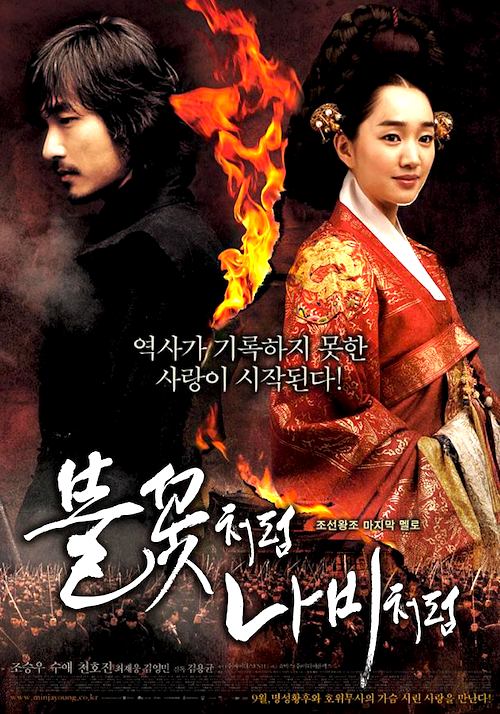
By Joe Bendel. She was a queen who advocated modernization and greater contact with the west. Niall Ferguson would approve, but many at court did not, particularly those aligned with the Imperial Japanese. Empress Myeongseong could only count on the support of one man, and it was not the king. At least that is the speculation of Kim Yong-gyun’s fictionalized epic The Sword with No Name, which screens this Tuesday as the latest selection for the Korean Cultural Service’s Korean Movie Night in New York.

Mu-myeung knew the queen when her name was Min Ja-yeong. Their chance meeting made quite the impression on the freelance ruffian. Recognizing that he is no match for a noble-born woman, he enlists (the hard way) with the palace guards to serve as her protector. She will need it. While the king trifles with his concubines, the queen forges a potentially game-changing alliance with Russia. Japan is not amused. Neither is the king’s father Daewongun, the former regent, who still very much considers himself the power behind the throne. Various factions will orchestrate uprisings and assassination attempts targeting Queen Min (as she was also known), but they will have to go through the devoted Mu-myeung first.

In recent years, Korean cinema has not been all that flattering in its characterizations of former kings. Sword is no exception, depicting King Gojong as a dissolute tyrant, much like his brethren in King and the Clown, Frozen Flower and Shadows in the Palace. There is also plenty of precedence for the brooding swordsman Mu-myeung, but Cho Seung-woo plays him with enough grit and angst to make him fresh, nonetheless.

However, the queen is something else entirely. Not just an early feminist role model, she can be seen as a progressive visionary, understanding the value of close diplomatic relations with the west and a less insular approach to statecraft in general. Had her policies been adopted, the next fifty years of Korean history might have been more pleasant. A smart and luminous screen presence, Soo Ae’s performance as Queen Min is a model of restraint and sensitivity.

There is something for just about everyone in Sword, but occasionally some of the Matrix-style action sequences escalate a bit over the top. In truth, it is the love story that really packs the wallop here. There is something quite beautiful about the queen and her protector’s star-crossed love, sustained over years by the merest incidental contact. It is impossible to find the same depth of feeling in western film. Instead, we would see two ill-fated lovers rolling their eyes in disbelief at the social circumstances blocking their union.

Like a late Joseon era Bodyguard without the annoying theme song, The Sword with No Name delivers all the intrigue and tragic romance fans of historical sagas could ask for. Though a bit slow out of the blocks, it locks in soon enough, hitting its stride with some heavy yearning and cool swordplay. Highly recommended, Sword screens for free this Tuesday (6/19) at the Tribeca Cinemas, courtesy of the Korean Cultural Service.

LFM GRADE: B+

Posted on June 18th, 2012 at 4:50pm.

Dramaville Goes Noir: LFM Reviews Inside Men

By Joe Bendel. Incentives matter. A cash-processing depot manager is put through the wringer by his superiors for the occasional irregularity in his accounts, but if an armed robber sticks a gun in his face, they will grant him time-off and provide counseling. If he is ever going to steal from the apparently impenetrable Larson House, he ought to do it in a big way. That is pretty much his plan in the four-part Inside Men, which premieres this Wednesday on BBC America’s Dramaville showcase.

The unassuming John Coniston is like a Bob Cratchit, promoted to management. He is keenly aware that neither his boss nor his subordinates respect him. When viewers first meet Coniston, he is having a bad day. Masked gunmen are forcing him to open the vault, while an accomplice holds his wife and newly adopted daughter hostage. However, there is more to this story, as the series title ought to indicate.

Yes, Coniston is in on it, but there are complications he never anticipated. Having caught his chief security guard Chris Lebden and loading dock worker Marcus Riley skimming mere tens of thousands off the top, he recruits them for a far more ambitious take: the lot of it.

Constantly flashing forward and backwards between the September heist and the planning stages six months earlier, Inside Men requires fairly close viewer attention. While there is plenty of skullduggery afoot, it is really more of a dark character study. Writer Tony Basgallop and director James Kent show us step by step how it all goes down, twisting viewer assumptions here and there along the way.

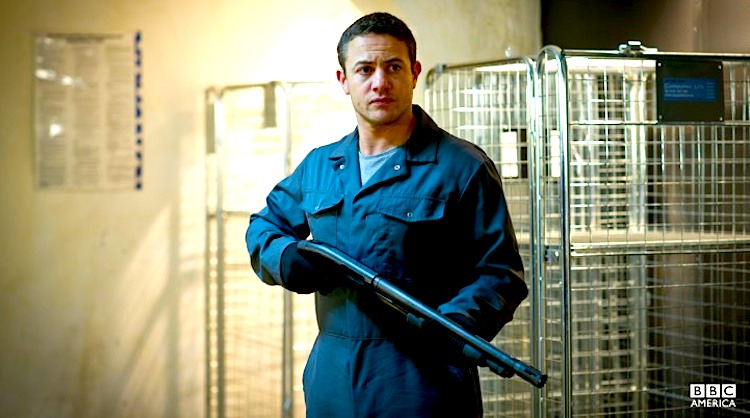
Warren Brown as Marcus Riley in "Inside Men."

The deceptively bland Coniston is clearly the key piece to the conspiracy. Steven Mackintosh convincingly sells his burgeoning empowerment as a criminal mastermind. Indeed, some of his best scenes involve the grudgingly respectful relationship he forges with Kalpesh, the purveyor of criminal support services reluctantly brought into the scheme. Though his character arc is quite intriguing, it is still hard to believe Coniston would put his family through such trauma, despite the safeguards he puts in place.

As Riley, fellow Luther alumnus Warren Brown makes a credible enough good-time knucklehead, while emerging UK TV star Ashley Walters is appropriately intense as the conflicted Lebden. However, the most invigorating supporting turn might come from Irfan Hussein, playing Kalpesh with icy flair.

Inside Men could well be too cold-blooded and intricately pieced together for fans of cozier British mystery television. Unabashedly naturalistic in its depiction of human nature, it definitely follows in the tradition of more fatalistic film noir. Even though it ends on a bit of a flat note, it is smart television, keeping a fair amount of surprises in store for engaged audiences. Recommended for those who enjoy a dark criminal yarn, Inside Men begins this Wednesday (6/20) and concludes July 18th (skipping Independence Day), on BBC America.

Posted on June 18th, 2012 at 4:49pm.

LFM Reviews The Woman in the Fifth

By Joe Bendel. Tom Ricks is a writer, so he must be a little off. With only one obscure novel to his name, the American cuts an underwhelming literary figure, but he has enough issues to earn a restraining order from his French wife. Following her and their daughter to Paris does little for his overwrought state of mind in Pawel Pawlikowski’s The Woman in the Fifth, which opens this Friday in New York.

Less than thrilled to see him, Nathalie Ricks promptly calls in the gendarmerie. Beating a hasty retreat, Ricks finds himself penniless at the flop-house motel run by gangster Sezer. To pay for his room and board, the novelist accepts a job working as a sketchy subterranean watchman for one of Sezer’s criminal endeavors. He figures it will give him time to work, but his writing is definitely not of the healthy variety. The only bright spot are his semi-regular assignations with Margit Kadar, an elegant and alluring widow of a Hungarian novelist perhaps even more obscure than Ricks, living in Paris’s 5th arrondissement.

While his ex shuns his reconciliation attempts, Ricks attracts the romantic attention of Ania, the Polish immigrant waitress at Sezer’s tavern, who also happens to be the mobster’s lover. This profoundly destabilizes the novelist’s situation. It also starts a chain of events leading Ricks to suspect a hitherto unknown force is meddling in his affairs.

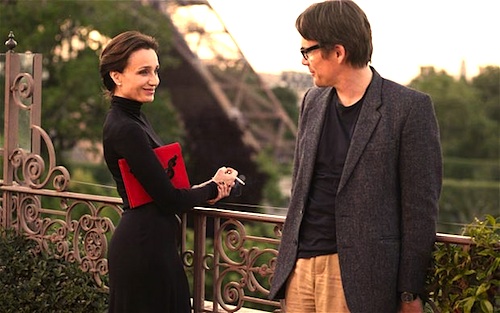
Kristin Scott Thomas and Ethan Hawke in "The Woman in the Fifth."

Based on the novel by Douglas Kennedy, Fifth blends elements of genre cinema in ways that would be spoilery to discuss in detail. However, Pawlikowski is more interested in presenting an extreme psychological study with a distinctly Continental art film sensibility than aiming for mere thrills or chills. Never rushing the revelations, Pawlikowski still deftly creates sense that all is not right with his protagonist and his world.

Leading a multinational ensemble, Ethan Hawke and his terrible French accent are effectively moody and withdrawn as the socially problematic Ricks. Polish actress Joanna Kulig, recently seen (and very much exposed) in Malgoska Szumowska’s Elles, is also quite credible as the glammed-down Ania. Yet, Kristin Scott Thomas is the crucial piece of the film’s puzzle. Always an intelligent presence, she is absolutely perfectly cast as the sophisticated Kadar. The audience instantly shares Ricks’ interest in her—and of course her accent is always flawless, in both French and English.

Fifth’s slow build and emotionally detached approach to Ricks’ existential drama might be difficult for some viewers to whole-heartedly embrace. However, it is a smart, stylish film. Indeed, cinematographer Ryszard Lenczewski’s chilly gray color palette nicely suits the on-screen mystery and alienation. It is the sort of film viewers will kick around in their heads for days after screening it, which is an increasing rarity. Highly recommended for fans of European cinema with a dark twist, Woman in the Fifth opens this Friday (6/15) in New York at the Village East.

LFM GRADE: B+

Posted on June 13th, 2012 at 10:39am.

LFM’s Govindini Murty at The Huffington Post and AOL-Moviefone: “We’ve All Been Brainwashed”: China’s Dissident Bloggers Speak Out in High Tech, Low Life

[Editor’s Note: the post below appears today on the front page of The Huffington Post and AOL-Moviefone.]

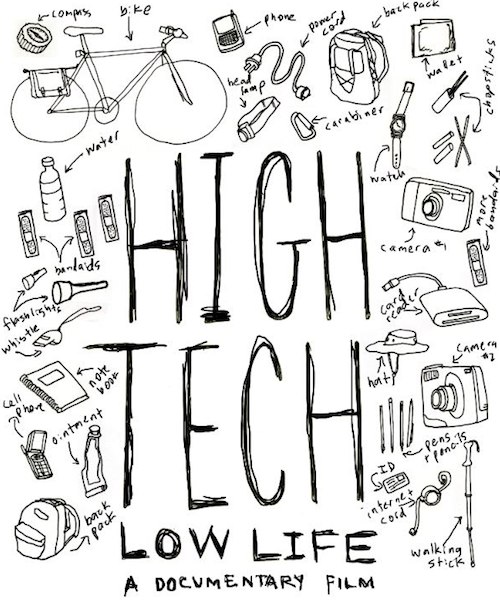
By Govindini Murty. Even as Chinese dissidents like Nobel laureate Liu Xiaobo and artist Ai Weiwei suffer physical imprisonment, hundreds of millions of their fellow Chinese citizens are suffering a form of mental imprisonment thanks to their nation’s system of internet censorship. For example, the Chinese government recently blocked on-line searches for words relating to the 23rd anniversary of the June 4th, 1989 Tiananmen Square massacre, censoring the terms “Tiananmen square,” “June 4th,” the number twenty-three, the words “never forget,” and even images of candles. The award-winning documentary High Tech, Low Life, currently screening at film festivals in the U.S., UK, and Australia, profiles two dissident Chinese bloggers who are working to challenge this Orwellian system.

Directed by Stephen Maing, High Tech, Low Life was in part funded by a Kickstarter campaign publicized on The Huffington Post and was an official selection of the 2012 Tribeca Film Festival. High Tech, Low Life documents the work of 57-year old blogger Zhang Shihe (known as “Tiger Temple”) and 27-year old Zhou Shuguang (known as “Zola”), two of China’s best-known “citizen reporters.” Even as the Chinese government uses internet technology to stifle dissent, these brave bloggers find creative ways to circumvent “The Great Firewall of China” and publish the truth about human rights abuses to the world. Along the way, Tiger and Zola suffer official harassment, familial disapproval, eviction, and arrest.

Blogger Zola describes in the film the vast apparatus of internet censorship that exists in China:

“There are 440 million netizens in China, 40,000 internal police monitor them, and 500,000 websites are blocked in China.” [Despite this,] “if an incident happens anywhere, netizens and citizen journalists will flock to the scene from all over the country. The censors might stop some of us, but they can’t stop all of us.”

Tiger Temple expands on the morally corrosive effect of the government’s censorship: “We’ve all been brainwashed. We’ve been listening to lies for too many years.” Although material prosperity may have improved in China, Tiger argues that life today is as bad as it was under Mao’s dictatorship. As Tiger puts it, the Chinese people are “complacent because they feel powerless.”

Tiger Temple and Zola could not be more different in style. The older, more experienced Tiger is a writer and former publisher living in Beijing who becomes closely involved in his subjects’ lives, bringing them food, money, and legal help. Tiger’s father was a high official in the Communist Party, but the family was persecuted by Mao during the Cultural Revolution in the ’60s. Tiger recalls how he and his family were beaten, evicted from their home, and exiled to the countryside. It was then, as a 13-year old, that Tiger says he started “roaming the country.”

Tiger’s entry into blogging was almost accidental. Returning home one day from viewing an exhibition of Monet paintings in Beijing, he saw a woman being stabbed to death on the street by a man as bystanders watched. Horrified but unable to prevent the murder, Tiger grabbed his camera and documented its aftermath instead. He notes that when the police showed up, they were angrier at him for taking the photos than at the murderer himself, because such scenes would normally be censored from the press. Tiger went on to publish the photos online and caused a sensation, becoming known as China’s first “citizen journalist.” Tiger adds that he calls himself a “citizen” and not a “citizen journalist” because that way the government can’t ban him.

Years later, Tiger makes lengthy journeys on bike through the countryside to report on the lives of the rural poor who have suffered in the rush to urbanization. He is even on occasion tailed by agents of the government. In one trip documented in the film, Tiger bicycles 4000 miles to Er Loa, a village devastated by the illegal flooding of toxic waste by the local government. The floods of waste have caused the farmers’ homes to collapse and have made farming impossible. Villagers tell Tiger that local officials have warned them that if they complain too much they will be arrested. Not only does Tiger take photos and video of the environmental devastation, he also brings the villagers flour and noodles to feed them and tells them he has forwarded their information to a university in Beijing where law students are working to file a legal complaint with the authorities. Tiger interests an NGO in their case, and the farmers are ultimately brought to Beijing to speak at the Civil Society Watch’s Environmental Protection Conference.

The blogger Zola at the Great Wall of China.

Continue reading LFM’s Govindini Murty at The Huffington Post and AOL-Moviefone: “We’ve All Been Brainwashed”: China’s Dissident Bloggers Speak Out in High Tech, Low Life

China’s Exploitation of Tibet: LFM Reviews Old Dog

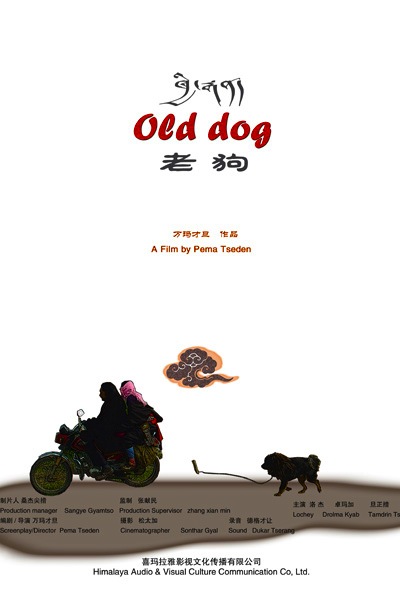
By Joe Bendel. In news of yet more outrageous but hardly surprising interference in Tibetan affairs, China has just announced an open-ended ban on foreign tourism to the occupied country. However, friends and admirers of the Himalayan nation can still get a glimpse into the on-the-ground realities there through Pema Tseden’s narrative feature Old Dog, which screens tonight at the Brooklyn Heights Cinema, as part of the 2012 Brooklyn Film Festival.

Not content with Tibet’s sovereignty, China also covets its dogs. For the Chinese nouveau riche, nomad mastiffs are the newest status symbol. It is a seller’s market, assuming unscrupulous dog merchants do not steal the traditional family canines first. Dog-nappings are so pervasive, Gonpo figures he might as well sell his father-in-law Akku’s beloved pet and at least get some money for him. Akku does not see it that way, enlisting the help of his a local copper kinsman to retrieve the shaggy pooch. Unfortunately, the dog brokers are not about to forget about so prized a pooch.

If Jia Zhangke remade Old Yeller, it might look something like Old Dog. Helmed by Tibetan auteur Pema Tseden (a.k.a. Wanma Caidan when he is in China), it is a slight departure for distributor dGenerate Films, the independent Chinese cinema specialists. However, Tseden’s naturalistic documentary-like approach is quite in line with the Digital Generation style for which they are named. He and cinematographer Sonthar Gyal capture the sweeping grandeur of the landscape, as well as the hardscrabble nature of life for Tibetans, both in cities and in the countryside. It is also clear the last fifty-three years have been devastating for contemporary Tibetan architecture.

Amongst a cast clearly at home on the Tibetan Steppe, Lochey gives a remarkably assured performance as Akku. Deeply human and humane, his character bears witness to the steady corrosion of traditional Tibetan values, but he does not necessarily do so silently. Drolma Kyab’s performance as the hash-up son-in-law Gonpo is also quite honest and engaging. Indeed, the small ensemble is so completely unaffected and natural on-screen, Old Dog could easily pass for a documentary. Yet it has a very real dramatic arc.

Already the focus of a career retrospective at the Asia Society (amounting to two films at the time), Tseden is a filmmaker of international stature. Taking some subtly implied but recognizable jabs at Chinese hegemony over Tibet, Old Dog is his boldest film yet. Cineastes will earnestly hope there will be more to follow. Quietly powerful, Old Dog is highly recommended during this year’s BFF. It screens tonight (6/8) at the Brooklyn Heights Cinema, with Tseden appearing for Q&A afterward, as well as this Saturday (6/9) at IndieScreen in Williamsburg.

LFM GRADE: A

Posted on June 8th, 2012 at 8:09am.