Blond Noir: LFM Reviews Headhunters

By Joe Bendel. Right now, Norway’s economy is a lot like our own. There are way more job-seekers than open positions to fill. At such times, if a recruiter sends you on an interview, you go, even though you might be leaving a few stray valuable objects d’art lying about your home unguarded. That is Roger Brown’s racket, but it turns unexpectedly deadly in Morten Tyldum’s Headhunters, which opens this Friday in New York and also screened yesterday as part of the San Francisco International Film Festival.

Brown is a man slight of stature, married to his bombshell wife, Diana. Suffering from a king-sized inferiority complex, he has allowed them to live beyond their means by burglarizing the homes of his executive search clients. With his house of cards on the brink of collapse, Brown’s prayers appear to be answered in the person of Claes Greve. Not only is the former tech CEO the perfect candidate for a plum position Brown must fill, he also owns a genuine Rubens painting of rather dodgy providence. Win-win, right?
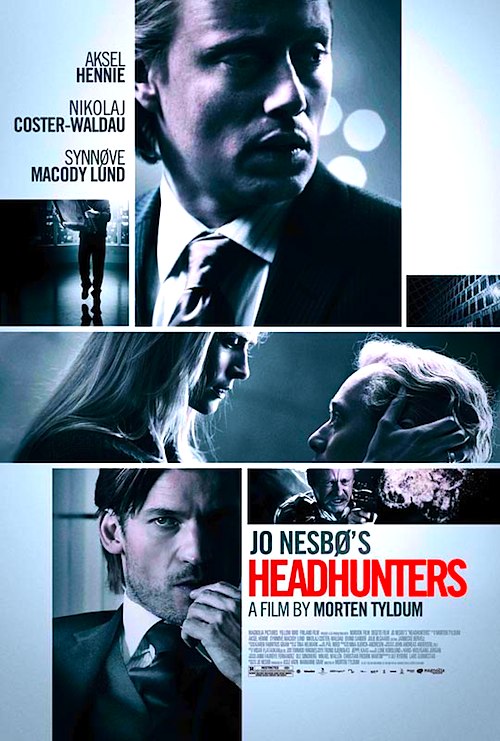
However, when Brown starts to suspect the younger man and his wife are carrying on an affair behind his back, he sabotages Greve’s campaign for the position. At this point, Greve reacts more forcefully than Brown anticipates. Mouse, meet cat.

Headhunters is quite a nifty one-darned-thing-after-another thriller. Tyldum has a good handle on the material, constantly ratcheting-up the tension, but periodically using black comedy to release some steam. In his hands, the frequent twists are entertaining rather than forced or exhausting.

Tyldum also has a nice looking cast to focus on. Especially bankable is the presence of Game of Thrones alumnus Nikolaj Coster-Wladau, now world famous for playing Lena Headey’s brother (and other things), Ser Jaime Lannister, here perfectly cast as Greve. As Diana Brown, former model Synnøve Macody Lund certainly looks the part, but she also has some nice dramatic moments as well. In the lead, Aksell Hennie’s Brown holds the film together while coming to grief quite effectively.

Based on Norwegian mystery writer Jo Nesbø’s first book outside of his bread-and-butter series, Headhunters engages in some of the same far-fetched anti-corporate humbug undermining so many recent domestic crime dramas. However, Tyldum keeps the rollercoaster loop-de-looping at such breakneck speed, it is not so distracting. Definitely a dark but thoroughly enjoyable exercise in skullduggery, Headhunters is easily recommended and opens theatrically this Friday (4/27) in New York at the Landmark Sunshine.

Posted on April 26th, 2012 at 11:38pm.
New Trailer for G.I. Joe: Retaliation; Film Opens June 29th

Check it out above. The film stars Dwayne Johnson as Roadblock, Bruce Willis as the original ‘Joe,’ Adrianne Palicki as Lady Jaye, Channing Tatum as Duke, Ray Park as Snake Eyes and Jonathan Pryce as the President of the United States.

It’s going to be a busy summer …

Posted on April 24th, 2012 at 12:43pm.

Epic Epicness: LFM Reviews Warriors of the Rainbow—Seediq Bale

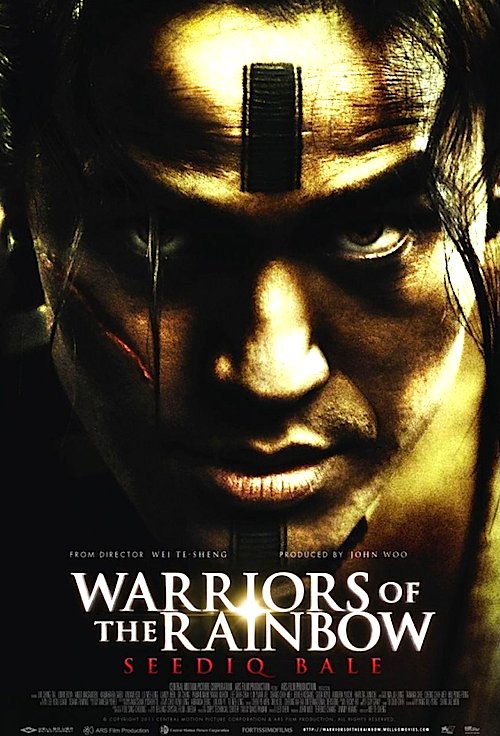
By Joe Bendel. For the aboriginal peoples indigenous to Taiwan, decapitating an enemy’s head in battle was an essential rite of manhood. In the early twentieth century, the occupying Japanese began the systematic suppression of aboriginal culture. It would cost them a whole lot of heads. Originally well over four hours long, Wei Te-sheng’s Warriors of the Rainbow: Sediq Bale in its more theatrical booking-friendly two and a half hour international cut opens this Friday in New York.

Mouna Rudao was one of the fiercest Seediq warriors ever. When the Japanese confiscate his collection of skulls, they are duly impressed. Unfortunately, as chief he must watch as the old ways atrophy under their oppressive rule. The tattoos of manhood are becoming scarce. However, this will change during the 1930 Wushe Uprising.

It started with a misunderstanding between Mouna’s family and the local Imperial authorities, snowballing from there. The Seediq forces strike first, ambushing the Japanese at a major sporting exhibition. Things only get bloodier thereafter. Frankly, Mouna knows their revolt is doomed to fail, but at least the young Seediq men will die as warriors, crossing over the Rainbow Bridge to their equivalent of Valhalla.

Submitted by Taiwan as their most recent official foreign language Academy Award candidate, Rainbow was released as two films in most Asian markets. However, the edited and cobbled together international version makes perfect sense from a narrative standpoint and includes plenty of Braveheart-style action. One suspects the axe fells disproportionately heavily on the female cast, including the great Vivian Hsu, who are rarely seen in the 150 minute cut until an emotionally devastating scene late in the picture.

It is too bad Mel Gibson went more or less insane, because he would have been the perfect celebrity “presenter” for Rainbow, executive-produced by John Woo, no less. There are death-scenes that will make you exclaim out loud. Yet, despite the frequent references to the Rainbow Bridge, there is little that could be deemed mystical or New Agey about the film, at least in its international configuration. It also resists the temptation to glorify Seediq traditionalism, unequivocally suggesting tribalism undermined their efforts to defeat the Imperial Japanese with a united front.

Lin Ching-Tai is all business as the steely old Mouna. He might just the best middle-aged action hero since the Eastwood of decades ago. Yet young Lin Yuan-Jie might be the most engaging member of the ensemble cast. There is absolutely nothing cute or cloying about his riveting work as Pawan Nawi. Japanese actor Sabu Kawahara also somehow manages to elevate the role of the stereotypically severe General Kamada Yahiko, while Chie Tanaka is memorably vulnerable as the wife of a relatively sympathetic Imperial officer.

Rainbow parallels the pronounced trend in current Mainland and Hong Kong films depicting Japanese characters in explicitly villainous terms. Indeed, the impulse to constantly re-fight WWII is becoming rather suspicious. Be that as it may or may not be, there is no denying Rainbow delivers the epic action goods. This is a big, bloody picture, serving as a perfect example of the bold filmmaking fostered by Fortissimo Films. Definitely recommended for fans of large scale historical action films, Rainbow opens this Friday (4/27) in New York at the AMC Empire.

LFM GRADE: B

Posted on April 23rd, 2012 at 2:36pm.

Tribeca 2012: LFM Reviews Sleepless Night

By Joe Bendel. Crooked cops are as French as frog legs and escargot. But in fact, there are varying degrees of police corruption, as viewers can see in Frederic Jardin’s cops vs. cops vs. drug dealers shoot-out Sleepless Night, which screens during the 2012 Tribeca Film Festival.

Vincent and his even more corrupt partner Manu just relieved some couriers of a huge shipment of cocaine. Unfortunately, he took a stiletto wound in the process. Without time to be properly stitched up, he must quickly bundle his son off to school and then show up at the station to play innocent. Events take a turn for the worse when the kingpin Marciano abducts the lad, demanding the coke as ransom. Into the lion’s den, or in this case Marciano’s club Le Tarmac, Vincent goes. When the even more corrupt internal affairs officer swipes his hidden coke, the desperate father starts improvising. That is when things start getting good.

Poor, morally compromised Vincent bleeds in every corner of the up-scale hipster disco/restaurant/pool hall, but he always gives as good as he gets. The kitchen gets a particularly messy going-over, worrying the staff to no end. And every time Vincent returns to their domain, the film gets an invigorating jolt of energy.

Tightly helmed by Jardin and stylishly lensed by frequent Eastwood cinematographer Tom Stern, Sleepless Night is sort of like an adrenaline-charged, action-driven variation on the brooding Paris By Night, which screened at French Rendezvous earlier in the year. As Vincent, Tomer Sisley (a.k.a. Largo Winch) is not as cool as Roschdy Zem, but he is still one bad cat.

While not exactly legendary, Sleepless also has some respectable villains, including Serge Riaboukine, whose somewhat larger than life Marciano clearly enjoys the trappings of gangster life. French rapper Joey Starr also brings the appropriate ferocity as Feydek, Marciano’s impatient buyer. Also making quite the impression in a small role as a bystander helping Vincent, Dutch-Russian-Korean model Pom Klementieff should definitely have a future looking alluring in films.

Although Sleepless Night wastes some time up top, over-establishing what a disappointing father Vincent is, once it gets going it becomes a thoroughly entertaining roller-coaster. Not quite at the level of Gareth Huw Evans The Raid: Redemption, but a pretty impressive excursion into action filmmaking nonetheless, Sleepless screens tonight (4/22), Thursday (4/26), and Friday (4/27) during this year’s Tribeca Film Festival, with a theatrical release slated for May from Tribeca’s film distribution arm.

LFM GRADE: B+

Posted on April 22nd, 2012 at 9:31pm.

Tribeca 2012: LFM Reviews Graceland

By Joe Bendel. One crooked Filipino congressman is used to handing out the traditional sort of bribes, but when his daughter is kidnapped, he also has to give a little financial consideration to get the cops to do their job. Unfortunately, they are determined to hassle his former driver, whose daughter was also abducted. To save her, he will have to navigate Manila’s seediest back alleys without the help of the openly antagonistic police in Ron Morales’ Graceland, which screens during the 2012 Tribeca Film Festival.

Though ostensibly a driver, one of Marlon Villar’s primary duties is to clean up after his boss Rep. Chango’s predatory indulgences with underage girls—or at least it was his job. Given the soul-deadening acts Villar witnessed, he is shocked when the congressman summarily fires him. The timing is particularly bad, considering his hospitalized wife desperately needs a transplant. That is also why suspicion immediately falls on him after the kidnapping. In what was to be his final task for his former employer, he picks up his daughter Evie and her best friend Sophia Chango from school, only to be waylaid by armed thugs.

Unfortunately, complications arise during the kidnapping that put Villar in a particularly tight spot. In a way, it is like a dark twist on the botched kidnapping in Kurosawa’s High and Low, but unlike Toshirō Mifune’s upstanding Kingo Gondo, Chango cannot be relied on to do the right thing. In fact, it quickly becomes clear the case directly involves the politician’s bad karma.

Granted, Graceland is not at Kurosawa’s level, but it is an intense dark crime drama that totally pulls off some audacious hide-in-plain-sight twists. However, it is not likely to delight the Filipino tourism bureau, depicting unhygienic slums, where shocking vice is carried on with near impunity, thanks to widespread police corruption.

Of course, for a desperation-in-the-city noir, such a setting works perfectly – as does Arnold Reyes, the terrific lead. As Villar, he broods ferociously, but is no superman. In the complex role, he keeps viewers on the edge of their seats and fully vested in his fate. In memorable support, Menggie Cobarrubias radiates sleaze as the dishonorable congressman, while Dido de La Paz brings a feral cunning to the corrupt Det. Ramos.

Tightly helmed by Morales, Graceland works every step of the way and completely holds together in retrospect. With its visceral sense of place and Reyes’ powerhouse performance, it is one of the best films so far at this year’s Tribeca Film Festival. Highly recommended, it screens again tonight (4/21) and next Saturday (4/28).

LFM GRADE: A

Posted on April 21st, 2012 at 12:57pm.

Tribeca 2012: LFM Reviews Alekesam

By Joe Bendel. South African trumpeter Hugh Masekela survived Apartheid and drug addiction. Though the musician was often something of an absentee father, his son Selema more-or-less had to survive them too, by proxy. Their complicated musical father-and-son story is told in Jason Bergh’s short documentary Alekesam, which screens as part of the Triptych program at the 2012 Tribeca Film Festival.

Anyone who reads Masekela’s memoir Still Grazing might easily get the sense he remains nostalgic for his hard partying days. Regardless, according to his son (often known as “Sal”) his father could not have withstood much more substance abuse. Fortunately, Masekela got clean, with the help of lifelong friend and producer Stewart Levine, who is still close to both Masekelas.

Alekesam focuses somewhat more on the son, who grew up with an unreliable father. Yet, he was able to make his own way in the world, becoming a well known surfer and extreme sports commentator. Following his father’s recovery and reconciliation, the junior Masekela has also made his way back to music, as a vocalist. In fact, he has a smooth, appealing voice. Nonetheless, most fans will want to hear more of the senior Masekela’s invigorating yet easy-going trumpet work they know so well from his soulful records.

Bergh elicits some honest reflections from both Masekelas and gets several amusing soundbites from Levine, a natural raconteur. However, he seems to give short shrift to the younger Masekela’s mother, considering the critical role she played during his formative years. Frankly, Alekesam could have been much longer than its manageable thirty-four minutes, without risk of overstaying its welcome, which is ultimately quite a compliment.

It is nice to have a documentary end on a happy note for a change. Alekesam is a rather uplifting testament to the power of family and friendship—with good music, of course. Recommended for fans of Hugh Masekela’s jazz-pop-African fusion blend and Sal Masekela’s extreme sports set, Alekesam screens again as part of the Triptych shorts block tomorrow (4/21), Wednesday (4/25), and Sunday (4/29) during this year’s Tribeca Film Festival.

Posted on April 21st, 2012 at 12:04pm.