LFM Reviews Sons of Liberty on The History Channel

By Joe Bendel. It is always bad news for an oppressive government when the wealthy elites start making common cause with the drunken rabble. Such was the case at the Second Continental Congress. Bostonians Sam Adams and John Hancock had little in common, but they both loathed paying British taxes. Together with their fellow patriots, they changed history and ultimately founded our great nation. Their early skirmishes on the streets of Boston and the campaign to unify all thirteen colonies are dramatized in the History Channel’s three-night mini-series Sons of Liberty, which begins this Sunday.

Not surprisingly, Sam Adams was a terrible tax collector. When his leniency evolves into outright insurrection, Loyalist Governor Thomas Hutchinson calls for his head. For the sake of stability, the wealthy merchant John Hancock tries to play peacemaker, paying off Adams’ debts and convincing the future revolutionary leader to cool his rhetoric. However, Hutchinson soon radicalizes the moderate Hancock by clamping down on both his legitimate mercantile and smuggling operations (which were largely indistinguishable in duty-despising 1760s Massachusetts). Tensions build until blood is finally shed in 1770, concluding the first night of the series with the Boston Massacre.

At this point Dr. Joseph Warren enters the story, not just to tend to the wounded, but also as a prominent patriot in his own right. Those who know their history will understand what lies in store for him, but at least he gets the mini’s only love scene with Margaret Kemble Gage, the New Jersey-born wife of the brutal new military governor, Gen. Thomas Gage. Their affair may or may not have been true, but there is enough historical speculation to justify its inclusion here.

Meanwhile, the reluctant Sam Adams accompanies Hancock and his brother to the First Continental Congress. Although it is not very productive from his standpoint, they meet two key allies, a lecherous old eccentric named Ben Franklin and the quietly commanding George Washington. Essentially, the second part of Sons sets the scene for Lexington and Concord, as well as the vote-counting at the Second Continental Congress, which will play out in the third climatic night.

By focusing on less celebrated Founding Fathers like Hancock and Warren, screenwriters Stephen David & David C. White help distinguish Sons from HBO’s John Adams and the old 1980s Barry Bostwick George Washington miniseries, its natural comparative titles. Frankly, the best part of Sons is the way it celebrates the idiosyncrasies and unruliness of the early Patriots. Was Franklin a bit of a hedonist? You bet—and a genius too. Clearly, they had to be wired slightly differently to challenge the mighty force of the British Empire, but they were also highly intelligent (both strategically and tactically), courageous to a fault, and indeed willing to sacrifice their lives, fortune, and sacred honor.

From "Sons of Liberty."

Ben Barnes is suitably intense either brooding or raging as the mercurial Sam Adams, whereas E.T.’s Henry Thomas is stuck playing the far less cool John Adams as a bit of a worrywart. Of course, nobody has more fun than Dean Norris, who gleefully captures Franklin’s sage insight and mischievous humor. Ryan Eggold also adds a nice bit of romantic dash as the good Dr. Warren. Yet, the biggest surprise is how well the historical Hancock holds up as a central figure and how convincingly Rafe Spall portrays the steady blossoming of his leadership and integrity.

As period productions go, Sons is okay, but not exactly sumptuously detailed. Nonetheless, Canadian director Kari Skogland keeps it moving along at a brisk trot. To their credit, she and the screenwriter tandem never water down the colonials’ complaints about intrusive government and confiscatory taxation, making it rather timely for Twenty-First Century American viewers. Definitely recommended for those who enjoy historicals, especially those that come with a bit of ale-swigging, Sons of Liberty premieres this Sunday, Monday, and Tuesday evenings (1/25-1/27), on the History Channel.

LFM GRADE: B+

Posted on January 23rd, 2014 at 4:05pm.
LFM Reviews Angels of Revolution @ The New York Jewish Film Festival

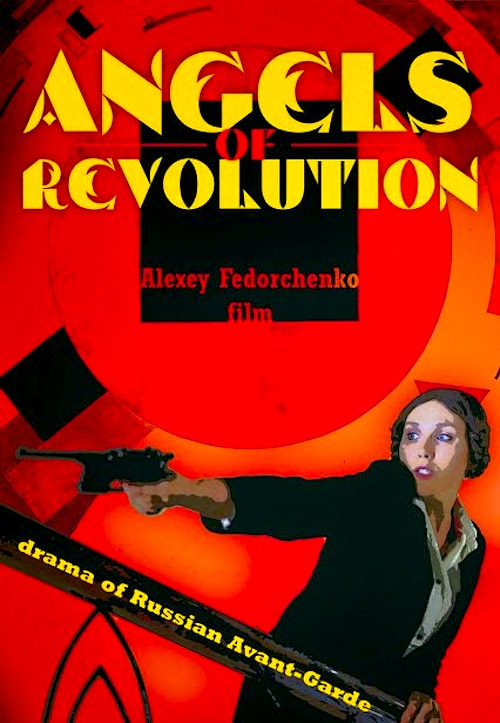
By Joe Bendel. As envisioned by Alexey Fedorchenko, the real life Polina Schneider is something like the mythical heroines of the French Resistance. She is an action figure and an artist, who can juggle legions of lovers while remaining faithful to her leftist ideology. Unfortunately, her latest assignment will end badly when she tries to win over the indigenous people of western Siberia with avant-garde Soviet art and theater in Fedorchenko’s Angels of Revolution, which screens during this year’s New York Jewish Film Festival.

Schneider has the dash of Amelia Earhart, the crack marksmanship of Lara Croft, and the politicized artistic soul of Simone Weil. Her Soviet masters are confident she can stem the discontent brewing among the Khanty people and perhaps spilling over into the neighboring Nenet. In his infinite generosity, Stalin has built the town of Kazym, complete with a boarding school, where indigenous children forcibly attend classes, but are forbidden from using their native tongues.

To reach their hearts and minds, Schneider and her four male colleagues will build atheist monuments and stage ridiculous pageants. While their revolutionary spirits are willing, it seems their artistic talents are inadequate for the task at hand. If you think you know where this is all heading, you are probably right, but Fedorchenko keeps the bloodshed not wholly off-screen, but mostly confined to the far corner of the field of vision.

It also hardly helps that he does everything possible to chop and dice his narrative, incorporating needlessly whimsical intertitles and injecting highly stylized interludes. This is a fascinating yet under-reported historical incident that would be better served by a more straight forward approach. Still, despite its rather scattershot nature, Angels represents a considerable rebound for Fedorchenko after his excessively sketchy and overly precious Celestial Wives of the Meadow Mari. In contrast, Angels has a pointed perspective and it very definitely builds to something significant. Rather than one powerful indictment of the Stalinist era, it is more like a half dozen little nibbling critiques.

Regardless, with his largely sympathetic treatment of the Khanty and Nenet, Fedorchenko has established himself as the leading cinematic chronicler of Russia’s ethnic minorities, following his earthy but lightweight ode to the Mari and the austere but surprisingly moving Silent Souls, featuring the Merjan Russians. Fedorchenko and his co-art director Artem Khabibulin also brilliantly recreate the Soviet constructivist madness of the era.

When Angels works, it is absolutely inspired, but when it gets bogged in its own affectations, it can get stuck noodling about for a while. Consequently, it is dramatically uneven (featuring intentionally stiff, ironically intentional propaganda-like performances), but its ambition, historical honesty, and ironic sensibility pulls it through. Recommended with mild aesthetic reservations, Angels of Revolution screens twice this coming Tuesday (1/27) at the Walter Reade Theater, as part of the 2015 NYJFF.

LFM GRADE: B-

Posted on January 23rd, 2014 at 5:03pm.

LFM Reviews Son of a Gun

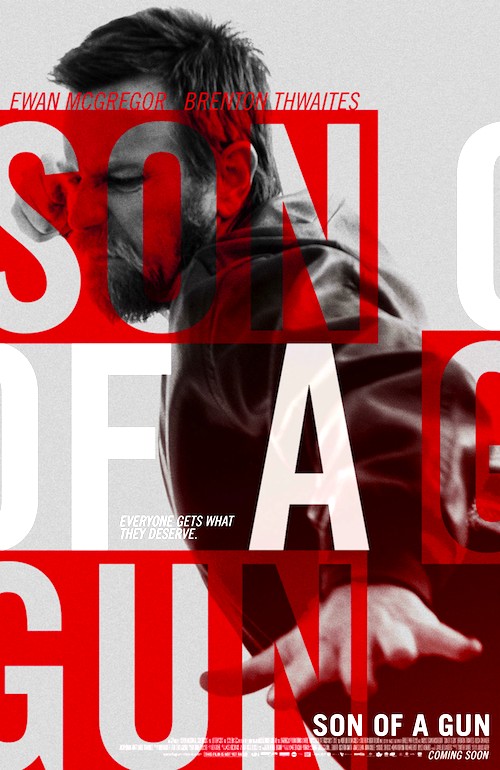
By Joe Bendel. There is a long cinematic tradition of gangsters and gunmen who were short of stature, but long on presence. Scottish Ewan McGregor follows in the footsteps of less than towering giants like Edward G. Robinson as hardboiled Australian lifer Brendan Lynch, delivering a batch of rather charismatic villainy in Julius Avery’s Son of a Gun, which opens this Friday in New York.

It is unclear whether J.R. and his feeble excuse for a moustache will survive prison, but his roommate is a certain goner. Attracting the unwelcomed attention of a hirsute biker rape gang, J.R. makes a deal for protection from Lynch and his associates. In return, once he is paroled, the kid will arrange the details of Lynch’s escape and serve as his management trainee assistant thereafter. Frankly, J.R. could use some direction, so this arrangement is win-win for him. Then he gets an eyeful of Tasha, one of the Russian women “kept” by Lennox, the Euro crime-boss, who finances Lynch’s operations.

Naturally, Lennox has a job for Lynch once he is at-large: an honest to gosh gold mine. The logistics will be a mess, but Lynch and his cronies need the money and are itching for action. After all, what could go wrong, aside from that thing with Tasha and Lynch’s generally erratic nature?

Son is a pretty entertaining little shoot ‘em up, almost entirely thanks to McGregor. Grizzled but wiry, he has the presence of a coiled spring, ready to launch at any moment. He seriously projects a sense of potential danger, making up for his lifeless appearance in Ossage County. Unfortunately, Brenton Thwaites could not possibly be any duller, truly fading into the background as the dumb and inexperienced J.R. Frankly, it is still unclear whether Alicia Viklander will really crossover. She seems uncomfortable vamping it up as a femme fatale, but her Tasha has enough intelligence and poise to totally out-class Thwaites.

Regardless, when Avery is getting down to criminal business, Son works pretty well. The escape sequence is impressively mounted and might just give other potential accomplices ideas. Likewise, the big heist also qualifies as well staged bedlam. However, during quieter times, the film is conspicuously over-written. Avery drives a bit about chimps and bonobo monkeys (decide which best represents your nature, padawan) so deeply into the ground, you’d think he was drilling for oil.

Son is never really surprising, per se, but it executes its crosses and double-crosses with admirable energy. Nobody is slacking off here, except maybe Thwaites’ facial hair, but McGregor truly takes possession of the film. We really haven’t seen him stretch out in this direction before, but he pulls it off. Recommended overall for fans of prison-heist-noir hybrids, Son of a Gun opens this Friday (1/23) in New York at the Quad Cinema.

LFM GRADE: B

Posted on January 20th, 2014 at 9:47pm.

LFM Reviews 20 Once Again

By Joe Bendel. Meng Li Jun is determined to bring back the Jackie-O bob and the spirit of sugary early 1960s pop. She might be cute enough to do it. Of course, she stills remembers when they were popular the first time around, when she was known as Shen Meng Jun. Shen will get a second chance at youth and the things that come with it in Leste Chen’s 20 Once Again, which opens this Friday in New York.

It is a mystical photo studio that spurs her youthful regeneration instead of a fortune telling machine, but you get the picture. She had wandered in to have her eventual funeral photo taken. Yes, she is in a martyring mood, but rather the opposite happens. Restored to the peak of her beauty, Shen still has all memories, including her loving favoritism for her would-be rocker grandson, Xiang Qian Jin. While she keeps her true identity secret, she does the only thing she can to help realize his dreams, joining the band as his girl-singer.

Naturally, he is quite taken with Meng/Shen, which is awkward, especially when their young media patron takes a shine to her. Further complicating matters, Shen’s old loyal companion-never-quite-lover is determined to woo the beauty he fell in love with decades ago.

From "20 Once Again."

If 20OA sounds familiar, beyond the obvious Big-18 Again comparisons, than you probably really know your Korean cinema. It is in fact a Mandarin language, Korean-Chinese co-produced re-conception of last year’s Korean monster hit, Miss Granny, helmed by the Taiwanese Chen, co-starring Luhan, a Chinese-born member of the K-pop boy band EXO. (His fans will probably dig his work here, but the rest of us innocent bystanders will be underwhelmed).

There are a lot of upbeat songs and candy colors in 20 2.0, but it is not all rainbows and buttercups. Naturally, it also indulges in a fair spot of sentiment. Yet, as on-guard as we should be for its heartstring pulling, Zhao Lixin delivers a doozey of a speech as Shen’s grown college professor son that will still kind of get to even relatively jaded viewers.

Nevertheless, it is Yang Zishan, the breakout star of Vicki Zhao Wei’s So Young, who is really running this show. Despite her flirty, pixie-like presence, she still projects Shen’s old, traditional soul. She honestly feels far older than she looks.

Whether you have seen Miss Granny or not, you should have a general idea where 20OA is headed. In addition to its cheesy songs, it has some nice moments celebrating the importance of family and an oddly effective lead performance from Yang Zishan. It is a modest yet manipulative film, but somehow still rather endearing nonetheless. Recommended for fans of light romantic fantasy and K-pop, 20 Once Again opens this Friday (1/16) in New York, at the AMC Empire.

LFM GRADE: B-

Posted on January 16th, 2015 at 12:58pm.

LFM Reviews Vice

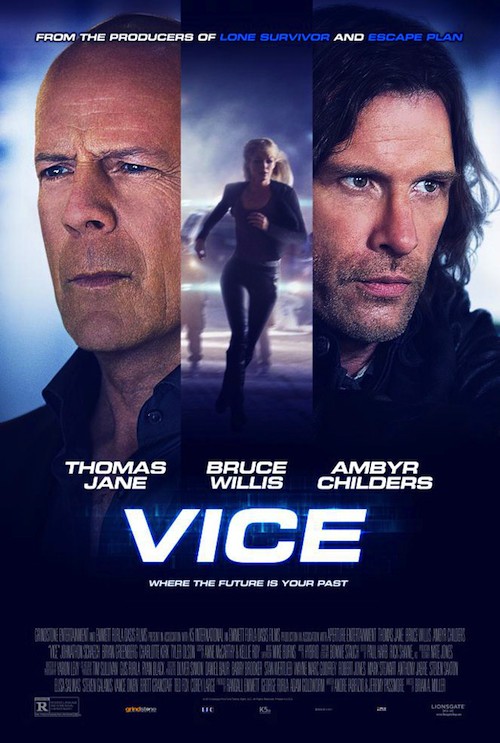
By Joe Bendel. Evidently, Michael Crichton gave humanity too much credit in Westworld. Instead of using cutting edge android technology to facilitate adventures in the Old West and ancient Rome, Julian Michaels has built a Vegas-style resort, where rich pervs can commit sex crimes with impunity. However, when one android-resident escapes into the real world, her programmers will pull out all the stops to recapture her in Brian A. Miller’s Vice, which opens this Friday in New York.

Like Kenny on South Park, pretty much every night Kelly and her friend Melissa are killed by a guest. Their memories are wiped and their bodies are repaired, so they can be reactivated a few days later. This time, Michaels expedites the process, to cater to a big hedge fund party. Seriously, someone at his level should not be micromanaging this sort of day-to-day business. Regardless, they put a rush on Kelly’s maintenance, leaving behind memories that understandably alarm her. Not inclined to go back for more such treatment, she escapes from the resort-compound.

Naturally, Michaels wants her back ASAP, but he does not want the cops involved, particularly not his nemesis, Roy Tedeschi. The world weary detective blames Vice for stirring up bad impulses that then spill over onto his streets. Despite the risk to his career, he has made it his business to antagonize Michaels. He and Kelly really ought to get together, as you know they must eventually.

There are an awful lot of stupid decisions and unnecessary villainy coming from Michaels and his associates. Pedantically speaking, there really ought to be multiply-redundant safeguards in place to avoid a situation like this—embarrassing, but probably not illegal. Needless to say, Vice is a pale shadow compared to Crichton’s Westworld and it suffers from the lack of a heavy comparable to Yul Brynner’s gunslinger. Still, it delivers a reasonable mix of trashy entertainment through its credible near future world-building and voyeurism dressed up as moral righteousness.

As a mid-January release, it is probably safe to say Vice is not destined to be a major awards player, but at least none of the primary cast-members embarrass themselves. Ambyr Childers is not half bad portraying Kelly’s slow process of self-assertion. Likewise, Thomas Jane is sufficiently hardnosed as Tedeschi and Bruce Willis chews on a fair amount of scenery as Michaels. Charlotte Kirk also makes the most of her limited screen time as the perennially ill-fated Melissa. Frankly, both Childers and Jane easily exceed expectations. It is just too bad Andre Fabrizio & Jeremy Passmore’s script is so derivative and uninspired.

Indeed, Vice is the sort of film you want to rewrite as you watch it. The whole concept of the Vice resort ought to be a launching pad for some clever social commentary, but like its creepy clientele, it just brings out the worst in its screenwriters. Still, everyone whose face is on the poster gives it a fair try. It is diverting enough if you enjoy B-movies, but anyone primarily intrigued by the premise should catch up with the Crichton film instead. For those looking for some slightly lurid, light-on-the-technical-stuff science fiction, Vice opens this Friday (1/16) in New York, at the Cinema Village.

LFM GRADE: C+

Posted on January 14th, 2015 at 11:10pm.

LFM Reviews New French Shorts at the IFC Center

By Joe Bendel. The original idea was to present a selection of French short films with prestigious festival credentials as a warm up for the My French Film Festival. However, the mood is sure to be drastically different from what anyone would have anticipated when UniFrance presents the third annual New French Shorts showcase at the IFC Center.

As the world reels from the terrorist attack on Charlie Hebdo, cineastes can take particularly comfort from Amélie Harrault’s Kiki of Montparnasse, because it represents everything we love about French culture and everything the Islamist killers would hate. Chronicling the life of a cultured and independent woman, it is elegant, artistic, and a bit racy. Alice Prin (a.k.a. Kiki) rose from humble beginnings to find fame as an artist’s model, torch singer, actress, and memoirist in the Parisian artists’ community of Montparnasse. It would be impossible to make a boring film about “the Queen of Montparnasse,” but Harrault’s short film is particularly inspired, altering the look of the animation to reflect the style of each successive artist Prin encounters, including Mondigliani and Man Ray.

Prin’s story is not all champagne and caviar, but it portrays Paris as we always want to think of the city. Bandine Lenoir’s The America of Womankind also offers a bit of sauciness (and Antoine Sahler’s fusiony trumpet gives the closing credits a nice kick), but it is more of a sketch than a narrative. While a teenaged girl and her boyfriend make the beast with two backs, her mother, grandmother, and aunts debate whether they should interrupt them or embrace their sex-positive attitude. It is somewhat amusing but inconsequential.

However, two of the programmed films explore the grittier side of contemporary France. Clément Tréhin-Lalanne’s Aïssa is the lesser of the two, serving more as a statement than a film. A young Congolese immigrant is seeking amnesty protection, claiming to be a distressed minor. However, a coldly bureaucratic medical examination may very well disprove her claim. Essentially, Aïssa is a one note film, but the vulnerability of Manda Touré’s performance is still impressive. It is also notable how the television-like aspect ratio gives it the feel of Super-8 micro docs.

Jean-Bernard Marin’s The Runaway addresses similar themes, but it is a fully developed narrative. Lakdar is a tough talking social worker, but he really cares about his charges, even the self-destructive ones like Sabrina. Through his efforts, she has landed a service industry trainee position, which might convince the court to sentence her to probation rather than a prison stretch, if she presents herself in a thoughtful, contrite manner. Alas, that might be too much to ask. Unfortunately, she might drag down Lakdar with her, as well.

As Lakdar, Adel Bencherif is absolutely terrific delivering a tragic, street level performance akin to what you might see in early Scorsese. Runaway is hardly a lecturing multicultural guilt trip either, emphasizing the flawed reality of human nature. Like Sabrine, an inmate in a Washington state women’s prison is a difficult case to help in Laure de Clermont-Tornerre’s Rabbit. She had committed to care for a dwarf rabbit as part of a counseling program designed to develop responsibility, but she might sabotage herself instead. Frankly, Rabbit is a perfectly presentable film, but the stakes and intensity cannot compare to Runaway.

French-based Chinese filmmaker Hu Wei’s docu-essay Butter Lamp might sound conspicuously out of place, but visually, it is unusually distinctive, so why not stretch the selection parameters? As an itinerant photographer and his assistant snap portraits of hardscrabble Tibetan families in front of anachronistic fake backdrops, Hu offers a shrewd commentary on the conflict between traditional Tibetan culture and globalization. Deceptively simple, it is actually quite cleverly executed.

Kiki of Montparnasse, The Runaway, and Butter Lamp are all excellent short films, under any circumstances. Of course, next week’s UniFrance showcase will be an opportunity to see them, as well as a time to express solidarity with the admirably iconoclastic Charlie Hebdo. Also recommended on strictly cinematic terms, the 2015 New French Shorts program screens this Wednesday (1/14) at the IFC Center.

Posted on January 14th, 2015 at 11:09pm.