LFM Reviews Confession of Murder @ The 2013 New York Asian Film Festival

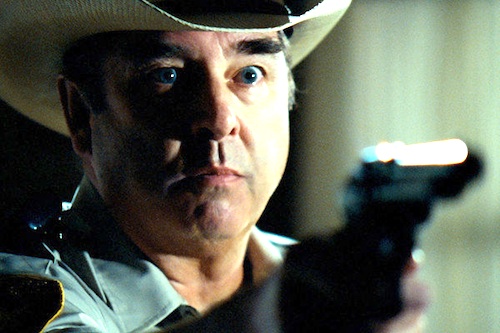
By Joe Bendel. It is the kind of capricious perversity of the legal system that a Victorian novelist would admire. After the statute of limitations expires for his crimes, a serial killer comes forward—ostensibly to repent. However, the cop in charge of the investigation doubts both his sincerity and his veracity in Jung Byoung-gil’s Confession of Murder, which screens today during the 2013 New York Asian Film Festival.

Det. Choi Hyung-goo still bears the scar from his close encounter with a masked serial killer. The case became personal for him—real personal. When Lee Doo-suk steps forward claiming to be the serial killer he is not impressed. Neither are the families of his victims. In marked contrast, the public eats up his phony contrition act, turning Lee into a media phenomenon. Unfortunately, there is little Choi can do, but the families are not so passive.

Directed by Jung, who is best known to NYAFF patrons for Action Boys, his documentary about Korean stuntmen, Confession has its share of big, adrenaline charged chases and fight scenes. However, it is not the stunt work bacchanal one might expect. Instead, Confession plumbs some murky psychological depths. Rather than an action thrill ride, it compares more closely to Kim Jee-woon’s I Saw the Devil.
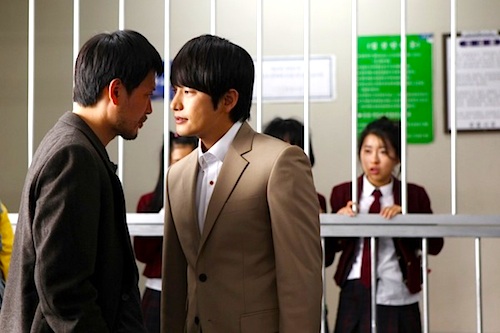
From "Confession of Murder."

Jung maintains the stark tension throughout the film, but he unleashes a barrage of revelations in the third act. Indeed, viewers might kick themselves for not guessing a few, but Confession serves as an object lesson in how not to telegraph your big twists by keeping everyone distracting with breakneck pacing. This is a really well constructed film, but it is not for those with delicate sensibilities. Yes, there is a fair amount of physical conflict, but the emotional violence is far more unsettling.

Jung Jae-young is all kinds of hardnosed as Det. Choi, yet he also perfectly conveys the damaged cop’s tragic nature. Television star Park Si-hoo is suitably cold and creepy as the serial killer-teen idol. Their scenes together have serious zing, but they are also backed-up by a strong supporting cast that really helps sell the twists and turns.

Presumably most viewers will not be experts in South Korean criminal law, so it is easy to suspend disbelief over its initial MacGuffin. While in America the statute of limitations never expires for murder, Confessions is such a nifty, high concept thriller, it seems ripe for a Hollywood remake nonetheless. (Perhaps a liberal judge in the Dirty Harry tradition could issue a preemptive ruling granting the killer impunity.) Regardless, Confession of Murder is a muscular thriller that ventures into some unusually dark places. Very highly recommended, it screens this afternoon (7/3) at the Walter Reade Theater, as part of the 2013 New York Asian Film Festival.

LFM GRADE: A-

Posted on July 3rd, 2013 at 1:17pm.
LFM Reviews Ip Man: The Final Fight @ The 2013 New York Asian Film Festival

By Joe Bendel. Ip Man was such a powerful kung fu master, he could actually warp time. Fans can only assume as much if they wish to justify the conflicting timelines of the various Ip Man films released in recent years. The dates and places might change, but Ip Man remains the grandmaster of masters. Herman Yau dramatizes his twilight years in Ip Man—the Final Flight, which was a hot ticket last night at the 2013 New York Asian Film Festival.

In the 1950’s and 1960’s, Hong Kong’s go-go economy had yet to blast off. Master Ip earns little more than a subsistence living teaching his Wing Chun style of kung fu to students. Well known throughout the city, Master Ip could probably do a brisker business were it not for his own self-imposed restrictions. Kung fu is a way of life for him—not a commodity to be commercialized.

In a way, The Final Flight is a bit Gumpish, casting Master Ip as an observer of two decades of Hong Kong’s growing pains, including the rise of trade unionism and the rampant gangsterism within the Walled City. However, when it finally gets down to fighting, Final delivers some spectacular street melees.

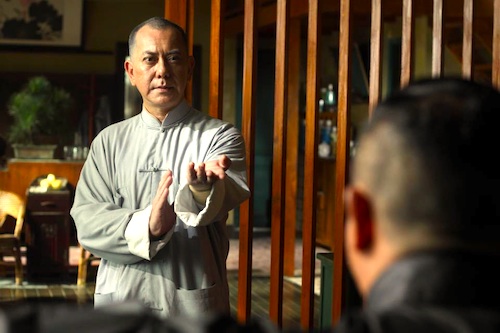
While produced independently of Wilson Yip’s Ip Man films, Anthony Wong is not a bad likeness for Donnie Yen in his AARP years. Wong might not look particularly spry, but he is a steely old cat, so it is easy to buy into him as the veteran martial artist. After all, the genre has a long history of butt-kicking greybeards.

Anthony Wong in "Ip Man: The Final Fight."

Indeed, Wong’s Zen-like gravitas is perfect for the venerable Ip. He also develops some appealingly ambiguous chemistry with Zhou Chu Chu, playing a scandalous nightclub singer attracted to his old bad self. However, the film is overstuffed with Ip’s disciples. You would think half the city was studying under him. Regardless, Jordan Chan adds real hardboiled heft to the film as Tang Shing, a not completely corrupt copper and former student of Ip’s. He creates a spinoff-worthy character should the filmmakers wish to further complicate the Ip Man universe.

Festival special guest Yau should satisfy fans with his gritty street action and humanistic portrayal of the Ip family. In fact, Ip’s son, Ip Chun, served as a technical advisor and appears in a small supporting role. Final Fight is also bolder than its predecessor films in depicting Ip’s most famous student, Bruce Lee. Although never named as such, it is hard to miss the implication when Master Ip meets with a former student turned famous actor, whom the audience only sees from behind, sporting conspicuous sunglasses.

It was the apostolic connection to Bruce Lee that launched the Ip Man filmmaking craze to begin with, but the Master has since taken on a media life of his own. Nicely choreographed with a wistful vibe that sets it apart from the pack, Yau’s latest Ip Man is a worthy addition to the Ip canon. Recommended for martial arts fans with a strong appreciation of tradition, Ip Man—the Final Fight screened last night (6/30) as part of the 2013 New York Asian Film Festival.

LFM GRADE: B+

Posted on July 1st, 2013 at 11:22am.

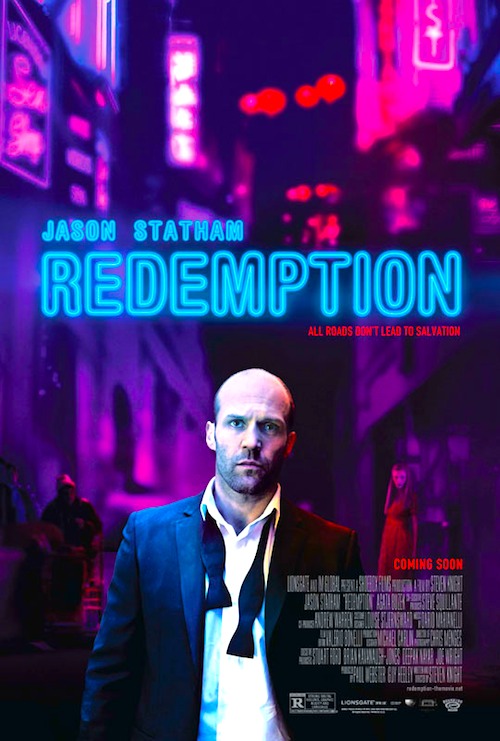
Statham Hits London’s Mean Streets: LFM Reviews Redemption

By Joe Bendel. It is not exactly “Garbo Talks,” but as hooks go, “Statham Cries” is pretty good. The action star’s big close-up comes in the right vehicle. In a throwback to the angry young anti-hero films Michael Caine cut his teeth on, Statham prowls the mean streets of London in screenwriter-director Steven Knight’s Redemption, which opens this Friday in select cities.

Haunted by his war crimes, a shell-shocked former Special Forces soldier lives a homeless existence to evade a certain court martial. Deeply traumatized by his experiences, he often suffers from flashbacks and hallucinations. Terrorized by local thugs, “Joey” finds unlikely refuge in an exclusive hipster flat. Unfortunately, his companion Isabel is captured and consigned to a low-end brothel.

Using the resources of his unwitting host (conveniently abroad for the season), Joey cleans himself up and takes work as an enforcer for a Chinese crime syndicate. With the reluctant help of inner-city mission nun Sister Cristina, Joey Jones (as he now calls himself) tries to track down Isabel. Yet, despite his erratic behavior, a strange relationship develops between them.

Granted, the “troubled” vet is always a problematic device. However, the film is rather sensitive in its depiction of Joey Jones, while never absolving him of his sins. There are definitely beatdowns in Redemption, but the film is more concerned with mood and character development. Knight demonstrates a keen understanding of tension-and-release, so when the violence flares up, it never feels gratuitous.

Clearly, Oscar winning cinematographer Chris Menges loves the neon lights and shadows of Redemption’s nocturnal world, getting all the Miami Vice he ever had in him out of his system. The film looks great, aside from a few awkward scenes of Jones’ delirium. Statham is also surprisingly good as Jones, convincingly portraying his violent unpredictability. Viewers are never quite sure how he will react in a given situation, which is a major reason why Redemption works so well.

Statham also shares some richly intriguing chemistry with Agata Buzek (the daughter of former Polish Prime Minister and Solidarity activist Jerzy Buzek), whose intelligent but tightly wound performance adds significant depth to the film. The notion that Jones and Sister Agata are sharing a mutual “wild patch” in their lives may not exactly ring true, but it still works within the film’s dramatic context.

Knight nicely maintains the tragic logic throughout Redemption, but the NSA-ish surveillance motif book-ending the proper narrative feels wholly out of place in his street level tale. Nonetheless, Redemption is a stylishly executed over-achiever that is only really missing the Roy Budd-inspired soundtrack. Recommended for fans of Statham and old school payback movies, Redemption opens this Friday in New York at the Village 7.

LFM GRADE: B+

Posted on June 25th, 2013 at 12:07pm.

Hot, Dry, and Noir: LFM Reviews Rushlights

By Joe Bendel. In the Lone Star State, estate law is a big deal. Smelling the money, crack-heads and secret progeny will come out of the woodwork for a Texas-sized inheritance in Antoni Stutz’s sweaty small town noir, Rushlights, which opened Friday at the Picture House in Pelham, New York.

Not long after Billy Brody finally puts the moves on Sarah, the greasy spoon waitress he has been swooning for, she calls him in a state of panic. Ellen Niles, her crack-addict roommate has overdosed. Normal people would simply call the police, but not Billy and Sarah. They are heading out of town as fast as his beater can take them, but not without a dubious plan.

Sarah bears an uncanny resemblance to her dearly departed roommate, who just received a letter informing her she is the sole heir of the rich uncle she hardly knew. Billy and Sarah are off to Texas to collect in her place. However, problems will follow them from the big city. It turns out there is a reason Sarah was rooming with a hardcore druggie. It also seems there might be an unacknowledged son looking to claim the estate for himself—and he’s a real bastard.

From "Rushlights."

It is kind of amusing to watch Rushlights string along one highly improbable scene after another, with a perfectly straight face. Right from the first ridiculously convenient accidental gun discharge, viewers should realize what they are in for. However, veteran character actors Beau Bridges and Aidan Quinn are actually a lot of fun to watch doing their suspicious Jim Thompson thing as good old boy Sheriff Robert Brogden, Jr. and his glad-handing lawyer brother, Cameron Brogden, respectively. Both are in fine form strutting about and chewing the scenery.

In contrast, the young leads are decidedly lightweight, particularly the underwhelming Josh Henderson and his high school freshman starter moustache as Brody. Haley Webb has a bit more presence as Sarah, Ellen, or whoever she is, but she does not project the femme fatale sense of danger the genre demands.

At least cinematographer Gregg Easterbrook gives it the right hot-in-the-shade/inflamed passions/noir look, in the tradition of Red Rock West and Blood Simple. As a director, Stutz also maintains a respectable pace, but as a co-writer, with Ashley Scott Meyers, he overindulges in contrivance while avoiding logic like the plague. Frankly, Rushlights would be perfect viewing for a lazy somewhat hung-over weekend afternoon, but its probably not worth commuting from the City to Westchester when it opened Friday (6/21) at the Picture House, as well the Chinese 6 in LA and the Premiere Renaissance in Houston.

LFM GRADE: C+

Posted on June 25th, 2013 at 12:07pm.

LFM Reviews A Werewolf Boy @ New York’s Korean Movie Night (6/25)

By Joe Bendel. Chul-soo is either Korea’s Kaspar Hauser or its Teen Wolf. He is old enough to be a war-era orphan, but even for a wild child he seems a little odd. Yet, a sickly teen-aged girl forms a deep connection with him in Jo Sung-hee’s A Werewolf Boy, which screens tomorrow night as part of the Korean Cultural Service’s ongoing free Korean Movie Nights in New York.

Soon-yi, her mother, and her younger sister Soon-ja have moved to the countryside in hopes the clean air will improve her health. Unfortunately, the big move was facilitated by Ji-tae, the entitled son of her late father’s business partner, who now feels at liberty to pop over whenever he feels like it. He assumes Soon-yi will eventually marry him for the sake of his wealth and social status. However, Soon-yi is not impressed.

She does not think much of the feral Chul-soo either when she and her mother first find him snarling in the garden. With the relevant social welfare agencies passing the buck, Soon-yi’s mother reluctantly takes him in. Slowly, he starts to grow on the family, once they clean him up and curtail his rougher instincts.  Soon-yi even starts teaching him to read with the help of a dog training manual. However, a rich jerk like Ji-tae cannot help making trouble, especially when his ego is bruised.

Chul-soo’s true nature is quite strange and uncanny, but Jo de-emphasizes the genre aspects of his story to focus on his young tragic love for Soon-yi. Told in media res as the decades-older woman returns to the fateful country house, Werewolf Boy has all the elements of a good weeper, so it is not surprising it was a monster hit at the Korean box office.

In truth, the film is at its strongest when portraying the innocent ardor of Chul-soo’s relationship with Soon-yi. In contrast, the ridiculously vile Ji-tae is little more than a clumsy class warfare tool that quickly grows tiresome. When the shoot-first military finally arrives on the scene, they at least have the virtue of being considerably less cartoony and more fully dimensional than the silver spoon villain.

Still, Song Joong-ki and Park Bo-young develop rather touching chemistry as Chul-soo and Soon-yi, respectively. The former shows both tremendous physicality and sensitivity as the young wolf-man, in an almost entirely nonverbal performance. Likewise, Park is radiantly expressive as Soon-yi. Jang Yeong-nam is also memorably charismatic yet down-to-earth as her mother. Unfortunately, as Ji-tae, Yoo Yeon-seok is stuck with a flimsy character and takes it embarrassingly over the top in every scene.

Werewolf Boy demonstrates how genre elements can be shrewdly repurposed to tell a highly relatable story rooted in human emotions. Frankly, Soon-yi and Chul-soo’s impossible love would resonate without Jo Sung-hee so conspicuously stacking the deck against them. Nonetheless, A Werewolf Boy is recommended for those who enjoy a shaggy-haired teen-aged romance, especially when it screens for free tomorrow (6/25) at the Tribeca Cinemas, courtesy of the Korean Cultural Service in New York.

LFM GRADE: B-

Posted on June 25th, 2013 at 12:06pm.

The War in Syria: LFM Reviews Not Anymore: A Story of Revolution @ 2013 AFI Docs, Presented by Audi

By Joe Bendel. Filmmaker Matthew VanDyke has unusual but highly pertinent qualifications to document the Syrian revolution. The self-described freedom fighter escaped from Gaddafi’s Abu Salim prison, where he was held in solitary during the Libyan civil war. Like a Twenty-First Century throwback to the partisan press corps that covered the Spanish Civil War, VanDyke both documents and advocates on behalf of the everyday Syrians rebelling against Assad’s dictatorship in his short documentary, Not Anymore: a Story of Revolution, which screens during the 2013 AFI Docs presented by Audi (as it is now officially, if awkwardly known).

VanDyke’s fixer is also his producer and subject. Nour Kelze sounds like she was once the sort of modern, educated woman so desperately needed in the Middle East. A former school teacher, she explains that she once wore fashionable clothes and high heels, but “not anymore.” With the onset of the Ba’ath regime’s crackdown, she became a war photographer, adopting the profession’s Kevlar helmet and vest.

Kelze guides viewers through the chaos that once was the thriving city of Aleppo. Although still populated, the neighborhoods strafed by Assad’s forces now look like a ghost town. Free Syrian Army commander “Mowya” wryly observes that Assad certainly made good on his promise to clear out the panhandlers from the desolate, bombed out streets.

From "Not Anymore: A Story of Revolution."

While Not Anymore clocks-in just under fifteen minutes, VanDyke captured more action in that time-frame than he probably would have liked. Unlike some documentary filmmakers, he is clearly willing to put himself on the front line, just like his producer. That gives the doc real immediacy and authenticity.

Throughout the film, VanDyke’s interview subjects pointedly ask why America has not forcefully interceded on their behalf. He is understandably diplomatic in his responses, but the hard truth is for the last four years or so, American foreign policy has been more interested in cultivating relations with regimes like Assad’s than changing them. Perhaps his film will open some eyes. Granted, it has a decided point of view, but it still is a powerful example of cinematic journalism. Recommended for all viewers concerned about conditions in Syria, Not Anymore screens tomorrow afternoon (6/20) and Sunday morning (6/23) as part of the Truth Be Told programming block at this year’s AFI Docs presented by Audi.

LFM GRADE: A-

Posted on June 19th, 2013 at 1:24pm.