LFM Reviews Best Friends Forever @ The 2013 Slamdance Film Festival

By Joe Bendel. When the apocalypse comes, books will definitely have an advantage over the internet. An aspiring grad student would agree. She was planning a career as a librarian. Unfortunately, the end of the world complicates matters. However, it takes a while for her and her hard partying BFF to notice Armageddon looming during their southwestern road trip in Brea Grant’s Best Friends Forever, which premiered last night in Park City at the 2013 Slamdance Film Festival.

Harriet is the sensitive one, who spent a short stint in a mental hospital following a suicide attempt. Following the long held tradition of low budget genre movies, her best pal Reba is kind of trampy. After graduation, Harriet packs up the AMC Pacer for grad school in Texas, convincing Reba to tag along for the ride. While they are on the road, a mysterious terrorist attack leads to a series of nuclear explosions. The two women are not listening to the news, though, preferring music and the occasional “Oprah” moment to reports from the outside world. Their first inkling something might be amiss comes when three hipsters carjack their Pacer.

From "Best Friends Forever."

Eventually, the breakdown of civilization strains their relationship. Of course, nobody is assigned responsibility for the cataclysmic act of terror, lest that offend anyone. In one awfully strange exchange, several characters want to blame North Korea, to which Reba replies that she is Chinese – as if the PRC were as benign as Luxemburg. Indeed, the third act threatens to undo much of the good will established by the co-leads, depicting a rather nasty nativist martial law sweeping across Texas.

Since Grant co-wrote and co-produced with her co-star Vera Miao, viewers are pretty much stuck with them as Harriet and Reba, respectively. Fortunately, they have some nice bickering buddy-buddy chemistry together. Still, this is clearly a genre film with a female audience in mind, casting men in exclusively either predatory or ineffectual roles. While Grant comes in with geek credentials from appearances in Heroes and Halloween 2, as well as her work co-writing the 1920’s zombie comic We Will Bury You with her brother Zane, neither of the two seems particularly comfortable with the odd action scene. Frankly, everyone in BFF would rather talk than do anything else, but the dialogue does not have the sort of snap it should.

Putting a Pacer in the center of an end-of-the-world road movie is pretty ingenious. Employing the apocalypse as a prism through which to examine personal and social relationships is also a promising strategy, yielding mixed results in this case. There are some appealing moments of friendship under extreme circumstance in BFF. Nonetheless, it never approaches the attitude or verve of Thom Eberhardt’s Night of the Comet, the gold standard for zeitgeisty generational Doomsday movies. More chick flick (deliberately referencing Thelma & Louise) than midnight movie, Best Friends Forever should satisfy those looking for the former, albeit with a bit of an edge. Flawed but interesting, it screens again at the Treasure Mountain Inn screening room this Monday (1/21) as part of this year’s Slamdance.

LFM GRADE: C+

Posted on January 20th, 2012 at 4:38pm.
LFM Reviews Fallen City @ The 2013 Sundance Film Festival

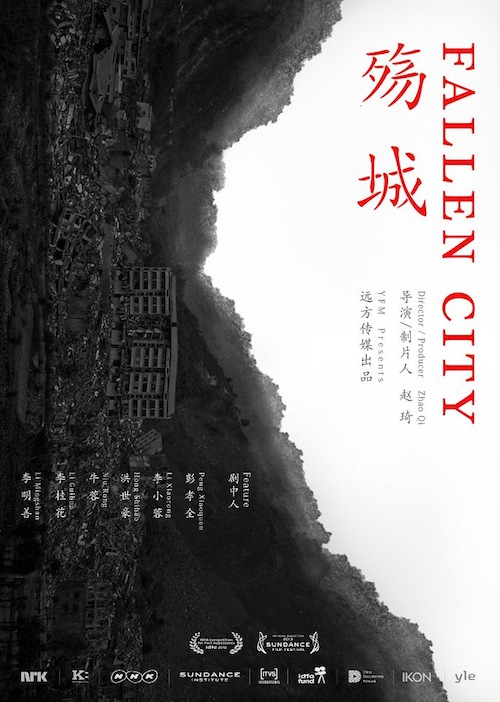
By Joe Bendel. When disaster strikes, government is there to step in and help, right? In today’s China, not necessarily. When the 2008 earthquake hit Sichuan, the town of Beichuan was simply leveled to the ground. Documentary producer turned director Zhao Qi records the ironies and indignities of the city’s rebuilding process in Fallen City, which screens during the 2013 Sundance Film Festival in Park City.

Once a community of 20,000 strong, the survivors of Beichuan now live in crude temporary housing as they await the shiny new city the state media breathlessly promises them. Each and every one of them grieves for multiple family members. Especially heartrending are the Pengs, who mourn their eleven year old daughter. Watching the inconsolable father pore over her drawings salvaged from their flat like holy relics is truly painful. They are not alone in their agony. The audience also sees in clear terms how the teenaged Hong’s behavioral issues are directly related to the loss of his father.

To add insult to injury, when the citizens of Beichuan seek traditional solace on the anniversary of the quake, the police physically prevent them from entering the “old city,” thereby undermining their attempts at closure through ritual. In fact, the disconnect between officialdom – as expressed by Orwellian newscasts – and reality is a theme running throughout Fallen.

In several ways, Fallen lets the government off the hook, scrupulously avoiding discussion of the so-called “Tofu Construction” causing the disproportionate collapse of school buildings, or the Party’s concerted efforts to prevent the release of an accurate death toll. Yet, the facts on the ground Zhao captures through his lens are impossible to miss. We see the media hypocrisy, institutionalized economic inequalities, and corrupt criminal justice system up close and personal.

Constantly documenting events since the 2008 disaster, Fallen represents a work of true documentary commitment from Zhao. Even those who think they have been de-sensitized by images of Hurricanes Katrina and Sandy will be staggered by the ghostly sight of old Beichuan. Nonetheless, it is the pictures and video of the children (negligently) killed during the quake that will really hit audiences in the gut. Powerful and profoundly troubling, Fallen City is highly recommended when it screens again this Monday (1/21), Wednesday (1/23), Friday (1/25), and next Saturday in Park City, as well as this Thursday (1/24) in Salt Lake as a World Cinema Documentary Competition selection of the 2013 Sundance Film Festival.

LFM GRADE: A-

Posted on January 19th, 2012 at 5:10pm.

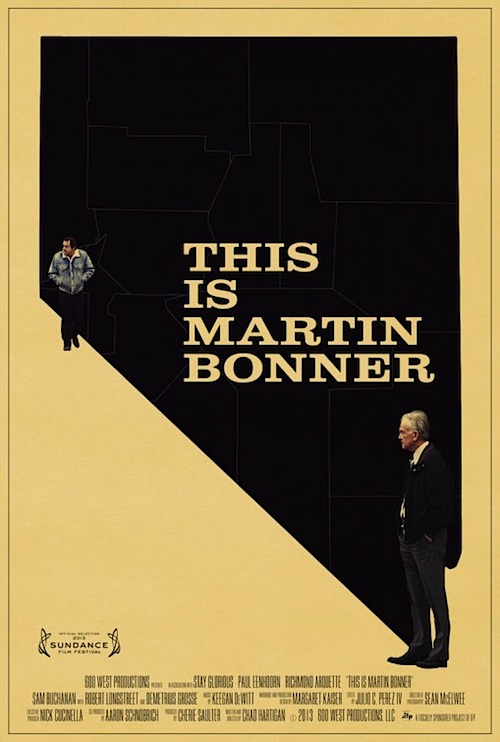
LFM Reviews This is Martin Bonner @ The 2013 Sundance Film Festival

By Joe Bendel. It seems like the only job Martin Bonner can get involves doing the Lord’s work. He has decidedly mixed feelings about that. Yet, his own uncertainties make him a more accessible adviser for a remorseful ex-con in Chad Hartigan’s This is Martin Bonner, which screens during the 2013 Sundance Film Festival in Park City.

An Australian transplant in Reno, Martin Bonner is starting over. After a long period of unemployment, he now works for a Christian outreach program for recently released prison inmates. Technically, he is not Travis Holloway’s mentor, but he makes a tenuous connection when pinch-hitting for his assigned volunteer. It is not that Holloway does not like the devout Steve Helms – he is simply more comfortable with Bonner.

Bonner is a film that could have gone one way or another. We quickly learn Bonner was fired from his previous church job because of his divorce. However, Hartigan never really grinds that ax. Nor is the evangelical Helms presented in fanatical terms. Instead, the film could be called a study of questioned faith in action. Frankly, it offers some of the most mature and nuanced discussions of Christianity in everyday practice you are likely to see in any major film festival.

Paul Eenhoorn’s performance as Bonner is arguably Oscar caliber (unquestionably so, if Cooper and Jackman truly are so this year). This man is not a saint. He can even be a little prickly, but he is trying to do the right thing. Eenhoorn perfectly conveys that humanistic temporizing. Likewise, as Holloway, Richmond Arquette (yes, from the Arquette family) creates an unusually deep portrait of regret and pathos. In fact, the entire ensemble is small but powerful, especially including Sam Buchanan as Holloway’s estranged daughter Diana.

Bonner is a modest, quiet film, by any standard of measure. Yet it has moments of rare honesty. Aside from the scene of Bonner lip-synching to his teenaged garage band’s old 8-track (which feels a little too cute and calculated), Hartigan’s patience and sensitivity always pay-off with surprising interest. Recommended with a fair bit of enthusiasm for general audiences, This is Martin Bonner screens again Sunday (1/20), Tuesday (1/22), and Friday (1/25) in Park City and next Saturday (1/26) in Salt Lake, as part of the 2013 Sundance.

LFM GRADE: B+

Posted on January 19th, 2012 at 5:09pm.

PBS’s Newest British Detective: LFM Reviews DCI Banks

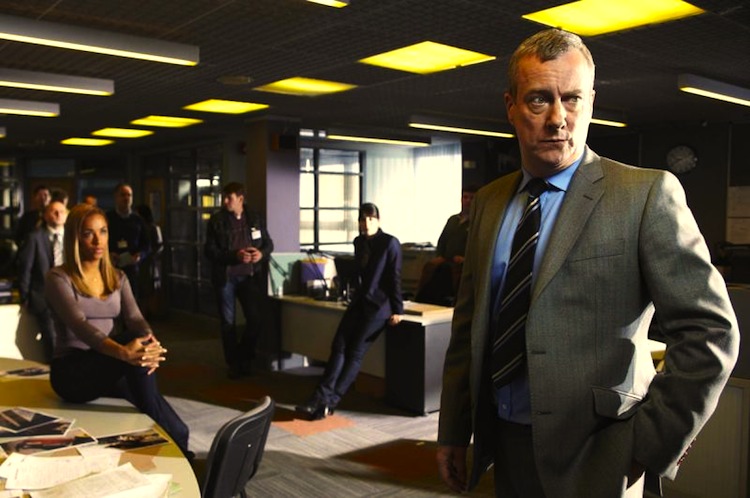
By Joe Bendel. East Yorkshire DCI Alan Banks is an avid jazz listener. From this we can deduce he is a man of principle, used to doing things the hard way. His Detective Sergeant respects and is frustrated by that (the principles, not the music). He might be tightly wound, but in the words of a superior officer, he “is the least worst man for the job.” Based on Peter Robinson’s novels, BBC Worldwide’s DCI Banks enters into syndication on PBS stations across the country this month, reaching an impressive 77% market clearance.

DCI Banks starts with an apparent ending. In The Aftermath, two patrol officers responding to a domestic disturbance discover a serial killer’s chamber of horrors. One of the officers is killed in the ensuing struggle and the murderer is comatose. For acting DCI Banks this is no happy ending. After fruitless months of investigation, one young woman is still missing. The big question is what role did his battered wife play in her husband’s crimes? Already stretched to the breaking point, he is in no mood for the internal investigation headed by the ambitious DS Annie Cabbot.

After an involuntary vacation and an unexpected promotion to full DCI, Banks returns for a standard but well executed game of cat-and-mouse in Playing with Fire. Despite their rocky start, Banks and the freshly transferred Cabbot have developed a strong working relationship. Yet her questionable romantic involvement with a figure involved in the case threatens to undo everything.

Technically the second episode of the first full season, Friend of the Devil is easily the best of Banks’ first two full seasons. Returning to a notorious scene from the pilot Aftermath, Friend of the Devil delves into some dark, painful psychological recesses. It is a case that hits close to home for the force and keeps on hitting. In fact, there will be considerable turnover in the Yorkshire CID over the course of the series.

Likewise, Cold is the Grave entangles Banks in a messy intersection of police and family business when his high-handed superintendant asks Banks to unofficially find his runaway daughter and bring her home. It turns out that the London vice lord she had shacked up with may somehow be involved in an armed robbery-turned cold blooded murder back home. Although it would seem like it would take a lot of elbow grease to force these strands together, Robert Murphy’s adaptation of Robinson’s novel does so rather neatly and orderly.

The shoe is on Banks’ foot in Strange Affair when his estranged brother is ensnared in a murder case. With a suddenly pregnant Cabbot on the verge of a leave of absence, Banks meets his new DI, Helen Morton, under slightly embarrassing circumstances. He is the prime witness in her first case. Socially awkward, even compared to Banks, their professional chemistry will develop slowly. However, they synch-up quite nicely in Dry Bones that Dream and Innocent Dreams, two traditional procedurals that both have nicely turned third act twists, at least by television standards.

For British mystery fans, DCI Banks might be closest in tone to the Inspector Lynley Mysteries – but its best episodes, like Aftermath and Friend of the Devil, approach Wire in the Blood’s murky psychological terrain. TV veteran Stephen Tompkinson’s Banks is somewhat like Inspector Lewis, but with more edge. (Evidently Yorkshire crimes are more brutal than those in Oxford.) Airing as either 45 minute two-parters or in ninety minute blocks, the entire series is consistently tight and tense. Notable directors include James Hawes (Aftermath), who helmed Masterpiece’s entertaining 39 Steps and Marek Losey (Cold is the Grave), grandson of Joseph.

Driven by Topkinson’s intense middle-aged rectitude, DCI Banks episodes are produced with above average intelligence and are addictive like popcorn. A worthy addition to the ranks of favorite PBS-BBC detectives, DCI Banks is easily recommended for mystery fans as it begins its syndicated run on many PBS outlets (including WLIW), so check those local listings.

LFM GRADE: A-

Posted on January 14th, 2012 at 12:38pm.

LFM Reviews The Fifth Heaven @ The New York Jewish Film Festival

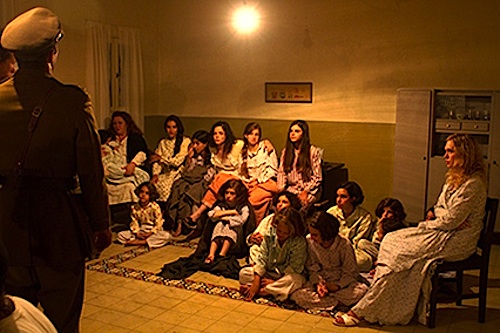
By Joe Bendel. It is late 1944, several years before the declaration of the State of Israel – which means that the generous Israeli social welfare system has also yet to be established. A remote desert orphanage is the only refuge for a group of cast-off girls and their damaged caretakers. However, secrets from the director’s past raise doubts for the institution’s future in Dina Zvi Riklis’s The Fifth Heaven, which screens during the 2013 New York Jewish Film Festival, co-presented by the Jewish Museum and the Film Society of Lincoln Center.

Maya’s father never was much, but he sinks even lower when he delivers her to Dr. Markovski’s orphanage. The director, who apparently has some ambiguous history with the family, understandably protests – since Maya is not, strictly speaking, an orphan. Yet the father has evidently fixed matters with Markovski’s tight-fisted patron. We quickly deduce Markovski once had an affair with Maya’s mother, who has long since deserted her family, running off to America. Maya is a bit slower on the up-take.

Markovski’s history with Maya causes friction with his demur colleague and potential lover, Frida. The orphanage’s new cleaning woman, Berta, the disowned daughter of an Orthodox family scandalously carrying on with a British officer, further destabilizes the staff. Yet it is the cache of arms stashed on the roof by Duce, a staff-member’s Italian lover deeply involved in the underground liberation movement, that represents greater danger for the institution. Maya discovers his secret, but she has fallen for his inappropriate charm offensive.

From "The Fifth Heaven."

Fifth nicely captures the strange duality experienced by Jewish residents of the British Mandate. On the one hand, they bitterly resented their colonialist rulers – while also raptly following the British war efforts against the National Socialists. Like many films set in isolated private schools, there is a whole lot of repressed sexual tension in the orphanage (almost entirely of the straight variety, though). Yet the big revelations are almost entirely given away in the opening scenes.

There are small flashes of devastating power in Fifth. In contrast, the big confrontation scenes are almost entirely drained of passion. Never melodramatic, Riklis’s restraint is something of a double-edged sword. Nonetheless, Yehezkel Lazarov’s understated but deeply humanistic portrayal of Markovski perfectly suits her approach. Rotem Zisman-Cohen also stands out as Berta, getting the film’s one big episode of acting-out. Oddly, the lead is rather icily stand-offish, while the rest of the young ensemble is largely indistinguishable.

A finely crafted period production, Fifth is sensitively underscored by the original themes and classical piano interpretations of Josef Bardanashvili. It might be a mixed bag, but it has its moments. Recommended for patrons of Israeli cinema, Fifth Heaven screens this Thursday (1/17) and Sunday (1/20) as part of this year’s NYJFF, now underway at the Walter Reade Theater.

LFM GRADE: B-

Posted on January 14th, 2012 at 12:35pm.

Dustin Hoffman’s Directorial Debut: LFM Reviews Quartet

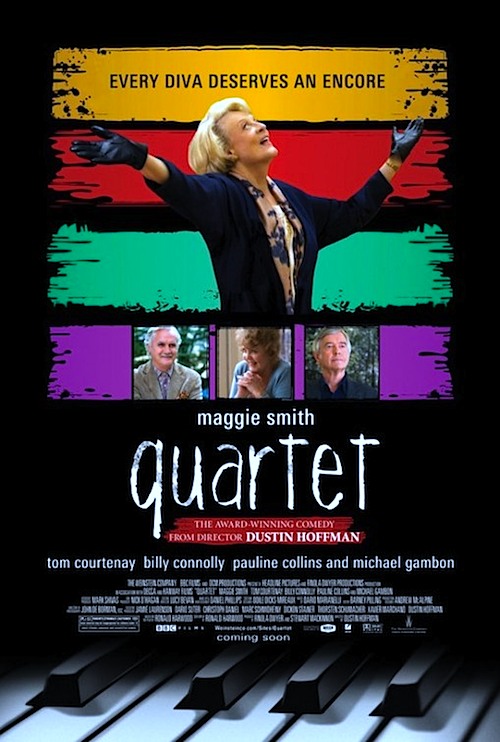
By Joe Bendel. In the film adaptation of Neil Simon’s California Suite, Dame Maggie Smith played a beloved English actress, rather embarrassed to be nominated for a lightweight comedic role. She won her second Oscar for that role. Somewhat ironically, Smith is back in Oscar contention for more or less the sort of part Simon’s character was up for. However, the just winner of back-to-back Emmy Awards for Downton Abbey, Smith may not exactly be the sympathetic favorite for Quartet, Dustin Hoffman’s feature directorial debut, which opens today in New York.

Beecham House for retired musicians (mostly classical, aside from a few token big band vets) is anticipating the arrival of a new resident. Jean Horton was the diva of her day. She was also part of the celebrated “Rigoletto Quartet,” whose other three members are already residents of Beecham. Their reunion is the cause of great trepidation for her. Everyone gets along with Wilf Bond, the compulsive old flirt. Likewise, Cissy Robson’s good nature never fails her, but her mind is slowly slipping. Reggie Paget is another story. Still sharp as a tack, he remembers only too well his ill-fated relationship with Horton. Indeed, his bitterness still lingers.

Will the four former friends be able to put their differences behind them and come together as a quartet to save Beecham House at the annual talent show gala? Are the ponds in New Hampshire still golden?

Smith might be the film’s biggest name, but the Weinsteins shoulld have put Quartet‘s Oscar chips on Tom Courtenay. He brings such exquisite dignity and sophistication to Paget, viewers will long to see him in a film with more heft. Smith is fine as Horton, but the character just seems so bland and pedestrian compared to Downton’s fan favorite, the Dowager Countess. Rounding out the foursome, Billy Connolly is likably roguish as Bond and Pauline Collins is rather sweet and earnest as Robson. There is nothing really wrong about Quartet, per se, except a lack of ambition, essentially amounting up to a bit of Marigold me-too-ism.

No horses were injured in the filming of Quartet, so it has that going for it. Do not expect any surprises, though, in this story of third act pluckiness adequately but not inspiringly helmed by Hoffman. Frankly, there is something slightly frustrating about a film whose most inspired moment is its closing credits, in this case showing vintage photos of its cast of accomplished opera singers, classical musicians, and classically trained thespians early in their careers. Predictable and unabashedly sentimental, Quartet should satisfy those who like sugary, ascot-wearing films (but classical music connoisseurs will be better advised to check out A Late Quartet instead). It opens today (1/11) in New York at the Paris Theatre.

LFM GRADE: C+

Posted on January 11th, 2012 at 10:26am.