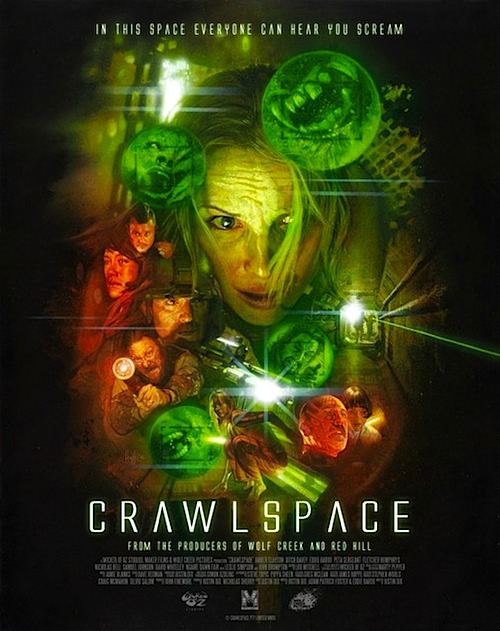
Weaponized ESP Down Under: LFM Reviews Crawlspace

By Joe Bendel. In the 1980’s, the Soviets really did launch an ambitious “remote viewing” program, training psychic spies to watch and perhaps even read the American President’s mind. It is hard to imagine any hostile powers bothering with such efforts now, unless they had no other access to the latest news from ESPN. Nonetheless, the “technology” was taken seriously and it is about to blow up in the face of a clandestine Australian research institute, becoming the Macguffin of Justin Dix’s Crawlspace, which debuts on VOD and begins a series of midnight screenings at the IFC Center beginning today.

Echo Companies 1, 2, and 3 are approaching the double-secret Pine Gap facility buried beneath the Australian desert (where there are no pine trees). They have two missions: terminate the dangerous inmates let loose during a power failure and rescue the scientific personnel. It seems like it is a bad idea to combine a maximum security prison with a research lab, so maybe these prisoners are not whom they are billed to be. Oddly enough, one of them also appears to be the late wife of company leader Romeo, who apparently harbors a wee bit of guilt over her assumed death.
Much to his team’s surprise, Romeo goes rogue, deciding to protect E.V.E., as her wristband identifies her, rather than fulfill their mission objectives. This becomes particularly awkward when the monsters start attacking. It is not until they “rescue” a truly annoying group of scientists that the psychic battle unfolding around them is insufficiently explained. What does that make Eve? Dangerous.

The directorial debut of SFX artist Dix, Crawlspace liberally incorporates narrative elements from the original Alien and Solaris, but little of their artistry. It is long on atmosphere, though, taking viewers through air ducts, service tunnels, and all manner of passages requiring grown men to stoop. There are also several distinctively gruesome deaths for those who measure genre films by such standards.

Again, Crawlspace’s cast might not earn marks for distinction, but they get the job done. While not remarkably expressive, Ditch Davey (a name so awesome it must be Australian) is appropriately manly as Romeo. Strangely, both Peta Sargeant and Ngaire Dawn Fair exhibit more cinematic presences (as Wiki the commando and Emily the psychic blocker, respectively) than Eve, the pseudo-romantic co-lead, but Amber Clayton can at least act twitchy and roll her eyes back in her head when necessary.

Crawlspace is no genre classic but it is entertaining in a Big-Mac-with-fries kind of way. Basically, it is heavily armed people going nuts in confined spaces. Horror movie fans, particularly those with a taste for flicks with a light sci-fi seasoning, should have at it this Friday (1/4) when it screens Midnights at the IFC Center and hits VOD platforms.

LFM GRADE: B-

Posted on January 4th, 2012 at 12:35pm.

Tibetan Buddhism Takes America: LFM Reviews When the Iron Bird Flies

By Joe Bendel. Niall Ferguson would say “I told you so.” For centuries, Tibetan Buddhism was largely confined to the Himalayan region. Then China invaded Tibet, precipitating an exodus of refugees. A few decades later, Tibetan Buddhists have earned growing ranks of converts around the world. Arguably, a bit of competition and Westernization has been beneficial. Victress Hitchcock explores the positive implications of their exile in When the Iron Bird Flies: Tibetan Buddhism Arrives in the West, which appropriately screens before and after New Year’s at the Rubin Museum of Art in New York.

It is a rather eerie prophecy in retrospect. In the Eighth Century, Guru Padmasambhava wrote: “When the iron bird flies and horse run on wheels, the Tibetan people will be scattered like ants across the face of the earth.” Communist China realized the prediction with the 1959 invasion. In many ways, it was absolutely devastating to Tibetan culture, particularly during the madness of the Cultural Revolution. Yet Hitchcock suggests it forced one of the world’s most isolated religions into contact with entirely new nations and peoples during the 1960’s, a period when popular Western culture was widely receptive to Eastern thought.

In Iron, Hitchcock challenges our traditional thinking on the Tibetan exile experience, suggesting it has invigorated, modernized, and spread their religious practice. She has a real point. If one took a survey of most American college dorms and neighborhoods, one would be far more likely to find books about Tibetan Buddhism than Mao’s Little Red Book, even in Berkeley. That is a defendable standard of victory, but it has certainly been costly.

Iron revisits subjects of several documentaries that have played at the Rubin over the last two years, including one covering the late E. Gene Smith’s game-changing campaign to preserve and digitize ancient Tibetan texts (fully documented in Dafna Yachin’s Digital Dharma) and another dealing with Chogyam Trunpa, Rinpoche, a learned teacher who adopted a Western business suit and lifestyle to popularize Tibetan Buddhism with the Western counter-culture (profiled in Crazy Wisdom, directed by Johanna Demetrakas, who served as a consulting editor on Iron).

If the learned Rinpoches became evangelists out of necessity, Iron spreads the Tibetan Buddhist “gospel” with the zeal of a convert. Hitchcock clearly hopes to convince Western audiences this once exotic faith speaks directly to the times in which we live. A little of that is all well and good, but she risks alienating the sympathetic by coming on too strong.

Still, Iron offers a fresh perspective on Tibetan Buddhism, capturing its efforts to shed centuries of male chauvinism. It is very definitely the result of Western contact, but also a reflection of the fundamental humanism of the Tibetan Buddhist establishment in exile. Do not hold your breath waiting for similar soul searching from the Islamic world. The wit, erudition, and humility of many exiled Tibetan leaders also help enrich Hitchcock’s portrait. Educational and surprisingly optimistic, When the Iron Bird Flies is definitely worth checking out when visiting the Rubin, home to the world’s leading collection of Himalayan art. It screens again this Wednesday (12/26), Saturday (12/29), and Sunday (12/30), as well as the 2nd and 23rd of January 2013.

LFM GRADE: B

Posted on December 26th, 2012 at 12:02pm.

LFM’s Govindini Murty at The Huffington Post: This Holiday Season, What Happens When All of Our Cultural Memories Go Digital?

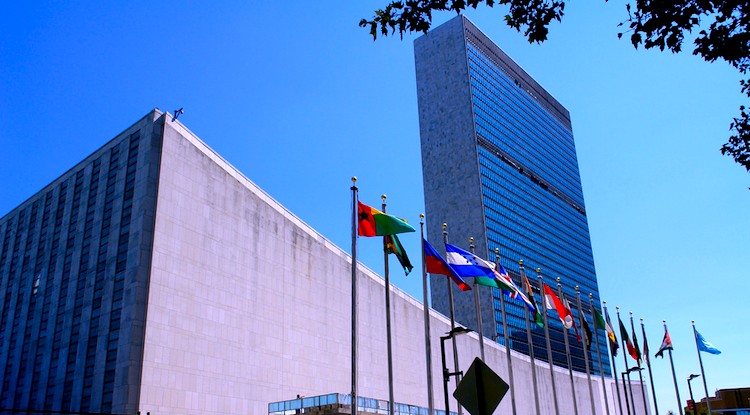
The UN's International Telecommunications Union recently voted to allow individual nations to censor the free flow of the internet.

[Editor’s note: the post below appears today on the front page of The Huffington Post.]

By Govindini Murty. As we celebrate the holidays, many of us are taking digital photos and videos of our loved ones, thinking that these digital files will be saved forever. The same thinking applies to our movies, books, songs, and stories – we save all of our creative works to the digital cloud, assuming they will be safely stored there. But between continual tech upgrades that make our digital files obsolete, and UN agencies that now seek to censor the internet, the question must be asked: are any of our cultural memories really safe in the digital age?

Recent developments are making it clear that control of digital information, and in particular of online artistic content, is the new front in the twenty-first century war of ideas. The UN’s International Telecommunications Union recently voted to allow individual nations to censor the free flow of the internet. This move was welcomed by authoritarian governments like China, Iran, Saudi Arabia, and Russia – and condemned by democracies like the U.S., the U.K., Canada, and Australia.

Combine this alarming development with the fact that many people now store their photos, videos, writing, and other creative works in online clouds, without ever creating hard copies or backing up their data – and the result is the potentially explosive ability of authoritarian forces to erase vast areas of our cultural memory at the push of a button. Without physical copies, no longer does a dictator have to go to the trouble of staging public burnings of art and books, as in 1930s Nazi Germany or 15th century Florence under Savonarola.

2012-12-24-RussiaPussyRiot72.jpg
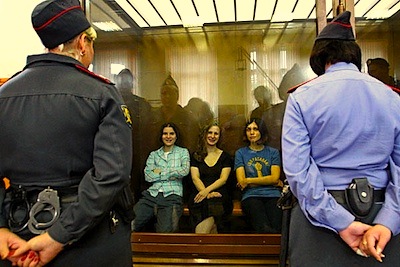
Jailed members of the Russian punk rock group Pussy Riot.

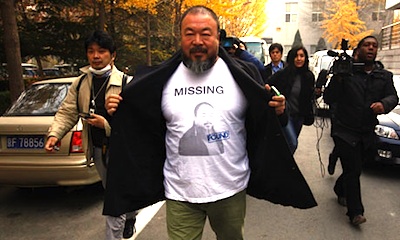
The freedom of the individual artist to speak out is more important now than ever, as today’s authoritarian nations seek to silence artists at every opportunity. Russia’s jailing of the women’s punk rock group Pussy Riot, China’s jailing of dissident artist Ai Weiwei, and Iran’s jailing of filmmaker Jafar Panahi are all examples of modern autocracies crushing citizens’ rights to creative expression. Apparently nothing is more threatening to today’s political fanatics than a free, creative individual.

And now the UN is going to give these authoritarian nations official sanction to censor the online work of artists, filmmakers, writers, and creative thinkers. This is a worldwide cultural catastrophe in the making.

Yet this isn’t the only danger that faces the preservation of our cultural memories; a new form of techno-utopianism poses a serious challenge to the preservation of our creative works. The problem in technologically advanced cultures like America is that we sometimes value technology for its own sake more than we do content. We equate advanced technology with greater value, so we rush to upgrade software, devices and formats without making any corresponding effort to ensure that prior digital files and formats can still be used.

2012-12-24-AiWeiwei37.jpg
Chinese artist and activist Ai Weiwei.

Obviously it’s important that we progress technologically. As a filmmaker I embrace digital filmmaking tools for their ability to democratize the movies, and as a writer I wouldn’t even be writing this post if it weren’t for the freedom of speech enabled by the internet. But as the digital revolution matures, we must give thought to how we manage and protect the enormous new quantity of digitally-created works.

This holiday season we’re celebrating blockbuster movies like Les Misérables and The Hobbit, but the irony is that these films are based on classic novels by Victor Hugo and J.R.R. Tolkien that were written in the pre-digital age – and are still around today because they’ve been widely distributed in paper hard copies. But what about fresh artistic and literary works created today? Where will they be fifty or a hundred years from now if they only exist in digital form? Even if they are classics, who will have the chance to adapt them into tomorrow’s movies or other, future forms of storytelling if they are erased within a few years by government censors – or are unreadable because tech companies have upgraded tablets/e-readers to the point that they can’t read prior digital books? Continue reading LFM’s Govindini Murty at The Huffington Post: This Holiday Season, What Happens When All of Our Cultural Memories Go Digital?

Accept No Substitutes: LFM Reviews Sergio Corbucci’s Original Django

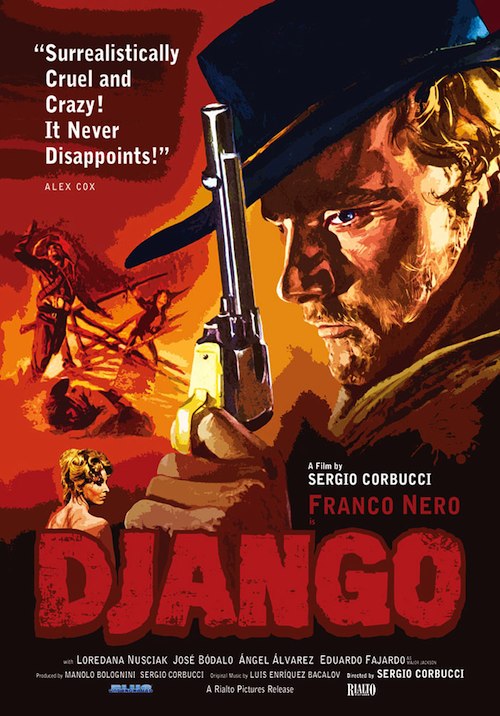
By Joe Bendel. Italian spaghetti western maestro Sergio Corbucci only helmed one official sequel to his classic 1966 western gundown Django, but scores of scruffy bootleg Django follow-ups were produced. In fact, they keep on coming, don’t they? None of them, including the recent homages from Takeshi Miike and Quentin Tarantino can hold a cigarillo to Corbucci’s original Django, which opens today in New York at Film Forum.

A stone cold killer comes to town wearing Union Blue and dragging a coffin. Much mayhem ensues. Basically, that is what the film boils down to. Like A Fistful of Dollars, there is an element of Yojimbo in Django, turning the title character loose in a town embroiled in a war between Maj. Jackson’s ex-Confederate white supremacists and a band of Mexican revolutionaries (who all look more or less the same), but attitude and action are more important than plot, per se.

Temporarily Django throws in his lot with his old associate, “General” Hugo Rodriguez, but that is only because he needs a few men to stage a daring gold heist from the Mexican army depot just across the border. He also holds a mysterious grudge against Jackson, whom he saves killing for last. Along the way, he rescues a fallen woman who duly falls for Django, but he is not really at a place in his life where he is looking for a serious relationship.

Notoriously violent in its day, Corbucci’s Django does not seem so shocking at a time when the Weinsteins will release Tarantino’s pseudo-reboot on Christmas Day (regardless of the unforeseeable national tragedy). However, its body count is still impressive. Django’s action scenes are not really shootouts, they are massacres. After all, that casket holds a heck of an equalizer, courtesy of Mr. Richard Gatling.

In a career defining role, Franco Nero is all kinds of steely badness as Django. There is something deeply existential about his presence, yet he is strictly business when it counts. Eduardo Fajardo is also thoroughly despicable as Jackson, providing the anti-hero with a worthy antagonist.

Frankly, some of the details do not make a lot of sense, like the racist Klansman Jackson being buddy-buddy with the Mexican army. At times, extras literally walk into the line of Gatling gunfire, which is awfully convenient of them. Yet, the metaphorically muddy environment and gritty action more than compensate for any pedantic grousing. Plus, it is truly impossible to watch Django and not hum the iconic theme song in your head for several days afterward.

Alex Cox suggests Django’s name is indeed a reference to the great Roma jazz guitarist Django Reinhardt, in a way that would be spoilerish to explain. If so, it adds another layer of cult weirdness to the film. Regardless, Django delivers enough unrepentant action to satisfy any genre fan. An essential Italian western, Corbucci’s 1966 original is the Django to see when it opens today (12/21) at Film Forum.

LFM GRADE: A

Posted on December 21st, 2012 at 10:29am.

The Long Shadow of North Korea: LFM Reviews Our Homeland, Submitted By Japan for the Oscars

By Joe Bendel. In the 1960’s and 1970’s, many Korean-Japanese immigrated back to their homeland. Unfortunately, they chose the wrong one. With family at risk in the DPRK, active members of Japanese-North Korean friendship associations had no choice but to tow the party line. Yet, the implications of the basic foodstuff care packages they sent to loved ones spoke volumes. Granted a special three month visit for medical reasons, one such “repatriated” North Korean reconnects with his guilt-ridden family in Yang Yonghi’s devastating Our Homeland, which has been selected by Japan as their official foreign language Academy Award submission.

Yun Sung-ho most likely has a brain tumor. Given the woeful inadequacies of the North Korean medical system, he is allowed to briefly return to Japan—after a five year waiting period. He is fortunate his father is the president of the North Korean society, but he will still be monitored the entire time by his minder, Mr. Yang. Regardless, his family is grateful to see him again, especially his poor mother. Likewise, Rie is delighted to see her beloved brother again, but she cannot ignore certain ironies, like her brother developing malnutrition in the “Workers’ Paradise.” Yes, she is our kind of free-thinker and the unambiguous conscience of Our Homeland.

Based on writer-director Yang Yonghi’s own family experiences recorded in Dear Pyongyang and a subsequent documentary, Homeland is even more direct in addressing conditions in North Korea. Perhaps liberated by the fictional context, the film explicitly blames the DPRK for the misery of its citizens. There is no inclination towards moral equivalency. In fact, there is a clear affection for the Ozu-like quiet serenity of Japan.

While Yang’s script is unusually honest and challenging, her leads really make it hit home. Dynamic and vivacious but deep as a river, Sakura Andô is simply remarkable as Rie. It is an award caliber performance. Conversely, it takes a while for Iura Arata’s pitch-perfect portrayal to sink in, striking uncomfortable chords between bitterness and resignation. Boasting a top flight ensemble from top to bottom, Homeland is also distinguished and humanized by memorable supporting turns from Kotomi Kyôno as Yun’s ex Suni and Tarô Suwa as his loving blacksheep capitalist Uncle Tejo.

An assured narrative debut, Yang masterfully controls the mood and tone, despite the almost complete lack of soundtrack music. Her approach is intimate and not surprisingly documentary-like, but Homeland never feels overly talky or draggy. Indeed, the emotional drama never slacks.

Our Homeland is a deeply compassionate film, but it is also somewhat angry, plainly calling an older generation to account for sacrificing their children on ideological grounds. Its unmistakable critique of North Korean Communism might not sound like Academy fodder, but the foreign language division can be surprising – in a good way. After all, The Lives of Others won the Oscar and Andrzej Wajda’s Katyn was nominated before it even had American distribution. Regardless, Our Homeland would be a worthy nominee that deserves an international audience.

LFM GRADE: A

Posted on December 18th, 2012 at 11:59am.

New Trailer for G.I. Joe: Retaliation; Film Opens in 3D on March 27th

A new trailer has been released for G.I. Joe: Retaliation, which was pulled from release this past summer just a month before it was set to open. This new, makeover edition of Retaliation will apparently be in 3D, and feature more of Channing Tatum.

G.I. Joe: Retaliation otherwise stars Dwayne Johnson, Bruce Willis, Adrianne Palicki, Jonathan Pryce and Ray Park and opens in 3D on March 27, 2013.

Posted on December 13th, 2012 at 10:34am.