A Bad Year to be an Orphan: LFM Reviews The Secret of Crickley Hall on BBC America

By Joe Bendel. On the anniversary of their young son’s disappearance the Caleighs try to heal their grieving family by renting out the most haunted house in England. Most of the former orphanage’s charges supposedly died in the great flood of 1943, but the truth is far more sinister. It might also have very personal implications for the Caleighs in The Secret of Crickley Hall, a special three hour adaptation of James Herbert’s novel, which airs this Sunday on BBC America.

Eve Caleigh blames herself for the apparent loss of their son, Cam. So does everyone else, but they try not to say so. She was the one who dozed off at the playground and woke up to find him missing. She used to have a pseudo-psychic connection with her son, but since Cam vanished she has not felt his consciousness—until they move into Crickley Hall.

Convinced her son is still alive and in danger, Caleigh starts investigating the old house. It is not pretty. Most of the orphans were supposedly sucked into the well dug into the cellar during the tragic storm, but two remain unaccounted for. Her best source of information is the old gardener, Percy Judd, who understood the grim realities of Crickley that the rest of the town was unwilling to face. He knew the headmaster was badly abusing the children – particularly a shy Jewish refugee – despite the heroic efforts of his potential girlfriend (the new teacher at Crickley), as viewers witness during the frequent flashbacks to 1943.
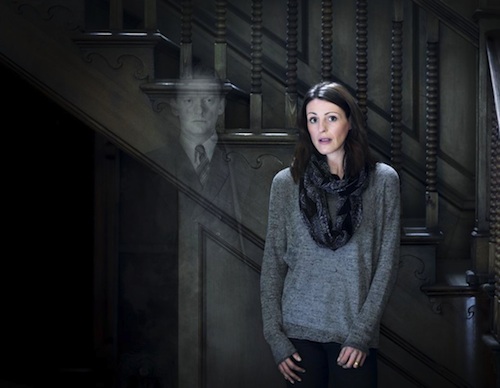
Suranne Jones in "The Secret of Crickley Hall."

Thematically similar, Crickley is sort of like the TV miniseries version of Nick Murphy’s The Awakening. Considering that they still have two perfectly good daughters to lose, it is hard to believe the Caleighs do not turn on their heels as soon as they take a gander at that ominous looking well. (What more do they need, a desecrated cemetery in the backyard?) Yet Gabe Caleigh stubbornly refuses to accept his wife’s ghost talk, despite all the spookiness going on around them. Certainly director-adaptor Joe Ahearne wrings plenty of chills and suspense from the eerie setting.

Although the ensemble does not have a lot of big names by the standards of Hollywood television magazines, it holds plenty of geek interest. Suranne Jones, (co-star of a fan favorite Doctor Who episode) is compellingly guilt-ridden as Eve Caleigh. Playing another mournful husband much like his character in The Fades, Tom Ellis is about as sympathetic and convincing as possible as the frustratingly incredulous Gabe Caleigh. However, it is reliable veteran David (Tron, Time Bandits) Warner’s Judd who really gives the film heart, while Game of Thrones alumnus Donald Sumpter also bears watching as the mysterious old parapsychologist come to allay everyone’s fears.

Even though none of the revelations are shockingly original, Ahearne still pulls it all together rather effectively in the third hour. He plays the old dark house card for all it is worth and juggles the two narrative time periods fairly adeptly. Still, the well produced, half-period Crickley’s three hours could have easily been condensed into two without losing much. Of course, it is important to bear in mind that Herbert is a major best-seller in the UK, so a longer Crickley would make sense for the BBC over there. All told, it is fairly scary stuff for an early Sunday evening. Recommended for fans of British supernatural programming, The Secret of Crickley Hall premieres this Sunday (10/28) on BBC America.

LFM GRADE: B-

Posted on October 26th, 2012 at 11:29am.
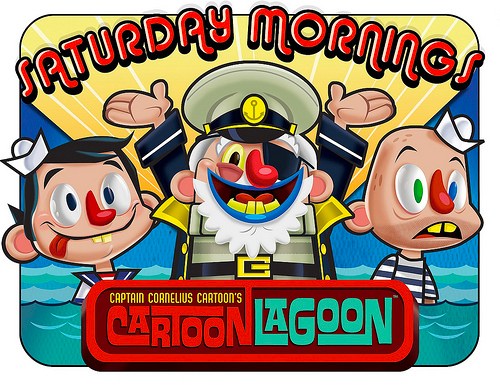
LFM Reviews Captain Cornelius Cartoon’s Cartoon Lagoon @ The NYTV Festival’s Independent Pilot Competition

By Joe Bendel. Those of us of roughly a certain generation fondly remember the Captains we came to know and love through kid’s programming; you know, like Captain Kangaroo, Captain America, Captain Crunch, and Captain Morgan. Captain Cornelius Cartoon follows in the tradition of them all. He and the crew of the Manta Ray salvage public domain cartoons from the watery graveyard of the Cartoon Lagoon, in order to riff on them MST3K style. The resulting blend of puppetry and retro nostalgia trips makes Captain Cornelius Cartoon’s Cartoon Lagoon the animated standout of the 2012 New York Television Festival’s Independent Pilot Competition.

The title is a little confusing, but this is indeed animated. Maybe they should have worked in the word cartoon a few more times. Regardless, the potential of creator Manny Galán’s concept is hard to miss. The biggest surprise is how cartoons from established franchises such as Popeye and Caspar the Friendly Ghost could fall into PD. There is no way you will ever see Mickey in the Lagoon. Yet, the clear highlight of the Lagoon pilot was an episode of the long forgotten mid 1970’s Undersea Adventures of Captain Nemo (another Captain) that bears absolutely no resemblance to Jules Verne.

The Me Generation Nemo is a blow-dried, jutting jawed male model who accidentally runs over a dolphin, permanently scarring his two juvenile companions for life. To nurse the dolphin back to health, Nemo puts it in a steel cage, while giving loud dramatic readings from Fifty Shades of Grey to scare away the sharks. Or something like that. Obviously, Nemo’s narrative development is a bit sketchy, making it a perfect foil for the Manta Ray crew.

The Lagoon creators readily acknowledge their debt of inspiration to MST3K, following the same format, right down to the portal door through which the cartoon goodness enters. It really works, though, because the creative team has the right pop culture sensibility. Lagoon delivers laughs from start to finish, sprinkling a number of truly memorable quips throughout the pilot. The old school miniature puppetry bringing to life the Manta Ray crew also appealingly resembles a slightly rum-soused Rankin/Bass special.

It is easy to see how a cable network could pick up Lagoon with confidence. That is not so true for the rest of the animated competition this year. Nathan Floody’s corporate head-hunting send-up Hunters is also wickedly cutting at times, but its raunchier inclinations might make it harder to place. However, the Captain pilot is never inappropriate for younger viewers, even though many jokes are aimed above their heads. Nicely executed and consistently funny, Captain Cornelius Cartoon’s Cartoon Lagoon ought to have a long life ahead of it, following its well received screenings at the 2012 NYTVF.

Posted on October 25th, 2012 at 10:48am.

A Great Symphony for a Great Nation: LFM Reviews Orchestra of Exiles

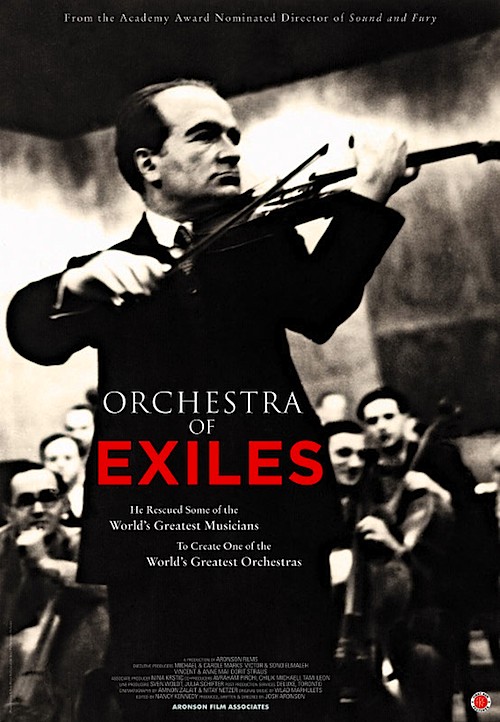
By Joe Bendel. They debuted under the baton of Arturo Toscanini and often worked with guest maestro Leonard Bernstein. Founded as the Palestine Symphony Orchestra, the Israel Philharmonic Orchestra (IPO) is one of the world’s most prestigious orchestras. Yet their founding members were very nearly caught up in the tragedy of the Holocaust. Bronisław Huberman’s tireless efforts to save Europe’s most accomplished and at-risk Jewish musicians – and the subsequent creation of Israel’s national symphony – are documented in Josh Aronson’s Orchestra of Exiles, which opens this Friday in New York.

Huberman was a child prodigy who played around the world. Yet he was also a politically aware Zionist, who had no illusions about the state of Europe in the early 1930’s. Obviously, the colonial territory the British called Palestine held great significance for him. For years, Jewish immigrants had come there, hoping to realize the Zionist dream home by home. However, the British occupiers halted Jewish immigration in response to Arab riots at a time when it was most needed.

Hoping to establish a symphony for the yet to be recognized nation, Huberman doggedly attempted to work around the various restrictions imposed by the British. Indeed, much of his heroics involved the paper-chase for this or that travel document. There was an important goal in sight: as a principled anti-Fascist, Toscanini had agreed to conduct their premiere performances.

Exiles captures the spirit of a certain group of people at a certain point of time for whom life and art were intrinsically intertwined. Indeed, the founding of the Symphony was critically important for the early émigrés, who dearly missed the refined culture of pre-war Europe. Aronson maintains an appropriately respectful tone throughout, but he stages a number of unnecessary dramatic recreations. For the most part, they are not very dramatic – aside from Alex Ansty’s agreeable appearance as the larger than life Toscanini.

With helpful context provided by an elite cast of interview subjects, including Itzhak Perlman, Indian-born IPO conductor and music director Zubin Mehta, and the Grammy Award-winning Joshua Bell (who currently performs on Huberman’s Stradivarius), Exiles is classy and authoritative. Regrettably, it comes at a time when the civilized world is becoming less civilized. Just over a year ago, an IPO performance in London was disrupted by extremists who were never prosecuted, partly due to the Royal Albert Hall’s refusal to pursue trespass charges (bad show, chaps). While conventional in its approach, Orchestra of Exiles is an elegant and informative film. Recommended for classical music connoisseurs and those who want (or need) a fuller appreciation of Israeli cultural history, it opens this Friday (10/19) in New York at the Quad Cinema.

LFM GRADE: B

Posted on October 23rd, 2012 at 10:43am.

A Space Race with China: LFM Reviews Control @ The New York Television Festival’s Independent Pilot Competition

By Joe Bendel. When we think of space, we think of lofty ideals, passed on down to us from JFK and Star Trek. However, an oppressive belligerent power will act the same up there as they do down here. Indeed, China’s saber-rattling off the coast of Taiwan will bedevil an American manned space mission in Josh Bernard & Bracey Smith’s Control, which screens as part of the 2012 New York Television Festival’s Independent Pilot Competition (IPC).

The NYTVF is the only meaningful festival of its kind showcasing independent talent looking to break into episodic television, in the same way scores of film festivals act as launching pads for indie films in search of theatrical distribution. There are real development deals to be won at this year’s festival. The dollar figures may not be much by studio standards, but they would constitute a significant step up compared to the budgets of many competing pilots. In the drama category, Smith & Bernard’s Control may well be the pilot to beat, which is not all that surprising, considering their Pioneer One (see here and here) won the drama competition two years ago.

The American and Chinese navies are engaged in a war of nerves in the South China Sea. Simultaneously, an American spacecraft is racing to beat their Chinese rivals to a resource-rich asteroid. Long in development, the American mission continued, even when China precipitously laid claim to the asteroid, in open defiance of international law. Apparently a quasi-private enterprise conducted with official government sanction, the mission obviously just became a whole lot more complicated.

The flight director isn’t helping much, either. Not only did he call the president a feckless ditherer on national television (but in more colorful terms), he is also carrying on a not so secret affair with the chief medical officer, who happens to be married to the flight captain.

Of all the genre-related pilots screening in the Drama 1 programming block, Control is by far the one that leaves audiences most eager to see more. Shrewdly, Bernard & Smith end on a monster cliffhanger that cannot possibly be as bad as it seems. Though the flight director resents the U.S. military’s secret involvement in the mission, he might be happy to have them around when it is all said and done. Based on the pilot, Control has the potential to become a cool submarine-warfare in space story, much like the classic Romulan episodes on the original Trek.

The tone of Control is sort of like a cross between Apollo 13 and Ben Bova’s geopolitical sci-fi thriller novels. To their credit, Smith & Bernard do not appear to have many naïve notions with respects to the current (and presumably near future) Chinese Communist regime. It also looks reasonably realistic, thanks to the control room full of computers bought on the cheap due to a tech firm’s bankruptcy (finally, the stimulus plan delivers).

Perhaps most importantly, despite all the intrigue and political infighting, it looks like it will still tap into the warm fuzzy feelings many viewers get when they think about the Space Program, particularly in its Apollo-era heyday. Showing loads of potential, Control is definitely worth seeing when it screens again this Friday (10/26) as part of the 2012 NYTVF’s IPC Drama 1 program at the Tribeca Cinemas.

Posted on October 23rd, 2012 at 10:42am.

Singular Sci-Fi: LFM Reviews Doomsday Book

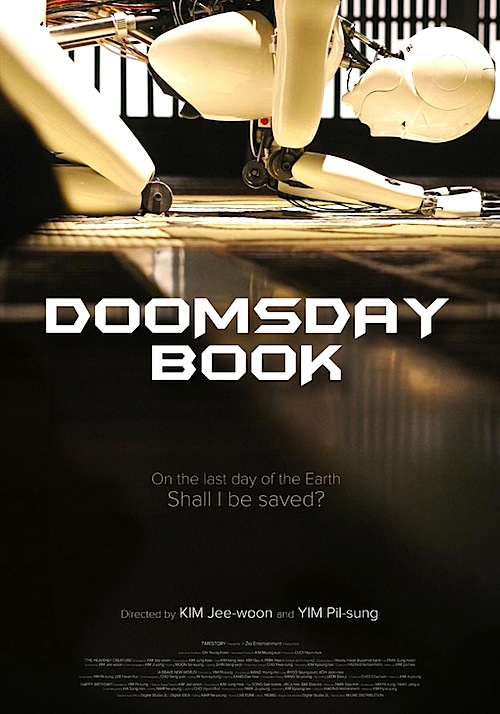
By Joe Bendel. The Singularity has become a frequent theme of science fiction novels in recent years, but it has not factored into many films or television shows. Finally, a bold Korean end-of-the-world anthology feature tackles the Singularity from a wholly original angle. There will also be Mad Cow infected zombies and a giant interstellar billiard ball on a collision course with Earth in Yim Pil-sung & Kim Jee-woon’s Doomsday Book, which screens during the 2012 Hawaii International Film Festival.

Yim’s lead-off Brave New World is a zombie flick Oprah could get behind. Military research scientist Yoon Seok-woo finally meets an attractive woman who seems interested in him. Unfortunately, she indulges his taste for barbeque. He should have humored her vegan inclinations. Yoon will be among the first turned into violent, vomiting zombies by widespread contaminated beef.

Frankly, Brave largely plays like an epidemic movie, such as Park Jung-woo’s recent Deranged, except with liberal helpings of gross-out humor. It hardly blazes any genre trails, but Koh Joon-hee’s sensitive work somewhat humanizes the bedlam as Yoon’s potential love interest.

Kim’s middle story, Heavenly Creature, is something else entirely. In-myung, a robot owned by a Buddhist monastery, has reportedly attained not just consciousness, but also enlightenment. A technician has been summoned in hopes that he can tell whether RU-4 unit (a nod to Čapek’s R.U.R., perhaps?) is actually the Buddha. This request confuses him to the point of peevishness. Yet, he is still reluctant to immediately implement the UR Company’s harsh protocols regarding newly sentient robots.

Gorgeously shot by cinematographer Kim Yi-yong, Heavenly is an unusually thoughtful genre outing that quietly packs a powerful punch. While dealing with some heady subject matter, including the meaning of life and the Singularity, he also coaxes some deeply affecting performances from his cast, particularly from the Kim Gyu-ri as the Bodhisattva Hye-joo, who desperately tries to save the enlightened robot. This is truly an award caliber film.

The concluding Happy Birthday fits somewhere between the prior two films in terms of intelligence and quality, which makes a certain amount of intuitive sense, considering it was co-directed by Yim and Kim. A giant eight-ball is hurtling towards Earth and young Park Min-seo might have inadvertently summoned it, but only her goofy uncle takes her seriously.

Unlike the first two constituent short films, Birthday really delivers on its doomsday promise, rendered with some reasonably presentable sci-fi special effects. Yet it is also strangely upbeat, positively portraying the resiliency of the family unit – albeit a rather eccentric one in the case of the Parks. It also savagely skewers the Korean media’s talking heads. Led by the impressive young Jin Ji-hee, Birthday’s small ensemble nicely darts back and forth between comedy to drama, without skipping a beat.

Ranging in quality from okay to outstanding to quite good, the films constituting Doomsday Book probably average out to very-good-plus. Regardless of the pseudo-math, Kim’s Heavenly Creature is so strong, it single-handedly earns the film a very high recommendation. Fit for SF geeks and the philosophically inclined, Doomsday Book screens tomorrow (10/17) and this Sunday (10/21) as part of the 2012 HIFF. The centerpiece selection of this year’s NYAFF, it should have plenty of action ahead of it on the festival circuit.

LFM GRADE: A

Posted on October 17th, 2012 at 10:36am.

LFM Reviews the New Daimajin Triple Feature Collection on Blu-ray

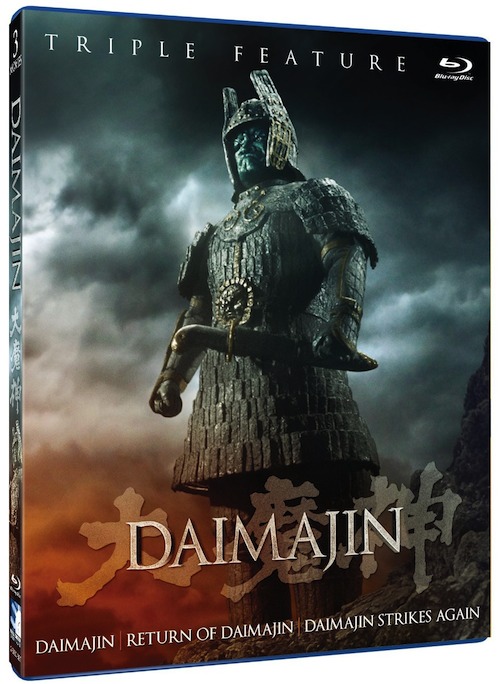
By Joe Bendel. Technically he is a god, not a monster. Regardless, it is a very bad idea to provoke him. Every kid ought to be dressing up as the giant (majin) deity this Halloween. He also makes a perfect stocking stuffer now that all three Daimajin features have been released together as the Bow Down to Daimajin collection, now available on Blu-Ray at online retailers everywhere.

Combining the Jidaigeki historical genre with the big lumbering Kaiju monster movie, the storied Daiei Japanese studio released three Daimajin films in 1966. The concept essentially adapted ancient archetypes of the Waste Land suffering from despotic rule for the Godzilla age. Indeed, the serious tenor is established right from the start of Kimiyoshi Yasuda’s series launching Daimajin.

Lord Hanabusa’s serfs live secure in the knowledge that they are protected from a fierce majin by the idol of their god, holding him trapped under the mountain. He is about to get really hacked off, though. The humane Hanabusa has been overthrown by his ruthless chamberlain Samanosuke, who orders the murder of the entire Hanabusa clan. However, loyal family retainer Kogenta spirits Hanabusa’s young son and daughter off to the monster’s mountain, where they live in relative peace under the shadow of the Daimajin statue. Eventually, Kogenta and the Hanabusa heir are captured. Intending to permanently demoralize the restive villagers, Samanosuke’s men then set out to destroy the mountain idol. Okay, good luck with that plan.

In Kenji Misumi’s Return of Daimajin, the second and perhaps best of the series, Daimajin now resides on a quite picturesque island in Lake Yakumo, where the neighboring Chigusa and Nagoshi clans pay proper reverence. Coveting the fruits of their industry, the tyrannical Lord Danjo Mikoshiba launches a sneak attack during a joint Chigusa-Nagoshi festival, occupying the land around Yakumo. Lord Nagoshi is murdered, but his son Katsushige escapes, taking refuge on the majin’s island. It is here that Sayuri, his Chingusa fiancée, prays for their salvation.

Of course, Mikoshiba tries to show everyone by blowing up the island idol. Soon thereafter, the skies darken and lightning flashes, prompting some rather nervous comments about how abruptly the weather around these parts can change. Featuring well crafted sets, appealing backdrops, and a shockingly strong cast (led by Shiho Fujimura as Lady Sayuri), Return would probably be nearly as satisfying as a straight historical drama without the monster bits.

With each clocking in under the eighty minute mark, the Daimajin films are formulaic and addictive as popcorn. The third departs the most from the template, which might be why it became the franchise finale (sadly there would be no I Told You Not to Mock Daimajin, but everyone’s favorite angry majin was rebooted on Japanese television in 2010). For his third go-round in Kazuo Mori’s Daimajin Strikes Again (a.k.a. Wrath of Daimajin), Daimajin has returned to the mountains and he now has a winged familiar. Through the hawk’s eyes, Daimjin follows four poor youngsters as they make the arduous journey over his mountain in hopes of rescuing their logger fathers and brothers from an evil warlord. While the boys give the first half of the film a distinctly adolescent character, it proceeds on a rather bittersweet course that might be too emotionally challenging for similarly aged viewers.

Of the consistencies between all three films, the most important is the late third act coming of the guest of honor, Daimajin. Building viewer anticipation, the usurpers and warlords he crushes have truly been asking for it when he finally shows himself. Unlike other Japanese monster movies, we can enjoy his rampages with a clear conscience, because they are all about retribution. It is a sight to behold when the stone giant rouses itself to action. Although Daimajin seems to have some undefined telekinetic powers, his weapon of choice is the slow, bone-crushing stomp.

Certainly the special effects rendering Daimajin’s destructive force were the product of their time, but they hold up pretty well, all things considered. Daiei definitely assigned some of their better period designers to the franchise, because the trappings are first rate. It all looks great on Blu-ray, thanks to a nice transfer.

More than a cut above standard issue creature features, the Daimajin films earnestly and rather compellingly address themes of faith and sacrifice. Bad guys also get flattened, which is kind of awesome. Enormous fun for connoisseurs of both Jidaigeki and Kaiju films, the Daimajin Triple Feature is enthusiastically recommended to skeptical viewers beyond the cult fan base. Just in time for Christmas, it is now available on Blu-ray from Mill Creek Entertainment.

LFM GRADE: A

Posted on October 15th, 2012 at 10:07am.