A Dark Birthday Surprise: LFM Reviews Dead Souls on Chiller TV

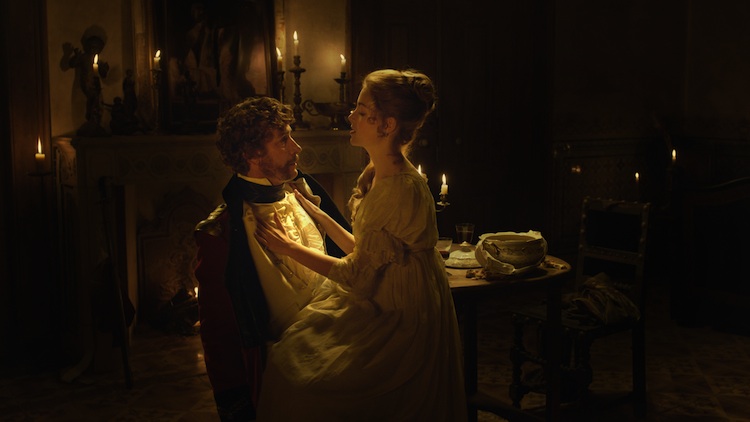
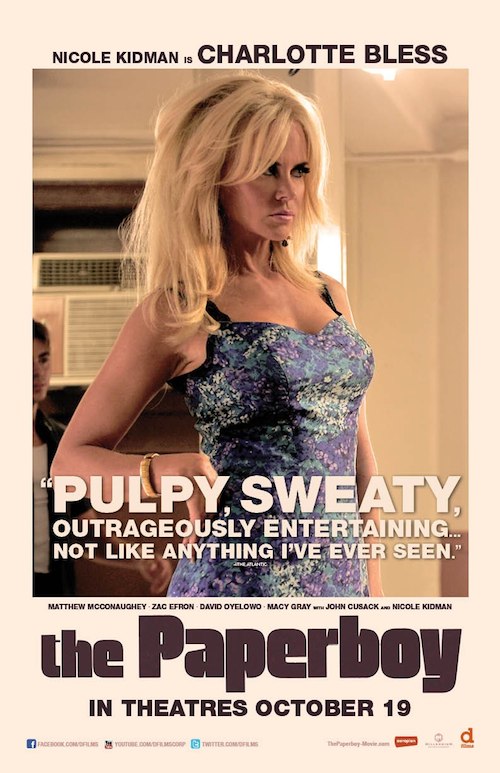
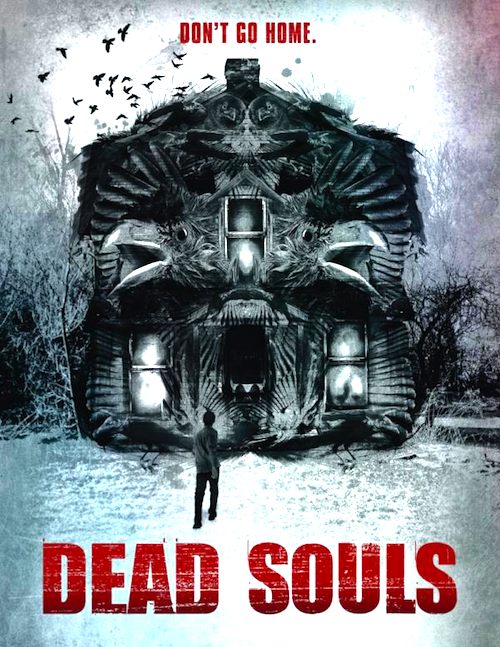
By Joe Bendel. An unexpected bequest is always a dramatically mixed blessing in horror films. Take Johnny Petrie, for instance. On his eighteenth birthday, he learns that he is adopted and has inherited the farmhouse where his birth father killed the rest of his original family. Returning to claim his legacy, Petrie will be forced to deal with some supernatural family business in Colin Theys’ Dead Souls, the Chiller original film based on the novel by Michael Laimo, which premieres this Friday night.

One dark and stormy night, the infant Petrie’s preacher father up and killed his family in a bizarre ritual, but not before his big brother safely hid him away. Eighteen years later, give or take, Petrie is living in New York with his super-Christian, hyper-protective, hypochondriac aunt, whom he believes to be his real mother. Oh, but not so, as he learns from the lawyer handling his parents’ estate, upon reaching his majority. When his presumed mother is once again admitted to the hospital, Petrie is able to sneak up north to take possession.
Strangely, once the prodigal son arrives, a pack of locals tries to strong-arm him back to the City. His estate attorney is also eager to facilitate a lucrative potential sale ASAP and be rid of him, but Petrie wants to look around, soaking up his roots. Before long, he comes across Emma, a squatter, which is exciting for him, because she’s a girl. Unfortunately, they are not alone. The spookiness starts coming fast and furious, possibly involving the sacramental killing of his family. It seems the ritual was not completed. Our first clue would be the fact that Petrie is still alive.

Theys has a good grasp on the three classical unities as they apply to horror movies. The creaky old barn and farmhouse are quite ominous looking (with credit also due to Paul Pribble and Jeanette Drake’s design teams), giving the film a genuine sense of place. Indeed, Souls is surprisingly distinctive visually, but the story itself is rather workaday genre stuff. The evil psychotic clergyman is also a decidedly tired cliché, though one could argue his cult does not really qualify as Christian, per se.

On the plus side of the ledger, the cast-members are all professional grade. Jesse James is sufficiently moody and confused as Petrie, but horror fans will be more interested in the supporting cast, particularly cult favorite Bill Moseley (of Devil’s Rejects and House of 1,000 Corpses infamy), who lends grizzled credibility to the third act as former Sheriff Depford. Jaiden Kaine also brings some energy to the proceedings as Andrew Judson, the dodgy lawyer (is there any other kind?).

The mechanics of Souls are fairly strong and it boasts some colorful, fan-pleasing supporting turns. There are eerie moments, particularly by television standards, but it is always clear what general direction it is headed. For horrors fans who value atmosphere over story, Dead Souls should still work well enough.  It airs this Friday night (10/12) on Chiller TV.

Posted on October 10th, 2012 at 4:01pm.
Democracy on the March? LFM Reviews A Whisper to a Roar

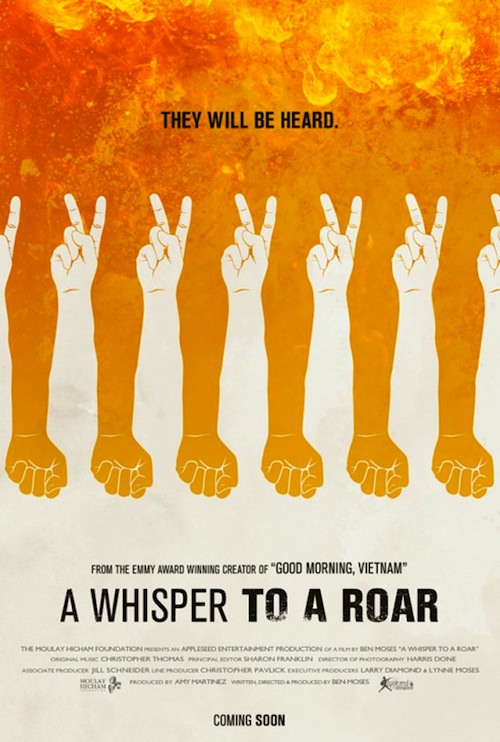
By Joe Bendel. Freedom and democracy are not the same things, but they tend to go together. Democracy advocates in Venezuela, Malaysia, Egypt, Zimbabwe, and the Ukraine understand only too well how their repressive regimes use rigged elections to legitimize their rule. Largely informed by the writings of Hoover Institute fellow Larry Diamond and the expelled Prince Moulay Hicham of Morocco, Emmy-winning filmmaker Ben Moses follows the struggle for free and fair democracies in all five countries throughout A Whisper to a Roar, which opens this Friday in New York.

Whisper uses an animated fable as a framing device that illustrates how the corrupting influence of power makes today’s hero tomorrow’s despot. Indeed, Hosni Mubarak might have been popular immediately after the Sadat assassination and the freshly “re-elected” Hugo Chavez might have been legitimately elected originally, but that was then. Up until the Arab Spring, elections in Egypt never involved alternative candidates. They were simply an up or down referendum on retaining Mubarak. Likewise, Chavez has rigged the Venezuelan electoral system through the mother of all gerrymandering and forcibly silenced the independent press.

Probably nobody interviewed in Roar has paid a higher price for their advocacy than former Malaysian Deputy Prime Minister Anwar Ibrahim, who was twice arrested and tried on trumped-up sodomy charges, a transparent attempt to make him socially radioactive in a country where Islam is the official state religion. Yet, Malaysia seems to be one of the two countries that have made the most progress towards democratic reform, along with Zimbabwe.

When longtime dictator Robert Mugabe finally agreed to share power with reformist Prime Minister Morgan Tsvangirai it represented a dramatic victory for the opposition. However, that victory came at a high cost, after militias loyal to Mugabe systematically beat and killed supporters of Tsvangirai’s party across the country. Mugabe’s cynical land reform proposals, clearly intended to stoke racial resentment, also offer a textbook example of how dictators resort to demagoguery to hold onto power.

Most frustrating is the case of Ukraine, where Viktor Yushchenko survived a poisoning attempt to lead the Orange Revolution, temporarily sweeping the neo-Soviet government out of office. Unfortunately, divisions within the Orange coalition opened the door for the old regime’s return in the next election, fair and square. As journalist turned opposition deputy Andriy Shevchenko trenchantly observes, winning freedoms is an arduous process, but surrendering them is quick and easy.

While Roar obviously has an agenda, it is one that just about all people of good conscience will buy into. It features some valuable on-camera interviews with prominent world figures, including Yushchenko, Tsvangirai, and Ibrahim, as well as boots on the ground activists, such as Roberto Patiño in Venezuela. Even the animated transitions, narrated by Alfred Molina, are rendered with more style than you might expect.

The only problem with Roar is hardly Moses’ fault. Each of these stories is still very much developing. Despite hopeful signs in Zimbabwe and Malaysia, Venezuela has only gotten worse, while the Ukraine has taken one step forward and then one step back, whereas Egypt remains an open question. As a result the five strands do not parallel each other very well and none has a satisfying sense of closure. Of course, Moses and his colleagues would surely like nothing better than to produce happy epilogues for each country, for reasons beyond the cinematic. As things stand, they interwove their stories rather well.

Informative and remarkably even-handed, A Whisper to a Roar is a very watchable status report on the state of undemocratic democracy. Recommended fairly highly for general news junkies and those particularly interested in any of the five subject countries, Roar opens this Friday (10/12) in New York at the Quad Cinema.

LFM GRADE: B+

Posted on October 8th, 2012 at 2:22pm.

French-Montenegrin Noir: LFM Reviews The Big Picture

By Joe Bendel. The French seem to have an affinity for the work of American novelist Douglas Kennedy.  Following the relatively recent art house release for Polish filmmaker’s Pawel Pawlikowski’s stylish French co-production of Woman in the Fifth, American audiences now get a look at Eric Lartigau’s Francophied The Big Picture, which opens this Friday in New York.

Paul Exben seems to have it all.  Married with two young children, he has a thriving private practice and a well equipped dark room to enjoy his photography hobby.  However, cracks are appearing in the façade.  Something is definitely not right with his wife Sarah.  All signs point towards an affair with his neighbor, a professional photographer Exben already resents, as a symbol of his own creative failure.  When Anne, his partner and de-facto mother-figure, reveals her terminal illness, Exben’s stable existence is rocked again. However, it is a confrontation with the cuckolding neighbor that truly throws Exben’s life upside-down.

Big Picture could be thought of as a big twist film, but it takes two sudden game-changing turns, rather than just springing one surprise gotcha down the stretch.  For reasons that are well developed within the film, Exben finds himself reinventing himself in Montenegro, under an assumed identity.  Indeed, Big Picture is all about questions of identity, both self-perceived and as assumed by others.  It is also a wickedly clever thriller.

As nifty as twists and turns might be, Big Picture is entirely dependent on Romain Duris to make it tick, but fortunately, he knocks it out of the park as Exben.  Duris creates a memorable portrait of a truly complex noir protagonist.  Somehow, we can always understand his often rash decision making and never pass judgment.  It is his movie, but he has some wickedly wry support from French character actor Niels Arestrup as the boozy expatriate newspaperman, Batholomé.  Viewers will appreciate the gleam in his eye as tucks into the tasty Montenegrin scenery.  Francophiles will also appreciate Catherine Deneuve, who is also characteristically engaging in the less showy role of Exben’s soon to be late partner.

From "The Big Picture."

Someone ought to make Lee Daniels sit in the corner a watch Big Picture over and over.  Although Kennedy’s story, co-adapted by the director, takes viewers on a far wilder ride, Lartigau’s skillful execution sells it to all but the most annoyingly pedantic viewer.  In contrast, the recent train-wreck of The Paperboy is considerably more credible on paper, but not one second is remotely believable.

The rocky coastal landscape of Montenegro adds immeasurably to the moody atmosphere, giving the film a truly distinctive character.  One of the more successful films following in the tradition of Hitchcock and Chabrol, it is tricky to discuss without dropping spoilers, but very satisfying to watch unfold.  Highly recommended for fans of moody, literate thrillers, The Big Picture opens this Friday (10/12) in New York at the IFC Center downtown and the Lincoln Plaza Cinema uptown.

LFM GRADE: A-

Posted on October 8th, 2012 at 2:20pm.

LFM Reviews Lines of Wellington @ The New York Film Festival

By Joe Bendel. Torres Vedras was not exactly Waterloo, but don’t tell the Portuguese that. It was there Gen. Wellington and the combined British and Portuguese troops he commanded defeated Napoleon’s invading army behind secretly commissioned fortifications. An epic campaign that still resonates on the Iberian Peninsula, Wellington’s military sojourn in Portugal was perfect fodder for a grandly sweeping Raúl Ruiz film, but it was not to be. Passing away during a stage of either late development or early pre-production, Ruiz’s widow Valeria Sarmiento stepped into the master’s shoes, helming Lines of Wellington, which screens during the 50th New York Film Festival.

Wellington has just shocked the French with tide turning victory at Buçaco, yet he is retreating anyway. Despite the demoralized state of the Bonaparte forces, they simply have an overwhelming numerical advantage. The British and their Portuguese allies will dig in behind the Torres Vedras ramparts, letting time fight the battle for them.

This is classic Nineteenth Century warfare, attracting spectators and hanger-ons. For British evacuee Clarissa Warren, it is the perfect opportunity to find an officer-grade husband. The distinguished Major Jonathan Foster looks like a good candidate, but he is not necessarily in the market for a trophy wife. Wounded soldiers will recuperate, romances will blossom, combatants will ravage the local populace, and spies will be dealt with. Yet the real story for LOW’s domestic audience is scorched earth – damaged wrought by the French and British on their native land.

Condensed from a longer Portuguese miniseries for the international festival circuit, a la Ruiz’s brilliant Mysteries of Lisbon, LOW is a rangy narrative, featuring scores of prestigious cast members, entering and exiting in maddeningly quick succession. Unlike Mysteries, viewers will definitely feel like there are holes in LOW, at least in its current festival edit. There are numerous promising subplots here, including Foster’s relationship with the rather forward Warren. Yet, after being introduced early on, they disappear from the film until the closing scenes. Likewise, when Chiara Mastroianni appears as Hussar, sort of a Bonapartist Emma Peel, it looks like a promising development – but her mere seconds of screen time do not appreciably advance the story.

From "Lines of Wellington."

The only characters getting a puncher’s chance at development are the General himself and Francisco Xavier, a dispossessed farmer now serving as a Sergeant in Wellington’s Portuguese auxiliary and as the film’s primary POV character. Fortunately, Nuno Lopes has the right rugged, world-weary presence as the disillusion soldier, while John Malkovich chews the scenery like an old pro as the British commander.

LOW definitely has its moments, including a genuinely moving conclusion. Not intended as an action movie, it powerfully recreates the aftermath of battle, rather than the actual warfighting. Yet, one wishes it had delved more deeply into the strategic chess game in play, particularly Wellington’s penchant for strategic retreats, which suggest he might have learned something from a certain General Washington.

Even at one hundred fifty-one minutes, there still seems to be something missing from LOW. It has plenty of the elements to satisfy fans of historical costume drama, but the Around the World in Eighty Days style cameos from the likes of Michel Piccoli, Isabelle Huppert, Catherine Deneuve, and Mathieu Almaric are more frustrating than satisfying. Laudably ambitious, Lines of Wellington is ultimately more notable for what it represents than as a self-contained film. Nonetheless, interested viewers ought to satisfy their curiosity, because they may not have many opportunities to see LOW in any form. It screens this Monday (10/8) and Tuesday (10/9) as a main slate selection of the 2012 New York Film Festival.

LFM GRADE: B-/C+

Posted on October 8th, 2012 at 2:20pm.

What a Crime: LFM Reviews The Paperboy @ The New York Film Festival + Opening Today

By Joe Bendel. In the Deep South, there is not much to do except have graphic sex and commit senseless acts of violence – at least, that is the portrait Lee Daniels chooses to paint in The Paperboy. However, the biggest mystery of his adaptation of Pete Dexter’s 1995 crime novel is why anyone would screen it as part of a gala tribute to co-star Nicole Kidman. Yet that is exactly what happened Wednesday night at the 50th New York Film Festival.

It is the late 1960’s or so in Florida’s swamp country. Tarty death row groupie Charlotte Bless has convinced a pair of Miami newspapermen to look into her “boyfriend” Hillary Van Wetter’s case. Ward Jansen is actually coming home to the town where his father W.W. publishes the local birdcage liner, and his younger brother Jack does not really do anything at all. Of course, the junior Jansen will fall head over heels for the sleazy femme fatale as he shuttles her, his brother, and Ward’s African American colleague Yardley Acheman about town.

There is a crusading journalist-legal thriller in Paperboy somewhere, but it often gets lost in Daniel’s heavy-handed but discursive narrative – told in flashback by the Jansen’s family maid, Anita Chester, who is never in any position to witness the events she relates. Instead, we see Bless going number one on young Jansen’s jellyfish stings and sit through several scenes of autoerotica. Eventually showing the audience Matthew McConaughey’s elder Ward Brother naked on the porcelain throne, Daniels will clearly spare us nothing.

This is bad movie, but Daniels does his best to dress up his lurid material with some visual flare and a soulful R&B soundtrack. It helps, but only so much. Too preoccupied with sex and race, Daniels often lets the crime story founder, distracted by his characters’ hang-ups.

Frankly, it is rather baffling why Kidman would accept the role of Bless. Regardless of her box office track record, she is one of the few actresses in Hollywood who can play it smart and classy, as well as sexy. However, the lingering aftertaste of Paperboy could damage that image. In truth, she is not bad revisiting To Die For terrain, provided viewers are okay with the obscure motivations and rash decision-making endemic to all the film’s characters.

Zac Efron is also adequate enough as young Jansen, largely reprising his bid for respectability in Me and Orson Welles, but with more sex and less earnestness. As the supposedly mercurial Van Wetter, John Cusack just looks like a sad Muppet. Deep dark secrets notwithstanding, McConaughey does his regular Lincoln Lawyer thing as Brother Ward. Most frustratingly, the great Scott Glenn is criminally wasted as old man Jansen.

Just a big humid mess, viewers will want to shower after seeing The Paperboy. Yet, it is hard to turn away from it, like the sight of a wrecking ball demolishing a building. Call it a career-wreck. Not recommended, The Paperboy opens today (10/5) in New York at the Landmark Sunshine and AMC Loews Lincoln Square, following its gala screening at the 2012 New York Film Festival.

LFM GRADE: D

Posted on October 5th, 2012 at 12:13pm.

Bruce Willis, CIA Fight Nuclear Terrorism in Russia in New A Good Day to Die Hard Trailer; Film Opens Feb. 13th

There may be life in this old series yet. Check out the punchy new trailer for A Good Day to Die Hard above. The film opens February 13th, 2013.

Posted on October 5th, 2012 at 12:11pm.