A Family Survives Mao’s Cultural Revolution: LFM Reviews Mulberry Child, Narrated by Jacqueline Bisset

By Joe Bendel. Paradoxically, it might have been the ardent loyalty of Jian Ping’s persecuted parents that saved them during the Cultural Revolution. At least, they never said anything incriminating their children would have been forced to repeat. Yet, the lingering trauma of the experience makes it difficult for her to relate to her Americanized daughter, Lisa Xia. By exploring their family history, the two women come to terms with their own relationship in Susan Morgan Cooper’s hybrid-documentary, Mulberry Child, which opens this Friday in New York at the Quad Cinema.

True believers, Hou Kai and Gu Wenxiu met and married through the Chinese Communist Party. They bought into the Party’s early rhetoric, which proved to be a profound mistake during the “Anti-Rightist Campaign.” Trying to defend a wrongfully accused colleague, Hou only succeeded in putting himself in the Party’s crosshairs. Despite some trying moments, Jian’s father made it through the first reign of terror, demoted but relatively unscathed. The Cultural Revolution would be a different story entirely.

As a school administer, Jian’s mother was directly in the line of fire. To make matters worse, her father’s history as a one-time Japanese POW was a red flag for the empowered zealots. As the institutionalized madness escalated, Jian’s father was imprisoned and her mother was held a de-facto captive in her school’s boiler room, forced to write self-criticism and pressured to denounce her husband. Largely raised by their grandmother, the children went months without seeing either parent.

How cowardly and cruel must an ideology be that it would force a seven year old girl to condemn her father in school? Yet, the Maoist cult continues to seduce Western academics who never had to live through it. Somehow, though, Jian’s parents still cling to their faith, as if by acknowledging that the source of the horror they lived through—the Chinese Communist Party—would somehow make all their suffering for naught.
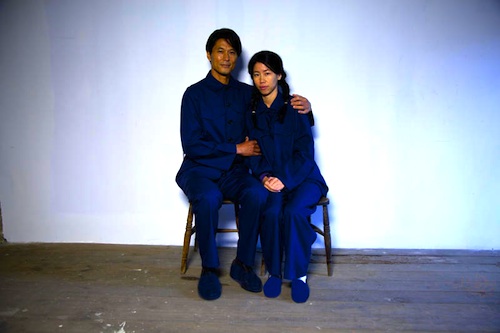
Gu Wenxiu (actor Bruce Akoni) and Hou Kai (actress Jody Choi) in film.

Jian and her daughter can apprise the past with more clarity, but they remain susceptible to a romanticized vision of contemporary China. Ironically, their big coming together moment happens during the Beijing Olympic Games, against the backdrop of the striking Bird’s Nest stadium, designed by Ai Weiwei. Yet, the government’s relentless campaign against the artist and teacher ought to undermine the superficial images the Party tries to present to the world.

Nonetheless, when looking backward, Mulberry is quite forceful and moving. Combining Jacqueline Bisset’s voice-overs with dramatized episodes from Jian’s memoir, Morgan Cooper vividly conveys an innocent child’s perspective on an era of state sanctioned insanity. Jody Choi and Bruce Akoni Yong are particularly affecting as young Jian and the much abused Hou (“The Big Traitor”), respectively. However, the candid-style mother-daughter conversations do not carry the same dramatic weight. Yes, there is something universal to their generational disconnect, but it pales in comparison to her experience visiting her father in prison—unaccompanied because only a seven year old girl could visit a suspected enemy of the state without reprisals.

Of course, the difficulties survivors like Jian have expressing affection are the least of the Cultural Revolution’s tragic legacy, but it is what most directly affects her and her daughter. Sensitively produced, Mulberry Child is recommended for its up-close-and-personal insight into the chaos unleashed by Mao’s regime (rather than its wishful thinking for today’s China) when it opens this Friday (9/7) at New York’s Quad Cinema.

LFM GRADE: B

Posted on September 4th, 2012 at 2:34pm.
The Birth of the Han Dynasty: LFM Reviews White Vengeance on Blu-ray/DVD

By Joe Bendel. Power corrupts and the pursuit of power corrupts just as absolutely. This is the lesson an ancient mystery man has for a pompous scholar and his students, startled while paying their respects in the first Han Emperor’s tomb. He will tell them the real story of the Hongmen Banquet and the struggle to succeed the fallen Qin Dynasty in Daniel Lee’s mistitled White Vengeance (trailer here), which is now available on DVD and Blu-ray today from Well Go USA.

The tyrannical Qin Emperor is dead and nobody misses him, least of all Han leader Liu Bang and Chu nobleman Xiang Yu, rival generals who forged an uneasy alliance against the Qin. Of course, the emperor’s death prompts a rather obvious question: who will succeed him? Fearing for his own neck, the caretaker emperor decrees the first to control the Qin capitol of Xianyang wins the throne, hoping to play the warriors against each other. It works.

As sworn brothers turned bitter rivals, there are still a lot of unresolved issues between Liu Bang and Xiang Yu, particularly concerning the royal consort Yu Ji, the latter’s lover entrusted to the former for safekeeping. Among many things, Vengeance is an elegantly austere, almost chaste, love triangle.

There is also plenty of period warfighting in Vengeance, rendered with grit and scope. Lee is definitely in his element staging huge clashes of armies. He really shows viewers exactly what it means to be outflanked and why it is a bad thing. Yet, the film’s real battle is that between the military strategists, Xiang Yu’s longtime family advisor Fan Zeng and the freelance Obiwan Zhang Liang, who sides with his rival because of Liu Bang’s professed lack of ambition. When the two counselors match wits during a game of weiqi, the stakes are significant and bloody.

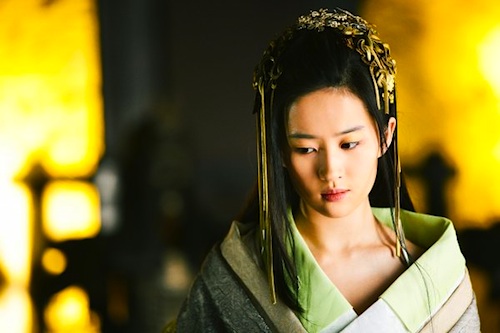
Liu Yifei in "White Vengeance."

Boasting an all-star HK and Chinese cast, Vengeance features memorable supporting performances from top to bottom. Not surprisingly, Anthony Wong dominates the film as the blind but all-seeing Fan Zeng, instantly bringing the gravitas necessary for the cunning yet classically tragic figure. Still, as the crafty Zhang Liang, Hanyu Zhang holds his own with the recognizable Johnnie To veteran.

Unfortunately, neither Feng Shaofeng nor Leon Lai displays the same commanding screen presence as the rival generals. Actually, they are rather bland. In contrast, Jordan Chan packs quite the late inning punch as Han loyalist Fan Kuai, while (Crystal) Liu Yifei is appropriately orchid-like as Yu Ji, but she also makes the most of a bigtime dramatic close-up down the stretch.

Lee rather dexterously shifts viewer sympathies in ways that might even be considered subversive. Indeed, there is definitely a point in Vengeance about the high cost of taking and keeping power. What they say about good intentions still holds true. An ambitious historical epic with plenty of action, White Vengeance is recommended with considerable enthusiasm for fans of Hong Kong cinema. It releases today (9/4) on DVD and Blu-ray from Well Go USA.

LFM GRADE: B+

Posted on September 4th, 2012 at 2:32pm.

Bombs and Bikes: LFM Reviews Quick on Blu-ray/DVD

By Joe Bendel. Safety first, kids. Remember, you never know what some psychopath could sneak into your helmet, so you are better off not wearing one – regardless of how recklessly you might race through the city’s streets. One biker turned messenger learns this the hard way in Jo Bum-gu’s Quick, which releases today on DVD and Blu-ray from Shout Factory.

In 2004, Han Ki-su broke up rather spectacularly with his girlfriend, Choon-sim. It is a heck of a pile-up. Seven years later, she has reinvented herself as Ah-rom, the lead singer of an up-and-coming girl group, while he has de-invented himself as motorbike deliveryman. Still fearless on a bike, Han delivers a bomb for a mysterious client unaware of its contents. There will be more where that came from. Unfortunately, his ex Ah-rom will become a part of the madness when she books Han to whisk her off to a gig. Putting on his helmet, she sees a rather ominous countdown clock where there shouldn’t be one. As the voice on Han’s cell phone explains, he has thirty minutes to make a series of deliveries or the helmet goes boom.

While Quick owes an obvious debt of inspiration to Speed, it could also be considered the motorized forerunner to Premium Rush – but with a more talented cast. There will be plenty of breakneck weaving through traffic and unlikely Evel Knievel jumps. There is also a yakuza backstory to the mad bomber’s crime spree so convoluted, even the cops can’t keep it straight. For stunt driving, though, Quick is hard to beat. The hospitalized stuntmen seen visited by cast members during the closing credits can attest to that.

Granted, Kang Ye-won is considerably less annoying than Sandra Bullock, but her character’s initial diva act is a bit cringy for a while. If nothing else, having a bomb attached to your head ought to inspire clarity of thought. Still, she looks good in vinyl as her character eventually settles in and gets serious.

Frankly, the humor in Quick is rather broad and does not travel well. Fortunately, Lee Min-ki never goes for laughs as Han, mostly brooding like a rebel without a cause, except when he is raging against their tormentor. As biker movie protagonists go, he is pretty good really. However, since the identity of the evil mastermind is kept secret until well into the third act, Quick does not have a lot of moustache-twisting villainy.

To recap, Quick has a whole lot of explosions and chase scenes. It is also nice to see the fim’s shout out to the stunt personnel, given the rate the Korean film industry chews them up and spits them out (at least according to stuntman-filmmaker Jung Byung-gil’s documentary Action Boys, which screened at NYAFF four years ago). Never lacking adrenaline, Quick is easily recommended for action fans. It is now available at most online retailers from Shout Factory.

LFM GRADE: B-

Posted on September 4th, 2012 at 2:30pm.

LFM’s Govindini Murty at The Huffington Post: Supermodels and True Beauty: A Conversation with Timothy Greenfield-Sanders of HBO’s About Face

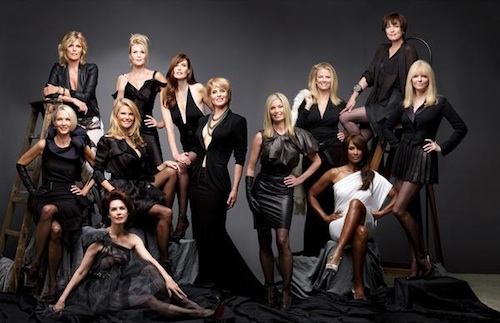
The supermodel sorority from "About Face."

[Editor’s Note: the post below appears today on the front page of The Huffington Post.]

By Govindini Murty. They’re among the most iconic faces of the second half of the twentieth century. Isabella Rossellini, Beverly Johnson, Paulina Porizkova, and their supermodel sorority helped to shape public perceptions of beauty and womanhood at a time of rapid expansion in the mass media. Their faces graced thousands of magazine covers and they were role models to millions of young women.

But was the rise of the supermodel a sign of female empowerment, or of female objectification?

About Face: Supermodels Then and Now, an insightful new documentary by director and photographer Timothy Greenfield-Sanders available on HBO on-demand through September 3 and HBO Go through 2013, interviews sixteen of these supermodels about the true nature of beauty in an age of consumerism and mass media.

As alluded to in About Face, the irony that underlies the modeling profession is that it should lead to both the empowerment and objectification of women. On the one hand, the mass distribution of images of female models through fashion magazines, ads, and other media in the past century has led to women becoming quite literally more visible in today’s world – with that visibility being an affirmation of their femininity and right to exist as women in the public sphere. In contrast to this, from the Puritans to the Taliban, misogynistic societies through history have restricted sensual or beautiful images of women as a prelude to denying their basic right to participate in public life, citing women’s beauty as a “corrupting” influence on social morality. The predominance of beautiful images of women in Western culture has thus affirmed the broader right of women to exist in public as feminine and not as neutered beings.

On the other hand, modeling has also had the effect of objectifying women by focusing on external surfaces, and at times unnatural standards of beauty. In About Face, Isabella Rossellini asks of the pressure for women to undergo plastic surgery: “Is this the new foot-binding? It’s misogyny to say that older women are unattractive.” Objectification can also lead to racism by dehumanizing people and imposing narrow standards of ‘beauty’ or ‘normalcy.’ Model and agent Bethann Hardison describes in About Face trying to book African-American models for runway shows in the ’70s and ’80s, only to be told by the casting agents that such models weren’t their “aesthetic.” As Hardison explains “‘Aesthetic’ is borderline for racist.”

I spoke with director Timothy Greenfield-Sanders about some of these issues at the LA Film Festival’s screening of About Face. The interview has been edited for length.

2012-08-31-beverly_johnson_smi_0002.jpg
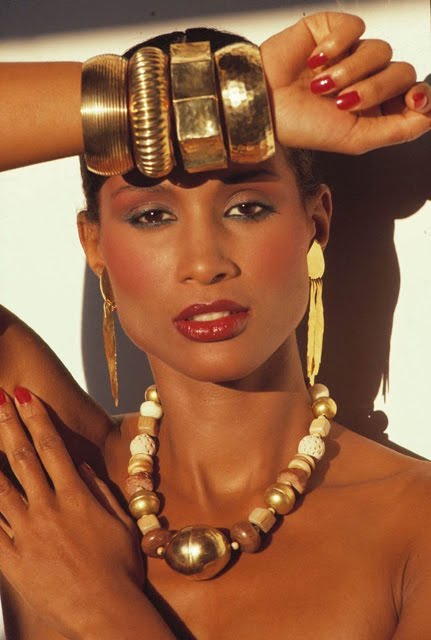
Model Beverly Johnson.

GM: What drew you to these ladies? I know you met them initially at a party in New York, but what did you find so magical about them?

TGS: I think when I met them at that party … I immediately got a sense of how smart they were. You know, the cliché is that you either have brains or beauty, but you don’t have both. Well, they seemed to have both. It really makes it an interesting film. And I thought that people weren’t aware of that. I have two young daughters who knew who they were. But many young people today who are so interested in fashion, they don’t know the history of it and of these iconic women.

GM: What has changed about modeling? You mentioned in the screening that these models were so unique, whereas today the models and their careers seem more transient. Why is there this disparity today versus back then?

TGS: I think that it was a smaller world then. I think there was a warmer relationship between the models and the designers and even the businesspeople involved. It was not so cut-throat and not so corporate. And I think today it’s just big business and big money, and I don’t think the human relationship is there as much. I think it’s very changed.

GM: Do you think a big part of that is the issue of covers – that the actresses are taking over magazine covers?

TGS: Yes.

GM: It’s such a striking change. What has that done to the morale of the models? Does it make a big difference behind the scenes?

TGS: I’m not sure I can answer that because it’s not my world, exactly. But I know certainly it was huge in those days to have covers, because covers were the definition of success. And the cover of Vogue was the ultimate success. So when Beverly Johnson got on the cover of Vogue – the first black woman to do so [in August, 1974], that was a big deal. And today – that doesn’t happen for models.

2012-08-31-PaulinaPorizkovapaulinaporizkova13818261454559.jpg
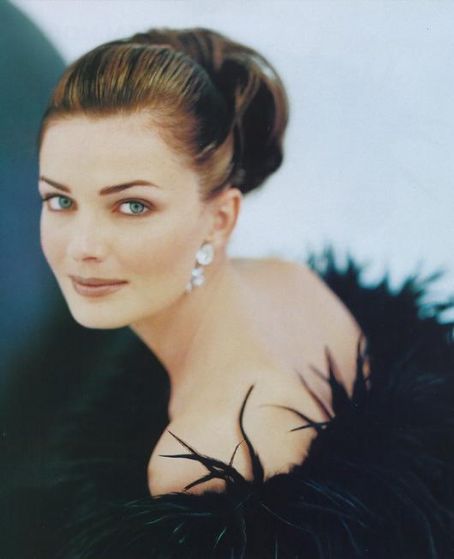
Model Paulina Porizkova.

GM: I thought it was very interesting what Dayle Haddon said that it wasn’t just that she thought she was the prettiest – in fact she didn’t quite fit into the physical type that was popular at the time, but that she brought something else to the picture.

TGS: She brought something else. And Dayle Haddon had to struggle because she wasn’t the look of the moment. She was a very smart woman and she figured out a way to add something more to the picture.

GM: Do you think the reason that those models from that era were so powerful – we’re talking the ’70s and ’80s, was because they were often muses for the designers they were working with?

TGS: Yes, exactly.

GM: I think of Yves St. Laurent and models like Khadija Adams, or even Catherine Deneuve in the ’60s who was dressed by St. Laurent for Belle de Jour. I think of Calvin Klein and Brooke Shields, they were so intimately tied together. Continue reading LFM’s Govindini Murty at The Huffington Post: Supermodels and True Beauty: A Conversation with Timothy Greenfield-Sanders of HBO’s About Face

LFM Reviews Jet Li’s Flying Swords of Dragon Gate in IMAX 3D

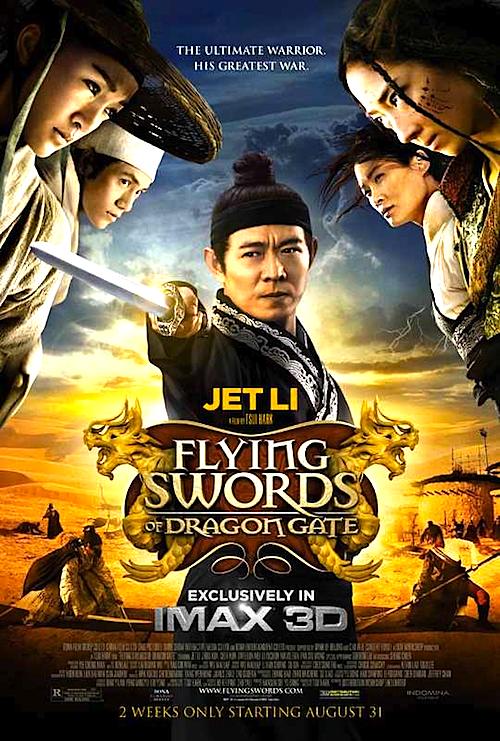
By Joe Bendel. It was a time when eunuchs terrorized the land. However, a handful of wandering knights are willing to challenge them, even at the cost of their lives. Good multi-taskers, they will still find time for a bit of treasure-hunting in Flying Swords of Dragon Gate, Tsui Hark’s monster 3D return to the legendary Dragon Gate Inn world, which opens a special two-week IMAX-coming-straight-at-your-head limited engagement this Friday in New York.

Sort of but not really a sequel to Raymond Lee’s 1992 Dragon Gate Inn (produced and co-written by Tsui), Flying 3D picks up three years later in movie time. Dragon Inn burned to the ground and the femme fatale proprietress disappeared under murky circumstances, but since there was a demand for a sketchy flophouse right smack in the middle of sandstorm alley, the inn has been rebuilt by a gang of outlaws. While they might roll the occasional guest, they are really more interested in the legend of the fabulous gold buried beneath the sands.

Two mysterious swordsmen calling themselves Zhou Huai’an will find themselves at the remote outpost after tangling with the corrupt eunuch bureaucracy. One Zhou has just rescued Su Huirong, a potentially embarrassing pregnant concubine from the forces of the East Bureau. This Zhou also happens to be a she and she has some heavy history with the man she is impersonating. For his part, the real Zhou Huai’an has just barely survived a nasty encounter with the East’s top agent, Yu Huatian.

The doubling continues when fortune hunter Gu Shaotang shows up at the inn with her partner Wind Blade, a dead-ringer for the evil Yu. Add to the mix a group of rowdy, hard-drinking Tartar warriors, led by their princess Buludu and you have a rather unstable situation. Before long, sides have been chosen and a massive gravity-defying battle is underway, as the mother of all sandstorms bears down on Dragon Gate Inn.

Frankly, the 3D in Flying is so good, the initial scenes are a bit disorienting. Tsui probably has a better handle on how to use this technology than just about any other big picture filmmaker, dizzyingly rendering the massive scale of the Ming-era wuxia world. Flying is also quite progressive by genre standards, featuring not one but three first-class women action figures. When the headlining Jet Li disappears from time to time, he really is not missed. Of course, when it is time to go mano-a-mano in the middle of a raging twister, he is the first to step up to the plate.

All kinds of fierce yet genuinely vulnerable, Zhou Xun is fantastic as Ling Yanquiu, the Twelfth Night-ish Zhou Huai’an. Likewise, Li Yuchun is a totally convincing action co-star as the roguish Gu, nicely following-up on the promise she showed in Bodyguards and Assassins. Yet Gwei Lun Mei upstages everyone as the exotically tattooed, alluringly lethal barbarian princess. Her Buludu is both more woman and more man than Xena will ever be. In contrast, Chen Kun is a bit of a cold fish in his dual role, which suits the serpentine Yu just fine, but does not work so well for Wind Blade.

Throughout Flying, Tsui chucks realism into the whirlwind and never looks back. If you are distracted by scenes that look “fake,” many of the CGI fight scenes will have you beside yourself. On the other hand, if you enjoy spectacle, you really have to see it. Surpassing its predecessor in nearly every way, Flying Swords of Dragon Gate is a whole lot of illogical fun. Highly recommended for everyone still reading this review, it opens for two weeks only this Friday (8/31) at the AMC Empire.

LFM GRADE: B+

Posted on August 30th, 2012 at 1:25pm.

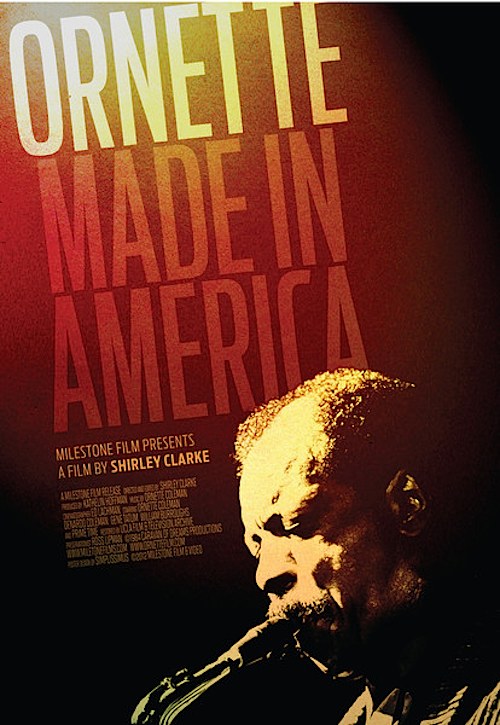
LFM Reviews Ornette: Made in America

By Joe Bendel. Ornette Coleman won the Pulitzer Prize for musical composition and performed live on Saturday Night Live. Although neither event is covered in Shirley Clarke’s classically idiosyncratic documentary-profile, viewers still get a memorable sense of the artist and his music in Ornette: Made in America, which opens in New York this Friday at the IFC Center, as part of Milestone Films’ Project Shirley restoration and rerelease program.

Explaining Coleman’s place in the jazz world would take some doing, especially in 1985, before his late career Grammy and Pulitzer accolades finally came cascading in. Coleman was one of the pioneers of the Free Jazz movement, whose legendary engagement at New York’s Five Spot club sharply divided the jazz world. However, you will not find his creation story here. Instead, Clarke’s approach to Coleman the man and the musician is deeply rooted in the then-current moment, yet is also rather timeless.

In the mid 80’s, the establishment (broadly defined) was just starting to understand that Coleman was a force to be reckoned with. As the film opens, the mayor of Fort Worth presents Coleman with a copy of the key to the city (the original, he explains, had been sent up into space or something), in the hours before the alto saxophonist-multi-instrumentalist will debut Skies of America, a major new composition integrating a symphony orchestra with his avant-garde electric combo Prime Time. Hizzoner’s speech might strike New York hipsters as a bit corny, but his drummer-manager-son Denardo is quite pleased his father is finally being recognized.

In fact, there is something all-encompassing and Whitmanesque about Coleman’s deeply blues-influenced music that is perfectly represented by a title like Skies of America, as well as the mayor’s patriotically Texan remarks. Shrewdly, Clarke uses this fairly accessible work as the musical centerpiece for the film, much like Sonny Rollins’ concert premiere of Concerto for Tenor Saxophone and Orchestra dominates Robert Mugge’s Saxophone Colossus.

There was probably no documentarian better suited to Coleman’s personality and aesthetic than Shirley Clarke. Her style of filmmaking perfectly reflects his music—fragmentary and baffling to the willfully uninitiated, but with a strong compositional conception underlying it all. Her visual sensibility might be far from infallible (a kid with an iPad could put her space age special effects to shame these days), but she demonstrates a rock solid command of Coleman’s acutely syncopated rhythms, and had a keen insight into his creative milieu.

Indeed, except for perhaps Clint Eastwood, no filmmaker can equal Clarke’s position as a filmmaker whose work promotes and is informed by America’s great original art form. The Connection, which launched Project Shirley, is a milestone (if you will) of independent filmmaking, in large measure due to Freddie Redd’s absolutely classic tunes. Likewise, her viscerally naturalistic social issue drama, The Cool World, derives considerable power from Mal Waldron’s soundtrack (which in turn was rerecorded by Dizzy Gillespie’s combo for the official OST LP version). There was even the non-narrative short, Bridges-Go-Round, featuring the music of Teo Macero. Ornette is sort of a summing up of her jazz evangelism, shining a spotlight on one of the most controversial yet at the time underappreciated artists to ever set foot on the bandstand.

Time and again, Clarke alternately emphasizes Coleman’s blues roots and hardscrabble early life (even filming young actors portraying the alto saxophonist in dramatized vignettes of his formative years) and his compulsively forward looking – almost futuristic – orientation. The fact that most of Coleman’s philosophizing makes little to no sense is hardly important. No, he never really explains his theory of harmolodics in Ornette and she wisely never pushes him.

The Coleman seen in Ornette matches the accounts I have personally heard from musician-friends who have had conversations with him and say it was the coolest thing ever, even though they have no idea what he said. Any film conveying that experience is worth seeing, but Ornette has considerably more to offer. A highly entertaining time-capsule of a jazz documentary, Ornette: Made in America is recommended for anyone who wants their ears stretched a bit when it opens this Friday (8/31) at the IFC Center.

LFM GRADE: A-

Posted on August 28th, 2012 at 12:15pm.