PBS Investigates: LFM Reviews The Disappearance of Glenn Miller

By Joe Bendel. Glenn Miller had more number 1’s than either Elvis Presley or the Beatles. At the peak of his success, he made considerably more in an average week than most Americans could hope to earn in a year. Yet, he voluntarily signed up to serve his country during a time of war. Although he was never assigned to combat, Miller ultimately died in the service of his country, but the details remain murky. The circumstances surrounding his final fateful flight get a TV looking-over in The Disappearance of Glenn Miller, the latest installment of History Detectives Special Investigations, airing Tuesday on most PBS outlets.

Even (or particularly) amongst swing die-hards, Miller is a divisive figure, with fervent champions and detractors. However, there is no denying his popular success or his patriotism. The sacrifices he made for the latter are especially impressive given the former. Capitalizing on his stature, Miller was tasked with leading an Army Air Force Band that played morale-boosting concerts for the troops.

To prepare for the first concert in newly liberated Paris, Miller hitched a ride on a single-engine Norseman prop plane across the English Channel, but it never arrived in France. Essentially, three theories emerge: accidental causes (small plane plus bad weather is never a good combination), friendly fire, and the straw man of assorted conspiracy theories.
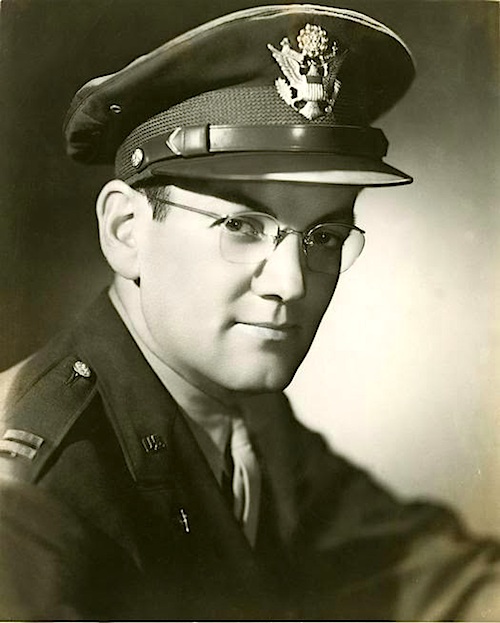
From "The Disappearance of Glenn Miller."

Evidently, there have been a lot of weird hypotheses hatched regarding Miller’s disappearance that all three host-investigators are quick to dismiss. However, they note in passing Miller’s connection to another celebrity officer, David Niven. Re-enlisting after the outbreak of war, Niven was apparently a real deal commando before his transfer to the propaganda unit, where it seems he may or may not have had dealings with the intelligence service. Frankly, his wartime experiences would make a terrific movie, but who could possibly play Niven? Of course, Jimmy Stewart played the bandleader in The Glenn Miller Story, seen briefly during this episode.

The three on-camera “History Detectives” (a lit professor, an auctioneer, and a sociologist) do a nice job explaining the technical details of the Norseman and the potential friendly fire misadventure, but they never really put Miller in his full musical context. Louis Armstrong loved his recordings, but many swing connoisseurs found his bands way too “sweet.” Indeed, it is doubtful Milller would have been the secret weapon for winning over Germany’s underground Swing Kids, as they suggest. Goodman or Ellington would have been far more effective. Still, a psych-ops unit probably had to make do with whatever bandleader they had handy.

Unfortunately from a dramatic standpoint, the verdict is decidedly anti-climatic, pretty much confirming our most prosaic suspicions. The hosts’ chipper, “happy news” style transitional conversations (“that’s fascinating, keep us posted”) also quickly get tiresome. Nevertheless, it is just nice to see some primetime television devoted to the iconic bandleader. Regardless of your feelings for his music, he was a great American. Why not listen to some of his Army Air Force Band recordings this Independence Day weekend and if you are still curious about his mysterious fate – and otherwise check out The Disappearance of Glenn Miller this coming Tuesday (7/8) on PBS’s History Detectives.

Posted on July 5th, 2014 at 2:32pm.
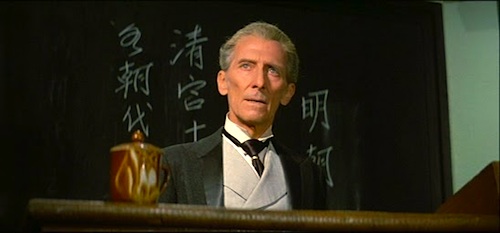
LFM Reviews The Legend of the 7 Golden Vampires @ The 2014 New York Asian Film Festival

By Joe Bendel. At a time when Hollywood has contracted “co-production fever” in hopes of pandering to the Chinese market, it is worth re-visiting the granddaddy of all co-productions. The fusion of the Hong Kong-based Shaw Brothers’ kung fu and mysticism with Hammer’s gothic British horror was a true Reese’s peanut butter cup of a film. It was also a flop, but it is a highly entertaining flop. As a revered media titan well into his centenarian years, Sir Run Run Shaw (1907-2014) was more accustomed to turning out hits. Still, Roy Ward Baker’s The Legend of the 7 Golden Vampires (co-directed by the uncredited Chang Cheh) is a distinctive and only slightly eccentric choice to screen as part of the sidebar tribute to Shaw at this year’s New York Asian Film Festival.

Prof. Van Helsing is visiting early Nineteenth Century China to research the eastern variations in vampirism, armed with knowledge of the Ping Kwei legend. According to the story, the villagers were constantly terrorized by a cult of seven vampires and their minions, until one peasant finally reaches his breaking point. Heroically, he kills one of the seven, but at the cost of his life. Everyone attending Van Helsing’s lecture assumes he is a crank, except Hsi Ching. He happens to be a descendant of the brave Ping Kwei farmer, who has come to ask Van Helsing’s help in liberating his village from the remaining six.

Showing remarkable cultural sensitivity for a British colonialist in a 1970s film, Van Helsing stresses his inexperience facing China’s undead and the specific traditions and morays that make them different from the Euro-vamps. However, he cannot refuse a plea for help. Indeed, he becomes rather anxious to get out of town when his twit of a son Leyland shows up the local triad boss when putting the moves on a Scandinavian heiress. The adventurous Vanessa Buren is also eager to fund the expedition, so she joins the party over the professor’s objections.

Of course, before they can face the undead hordes, they will have to hack their way through a small army of triads, but that will not be a problem for Hsi, his six brothers (each with a specialized weapon of choice), and his sister, Mei Kwei. However, there is another European visitor to Ping Kwei, whom Van Helsing is well acquainted with—cue ominous thunderclap.

Everyone seems to love to pick on this film, just because it is admittedly an oddball concept. Yet, it deserves considerably more love. Action director Lau Kar-leung stages some very cinematic (and surprisingly bloody) martial arts sequences, presumably in collaboration with Chang. Perhaps inspired by the Hong Kong production, Peter Cushing brought his A-game as Van Helsing, as determined and authoritative as ever, but also protective of the youngsters and smart enough to know what he doesn’t know. In fact, Cushing looks quite comfortable and collegial with Shaw Brothers leading man David Chiang, who has all the right action chops for Hsi Ching and nearly makes his phonetic English dialogue sound natural.

From "The Legend of the 7 Golden Vampires."

Shih Szu (who almost broke out during her time with the Shaws, becoming more of a cult figure instead) is also impressively steely and sensitive as Mei Kwei. Former Miss Norway and Penthouse Pet Julie Ege gives Buren a bit of an edge and a backbone too. Unfortunately, Robin Stewart’s Leyland Van Helsing comes across like Hugh Grant’s ineffectual forefather. Frankly, it is hard to believe he could live through the first act.

As if that were not enough, Golden also holds the distinction of being the only Hammer Dracula film in which Christopher Lee does not play the Count. Let’s just say he was missed. However, Cushing, Chiang, Shih, some cool fight scenes, and a full dose of Hammer atmosphere make up for his absence. Recommended for Hammer Horror and Shaw Brothers fans, The Legend of the 7 Golden Vampires screens yesterday (the Fourth of July) at the Walter Reade Theater, as part of the 2014 NYAFF’s tribute to Sir Run Run Shaw.

LFM GRADE: B+

Posted on July 5th, 2014 at 2:22pm.

LFM Reviews Zero Pro Site: the Movable Feast @ The 2014 New York Asian Film Festival

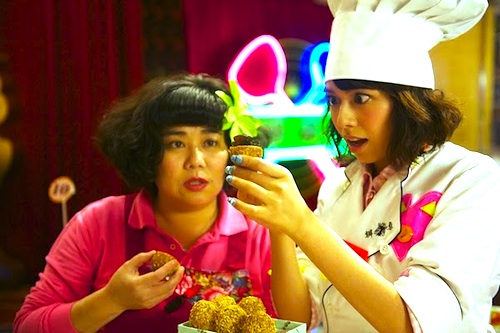
By Joe Bendel. Master Fly Spirit’s food was sort of slow and reasonably local. Most of all, it was entirely traditional, making it difficult to replicate in these times. His daughter Chan Hsiao-wan is learning that the hard way. She had always planned to be an actress or a model, but she is falling back on the old family catering business after tasting the cold hard realities of showbiz in Chen Yu-hsun’s awkwardly titled Zero Pro Site: the Movable Feast, which screens during the 2014 New York Asian Film Festival.

Chan was always better at being cute than responsible, so she would be just the type to innocently co-sign on a deadbeat boyfriend’s loan. When he takes to the wind, two loan-sharks come to collect from her. Fleeing Taipei, she eventually reconnects with her stepmother, “Puffy” Ai-feng who is also evading debt collectors. Unfortunately, “Puffy” earned her new nickname when she sacrificed her savings and her late husband’s reputation in an ill-advised showdown with his faithless apprentice. However, Chan’s sunny personality and a few long forgotten traditional dishes start attracting customers to their greasy spoon.

Not surprisingly, Chan has been a poor steward of her father’s recipes, so she seeks help from a variety of sources, including his happily addled teacher Master Tiger Nose and the itinerant “Dr. Gourmet,” a.k.a. ex-con Yeh Ju-hai. However, just as things start to develop between her and Yeh, he jumps ship to assist his teacher, the gangster caterer Master Ghost Head. Even without Yeh’s help, Chan places her future hopes in a national catering competition, duly impressing the loan-sharks into kitchen service, as could only happen in romantic comedies. Yet, to truly cook in a traditional manner, she will have to fully engage with the past.

Yes, there is a lot of food in ZPS, as metaphors, comedic props, and a way to celebrate Taiwanese cultural identity. Yet, it only serves a limited courtship function. While the film certainly has a dash of romance it is more about familial legacies and finding one’s place in the world. Like Chan’s turtle-stuffed chickens, the film is also bursting at the seams with supporting characters, so if one is too goofy and outrageous for your tastes, just wait for a more understated type to come along.

From "Zero Pro Site: the Movable Feast."

As Chan, Kimi Hsia is relentlessly silly and sweet, without getting viewers’ nerves. She forges some respectable screen chemistry with Tony Yang, even though Dr. Gourmet largely vanishes during the second and third acts. Top-billed Lin Mei-hsiu initially mugs something fierce as Puffy Ai-feng, but she reins it in to some extent as the dramedy starts to develop. Although there is a lot of colorful wackiness going on, the film draws a lot of heart from its senior cast-members, such as the recently reunited old couple, who want Chan to cater their wedding in the manner they remember from their youth.

ZPS is fun, it is endearing—it really could have been ninety some minutes. Over two hours of food and nostalgia is starting to push it. Still, Chen ties up all his subplots fairly neatly. He might have more secondary characters than Around the World in Eighty Days, but he develops a rather high percentage of them. Frothy and pleasing, it delivers some potent wistfulness along with its liberal servings of food and scrappy underdog resiliency. Recommended for fans of generation-spanning culinary cinema, Zero Pro Site—The Moveable Feast screens today (7/5) at the Walter Reade Cinema, as part of this year’s NYAFF.

LFM GRADE: B-

Posted on July 5th, 2014 at 2:08pm.

LFM Reviews Fuku-Chan of FukuFuku Flats @ The 2014 New York Asian Film Festival

By Joe Bendel. FukuFuku Flats is a low rent complex nobody would ever confuse with Melrose Place. Tatsuo Fukuda, a.k.a. Fuku-chan, does not exactly have the sort of face you usually see on network television either, but an aspiring photographer from his past finds it inspiring. Lead actress Oshima Miyuki represents a rather unconventional casting choice as well, but she poignantly expresses Fukuda’s loneliness and fear of rejection throughout Yosuke Fajita’s Fuku-Chan of FukuFuke Flats (see clip above), which screens during the 2014 New York Asian Film Festival.

As the foreman of a crew of painters, Fukuda always sticks up for the underdog. He also throws a lifeline of friendship to the only tenants in his building more socially awkward than himself. His friend Shimacchi is constantly trying to fix Fukuda up with his wife’s friends, but it never works. The kite-flying enthusiast is simply too intimidated by women—and it is largely Chiho Sugiura’s fault.

While it school, she played a crucial role in a prank that still haunts Fukuda. However, karma has come around. Her decision to quit her job to pursue photography fulltime is not exactly paying dividends. To cover her cosmic overdraft, Sugiura finds Fukuda to apologize, only to be staggered by the character she sees in his face. Initially, he wants nothing to do with her, but it is hard to resist the attention of an attractive woman, despite their complicated history (or perhaps especially because of it).

Clearly, a connection is made, but does it have the same meaning for Fukuda and Sugiura. That is a question that concerns Shimacchi. Yet, Fajita is most forgiving of Sugiura, who is nothing like the mean girl she once was. She is just confused. There are no villains in FukuFuku, just people trying to get by as best they can. It can be especially difficult when you are stark staring bonkers, as is at least one of Fukuda’s neighbors.

From "Fuku-Chan of FukuFuku Flats."

While the casting of Miyuki (a comedic performer known for her old men characters) might sound like broad gender-bending comedy in the tradition of Hairspray, there is no ironic winking. FukuFuku is a comedy, but Miyuki plays Fukuda scrupulously straight. Frankly, a more apt comparison would be Linda Hunt in The Year of Living Dangerously, even though the film’s tone is radically different.

Asami Mizukawa’s Sugiura is also terrifically understated, but completely engaging as she wrestles with her feelings, while trying to figure out how she made a hash of her life. (Unfortunately, her creepy encounter with a would-be photography mentor feels out of place in the otherwise wistful and honest relationship dramedy.)

Aside from that rare misfire, Fajita agilely pirouettes from everyday comedy of observation, to halting romance, and even potential tragedy, while maintaining a deceptively light touch. Endearing but never cloying, Fuku-Chan of FukuFuke Flats is recommended for those who enjoy messy but mature character-driven films when it screens today (7/3) at the Walter Reade Theater, as part of this year’s NYAFF.

LFM GRADE: B+

Posted on July 3rd, 2014 at 11:29am.

LFM Reviews The Newly Restored A Hard Day’s Night

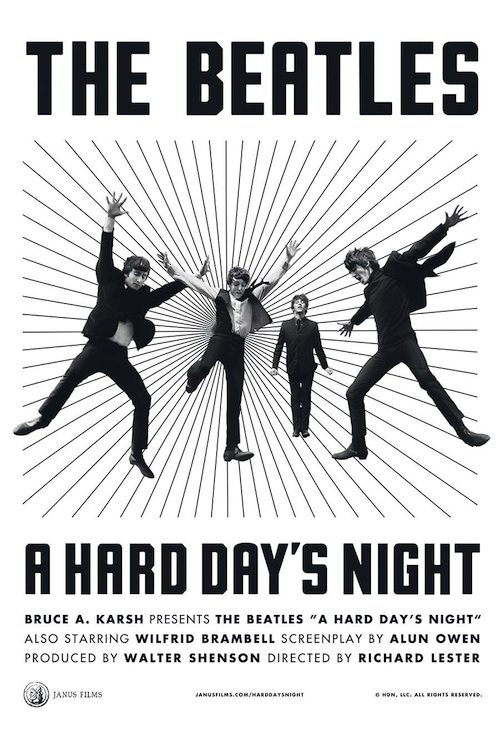
By Joe Bendel. Oddly, nobody actually says the word “Beatles” in their first movie. It’s not like anyone needed to. It was clearly emblazoned across Ringo’s bass drum. Of course, just about everyone knew who they were. Beatlemania was already a full-fledged phenomenon that would be even further stoked with the initial release of Richard Lester’s A Hard Day’s Night. Digitally restored by Janus Films in time for its fiftieth anniversary, Lester’s iconic introduction to the band re-releases this Friday at New York’s Film Forum.

If you are still trying to figure out if the four lads from Liverpool were mods or rockers, you will not get a straight answer in AHDN, but that is all part of its charm. Instead, the Beatles just sort of be themselves as they gracefully deal with the challenges of superstardom, while trying to keep Paul’s grandfather out of trouble (his other grandfather). They run from hordes of screaming fans, play sound-checks, accidentally get arrested, and generally riff off each other. It is all still breezy fun fifty years later thanks to the wit and easy charm of Alun Owens’ screenplay and the Beatles themselves.

Looking back at AHDN, it is remarkable how profoundly it shaped our perceptions of the Beatles’ personas: George is the cerebral one, John is the snarky one, Paul is a bit of a pushover, and Ringo is a goof. It also established a deceptively easy formula that has proved exceedingly difficult to emulate, as a host of meet the band box-office duds proved (Spice World, anyone?). To be fair, it is hard to compete with enduring original songs like the title smash hit, “All My Loving,” “And I Love Her,” “I Should Have Known Better,” and “She Loves You.”

Lester and the Fab Four also had a not-so-secret weapon in veteran comedic character actor Wilfrid Brambell, who was then nearly as recognizable as the Beatles from his leading role in the hit sitcom Steptoe and Son (remade in America as Sanford and Son). He has a way of mugging that seems rather dryly amusing. He also demonstrates perfect timing playing off the Lads. Likewise, Neil Aspinall and Mal Evans do a Mutt-and-Jeff routine as characters based on the Beatles’ personal assistant and road manager that nicely balances broad rubber-faced comedy with a kind of hyper-real sense of what it must have been like to ride the Beatles whirlwind.

AHDN provides a time-capsule of mid-1960s London, where you could buy milk from vending machines and television broadcasts involve transistors and dials. Yet, it still feels fresh and unspoiled. It is rather mind-boggling to suggest this, but AHDN would be a fine way for parents to introduce their children to the Beatles, because despite their mischievous inclinations, they essentially come across as good kids. More importantly, it is just funny in a good-hearted way and rocks (innocently and politely). It is a true classic that looks and sounds great after Janus’s careful 4K restoration. Highly recommended for any serious film lover, A Hard Day’s Night opens this Friday (7/4) at Film Forum.

LFM GRADE: A

Posted on July 1st, 2014 at 11:50pm.

Himalayan Heroics in 3D: LFM Reviews Beyond the Edge

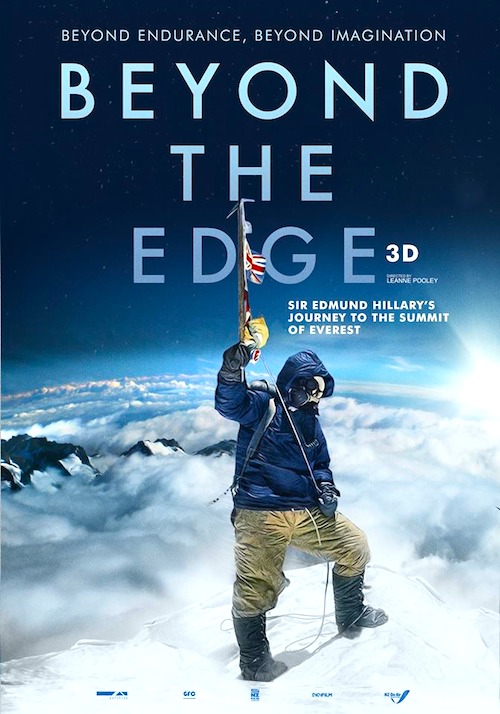
By Joe Bendel. The conquest of Mt. Everest is considered the final crowning achievement of the British Empire, but it was successfully completed by a New Zealander and a Nepali (or possibly Tibetan) Sherpa. It was a nearly impossible climb with early 1950s gear – that was further complicated by the odd logistical error here and there. However, Sir Edmund Hillary and Tenzing Norgay were part of a generation that refused to substitute excuses for success. The story of their summiting is recounted and recreated in Leanne Pooley’s 3D documentary Beyond the Edge, which opens this Friday at the IFC Center.

Before Hillary joined Colonel John Hunt’s 1953 expedition, the Everest statistics told a grim tale: “thirteen deaths and no summits.” Hillary, an unassuming bee-keeper, was one of only two New Zealanders in Hunt’s party, but he truly looked like a mountaineer. He also had the skills and the drive to for the final push. Unlike most of his Sherpa colleagues, Tenzing Norgay also had a climber’s ambition to summit—and summit first. Like good Survivor contestants, they sized each other up, recognized their compatibilities, and formed an alliance. Soon they were a team, hustling to establish a path through the dreaded icefall to impress Hunt.

Yes, there will be setbacks and complications. One of the strangest aspects of Beyond is the way its vocabulary more often evokes horror films than National Geographic specials. There are references to the “Death Zone” immediately below the summit and the “stench of death” asserting itself even before that stage. Nevertheless, Beyond is visually awe-inspiring. The 3D adds depth, but is not absolutely necessary—the spectacle of the Himalayas does not need punching-up. For her hybrid approach, Pooley seamlessly integrated restored 16mm color footage shot by the Hunt expedition with dramatic recreations mostly filmed in New Zealand’s Southern Alps. Just watching the immersive visuals will make viewers feel chilly and light-headed.

There is also plenty of expert commentary in Beyond, but Pooley eschews the traditional talking head approach, opting instead for disembodied voice-overs, sort of like Room 237, except her professionals are insightful and experienced Everest veterans rather than cracked eccentrics. The enthusiastic participation of Hillary’s mountaineering son Peter and Tenzing Norgay’s son Norbu Tenzing also adds apostolic credibility.

Mountain climbing sequences used to be where movies went to die (MST3K’s “rock climbing” riffs for Lost Continent pretty much said it all), but documentaries somehow managed to crack that nut. Like Nick Ryan’s K2 doc The Summit before it, Beyond is tight, tense, and very cinematic. Yet, instead of a tragic cautionary tale of reckless overreach, Pooley’s film celebrates courage, ambition, and sheer will power. No mere Discovery Channel special, it is much more dramatic and entertaining than you would expect. Highly recommended for sporty audiences, Beyond the Edge opens this Friday (7/4) in New York at the IFC Center.

LFM GRADE: B

Posted on July 1st, 2014 at 11:45pm.