LFM Reviews Asghar Farhadi’s The Past, Iran’s Oscar Submission

By Joe Bendel. It is hard to define Ahmad’s role in the family drama he re-submerges himself in. As Marie’s soon to be ex-husband, he is intimately familiar with her and her two daughters from a previous relationship. Of course, he is a complete stranger to Samir, her next intended husband, and his young son. That ambiguity provides rich fodder for Asghar Farhadi’s French language, Iranian Oscar submission, The Past, which opens this Friday at Film Forum.

Ahmad, the former Iranian expat, has returned to Paris to finalize his divorce with his French wife, Marie. One might wonder why he should travel such a long way for a bit of paperwork. Frankly, the same question crosses Ahmad’s mind as well. Regardless, here he is. Much to his surprise, he learns he will be staying with Marie and Samir in their distinctly unfashionable suburban Paris home.
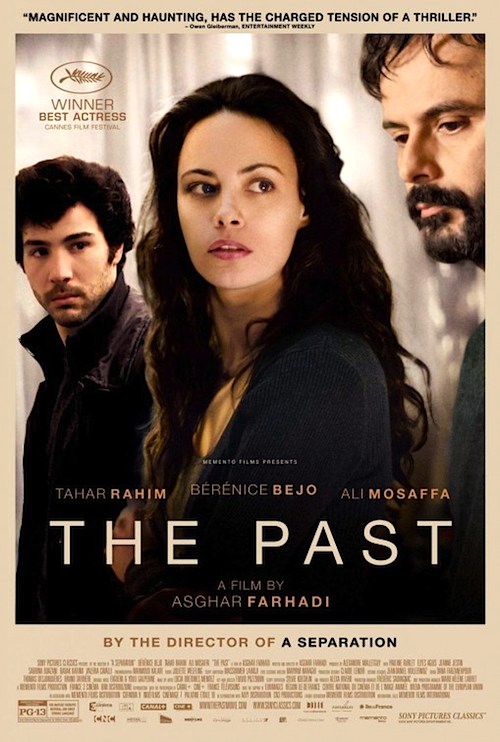
Viewers quickly deduce Ahmad has a history of mental instability, whereas Marie is a bit of game-player. The now stoic Ahmad tries to take the high road, but he is soon drawn into his eldest former step-daughter’s cold war with Marie. Lucie is dead set against her mother’s engagement to Samir, because she believes their love affair drove his comatose wife to her suicide attempt. As Ahmad tries to counsel Lucie, he discovers the truth is considerably more complicated than anyone suspected.

Despite having no formal position in the family, Ahmad becomes the closest thing to a referee they have. Yet, it is clear the feelings he and Marie once had for each other remain unresolved. It is fascinating to watch him navigate this tortuous emotional terrain, acting as an honest broker and peace-maker, while keenly aware of his own destabilizing influence. Ahmad is a tricky role to pull off, considering he often serves as an audience proxy as well as an independent actor in his own right, but Ali Mosaffa pulls it off masterfully. It is an exquisitely humane turn that darkly suggests volumes of unspoken back-story.

Although Ahmad is central to the narrative, he is still a supporting player in the overall scheme of things. This is Marie’s story, driven by her problematic relationships with Samir and Lucie. The thoroughly de-glamorized Bérénice Bejo’s lead performance is earthy and passionate, constantly approaching the overwrought, put always pulling back just in time (because the working class cannot afford such indulgences). Pauline Burlet is also quite remarkable, making Lucie’s inner turmoil vivid and believable in an angsty teen-aged sort of way. She could be this year’s equivalent of Shailene Woodley in The Descendants.

The opening of The Past essentially closes the year in film. Granted, there are some presumptive Oscar candidates slated to open Christmas week, but they do not deserve their buzz. In contrast, The Past should be a contender in multiple categories. It might not have quite the same visceral intensity of Farhadi’s A Separation and About Elly, but those films set the bar awfully high, making comparisons decidedly unfair. The Past is a gripping film that embraces the messy humanity of its characters. It is a bracing yet forgiving film, much in keeping with the rest of Farhadi’s filmography. Highly recommended, The Past opens this Friday (12/20) at New York’s Film Forum.

LFM GRADE: A-

Posted on December 16th, 2013 at 10:02pm.
The Literary Godfather of All CSIs: LFM Reviews How Sherlock Changed The World; Airs Tuesday (12/17) on PBS

By Joe Bendel. We think of Sherlock Holmes stories as classic mysteries, but they were practically science fiction when they were first released. Such was the state of forensic science at the time—it simply did not exist. Various forensic fans pay their respects to the consulting detective in the two-part, one-night special How Sherlock Changed the World, which premieres this Tuesday on most PBS stations nationwide.

The first Holmes story came out during the Jack the Ripper investigation, when most of London had concluded most of the city’s coppers were just a pack of dumb thugs—and not without justification. Crime scenes were not preserved and nobody bothered to give them the once-over for telling information. Instead, it was round-up the usuals and beat out a confession—a strategy doomed to fail with a serial killer.

The fact that the fictional Holmes served as a catalyst for smarter investigative techniques makes perfect sense, considering how science fiction has always inspired technological breakthroughs. In the early segments, producer-director Paul Bernays and his expert witnesses make a strong case for Sherlock’s influence on the pioneers of forensic investigation, particularly Edmond Locard, a French Holmes fan who assembled the first legitimate crime lab in 1910.

Eventually, HSCTW settles into a familiar pattern, introducing an investigative avenue prefigured in Doyle’s stories (like toxicology, ballistics, and hair and fiber analysis) and then demonstrating real world applications from the case files of its talking heads, including the sometimes controversial Dr. Henry Lee, probably best known for his work on the notorious “Woodchipper Murder.” Initially a bit of a revelation, the Sherlock tribute largely becomes reasonably diverting comfort viewing for true crime fans.

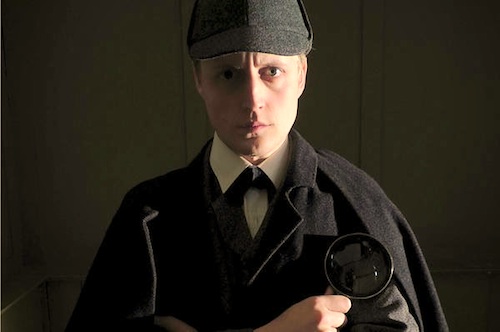
From "How Sherlock Changed The World."

Obviously, HSCTW was shrewdly programmed to stoke viewer enthusiasm for the upcoming third season of PBS’s Sherlock. We do indeed see clips from the Cumberbatch show, but most of the points are illustrated with original recreations of Holmes at work. Granted, clearances can be tricky, but the HSCTW cast lacks the distinctive presence of the many classic screen Holmeses, such as Basil Rathbone, Peter Cushing, Christopher Lee, Jeremy Brett, Patrick Macnee, Tom Baker, Christopher Plummer, or even Ronald Howard.

HSCTW is television viewers can safely dip in and out of. Nonetheless, it makes a compelling case on behalf of the contributions made to criminal justice by Holmes, as well as his creator, Arthur Conan Doyle. In fact, it leads one to believe Doyle’s stock is rather undervalued given his post-Sherlock endeavors. While it has a fair amount of filler, How Sherlock Changed the World also provides some intriguing cultural history. Recommended as a pleasant distraction for Holmes and CSI fans eagerly anticipating the new season of Sherlock, it airs this Tuesday (12/17) on most PBS affiliates nationwide.

Posted on December 16th, 2013 at 9:58pm.

It Happened in Park City: LFM Reviews The Crash Reel

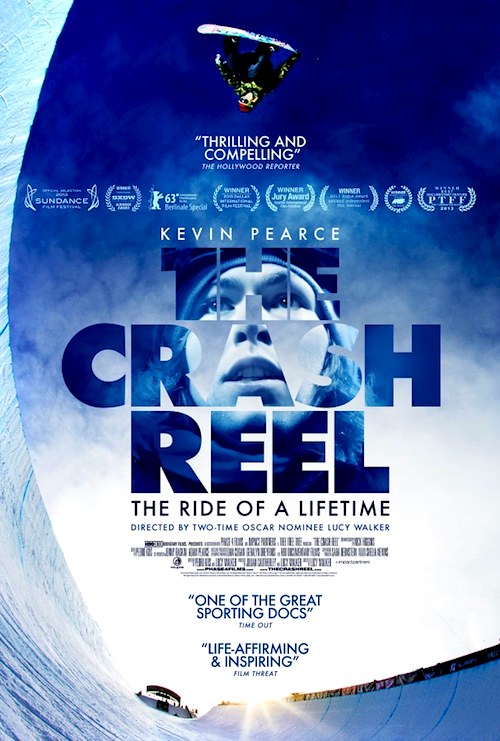
By Joe Bendel. If they are smart, organized snowboarding and other extreme sports will get proactive about preventing serious brain trauma, like that suffered by Olympic prospect Kevin Pearce. Or they can just bury their heads in the sand like the NFL. Anyone care to lay odds on which course they take? Perhaps Oscar nominated filmmaker Lucy Walker will shift the needle a bit with her HBO produced documentary profile of Pearce, The Crash Reel, which opens today in New York at the IFC Center.

Pearce was sort of the Zenned-Out Natural, who generated jaw-dropping amplitude on his runs. His friend-turned-rival Shaun White is depicted as the Ice-Man of snowboarding, who never made a mistake, but lacked Pearce’s indefinable X-factor. While White was a driven lone wolf (or so he appears), Pearce led a free-spirited group of competitive snowboarders known as the “Frends,” because there is no “i” in there. Then during a fateful training run in Park City (a town which holds continuing significance throughout the film), Pearce took a fall that is truly sickening to watch.

Obviously, this changes everything. It is a slow process, but Pearce begins to the recover physically and mentally. However, several individuals tangentially related to Pearce are not so fortunate. In fact, their sad intersecting stories provide some of Reel’s most poignant moments. Yet, despite these tragic examples and the objections of his family, Pearce remains determined to make his competitive return.

Walker is a talented filmmaker, who really should have taken home the Oscar for The Tsunami and the Cherry Blossom. She skillfully broadens Reel’s focus, without turning it into an outright advocacy PSA. Walker and her team also culled through a remarkable wealth of archival and privately recorded video clips. Say what you will about extreme sports athletes, but they certainly document themselves thoroughly. Unfortunately, they are not always wildly interesting as interview subjects. Ironically, White is probably the most engaging on-camera presence, aside perhaps from another extreme skiing colleague, whose appearances take on tragic implications in the third act.

As fate would have it, Walker first met Pearce at an unrelated Sundance event and eventually premiered Reel at this year’s festival. Yet, one wonders how the Park City snow sports industry will appreciate their unflattering role in the film. Granted, the road-back section drags a bit from time to time, but there is clearly a reason why every scene was included. Indeed, it would make an effective (if somewhat depressing) double feature with Steve James’ Head Games. Recommended for fans and critics of snowboarding and related sports, The Crash Reel opens theatrically today (12/13) at the IFC Center.

LFM GRADE: B

Posted on December 13th, 2013 at 7:33pm.

There’s Something Wrong with Kids This Quiet: LFM Reviews Here Comes the Devil

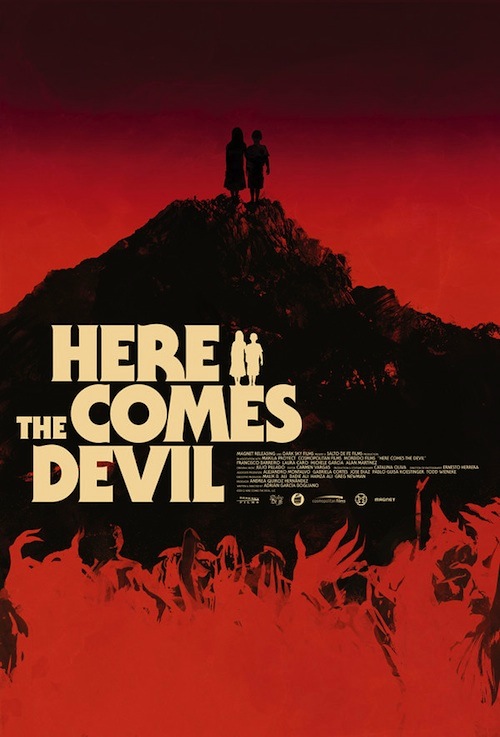
By Joe Bendel. It starts with a gratuitous sex scene, closely followed by a generous helping of gratuitous violence. Obviously, there is no call for subtlety here. Whether or not it really is Old Scratch stirring up mischief or the demonic spirit of a notorious serial killer hardly matters. Either way there will be big trouble in Adrián García Bogliano’s Here Comes the Devil, which opens today in New York.

In time, the prologue will make more sense, as is often the case with good prologues. For the time being, our story revolves around Sol and Félix, two reasonably humdrum parents on holiday with their adolescent son and daughter. To squeeze in some adult quality time, they let Sara and Adolfo go explore a nearby craggy hill. When they are not back by the appointed time, panic and recriminations replace passion. Making matters worse, this particular corner of northern Mexico seems to have some sort of sinister history.

When the kids suddenly turn up the next morning, everything seems to be okay. Yet, they now seem strangely distant. Initially, Sol and Félix fear something might have happened with the slow-witted man they caught suspiciously eying Sara at the gas station at the foot of the hill. However, it becomes increasingly difficult to rationalize away all the uncanny incidents occurring around the house.

Devil is sort of like a throwback to 1980’s horror films, but with a taste for post-2000 excess. Ironically, it probably has more sex than blood, but it still definitely is not for the squeamish. Regardless, Bogliano creates a profoundly creepy atmosphere, nicely building off the somewhat confused but still intriguing backstory.

Mexican pop idol Laura Caro makes a surprisingly strong horror movie mom and Francisco Barreiro (also seen in the original We Are What We Are) is at least sufficient to the task as the more passive Felix. Befitting its genre status, Devil also features several small but memorably colorful supporting turns, such as Enrique Saint Martin as the severe-looking gas station manager, who might know only too well just what is going on here.

Devil’s midsection actually boasts some rather inspired developments that definitely set it apart from the field. Bogliano makes the most of his ominous yet seemingly everyday locales (filmed in Tijuana and neighboring Tecate), maintaining the effectively portentous vibe. Well crafted by horror industry standards, Here Comes the Devil is recommended for mature genre fans when it opens today (12/13) in New York at the Cinema Village, just in time to help us get in the holiday spirit.

LFM GRADE: B

Posted on December 13th, 2013 at 7:29pm.

Back in the Family Business: LFM Reviews Friend 2: The Legacy

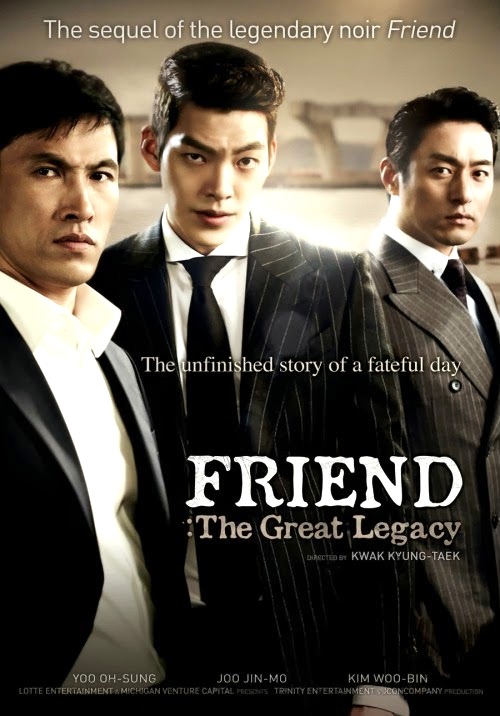
By Joe Bendel. Gangsters have a strong sense of history, probably because the past is constantly coming to bite them. Lee Joon-seok is a case in point. He will have all sorts of unfinished business on his hands after serving his seventeen year prison sentence in Kwak Kyung-taek’s Friend 2: the Legacy, which opens today in New York.

Lee is doing time for ordering the hit on a rival gang leader, who was once his childhood best friend. The turncoat was sort of asking for it, but it still bothers Lee from time to time. Shortly before his release, Lee is visited by a casual social acquaintance from his youth. Her son Choi Seong-hoon is a fellow prisoner, who has been marked for death after crossing Lee’s outfit. Much to his surprise, Lee extends his protection to the young thug, eventually taking him on as a protégé when they are both released.

They will be busy. Lee finds the syndicate his father first organized has been largely hijacked by Eun-gi, a cold-blooded boardroom gangster who exploited the vacuum left by Lee’s incarceration and the failing health of their Chairman. Obviously, Lee is not about to let this stand, even when a fairly obvious revelation threatens to undermine his relationship with the volatile Choi.

Friend 2 probably has four or five flashbacks too many, periodically revisiting not just Lee and Choi’s tumultuous backstories, but also giving viewers the highlights of the gang’s formative days under Lee’s enterprising father. The latter are almost superfluously tangential, but they are executed with a good deal of style and provide a lot of gangster genre goodies, so its worth going along with them, even if they confuse the narrative thread.

Regardless, Yoo Oh-seong is unquestionably Friend 2’s steely MVP. He is all hardnosed business as Lee, yet he still suggests hints of that troubled conscience buried somewhere deep within him. Kim Woo-bin is certainly convincingly erratic as Choi. Frankly, Friend 2 is not a great showcase for women’s roles, but the always reliable Jang Yeong-nam works wonders as Choi’s still attractive and resilient mother.

The gangster themes of family, loyalty, and betrayal are pretty standard stuff by now, but Friend 2 executes them with energy and conviction. The hits and brawls are always quite cinematic and the period scenes are nicely crafted. Propelled by Yoo’s serious-as-a-heart attack performance, Friend 2 is a solidly entertaining (if not exactly game-changing) crime epic, recommended for those who appreciate that specific genre and Korean cinema in general. It opens today (12/13) in New York at the AMC Empire.

LFM GRADE: B

Posted on December 13th, 2013 at 7:25pm.

Seven Brothers vs. The Khitan Army: LFM Reviews Saving General Yang; Now on Blu-ray/DVD

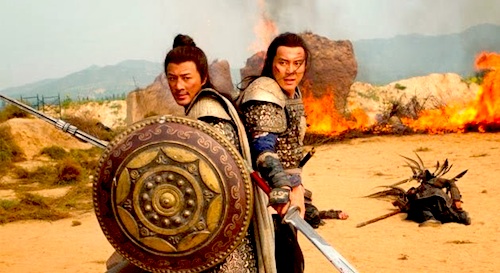
By Joe Bendel. The story of the Yang Family Generals and their noble sacrifices has been told on film before, including twice by the Shaw Brothers. Still, Ronny Yu and his co-screenwriters, Edmund Wong and Scarlett Liu, give it a fresh twist – and an English title obviously intended to evoke Spielberg’s post-D-Day blockbuster. They certainly have plenty of tragedy and bloody warfighting to work with. Death comes swiftly but the stain of dishonor is eternal in Yu’s Saving General Yang, which releases this week on DVD and Blu-ray from Well Go USA.

Nobody is more celebrated throughout the Song Dynasty for keeping the Khitan at bay than General Yang Ye. That also means he has made plenty of enemies, the fiercest being Yelü Yuan, the Khitan commander, who blames Yang for his father’s death in battle. However, Yang’s more politically astute rival Lord Pan poses a greater snake-in-the-grass danger. Despite Yang’s proven military leadership, the emperor appoints Pan as supreme commander of the Imperial Army, essentially demoting Yang to frontline general. He will regret that decision.

Of course, the first chance Pan gets, he retreats, leaving General Yang in the lurch. Rather than moving in for the kill, Yelü allows the wounded Yang to regroup on Wolf Mountain, fully expecting the Yang Brothers will try to rescue their besieged father. It is not just war for him, it is personal.

From "Saving General Yang."

Obviously, the Yang clan is in for a lot of mourning, but at least the brothers die spectacular deaths. Yu and action Stephen Tung Wai know how to stage a battle scene, emphasizing brutal realism instead of super human heroics. These might be some of the roughest, least exaggerated action sequences you will see in a year of wuxia films. On the other hand, when it comes to romance, Saving largely punts. At the least we briefly meet Ady Ang as Princess Chai, who definitely seems like the sort of Imperial royalty you would consider taking home to meet your parents. (Unfortunately, both Yang and Pan have a son who had that same idea, which is how most of this trouble starts in the first place.)

As the titular general, veteran HK actor Adam Cheng is aces at projecting a commanding presence. Likewise, Young & Dangerous franchise alumnus Ekin Cheng is appropriately steely as the first Yang son, Yang Yanping. However, numbers two through seven are largely indistinguishable from each other. All we really know about Vic Chou’s Yang Sanlang (#3) is his prowess with bow-and-arrow, but frankly that’s good enough, considering his role in a massive third act archery duel with Yelü’s chief lieutenant.

Saving’s big battle set pieces are quite impressive, with set designer Kenneth Mak and cinematographer Chan Chi-ying crafting a first class period production with epic sweep and down-and-dirty grit. If you like hot-blooded war films circa 986 AD, this one delivers. Just don’t ask for any extraneous characterization or whatnot. Recommended as red meat for genre fans, especially those who appreciate the enduring story of the honorable Yangs, Saving General Yang is now available for home viewing from Well Go USA.

LFM GRADE: B

Posted on December 11th, 2013 at 1:05pm.