LFM Reviews Life of Pi in 3D @ The New York Film Festival

By Joe Bendel. In 3D, New Age platitudes look like they are coming straight at you. At least Taiwanese auteur Ang Lee makes them stunning to behold. The tiger does not hurt, either. Generating significant buzz, Lee’s they-said-it-couldn’t-be-done adaptation of Yann Martel’s Life of Pi officially opened the 50th New York Film Festival, now underway at several Lincoln Center venues.

Growing up in India’s French quarter, Pi Patel was named for a Parisian swimming pool, but embraced mathematics as a means of truncating the embarrassing Piscine. As a boy, religion was his hobby, practicing Hinduism, Christianity, and Islam Furr’s Cafeteria style (but no love for Buddhism, evidently). He also picks up a few animal training pointers from his zookeeper father, which will stand him in good stead.

Much to Patel’s chagrin, his father decides to immigrate to Canada, where he and his brother will enjoy better future opportunities. Tragically, their ship sinks en-route – which is how, through an unlikely set of circumstances, Patel finds himself sharing a life boat with the family’s ferocious Bengal tiger, Richard Parker.
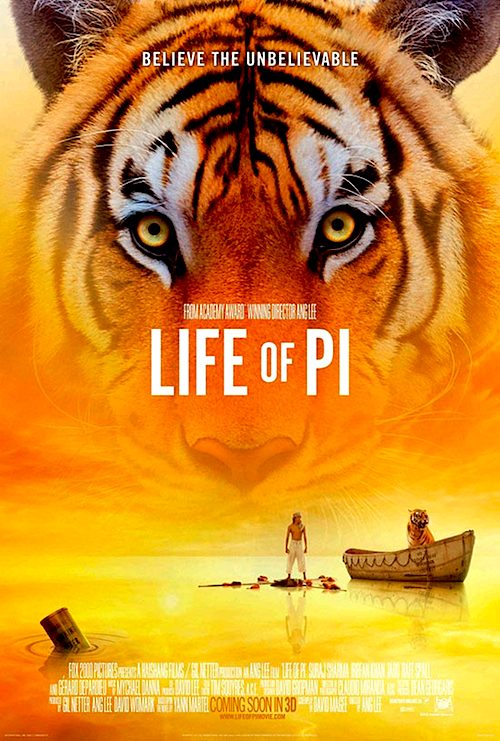
Pi is not exactly a story of a boy and his tiger. Despite the character’s avowed spirituality, he never hopes to change the tiger’s nature. Richard Parker begins and ends the film as a wild beast. However, Patel will attempt to train him with the techniques he learned from his father, in order to survive. They will not cohabitate, though. Patel will spend most of his time in a makeshift raft lashed to the lifeboat, ceding the larger vessel to Richard Parker.

For those who were wondering where Ang Lee has been, he has spent the last four years or so in a wave tank in Taiwan. Not surprisingly, the man who helmed Crouching Tiger has a keen sense of how to incorporate 3D to best serve the on-screen action. As dramatic as the tiger sequences are, it is the way he realizes depth and scope that are particularly arresting. He and his team create a spectacular fantasy world in the middle of the ocean.

Unfortunately, the narrative settles into a second act doldrums, largely repeating its Robinson Crusoe-Grizzly Adams motifs in what seems like an endless loop. Yet, in contrast to the film’s frequent heavy-handedness, Lee’s payoff hits the mark, precisely because of his tasteful understatement.

Indeed, there are many elements that work quite well in Pi, particularly its nostalgic portrayal of French India. For many viewers conditioned by Jewel in the Crown to think of pre-1949 India solely in terms of the British Raj, this is fertile ground, worth exploring in further films. Lee also nicely establishes the Patel family history, especially the role played by his dashing honorary uncle, Mamaji (played by the distinctive Elie Alouf). The wrap-around framing device is also quite effective, featuring a relatively brief but moving performance from Irffan Khan as the adult Patel, relating his story to a Martel-like novelist. For hardcore film geeks, Pi even features an unusual aspect ratio shift.

Pi has its merits, but it also illustrates the perils inherent in films confined to lifeboats. Visually, it is quite the triumph, but Lee’s young cast-members are not all some more enthusiastic critics are billing them to be. Ultimately, much of Pi is like a 3D painting—dazzling to soak in, but rather static. Better filmmaking than story-telling, Life of Pi certainly deserves technical consideration during awards season. Recommended for those interested in 3D as legitimate creative medium, Life of Pi launched this year’s NYFF on Friday, with a theatrical opening already scheduled for November 21.

LFM GRADE: B-

Posted on October 1st, 2012 at 11:56am.

Escaping East Germany: LFM Reviews Barbara @ The New York Film Festival

By Joe Bendel. Intimacy is based on trust, so is it ever really possible in police state like Soviet-era East Germany? Obviously, that is not the Stasi’s problem. They are out to do everything possible to isolate and demoralize a dissident doctor. Yet, in spite of her better judgment, she will develop ambiguously complicated feelings for her minder in Christian Petzold’s Barbara, Germany’s official best foreign language Academy Award submission, which screens during the 50th New York Film Festival.

As soon as Dr. Barbara Wolff applied for an exit visa, her brilliant career was effectively over. Transferred from a prestigious East Berlin hospital to a provincial backwater, Dr. Wolff is all too aware of the eyes on her. The most obvious set belongs to Andre, Barbara’s ostensive supervisor, whose role as the designated Stasi snitch is an open secret. He has a surprisingly convincing good guy act, though, and he definitely seems to care about their patients – particularly Mario, a young man suffering from a mysterious head trauma that defies diagnosis. Yet, the case that resonates deepest with Dr. Wolff is that of Stella, a recaptured prison camp escapee suffering from meningitis.

Wolff is not inclined to meekly submit to the Stasi’s mounting harassment. Having hatched an escape plan with her West German lover, she believes her time in East Germany is limited, which is why she is so surprised by her growing attraction to Andre and her emotional investment in their patients.

Actress Nina Hoss in "Barbara."

Barbara has been described as Petzold’s response to Florian Henckel von Donnersmarck’s brilliant The Lives of Others. That is true to an extent, but not in a polemical sense. There is no nostalgia here for the Honecker regime, let alone a defense. Petzold’s parents made the flight to freedom Dr. Wolff is anticipating, so he is understandably sensitive to the everyday tribulations endured by East Germans. Indeed, the film is best at conveying the guarded nature required for even the most prosaic of conversations and the jarring sound of that dreaded knock in the night.

Barbara Wolff easily represents Nina Hoss’s best performance to reach our shores.  Outwardly diffident but profoundly uneasy beneath her facade, the good doctor might be the best woman’s lead role of the year (and most years prior).  It is a tricky proposition to convey her character’s roiling inner turmoil as well as her concerted efforts masking it from the world, but Hoss pulls it off remarkably. Former East German Ronald Zehrfield also helps complicate audiences’ emotional responses as the flawed but perhaps still idealistic Andre, who might also be a victim himself, in that manner unique to captive citizens of police states.

Exercising a masterful control of mood and ambient sound, Petzold vividly recreates a sense of life in the GDR, in all its oppressive austerity. It is a lean, tense narrative, yet Petzold derives much of the suspense from within his characters rather than through external cloak-and-daggering. A very accomplished film featuring Oscar-worthy work from Hoss, Barbara is very highly recommended when it screens this coming Monday (10/1), next Saturday (10/6), and the following Tuesday (10/9) as a main slate selection of the 2012 New York Film Festival.

LFM GRADE: A

Posted on September 28th, 2012 at 1:22pm.

LFM Reviews Liv & Ingmar @ The New York Film Festival

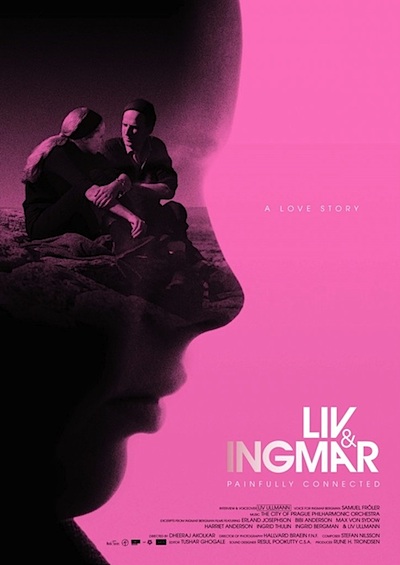
By Joe Bendel. They collaborated on some of the least romantic films ever (see Hour of the Wolf, for instance). Yet Ingmar Bergman and Liv Ullmann became the first couple of international art cinema. The Swedish auteur’s romance with his Norwegian muse would not last, but their relationship continued to evolve and endure. Ullmann reflects on each stage of her career-defining association with Bergman in Dheeraj Akolkar’s Liv & Ingmar, which screens as part of the 50th New York Film Festival’s Cinema Reflected sidebar.

What a difference a few years and a more northern latitude make. Whereas Ingrid Bergman was pilloried for leaving her husband to take up with Roberto Rossellini, Ullmann essentially did the same thing with Bergman, but with no attendant outrage from the world press. As she tells it, she was widely encouraged by friends to do so. Indeed, the film is entirely presented from Ullmann’s perspective, relying almost entirely on her narration and extended interview sequences to tell their story.

Nevertheless, there is no score settling in L&I. Even after the dissolution of their intimate cohabitation, the legends of Scandinavian cinema remained on good terms, eventually becoming the closest of friends. There is definitely a lesson in that, especially if you think documentary crews will one day be interviewing your former lovers. However, it might not make the most compelling viewing.

Ullmann still offers some insight into the dark places manifested in Bergman’s films, but that is about as far as the film goes. As a result, L&I is permeated with a fatal sense of respectability. Granted, nobody wants or needs to see a great filmmaker like Bergman trashed by an ex. The fact that he and Ullmann continued to mean so much to each other is quite touching and nearly the extent of the film’s takeaway.

Scenes of Ullmann revisiting Bergman’s Fårö Island home give the documentary a vivid sense of place and there are plenty of tellingly illustrative clips from their films. L&I is quite a heartfelt tribute, but as a work of cinema in its own right it is hardly essential (though it is an interesting film to see in conjunction with Francesco Patierno’s thematically related War of the Volcanoes, also screening during this year’s NYFF). Mostly recommended for dedicated Bergman and Ullmann admirers, Liv & Ingmar screens this coming Monday (10/1) and Tuesday the 10th during the 2012 New York Film Festival.

LFM GRADE: C+

Posted on September 28th, 2012 at 1:21pm.

LFM Reviews The Savoy King: Chick Webb and the Music that Changed America @ The 50th New York Film Festival

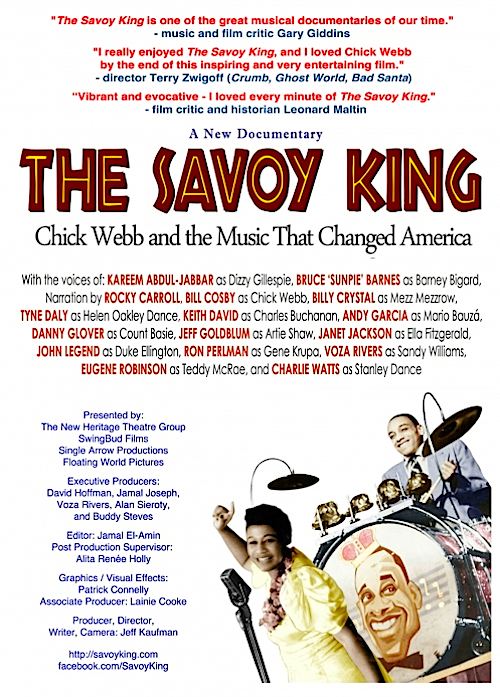
By Joe Bendel. To his colleagues, Chick Webb was a musicians’ musician. For dancers, he was their bandleader of choice. Yet, the man who drove the Savoy’s house band is not as widely recognized alongside the Dukes and Counts of jazz royalty as he ought to be. Surviving friends and fans help rectify that in Jeff Kaufman’s thoroughly entertaining documentary profile, The Savoy King: Chick Webb and the Music that Changed America, which screens as part of the 50th New York Film Festival’s On the Arts sidebar.

Chick Webb did not have much margin for error in life. He was an African American, naturally slight of stature, whose childhood back injury led to a broken body and a short lifetime of pain. He could play those drums, though. A reluctant bandleader, Webb held his outfit together during some decidedly hard times, largely thanks to the quality of his personality and music. Eventually, they hit it big through the perfect combination of venue and band.

Under progressive management, the Savoy Ballroom was unlike other Harlem nightspots, allowing interracial socializing. It welcomed neighborhood residents onto its dance floor—and dance they did. The eternally youthful Frankie Manning explains how the Chick Webb Orchestra became the band of choice for Lindy Hoppers in general and especially for him. In fact, it was Webb providing special rhythmic support for the first time Manning publicly unveiled his still dazzling air-steps.

Those familiar with Ken Burns’ Jazz will also know the basic story of Webb’s legendary battle of the bands with Benny Goodman. Yet, Savoy King tells it from a slightly different perspective, through the written recollections of his friend and promoter, Helen Oakley Dance. Webb also had the distinction of giving a band singer named Ella Fitzgerald her first big break. It all happened in thirty-four all too brief years.

Indeed, one of the many drawbacks of dying at a young age is the difficulty of staking one’s claim on history. Savoy King rightly does so on his behalf, calling upon expert testimony from the likes of Manning, the impossibly cool Roy Haynes, and trumpeter Joe Wilder, a true gentleman of jazz if ever there was one. He also enlists an all-star cast to give voice to the giants of the era, including Bill Cosby (a frequent host of the Jazz Foundation of America’s Great Night in Harlem gala concerts) fittingly cast as Webb himself. For his colleague and favorite arranger Mario Bauzá, Andy Garcia is also about as perfect a match as you could hope to make. However, Janet Jackson as Ella Fitzgerald? She wishes.

Savoy King is a compelling blend of cultural and social history that shrewdly always keeps the music prominent in the mix. Although director-producer-writer Kaufman fully explores Webb’s many tribulations, it is a pleasure to revisit the early swing era in his company. Hip and sensitive, Savoy King is an obvious highlight of this year’s NYFF for jazz fans, but it is also highly recommended for general audiences when it screens this Saturday (9/29) at the Walter Reade Theater and the following Tuesday (10/2) at the Francesca Beale.

LFM GRADE: A-

Posted on September 26th, 2012 at 3:32pm.

Revisiting the Holocaust: LFM Reviews Six Million and One

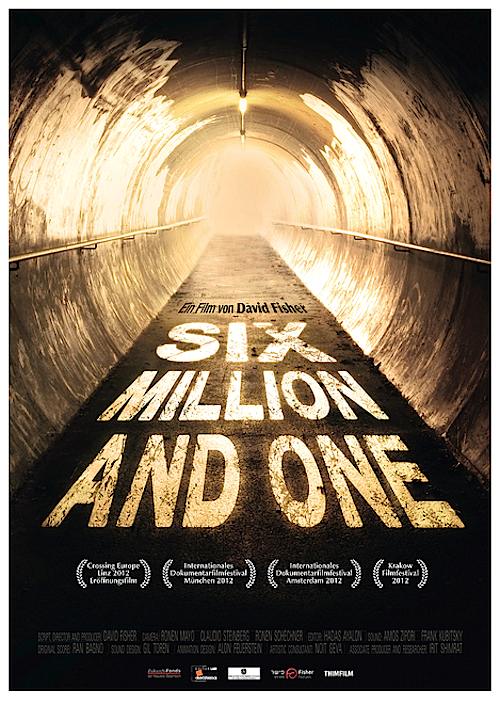
By Joe Bendel. David Fisher chose to drag his siblings to the historic sites of Austria – at least, the ones that the country would rather hide away from the world. They would visit the concentration camps their father survived. It is a trip Israeli filmmaker Fisher’s sister and two brothers make quite reluctantly. Nevertheless, they experience family history as a form of therapy they never knew they needed in Fisher’s Six Million and One, which opens this Friday in New York.

Fisher somehow lived through his internment at the Gusen and Gunskirchen camps, but just barely. Amongst the last camp populations to be liberated, the Fishers’ father easily could have been the National Socialists’ final victim, the titular six million and first. He did survive, but he never told the tale, except in the unpublished memoir discovered after his death. While most of the family has no interest in plumbing the depths of their father’s wounded psyche, the documentarian brother obsesses over it, using it as the blue print for SMAO.

Brother David starts the voyage solo, traveling to Austria, where he meets several townspeople who were slightly surprised to learn they had moved into houses across the street from a concentration camp. He also journeys to America to interview some of the surviving GI’s who liberated the Austrian camps and still suffer from post-traumatic stress syndrome decades later. In fact, these might be some of the most eye-opening scenes of the film, arguing for separate documentary treatment in their own right.

Eventually, Fisher cajoles his siblings into returning to Austria with him. They literally retrace their father’s steps on the notorious death march between camps and in the munitions tunnel he dug as a slave laborer. Yet, having not read their father’s chronicle, they are unaware of the significance of each leg of the journey until it is revealed by their filmmaker brother.

Notwithstanding the humanistic empathy of his visit with America’s “Greatest Generation,” SMAO revisits some well traveled documentary roads. For those of us who have covered many thematically related films, it clearly bears close comparison to Jake Fisher’s A Generation Apart (presumably no relation), as well as any number of films documenting Survivors’ return journeys to their old fateful homelands (such as Inside Hana’s Suitcase or Blinky & Me for instance). However, the refreshing wit and attitude of the Fishers helps differentiate SMAO from the field. It is clear they are never reading from a pre-written script, nor are they interesting in indulging in cheap-and-easy sentiment.

Yes, there have been a lot of films about this uniquely horrific episode in human history, but SMAO still finds something new to say. Though it displays a bit of inclination towards the discursive, writer-director-producer Fisher and editor Hadas Ayalon ultimately shape it all into a compelling narrative. Ran Bagno’s ECM-ish blend of chamber strings and experimental music also nicely underscores the dramatic presentations on-screen. Recommended for thoughtful audiences, Six Million and One opens this Friday (9/28) in New York at the Lincoln Plaza Cinema.

LFM GRADE: B

Posted on September 24th, 2012 at 12:29pm.

The King is Not Himself Today: LFM Reviews Masquerade

By Joe Bendel. It is like the Joseon-era equivalent of the eighteen minute gap in the Watergate tapes. Fifteen days of King Gwanghae’s official court history mysteriously disappeared. There was a fair bit of intrigue afoot during that period, but the king missed most of it. It is his double who briefly tends to matters of state in Choo Chang-min’s Masquerade, which opens today in select cities, including New York and Los Angeles.

When Gwanghae first assumed the throne, there was great hope for his reign. Unfortunately, he turned out to be a capricious ruler. Sound familiar? At least in early seventeenth century Korea, there were worse alternatives. Given the unsavory nature of his rivals in court, his loyal Chief Secretary Heo Gyun opts for full cover-up mode when the king is incapacitated by a life-threatening mickey. Already employing look-alike actor Ha-seon as the King’s double on a limited basis, Heo Gyun installs him on the throne full time until the royal doctor nurses the king back to health.

Han Hyo-joo as the Queen Consort.

Ha-seon knows little about the issues of the day, but his fundamental decency leads him to make better decisions than had been coming from Gwanghae of late. Trying to make nice with the beautiful Queen Consort, he starts doing those little things, like ending her brother’s torturous inquisition. Of course, these edicts only further antagonize the conspirators who brought about Ha-seon’s impersonation in the first place.

Essentially, Masquerade is the Korean costume drama version of Dave, but the stakes are higher for everyone involved. Obviously, not everybody will make it through the picture alive. The only questions are how high will the body count be and will it include the secret social climber Ha-seon?

In his first true period piece, action star Lee Byung-hun (internationally recognizable for G.I. Joe and I Saw the Devil) handles the dual role of king and clown rather well. He is convincingly imperious as Gwanghae and not terribly shticky as the in-over-his-head Ha-seon. However, it is the supporting cast that really shines, particularly Ryoo Seung-ryong (scary good in War of the Arrows), whose hardnosed Heo Gyun personifies steely gravitas. Likewise, Jang Gwang’s understated turn as Chief Eunuch Jo really sneaks up on viewers. Han Hyo-joo makes the most of the underwritten Queen Consort role, but Shim Eun-kyung really lowers the dramatic boom as Sawol, the young taster who awakens the conscience of the pretend king.

Costume designer Kwon Yoo-jin’s colorful threads look appropriately rich and finely wrought – but Choo is not overawed by the trappings of royalty, largely narrowing his focus to the micro human tribulations rather than the macro geo-politics. While there is more backstabbing than swordplay in Masquerade, it should still satisfy the entire spectrum of period action and romance audiences. Recommended for fans of Korean epic historicals, Masquerade opens today (9/21) in New York at the AMC Empire and in L.A. at the CGV Cinemas, courtesy of CJ Entertainment.

LFM GRADE: B+

Posted on September 21st, 2012 at 12:59pm.