LFM’s Govindini Murty at The Huffington Post: Supermodels and True Beauty: A Conversation with Timothy Greenfield-Sanders of HBO’s About Face

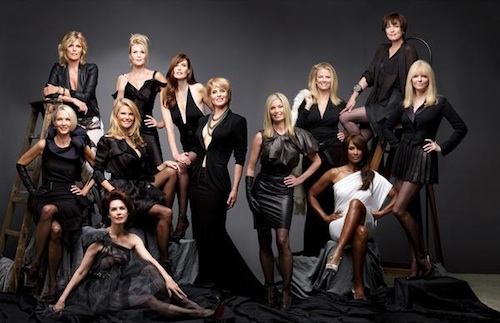
The supermodel sorority from "About Face."

[Editor’s Note: the post below appears today on the front page of The Huffington Post.]

By Govindini Murty. They’re among the most iconic faces of the second half of the twentieth century. Isabella Rossellini, Beverly Johnson, Paulina Porizkova, and their supermodel sorority helped to shape public perceptions of beauty and womanhood at a time of rapid expansion in the mass media. Their faces graced thousands of magazine covers and they were role models to millions of young women.

But was the rise of the supermodel a sign of female empowerment, or of female objectification?

About Face: Supermodels Then and Now, an insightful new documentary by director and photographer Timothy Greenfield-Sanders available on HBO on-demand through September 3 and HBO Go through 2013, interviews sixteen of these supermodels about the true nature of beauty in an age of consumerism and mass media.

As alluded to in About Face, the irony that underlies the modeling profession is that it should lead to both the empowerment and objectification of women. On the one hand, the mass distribution of images of female models through fashion magazines, ads, and other media in the past century has led to women becoming quite literally more visible in today’s world – with that visibility being an affirmation of their femininity and right to exist as women in the public sphere. In contrast to this, from the Puritans to the Taliban, misogynistic societies through history have restricted sensual or beautiful images of women as a prelude to denying their basic right to participate in public life, citing women’s beauty as a “corrupting” influence on social morality. The predominance of beautiful images of women in Western culture has thus affirmed the broader right of women to exist in public as feminine and not as neutered beings.

On the other hand, modeling has also had the effect of objectifying women by focusing on external surfaces, and at times unnatural standards of beauty. In About Face, Isabella Rossellini asks of the pressure for women to undergo plastic surgery: “Is this the new foot-binding? It’s misogyny to say that older women are unattractive.” Objectification can also lead to racism by dehumanizing people and imposing narrow standards of ‘beauty’ or ‘normalcy.’ Model and agent Bethann Hardison describes in About Face trying to book African-American models for runway shows in the ’70s and ’80s, only to be told by the casting agents that such models weren’t their “aesthetic.” As Hardison explains “‘Aesthetic’ is borderline for racist.”

I spoke with director Timothy Greenfield-Sanders about some of these issues at the LA Film Festival’s screening of About Face. The interview has been edited for length.

2012-08-31-beverly_johnson_smi_0002.jpg
Model Beverly Johnson.

GM: What drew you to these ladies? I know you met them initially at a party in New York, but what did you find so magical about them?

TGS: I think when I met them at that party … I immediately got a sense of how smart they were. You know, the cliché is that you either have brains or beauty, but you don’t have both. Well, they seemed to have both. It really makes it an interesting film. And I thought that people weren’t aware of that. I have two young daughters who knew who they were. But many young people today who are so interested in fashion, they don’t know the history of it and of these iconic women.

GM: What has changed about modeling? You mentioned in the screening that these models were so unique, whereas today the models and their careers seem more transient. Why is there this disparity today versus back then?

TGS: I think that it was a smaller world then. I think there was a warmer relationship between the models and the designers and even the businesspeople involved. It was not so cut-throat and not so corporate. And I think today it’s just big business and big money, and I don’t think the human relationship is there as much. I think it’s very changed.

GM: Do you think a big part of that is the issue of covers – that the actresses are taking over magazine covers?

TGS: Yes.

GM: It’s such a striking change. What has that done to the morale of the models? Does it make a big difference behind the scenes?

TGS: I’m not sure I can answer that because it’s not my world, exactly. But I know certainly it was huge in those days to have covers, because covers were the definition of success. And the cover of Vogue was the ultimate success. So when Beverly Johnson got on the cover of Vogue – the first black woman to do so [in August, 1974], that was a big deal. And today – that doesn’t happen for models.
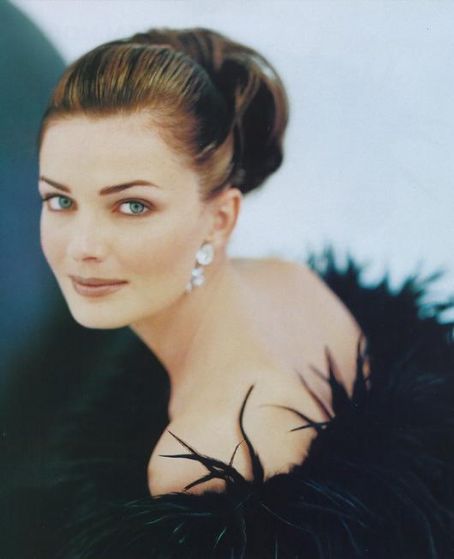
2012-08-31-PaulinaPorizkovapaulinaporizkova13818261454559.jpg
Model Paulina Porizkova.

GM: I thought it was very interesting what Dayle Haddon said that it wasn’t just that she thought she was the prettiest – in fact she didn’t quite fit into the physical type that was popular at the time, but that she brought something else to the picture.

TGS: She brought something else. And Dayle Haddon had to struggle because she wasn’t the look of the moment. She was a very smart woman and she figured out a way to add something more to the picture.

GM: Do you think the reason that those models from that era were so powerful – we’re talking the ’70s and ’80s, was because they were often muses for the designers they were working with?

TGS: Yes, exactly.

GM: I think of Yves St. Laurent and models like Khadija Adams, or even Catherine Deneuve in the ’60s who was dressed by St. Laurent for Belle de Jour. I think of Calvin Klein and Brooke Shields, they were so intimately tied together. Continue reading LFM’s Govindini Murty at The Huffington Post: Supermodels and True Beauty: A Conversation with Timothy Greenfield-Sanders of HBO’s About Face
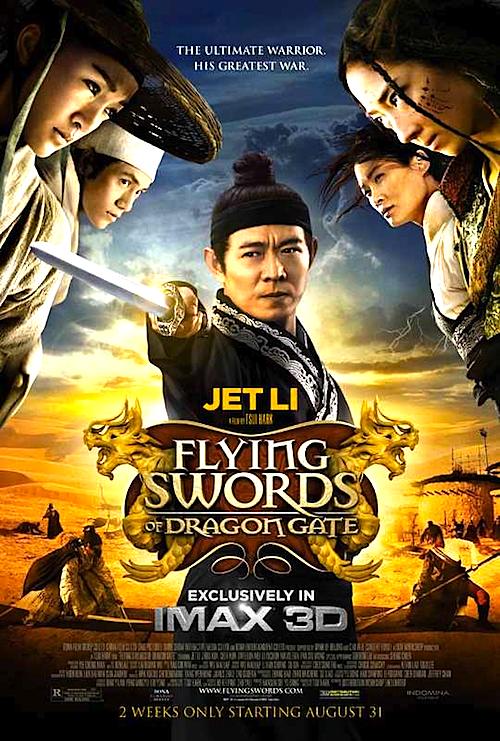
LFM Reviews Jet Li’s Flying Swords of Dragon Gate in IMAX 3D

By Joe Bendel. It was a time when eunuchs terrorized the land. However, a handful of wandering knights are willing to challenge them, even at the cost of their lives. Good multi-taskers, they will still find time for a bit of treasure-hunting in Flying Swords of Dragon Gate, Tsui Hark’s monster 3D return to the legendary Dragon Gate Inn world, which opens a special two-week IMAX-coming-straight-at-your-head limited engagement this Friday in New York.

Sort of but not really a sequel to Raymond Lee’s 1992 Dragon Gate Inn (produced and co-written by Tsui), Flying 3D picks up three years later in movie time. Dragon Inn burned to the ground and the femme fatale proprietress disappeared under murky circumstances, but since there was a demand for a sketchy flophouse right smack in the middle of sandstorm alley, the inn has been rebuilt by a gang of outlaws. While they might roll the occasional guest, they are really more interested in the legend of the fabulous gold buried beneath the sands.

Two mysterious swordsmen calling themselves Zhou Huai’an will find themselves at the remote outpost after tangling with the corrupt eunuch bureaucracy. One Zhou has just rescued Su Huirong, a potentially embarrassing pregnant concubine from the forces of the East Bureau. This Zhou also happens to be a she and she has some heavy history with the man she is impersonating. For his part, the real Zhou Huai’an has just barely survived a nasty encounter with the East’s top agent, Yu Huatian.

The doubling continues when fortune hunter Gu Shaotang shows up at the inn with her partner Wind Blade, a dead-ringer for the evil Yu. Add to the mix a group of rowdy, hard-drinking Tartar warriors, led by their princess Buludu and you have a rather unstable situation. Before long, sides have been chosen and a massive gravity-defying battle is underway, as the mother of all sandstorms bears down on Dragon Gate Inn.

Frankly, the 3D in Flying is so good, the initial scenes are a bit disorienting. Tsui probably has a better handle on how to use this technology than just about any other big picture filmmaker, dizzyingly rendering the massive scale of the Ming-era wuxia world. Flying is also quite progressive by genre standards, featuring not one but three first-class women action figures. When the headlining Jet Li disappears from time to time, he really is not missed. Of course, when it is time to go mano-a-mano in the middle of a raging twister, he is the first to step up to the plate.

All kinds of fierce yet genuinely vulnerable, Zhou Xun is fantastic as Ling Yanquiu, the Twelfth Night-ish Zhou Huai’an. Likewise, Li Yuchun is a totally convincing action co-star as the roguish Gu, nicely following-up on the promise she showed in Bodyguards and Assassins. Yet Gwei Lun Mei upstages everyone as the exotically tattooed, alluringly lethal barbarian princess. Her Buludu is both more woman and more man than Xena will ever be. In contrast, Chen Kun is a bit of a cold fish in his dual role, which suits the serpentine Yu just fine, but does not work so well for Wind Blade.

Throughout Flying, Tsui chucks realism into the whirlwind and never looks back. If you are distracted by scenes that look “fake,” many of the CGI fight scenes will have you beside yourself. On the other hand, if you enjoy spectacle, you really have to see it. Surpassing its predecessor in nearly every way, Flying Swords of Dragon Gate is a whole lot of illogical fun. Highly recommended for everyone still reading this review, it opens for two weeks only this Friday (8/31) at the AMC Empire.

LFM GRADE: B+

Posted on August 30th, 2012 at 1:25pm.

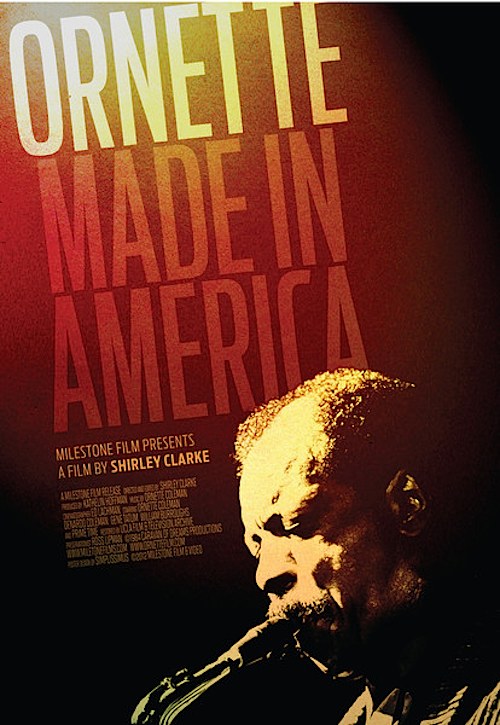
LFM Reviews Ornette: Made in America

By Joe Bendel. Ornette Coleman won the Pulitzer Prize for musical composition and performed live on Saturday Night Live. Although neither event is covered in Shirley Clarke’s classically idiosyncratic documentary-profile, viewers still get a memorable sense of the artist and his music in Ornette: Made in America, which opens in New York this Friday at the IFC Center, as part of Milestone Films’ Project Shirley restoration and rerelease program.

Explaining Coleman’s place in the jazz world would take some doing, especially in 1985, before his late career Grammy and Pulitzer accolades finally came cascading in. Coleman was one of the pioneers of the Free Jazz movement, whose legendary engagement at New York’s Five Spot club sharply divided the jazz world. However, you will not find his creation story here. Instead, Clarke’s approach to Coleman the man and the musician is deeply rooted in the then-current moment, yet is also rather timeless.

In the mid 80’s, the establishment (broadly defined) was just starting to understand that Coleman was a force to be reckoned with. As the film opens, the mayor of Fort Worth presents Coleman with a copy of the key to the city (the original, he explains, had been sent up into space or something), in the hours before the alto saxophonist-multi-instrumentalist will debut Skies of America, a major new composition integrating a symphony orchestra with his avant-garde electric combo Prime Time. Hizzoner’s speech might strike New York hipsters as a bit corny, but his drummer-manager-son Denardo is quite pleased his father is finally being recognized.

In fact, there is something all-encompassing and Whitmanesque about Coleman’s deeply blues-influenced music that is perfectly represented by a title like Skies of America, as well as the mayor’s patriotically Texan remarks. Shrewdly, Clarke uses this fairly accessible work as the musical centerpiece for the film, much like Sonny Rollins’ concert premiere of Concerto for Tenor Saxophone and Orchestra dominates Robert Mugge’s Saxophone Colossus.

There was probably no documentarian better suited to Coleman’s personality and aesthetic than Shirley Clarke. Her style of filmmaking perfectly reflects his music—fragmentary and baffling to the willfully uninitiated, but with a strong compositional conception underlying it all. Her visual sensibility might be far from infallible (a kid with an iPad could put her space age special effects to shame these days), but she demonstrates a rock solid command of Coleman’s acutely syncopated rhythms, and had a keen insight into his creative milieu.

Indeed, except for perhaps Clint Eastwood, no filmmaker can equal Clarke’s position as a filmmaker whose work promotes and is informed by America’s great original art form. The Connection, which launched Project Shirley, is a milestone (if you will) of independent filmmaking, in large measure due to Freddie Redd’s absolutely classic tunes. Likewise, her viscerally naturalistic social issue drama, The Cool World, derives considerable power from Mal Waldron’s soundtrack (which in turn was rerecorded by Dizzy Gillespie’s combo for the official OST LP version). There was even the non-narrative short, Bridges-Go-Round, featuring the music of Teo Macero. Ornette is sort of a summing up of her jazz evangelism, shining a spotlight on one of the most controversial yet at the time underappreciated artists to ever set foot on the bandstand.

Time and again, Clarke alternately emphasizes Coleman’s blues roots and hardscrabble early life (even filming young actors portraying the alto saxophonist in dramatized vignettes of his formative years) and his compulsively forward looking – almost futuristic – orientation. The fact that most of Coleman’s philosophizing makes little to no sense is hardly important. No, he never really explains his theory of harmolodics in Ornette and she wisely never pushes him.

The Coleman seen in Ornette matches the accounts I have personally heard from musician-friends who have had conversations with him and say it was the coolest thing ever, even though they have no idea what he said. Any film conveying that experience is worth seeing, but Ornette has considerably more to offer. A highly entertaining time-capsule of a jazz documentary, Ornette: Made in America is recommended for anyone who wants their ears stretched a bit when it opens this Friday (8/31) at the IFC Center.

LFM GRADE: A-

Posted on August 28th, 2012 at 12:15pm.

Drinking in The Wheel of Life: LFM Reviews Samsara

By Joe Bendel. Shooting footage in twenty-five countries around the world, documentarian-visual essayists Ron Fricke and Mark Magidson must have met thousands of fascinating people. Yet, you will not meet any of them on a personal level in their latest 70mm spectacle. Their aesthetic favors the people en mass and dehumanized over messily unpredictable individuals. As their follow-up to 1992’s Baraka, director-cinematographer-co-writer-co-editor Fricke & producer-co-writer-co-editor-co-musical director Magidson’s Samsara takes viewers to some awe-inspiring sites all over the globe, intending it all to signify the great cosmic wheel of life, as the title translates from Sanskrit. Those who want to see it should see in a theater, the way it was meant to be seen, when Samsara opens today in New York.

Think of this as The Wall for politically correct Volvo-driving health nuts. Deeply steeped in Eastern religious traditions, Samsara captures some amazing images, such as the opening Balinese dancers, the archaeological wonderland of Petra, and the Tibetan Buddhist monks of Thikse creating impermanent sand mandalas. It would probably deepen any viewers’ appreciations to hear the dancers discuss their incredibly disciplined collective choreography, or to have the monks explain what the mandalas symbolize according to their faith, but Fricke and Magidson are not going there. There will be no talking and no text in the film.

Samsara brings to mind an old airline commercial from years ago, in which a charming old Southwestern artist tells viewers that the young painters who move to New Mexico and are blown away by the landscape are missing the point—it is the people who are really interesting. Fricke & Magidson are like those landscape painters, duly filming the sweeping awesomeness of nature. Yet, in a way, this makes things so much neater and tidier. When images of the disfigured are contrasted with scenes of armament factories, we cannot help but get the unsubtle message. Yet, the more we knew about individual cases might make it far harder to indulge in sweeping generalizations.

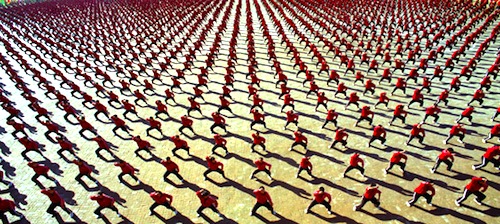
From "Samsara."

Some of the sequences in Samsara are absolutely arresting, like the shots of the Bagan temples in Burma, which did indeed grant the filmmakers access, after quite a bit of diplomatic and bureaucratic hoop-jumping. Sadly, when North Korea said “no,” Kim really meant “no,” so Fricke and Magidson were unable to film one of the giant choreographed stadium airangs. That’s too bad, because it would have fit right in with the rest of Samsara.

Without question, Samsara is lovely to look at (except when it is being deliberately ugly). There was obviously a conscious intent guiding the assemblage of the images, but they are still just images. Ultimately, the film is all surface and precious little substance. Any deeper meditations it might spur are solely due to viewer’s highly individualistic responses to the natural, sacred, and profane visuals it presents. Recommended just for those who enjoyed previous wide-screen picture books, like Baraka and Godfrey Reggio’s Koyaanisqatsi (on which Fricke served as cinematographer), Samsara opens today (8/24) in New York at the Landmark Sunshine.

LFM GRADE: B-/C+

Posted on August 24th, 2012 at 10:37am.

Please Don’t Strip Search Your Employees: LFM Reviews Compliance

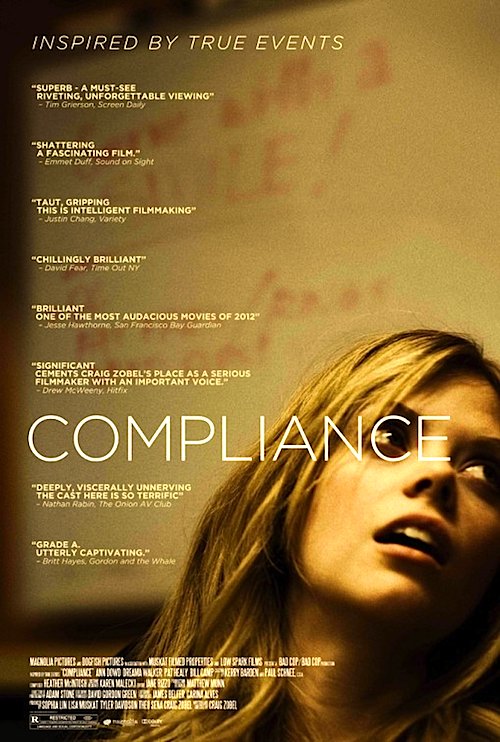
By Joe Bendel. Aren’t cop shows popular in the Midwest anymore? Anyone with a passing familiarity with the Law & Order franchises should understand the principle of lawyering up. Yet, one teen-aged fast food employee allows her manager to humiliate her on the instructions of a caller falsely identifying himself as a police officer in Craig Zobel’s ripped-from-the-headlines-with-the-names-changed-to-protect-the-innocent indie drama Compliance, which is now playing in New York.

Sandra, the restaurant manager, is under a lot of stress. She does not have enough bacon or pickles to make it through the weekend. Becky is an okay, but not a great employee. When “Officer Daniels” calls Sandra, sight unseen, claiming a customer accused the teenaged cashier of stealing money from her purse at the check-out counter, she is surprised but not incredulous. Just why the accuser never said anything at the time is an obvious question never asked. Dutifully, Sandra agrees to help Daniels’ investigation by sequestering Becky in the backroom, rifling through her belongings, and before long even strip-searching the confused young girl.

Of course, Sandra cannot find the “missing” money, which allows “Officer Daniels” to continue escalating the situation. Periodically, other restaurant employees are brought into this sensitive situation, who either reluctantly comply (so to speak) or wash their hands of the mess. To Zobel’s credit, he never plays any gender warfare cards. In fact, the voices of reason at this Chick-Wich are all male. However, the biggest offender also happens to be Van, Sandra’s inebriated fiancé, enlisted to “guard” Becky.

Yes, this is loosely based by a real case that even inspired an episode of Law & Order: SVU. While we cannot intellectually dismiss the events depicted in the film out of hand, it is important to remember they took place over the course of hours. This is a boiling frog phenomenon that simply is not credible in a mere ninety minutes. Granted, old Van was drunk as a skunk, but going from “hello Officer Daniels” to absolutely indefensible acts in about sixty seconds flat is dramatically problematic on-screen, regardless of the actual case files.

Pat Healy is effectively creepy and authoritative as “Daniels,” while Ann Dowd convincingly puts a harried every-person face on Sandra. Dreama Walker (known as a recurring on Gossip Girl) also has some very well turned scenes that help explain the victim’s mindset. Frankly, their performances are good enough to sell the initial set-up. It just spins out too quickly into some rather lurid places. Witnessing it all is supposed to challenge viewers to wonder what they would have done had they been in Sandra or Becky’s shoes. However, many will probably just quietly repeat to themselves the mantra: “right to an attorney.” After all, third graders can recite the Miranda warning by heart these days.

Perhaps the most troubling aspect of Compliance is its borderline vicarious sadism, essentially condemning its cake and eating it too. Ironically, though, the acts it portrays will make it easier for viewers to erect walls around the film and flatly deny they could ever be induced to act in such a manner. Hopefully they are correct. At times provocative, but also rather messy and ham-fisted, Compliance is a notable failure, probably worth viewing at a later stage for those who want to know what all the furor was about when it so sharply divided audiences at this year’s Sundance. For now, it is showing in New York at the Landmark Sunshine.

LFM GRADE: C+

Posted on August 18th, 2012 at 2:43pm.

LFM Reviews Wajda’s Korczak; Now on Blu-ray/DVD

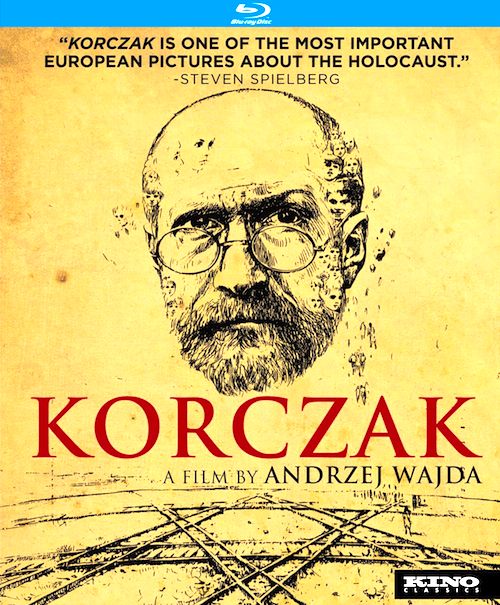
By Joe Bendel. Janusz Korczak was like the Polish Dr. Seuss, Dr. Spock, and Father Flanagan combined. He was born Henryk Goldszmit—a name that would prove fatal during the National Socialist occupation. Master Polish director Andrzej Wajda became one of his first filmmaking countrymen to forthrightly address the Holocaust, following the brave example of his protégé and frequent screenwriter Agnieszka Holland with 1990’s Korczak, which is now available on DVD and Blu-ray from Kino Classics.

Korczak/Goldszmit devoted his life to children. He was a popular children’s author and radio broadcaster, whose show was rather summarily canceled in the late thirties for sadly obvious reasons. Though removed from the public eye, Korczak continued to serve his beloved children as the benevolent headmaster of a progressive orphanage. A gentle gentleman by nature, Korczak loyally served as a doctor in the Polish Army, but nobody would have mistaken him for a military man. Yet, as the Germans marched through the streets, he refused to relinquish his uniform when so many others did. As viewers soon see, Korczak always did things the honorable way—the hard way.

Part of the agony of Korczak is watching the good doctor and his associates refusing to believe the situation is as bad as viewers know it is. Of course, the scale and systemization of the National Socialist death machine still remain hard to process. Yet, by 1942, enough escapees had sent word back to the ghetto that most of the involuntary residents would have a general idea what to expect from the concentration camps. Nonetheless, despite offers of counterfeit papers, Dr. Korczak refuses to leave his children. He had no use for one fake passport. He would need over two hundred.

Many have identified Korczak as a significant inspiration for Spielberg’s Schindler’s List. Shrewdly, the DVD cover prominently displays his unqualified endorsement. While both films profile heroic individuals, Korczak has absolutely no sentimental uplift to placate shallower viewers. It ends as it ended. Nonetheless, Wajda, again filming a Holland screenplay, ventures into more expressionistic territory in his final scene, perhaps representing idyllic afterlife not so strongly defined in the Judaic tradition Korczak never closely identified with (a stylistic decision Wajda took some heat for at the time of its initial release).

Wojciech Pszoniak gives one of the defining performances of the immediate post-Communist era. Yes, the Korczak viewers initially meet seems impossibly kind and virtuous. Yet, as the doctor endures pain and humiliation for the sake of his charges, Pszniak makes his anguish vividly clear.  Being a saint is trying burden.

Korczak also boasts a talented ensemble cast of pre-teen actors. Their complex relationships with each other feel very real and human. Conversely, those of Korczak’s colleagues are not as well established. Still, Ewa Dalkowska has some touching moments as Stefa Wilczynska, a former Korczak alumnus, who returned from the safety of “Palestine” to assist the doctor and his children during their hour of need.

Robby Müller’s black-and-white cinematography is absolutely arresting. Its influence on Schindler is unmistakable. Despite the deliberate lack of on-screen horrors, it is a draining film to watch. It is also exactly the sort of story that would have been impossible to depict under the recently deposed Communist regime, which had steadfastly relegated the Holocaust to the Orwellian memory hole. Along with his visceral Katyn, Korczak represents an important burst of creative truth telling from Wajda and Holland. Highly recommended, it is now on-sale at all major online retailers.

Posted on August 18th, 2012 at 2:40pm.