Sundance 2012: LFM Reviews Wuthering Heights

By Joe Bendel. Remember Sir Laurence Olivier and Merle Oberon in William Wyler’s adaptation of Emily Brontë’s romantic classic? If you do, you had best forget them now. Andrea Arnold radically reconceptualizes the familiar story in her mud and thatch version of Wuthering Heights (trailer above), which screens at the 2012 Sundance Film Festival.

The basic elements are still here. Heathclliff is a sullen young waif adopted by Earnshaw, a stern but charitable farmer of property. The lad forges a deep bond with his sort-of sister Catherine, but earns the enmity of Earnshaw’s son Linton, for usurping his father’s affections. When the devout farmer dies, Linton inherits the farm, stripping Heathcliff of his family standing. Now a lowly servant, Heathcliff nurses his resentments, which will lead to tragedy.

However, Arnold’s take on Brontë strips away the high costume drama romanticism, tacking an earthy, naturalistic course. Her casting of Afro-Caribbean actors as Heathcliff has garnered much attention, but that is really the least unconventional aspect of her approach. This is a highly impressionistic and ruminative film that revels in closely observed nature studies (masterfully lensed by Robbie Ryan) and relies on ambient noise rather than complimentary music and even dialogue. Set amid a harsh, unsentimentalized environment, Earnshaw’s home, Wuthering Heights, is simply a working farm, with all the muck and mire one should expect. Even Thrushcross Grange is cut down to size, nowhere near as imposing as Highclere Castle (a.k.a. Downton Abbey).

That is not to say it is not effective. As young Heathcliff and Catherine, Solomon Glave and Shannon Beer forcefully portray their characters’ animalism and instinctive defiance. Glave is a particularly electric screen presence, who largely carries the quiet film on his shoulders. By contrast, James Howson is far less dynamic as the older Heathcliff, lacking the charismatic malevolence the role demands. Frankly, he hardly looks much older than Glave.

Indeed, Arnold’s Heights is at its best during Heathcliff and Catherine’s formative years. Like most adaptations, the late chapters concerning their grown children are omitted. Since the film proceeds without a narrator, Mr. Lockwood also gets the boat. However, Heathcliff’s relationship with Isabella is shoehorned in rather awkwardly, perhaps to placate the faithful.

Heights’ spartan brutality is truly haunting. However, it is doomed to collect decidedly negative online feedback. People who go to Brontë films do not want to see something new and different. They want the “Oh, Heathcliff” scene on the moors. This is not that kind of film. It viscerally expresses a host of tactile sensations, de-emphasizing melodramatic plot turns. Despite a comparatively weaker third act, it is a bold work that really stays with you after viewing – but due to its nature, it is only recommended for adventurous, fully informed audiences. It screens again during the 2012 Sundance Film Festival today (1/28) in Salt Lake.

SUNDANCE GRADE: B

Posted on January 28th, 2012 at 3:19pm.
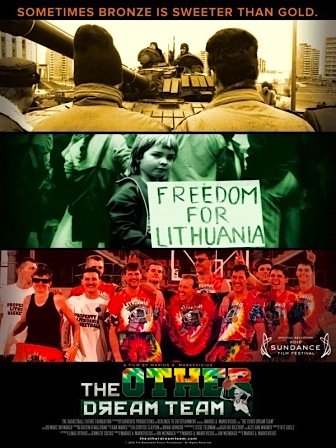
Sundance 2012: LFM Reviews The Other Dream Team

By Joe Bendel. In the late 1930’s, Lithuania twice won the European basketball championship. In 1940, it was invaded and subjugated by the Soviet Union. Yet, the tiny Baltic country’s proud sporting tradition helped sustain it during those painful decades, culminating in the newly free Lithuania’s Olympic victory over the Russian-Unified team in 1992. The incredible history of Lithuania’s break from the Soviet Union and the game that announced their independence to the world is told in Marius Markevicius’s stirring documentary The Other Dream Team, which screens during the 2012 Sundance Film Festival.

America’s 1988 Olympic loss to the Soviets was the impetus for the creation of the so-called “Dream Team” of NBA all-stars, including Michael Jordan and Patrick Ewing. However, four of the Soviet team’s starters were actually Lithuanian. In fact, warriors like Arvydas Sabonis and Šarunas Marčiulionis had dramatically mixed emotions about their 1988 gold. They were proud of their accomplishments, but the Soviet anthem was not the anthem they wanted to hear on the medal stand.

Four years later, much had changed. Sabonis and his colleagues were finally allowed to play in the NBA as a reward for their Olympic glory. At great risk, Lithuania had asserted its independence and held out against invading Soviet forces. The freshly sovereign country could field one of the best basketball teams in the world but had insufficient resources to send them to Barcelona. However, help would come from an unexpected source: the Grateful Dead.

Dream gives roughly equal time to sports and history, but each part is equally uplifting and informative. Indeed, people often forget it was Nobel Peace Laureate Mikhail Gorbachev who sent the tanks into Vilnius. In fact, independence leader Vytautas Landsbergis was just as much a protagonist as Sabonis and his teammates.

Just about all the starters from the 1992 team are heard from in great length throughout Team and each has their share of telling anecdotes. As is so often the case with survivors’ reminiscences of the Communist era, they are often simultaneously funny and sad. Yet, simply considered as a sports doc, Dream is one of the best in years. Even basketball fans who think they know the players well will learn something new here.

This is a great story, smartly constructed with rich details and full historical context. The many Grateful Dead tunes included in the soundtrack are also a nice bonus. For those looking for a movie that celebrates the spirit of freedom, Dream will get you choked-up, in a good way. Legitimately inspiring and hugely entertaining, it is one of two truly standout documentaries at Sundance this year (along with Ai Weiwei: Never Sorry).  Enthusiastically recommended, it screens again today (1/25) and Saturday (1/28) in Park City, as well as this Friday (1/27) in Salt Lake.

SUNDANCE GRADE: A+

Posted on January 25th, 2012 at 6:58pm.

Sundance 2012: LFM Reviews Wish You Were Here

By Joe Bendel. Southeast Asia really is not the wisest place to go on a drug and booze-fueled bender, particularly if you are parents and even more so if you are pregnant. Nonetheless, the Flannerys decides you only live once in Kieran Darcy-Smith’s cautionary tale, Wish You Were Here, which screens as part of the 2012 Sundance Film Festival.

Dave and Alice Flannery have two kids, with a third on the way. Despite her advancing pregnancy they cannot say no when her sister Steph McKinney’s new boyfriend offers to treat them all to a vacation in Cambodia. A sketchy import-exporter, the fast-talking Jeremy King claims he can deduct it all. Evidently Australia must have quite an indulgent tax code. At first, the quartet has a blast, as the audience can plainly see from the long opening montage. However, only three of them came back. Somewhere along the way, they lost King.

Actually, quite a bit went down in Cambodia that threatens to break their family ties. Since they all assume King’s disappearance involved his stash of XTC, they have trouble deciding just what they should tell the Australian authorities. Needless to say, there are probably lingering dangers from that fateful night they should also worry about.

At times, the Flannerys can just be hair-pullingly dumb. An iota of communication would have spared them so much grief. Still, the slow reveal of King’s fate is rather effective (though the resolution of the mystery is somewhat underwhelming). The Cambodian locales are also quite cinematically exotic and seedy. Yet throughout Wish, it is impossible to shake the notion the Flannerys got off easy. Haven’t they seen Midnight Express? Drug use in a less than transparent country is usually a distinctly bad idea.

Poised to succeed Russell Crowe as Hollywood’s favorite square-jawed Australian, Joel Edgerton definitely has the right intense screen presence and everyman quality for Dave Flannery. Granted, it is a stressful set of circumstances, but Felicity Price’s Alice Flannery often comes across as somewhat overwrought and irrational. In contrast, even though he draws the short straw, Anthony Starr is rather memorably dynamic as the ill-fated King.

Wish is a serviceable thriller-slash-family drama, but it holds no real surprises in store for viewers. It probably will not do much for Cambodian tourism either, even though the beaches look inviting. Not a special priority, Wish screens this coming Wednesday (1/25) and Friday (1/27) in Park City, as this year’s Sundance swings into high gear.

SUNDANCE GRADE: C+

Posted on January 22nd, 2012 at 11:10am.

Sundance 2012: LFM Reviews Where Do We Go Now?

By Joe Bendel. Isolated and picturesque, the Lebanese village of Taybeh offered the perfect locations for the country’s official submission for this year’s best foreign language Academy Award. The church and mosque built side by side will be particularly significant in Nadine Labaki’s stylized musical, Where Do We Go Now?, which screens during the 2012 Sundance Film Festival.

Accessible only by an impossibly torturous bridge, the Christian and Muslim inhabitants live in peace, or at least the women do. The men are uneasy in their truce as news of fresh violence in the outside world vaguely drifts in. Tired of their perpetual mourning, Amale, the Christian widow who operates the town café, organizes the women like a Lebanese Lysistrata. They sabotage the television and radios, while doing their best to distract the restive men. When all else fails, they bring in a troupe of Ukrainian strippers, in a bit of a departure from the film’s classical Greek forerunner.

In a bit of a twist, the women’s few real male allies include the village’s priest and imam, whom the film presents as friendly colleagues rather than hateful zealots. Of course, Labaki and co-writers Jihad Hojeily, and Rodney Al Haddad strenuously avoid taking sides. Indeed, the whole crux of the film is the interchangeability of the two faiths.

The occasional musical number certainly helps liven-up the proceedings. Some are rather somber, like the funeral procession taking a slight Fosse-esque detour. However, Amale’s fantasy dance with Rabih, her Muslim handyman, is pretty hot stuff. As Amale, Labaki is also rather alluring, but her smart and sophisticated presence seems at odds with the rest of the largely matronly townswomen. Indeed, she seems distinctly out of place in this town full of stock characters.

Still, the choreography is striking and Christophe Offenstein’s cinematography is often quite arresting, soaking up all the scarred beauty of the weathered village and the rugged surrounding landscape. Though well meaning, Where remains a minor film that ultimately lacks the gravitas it presumes to have by virtue of its subject matter. Pleasant for those who enjoy an unconventional movie musical, but hardly a priority at Sundance, it screens this Saturday (1/21), Wednesday (1/25), and the following Saturday (1/28) in Park City, as well as this Sunday (1/22) in Salt Lake.

SUNDANCE GRADE: B-

Posted on January 21st, 2012 at 10:06am.

Sundance 2012: LFM Reviews The Conquerors

By Joe Bendel. They are sort of like the Swiss Family Robinson, except more archetypal. They also must learn to share their bizarre new world with fantastical insectoid creatures in Tibor Banoczki & Sarolta Szabo’s unusually ambitious, genre-defying animated short film The Conquerors, which screens during this year’s Sundance Film Festival in Park City.

Amidst a roiling sea, a man and a woman become castaways on a forbidding island. Since she is pregnant, their situation is particularly dire. Yet, after some initial days of hunger, the man learns how to tame the smaller beetle-like creatures and hunt the larger ones. The woman safely delivers her baby and several more follow. Eventually, their family becomes a small community. For the most part, they live in harmony with their macabre environment, but danger is ever present. Then outsiders arrive and everything changes.

Rendered in a distinctive photorealistic style of animation, Conquerors has a striking look truly unique unto itself. Its evocative black-and-white images suggest the influence of both German expressionism and 1930’s adventure serials in equal measure, while the strange world owes more to the surrealists. Yet, in terms of tone, its closest comparison might be René Laloux’s Fantastic Planet, for its bold use of Biblical motifs and brutally naturalistic representation of the rule of the jungle.

Conquerors screens as part of the short program in Sundance’s New Frontiers track, which is sort of a catch-all for work that is experimental or tech-driven. While its animation might be cutting edge, it is still perfectly accessible from a narrative standpoint. In fact, Banoczki and Szabo tell quite an epic tale in an economic twelve minutes.

So richly detailed and loaded with allegorical significance, Conquerors is definitely the sort of film that rewards multiple viewings. Visually, it is absolutely absorbing, even when depicting unsettling events. A co-production of the National Film Board of Canada, it would be a highlight of most any short film program. Highly recommended, it screens during the 2012 Sundance Film Festival’s New Frontiers shorts block this coming Monday (1/23), Wednesday (1/25), and next Saturday (1/28) in Park City and this coming Tuesday (1/24) in Salt Lake.

Posted on January 21st, 2012 at 10:04am.

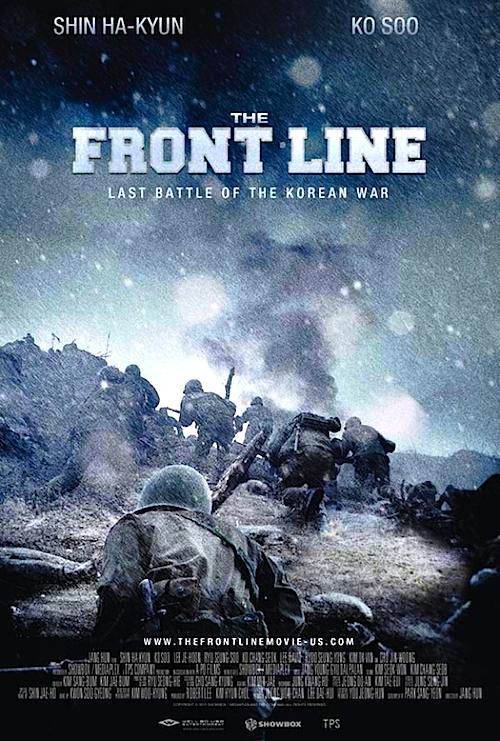
Submitted to the Oscars by South Korea: LFM Reviews The Front Line

By Joe Bendel. When a South Korean officer is killed with one of his troops’ weapons, someone has to investigate. It is also a convenient way to move a trouble-making lieutenant out of the way. Indeed, war is brutal, messy, and soul-deadening in Jang Hun’s The Front Line, Korea’s official best foreign language Oscar submission, which opens this Friday in New York.

A vocal critic of the drawn-out peace negotiating process, Kang Eun-pyo is assigned to investigate irregularities reported within the “Alligator Company” dug-in around the pedestrian looking but strategically prized Aero.K hill. In addition to the suspicious death of a despised commander, several letters from North Korean soldiers have been posted to family members in the south by someone in the company. A mole is suspected.

However, when Kang arrives, he discovers the situation is murkier than that. There has been a form of communication flowing between the two sides, but it is born of survivors’ fellowship rather than espionage. Still, he maintains suspicions regarding Kim Su-hyeok, a comrade from the early days of the war long presumed to be a POW, but evidently serving as the Company’s lieutenant.

Over the course of the film, Alligator Company will take, lose, and regain the fateful hill over and over again. It would get somewhat repetitive if not for the intense warfighting scenes, rendered by Jang in a take-no-prisoners style. Line’s sense of place is so strong, audiences will feel they know every inch of that crummy nub of a hill.

Do not get too attached to any characters in Line. Jang will call up their numbers at the most arbitrary of times, as befits the nature of war. Nonetheless, there are many strongly delineated characters. In fact, the self-medicating Captain Shin Il-yeong and the darkly brooding Lt. Kim, memorably played by Lee Je-hoon and Ko Soo respectively, clearly bear the spiritual scars of war. As the film’s only substantial female character, Kim Ok-bin also hints at a host of inner conflicts as the soon-to-be not so mysterious woman often seen foraging near the battlefield.

Like Jang’s previous film Secret Reunion (which screens February 15th in New York as part of the Korean Cultural Service’s regular cinema showcase), Line not very subtly advocates for reunification, arguing that divisions are merely an arbitrary matter of hills and parallels. Of course, it ignores the grim reality of the DPRK, in which famine is commonplace and the gulags are so extensive that they are the only features of the country that can be seen from space. While the soldiers could easily lose sight of it in the carnage surrounding Aero.K, there were indeed real stakes and consequences to the war. Whether it was also prosecuted competently, is an entirely fair and separate question.

Regardless, Jang masterly stages some of the most realistic, decidedly unheroic battle scenes viewers will see at the theater this year. It is a powerful, draining statement, recommended for connoisseurs of war movies, including the anti-war variety. Line opens this Friday (1/20) in New York at the AMC Empire and in the Bay Area at the AMC Cupertino.

Posted on January 19th, 2012 at 9:04am.