LFM Reviews Funuke Show Some Love, You Losers @ The 2015 New York Asian Film Festival

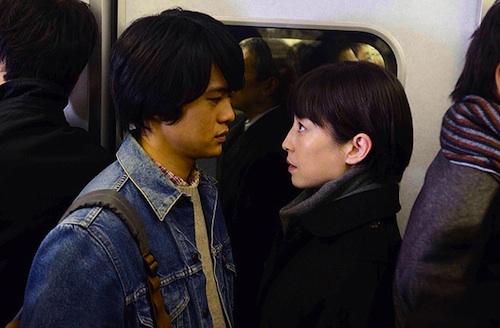
By Joe Bendel. It has been a rough couple of years for cartoonists. Although young Kiyomi Wago does not have a fatwah hanging over her head, her family banned her from drawing horror manga, scapegoating her gory images for all their problems. Yet, they constantly provide fresh inspiration with their ghastly behavior. Frankly, they need another dose of manga humiliation as comeuppance for all their acting-out in Daihachi Yoshida’s Funuke Show Some Love, You Losers, which screens during the 2015 New York Asian Film Festival.

Wago’s parents recently perished in a fatal car crash, involving an adorable kitten. Her spoiled older sister Sumika will not offer much consolation when she finally makes it home. The family had been supporting her dubious acting career, but she only has debts and burned bridges to show for her efforts. She expects to continue dominating their half-brother Shinji, because of the incestuous control she exerts over him, even though he is now married to his naïve internet bride, Machiko. Unfortunately, Sumika still blames Kiyomi for scandalizing the family when she won an amateur contest with the story of her irrational attempt to murder their now late father. Needless to say, Sumika is not ready to forgive and forget.

From "Funuke Show Some Love, You Losers."

By the way, Funuke is a comedy, more or less. Yes, you could say it is a somewhat dark one in terms of tone. In fact, Yoshida maintains an almost unclassifiable vibe, like Ozu mixed with Sirk and a dash of John Waters and then launched on a grain alcohol bender.

You may not fully understand the term “hot mess” until you have seen Eriko Sato as Sumika Wago. She is a force, which makes it so rewarding to watch Aimi Satsukawa’s Kiyomi learn to assert her inner Daria. It is subtle, yet substantial arc of character development that she carries off quite well. However, Hiromi Nagasaku might actually be too good as earnest Machiko. She just makes you want to slap everyone around her. As a result, poor Masatoshi Nagase and his character Shinji never stand a chance. They just get buried by the stronger personas surrounding them.

In a way, Funuke is an ode to the cathartic power of artistic expression—specifically through manga in this case. Fortunately, it features a good deal of art by Noroi Michiru that is striking in its own right and absolutely perfect in the dramatic context of the film. At times, Yoshida’s adaptation of Yukiko Motoya’s novel feels excessively mean towards Machiko, but its edge is impressive. Recommended for manga fans who think the last good comedy to play at Sundance was The House of Yes, Funuke Show Some Love, You Losers! screens today (6/29) at the Walter Reade, as part of NYAFF’s mini-focus on Yoshida.

LFM GRADE: B

Posted on June 30th, 2015 at 12:37pm.
LFM Reviews Pale Moon @ The 2015 New York Asian Film Festival

By Joe Bendel. Currently, the exchange rate is 120-some Yen to the Dollar. It was something similar in the mid-1990s. Although we know we should be adjusting in our heads, the sums Rika Umezawa embezzles from her private banking clients still look staggeringly high. It is hard to sustain such recklessness indefinitely, but Umezawa will have a heck of a run in Daihachi Yoshida’s Pale Moon, which screens during the 2015 New York Asian Film Festival.

Umezawa looks a far cry from John Dillinger. The former housewife has only recently returned to the workforce, responding to the bank’s recruitment program. She is attractive, but extremely shy and reserved. Her first inherited client, a lecherous old tight-wad, might have been troublesome for her to deal with – if not for the intercession of his college age grandson, Kota Hirabayashi. Still, she manages to sell him on a few starter investments.

In the early days, Umezawa’s performance is quite promising. Yet, her husband continues to patronize and underestimate her. Of course, he just assumes she will accompany him when he is transferred to China, but she rather scandalously opts to stay in Japan. After all, she has secret affair with Hirabayashi to enjoy. She also redirected some of his Scrooge-like grandfather’s money to pay for his tuition. That turns out to be the sort of thing that is hard to stop once you start. Soon, Umezawa is falsifying documents and intercepting bank statements to maintain her lifestyle. Meanwhile, her senior colleague Yoriko Sumi starts investigating her suspicions, hoping to find something that would forestall her forced retirement.

Moon has the obvious feminist angle and the zeitgeisty financial crisis theme, but it is rather more than either sort of issue-driven drama. Thanks to Rie Miyazawa’s absolutely extraordinary lead performance, it is utterly impossible to pigeon hole Umezawa as some sort of Thelma or Louise in a business suit. Although she has good reasons to feel put-out, she is not a victim, but more of an existential heroine. Eventually she will even question the soundness of fiat currency and the legitimacy of Platonic reality. At that point, the third act takes a rather strange turn, but Yoshida lays enough groundwork so that it seems almost logical rather than jarring.

From "Pale Moon."

Miyazawa owns this film lock, stock, and barrel, but her greatest competition for the spotlight fittingly comes from Yuna Taira, who appears as the fourteen year old Umezawa in flashbacks. The young screen performer has no shortage of presence, yet still projects a sense of earnest vulnerability she shares with Miyazawa. Admittedly, it is tough being a guy in Moon, but Renji Ishibashi knocks us off-balance from time to time as the curmudgeonly old Kozo Hirabayashi. There is also something compellingly sad about Satomi Kobayashi’s performance as Sumi, a somewhat kindred spirit to Umezawa, who has adopted the diametrically opposite survival strategy.

Special NYAFF Guest Yoshida helms with great sensitivity and a subtly dark sense of humor, which distilled produce a truly distinctive vibe. This is a film that defies labels (is it a crime drama or a work of social criticism?) and up-ends expectations. Moon absolutely does not leave the audience in a “safe place,” but it is strangely satisfying spot to end. Throughout it all, Miyazawa is superhumanly engaging as Umezawa. Highly recommended for sophisticated audiences, Pale Moon screens today (6/29) at the Walter Reade, as part of NYAFF’s mini-focus on Yoshida.

LFM GRADE: B+

Posted on June 30th, 2015 at 12:37pm.

LFM Reviews It’s Already Tomorrow in Hong Kong @ The 2015 New York Asian Film Festival

By Joe Bendel. Hong Kong is a wildly cinematic city, but it is not conducive to rom-coms. Johnnie To keeps trying, but it is his gangster-cop dramas that will be remembered. Still, two American ships passing in the night will take their best shot at talky flirtatiousness in Emily Ting’s It’s Already Tomorrow in Hong Kong, which screens during the 2015 New York Asian Film Festival.

Ruby Lin is a Chinese American toy designer who does not speak a word of Cantonese. Josh Rosenberg is a fluent American expat working in finance. There paths cross on the one night she happens to be in Hong Kong for business. He helps her navigate the city, sparks fly, and then epic fail. One year later, they bump into each other on the Kowloon ferry. She is now temporarily working in HK, but she still does not feel comfortable there. Much to her surprise, Rosenberg has chucked in his high paying corporate gig and has adopted the lifestyle of a literary bohemian. It’s all her fault, by the way.

They start slower on their second go-round, but eventually they generate the same heat again. However, this time they are uncomfortably aware of the other’s respective romantic partners. Maybe it cannot lead anywhere, but the food looks delicious and the scenery is picture postcard perfect.

Yes, it is kind of like the Linklater trilogy. So what? Frankly, even Before Sunrise was not so earth-shatteringly original when it first released. There was a 1945 film called Brief Encounter that covered similar thematic terrain and it was based on a play from the 1930s. David Lean did it better than anyone, but Ting has a huge trump card in the city of Hong Kong. It is easy to imagine a lot of indulgent boyfriends and husbands getting dragged on a It’s Already Tomorrow pilgrimage tour (or maybe vice versa). Seriously, Ting and cinematographer Josh Silfen make the mega-city look ever so seductive (and also quite a bit overwhelming).

From "It’s Already Tomorrow in Hong Kong."

As Lin and Rosenberg, co-executive producers Jamie Chung and Bryan Greenberg exhibit real chemistry, as apparently they ought to. Even their idlest chatter is pretty hot, yet it almost always sounds believably grounded. Even though they riff on Seinfeld, Ting’s screenplay mercifully never sounds like it is trying to deliberately coin catch-phrases.

NYAFF’s screening of IATIHK is presented in conjunction with the Hong Kong Economic and Trade Office in New York, who really should be at the theater selling HK tourism packages. They would probably get a lot of takers. In many ways, the film follows a predictable pattern, but its ambiguous romance and the perambulation through the streets of Hong Kong is an entirely pleasant and satisfying way to spend some fleeting time. Recommended for those who enjoy rom-coms and city symphonies, It’s Already Tomorrow in Hong Kong screens this Sunday (6/28) at the Walter Reade, as part of this year’s NYAFF.

LFM GRADE: B+

Posted on July 26th, 2015 at 2:57pm.

LFM Reviews My Love, Don’t Cross that River @ The 2015 New York Asian Film Festival

By Joe Bendel. When Jo Byeong-man married Kang Kye-yeol, Korea was still occupied by Japan. For seventy-six years they were a happy couple, despite never having much money. Unfortunately, all mortal things must end. Jin Mo-young documented their final happy days together as well as their long goodbye in the surprise Korean box-office blockbuster, My Love, Don’t Cross that River, which screens during the 2015 New York Asian Film Festival.

When Jin started filming them, Jo was ninety-eight years young and his wife Kang was a youthful eighty-nine (they were already used to cameras, as the prior subjects of a KBS special report, Gray-Haired Lovers). You will actually come up with some awkward numbers if you do the math, but Kang explains her beloved was quite shy during their early years together and willing to wait for her to mature at her own pace. Eventually, they had twelve children together, but only six survived to see them into their golden years.

Frankly, considering their respective ages, Jo and Kang are impressively spry and frisky in the film’s initial scenes. There is no question they had a heck of a run together. Even though their union was a semi-arranged business, they clearly fell deeply in love. Sadly, time will finally catch up with Jo as he nears the century point. At this point, River becomes difficult to watch. However, our hearts really take a pummeling when Kang, recognizing time is short, makes offerings of burnt children’s clothing to the son and daughters they lost so long ago—but never forgot.

From "My Love, Don’t Cross that River."

Much to everyone’s surprise, River became a sleeper sensation in South Korea, knocking Interstellar out of the top spot at the box-office. In their happier days, they were certainly an adorable couple. Yet, in addition to their great romance, they represent a bridge to the past, frequently wearing colorful traditional garments and residing in a modest home with modern appliances, but no indoor plumbing. They have seen it all (occupation, war, regime change, and dramatic Tiger-era economic growth), yet they still live much as they always have.

At times, River is uncomfortably intimate. Arguably, Jo’s painful last days merited greater privacy. Nevertheless, the longevity of their wedded bliss is quite inspiring. Yet, it is consolation offered by traditional rituals that provides the film’s most quietly devastating moments. Honest and endearing, My Love, Don’t Cross that River is recommended for slice of life doc watchers when it screens this Sunday (6/28) at the Walter Reade, as part of this year’s NYAFF.

LFM GRADE: B

Posted on June 26th, 2015 at 2:57pm.

LFM Reviews Cold War @ The 2015 New York Asian Film Festival

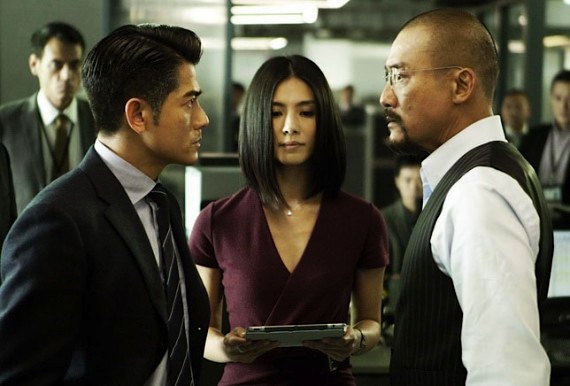
By Joe Bendel. Up until the crackdown on the Umbrella Protest Movement, the Hong Kong police had remained popular even when the government was not. Despite what we see in Johnnie To and John Woo movies, the police had always kept the city safe, while maintaining a reputation for integrity. That all might come to an explosive halt in Longman Leung & Sunny Luk’s Cold War, which screens as part of the tribute to Star Asia Award winner Aaron Kwok at the 2015 New York Asian Film Festival.

The bad guys will be busy while the PR-sensitive police commissioner is attending a conference in Copenhagen. Soon after a bomb explodes in a Mongkok cinema, an emergency response police van is hijacked, along with the five cops assigned to it. “M.B.” Lee Man-bin, the grizzled deputy commish for operations swings into action, putting the force on a war footing and pulling manpower off everyday duties. Unfortunately, all he recovers during the first twenty-four hours are five mannequins wired with explosives.

Smooth-talking Deputy Commissioner for Administration Lau Kit-fai believes his colleague has over-reacted, perhaps because his son is one of the hostages. When Lee overplays his hand, Lau will move to replace him as acting commissioner. Of course, he might just regret taking ownership of the cluster-dustup codenamed “Cold War,” especially when Internal Affairs starts investigating the aftermath.

From "Cold War."

Cold War is a fine vehicle for Kwok, showcasing his steely, well-tailored lawman’s chops, much like the relentlessly by-the-book prosecutor in Silent Witness, selected for last year’s NYAFF. Yet not surprisingly, “Big” Tony Leung Ka-fai out hardnoses everyone as the from-the-hip Lee. He and Kwok generate sparks together, like a seat belt dragging down the highway. In fact, the best part of Cold War is the way their relationship evolves from rivals into something different.

Cold War also boasts an all-star supporting ensemble, but it does not always fully capitalize, such as when Andy Lau briefly parachutes in, flashing his winning smile as Lau Kit-fai’s political patron. As the public information officer, Charlie Young holds her own with Leung in a key early scene, but she is mostly on exposition duty aside from that. However, Eddie Peng shows hitherto unseen grit as the kidnapped Joe Lee.

Co-director-screenwriters Leung and Luk try too hard to manufacture twists, but the way they merge office politics and urban warfare is definitely entertaining. Just watching Leung and Kwok go at it is seriously good fun. Recommended for fans large scale cop thrillers, Cold War screens this Saturday (6/27) at the Walter Reade, as part of this year’s NYAFF.

LFM GRADE: B

Posted on July 26th, 2015 at 2:56pm.

LFM Reviews Elimination Game

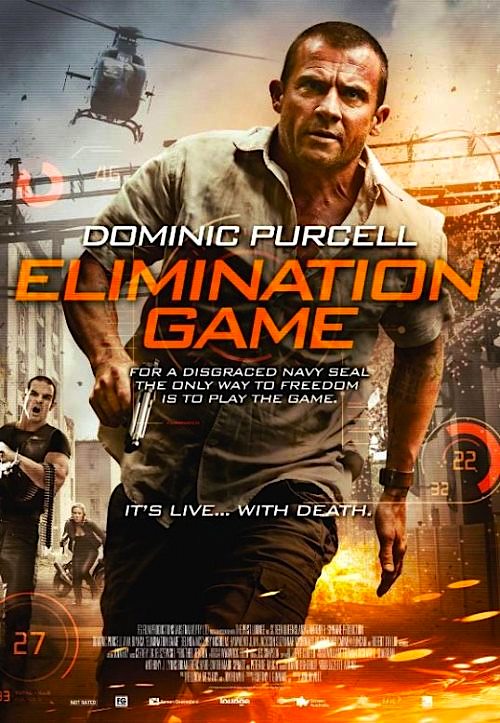
By Joe Bendel. It is the near future or maybe right now. The world is sick of the perennial world war engulfing Africa, but they are delighted to be distracted by bloodsport on television. It would sound almost like a call back to the Roman Empire, but it is surprisingly clothed and chaste for a film produced by Brian Trenchard-Smith. Nevertheless, the Ozploitation legend gave his blessing to a new remake-re-conception of his cult favorite Turkey Shoot, a.k.a. Escape 2000, a.k.a. Blood Camp Thatcher. With a rather prosaic title befitting a film striving for phony relevancy, Jon Hewitt’s Elimination Game opens this Friday in select theaters.

It sure seems like Navy SEAL Rick Tyler capped the Libyan dictator in the opening sequence. However, the next thing we know, World War Africa is raging and Tyler has been convicted of a heinous massacre of innocent civilians. It is pretty clear what’s going on to everyone but Tyler. He will not have much time to puzzle things out either, when the Monty Halls in power offer him a deal. If he survives as a contestant on the human hunting show Turkey Shoot (“it’s live . . . with death”) he will win his freedom.

Of course, the deck will be stacked against him, but Tyler has a very particular set of skills. He also finds an unlikely ally in Commander Jill Wilson, who goes rogue when General Thatcher lets it slip they framed Tyler because you know why.

Fans will probably be disappointed by just how far removed Hewitt’s film is from the Trenchard-Smith original, which was a lot like an ultra-violent Roger Corman tropical prison movie. Perhaps most problematic is the film’s anti-septic vibe. Sure, it is violent at times, but it is incapable of real sleaze—and that is a problem for a re-re of Turkey Shoot.

Prison Break’s Dominic Purcell is not the most expressive actor holding an Equity card, but he is not a runny-nosed boy either. Let’s face it, anyone who can survive multiple Uwe Boll films (and we use that word liberally) should be at home in a Trenchard-Smith remake. In fact, he is perfectly credible in the action scenes and is a more than adequate brooder.

Purcell is not the problem. Unfortunately, he is working with a lame-brain script. The excessively bright and sterile atmosphere does not help either. It all looks very down-market television. You have to wonder if Trenchard-Smith was constantly scrubbing the sets, so he wouldn’t have to pay a cleaning fee.

Still, fans of the original will be happy to see alumni like Roger Ward and Carmen Duncan turn up in minor roles, as the Libyan dictator and the president, respectively. It is also rather mind-blowing to see Nicholas Hammond, the late 1970s Spiderman, pop up as Gen. Thatcher. He also turns his scenes with Purcell rather well, so it kind of baffling the Marvel film juggernaut has not found a fan-servicing cameo-spot for him yet.

Instead of whipping up our vicarious bloodlust, Elimination just leaves us cold. It is too calculated, too conventional, and too tightly controlled. There are some nice fight sequences sprinkled in, but it still won’t satisfy exploitation connoisseurs. Not really recommended, Elimination Game opens this Friday (6/26) in limited markets and also launches on VOD.

LFM GRADE: D

Posted on June 26th, 2015 at 2:56pm.