LFM Reviews Gett: The Trial of Viviane Amsalem

By Joe Bendel. There is one area where Israel should find common ground with its radical neighbors: its rabbinical system of divorce that applies to all, regardless of faith or lack thereof, and invariably favors men. Of course, women’s rights are assiduously protected in other spheres of life, so that compatibility extends only so far. Nevertheless, for an emotionally neglected wife desperate to move on with her life, divorce proceedings are unbearably unjust, absurd, and protracted in Ronit & Schlomi Elkabetz’s Golden Globe nominated Gett: the Trial of Viviane Amsalem, which opens this Friday in New York.

Amsalem has not lived with her husband Elisha for years. All that time, she has stayed with her grown siblings, dutifully sending meals home to Elisha and their children every night. She has never been unfaithful or in any way brought shame on the family—aside from the scandal of their separation. She simply had enough of his passive aggressive cruelty and the isolation imposed by his anti-social Puritanism.

In an American court, this would be an open and shut case, especially when her husband contemptuously disregards notices to appear in court. Despite his recalcitrant behavior, the law remains on his side. As long as he continues to deny her long-sought after divorce (or gett), nobody can force him to change his mind. Viviane Amsalem’s decidedly unreligious attorney Carmel Ben Tovim will continue to file objections and call witnesses, but the institutional fix is in. Yet, like some sort of Kafkaesque Sisyphus, she continues to press a case that will be observed in months and eventually years.

Gett paints a traumatizing portrait of divorce, but unlike L.A. Law or American exposes like Divorce Corp, the Elkabetz sibling filmmakers never accuse the attorneys of exploiting the proceedings for financial gain. Frankly, everyone in this film is abjectly miserable, but the three-judge panel refuses impose a sensible gett, due their overriding doctrinal concerns.

From "Gett: The Trial of Viviane Amsalem."

Ronit Elkabetz (so seductively earthy in the Oscar disqualified The Band’s Visit) is quite remarkable as Ms. Amsalem. She viscerally conveys a sense of her bitter exhaustion, but can still shock us with eruptions of repressed emotion, manifesting as rage or inappropriate laughter. Simon Abkarian plays Mr. Amsalem with rigid discipline, coming off cold, clammy, and callous. Yet, he adroitly reveals aspects of the husband “defendant” that explain and somewhat humanize his actions to some extent, but not at the expense of viewer sympathy for his embattled wife.

In terms of themes, tone, and intensity, Gett most closely compares to Asghar Farhadi’s A Separation, but it probably does the Iranian filmmaker no favors to liken his film with an Israeli work. Regardless, they are both seamlessly exhausting viewing experiences. Arguably, it is the mark of a healthy society that can forthrightly address its faults through cultural and artistic statements. Frankly, you will not see Arab cinema tackle gender inequity so candidly. Of course they also have even more fundamental issues than biased divorce law to contend with, like honor killings and female genital mutilation. No doubt that is slim comfort to the Viviane Amsalems, but worth noting nonetheless. Recommended for the sheer power of its performances and the Elkabetzes’ almost unbearably intimate dramatic focus, Gett: the Trial of Viviane Amsalem opens this Friday (2/13) in New York, at the Lincoln Plaza Cinema.

LFM GRADE: B

Posted on February 9th, 2015 at 8:58pm.
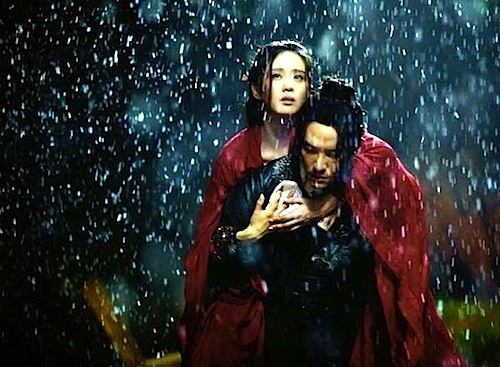
Imperial Assassins Do What They Do: LFM Reviews Brotherhood of Blades; Now on DVD/Blu-ray

By Joe Bendel. Would you feel confident throwing your conspiratorial lot in with something called “the Eunuch Clique?” Maybe not now, but the late Ming Dynasty were far different times. Senior Eunuch Wei Zhongxian was thought to control seventy percent of court officials, the so-called Clique. The new emperor is determined root out the eunuch’s influence, but that will be easier said than done for the three Jinyiwei imperial assassins in Lu Yang’s Brotherhood of Blades, which Well Go USA releases this week on DVD and Blu-ray.

The trio of Jinyiwei are so scruffy, their new commander Zhao Jingzhong is confident they have not been corrupted. It also means they could use a windfall. Shen Lian yearns to buy the freedom of Zhou Miaotong, a courtesan he has long visited, but it is unlikely to happen on his Imperial salary. The older and gaunter Lu Jianxing covets a promotion, but that will require bribes beyond his means. Meanwhile, the consumptive rookie, Jin Yichuan makes regular blackmail payments to an older associate from his criminal past.

Since they all need money, Shen Lian makes an executive decision to strike a deal with Wei. In exchange for a considerable sum of gold Taels, the Jinyiwei assassin lets Wei escape, delivering the charred body of a servant in his place. The three are hailed as heroes, but Wei’s followers are already conspiring to eliminate the only witnesses who know the powerful Eunuch is still alive. Unbeknownst to them, Zhao is part of the cabal. It turns out he is Wei’s secret foster-son. As the leader of the Eastern Depot, Zhao will give the three assassins assignments specifically intended to silence them permanently. When they manage to live anyway, things really start getting complicated.

In a way, Brotherhood is like a gangster movie decked out as a wuxia epic. Everyone is on the take to some extent. The question is how morally compromised are they? Like a good Triad or Yakuza film, it is heavy with themes of loyalty and betrayal, with personal allegiances frequently trumping concern for corps, dynasty, and nation. Of course there is also plenty of hack-and-slash action, featuring more crimson blood splatters than is typical of the genre.

From "Brotherhood of Blades."

Taiwanese superstar Chang Chen, whose credits go back to Edward Yang’s masterpiece A Brighter Summer Day is perfectly suited for the tightly wounded Shen Lian. He broods hard and when he loses his cool, it is serious business. Frankly, it is one of his best performances in years. Likewise, Wang Qianyuan is appropriately world weary and a bit vinegary as old Lu Jianxing. However, Ethan Li largely fades into the background as the young, sickly Jin Yichuan.

Brotherhood is fully loaded with colorful supporting turns, but it strangely shortchanges Dani Zhou’s screen time, even though she seems quite promising as Wei’s butt-kicking daughter, Wei Ting. On the other hand, Cecilia Liu totally looks the part and delivers the aching tragedy in spades as the more-substantial-than-you-expect courtesan.

It is hard to believe Brotherhood’s robust action and intrigue comes from the same director who helmed My Spectacular Theater, a sensitive drama about empathy and accommodation, but here it is—and it is jolly nice to have it. Recommended for fans who like their wuxia on the bloody, morally ambiguous side, Brotherhood of Blades is now available on DVD, Blu-ray, and digital platforms, from Well Go USA.

LFM GRADE: B+

Posted on February 9th, 2015 at 8:57pm.

LFM Reviews 6 Desires: D.H. Lawrence and Sardinia @ The 2015 Sundance Film Festival

By Joe Bendel. There was a time when D.H. Lawrence’s travel writings were his best received work. Even before his sexually charged novels belatedly achieved widespread critical acceptance, Lawrence’s nonfiction did more than their share to promote Italian tourism. Over ninety years after its initial publication, his Sea and Sardinia continues to lure visitors from the UK to the Mediterranean isle. In this case it is Northern Irish documentarian Mark Cousins and his small intrepid crew, who will retrace the old man’s footsteps in the docu-essay-travelogue 6 Desires: D.H. Lawrence and Sardinia, which screened during the 2015 Sundance Film Festival.

Clearly, this will be a very personal and impressionist journey, considering Cousins starts his voiceovers by asking Lawrence (presumably in spirit) if he can call him Bert. At this point, the audience can envision the novelist looking down from somewhere, chillily replying: “that’s Mr. Lawrence to you.” Nevertheless, Cousins maintains the intimate, but one-sided dialogue, revisiting the sites from the book, but informing the film’s visits with their full historical and cultural context.

This will never be a breakout Sundance documentary hit like Searching for Sugarman, but it is pleasant enough for a while. Despite his libertine reputation, Cousins’ portrait emphasizes Lawrence’s conservative nature, including his categorical rejection of socialism and his contention feminism would largely emasculate males into what we would now call metrosexuals. Along the way, he offers plenty of tips for prospective tourists. The hearty Lawrence multi-course menu offered at one rustic restaurant sounds like it might be worth the trip by itself.

From "6 Desires: D.H. Lawrence and Sardinia."

Strangely though, the film loses focus when Cousins hands over the third act narrating duties to a woman, for gender representational reasons Lawrence probably would have abhorred. It is sort of interesting to hear her contrast Lawrence with Grazia Deledda, Italy’s female proletarian Nobel Prize winner for literature, but the vague yet unmistakable implication he helped contribute to the Holocaust because he never criticized Italian fascists in-print is so excessive, it jeopardizes the entire film’s credibility. As points of reference, Sea and Sardinia was published in 1921 and Lawrence died in 1930, so please, get serious.

Frankly, 6 Desires is often doing odd little things to undercut itself. Many times, when Cousins has a lovely vista in his frame, he ruins it by sticking his arm out, selfie style, with a cheap laminated photo or a plastic overlay frame. These just look bad on-screen.

When the film actually focuses on its ostensive subject, it offers some intriguing insights that might lead to viewers to reappraise Lawrence and his work. To jolt everyone awake, Cousins also includes clips from Ken Russell’s adaptation of Women in Love, so you know what that means: Oliver Reed, full frontal. Unfortunately, this is about the time the film starts to founder. It has its moments, but 6 Desires really ought to have been chopped down to an hour and packaged specifically for television. Regardless, it will likely find more festival play following its screenings at this year’s Sundance Film Festival, thanks to the filmmakers’ reputation, but it is strictly for Lawrence and Cousins completists.

LFM GRADE: C

Posted on February 9th, 2015 at 8:57pm.

LFM Reviews Concrete Love @ The 2015 Slamdance Film Festival

By Joe Bendel. Pritzker Prize winner Gottfried Böhm and his three architect sons might be the world’s preeminent modernists, but the function of many of their buildings is to harken back to the past. With churches, mosques, World War II memorials, and an Egyptology museum to their collective credit, the Böhms have built, but they find themselves at a personal and professional crossroads in Maurizius Staerkle Drux’s documentary, Concrete Love: the Böhm Family, which screened during the 2015 Slamdance Film Festival in Park City.

As the only German Pritzker laureate, Gottfried Böhm is the unquestioned head of the clan and of their family practice. His overwhelmingly dominant stature leads to issues and tensions within the family unit, particularly with respect to his wife Elisabeth. She was once a promising junior architect as well, but she permanently deferred her career to raise their children. She has long suffered from dementia when Drux starts observing the family, but she soon succumbs to age and infirmity.

Despite her failing health, the Böhm sons miss their mother’s stabilizing influence. Resentments of the patriarch start to become more pronounced, especially as the sons face their own particular professional challenges. Stephan is determined to get a toehold in the exploding Chinese market, even though he is a bit put off to learn architects are largely considered on par with contractors and workmen in the People’s Republic (arguably, a rare expression of egalitarianism in the increasingly stratified nation). Meanwhile, Paul Böhm is growing exasperated with the budget cuts and aesthetically dubious demands imposed on him by the strange network of patrons behind his mega-mosque project. Believe it or not, we sort of get the sense he is being set up to be some kind of scapegoat.

From "Concrete Love."

At least Peter Böhm sort of gets the last laugh at the opening of the Museum of Egyptian Art he designed. He had clashed with his father over its deceptively simple, boxy layout. Yet, once Drux takes his cameras inside, we get a sense of how its imposing massiveness evokes the great monumental structures of ancient Egypt and how the surprisingly airy open spaces serve the exhibitions. It really has a cool sense of place.

Of course, the elder Böhm has plenty of striking buildings to his credit as well. Indeed, seeing the family’s greatest hits is one of the best parts of Concrete. To his credit, Drux has a good eye for both architecture and familial drama. In a case of good news-bad news, his approach is probably too detached to feel voyeuristic or intrusive. As a result though, the pace can be a bit leisurely at times, but the film is clearly intended for a cultured audience with a sustainable attention span. Respectfully recommended for those interested in post-war architecture, Concrete Love will likely screen at many art-focused and German language festivals over the coming year, following its North American premiere at this year’s Slamdance Film Festival.

LFM GRADE: B

Posted on February 6th, 2015 at 12:33pm.

LFM Reviews Station to Station @ The 2015 Sundance Film Festival

By Joe Bendel. Where can hipsterdom and traditional Americana come together in common purpose? Evidently, along our nation’s railways. Neither wants to be tied down, nor are either in any particularly hurry. Collaborating with musicians who would feel at home either at Lollapalooza or on Austin City Limits, Doug Aitken documents a twenty-four day coast-to-coast train trip in sixty-one one-minute shorts films (plus beginning and end credits), assembling it all into the restless, slightly avant-garde concert doc, Station to Station, which screened at the 2015 Sundance Film Festival.

Granted, Aitken’s preferred term of “happenings” is pretty cringey, but the ten stops his transcontinental train made for multi-disciplinary performances mostly look like a lot of fun. It seems the music never stopped, as performer after performer gets their one minute feature spot, sometimes at the happening, other times on the speeding train.

A pair of flamenco dancers, an old school western auctioneer, and the Kansas City Marching Cobras are particularly fun to watch, because they have tons of talent, but they are hardly recognizable celebrities. However, big name recording stars like Beck and Thurston Moore bring their A-game, perhaps even winning over new fans. Of course, nobody can out power soul legend Mavis Staples. Perhaps the biggest surprise is the appearance of Giorgio “Flashdance” Moroder, but it is pretty cool to see him do his thing on the synthesizer.

From "Station to Station."

Despite its linear direction and the imposed limits of the train, Station is a largely shapeless film. However, it has a lot of energy and it is visually quite stylish. Whether it be the lonely desert vistas, the warm glow of an electronica performance, or the evocative sight of Aitken’s movable light show of a train hurtling through the night, he and co-cinematographer Corey Walter always make the rapidly changing visuals look great. On the other hand, when he invites spoken word commentary from the likes of Gary Indiana, we mostly get annoyingly folksy dialectics.

Frankly, Station to Station probably isn’t experimental enough to sit comfortably in Sundance’s New Frontiers section, but it is hard to see where it would more easily fit. It certainly moves along at a good clip. Like Midwest weather, if you’re not digging it, just wait a minute and it will change. Rather pleasant overall, Station to Station is recommended for listeners of Sonic Youth and Patti Smith, as well as the sort of neo-roots artists profiled in No Depression. Having just notched a number of international sales, Station to Station should find its audience after world-premiering at this year’s Sundance Film Festival.

LFM GRADE: B-

Posted on February 4th, 2015 at 8:28pm.

LFM Reviews My Friend Ivan Lapshin

By Joe Bendel. How can you be nostalgic for the bad times? Because they are the old times. For instance, our narrator looks back rather fondly on the early days of Stalinism. He and his father were fortunate to share their flat with the local police constable. That meant there were only five (and later six) people crammed into the apartment. How spacious. Even without depicting the Stalinist terror, there is still plenty of scarcity and absurdity in Aleksei Guerman’s My Friend Ivan Lapshin, which screens as part of a mini-Guerman (sometimes translated as German) retrospective now running at Anthology Film Archives in conjunction with the premiere theatrical release of Guerman’s Hard to be a God.

There is not much sugar in this sleepy village of revolutionary fervor, but there always seems to be some in Lapshin’s flat. The town will also get a treat in the form of a traveling agitprop stage performance. The show is a bad as it sounds, but Lapshin still falls for Natasha Adasova, a demur featured actress. They will have some laughs together, but unfortunately, it will be Lapshin’s suicidal journalist friend Khanin who turns her head.

However, Lapshin has another obsession to fall back on: capturing the dreaded Solovyey gang. It is not clear just what crimes the Solovyey outfit has committed, but their (comparative) liberty rankles Lapshin. Frankly, they seem to be born out of the same cloth of economic desperation that gave rise to Bonnie and Clyde—and their ability to evade justice (probably due to their considerable local support) arguably undercuts the state’s authority.

One thing is certain, everyone spends a good deal of time in queues, struggling with shortages, except Lapshin, who goes out of his way to bust black market firewood peddlers. Yet, somehow he seems like a decent fellow, in a rigid, stentorian sort of way, perhaps because we might guess what sort of trials and travails lie ahead for him.

From "My Friend Ivan Lapshin."

Although Friend is far more accessible and narrative-driven than HTBAG, the vibes of the respective films are not so very different. In both cases, characters exist in a state of constant chaos, yet they live in an environment of near total stasis. Both films are distinguished by their striking black-and-white cinematography, but there is something about the dreamy vibe that keeps us at arm’s length.

Andrei Boltnev is commandingly tragic as the severe Lapshin, while Andrey Mironov makes a strangely charismatic sad sack as Khanin. Nina Ruslanova’s Adasova also brings sufficient heat to let us buy into their love triangle. Indeed, it is quite a fine example of ensemble acting, but it is still a rather odd film to watch, because Guerman is being so deliberately cagey with his allegorical implications, for obvious reasons.

Nevertheless, Friend was duly banned by the authorities for fourteen years, finally seeing the light of day in the late 1980s. Reportedly, it was deemed an insufficiently heroic portrayal of the early days of socialism building. It was also an awkward, sometimes even sarcastic reminder they had been building socialism for five decades, but things were as crummy as ever. Recommended as a fascinating historical document not without its own artistic merits, My Friend Ivan Lapshin screens again this coming Monday (2/9), as part of the Guerman series at Anthology Film Archives.

LFM GRADE: A-

Posted on February 4th, 2015 at 8:27pm.