Diving for Oil: LFM Reviews Pioneer

By Joe Bendel. It makes perfect sense George Clooney would sign up for the remake of this Norwegian film. It includes two of his favorite activities: scuba diving and blaming America. It is the early 1980s, when Norway is poised to become enormously wealthy thanks to the discovery of oil in the North Sea. Evidently, that is a bad thing. Constructing a pipeline to reach it will be a tricky proposition. Two advanced deep sea diver brothers are supposed to do the hardest parts, but they will be engulfed by a shadowy conspiracy in Erik Skjoldbjærg’s Pioneer, which opens this Friday in New York.

As Pioneer opens, Petter is about to make history for enduring the deepest simulated dive. He will also start hallucinating. Can we ever really trust his perceptions going forward? It is hard to say, because Skjoldbjærg never overtly plays the ambiguous reality-untrustworthy POV cards. Near as we can tell, Petter just shakes off his light-headedness and moves on to the next mission. This time he and his brother Knut will be diving for real. However, since the American engineering firm has assumed operational control, they will now be breathing in the Yanks’ double-secret oxygen tank additive.

Of course, the dive goes spectacularly badly, culminating in Knut’s death. Frankly, it kind of-sort of looks like Petter’s fault, but others quite considerately step forward to take the blame. A-ha, it must be the additive. If he can just get a sample to a colleague, he will be able to prove, well he’s not quite sure what, but something really bad.

Forget the unreliable narrator, Pioneer gives us an unreliable script. Credited to Skjoldbjærg and a battery of three other screenwriters, it keeps the conspiracy ridiculously murky. Basically, all we can glean with certainty is that the Americans will do anything for oil and there is a man with a limp out there up to no good.
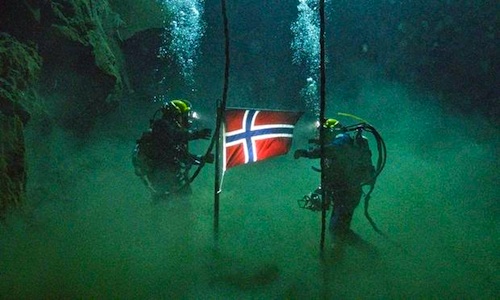
From "Pioneer."

On the plus side, Pioneer perfectly channels the atmosphere and vibe of paranoid 1970s thrillers, like Parallax View. As Petter (whose entire wardrobe seems to be corduroy), Aksel Hennie looks so Seventies, it is almost tragic. He also projects a quiet mania that really helps the film chug along. Wes Bentley and Stephen Lang chew a bit of scenery as the villainous Americans, but they never elevate their stock characters above the level of predictable cliché. Likewise, Miss Bala’s Stephanie Sigman is largely wasted as Knut’s widow Maria, who simply turns up from time to time to pretend she’s not guilt-tripping Petter when she really is.

Ambiguity can be a powerful element in cinema, but viewers should have a sense that it is all part of the filmmakers’ deliberate strategy. In the case of Pioneer, it just feels like they lost track of the possible implications of early scenes. Technically, it is an impressive package, especially the work of cinematographer Jallo Faber, who makes early 1980s Norway look so dingy and depressed, it pretty much justifies whatever whoever may or may not have done to hasten the oil boom. The result is an odd curio of a film that simply cannot justify Manhattan ticket prices. It opens this Friday (12/5) in New York at the Cinema Village.

LFM GRADE: C-

Posted on December 3rd,2014 at 3:58pm.
LFM Reviews Dying of the Light

By Joe Bendel. Evan Lake is the CIA’s top motivational speaker. He also happens to be played by Nicolas Cage, so hold on tight, this will be a bumpy ride. While a station chief, Lake was captured and tortured by a notorious terrorist, but he lived to tell the tale, with honor. Fatefully, just as the physical and mental symptoms of a rare neurological disease start plaguing Lake, he gets a line on his old tormentor, Muhammad Banir. He might as well get his revenge or die trying in Paul Schrader’s Dying of the Light—although Schrader himself would reportedly prefer not to be so closely identified with the final producer-cut product. Regardless, it opens this Friday in New York.

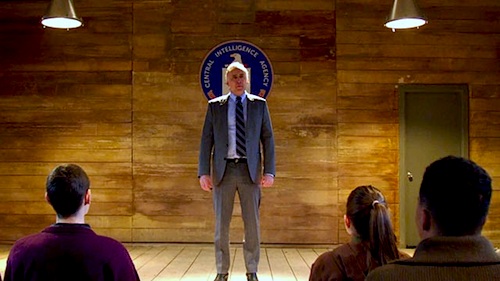
Every year Lake gives a pep talk to the new recruits undergoing basic training and he projects to the back row of the theater—the theater next door. This might be his last hurrah. The agency just got wind his second opinion came back positive (in a bad way). However, his protégé, Milton Schultz has some interesting news. The rare pharmaceutical used to treat Banir’s degenerative disease has strangely surfaced during an incident in Romania. Yes, both men are slowly dying, betrayed by their own bodies.

Since the Agency still insists Banir is dead, Lake goes rogue, burning every possible bridge behind him. Yet, despite his increasingly erratic and anti-social behavior, he can count on the help of the loyal Schultz and Michelle Zuberain, an ambiguously close former Euro colleague. Meanwhile, the dastardly CIA bureaucrats keep trying to send Lake doctors and counselors.

Evidently, Schrader and several cast members are unhappy with the current theatrical cut, but it is hard to see why. It is a reasonably serviceable thriller with a bit of style here and there. Let’s be frank—this is the latest film from the director of The Canyons and the star of Left Behind. It’s just not that bad, especially compared to some of the recent gems in the Cage filmography. Frankly, it probably doesn’t even crack the bottom twenty (hello, The Wicker Man, Stolen, Seeking Justice, Trespass, Season of the Witch?)

From "Dying of the Light."

Be that as it may, Cage sure does his thing as the tightly wound Lake. The man just doesn’t seem to have an inside voice. When he gorges on scenery, it is like watching a bull in a china shop, but at least he is nowhere near as embarrassing as Meryl Streep unconscionably overacting in Osage County. As Schultz, Anton Yelchin looks thoroughly freaked out, probably because he was. At least Irène Jacob does her best to class-up the joint as Zuberain.

Dying wrings plenty of atmosphere out of its Romanian locales and surprisingly, it is almost sympathetic in its treatment of the CIA (perhaps that is why some principals are unhappy). Say what you will, but they are dashed indulgent of Lake. In its current state, the film also portrays the Islamist terrorists as unambiguously vicious extremists. It is far from perfect and nobody would describe it as high art, but Dying of the Light is compulsively watchable, building a fair degree of suspense in its weird way. Recommended for fans of Cage’s flaring nostrils, it opens this Friday (12/5) in New York, at the AMC Empire.

LFM GRADE: C+

Posted on December 2nd, 2014 at 1:01pm.

LFM Reviews The Barefoot Artist

By Joe Bendel. It is the story of one father, two families, and Two Chinas. Learning of the family her late Nationalist general father abandoned to the abuse and oppression of Maoist China, artist Lily Yeh would return in his stead, hoping to make peace with the spirit of his first wife. Her emotional journey is documented in Glenn Holstein & son Daniel Traub’s The Barefoot Artist, which opens this Friday in New York.

Raised in Taiwan, Yeh came to America as an art student, married a man named Traub, and became an American citizen. Eventually, her entire family naturalized, at least those that she knew of. As her father’s health started to fail, he became wracked with remorse over the fate of the wife he divorced to marry her socially connected mother.

Yeh does indeed learn being the ex-wife, daughter, and sons of an absconded KMT officer was agonizingly difficult during the Cultural Revolution. Yet, somehow his first wife bore her fate with dignity. Yeh will experience some heavy personal drama, but it is not clear whether she picks up on the wider lesson regarding the danger of rampant ideology coupled with unchecked state power.

Clearly, the most potent sequences in Barefoot follow Yeh’s humbling trip to China, but the film also spends considerable time watching her work. Essentially, her program is bringing public art to distressed places. Where we might think the downtrodden of the world are most in need of food or constitutional guarantees of the freedoms of expression and worship, Yeh would suggest what they could really use is a little color.

From "The Barefoot Artist."

Based on the film’s footage, her prescription seems to be most effective in place like the Rwandan survivors’ community, where her projects become part of a wider effort to bear witness and memorialize lost ones. Wisely, Holstein & Traub only mention the so-called “Palestinian” so-called “refugee camp” she spruced up in passing, thereby avoiding inconvenient questions like just what would happen if an openly gay or non-Muslim resident tried to participate in the project.

Ultimately, the two sides of Barefoot are so fundamentally unequal, it is impossible to balance them. In China, we see up-close-and-personal how micro choices and macro events in tandem can lead to profound suffering. Yet, in a way, her public art literally white-washes over the resulting legacies of pain. Essentially, Barefoot Artist is half of a good documentary that never really becomes fully self-aware. For Yeh’s admirers and those fascinated by her family’s story, The Barefoot Artist opens this Friday (12/5) in New York, at the IFC Center.

LFM GRADE: B-

Posted on December 2nd, 2014 at 1:00pm.

LFM Reviews Tango Negro @ The 2014 African Diaspora International Film Festival

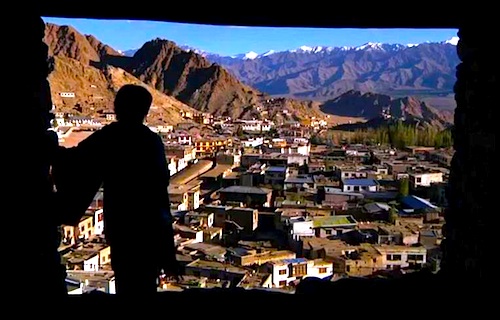
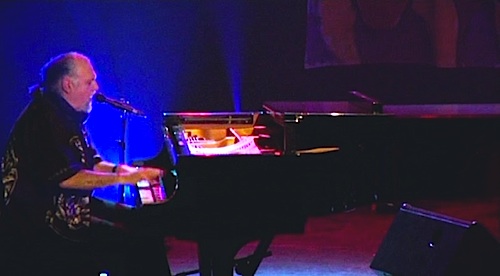
By Joe Bendel. Anyone with a little bit of jazz, blues, and Afro-Cuban music under their belts should be ready to accept the notion that most music with a real rhythmic kick has the “Same Mother,” to quote the title of Jason Moran’s deep blues influenced 2004 release. Yet they seem to have trouble with the idea in Argentina and Uruguay. Parisian expatriate tango-jazz pianist Juan Carlos Cáceres returns to his native Argentina to promote awareness of the music’s African origins in Dom Pedro’s Tango Negro: the African Roots of Tango, which screens during the 2014 African Diaspora International Film Festival in New York.

Blessed with incredible technique, Cáceres has become a leading expert on tango, especially its earliest manifestations. As in Brazil and many other Latin American countries, great numbers of African slaves were brought to Argentina against their will. Retaining elements of their pre-bondage culture, they developed musical forms not so very different from Cuban rumba. However, subsequent waves of overwhelmingly white immigration from Europe would radically change the country’s demographics. Just as the composition of Argentina changes, so too did the character of tango.

Frankly, it is hard to fathom how this could be controversial because it seems so self-evident. By the same token, one could argue the film does not give European immigrants proper credit for making tango what it is today. It is an elegant form of music and dance wholly distinct from traditional Afro-Cuban forms. Arguably, the description of tango quoted in the film as the synthesis of three sadnesses, as experienced by the immigrant, the gaucho, and the disenfranchised African gets at the essence in a fully inclusive way.

From "Tango Negro."

There are some enjoyable performances in TN, including features spots for Cáceres and various neo-traditional ensembles. It makes a logical cinematic pairing with Arístides Falcón Paradí’s Rumba Clave Blen Blen Blen, but it is more self-consciously pursuing a mission, whereas RCBBB is more interested in celebrating musical camaraderie. (If you only see one of the music docs at the festival, chose the rumba, because camaraderie is more fun.)

TN offers some nice music and solid scholarship, but it sees more opposition to its case than the audience does. Regardless, if you want to hear tango performed with uncharacteristic percussion, it is the film for you. Recommended for tango enthusiasts, Tango Negro screens this Friday (12/5) and the following Tuesday (12/9) as part of this year’s ADIFF New York.

LFM GRADE: B-

Posted on November 30th, 2014 at 7:32pm.

LFM Reviews April Chill @ MoMA’s Discovering Georgian Cinema Series

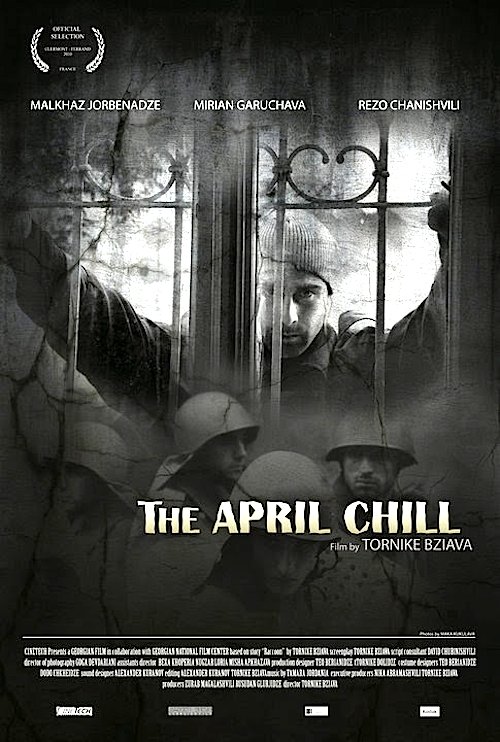
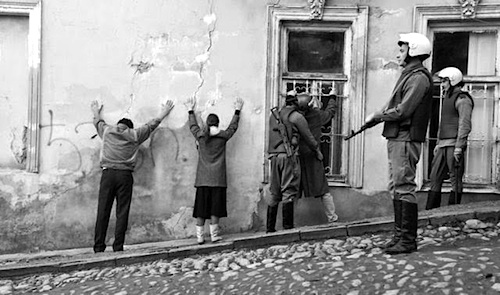
By Joe Bendel. April 9th is now Georgia’s official Day of National Unity. This film shows why. Everybody always assumed good old Gorby would never send in the tanks to crush dissent, but he did in Tbilisi. Hundreds were severely injured and twenty people died that fateful day, seventeen of whom were women. While many were beaten beyond recognition, CN and CS gas inhalation was the primary cause of death. One of the Soviet invaders gets a glimpse of the true warrior’s spirit in Tornike Bziava’s Clermont-Ferrand award winning short film, April Chill, which screens during MoMA’s ongoing Discovering Georgian Cinema series.

As several of the Soviet “soldiers” note, it was quite a nice day for their ruthless business. The enlisted men duly follow their orders, chasing democracy demonstrators into barricades, rounding up and beating anyone who looks suspicious. Like good Communists, most of the Soviets seem to enjoy the crackdown, including the focal character. However, the sound of a hand drum and rhythmic counting sparks his curiosity. Within a battle-scarred Soviet Brutalist building, he encounters a young boy learning to perform the traditional military-inspired Georgian Khorumi Dance.

He will learn something about dignity and determination from that boy, but it probably will not be enough to make a difference for his soul or the Georgian people’s immediate well-being. Chill is a brilliantly shot short film that viscerally captures the panic and abject terror caused by the Soviet shock troops. Giorgi Devdariani’s black-and-white cinematography is starkly arresting. He and Bziava frame the action in inventive ways that create jarring perceptual effects. Bziava also uses the imposing Soviet-era architecture to convey a vivid sense of place.

From "April Chill."

Although Chill is more of a director’s film than an actor’s showcase, there is no denying the fierceness of the young boy. He has the dance chops, too. It only runs for a mere fifteen minutes, but it manages to say quite a bit with great eloquence. Sadly, it is also terribly timely. In 1989, nobody thought Soviet tanks would roll into Georgia, yet they certainly did. Afterward, nobody thought they would ever return, but they already have. Now it’s Ukraine’s turn. April Chill shows viewers just what that entails, in bracingly up-close-and-personal terms. Very highly recommended, April Chill screens with The Other Bank this Wednesday (12/3) and next Wednesday (12/10) as part of MoMA’s continuing survey of Georgian cinema.

LFM GRADE: A

Posted on November 28th, 2014 at 12:57pm.

LFM Reviews Rumba Clave Blen Blen Blen @ The 2014 African Diaspora International Film Festival

Rumba Clave Blen Blen Blen | Teaser from colorbox on Vimeo.

By Joe Bendel. Forget Arthur Murray’s bastardization of the bolero-son. This is the real rumba. Think “The Peanut Vendor,” pre-Stan Kenton. It is a dance and a rhythm and maybe even a philosophy of life. Arístides Falcón Paradí surveys all manifestations of rumba, tracing its journey from Africa to Cuba and on to New York in Rumba Clave Blen Blen Blen, which screens during the 2014 African Diaspora International Film Festival in New York.

You had better believe rhythm and percussion are important to Afro-Cuban music. Those who have not had at least a beginner’s introduction to Afro-Latin jazz (Trueba’s Calle 54 being a nice place to start) might not realize how sophisticated the music really is. It can also be wonderfully earthy, even though it has distant roots in sacred music.

Falcón Paradí explores rumba from both perspectives, celebrating the virtuosity of rumba musicians and its enduring popularity, particularly within the Cuban-American community. In fact, if there is one defining event for RCBBB, it would arguably be Mariel. Without it, Falcón Paradí would not have had nearly as many interview participants.

The doc features some big name musicians, most notably including the revered Candido Camero, considered by many the preeminent jazz conguero, still going strong in his nineties. With at least 2,000 recording credits, Camero (or just plain Candido, as many know him) is clearly the dean of RCBBB, but it is still tough to beat the effortless cool radiated by Jerry González, probably still best known for his work with the Fort Apache Brass Band. However, the late, great Orlando “Puntilla” Ríos largely serves as the film’s Obi-wan, carrying a disproportionate share of the on-screen commentary with authority and charm.

From "Rumba Clave Blen Blen Blen."

From time to time, RCBBB looks backward at rumba history, especially Chano Pozo’s legendary collaborations with Dizzy Gillespie that more or less constitute Latin Jazz’s creation story. Yet, despite his background as a CCNY faculty member, Falcón Paradí is more interested in putting the music in an everyday listener’s context. We get a sense of where the music is played and the lack of a rigid hierarchy demarcating artist from audience. Still, he recognizes interesting material when it arises. Several times he asks about the role played by the Abakua, the secret Cuban fraternal mutual aid society in the development of the music, getting evasive responses like “hmm, maybe for the next documentary.” At least he asked.

In fact, the extent to which Falcón Paradí is welcomed into the Rumba scene really tells you what you need to know about the communal nature of the music. Granted, in a politically focused documentary, a lack of editorial distance is highly problematic, but in this case, it just means he is invited to the party along with everyone else. Striking a good balance between scholarship and a jam session hang, Rumba Clave Blen Blen Blen is recommended for all fans of danceable music when it screens this Monday (12/1) as part of this year’s ADIFF New York.

LFM GRADE: B

Posted on November 28th, 2014 at 12:55pm.