LFM Reviews In Her Place @ The 2014 Toronto International Film Festival

By Joe Bendel. It is one of the few relationships Hallmark has yet to crack. It is hard to define just what this moody teen represents to her well-heeled visitor, aside from being the mother of her future baby. The two women will share intimate moments, but there will always be a wall dividing them in Korean-Canadian filmmaker Albert Shin’s In Her Place, which screens during the 2014 Toronto International Film Festival.

It is safe to say the Girl is troubled. Frankly, her swelling stomach is only one of her problems, but it is the most conspicuous one. For her Mother, the Woman from Seoul is a Godsend. She will help out during the final months of pregnancy, footing all the bills and providing enough additional money for the Mother to get the run down farm back on its feet again. In exchange, she will leave with the baby, claiming it as her own. This being Korea, social conventions demand they keep everything hush-hush. However, the Girl is the wild card in their best laid plans.

Not surprisingly, boys are a point of contention with her, but she has even deeper issues regarding self-esteem and abandonment. The Woman from Seoul partly understands this, but not fully so. She will take the time to get to know the Girl (as well as the kind of-sort of boyfriend who is quite surprised to learn of her condition), but the management-labor dynamic is hard to shake.

A vibe of foreboding hangs over IHP right from the start and the third act is a bit protracted, yet the film’s ultimate tragedy still hits viewers with the force of a locomotive traveling at full steam. Credit goes to the three principle women, who are each truly devastating, but in a very different ways. Ahn Ji-hye is clearly a young breakout star of the future, who maintains viewer sympathy and credibility despite all her painfully self-destructive acting out. She could easily be the next Kim Go-eun (sort of the reigning Jennifer Lawrence of Korean Cinema).

From "In Her Place."

While many American indie filmmakers would be tempted to portray the Woman from Seoul as a one-percent exploiter, Shin and co-writer Pearl Ball-Harding take great effort to humanize and explain her. She is a complicated character, whose past pain and disappointments are subtly but powerfully conveyed by Yoon Da-kyung. Yet, it is Kil Hae-yeon’s Mother who really sneaks up on the audience and rips everyone’s guts out. In all fairness, it should also be noted two of the guys (Kim Chang-hwan as the clueless Boy and Kim Seung-cheol as the Mother’s farmhand-crony) are also very good, but they are doomed to be overshadowed by the women.

After watching IHP you need a couple days to make peace with it, but in all honesty, it is rare to find films that get under the skin in such a fashion. It is also an usually quiet film that adeptly captures the stark silence and loneliness of its rural setting. Cinematographer Moon Myoung Hwan truly transports us to that hardscrabble locale. It is a demanding film, but it constitutes impressive work all the way around. Recommended for discerning audiences, In Her Place screens again today (9/9) as part of this year’s TIFF.

LFM GRADE: A-

Posted on September 9th, 2014 at 4:31pm.
High Seas Intrigue in the Joseon Era: LFM Reviews The Pirates

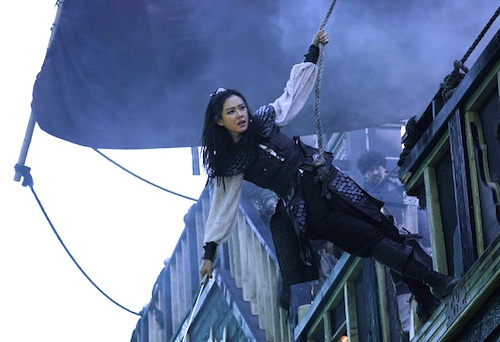
From "The Pirates."

By Joe Bendel. Why would a Korean Long John Silver start hunting Moby Dick during the early days of the Joseon Era? Captain So-ma has his reasons, including money, power, and revenge. He is not the only pirate hunting the whale that swallowed the Emperor’s new royal seal. His former first mate and a bandit nursing his own grudge get in on the chase in Lee Seok-hoon’s The Pirates, which opens this Friday in New York.

The Ming Emperor has given his blessing to Yi Seong-gye’s rebooted Joseon Dynasty, as well its new name and seal. Unfortunately, when the ship carrying Yi’s emissaries back from China encountered a great mother whale and her baby, they arrogantly attacked. The new name and the ambassadors would make it back to the Imperial court, but the seal would not, having been engulfed like Jonah.

The ambassadors blame pirates and stall for time, recruiting the treasonous officer Mo Hong-gab to do all the dirty work necessary. Mo forces freshly minted pirate captain Yeo-wol to hunt down the whale, despite her misgivings. Yet, he immediately double crosses her with the So-ma, whom she recently deposed. Further complicating matters, landlubbing soldier turned bandit Jang “Crazy Tiger” Sa-jung also pursues the marked whale for mercenary reasons. However, things get personal for Jang when he encounters his old enemy, Mo (he happens to be the only one with an eye-patch, thanks to Jang).

Naval action historicals have been ruling the Korean box office in recent months, with both Pirates and The Admiral: Roaring Currents racking up over five million ticket sales, which is a significant milestone in that market. While The Admiral plays it scrupulously straight, Pirates allows for far too much mugging from pirate-deserter Chul-bong and the bandit monk. Frankly, even Jang acts strangely schticky for a fugitive-patriot with a history of showing up disloyalty.

However, when the film is aboard Yeo-wol’s ship, it is (ironically) on solid ground. There is no joking around with her. Honor and brotherhood mean something to Yeo-wol and her faithful followers. As the new captain, Son Ye-jin exhibits solid action chops and a smoldering presence, bringing to mind her dazzling work in Open City.

From "The Pirates."

Likewise, Lee Kyoung-young is great fun to watch chewing the scenery as her mentor and nemesis. Kim Tae-woo also makes an effective villain, opting for an icier, menacing approach for Mo. The one-named K-pop star Sulli brings some charismatic earnestness to the proceedings as Yeo-wol’s protégé, but there is just too much of the rubber-faced Yu Hae-jin and his fellow goofy land bandits.

Call it the curse of Jack Sparrow. When making a film about pirates, comic relief seems like an essential ingredient, but what we really want are more heroic women action figures, exactly like Yeo-wol. (Let’s forget about Cutthroat Island—please). Although it is more than two hours before the closing credits roll, Lee keeps it moving along rather briskly. He stages some suitably swashbuckling action spectacles and cinematographer Kim Young-ho’s underwater scenes are impressive. Recommended for fans of Son and high seas adventure, The Pirates opens this Friday (9/12) in New York at the AMC Empire.

LFM GRADE: B-

Posted on September 9th, 2014 at 4:30pm.

Taking Down the Brazilian Yakuza: LFM Reviews Falcon Rising

By Joe Bendel. Brazil has one of the largest Japanese expat communities outside of Japan. Unfortunately, that also entails a Yakuza presence—or at least it used to, until the Rio clan nearly killed the wrong ex-Marine’s sister. They will soon learn John Chapman’s martial arts skills and PTSD death wish make him all kinds of deadly. He even has a codename to dig out of mothballs in Ernie Barbarash’s Falcon Rising, which opens tomorrow in New York.

Haunted by his experiences in the Middle East (refreshingly, these seem to be more about what they did to his men than what he did to them), Chapman is essentially trying to booze his way into an early grave. However, he manages to pull himself together when his NGO do-gooding sister Cindy blows into town for a quick visit. She should have stayed longer. Soon after returning to her favela nonprofit, a violent attempt on her life leaves her in a coma.

Somewhat put out by this news, Chapman hastens down to Rio, where his old service buddy Manny Ridley is a senior Foreign Service Officer. Ridley cannot get too involved in the smackdowns, but he can point Chapman in the right direction. Before long he will be shaking the Yakuza’s tree, while their crooked minions on the police force try to finish off both Chapmans. Good luck with that.

Right, we’re talking total B-movie here, but Falcon harbors few illusions about where its comparative advantages lie. Michael Jai White brings plenty of heat as Chapman and develops some pleasant bantering buddy chemistry with the ever-reliable Neal McDonough’s Ripley. However, one would think the film could have better used retired boxer Laila Ali (daughter of Muhammad), who spends most of the film hooked up to tubes.

From "Falcon Rising."

Instead, Hazuki Kato gets to be the action femme fatale, displaying some nice chops and an intriguing presence as Yakuza lieutenant Tomoe. In contrast, Masashi Odate is a little too icy and reserved as her master, Hirimoto, but he swings the samurai sword with credibility and authority. However, Lateef Crowder arguably shows off the best moves as Carlo Bororo (a.k.a. crooked cop #2).

As a journeyman action helmer, Barbarash (whose credits include the similarly entertaining Assassination Games) is clearly in his power zone. He stages some pretty impressive fight scenes (choreographed by Larnell Stovall) that eschew shaky cams in favor of full body shot clarity. Barbarash also soaks up the local color, giving viewers a good feel for the Rio’s teeming sprawl.

This is a small film even in the world of action movies, but it is still a lot of fun, sure-footedly following in the spirit and tradition of the American Ninja franchise. Recommended for fans of White and unpretentious martial arts films, Falcon Rising launches today on VOD (where it should do the lion’s share of its business) and opens today (9/5) in New York at the AMC Empire.

LFM GRADE: B

Posted on September 5th, 2014 at 12:22pm.

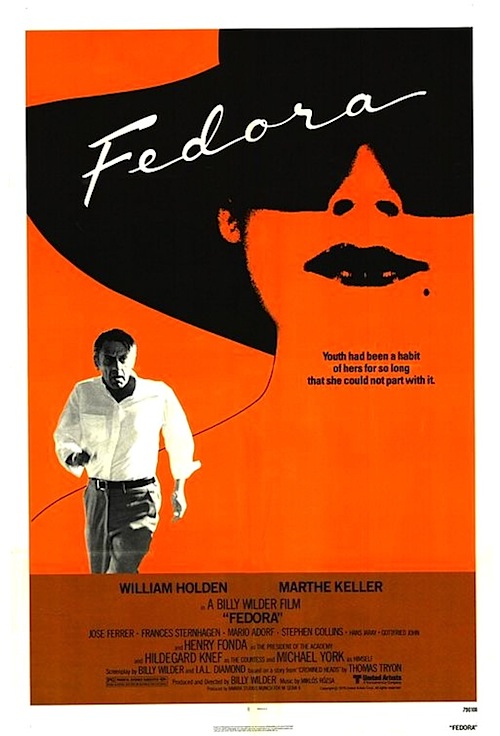
LFM Reviews Billy Wilder’s Newly Restored Fedora

By Joe Bendel. It turns out Norma Desmond was right. By 1978 the pictures had gotten small. One reclusive actress could make them big again, if only she were willing. One scuffling independent producer thinks he has the perfect comeback vehicle for her, but he will have to get past her suspiciously protective entourage in Billy Wilder’s newly restored Fedora, which opens this Friday at Film Forum.

Unlike Desmond, the uni-named Fedora appears truly ageless. Part of the credit must go to Dr. Vando, her personal physician, but he is just as controlling as the rest of her gatekeepers. Fedora is staying at Countess Sobryanski’s villa on the Greek Isle of Corfu, where access is strictly limited. Even though she has rebuffed Hollywood’s overtures for years, Barry “Dutch” Detweiler has come on borrowed money, script-in-hand, hoping to entice her with his modern day remake of Anna Karenina. Since the film starts in medias res at Fedora’s funeral, it is safe to assume the trip will not be a success. In fact, Fedora will dispatch herself in the manner of Tolstoy’s heroine. Of course, there will be a decidedly thorny explanation for her actions.

As we learn in flashbacks, Detweiler has a personal reason to believe Fedora might consider his offer. They once had a fling when she was at the height of her stardom and he was a very junior but very popular production assistant. There will be many more deep dark secrets from the past that Wilder and his celebrated screenwriting partner I.A.L. Diamond clearly enjoyed teasing out.

As a sort of thematic sequel to Sunset Boulevard, starring William Holden as Detweiler, Fedora ought to be beloved or reviled, yet it has been largely overlooked during the succeeding years, instead. Frankly, that is rather baffling, because their dialogue is as snappy as ever and their take on the late 1970s business of moviemaking is drily mordant. There are obvious parallels with Boulevard, but they dress it up with the scandalous trappings of the Harold Robbins novels then in vogue (sex, drug addiction, children secretly born out of wedlock).

Nevertheless, Wilder was still Wilder, so he could secure some really big stars to appear as themselves. Henry Fonda cranks his likability up to superhuman levels to play himself as the president of the Academy, specially delivering Fedora’s honorary Oscar two years before he was awarded his own. On the flipside, Michael York is quite the good sport appearing as a shallow, clueless Michael York.

Holden proves he can still masterfully handle Wilder’s adult banter, but there is also something poignant about Detweiler’s mounting desperation and nostalgia for the good old days. Even in his final years, he was a true movie star. Marthe Keller is also quite compelling in the title role, which turns out to be quite the complicated part, for reasons that would be spoilery to explain. Likewise, it is great fun to watch José Ferrer’s Vando swill his liquor and chew his scenery.

Sure, Fedora is alternatively lurid and campy—all the best films about Hollywood are, at least to some extent. More importantly, it has the wit and the attitude you would hope for. Not exactly a masterwork and certainly not a masterpiece, Fedora is really just a ripping good exercise in storytelling. Highly recommended for fans of classic movies and the people who made them, Billy Wilder’s Fedora opens this Friday (9/5) at New York’s Film Forum.

Posted on September 2nd, 2014 at 10:55pm.

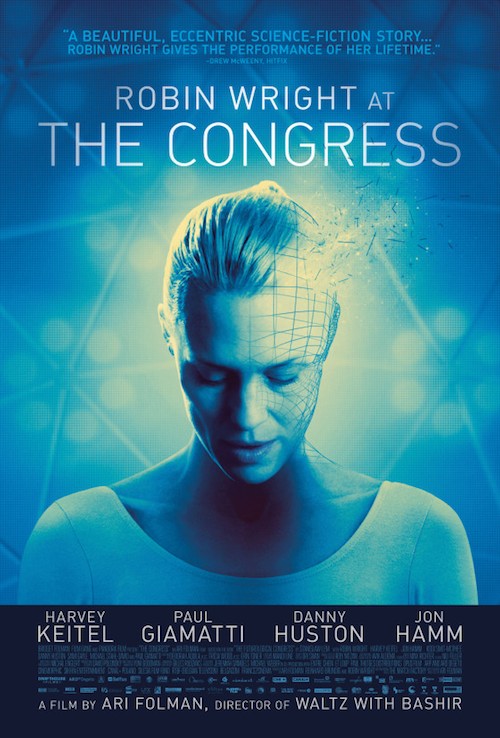
LFM Reviews The Congress

By Joe Bendel. Polish science fiction master Stanislaw Lem deftly satirized Soviet utopianism in The Futurological Congress. For his modernized riff, Israeli filmmaker Ari Folman uses Hollywood as the new evil empire. It is a smooth substitution. In the very near future, the movie business will take exploitation to even greater technological heights, as Robin Wright learns first-hand when she plays herself in Folman’s The Congress, which opens this Friday in New York.

Lem’s novel may have provided the seed of inspiration, but you will not find his well traveled hero Ijon Tichy. Instead, Wright will attend the conference in his stead, but first we will witness the final days of her acting career. Despite her early success in hits like The Princess Bride, Folman’s Wright turned out to be difficult to work with, frequently dropping out of high profile roles at the last minute. While she always claimed it was for the sake of her ailing son Aaron, her frustrated agent really knows it is fear and a lack of confidence that sabotaged her career.

However, Miramount has a final offer to make. For a lump sum payment, they will digitize Wright and program her into all the hit movies she was never shrewd enough to accept. Evidently, this is the way the business is going, so she reluctantly accepts. Twenty years later, she is the biggest star in the business, but nobody recognizes the real Wright. Accepting an invitation to speak at Miramount’s Futurological Congress, Wright plans to challenge their questionable ethical priorities from the podium. However, to get there, she must travel into Miramount’s animated city of avatars. Unfortunately, little things like the nature of time and reality will complicate her plan.

Frankly, the first fifty minutes of live action could have easily been condensed. In fact, by the time the film finally switches over into animation, Folman seems so eager to go off on a fantastical romp he never fully establishes the rules and boundaries of his chemically induced world of cartoon avatars. Still, it all looks spectacularly trippy.

Granted, Folman’s Congress is a bit of a narrative mess and it lacks Lem’s subversive bite, but it is fully stocked with fascinating ideas and surprisingly effective performances. In one of many intriguing side-plots, Folman puts a Matrix-like spin of Otto Preminger’s Laura when Dylan Truliner confesses to Wright he fell in love with her while working as the animator manipulating her digital image.

As Al the agent, Harvey Keitel delivers a monologue to end all monologues, while Paul Giamatti (who could have advised Wright on playing a meta-meta version of herself, having done something similar in Cold Souls) adeptly brings some stabilizing sensitivity and dignity to the film as Aaron’s kindly Dr. Baker. Whether as an animated avatar or in the flesh, Danny Huston also makes a dynamite villain as Miramount (great name) studio boss Jeff Green.

Most importantly, The Congress’ animation is wildly cool and colorful, with enough thinly disguised cameos and visual quotes to reward dozens of repeat viewings. In contrast, the Wright family drama gets tiresome the first time through, especially when it comes to poor, pitiful Aaron, whose bland personality seems to be degenerating along with his sight and hearing. Nevertheless, Folman puts so much crazy ambition up on the screen, it more than compensates for the occasional lapse into Lifetime melodrama. Recommended for fans of cult science fiction and animation, as well as Lem readers who enjoy being scandalized, The Congress opens this Friday (9/5) in New York at the Elinor Bunin Munroe Film Center.

LFM GRADE: B+

Posted on September 2nd, 2014 at 10:55pm.

LFM Reviews Rocks in My Pockets

By Joe Bendel. Perversely, the Soviet occupation of Latvia probably saved the life of animator Signe Baumane’s grandmother, Anna, at least temporarily. The resulting privations and exploitation provided a distraction from the depression and suicidal impulses that plagued her all her life. Combining art and therapy, Baumane chronicles the mental health trials of the women in her family, culminating with her own struggles in Rocks in My Pockets, which opens tomorrow in New York.

Baumane’s father and his seven brothers and sisters revere their sainted mother, but Baumane slowly pieces together a darker story. She was such a bright young girl, her father saved and even borrowed to send her to college, making Anna one of the few women in 1920s Latvia with an advanced education. Unfortunately, the only job she found after graduation was as the secretary to the entrepreneur who would become Baumane’s grandfather.

Initially, Anna was in awe of his erudition and sophistication, but his jealous controlling side quickly surfaced after their marriage. Instead of living a life of cosmopolitan glamour in the city, Anna dutifully followed her husband into the forest, where he established a turpentine factory. Unlike many of his schemes, it was relatively successful until the Soviets invaded, nationalizing it and everything else in their wake.

With eight mouths to feed, Anna rouses herself from her depression, navigating the life-and-death challenges posed by the Soviets, the Germans, and then the Soviets again. In fact, the Communists never stopped shaking down Anna and her family, confiscating their provisions when they are on the outs as partisans, just as they did when they were conquering oppressors.

Needless to say, Soviet psychiatric care was not exactly scientifically or socially progressive, either. It was mostly just about doping patients up, locking them up, and stigmatizing them thereafter, as Baumane learns first hand. In between, she revisits the sad history of many lost relatives, reading between the lines.

Even if it is animated, a film about depression sounds rather depressing, especially when a good portion of it is set during the Communist era. However, Baumane’s animation is quite striking, often taking viewers down surreal, symbolically resonant rabbit holes, and her message is also empowering and ultimately upbeat. In fact, the closing lines are absolutely unforgettable.

From "Rocks in My Pockets."

Yes, there is a prescriptive element to the film (tragically timely in the wake of Robin Williams’ death), but animation enthusiasts can enjoy it simply on a visual level. While Baumane tips her hat to Bill Plympton and Jan Svankmajer, her hand-drawn figures and backgrounds often bring to mind the work of Sally Cruishank (although they are somewhat less colorful, perhaps reflecting the subject matter and setting).

Clearly, Rocks is a very personal film, but Baumane’s family experiences offer a highly relevant and accessible perspective on the greater realities of depression and even Twentieth Century Latvian history. She convincingly makes the sort of jump from the private to the universal that Barabara Kopple’s glitzy, self-helpy Running from Crazy miserably failed to pull off. Highly recommended for fans of animation and those who appreciate its message, Rocks in My Pockets opens this Wednesday (9/3) in New York at the IFC Center.

LFM GRADE: A-

Posted on September 2nd, 2014 at 10:54pm.