King Hu at BAM: LFM Reviews The Fate of Lee Khan

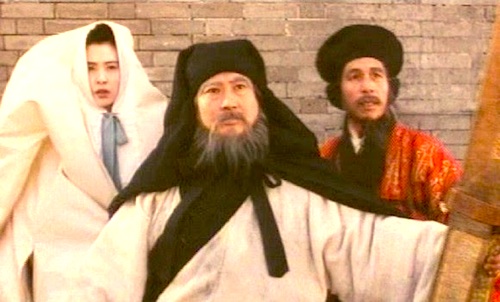
From "The Fate of Lee Khan."

By Joe Bendel. The Spring Inn is a lot like Rick’s in Casablanca. Nobody is shocked to find gambling there, while the resistance rubs shoulders with the occupiers. King Hu appreciated the dramatic possibilities of a nice isolated inn, setting three of his classic films within such seedy establishments. Fittingly, The Fate of Lee Khan, the third and least widely seen of his so-called “Inn Trilogy,” screens during BAM Cinématek’s retrospective, All Hail the King: the Films of King Hu.

Ever since she set up a dice table, “Wendy” Wan Jen-mi’s Spring Inn has crushed the business of her closest competitor. He does not mind, though, because he is her superior in the underground opposition to the Mongols. From him she receives advance warning that the dreaded warlord Lee Khan will soon be staying at her inn. The ruthless prince has intercepted a strategically important map from their compatriots, so Wan must steal it back. She has just the right staff for the job: four reformed criminals now working as waitresses. Additional back-up arrives in the form of lowly scholar Wang Shih-cheng and troubadour Sha Yuan-shan, who masquerade as Wan’s bookkeeper cousin and his servant.

After a fair amount of carousing with the rustic locals, the scene is sufficiently set for Lee Khan’s arrival and the fighting chops of former pickpocket Hai Mu-tan are thoroughly established. With the inn closed to all except the staff and the Mongol entourage, the sneaking around begins in earnest.

Frankly, Fate leans more towards intrigue than adrenaline-charged smack-downs, but action director Sammo Hung still blocked out some nice sequences to showcase his good friend Angela Mao. Even though it is a supporting part, nobody can miss the star power she brings to bear as Hai. As Wendy, Li Hua-li is hardly anyone’s push over either. In fact, the five women of Spring Inn vividly demonstrate Hu’s facility for strong “nuxia” swordswomen characters.
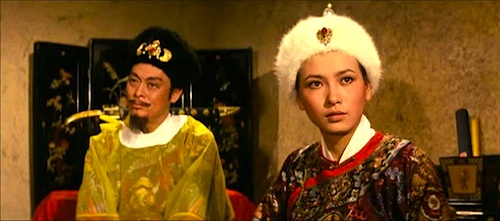
From "The Fate of Lee Khan."

One of the strangest aspects of Fate is Lee Khan himself. Feng Tien’s portrayal is not so very far removed from Conrad Veidt’s Maj. Strasser in Casablanca, oozing cunning and malevolence. Yet, everything he says, such as that officials should live close to the citizens they govern and should hire the most qualified scholars regardless of ethnicity, makes a good deal of sense. In fact, it sounds downright progressive for the era. Nonetheless, he is still the bad guy.

Featuring characters as colorful as their costumes, The Fate of Lee Khan is a fast-paced comedic-tragedy that should fully satisfy wuxia connoisseurs. It is important both as part of Hu’s thematic trilogy and a relatively early turn from Mao (shortly following Enter the Dragon and Hapkido), but because life is not fair, it is hard to find a watchable print with English subtitles and the original Mandarin dialogue. Since BAM will screen it this Sunday (6/15) as it should be seen, it ought to be a high priority for Hu and Mao fans during the All Hail the King retrospective, now underway in Brooklyn.

LFM GRADE: B+

Posted on June 12th, 2014 at 8:06pm.

King Hu at BAM: LFM Reviews The Valiant Ones

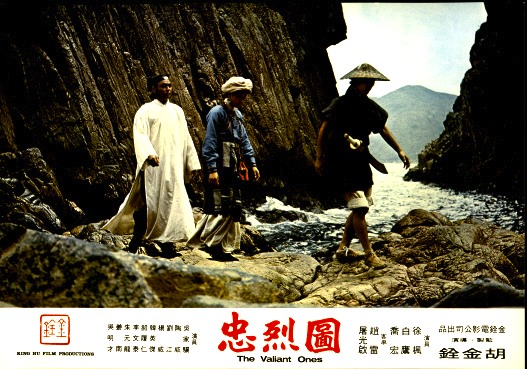
By Joe Bendel. It was a chaotic time during the Ming Dynasty, when the coastal provinces were like the Gulf of Aden. Japanese ronin were the Somali pirates of their day, raping and pillaging with impunity, thanks to the corruption of local officials. However, there is a new sheriff in town and he brought two spectacularly skilled deputies. They will take the fight directly to the pirates in King Hu’s The Valiant Ones, which screens during BAM Cinématek’s retrospective, All Hail the King: the Films of King Hu.

Frankly, many in court are hoping Yu Da-you will fail in his imperial assignment to subdue the pirates terrorizing coastal villages. After all, he has a reputation for integrity, just like his inconvenient father. He also has Wu Ji-yuan, a master swordsman, and his wife Wu Re-shi, who happens to be a particularly lethal archer. The bad guys will launch a preemptive attack on Yu, but they are no match for the Wus’ chops. With the reluctant help of a crooked prosecutor busted dead to rights, Yu’s lieutenants will infiltrate the pirates’ lair, posing as mercenaries looking to sign on. Their talents will impress, in more ways than one.

In terms of narrative structure, Valiant is pretty straight forward, marching from point to point in an orderly fashion. However, Hu’s striking seascape vistas give it an epic, widescreen vibe. He also lays down some incredible action sequences choreographed by the then little known Sammo Hung. Arguably, the climatic showdown is a true wuxia landmark, distinguished by feats that defy gravity and evoke classical tragedy.

Granted, Bai Ying and Hsu Feng do not cover an especially wide dramatic range as Wu Ji-yuan and Re-shi, respectively, but they have the moves and the presence. Roy Chiao has a steely Picard-ish air of command as the upright Yu, but Hung’s flamboyant turn as the pirate chieftain, Hakatatsu, seems to be looking for ways to be problematic. Nevertheless, his fight direction is terrifically stylish and camera-friendly.

Valiant is another great example of a strong, resourceful action heroine, presented by Hu in a rather matter-of-fact manner. Both Wu Re-shi and her husband are also highly mortal action figures (although you might not get that impression from a few scenes, if seen in isolation). It is all good stuff, especially well suited to viewing on the big screen. Recommended for wuxia fans who want to see dead pirates piling up and cineaste admirers of Hu’s artistry, The Valiant Ones screens this Friday (6/13) during the All Hail the King retrospective at BAM.

LFM GRADE: B+

Posted on June 12th, 2014 at 6:17pm.

LFM Reviews Hide and Seek; Now on DVD

By Joe Bendel. For the Occupy crowd and their allies in Congress, “I like it, I’ll forcibly take it” is an economic policy. In South Korea, it is the stuff of horror movies, or at least one very dark thriller. Violent and intrusive squatting has tormented the residents of a shabby tenement, but the terror is about to move on up George Jefferson-style in Huh Jung’s Hide and Seek, which just released on DVD from RAM Releasing, Film Movement’s relatively new genre division.

Baek Sung-soo has a lovely wife, two small children, and a mild case of germ-o-phobia. He also has an older brother Sung-chul, who has apparently gone missing. They were never very close, particularly after Baek inherited their parents’ entire estate, even though he was the adopted one. Of course, there is a good reason for that.

Visiting his brother’s dilapidated building, Baek learns that the tenants have been terrified by a peeping tom, who has a knack for invasive snooping. We also know from the prologue that at least one murder has been committed there. Brother clearly suspects brother, as Baek Sung-chul’s backstory is revealed, but whoever that motorcycle helmet wearing freak might be, he has followed the Baek family home to their tony Seoul high-rise condo.

Granted, most of the second act business is pretty straight forward woman-and-children-in-jeopardy stuff and the big third act revelation stretches credibility to the breaking point. However, it is Huh’s attention to creepy details that really elevates Hide. Shrewdly, he never overplays Baek’s OCD, using it for character development rather than as a major plot device. He also fully establishes the two very different housing complexes as distinct, physical locations, while steadily cranking up the sense of paranoia.

From "Hide and Seek."

Son Hyun-joo’s Baek always looks appropriately haggard, as if he were constantly in desperate need of an aspirin—even if he does just sort of plod along grimly. Although his wife Min-ji initially comes across as a sort of ice queen-trophy accessory, Jeon Mi-sun brings out the mother’s fierce protectiveness quite powerfully. Yet, perhaps the most effective performance comes from young Kim Ji-young, as little Pyeong-hwa, a neighbor of Sung-chul, who always turns up during especially dramatic and dangerous times.

Frankly, anyone down with the so-called “Occupy” movement has no grounds to protest the villainy afoot in Hide and Seek, beyond the aesthetic (“kill less and smile more, because it looks better”). It is a tense and unsettling depiction of a family’s sudden vulnerability to a predator, ironically cloaked by its fringe outsider status. It also gives us a vivid idea of what follows when bourgeoisie principles of property rights and the sanctity of life are thrown by the wayside. Recommended for fans of dark psychological thrillers and k-horror, Hide and Seek is now available on DVD from RAM releasing.

LFM GRADE: B+

Posted on June 12th, 2014 at 6:12pm.

Branagh Storms the Armory: LFM Reviews Macbeth

By Joe Bendel. Much to the regret of cineastes and Shakespeare connoisseurs, we can only speculate about what Olivier’s aborted Macbeth film could have been. At least we have auteurist adaptations from Orson Welles, Roman Polankski, and (sort of) Akira Kurosawa. Sir Kenneth Branagh (who picked up his fifth Oscar nod playing Olivier in My Week with Marilyn) has not yet helmed a big screen version of the Scottish Play, but patrons attending his new staging at the Park Avenue Armory will feel like they have seen it anyway, in widescreen 3D. An extremely cinematic Macbeth directed by Rob Ashford & Branagh officially opened last Thursday night, thoroughly dominating the cavernous Wade Thompson Drill Hall.

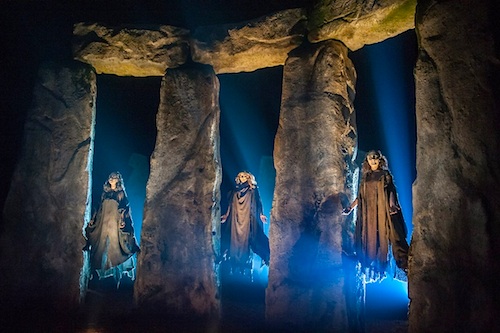
When transplanting their critically acclaimed Manchester International Festival production to the Armory, Ashford and Branagh decided to go large—really, really large. Seriously, we are talking big here. It is hard to describe the initial awe experienced walking to one’s seat through a recreation of Scotland’s moors, illuminated by hooded torchbearers, under the shadow of an enormous druid stone circle. That essentially covers the price of your ticket right there.

The druid stones are at one end of the stage and a massive candle-lit altar stands at the other. In between is a dirt battlefield, where Scotland’s thanes will get muddy, bloody, and dead. Two tiers of risers define the sides of the performance space, but despite their imposing size, it still feels like a surprisingly intimate viewing experience.

It is difficult to overstate the importance of set and costume designer Christopher Oram’s work. Yet, the show starts even before patrons enter, when they are assigned a clan and assemble with their kinsmen in one of the Armory’s historic chambers. There is no audience participation, per se, but it puts you on notice—this will not be a typical night at the theater.

Branagh brings it right from the start, with a full-scale battle sequence that brings to mind the melee of his classic Henry V. As you really ought to know, Macbeth is initially a heroic supporter of the king. Then three witches enter. They offer up a series of cryptic prophecies and soon Macbeth is up to his neck in murder most foul. Even with all the jaw-dropping spectacle on display, Branagh and company have to get down to business at some point, but fortunately he comes to make a statement.

As an old theater pro, Branagh could project to the back row with his head wrapped in gauze. While not a huge man, his Macbeth bristles with power, suggesting a sociopathic Medieval Napoleon. Frankly, most audience members are coming to give him a standing ovation, but he truly earns it. At times, Alex Kingston’s Lady Macbeth might be a bit too quiet for the staging, but her one-on-one scenes with Branagh have a raw physicality that is almost shocking. (Still, probably no one will ever match the sheer force of Roseanne Ma’s psychotic breakdown in the Pan Asian Rep’s Shogun Macbeth.)

From Kenneth Branagh's "Macbeth."

Unfortunately, several of the major thanes are rather overwhelmed by the staging, but Richard Coyle is the standout exception as Macduff. He was quite winning in Grabbers and impressively intense in Pusher, but he takes it to another level here, holding his own with Branagh. Just so we do not forget this is a Branagh show, Jimmy Yuill once again rejoins his frequent comrade as an unusually crusty and battle-hardened Banquo.

You really have to see the Armory Macbeth to fully get its full scope and impact. Ashford & Branagh have mounted what might well be the most ambitious staging of Macbeth, perhaps ever. Yet, they do not neglect the dramatic essentials. There is no need to tip toe around, referring to it as the Scottish Play sotto voce. This is Macbeth and it means business. Highly recommended for anyone who can possibly get to the Upper Eastside, Ashford & Branagh’s Macbeth ends its limited engagement on June 22nd at the Park Avenue Armory.

Posted on June 12th, 2014 at 12:59pm.

LFM Reviews Edge of Tomorrow

By Joe Bendel. You have to feel for the publishers of Hiroshi Sakurazaka’s light novel and manga, All You Need is Kill. They had a recognizable property with one of the coolest titles ever, but the studio changed the title of their live action adaptation to something sounding like a soap opera or an Edgar Cayce tract—and then they wonder why their tracking is soft. It is a shame, because the eternally recurring battle against alien invaders is rather snappily executed in Doug Liman’s Edge of Tomorrow, which opened Friday nationwide.

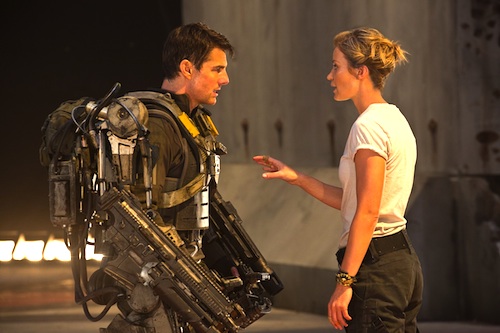
The so-called “Mimics” (because they are so blasted adaptable in battle) have overrun continental Europe, but somehow mankind held them off at Verdun. Victory was partly attributed to the development of their Iron Man-like exo-war “jackets” and partly to the leadership of warrior-extraordinaire Rita Vrataski, the “Angel of Verdun” (or “Full Metal Bitch” in the source novel). Embolden by humanity’s first battlefield success, General Brigham is poised to launch a D-Day-like counter-invasion of France. It will not go well, as soon to be ex-Major William Cage (formerly green recruit Keiji Kiriya) experiences over and over again.

Deservedly busted down to private for his incredibly stupid comments to Gen. Brigham, the military PR officer is now amongst the first wave of ground troops set to hit the beaches. Unfortunately, the Mimics know they are coming. Cage is indeed killed in rather short order, as are most of his new comrades, but not before he takes out an unusually large “Alpha” Mimic. Eventually, he learns he has been contaminated by their time altering power through its blood. Each time he dies, his incredibly un-fun day starts afresh. It has to be a clean death though. A transfusion will wash out his Mimic connection, whereas incapacitation would be the worst possible scenario.

Even though it is easy to recognize plenty of familiar military science fiction elements, Liman cobbles them together quite sure-handedly, adding the Groundhog Day twist. The action sequences are intense and brutally honest to the realities of any war. Frankly, there are a handful of moments of 3D shock and awe, but it is mostly unnecessary (as you probably already guessed). The battery of screenwriters also convey as decent sense of the soldier’s perspective and attitude. Yet, the film is relatively circumspect drawing D-Day parallels, notwithstanding the June 6th release date.

From "Edge of Tomorrow."

Younger readers might be interested to know Tom Cruise was once one of the biggest box office stars in the world, before he started handing out flowers at the airport, or whatever. This is the sort of role that used to be his bread-and-butter in the 1980s: the callow hotshot forced to mature thanks to the help of a more experienced woman. It might be a familiar arc for him, but he does not slack on the energy level. Yet, it is Emily Blunt who really delivers the grit and action cred as Vrataski. Science fiction fans will also enjoy watching Bill Paxton play with and against his Aliens persona as the hard-charging Master Sergeant Farrell Bartolome.

There are a handful of moments in Edge that will make the hair on the back of your neck stand on end. Unfortunately, the ending feels like a tacked on exercise in Hollywood gooeyness, almost undoing the in-your-face integrity of everything that came before. Nevertheless, there is more than enough amped-up genre action and time paradox-tripping to satisfy high concept, big budget science fiction fans. Recommended accordingly, Edge of Tomorrow opened Friday across the country, including the AMC Empire in New York.

LFM GRADE: B

Posted on June 12th, 2014 at 12:54pm.

King Hu at BAM: LFM Reviews Painted Skin

From "Painted Skin."

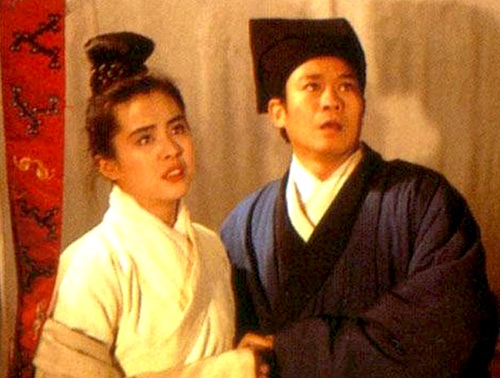
By Joe Bendel. Somehow, they are both based on Pu Songling’s short stories, but you would be hard pressed to find many similarities between King Hu’s final film and the smash hit Chinese cinema and television franchise of the same name. At least the casting made sense when Zhou Xun succeeded Joey Wong as the supernatural femme fatale with the detachable face. A foolish scholar will get more than he bargained for when he takes in a mystery woman in King Hu’s Painted Skin, which screened during BAM Cinématek’s retrospective, All Hail the King: the Films of King Hu.

Wang Hsi-tzu realizes he might have stayed out too late drinking when he starts seeing strange spectral visions on his way home. Nevertheless, he gets a sudden dose of courage when he encounters You Feng. Moved by claims she was badly abused by her husband’s first wife, Wang takes her into his household, much to the annoyance of his own wife. He may have yet to pass an imperial exam, but even Wang quickly realizes there is something a little off about You.

When confronted by a charm provided by two Taoist priests, You admits she is a ghost, trapped between worlds and held in thrall to the King of Yin and Yang. Half ghost, half man, the evil king commands a death cult of similarly in-between spirits. To escape his power, You will need more help than Wang can provide, she sets off in the company of the two priests, to find a legendary high priest, living a hermit like existence tending peach trees.

Without question, the first third of Painted is by far the most effective. Hu defty creates an eerie nocturnal atmosphere and a metaphysically scary villain. In contrast, the subsequent fantasy quest sequences feel more conventional, even though he nicely conveys the notion that the conflict is joined on both physical and spiritual levels. Still, the conclusion is quite redemptive, in every sense.

From "Painted Skin."

Granted, Wong does not have the strongest reputation as a thesp, but when it comes to looking like a doe-eyed lost little girl, she was tough to beat. Likewise, Wang is a great role for Adam Cheng, giving him license to ham it up in two directions. Even though his scenes do not have as much pop, there is no denying Sammo Hung has the appropriate heft, so to speak, for the high priest.

Painted Skin is a relatively minor entry in Hu’s filmography, but it is still a consistently entertaining supernatural wuxia fusion. Indeed, many of his prestigious filmmaker colleagues have ended their careers on weaker codas. Recommended as a ghostly outing in its own right and indispensible for BAM’s retrospective, Painted Skin screened this week in Brooklyn, as part of the perfectly named All Hail the King film series.

LFM GRADE: B

Posted on June 12th, 2014 at 12:46pm.