LFM Reviews Come Drink with Me @ BAM Cinématek

By Joe Bendel. With the release of ScarJo’s Lucy looming, we can expect the publicity campaign to wax rhapsodic about the significance of a female action hero. Of course, Michelle Yeoh has been kicking butt and carrying action films for decades. So has Angela Mao. Cheng Pei-pei also did it before Johansson and did it far better in King Hu’s Shaw Brothers classic, Come Drink with Me, which screens during BAM Cinématek’s retrospective, All Hail the King: the Films of King Hu.

Drink would be Hu’s definitive film for legendary producer Run Run Shaw, but also his last. Furthermore, it introduces the first of Hu’s many strong woman protagonists: Golden Swallow, the daughter of the scrupulously just provincial governor. A gang of outlaws has abducted her brother, expecting to exchange her for a colleague due to be executed for his crimes. Instead, the old man dispatches Golden Swallow to recover her brother and dispense some justice.

Kind of-sort of disguised as a man, Golden Swallow marches into the bandit’s favorite tavern, looking for trouble. They try to oblige, but she far outclasses mere henchmen. Needless to say, they vow to return, with their boss, Jade-Faced Tiger to continue the “negotiations.” To make things fairer, she will make a secret ally in Drunken Cat, the local lush, who is considerably more dangerous than his easygoing façade would suggest.

Come Drink is hardly the most complex wuxia story ever filmed, but it delivers several striking action sequences. Indeed, the fight scenes are vintage Hu, as deeply influenced by ballet as martial arts. It is not hard to gather why Golden Swallow’s exploits are often identified as a forerunner to Ang Lee’s Crouching Tiger, Hidden Dragon. It is also easy to see how it launched Cheng Pei-pei to overnight superstardom. She has poise, presence, and all kind of moves. (It is hard to fathom mistaking her for a man, but that is a genre convention we just have to go along with.) Even though he sings and clowns as Drunken Cat, Yueh Hua more than holds up his end, bringing to mind Donnie Yen with his earnestly likable badassery.

In fact, there is something appealing about Golden Sparrow being her family’s designated action figure. She is impressive, but not super-heroic. Both she and Drunken Cat have their physical and emotional vulnerabilities, but they demonstrate humanist virtues as well.

Thanks to Hu’s mystical trappings and striking backdrops, Come Drink With Me easily ranks amongst the higher end of Shaw Brothers productions. Nor can anyone argue with Cheng’s iconic work as Golden Swallow. A briskly paced tale of good versus the corrupt, Come Drink With Me is a film all wuxia connoisseurs should catch up with eventually. Highly recommended, it screens this today (6/8) at BAM as part of their King Hu retrospective.

LFM GRADE: A-

Posted on June 8th, 2014 at 12:08pm.
LFM Reviews The Cabining @ The 2014 Dances With Films

By Joe Bendel. They are not exactly the Garson Kanin & Ruth Gordon of horror movies. Frankly, the one thing two would-be screenwriting partners lack more than talent is inspiration. However, a quick stay at an artists’ resort will provide the latter, in the worst way possible. The bodies pile up, as well they should, in Steve Kopera’s slasher-spoof The Cabining which screened during the seventeenth Dances With Films.

Bruce is the hopelessly irresponsible one, while Todd is the earnest sad sack. Neither can crank out a halfway watchable scene, even by slasher movie standards. On the plus side, they have a tentative investor lined up for their first film, but if they cannot produce anything reasonably filmable, Todd’s uncle will put his money in a cousin’s heavy metal recording instead. After having their egos handed to them by their writing group, Todd reluctantly agrees to Bruce’s plan, regrouping for a few days at the Shangri-La retreat.

Right, so Shangri-La is a luxury cabin deep in the woods. You know what happens next, except for the surprisingly spirited courtship between Todd and the sarcastic Mindy, a real literary-grade writer also staying at the retreat. Meanwhile, guests act suspicious and/or dead, while Bruce recklessly pursues the disinterested but not completely unwilling Celeste.

From "The Cabining."

There is no getting around the fact Cabining is a meathead movie, but it is an oddly ambitious one. Kopera and co-writer David Silverman get a lot of mileage out of approaching the brink of shopworn horror clichés, but doing a 180º at the last moment. As a result, there is quite a respectable balance of smart and dumb laughs.

Kopera’s brother and co-producer Mike demonstrates solid timing and an easy likability as Todd. He also develops some appealing chemistry with the scene-stealing Angela Relucio’s Mindy. The film really hums when they are bantering. Conversely, Bo Keister’s Bruce is all about clumsy shtick, but Richard Riehle brings some on-target lunacy as Todd’s uncle, Sarge.

Admittedly, Cabining is no Blythe Spirit, but if you have seen your share of crap-goes-down-in-the-woods movies than you will find it consistently entertaining. It’s a scruffy indie, but it’s funny. Recommended for midnight movie patrons, The Cabining screened Friday night as part of this year’s Dances With Films, in Hollywood, CA.

LFM GRADE: B

Posted on June 8th, 2014 at 12:02pm.

LFM Reviews The Sacrament

From "The Sacrament."

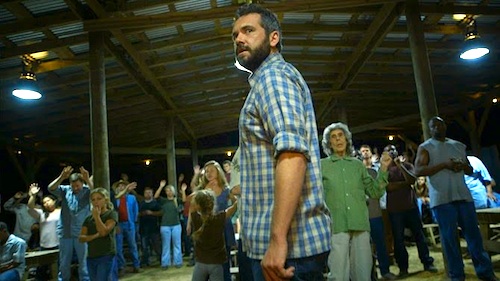
By Joe Bendel. Somehow, Hollywood was not especially interested in the close alliance Harvey Milk forged with the cult leader and duly appointed San Francisco Housing Commission Chairman Jim Jones, lest it spoil some perfectly sanitized hagiography. We will still have to wait for that part of the historical record to hit screens. However, genre auteur Ti West tackles the Jonestown legacy without whitewashing the Socialist ideology of its founder with his horrifying-but-not-really-horror The Sacrament, which opened this Friday in New York.

For all we know, we could be in Guyana. This undisclosed developing country is home to Eden Parrish, a socialist religious commune maintained by “Father” and his followers. One of them happens to be Caroline, the “troubled” sister of the well heeled Patrick, who happens to have several good friends at the Vice Media network. Sensing a good story, Sam and his cameraman Jake accompany Patrick to document his reunion and hopefully score an interview with Father. Of course, Caroline insists everything is totally fine, but she cannot wait to introduce her brother to some of the commune’s single women—thereby separating him from his Vice companions.

Soon Sam has his sit-down with Father, but it is a frustrating experience. Stymied by the John Goodman-esque cult leader’s slippery rhetoric and spellbinding cadences, the reporter is ready to admit defeat, until terrified cult members start secretly approaching him for help.

West faces an obvious challenge, since just about everyone, except apparently Gus Van Sant, knows exactly how Jonestown ended. On the other hand, knowledge of what is coming and the uncertainty of whether we really want to see it keeps the audience on pins and needles right from the start. Indeed, the scenes of Sam and Jake sneaking through the darkened compound are just extraordinarily tense.

From "The Sacrament."

Not exactly found footage, per se, The Sacrament is still shaped by the look of field reporting. Mercifully, the action is always clear and easy to follow, with little of the shaky cam distortion to be had, even when Jake is running for his life. The vibe of Eden Parrish is also so spot-on, one almost wonders if production designer Jade Healy had a captive crew of cultists to build it for real.

However, West’s ace in the hole is undeniably the ironically named Gene Jones (previously best known for No Country for Old Men), who delivers a massively chilling, truly Oscar-worthy performance as Father. Frankly, this could have been a take-it-to-a-new-level turn for A.J. Bowen, who is otherwise terrific as Sam, but when Jones throws down, he utterly overwhelms everything and everyone else on-screen.

Thanks to the mesmerizing Jones, The Sacrament vividly depicts how a strong, sociopathic personality can dominate weaker followers. It is a lean, tight thriller that feels uncomfortably true to history. Recommended for West’s fans and those fascinated by the psychological dynamics of cults, The Sacrament opened this Friday (6/6) in New York at the Cinema Village.

LFM GRADE: A-

Posted on June 7th, 2014 at 10:45am.

HK Horror Homage: LFM Reviews Rigor Mortis

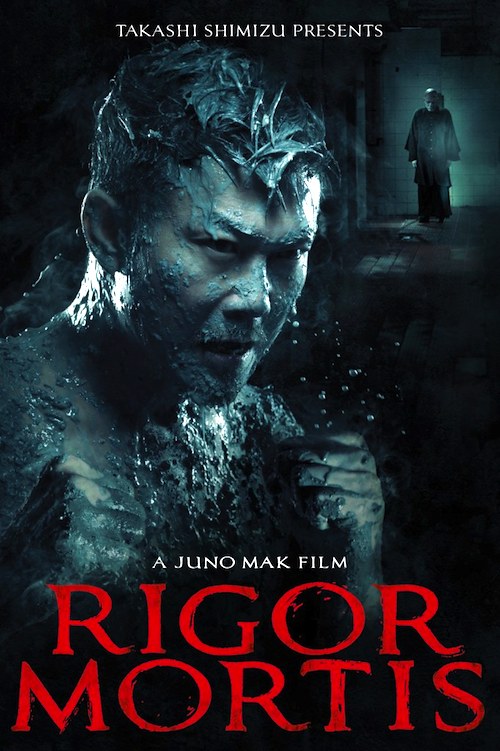
By Joe Bendel. Imagine Doctor Strange wearing a bathrobe and flip-flops. That’s old Yau. He also cooks a mean bowl of glutinous rice, but exorcism is his real calling. His ominous HK apartment complex keeps him all kinds of busy, but he might finally find an ally when a suicidal actor arrives in Juno Mak’s Rigor Mortis, which opened this Friday in New York.

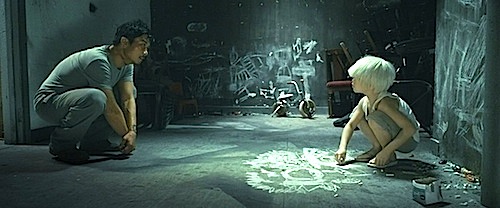
Disgraced and bereft for reasons only hinted at, Chin Siu-ho moves into a building so decrepit, it could be in Union City, New Jersey. Of course, Chin does not plan to live there (or anywhere else) for long. However, it turns out suicide is not painless. Given the spirits lurking about, it is a profoundly dark and disturbing experience. Fortunately, Yau intercedes at the last minute, but he keeps seeing the spooks and specters afterward.

Still unsure what comes next, Chin befriends the former tenants of his flat, the emotionally shell-shocked Yeung Feng and her ashen-haired little boy, while tentatively offering Yau a hand here and there.  Meanwhile, Yau’s rival, Gau a shaman who cannot resist dabbling in black magic, helps Auntie Mui re-animate her recently deceased husband. Even though she follows his instructions to the letter, Uncle Tung just doesn’t seem to be his old grouchy self. That will get to be thing for Yau to deal with.

As befits a film set within an apartment building, Rigor Mortis is fully stocked with odd characters, many of whom are played by veterans of the Mr. Vampire series. The comings and goings get rather complicated, but the atmosphere trumps everything. Mak and production designer Irving Cheng create a very creepy space. The exorcism process also involves some distinctive martial arts choreography, for extra added genre appeal. However, the ending is rather frustrating, bringing to mind a 1990 mind game film that would be spoilery to name by title.

From "Rigor Mortis."

In a case of meta-meta casting, Mr. Vampire star Chin Siu-ho plays his washed up namesake. He is so convincingly world weary, he practically blows away with the wind. Conversely, his former franchise co-star, Anthony “Friend” Chan commands the screen with his sly presence. Likewise, Paul Chung chews enough scenery for a Hammer Horror film as the reckless Gau. Although best known for her martial arts chops, Kara Wai is also surprisingly affecting as the traumatized Yeung Feng.

Rigor Mortis looks incredible, in no small measure thanks to cinematographer Ng Kai Ming, and it delivers a number of deeply unsettling scares. Mak and his co-screenwriters, Philip Yung and Jill Leung, take a shotgun approach, spraying all manner of supernatural business across the screen, but it works more often than not. Recommended for fans of HK horror, Rigor Mortis opens this Friday (6/6) in New York at the AMC Empire.

LFM GRADE: B

Posted on June 7th, 2014 at 10:40am.

LFM Reviews The Human Factor @ The Lincoln Center’s Open Roads: New Italian Cinema

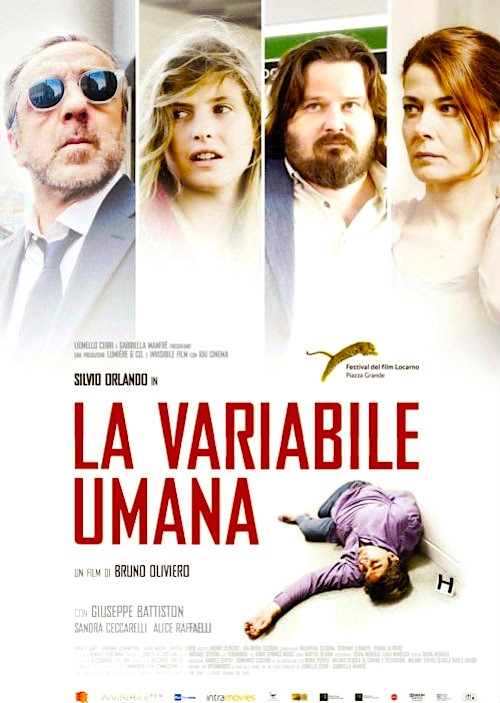
By Joe Bendel. You know whenever a movie cop takes on one last case before retirement it is bound to get complicated. It becomes especially uncomfortable for Inspector Adriano Monaco when he investigates the lurid murder of a highly connected contractor, while trying to repair his relationship with his daughter in Bruno Oliviero’s The Human Factor, which screens during the Film Society of Lincoln Center’s annual series, Open Roads: New Italian Cinema.

As a cop and as a parent, Monaco goes strictly by the book. That has made it difficult to bond with his daughter Linda, even after the untimely death of his wife three years ago. Since then, Monaco has buried himself in desk work, but his captain insists his tact and insight are needed for the murder of Mirko Ullrich. A good friend of Milan’s political power-brokers, Ullrich was discovered by his wife in a highly compromising and most certainly deceased condition.

Initially, suspicion falls on the not-too-terribly-broken-up Mrs. Ullrich, but Monaco and his junior partner Carlo Levi soon follow a trail of clues to Milan’s underworld of drugs and under-aged procurement. Meanwhile, Monaco continues to neglect and inadvertently push away the oversensitive Linda, until her rebellion precipitates a family crisis.

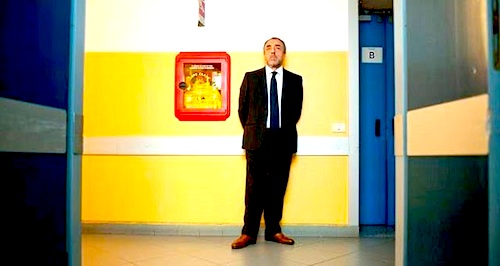
Essentially, Oliviero employs the elements of film noir to tell an acutely personal family drama, but the Ullrich case is still as serious as a heart attack. One cannot help wonder what levels of tragic gravitas Toni Servillo might have brought to Monaco, but Silvio Orlando rather deftly takes him in the completely opposite direction. His Monaco is just a haggard shell of man, who barely has sufficient force of will remaining to walk across the room.

From "The Human Factor."

There is indeed something undeniably compelling about Orlando’s emotionally desiccated performance. In contrast, Alice Raffaelli’s petulant Linda can be tough to take, but that is probably rather true to the reality of late adolescence. For some welcome added color, Giuseppe Battiston brings to mind a young, salty Depardieu as the more pragmatic Levi, which is a good thing.

Oliviero and cinematographer Renaud Personnaz maximize the seedy nocturnal vibe for all its worth. Even though most viewers will probably guess exactly the general direction it is headed, the stylish execution and distinctive performances still make Factor a trip worth watching. Recommended for fans of film noir and Italian cinema, The Human Factor screens today (6/6) at the Walter Reade, as part of Open Roads 2014.

LFM GRADE: B+

Posted on June 6th, 2014 at 10:59am.

LFM Reviews Never Too Old to Meow @ The 2014 Brazilian Film Festival in New York

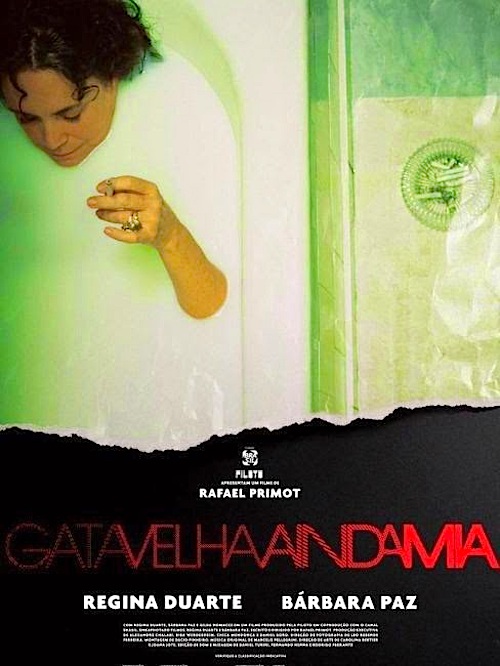
By Joe Bendel. Barbara Polk was once the Susan Sontag of Brazil, but it has been a long time since her last book. It is fair to say she has had issues during the intervening time. Viewers will learn them in dramatic detail when Polk reluctantly sits for an interview with a journalist neighbor in Rafael Primot’s Never Too Old to Meow, which screened during the 2014 Brazilian Film Festival in New York.

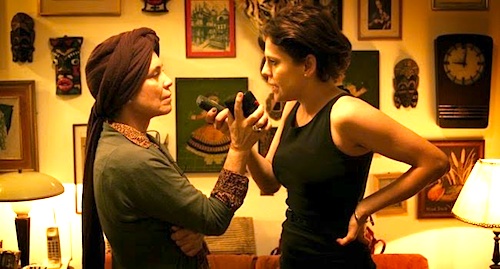
Polk is still a recognizable name in literary circles, but she no longer has the same cache as a public intellectual. With the expected publication of a long awaited follow-up novel looming, she agrees to an interview for a hipster magazine. Like a bitter old Lillian Hellman, Polk seems to do everything she can to make Carol uncomfortable. There is a reason for her icy hospitality. The two women are linked in extremely intimate ways. Let’s just say Polk used to live in the penthouse instead of Carol.

Nonetheless, Polk starts to warm to her guileless guest as the vino flows. Perhaps they can form some sort of alliance as fellow women of letters. And then the film turns into a completely different animal—one that makes more sense to be covered here. It is hard to avoid spoilery terms (although the ominous opening credit sequence foreshadows the big twist), but one might say Meow starts in the vein of a Mary McCarthy novel and then takes a detour into Joyce Carol Oates’ darker terrain.

Frankly, Meow just doesn’t know when to quit. There is an obvious concluding place that would serve as a much darker but more powerful exclamation point to their strange evening. Regardless, there is no question Primot pulls the audience into what is essentially a one-set two-hander. His disciplined approach is not overly showy, yet it is open enough to avoid staginess, much in the tradition of some of Polanski’s more grounded work.

From "Never Too Old to Meow."

It is also pretty clear Meow was intended as a showcase for Regina Duarte, who marked her fiftieth anniversary as a multiple-screen actor last year. She is ferocious as Polk, especially when chewing on her early acerbic one-liners. The entire film is stacked against Bárbara Paz’s Carol, but she holds on and guts it out admirably well, all things considered.

This is not the sort of Jill Clayburgh movie Meow originally presents itself to be. Frankly, you do not see such radical gear-shifting in film or television very often, which makes it quite cool, in a rude sort of way. Recommended for patient fans of sinister psychological thrillers (but not the cat lovers who might be accidentally drawn to it), Never Too Old to Meow screened this week as part of this year’s Brazilian Film Festival in New York at the Tribeca Cinemas.

LFM GRADE: B

Posted on June 6th, 2014 at 10:51am.