Canadian Time Travel: LFM Reviews I’ll Follow You Down

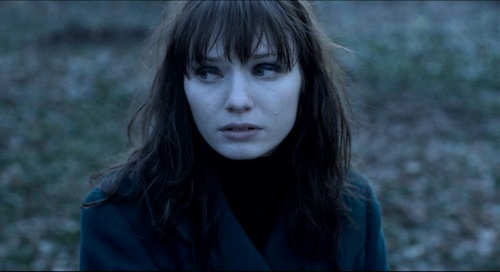
By Joe Bendel. As a family of academics, it is not surprising the Whytes are prone to depression and dysfunctional insecurities. At least they have a good reason. While still a young boy, Erol’s father mysteriously vanishes while attending a theoretical physics conference. His absence continues to haunt Erol and his mother, but the son might be able to fix his broken family by reconstructing his father’s time travel research in Richie Mehta’s I’ll Follow You Down, which opens this Friday in the Tri-State Area.

Gabe Whyte’s luggage remained in his Princeton hotel room, but no trace could be found of the Toronto scholar. His wife Marika never really recovered from the loss. Arguably though, some good came out of the misfortune, from Erol’s perspective. While his mother was away searching for his father, the young boy forged a deep bond with Grace, his childhood sweetheart. In fact, they are poised to get married after their undergrad studies, until his mother finally succumbs to her depression.

As he mourns his mother, Whyte starts to reconsider his Grandpa Sal’s crazy claims. The good professor is convinced Gabe developed a method of time travel, journeying through a wormhole to have a discussion with Einstein, presumably meeting with misadventure somewhere along the way. However, it will take more than a garden variety genius like Prof. Gramps to replicate his work. Only an exceptional mind like Erol’s is equal to the task. The upside for his family will be profound if Whyte can save his father, but what will happen to his relationship with Grace?
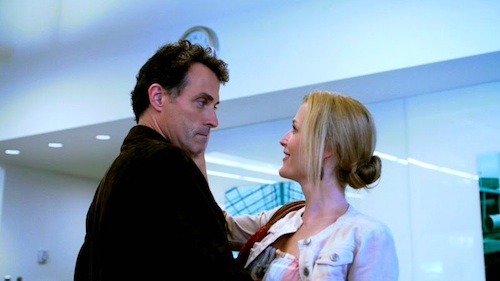
From "I’ll Follow You Down."

Follow definitely has its cerebral side, which is a good thing, but it is also unusually emotionally mature for science fiction. Instead of speculating about the Butterfly Effect and how it might alter macro history and technology, Mehta focuses on how it could transform the Whyte family. As a result, it is not nearly as intricately constructed and gleefully mind-blowing as Nacho Vigalondo’s Timecrimes or Hugh Sullivan’s The Infinite Man, but its time shifting business still holds together pretty well.

As a misfit genius, The Sixth Sense’s Haley Joel Osment makes a convincing misfit. The genius part requires a bit more willful suspension of disbelief. He more or less keeps his head above water, but it is far from certain whether Follow will herald a major career comeback. Wisely, he is surrounding by a quality supporting cast with serious genre cred. Alias’s Victor Garber is on familiar turf as the decent mentoring grandfather, but he is still a reassuring presence. Rufus Sewell makes intelligence charismatic as the temporally misplaced Whyte, while The X-Files’ Gillian Anderson is surprisingly compelling as miserable mother Marika.

Like Infinite Man and Darren Paul Fisher’s Frequencies, Follow is the sort of cleverly conceived science fiction that does not require extensive special effects. A dose of Einstein (not a character) beats an explosion any day. Recommended with enthusiasm for time travel fans, I’ll Follow You Down opens this Friday (6/13) at the AMC Jersey Gardens in Elizabeth, via Well Go USA.

LFM GRADE: B+

Posted on June 6th, 2014 at 10:39am.
LFM Reviews The Periphery @ The 2014 Dances With Films

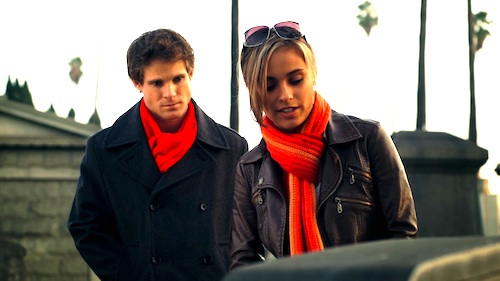
By Joe Bendel. As a Pope Francis kind of priest, young Father McCready is uncomfortable with traditional ideas of demons and exorcisms. In contrast, his headmaster, Father Jenkins, is an old school Benedict XVI kind of clergyman. Unfortunately, the senior priest’s diagnosis will prove correct for one of their students. Things get Exorcistic in Tom Lewis’s The Periphery, which screened during the seventeenth Dances With Films.

Essentially, Cassie Stevens died and came back to life. Unfortunately, the young girl her drunken goth friends ran over was not so fortunate. Frankly, her second lease on life turns out to be more of a curse than a blessing. Not only must she endure the public shame and survivor’s guilt resulting from her accident, something sinister has apparently followed her from the other side. Initially, she can only see it vaguely out of the corner of her eye, but it steadily gets closer and more belligerent.

They say in the film: “evil hides in the periphery,” which sounds heavy. More importantly, it prevents Lewis from over-exposing the malevolent entity, forcing him to suggest rather than show, which is always a winning horror movie strategy. His instincts are not always so on target, particularly the opening narration (“I’m Cassie Stevens and I see blurry androgynous figures”) that makes it sound like a television pilot. The general tone is also surprisingly dour and downbeat.

From "The Periphery."

However, like Blatty and Friedkin, Lewis addresses his themes of good, evil, and redemption with scrupulous seriousness. He also establishes an effective dichotomy between the secular reason of Stevens’ psychiatrist, Dr. Switzer, and the faith of Father Jenkins. In fact, the best things going for Periphery are the distinctive supporting turns from Larrs Jackson (with his incredible radio voice) and executive producer Myron Natwick as Dr. Switzer and Fr. Jenkins, respectively. The young kids just don’t have the presence of the veteran cats.

True, Periphery is simply nowhere near the Exorcist’s level, but Lewis (an attorney specializing in film production work in his other life) nicely handles some third act revelations and maintains a menacing vibe throughout. It is also compelling to watch the re-assertion of Fr. McCready’s flagging faith, at least for the bad stuff. (Still, you have to wonder where Stevens’ supposedly concerned parents are constantly disappearing to in the middle of the night.) While certainly a B-movie, it is considerably better than you would expect. Worth checking out for die-hard horror fans, The Periphery screened during this year’s Dances With Films in Hollywood proper.

LFM GRADE: B-

Posted on June 6th, 2014 at 10:24am.

LFM Reviews The Curse of Styria @ The 2014 Dances With Films

Styria Trailer from Styria on Vimeo.

By Joe Bendel. The Austrian state of Styria was once home to jazz musician Wolfgang Muthspiel and disappointing former governor Arnold Schwarzenegger. It was also where the vampire Carmilla Karnstein haunted her victims in J. Sheridan Le Fanu’s gothic classic. The fictional Communist era Hungarian hamlet of Styria will also fall prey the undead seductress. It is a shift that works rather well, adding an additional layer of menace to Mauricio Chernovetzky & Mark Devendorf’s The Curse of Styria, which screens during the seventeenth edition of Dances With Films.

Something terrible happened to Laura Hill’s’ mother at an early age, but her art historian father refuses to speak of it. It is just her and him now, but he is mostly wrapped up in his work. Dr. Hill has dragged her to a remote Hungarian castle to remove a series of culturally significant murals. However, the clock is ticking. As a symbol of class exploitation and imperialism, the government will soon demolish the creaky old fortress, regardless of what national treasures it might contain. As Dr. Hill races to finish his work, his government liaison, General Spiegel, regularly drops by to be unhelpful and intimidating.

One day, Mme. Hill witnesses a young woman flee Spiegel’s custody, following a car accident and an altercation. That would be Carmilla. She will also start visiting the castle frequently, but only at night. Initially, Lara is delighted to have a companion, but Carmilla exerts an unhealthy influence over her, physically and mentally. There seems to be a lot of that going around, given the recent wave of suicides amongst Styria’s teenage girls.

From "The Curse of Styria."

Unlike previous adaptations, Styria does not leeringly exploit Carmilla’s lesbian overtones. Instead, Chernovetzky & Devendorf concentrate first and foremost on atmosphere, which is not such a bad strategy for a supernatural film. The late 1980s Communist setting also heightens the foreboding vibe. Granted, they could have just moved the story a few feet over the Slovenian border, but that might have complicated the viewing experience with inadvertent Balkan baggage.

Polish actor Jacek Lenartowicz (seen briefly in Wajda’s masterwork, Katyn) is gleefully evil as Spiegel, clearly portraying a self-aware agent of oppression, who realizes his time may soon be up. Always reliable, Stephen Rea is consistently credible as the concerned but deeply flawed father, especially compared to the sort of clueless parents typically encountered in horror movies. Unfortunately, Eleanor Tomlinson is a bit colorless as Laura Hill, but it is easy to believe her self-destructive slightly goth-ish teen would be highly susceptible to Carmilla’s supernatural overtures. Likewise, Julia Pietrucha is certainly no Ingrid Pitt, but she conveys a respectable air of danger.

In truth, Styria is better described as a gothic film than a horror or vampire movie. Grzegorz Bartoszewicz’s cinematography is appropriately moody. Likewise, the evocative work of production designer Jim Dow and art director Ian Dow is somewhat in the Hammer period tradition, but more austere. Smarter and more refined than most genre films, but bloodier than BBC productions of Wilkie Collins, The Curse of Styria is recommended for literate vampire fans when it screens Sunday night (6/1) at this year’s Dances With Films.

LFM GRADE: B

Posted on May 30th, 2014 at 9:08pm.

LFM Reviews Hornet’s Nest

By Joe Bendel. He was known as QZR—was known. Now the Taliban militant is simply the late Qari Ziaur Rahman. The civilized world can thank the troops of the No Slack Battalion 2/327 and their 2nd Battalion 8th Regiment Marine Regiment and 3BCT “Rakkasan” Airborne colleagues. Embedded journalists Mike Boettcher and his son Carlos followed the No Slack Task Force on a series of dangerous missions, culminating with a strike against Rahman on his home turf. Shot by the Boettchers, the action is as real as it gets in David Salzberg & Christian Tureaud’s The Hornet’s Nest, which opens tomorrow in New York.

Credited as producers and cinematographers, the Boettchers were deeply embedded with the No Slack troops, very much in the line of Taliban fire. A veteran war correspondent, Mike Boettcher had done this sort of thing before, serving as a fulltime embed for Nightline. This was Carlos Boettcher’s first time covering a war zone, but his father reluctantly agreed to let him share his assignment. Despite his concern, he hoped the same forces that bound the troops together would help repair their somewhat estranged relationship.

It probably is not much of a spoiler to report that much proceeded as planned. The real point to Nest is the footage they jointly recorded, which is absolutely incredible. Remarkable for their clarity of sound and visuals, Nest’s warfighting incidents are even more intense and far easier to follow than anything seen in Junger’s Korengal films or Brothers at War and Severe Clear, documenting the Iraq War experience. At times, Salzberg & Tureaud are able to shift between each embed’s footage for multiple vantage points on the chaotic battles.

Frankly, Nest probably realizes the worst fears of several Columbia School of Journalism faculty members regarding embedded reporters. While the senior Emmy winning Boettcher scrupulously avoids political judgments, he makes no secret of his deep emotional involvement in the events he covers. It is easy to understand why, because the audience sees what he sees. It is tough to stay neutral watching Afghan children fall victim to IEDs or medivac helicopters take fire from Taliban forces, but the Boettchers witness it all in the heat and smoke of real-time war.

For obvious reasons, Nest has followed an unconventional distribution strategy, releasing in markets with large military populations before its New York run. As it happens, it opens here the same day as Junger’s Korengal. Both films are well worth seeing, but Nest is in fact the more powerful of the two. No other contemporary war doc so eerily captures the whistling sound of bullets whizzing overhead and when No Slack soldiers mourn their fallen brothers, Nest packs a greater punch to the emotional solar plexus. Very highly recommended, The Hornet’s Nest opens tomorrow (5/30) in New York at the AMC Empire and Village 7 theaters.

LFM GRADE: A

Posted on May 29th, 2014 at 9:32pm.

LFM Reviews Karaganda @ The 2014 Dances With Films

Karaganda from Max Weissberg on Vimeo.

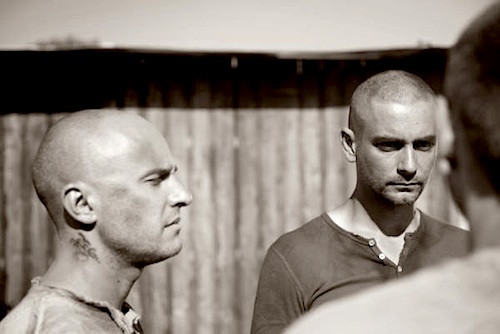
By Joe Bendel. If you want to know why Russia held the Winter Olympics in a town without snow and spent so much money on sub-standard construction, you might ask the Ganavim ba Hok or Thieves By Law, but that probably would not be a good idea. They survived the Czars and would survive the Communists, often plying their criminal trades behind bars. Given their power, one Jewish gulag prisoner is convinced joining the “Vors” represents his best chance to save his wife in Max Weissberg’s short film Karaganda, which screens during the seventeenth edition of Dances With Films.

During Stalin’s reign of terror, approximately 18 million Soviet citizens were condemned to the gulag system of prison work camps. Like Siberia, Kazakhstan was a prime location, because of its harsh climate and forbidding landscape. Smuggler Vladimir Bershstein has been sentenced to such a gulag somewhere in the vicinity of Karaganda, but it might as well be the dark side of the moon. At least he is not a political prisoner, like work detail partner Aleksei, but his Jewish heritage is nearly as reviled. Yet, knowing his wife Elena was also condemned to a women’s camp not far from his own torments Bershstein even more than his Soviet jailers.

In spite of Aleksei’s warnings, Bershstein is convinced he can only save Elena by earning an invitation to join the so-called Vors. Of course, it is easier said than done. After all, the guards themselves are afraid to cross the heavily tattooed gang, for good reason. To be considered for membership, Bershstein will need a killing to his name, but that will be the easy part.

From "Karaganda."

The Thieves By Law are definitely a scary bunch, but Weissberg does not let the Soviets off the hook either. What comes to pass in Karaganda is truly Russian style tragedy, portending future repercussions that could be explored in a future feature length version. Still, in just under half an hour, Weissberg covers more plot than a lot of slow cinema indulgences, without skimping on characterization or atmosphere.

He also has the benefit of a strong cast and crew. As the intense Bershstein, Konstantin Lavysh is clearly a gold medal contender for brooding. While his character is more outgoing, Nikita Bogolyubov really centers the film as the decent but somewhat unpredictable Aleksei. Both have strong presences that never wilt under the existential weight of Terrence Laron Burke’s striking black-and-white cinematography and the bleak, forbidding backdrops.

There is more ambitious filmmaking in Karaganda than a festival full of precious navel-gazing indies. Recommended both as a self-contained film and as the start of a potential saga, Karaganda screens this Saturday (5/31) as part of Competition Shorts Group 2 at this year’s Dances With Films.

LFM GRADE: A-

Posted on May 29th, 2014 at 9:27pm.

LFM Reviews Skum Rocks @ The 2014 Dances With Films

By Joe Bendel. If anyone is entitled to laugh at the garage metal band Skum, it is Alice Cooper. He participated in even crazier shenanigans during the early stages of his career, yet he made it to the top and stayed on top. Fittingly, he serves as the subtly acerbic narrator for their shoulda-coulda story. A group of William & Mary soccer players very well might have formed an appallingly untalented hard rock band, but when Clay Westervelt brought them together for a reunion, they kept their tongues firmly planted in their cheeks. The emphasis is on mock and rock when Westervelt’s Skum Rocks screens as a legit doc at the 17th annual Dances With Films in Hollywood, USA.

Skum were almost profiled on Behind the Music style program for “Disaster Bands,” but they turned out to be too disastrous. Nonetheless, Westervelt and a pick-up crew kept following the story. Founding members Hart Baur, Todd Mittlebrook, and Scott Bell had no musical aptitude, but they did not let that dissuade them. Eventually, they recruited some band-members with genuine chops, but quickly fired them when they provided too much competition for their admiring lady fans. Somehow they built up a cult reputation in Miami after graduation, partly because of their success in battle-of-the-bands. Again, this was not due to talent, but the extra credit Baur (now a high school teacher) offered his classes.

Even though they never really made it, Skum lived the rock & roll lifestyle to the fullest, leaving everyone who ever tried to do business with them reeling in bankruptcy. Like an inadvertent Max Bialystock, they oversold shares of their long promised debut album, but fortunately their sole masters were stolen under appropriately bizarre circumstances. That temporarily spelled the end of Skum—and the music industry was grateful. Oh, but there has to be a comeback.

From "Skum Rocks."

While not Spinal Tap or the real life Super Duper Alice Cooper, Skum Rocks is still pretty funny stuff. It hits all the rockumentary bases, including the band’s revolving door for drummers and one member’s pornstar obsession. Sure, they are “playing themselves,” but the dudes from Skum nail the aging un-self-aware hedonist rocker vibe, particularly Baur and John Eaton. Of course, Cooper sells it perfectly with his stranger-than-fiction voiceovers. Following Super Duper, Supermensch, and An Honest Liar, Skum Rocks represents the fourth “documentary” he appears in this year. It is quite a body of work that makes for entertaining binge viewing.

Whether hand-on-the-Bible true or somewhat enhanced, Skum Rocks is a lot of mischievous fun, which nobody should take too seriously regardless. At least the rock & roll attitude is certainly genuine. Recommended for Skum fans and those who appreciate their milieu, Skum Rocks screens this Friday (5/30) during the 2014 Dances With Films.

LFM GRADE: B

Posted on May 29th, 2014 at 9:21pm.