LFM Reviews Letters from Pyongyang @ The 2013 Korean American Film Festival in New York

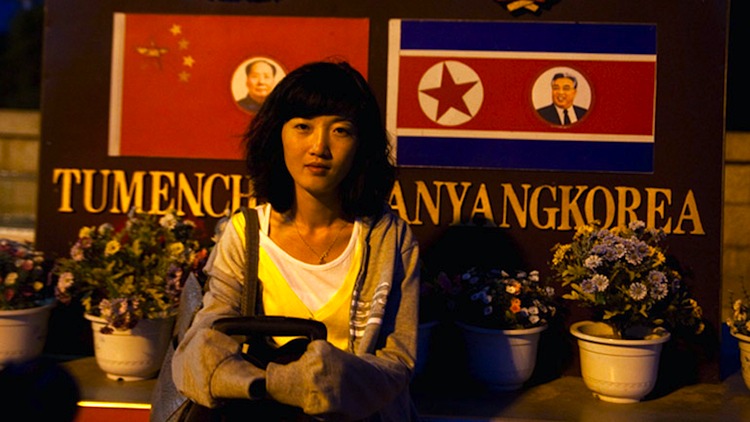
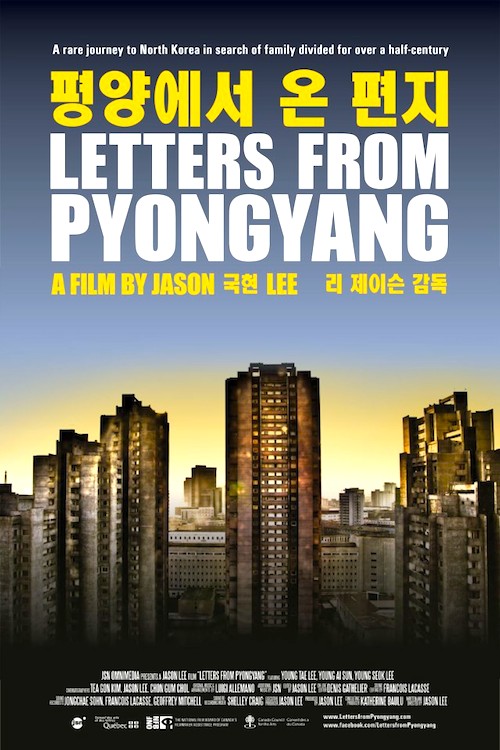
By Joe Bendel. If you know someone in North Korea, then you have just cause to be concerned for their well-being. With reports re-surfacing of widespread famine and worse, losing contact with family in the closed Communist nation would not inspire optimism. When the annual letters from filmmaker Jason Lee’s uncles stopped coming, his father became understandably anxious, embarking on a family fact-finding mission documented in Lee’s short film, Letters from Pyongyang (trailer here), which screens during the 2013 Korean American Film Festival in New York.

Getting into the DPRK requires superhuman bureaucratic hoop-jumping, even from Canada. After getting more no’s than Stephen Merchant in a singles bar, Lee and his father finally received the requisite approvals for their visit. However, in a massively anticlimactic turn of events, they learn Lee’s two uncles died several years ago, just prior to embarking. They continue on anyway, hoping to pay their respects and connect with the family they have never known.

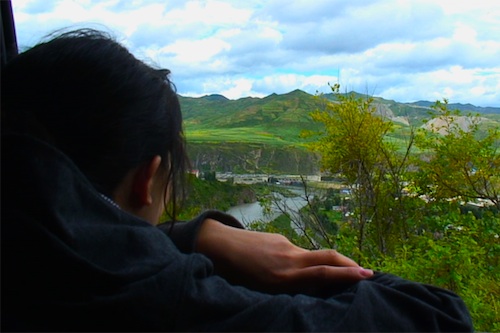
What follows vividly illustrates the stilted nature of tourism in oppressed countries. The Lees’ minders show them plenty of imposing Socialist monuments, but they are only allowed a brief meeting with their extended North Korean relatives in the lobby of their hotel. Presumably, Lee the filmmaker has little to say about this conspicuous police state behavior because Lee the nephew is concerned about his uncles’ families. That is completely understandable but highly problematic from a cinematic standpoint, resulting in too many scenes of Lee and his father duly taking in one epic statue after another.

Documenting family members living under a ruthless regime is obviously a tricky proposition, but Yang Yonghi walked that fine line rather deftly with her more forthright documentary Dear Pyongyang. Arguably, the more her family members were on-camera and the wider she exhibited her film, the more protected they were as a practical matter. While perceptive viewers can always glean something from a peak behind the DPRK’s iron curtain, Letters lacks than insight and drama of Hein Seok’s Seeking Haven, also screening at this year’s KAFFNY. For voracious North Korea watchers, it screens tomorrow (10/26) at the Village East as part of the Forgotten War Shorts programming block.

Posted on October 25th, 2013 at 12:52pm.

Days Gone by in North Korea: LFM Reviews The Girl from the South @ The 2013 Korean American Film Festival in New York

By Joe Bendel. It was mostly guys with a whole lot of facial hair. In frat house parlance, the final Soviet-funded World Youth and Students Festival was a real sausage party. For obvious reasons, the South Korean delegate made quite an impression on José Luis García. Since the 1989 Communist youth confab was held in Pyongyang, Lim Sukyung became a minor media sensation. Decades later, García tracked down the so-called “Flower of Re-Unification” for the documentary profile, The Girl from the South, which screens during the 2013 Korean American Film Festival in New York.

García happened to be in Pyongyang by chance, taking his brother’s place in the Argentine delegation at the last minute. To his credit, García was quite curious how the Communist youth congress would address the still fresh massacre in Tiananmen Square. The answer—stony silence, aside from an impromptu punk rock protest from the Scandinavians—was rather unsatisfying. Then Lim blew into town, ready to decry South Korea’s restrictions on contact with the North at every public gathering. Fascinated by her, García recorded as many of her appearances as he could with his consumer video camera. After all, she was one of the few delegates not trying to look like Che.

From "The Girl from the South."

Loaded with irony, García’s home movies of the Pyongyang get-down are easily the best part of the film. Frankly, it isn’t even close. Although García suggests he was more-or-less apolitical in his youth, he captures all the absurdity and pretension of international Communism’s last gasp before crashing into the dustbin of history. One can easily see how this material could be reworked into a wickedly satirical narrative feature.

Unfortunately, the Lim he meets some twenty years later is not particularly interesting to spend time with and decidedly uncooperative. Evidently, Lim served a short prison term after returning to the Republic of Korea and would subsequently suffer a terrible family tragedy, but she never opens up to García about anything. As a result, the film’s second two acts are about as illuminating as a wiki entry.

Granted, GFTS presents a sharp contrast between idealized memories and the disappointments of reality, but that does not exactly make gripping viewing. García never pushes Lim with obvious questions regarding North Korea famines and labor camps, but he never really succeeded in getting her to sit for a proper interview. Thanks to her overt manipulations, his climatic one-on-one quickly descends into an exercise in futility. García practically bangs his head on the table out of frustration and most viewers will be tempted to do the same.

Of course, there is no corresponding “Girl from the North,” because anyone returning to the DPRK after publically criticizing the country’s militarism would be consigned to a death, along with their entire family. García probably gets that, but he was too hung up on getting something—anything—from Lim. Girl from the South has some fascinating moments, but they are largely front-loaded. Mainly recommended for hard-core North Korea watchers, it screens this Saturday (10/26) at the Village East as part of this year’s KAFFNY.

LFM GRADE: C+

Posted on October 24th, 2013 at 3:45pm.

Mumblecore Horror: LFM Reviews Toad Road

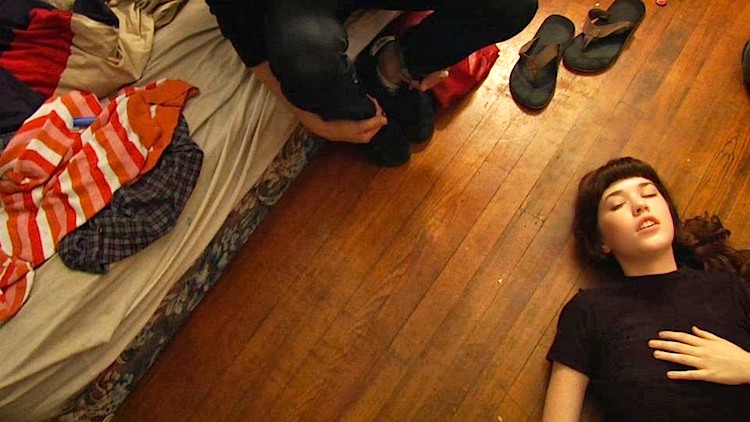
By Joe Bendel. It seems like there are so many gateways to Hell, people must be accidentally dropping in all the time. There is that stairway in Stull, Kansas, the portal in Amityville, and a Hellmouth in Cleveland (according to Buffy). Supposedly, the Seven Gates of Hell are also located in York County, Pennsylvania, outside Hellam Township, logically enough. A slacker and his formerly together girlfriend will get really high and head out in search of the urban legend in Jason Banker’s Toad Road (trailer here), which opens tomorrow in New York.

It is hard to understand why Sara, the studious college student, is attracted to the seriously under-achieving James, especially when the audience first spies him. When he passes out dead drunk, his so-called friends commence with the sort of fun and games we really do not need to see. Nonetheless, James somehow seduces her into his world of hardcore drug use and chronic irresponsibility. One pleasant summer day, they set out to find their kicks on Toad Road, the mythical forest byway that reportedly leads to the Seven Gates. That sounds like a great idea, provided they drop acid first.

Naturally, things get a bit confused as they stagger about the woods. Eventually, James comes to, shivering in snow. While it only seems like a few hours have passed, James learns that he and Sara have been missing for six months and he is now the primary suspect in her disappearance.

Although Toad is billed as a horror movie, the most terrifying aspect of the film is the state of the current twenty-nothing generation. In all honesty, Banker really is not going for traditional genre scares. He is more interested in the druggy mind-trip he tries to approximate on-screen. Indeed, watching Toad gives the sensation of some rather nasty chemical side-effects. Still, his use of the Seven Gates mythos is metaphysically unsettling and frankly quite smart. Toad actually becomes scarier as the memory unpacks it over time. Unfortunately, many of the interpersonal scenes of James and his cronies serve as a vivid reminder of how annoying mumblecore can get.

Toad is almost guaranteed to inspire a strange cult following, especially in light of the tragic loss of lead actress Sara Anne Jones at the terribly young age of twenty-four. Banker’s aesthetic choices are so hallucinatory it makes it difficult to thoroughly judge the film’s performances, but Jones had a real presence and never wilted amid his surreal excesses.

Banker and his co-cinematographers, Jack McVey and Jorge Torres-Torres give the picture a distinctive look that is eerily otherworldly yet still bleak and depressing. This is the work of a zero-budget auteur, but it does not add up to very much fun. Intriguing and maddening in equal measure, Toad Road is recommended for the most adventurous ten percent of cult film fandom’s bell curve.  It opens tomorrow (10/25) in New York at the Cinema Village.

LFM GRADE: C+

Posted on October 24th, 2013 at 3:40pm.

LFM Reviews Pluto @ The 2013 Korean American Film Festival in New York

By Joe Bendel. Forget about secret society rituals. These elite prep school kids are too busy keeping their classmates down. They are the top ten in their class and they will kill to keep it that way throughout Shin Su-won’s Pluto, which screens during the 2013 Korean American Film Festival in New York.

Kim June was the top student in his public high school, but that does not impress anyone in his new school, particularly not his American roommate, Yu-jin Taylor, the top man in their class. Supposedly, this is his big opportunity. He was only admitted because a suicide opened up space for him. That was Yung Su-jin’s roommate. Now the slacker computer major is out to settle the score with the ruling elite. Kim sort of likes her, but the working class transfer student opts to curry favor with the privileged ten instead.

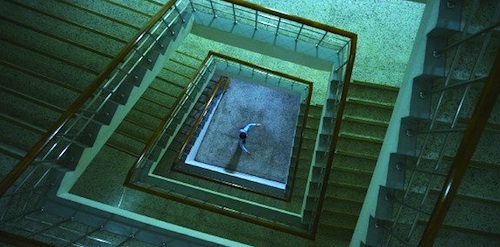
As part of their “rabbit hunting” initiations, Kim does their dirty work in exchange for inside information on approaching exams. Naturally, Taylor and his cronies clearly have no intention of letting him into the club. However, as viewers can readily glean from the film’s complicated flashback structure, it is a very bad idea to play mind games with someone as tightly wound as Kim.

From "Pluto."

While Pluto’s class warfare themes are obvious and inescapable, Shin’s uncompromising screenplay surpasses mere polemics, portraying the sociopathic will-to-power at its rawest. This is not the sort of film that will have anyone saying “so there” when it ends. Kim might be our protagonist, but he is not an exactly a downtrodden POV character audiences would like to identify with. Surprisingly, his nemesis Taylor turns out to be the most nuanced of the lot. Of course, his cronies do not much care for his sudden subtle dimensions of character.

Pluto boasts some considerable star-power, thanks to Kim Kkobbi appearing as Yung, a relatively modest but intriguing supporting role. Lee Da-wit is eerily soulless and desperate as the hollow-looking Kim. Yet, it is June Sung who really keeps viewers off-balance as the not exactly remorseful Taylor.

Many of the sins of prep school dramas past repeat again in Pluto. As if required by an unwritten law, all the adults are ridiculously dense and the cops are problematically passive. Still, Shin raises the stakes for all future prep students behaving badly, making a film like Tanner Hall look tame and pale in comparison. Despite some clumsy excesses, it is mesmerizing, in-your-face filmmaking. Recommended for the reasonably jaded, Pluto screens this Friday (10/25) at the Village East as part of this year’s KAFFNY.

LFM GRADE: B

Posted on October 23rd, 2013 at 1:09pm.

Held Hostage by Al Qaeda: LFM Reviews Held Hostage; Premieres on PBS Tues., 10/22

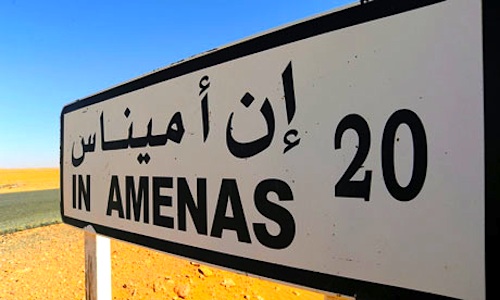
By Joe Bendel. Algeria’s In Amenas gasoline processing facility would be the perfect setting for a Die Hard movie. It is an isolated spot, surrounded by vast stretches of the Sahara Desert in every direction. That is why many survivors wonder how several truckloads of al-Qaeda affiliated terrorists could launch a ground assault on the facility without the Algerian authorities noticing. Not surprisingly, many in the Algerian government would prefer to forget the embarrassing international incident. Fortunately, director Bruce Goodison and his team have assembled a comprehensive tick-tock history of the In Amenas hostage crisis. Their revealing look at contemporary Islamist terrorism, Held Hostage, airs on most PBS outlets tomorrow.

With al-Qaeda reportedly operating freely to the south and east of In Amenas in Mali and Libya, security was obviously a concern for the expat workers long before January 16th, 2013. Paul Morgan, the British security chief, had actually tendered his resignation out of frustration with lax plant security days before the attack. (Tragically, he would not survive to be vindicated by events.) While military and gendarmerie escorted workers on and off the premises, no facility personnel were allowed to carry arms. That meant once Mokhtar Belmokhtar’s band of terrorist-brigands reached the plant, there would be no means of organizing any resistance.

From "Held Hostage."

Securing the first on-camera interviews of many survivors and victims’ family members, Held Hostage provides a very personal perspective on the terrorist attack. Perhaps the report’s most shocking moment involves the circumstances surrounding the truly cruel and senseless murder of Filipino expat Angelito Manaois, Jr. Three Americans died at In Amenas, which should concern us all, but the losses were greater for Britain, Norway, Japan, and the Philippines. Regardless, the crimes committed in In Amenas warranted far greater attention than they received from the traditional old media.

Goodison’s team broaches a number of inconvenient questions throughout the program, particularly with respect to the conduct of the Algerian military. Granted, refusal to negotiate with terrorists is a defensible position, but it rather looks better if there is some attempt to stall for time while organizing a rescue operation. Whereas, strafing carloads of hostages is just hard to defend from any standpoint.

Held Hostage is technically quite well constructed, instilling a full sense of the factors that contributed to the desert calamity in just under an hour. Viewers will have the sense they could lead their own briefing session after watching it—and perhaps they should. It a real expose and a wake-up call, but its warning is likely to fall on deaf ears. Easily the most important television of the week, Held Hostage airs on most PBS stations tomorrow (10/22).

LFM GRADE: B+

Posted on October 21st, 2013 at 12:02pm.

Escaping North Korea: LFM Reviews Seeking Haven, Narrated by Moon Bloodgood

By Joe Bendel. North Korean defector Kim Young-soon is a beautiful woman. The same is probably true of her sister, Mi-hee, but viewers cannot tell for certain. That is because her face is kept scrupulously obscured to protect her from potential reprisals in North Korea. Unfortunately, it might be too late for her already, but her sister will still doggedly pursue any means possible to bring her over the border in Hein S. Seok’s documentary, Seeking Haven, which screens on the opening night of the 2013 Korean American Film Festival in New York.

When we first meet the Kim sisters, they are living in an underground shelter for defectors in China. These are relatively happy times, because the sisters are together and have sufficient food to survive. However, they live in the constant fear of exposure and repatriation to North Korea. Eventually, Kim Young-soon sets off on the arduous journey to lasting freedom, overland through China and Laos to Thailand, where North Korean defectors are formally recognized as legitimate political asylum seekers.

It is a hard trek, involving several narrow escapes from various border patrols, dramatically captured by Seok’s cameras. Unfortunately, when Kim finally arrives in South Korea via the Bangkok embassy, she learns the Chinese authorities raided her former safe house and deported her sister back to the DPRK. For the rest of the film, she will periodically return to China, where she will deal with various dodgy brokers, in the hopes they can arrange transit for her family, or at least bring back news on their situation.

From "Seeking Haven."

Not surprisingly, Kim suffers from a powerful case of survivor’s guilt. Yet, she is only in her early twenties and fully entitled to live her own life. Viewers will want to offer her emotional comfort, as they start to suspect the worst for her family. While just under an hour, Haven contains more reality than a month of network television. These are real people, feeling real fears, as they face life-and-death situations.

Haven tells a very personal story, but it is also a rather shocking expose, capturing the perils endured by North Korean defectors through a few hidden cameras and considerable chutzpah. While it is comparatively circumspect in addressing the sort of persecution that is an everyday reality in North Korea, this is clearly out of concern for the Kims and other family members of defectors. Nonetheless, the obvious fear of potential repercussions speaks volumes regarding the appalling state of human rights in the DPRK.

Kim Young-soon is an achingly compelling POV figure who hopefully will find peace and happiness in the next phase of her life. She certainly commands viewer sympathies. Haven is a gutsy doc, shot guerilla-style in nations like China and Laos that do no respect basic freedoms of expression. For a touch of celebrity, Moon Bloodgood serves as narrator, demonstrating a nice voice for such work. Highly recommended, it screens this Thursday (10/24) at the Village East Cinema as part of this year’s KAFFNY.

LFM GRADE: A-

Posted on October 21st, 2013 at 11:59am.