LFM Reviews Camille Claudel 1915

By Joe Bendel. Camille Claudel is a woman of extraordinary associations. She was the sister of playwright Paul Claudel, the mistress of Auguste Rodin, and was once erroneously thought to be the lover of Claude Debussy. In the cinema, she has been played by Isabelle Adjani and now Juliette Binoche, but in reality, she led a deeply troubled life. Bruno Dumont picks up with Claudel two years after her family institutionalized the sculptor, dramatizing three anesthetizing days leading up to her brother’s visit in Camille Claudel 1915, which opens this Wednesday at Film Forum.

Her brother blames the artistic temperament and perhaps he is right. Regardless, his sister clearly suffers from paranoia and a persecution complex. Unfortunately, her commitment rather vindicates the latter. Since she is convinced her food is constantly poisoned by her multitude of enemies, Claudel has special dispensation to cook her own meals. Given her mostly calm demeanor, the sisters give her relatively free reign at Ville Evrard and even recruit her reluctant help with more quarrelsome patients. Nevertheless, if you ask her about her situation you will get an earful.

1915 is easily Dumont’s most accessible film in years, but it still bears the hallmarks of his aesthetic severity. If you hum a few bars of anything during the film, you will become the soundtrack. Color is also rather scarce. However, there are plenty of static shots framing Claudel as her spirit slowly ebbs away.

Having previously invited sympathy for the Devil with Hors Satan and suggested all devout Christians are a wink and a nod away from becoming Islamist suicide bombers in Hadewijch, Dumont will not surprise anyone with his unforgiving view of Paul Claudel, the devout Catholic dramatist. He sharply contrasts the ascetic austerity of the writer with the more sensual feeling of the sister. Yet, given his affinity for extremity, the rigidly disciplined Claudel ought to be more in his wheel house.

Jean-Luc Vincent duly plays Frere Paul as the cold, clammy caricature Dumont requires. It hardly matters. He is a distant second fiddle to Binoche’s title character—a role perfectly suited to her strengths. Nobody could better convey the roiling passions submerged beneath her glacial exterior or convincingly erupt in pained outrage when provoked. She is a force to be reckoned with, nearly undermining Dumont’s feminist-victimization narrative. Somehow thanks to Dumont’s powers of persuasion, 1915 was filmed with real nursing home patients playing Claudel’s fellow residents and their nurses playing the nuns, adding further dimensions of authenticity and exploitation into the mix.

Ironically, it is the work of Paul Claudel that is most ripe for re-discovery (as the Black Friars Repertory demonstrated in New York with their Claudel revival project), whereas reproductions of the sculptor’s La Valse are widely available. Regardless, Binoche delivers a remarkable performance in an otherwise flawed film. Best reserved for her loyal admirers and hardcore French art cinema enthusiasts, Camille Claudel 1915 opens this Wednesday (10/16) at Film Forum for all of New York.

LFM GRADE: C+

Posted on October 14th, 2013 at 2:01pm.

LFM Reviews All the Boys Love Mandy Lane

By Joe Bendel. Virtuous high school student Mandy Lane is the polar opposite of Stephen King’s Carrie White. The guys want to sleep with her and the girls want the status of being her frienemy. She is not really into the scene, but she agrees to a weekend getaway to be sociable. Naturally, everyone soon becomes the prey of a serial killer in Jonathan Levine’s All the Boys Love Mandy Lane, which finally opens today in New York.

The last time Lane tried this partying thing, it ended in tears. At a fateful poolside shindig, Lane’s reluctantly platonic artsy friend Emmet convinces a big dumb jock to attempt a high dive from his roof to impress the unobtainable bombshell. He misses. It seems like Emmet left himself plenty of plausible deniability, but he winds up shunned by everyone, including you-know-who. Obviously, this episode looms large for Lane when she accepts Red’s invitation for what he hopes will be a few days of debauchery at his family ranch.

It is awkward right from the start. Lane rebuffs everyone’s advances, but seems kind of sort of interested in the legally adult ranch hand, Garth. Only the school floozy agrees to sleep with any of Lane’s frustrated admirers, but she soon pays for her bad judgment. Before long, the kids are dropping one by one, like a hornier, binge-drinking version of Agatha Christie’s And Then There Were None.

ATBLML appears to be a case of absence making the heart grow fonder. The film first hit the festival circuit in 2006. Subsequently it was picked up by the Weinsteins, who later sold it to another distributor that went under shortly thereafter. When the rights dust finally settled, the Weinsteins re-acquired the film—and now here it is, rather underwhelming given its elusive rep.

Frankly, this is merely a serviceable dead teenager movie, executed with a measure of style, but not a lot of inspiration. It gets the high school vibe right, but the genre stuff is all strictly by the numbers. In fact, the big switcheroo is so conspicuously obvious, it feels rather anti-climatic when the shoe finally drops.

From "All the Boys Love Mandy Lane."

Some viewers might also be intrigued to catch up with early screen turns from Amber Heard and Anson Mount from Hell on Wheels. While they are perfectly adequate as Lane and the Garth the protective cowpoke, their work in the film never screams “star in the making.” Perhaps Whitney Able fares the best as Chloe the high maintenance party girl, whereas the rest of the ensemble is rather anonymous.

There are a lot of reds and golds in cinematographer Darren Genet’s color palate, so at least that will help you remember the film. There are worse slasher films out there, but it is nothing special. With better genre releases due next week, discerning horror fans are advised to wait. For Heard obsessives, All the Boys Love Mandy Lane opens today (10/11) at the Angelika Film Center.

LFM GRADE: D

Posted on October 11th, 2013 at 12:55pm.

Growing Up the Hard Way in Busan: LFM Reviews Tough as Iron

By Joe Bendel. In a port city like Busan, there are two kinds of jobs for a disadvantaged lunkhead like Gang “Iron Head” Chul. He currently works as a longshoreman, but the local syndicate will make him an offer he should refuse. Unfortunately, it might be the only way he can pay for his mother’s surgery in Ahn Kwon-tae’s bare-knuckled coming of age drama Tough as Iron, which opens tomorrow in New York.

Even when he was alive, Gang’s dad was not much of a father. As a result, he formed a close emotional bond with his mother that persists even though her mind is slipping into the early stages of dementia. Gang often finds himself thrust into some form of public spectacle through her misadventures. During one such display, he catches the eye of Suji, a bohemian photographer traveling across the country. She enjoys the sort of freedom he can only dream of.

Also through happenstance, Gang manages to save the life of Sang-gon, the local mob boss. This hardly endears him to the gangster’s erratic brother and self-styled bodyguard, Hwee-gon. A childhood chum working as a foot soldier in the mob tries to discourage Gang’s involvement, but the loyal son has exhausted every other option to fund his mother’s operation. As tensions mount between Korean criminal subsidiary and their Japanese Yakuza patrons, a disposable outsider like Gang could be very useful to gangster brothers.

From "Tough as Iron."

Ahn almost seamlessly combines the young-man-finding-himself story with a street-smart gangster beatdown, staying true to both genres, while giving each equal weight. The Busan seafront also nicely fits both hemispheres of the film, serving as a picturesque backdrop for Gang’s tentative courtship of Suji, but looking appropriately gritty for the waterfront action. Occasionally, the mother-son relationship flirts with outright melodrama, but it always remains firmly tethered to reality.

As Gang, Yoo Ah-in powers the film like a locomotive. Intense and charismatic, yet convincingly meat-headed, he creates a keenly human, fully realized portrait of a young, imperfect man under tremendous stress. Hong Sang-soo regular Jung Joo-mi is also appealingly independent and down-to-earth as Suji. While not exactly subtle, Kim Sung-oh delivers some marvelously twitchy villainy as Hwee-gon, the stuttering thug. Kim Hae-sook (so awesome opposite Simon Yam in The Thieves) is a bit showy as Mother Gang, but she still nicely turns the quiet moments with Yoo.

It is a strange observation to make of a Korean film, but the Yakuza characters certainly compare quite favorably to their Busan counterparts (but describing Iron as pro-Yakuza would still be a stretch). Regardless, Gang’s character and Yoo’s performance give Iron real heart and grit. Highly recommended, Tough as Iron should equally appeal to cineastes and genre enthusiasts when it opens tomorrow (10/11) in New York at the AMC Empire and in LA at the CGV Cinemas.

LFM GRADE: B+

Posted on October 10th, 2013 at 3:53pm.

Afghanistan Live and Direct: LFM Reviews The Network; Now Available on VOD

By Joe Bendel. TOLO TV is like the Al Jazeera of Afghanistan, except it is critical of terrorism. Founded by Saad Mohseni, his brothers Zaid and Jahid, and their sister Wajma to be an agent of change, TOLO TV is the first and largest media outlet in Afghanistan. For three months, filmmaker Eve Orner documented the Mohsenis and many of their 900 employees at work and on their guard in The Network, which releases on VOD platforms today.

If TOLO TV sounds familiar, you might remember Havana Marking’s Afghan Star, the behind-the-scenes look at the pop idol reality show produced by that station. Marking followed the travails of a particular contest who faced death threats for modestly swaying to her music. Several years later, contestants regularly show off a few non-twerking moves and often appear sans head trappings. This constitutes progress and it was made possible by TOLO.

Growing up in exile as a result of the Soviet invasion, the Mohsenis, especially London-born Saad, are clearly entrepreneurs on a mission. Arriving in Kabul with waves of returning expats, they shared the general euphoria following the fall of the Taliban. Perceiving a need and an opportunity, they started the radio station that would eventually blossom into the TOLO mini-empire. It was a risky venture, because there was absolutely no media whatsoever in the country at the time. None. Zero. The Islamist Taliban had forbidden such a sacrilege. As one TOLO reporter dramatically recalls, the only sanctioned form of entertainment during the regime were public executions. Yet despite the years of doing without, the Afghan people immediately took to TOLO’s offerings.

On one hand, The Network is a success story, charting TOLO’s growth as a business and a cultural phenomenon. However, an uneasy pessimism hangs over the film. The Mohsenis and their employees openly fear the consequences when the western military powers cut-and-run. After all, TOLO personnel have definitely become targets of the Taliban and their allies. Orner documents many of the tight spots they just barely survived. Ironically, some of the most tragic episodes were instances when TOLO staffers were literally caught in the crossfire.

Arguably, Saad Mohseni is a media visionary. Yet, TOLO often walks a fine line to avoid angering the Islamist element. Their answer to Dr. Phil is particularly problematic, but one could make a case that the open criticism expressed by TOLO’s female employees of his “just be virtuous” advice is a promising sign. Granted, their melodramas look rather cheesy, but not as amateurish as the grade-Z Pashto films gonzo documentarian George Gittoes produced. TOLO also challenges many pre-conceptions viewers might hold, especially with regards to the success they have had with their anti-terrorist cop show, partly underwritten by the U.S. embassy.

Indeed, there is little anti-American sentiment in The Network, per se, and there is absolutely no nostalgia for the Communist regime. This is fascinating stuff, with far reaching social, economic, and geopolitical implications. Orner captures plenty of telling moments and conveys a good sense of the increasingly uncertain vibe in-country. It is a smart doc that is all muscle and no fat. Highly recommended for Middle East watchers and strategic thinkers, The Network is now available for VOD viewing.

LFM GRADE: B+

Posted on October 8th, 2013 at 11:05am.

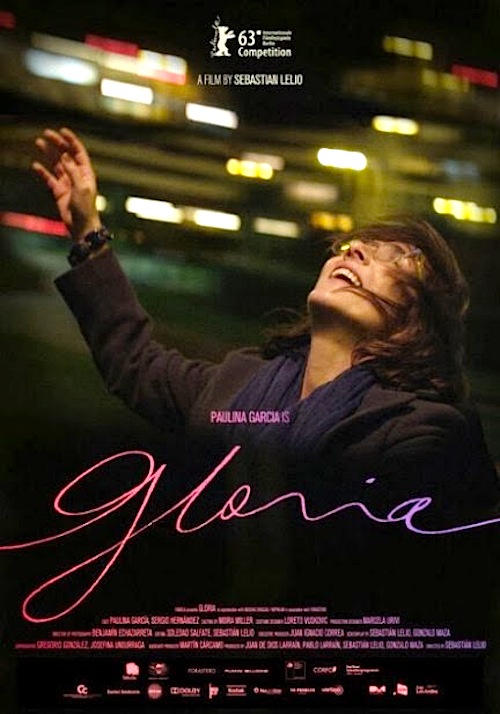
LFM Reviews Gloria @ The New York Film Festival

By Joe Bendel. Gloria is a musical name. Hip readers will know Umberto Tozzi was topping the international charts long before his pop song was drastically re-written for Laura Branigan. The bittersweet lyrics of love heard in Tozzi’s original version will nicely suit the protagonist of Chile’s latest foreign language Oscar submission. However, Van Morrison’s “Gloria” never factors into Sebastián Lelio’s Gloria, which screens during the 51st New York Film Festival.

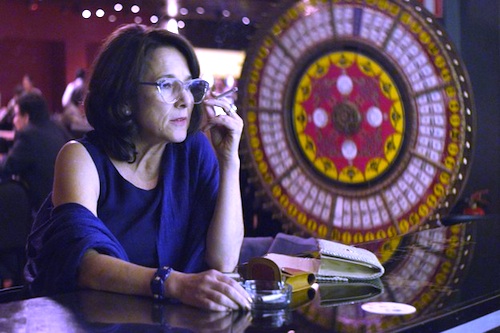
Gloria Cumplido is no stranger to discos. She often haunts them during singles nights. The fifty-eight year-old divorcee always finds a dance partner for the night, but she is looking for something more substantial. She thinks she might have found it in Rodolfo Fernández. They catch each others’ eye across the dance floor and one thing duly leads to another.

Happily, his charm does not evaporate in the morning. In fact, he is rather determined to pursue a relationship with Cumplido, but he has issues. His ex-wife and grown daughters are still unhealthily co-dependent and he continues to enable their behavior. At least, that is the charitable interpretation. Regardless, he gets distinctly flaky at the most inopportune times.

Gloria is small in scope and thin in narrative development, but it has a dynamite lead in Paulina García’s Cumplido. Refreshingly, she is nobody’s victim. She is a woman of a certain age with a reasonable degree of sexual confidence, trying to chart a third act for her life, now that her grown children are preoccupied with their own lives. García brings out her vulnerability, but consistently plays her as smart and resilient, so we never lose patience with decisions.

From "Gloria."

There are a few laughs here and there (most memorably the odd cat creation story her housekeeper spins out of Noah’s Ark), but Gloria a serious film by-and-large, because it addresses some serious business—love and aging. At times, Lelio is far too enamored with the daily routine of his central character, but he has a keen sense of how to use music. When he finally unleashes Tozzi’s hit tune, it makes the moment. He also shrewdly incorporates a rendition of Jobim’s “Waters of March,” whose lonesome imagery and hopeful spirit nicely reflects her alone-in-a-crowd experiences.

Lelio’s one hundred ten minute running time is far longer than it needs to be. We would most likely get it just as well somewhere closer to ninety. He probably fell in love with his character and lead actress, which is understandable. She carries the film with her boldly revealing performance. Those who have a phobic reaction to unvarnished nudity should be forewarned, but it will strongly resonate with viewers who identify with mature characters and their emotional circumstances. Recommended respectfully (but not wildly enthusiastically) for the target audience, Gloria screens tonight (10/6) at the Walter Reade and tomorrow (10/7) at the Francesca Beale as a main slate selection of this year’s NYFF.

LFM GRADE: B-

Posted on October 7th, 2013 at 12:31pm.

LFM Reviews Real @ The New York Film Festival

By Joe Bendel. Overlooked in the only Jurassic Park that matters, the pleisiosaur finally gets its big screen close-up, courtesy of the other Kurosawa. Initially, it is only a metaphor, but it becomes significantly meaningful and pressing to the young lovers in Kiyoshi Kurosawa’s Real, which screens tonight at the 51st New York Film Festival.

Initially, Koichi Fujita and Atsumi Kazu look like the ideal couple. Kazu seems perfectly sweet, but the comic artist specializes in grisly serial killer mangas. Unfortunately, while suffering a persistent case of writers block, Kazu tried to take her own life, falling into a coma instead. Hoping to assist her recovery, Fujita has agreed to a new procedure known as “sensing,” by which he will enter her subconscious.

If Fujita gently probes the circumstances surrounding her attempted suicide, he can encourage her conscious mind to re-awaken. The early sessions go relatively well, but Fujita is increasingly alarmed by the residual phantom images intruding on his reality as a result of the sensing. He also carries back a concrete mission to perform in the real world. Kazu yearns to see the pleisiosaur drawing she gave him while they were both children living on the provincial island of Hikone.

As Kurosawa’s title suggests, there will be many questions about the nature of reality throughout Real. However, every twist and revelation serves to advance the story (adapted from Rokuro Inui’s novel), so they never feel cheap or forced. While perhaps less of a departure for the horror auteur than his previous outing, the dark family drama Tokyo Sonata, Real is best considered in the tradition of Richard Matheson writing in his What Dreams May Come and Somewhere in Time bag. In fact, what is most striking about Real is how deeply Fujita and Kazu feel about each other while being so reserved in the manner they express it.

From "Real."

Frankly, Takeru Sato’s work could be uncharitably categorized as a bit stiff or awkward, but to be fair, Fujita is supposed to be a step slow in the intuition department. On the other hand, Haruka Ayase’s performance as Kazu is acutely sensitive. In fact, she handles her game-changing pivot with considerable grace. It is also a bit surprising to see a major star like Miki Nakatani (truly mesmerizing in Memories of Matsuko) in the comparatively straight forward supporting role of Dr. Eiko Aihara, but she makes the most of it.

Real is a text book example of how special effects can and should be subservient to story and character development. There is plenty of head-tripping and reality-bending, but it is the love story drives the film. Nicely supported by Kei Haneoka’s elegant musical themes, Real is far more accessible for general audiences than most of Kurosawa’s films. Highly recommended, it screens tonight (10/7) at Alice Tully Hall as a main slate selection of the 2013 NYFF.

LFM GRADE: A-

Posted on October 7th, 2013 at 12:26pm.