LFM Reviews Crystal Fairy @ The 2013 Sundance Film Festival

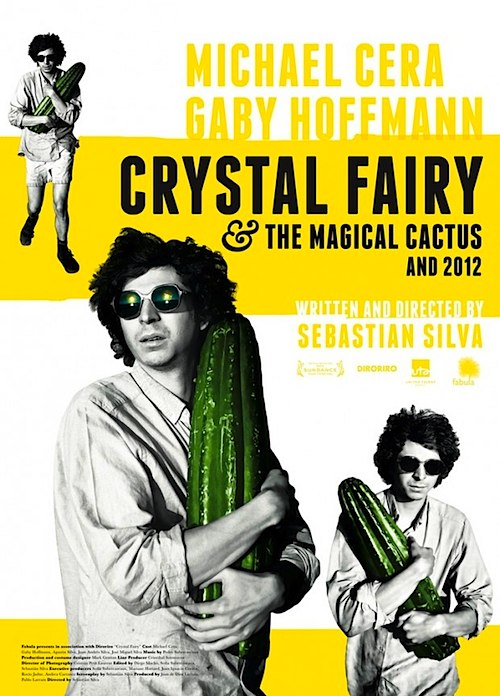
By Joe Bendel. Travel is broadening – you can discover exotic new ways to get high. For an extraordinarily annoying American expat, Chile is all about one thing: San Pedro cactus. Chile is welcome to keep him. Still, he just might learn something from a hippy-dippy free spirit in Sebastián Silva’s Crystal Fairy, which screens during the 2013 Sundance Film Festival in Park City.

Did I mention how truly unpleasant it is to spend time with young Jamie? Well, it is. Nonetheless, three Chilean brothers befriend the self-centered, manic, immature drug-vacuum. They are about to embark on a little Fear-and-Loathing road trip in search of some of that increasingly rare cactus to boil up and ingest on the beach. However, Jamie complicates matters when he invites along wild child Crystal Fairy. He will regret the overture as soon as he comes down from his coke bender. While the brothers three try to make the best of it, Jamie acts like a complete jerkweed around his fellow American. Yet somehow, there might be a thimble-full of redemption lurking in the third act.

While Michael Cera still looks like a moppet, he is so convincingly irritating, it is rather amazing his management signed off on this Chilean escapade. Were it not for the climatic emotional pay-off Silva handles with remarkable sensitivity, Crystal might sour viewers on Cera indefinitely.

Between Crystal Fairy and his class conscious The Maid, Silva is beginning to emerge as the maestro of the awkward situation. He is also clearly willing to present his cast in a profoundly unflattering light. Indeed, Jamie dubs Gaby Hoffman’s character “Crystal Hairy” for reasons that are vividly and repeatedly established. The obvious exceptions are his three real life brothers, Agustín, José Miguel, and Juan Andrés – who all come across as decent chaps with sufficient hygiene.

Essentially, Crystal Fairy shows the dark side of the kooky, quirky characters that typically inhabit indie films. Frankly, it is sort of a corrective to many other films that will play in Park City over the coming week, reminding viewers there are often rather unfortunate reasons behind eccentric behavior. That is not nothing, but Silva forces the audience to sit through a lot of noise before it starts to get real. Only recommended for viewers with little fondness for precious-sized indies or Cera, Crystal Fairy screens today (1/18), Wednesday (1/23), and Friday (1/25) in Park City, today (1/18) in Salt Lake, and tomorrow (1/19) in Ogden, as a World Cinema Dramatic Competition selection at this year’s Sundance.

LFM GRADE: C+

Posted on January 18th, 2012 at 8:33am.
LFM Reviews The Capsule @ The 2013 Sundance Film Festival

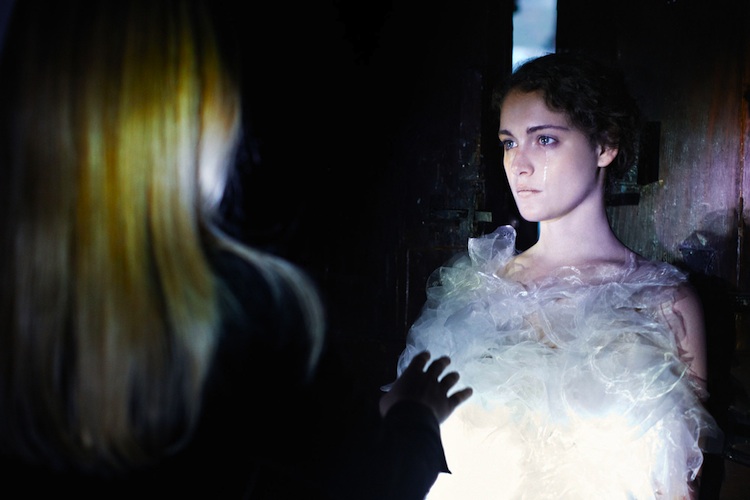
By Joe Bendel. There are plenty of fantastical happenings in this girls’ finishing school, but it certainly is no Hogwarts. Clémence Poésy’s Harry Potter fans will not know what to make of it. Part fashion show, part art installation, but entirely experimental cinema, Athina Rachel Tsangari’s The Capsule screens as part of the New Frontiers Shorts Program at the 2013 Sundance Film Festival.

Six young women have arrived in mysterious ways at an ancient coastal villa for metaphysical instructions on becoming women. This naturally includes music classes and lessons on how to look elegant while walking your goat. Narrative is decidedly slippery here, but it is definitely inspired by Sisyphus, Prometheus, and Sappho, as well as the art of co-writer Aleksandra Waliszewska.

For part-time cover-waif Poésy and her co-stars, The Capsule is as much a modeling assignment as it is an acting gig. The costumes by leading designers, including the only mildly fetishistic school uniforms, are quite striking, but the faded glory of the villa and exotic surrounding environs are Capsule’s strongest asset. However, the super-imposed animation would not have cut it on MTV’s Liquid Television back in the day.

Expressly intended for adventurous viewers, the thirty-five minute Capsule is nonetheless unusually stylish by experimental standards. Cinematographer Thimios Bakatakis gives it all a cool, glossy sheen appropriate to its neo-gothic austerity. Recommended for New Frontiers track veterans and uncommonly hardy fashonistas, The Capsule screens as part the NF shorts block at this year’s Sundance.

Posted on January 18th, 2012 at 8:32am.

PBS’s Newest British Detective: LFM Reviews DCI Banks

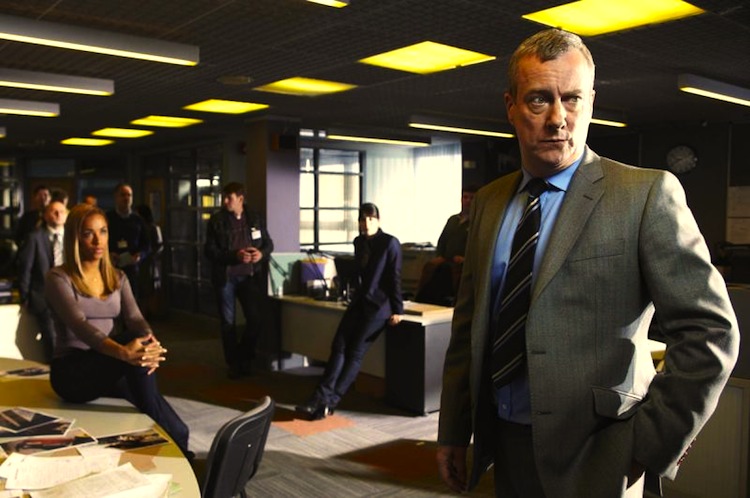
By Joe Bendel. East Yorkshire DCI Alan Banks is an avid jazz listener. From this we can deduce he is a man of principle, used to doing things the hard way. His Detective Sergeant respects and is frustrated by that (the principles, not the music). He might be tightly wound, but in the words of a superior officer, he “is the least worst man for the job.” Based on Peter Robinson’s novels, BBC Worldwide’s DCI Banks enters into syndication on PBS stations across the country this month, reaching an impressive 77% market clearance.

DCI Banks starts with an apparent ending. In The Aftermath, two patrol officers responding to a domestic disturbance discover a serial killer’s chamber of horrors. One of the officers is killed in the ensuing struggle and the murderer is comatose. For acting DCI Banks this is no happy ending. After fruitless months of investigation, one young woman is still missing. The big question is what role did his battered wife play in her husband’s crimes? Already stretched to the breaking point, he is in no mood for the internal investigation headed by the ambitious DS Annie Cabbot.

After an involuntary vacation and an unexpected promotion to full DCI, Banks returns for a standard but well executed game of cat-and-mouse in Playing with Fire. Despite their rocky start, Banks and the freshly transferred Cabbot have developed a strong working relationship. Yet her questionable romantic involvement with a figure involved in the case threatens to undo everything.

Technically the second episode of the first full season, Friend of the Devil is easily the best of Banks’ first two full seasons. Returning to a notorious scene from the pilot Aftermath, Friend of the Devil delves into some dark, painful psychological recesses. It is a case that hits close to home for the force and keeps on hitting. In fact, there will be considerable turnover in the Yorkshire CID over the course of the series.

Likewise, Cold is the Grave entangles Banks in a messy intersection of police and family business when his high-handed superintendant asks Banks to unofficially find his runaway daughter and bring her home. It turns out that the London vice lord she had shacked up with may somehow be involved in an armed robbery-turned cold blooded murder back home. Although it would seem like it would take a lot of elbow grease to force these strands together, Robert Murphy’s adaptation of Robinson’s novel does so rather neatly and orderly.

The shoe is on Banks’ foot in Strange Affair when his estranged brother is ensnared in a murder case. With a suddenly pregnant Cabbot on the verge of a leave of absence, Banks meets his new DI, Helen Morton, under slightly embarrassing circumstances. He is the prime witness in her first case. Socially awkward, even compared to Banks, their professional chemistry will develop slowly. However, they synch-up quite nicely in Dry Bones that Dream and Innocent Dreams, two traditional procedurals that both have nicely turned third act twists, at least by television standards.

For British mystery fans, DCI Banks might be closest in tone to the Inspector Lynley Mysteries – but its best episodes, like Aftermath and Friend of the Devil, approach Wire in the Blood’s murky psychological terrain. TV veteran Stephen Tompkinson’s Banks is somewhat like Inspector Lewis, but with more edge. (Evidently Yorkshire crimes are more brutal than those in Oxford.) Airing as either 45 minute two-parters or in ninety minute blocks, the entire series is consistently tight and tense. Notable directors include James Hawes (Aftermath), who helmed Masterpiece’s entertaining 39 Steps and Marek Losey (Cold is the Grave), grandson of Joseph.

Driven by Topkinson’s intense middle-aged rectitude, DCI Banks episodes are produced with above average intelligence and are addictive like popcorn. A worthy addition to the ranks of favorite PBS-BBC detectives, DCI Banks is easily recommended for mystery fans as it begins its syndicated run on many PBS outlets (including WLIW), so check those local listings.

LFM GRADE: A-

Posted on January 14th, 2012 at 12:38pm.

LFM Reviews The Fifth Heaven @ The New York Jewish Film Festival

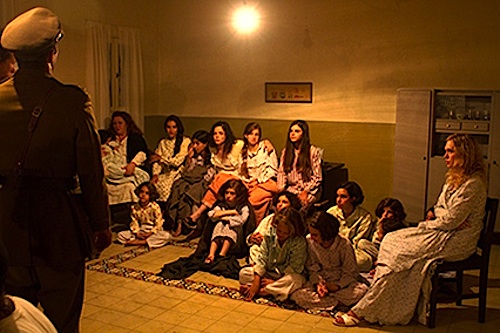
By Joe Bendel. It is late 1944, several years before the declaration of the State of Israel – which means that the generous Israeli social welfare system has also yet to be established. A remote desert orphanage is the only refuge for a group of cast-off girls and their damaged caretakers. However, secrets from the director’s past raise doubts for the institution’s future in Dina Zvi Riklis’s The Fifth Heaven, which screens during the 2013 New York Jewish Film Festival, co-presented by the Jewish Museum and the Film Society of Lincoln Center.

Maya’s father never was much, but he sinks even lower when he delivers her to Dr. Markovski’s orphanage. The director, who apparently has some ambiguous history with the family, understandably protests – since Maya is not, strictly speaking, an orphan. Yet the father has evidently fixed matters with Markovski’s tight-fisted patron. We quickly deduce Markovski once had an affair with Maya’s mother, who has long since deserted her family, running off to America. Maya is a bit slower on the up-take.

Markovski’s history with Maya causes friction with his demur colleague and potential lover, Frida. The orphanage’s new cleaning woman, Berta, the disowned daughter of an Orthodox family scandalously carrying on with a British officer, further destabilizes the staff. Yet it is the cache of arms stashed on the roof by Duce, a staff-member’s Italian lover deeply involved in the underground liberation movement, that represents greater danger for the institution. Maya discovers his secret, but she has fallen for his inappropriate charm offensive.

From "The Fifth Heaven."

Fifth nicely captures the strange duality experienced by Jewish residents of the British Mandate. On the one hand, they bitterly resented their colonialist rulers – while also raptly following the British war efforts against the National Socialists. Like many films set in isolated private schools, there is a whole lot of repressed sexual tension in the orphanage (almost entirely of the straight variety, though). Yet the big revelations are almost entirely given away in the opening scenes.

There are small flashes of devastating power in Fifth. In contrast, the big confrontation scenes are almost entirely drained of passion. Never melodramatic, Riklis’s restraint is something of a double-edged sword. Nonetheless, Yehezkel Lazarov’s understated but deeply humanistic portrayal of Markovski perfectly suits her approach. Rotem Zisman-Cohen also stands out as Berta, getting the film’s one big episode of acting-out. Oddly, the lead is rather icily stand-offish, while the rest of the young ensemble is largely indistinguishable.

A finely crafted period production, Fifth is sensitively underscored by the original themes and classical piano interpretations of Josef Bardanashvili. It might be a mixed bag, but it has its moments. Recommended for patrons of Israeli cinema, Fifth Heaven screens this Thursday (1/17) and Sunday (1/20) as part of this year’s NYJFF, now underway at the Walter Reade Theater.

LFM GRADE: B-

Posted on January 14th, 2012 at 12:35pm.

Dustin Hoffman’s Directorial Debut: LFM Reviews Quartet

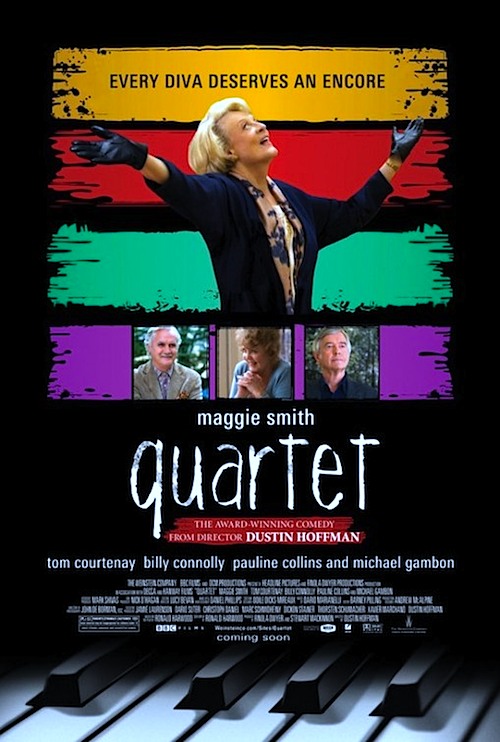
By Joe Bendel. In the film adaptation of Neil Simon’s California Suite, Dame Maggie Smith played a beloved English actress, rather embarrassed to be nominated for a lightweight comedic role. She won her second Oscar for that role. Somewhat ironically, Smith is back in Oscar contention for more or less the sort of part Simon’s character was up for. However, the just winner of back-to-back Emmy Awards for Downton Abbey, Smith may not exactly be the sympathetic favorite for Quartet, Dustin Hoffman’s feature directorial debut, which opens today in New York.

Beecham House for retired musicians (mostly classical, aside from a few token big band vets) is anticipating the arrival of a new resident. Jean Horton was the diva of her day. She was also part of the celebrated “Rigoletto Quartet,” whose other three members are already residents of Beecham. Their reunion is the cause of great trepidation for her. Everyone gets along with Wilf Bond, the compulsive old flirt. Likewise, Cissy Robson’s good nature never fails her, but her mind is slowly slipping. Reggie Paget is another story. Still sharp as a tack, he remembers only too well his ill-fated relationship with Horton. Indeed, his bitterness still lingers.

Will the four former friends be able to put their differences behind them and come together as a quartet to save Beecham House at the annual talent show gala? Are the ponds in New Hampshire still golden?

Smith might be the film’s biggest name, but the Weinsteins shoulld have put Quartet‘s Oscar chips on Tom Courtenay. He brings such exquisite dignity and sophistication to Paget, viewers will long to see him in a film with more heft. Smith is fine as Horton, but the character just seems so bland and pedestrian compared to Downton’s fan favorite, the Dowager Countess. Rounding out the foursome, Billy Connolly is likably roguish as Bond and Pauline Collins is rather sweet and earnest as Robson. There is nothing really wrong about Quartet, per se, except a lack of ambition, essentially amounting up to a bit of Marigold me-too-ism.

No horses were injured in the filming of Quartet, so it has that going for it. Do not expect any surprises, though, in this story of third act pluckiness adequately but not inspiringly helmed by Hoffman. Frankly, there is something slightly frustrating about a film whose most inspired moment is its closing credits, in this case showing vintage photos of its cast of accomplished opera singers, classical musicians, and classically trained thespians early in their careers. Predictable and unabashedly sentimental, Quartet should satisfy those who like sugary, ascot-wearing films (but classical music connoisseurs will be better advised to check out A Late Quartet instead). It opens today (1/11) in New York at the Paris Theatre.

LFM GRADE: C+

Posted on January 11th, 2012 at 10:26am.

Ukrainians in the West Bank: LFM Reviews The Territory

By Joe Bendel. Everyone wants to sell them out and nobody wants you to see them up close and personal: they are the Israeli settlers living in both official and unofficial settlements within the West Bank. A great number of them also happen to be Ukrainian and Russian immigrants. Filmmaker Dmitriy Khavin continues to document the Ukrainian Diaspora, giving viewers a rare unfiltered look at the Israeli settlement experience in The Territory, which premieres this coming Tuesday at the JCC in Manhattan as part of the Generation R film program.

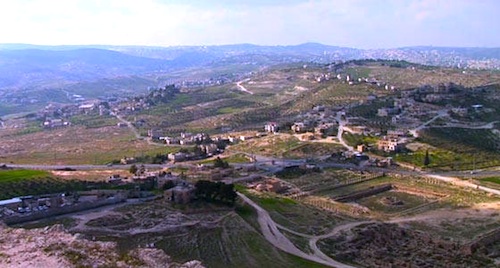
The settlements are not what you might expect. Where once there were dormitories and trailers there are now pleasant looking middle class homes. Granted, they are often found in gated communities, not uncommonly with armed guards out front. The land around them looks rather harsh and arid—hardly terrain worth fighting for. However, the fortifications are clearly there for a reason.

These first and second generation Soviet immigrants are products of the Refusenik movement. Their families’ experiences under Communism directly shaped their Zionist convictions. Still, they might not exactly be what viewers expect, either. Some are simply taking advantage of the inexpensive housing. Yes, Khavin also talks to some who express less than edifying opinions on their hostile Arab neighbors. Yet, many are clearly inclined to live in peace and harmony with all residents of the territory. Nonetheless, they consciously chose the risks involved in forming a buffer to protect the rest of Israel.

From "The Territory."

Throughout The Territory, Khavin challenges preconceptions across the political spectrum, beginning with film’s calm, peaceful tone. There are no bombs exploding here. His interview subjects go about their daily business like people anywhere, adopting a God-is-my-copilot attitude. Occasionally there are ugly reminders of the terrorism for which the territory is infamous for. One of Khavin’s guides takes viewers to the shrine dedicated to a tiny infant murdered by a sniper. Residents assume the young innocent was deliberately targeted by the Palestinian murderer and it is hard to argue with them, given the results.

The West Bank settlements will always be a thorny issue to untangle. However, the media would like people to blindly assume they are all lunatic Kahane clones, which simply is not the case. Indeed, many are part of the epic Russian and Ukrainian stories starting tragically in the early Twentieth Century. A real example of documentary filmmaking journalism, the forty-one minute The Territory ought to be broadcast on PBS, perhaps as part of a series with Khavin’s other films (like Artists of Odessa), but do not hold your breath. A balanced and intriguing look at one of the world’s most misunderstood tracts of land, The Territory is recommended for all inquisitive viewers when it screens Tuesday (1/15) at the JCC in Manhattan.

Posted on January 11th, 2012 at 10:24am.