Tribeca 2012: LFM Reviews Deadfall

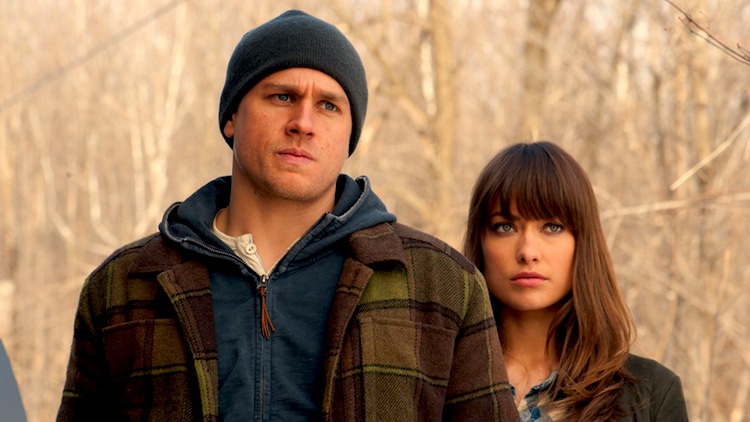
Charlie Hunnam and Olivia Wilde in "Deadfall."

By Joe Bendel. A prodigal son plows through a blizzard to make it home for Thanksgiving dinner. However, this will not be the stuff of a Norman Rockwell painting. Instead, his fate will become intertwined with that of two wanted fugitives in Stefan Ruzowitzky’s Deadfall, a chilly thriller from the Academy Award winning director of The Counterfeiters, which screens during the 2012 Tribeca Film Festival.

Having endured a traumatic childhood together, Addison and his sister Liza are now hopelessly codependent. He also has a propensity for violence.  They just knocked over a casino, but a freak accident mars their getaway. Splitting up (for reasons driven more by the narrative than by survival considerations) an exhausted Liza is rescued from the frozen roadside by Jay, an ex-con former Olympic boxer, who through a complicated set of circumstances already suspects the law is after his dumb hide. 

Liza knows the cops are looking for her and Addison, so his parents’ home near the Canadian border sounds like the perfect rendezvous. Much to her surprise though, she quickly develops intense feelings for the dumb palooka, which she can tell are mutual. Liza does not yet know Jay’s father is the former sheriff and his successor’s unappreciated deputy-daughter is a close friend of the family, but she will learn when Jay’s Planes, Trains, and Automobiles story turns into The Desperate Hours.
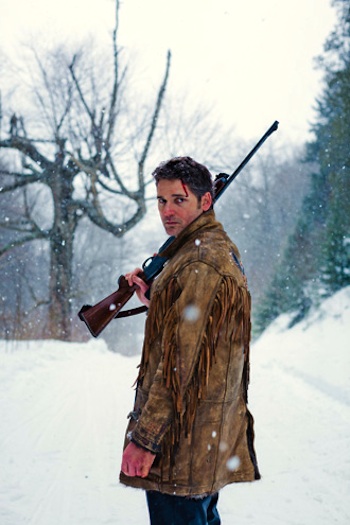
Eric Bana in "Deadfall."

There are an awful lot of contrivances in Deadfall. Indeed, Jay and Liza fall for each other faster than light-speed. Still, in his case, it might be rather believable, considering he just got out of prison and she is played by Olivia Wilde. In fact, for the most part, Ruzowitzky’s energetic pacing and the conviction of his cast largely overcome the credibility gaps.

Most importantly, Addison and Liza make an excellent villain-femme fatale tandem. Eric Bana compellingly brings out Addison’s avenging angel complex, while Wilde nicely balances Liza’s cunning and vulnerability. Though Charlie Hunnam is not exactly a great thespian, the audience can certainly believe his ex-boxer has taken a number of blows to the head. Not so surprisingly, Sissy Spacek adds a real touch of class to the film, playing Jay’s mother with grace and intelligence.

Despite the ragged edges, Deadfall is an easy man vs. man vs. the elements thriller to get caught up in. Sure to become a family Thanksgiving tradition, it screened yesterday as part of the 2012 Tribeca Film Festival.

LFM GRADE: B

Posted on April 27th, 2012 at 1:12am.
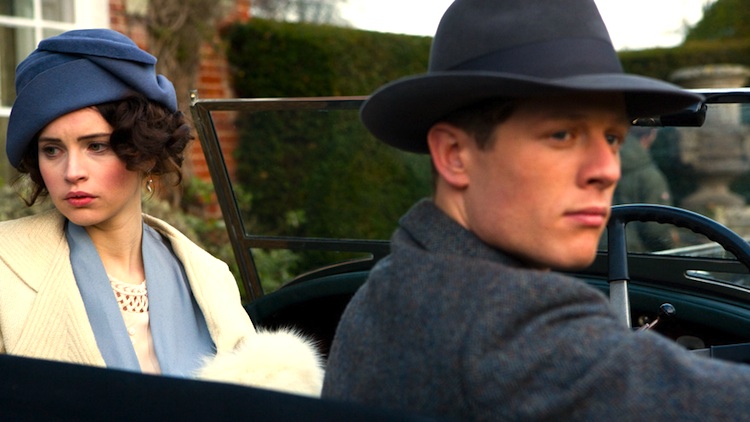
Tribeca 2012: LFM Reviews Cheerful Weather for the Wedding

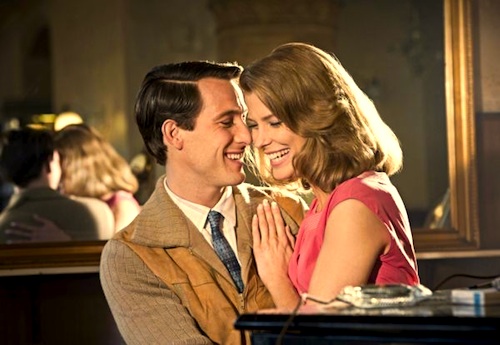
By Joe Bendel. In 1932, the British economy was also rather depressed, but appearances had to be kept up, nonetheless. A well-to-do widowed mother is determined to see her eldest daughter married in proper style, even if it kills the rest of her family in Donald Rice’s Cheerful Weather for the Wedding, which screens during the 2012 Tribeca Film Festival.

Dolly Thatcham became re-acquainted with her rich, twittish fiancé during a grand tour of Albania. She was most definitely on the rebound, following the end of her affair with Joseph Patten, a promising young academic. He was somewhat self-centered, but there was real passion between them, as the audience sees in multiple flashbacks. Her controlling mother could make the rest of the family sufficiently miserable on her own, but when the sullen Patten shows up at the house, it puts everyone further on edge. The fact that the bride has locked herself in her dressing room with a bottle of rum hardly helps matters either.

Based on the novella by Julia Strachey, a member of the Bloomsbury Group whose work has gained popularity in recent years, Cheerful Weather could be considered a lite beer version of Downton Abbey, but Rice and Mary Henley Magill’s adaptation clearly lacks Sir Julian’s delicious wit. Of course, the presence of Elizabeth Montgomery in the rather thankless role of Thatcham’s overbearing mother further invites such comparisons.

From "Cheerful Weather for the Wedding."

Still, Cheerful Weather offers a number of memorable moments, largely courtesy of its snappy supporting cast. Indeed, Mackenzie Crook and Fenella Woolgar steal scene after scene as the bickering Dakins, who largely reconcile through their shared distaste for his family. Julian Wadham also adds a humane touch to the film as the not-as-dumb-as-he-looks bumbling Uncle Bob, while Zoe Tapper brings considerable allure and even a bit of depth to Evelyn Graham, Thatcham’s fortune hunting maid of honor.

Unfortunately, Cheerful Weather’s weak romantically-doomed leads undermine the audience’s investment in the actual wedding. Looking rather dazed, even in the flashbacks, Felicity Jones’ turn as Thatcham is a pale shadow of Michelle Dockery’s Lady Mary Grantham. More baffling is the complete lack of screen presence displayed by Luke Treadaway as the morose Mr. Patten.

Frankly, it is hard to understand why Thatcham or Patten would pine for each other, but it is easy to see how this family would annoy the Dakins. Yet viewers can enjoy elements of the picture once they have shifted their sympathies accordingly. An okay but hardly exceptional period drama, Cheerful Weather seems best suited for PBS’s Masterpiece. For diehard Anglophiles, it screens again this Saturday (4/28) as this year’s Tribeca Film Festival enters its final weekend.

LFM GRADE: C+

Posted on April 27th, 2012 at 12:14am.

A UN-Inspired Catastrophe? LFM Revews Baseball in the Time of Cholera @ Tribeca 2012

By Joe Bendel. The United Nations has long acted like one of the four horsemen of the apocalypse; in the case of Haiti, it is literally pestilence. Allegedly thanks to the UN peacekeeping force, a deadly wave of cholera has swept the dysfunctional country. Viewers witness the epidemic from the vantage point of a young ball player in David Darg & Bryn Mooser’s short documentary, Baseball in the Time of Cholera, which screens as part of the Help Wanted programming block during the 2012 Tribeca Film Festival.

Joseph Alvyns and his friends should simply be spending an innocent summer on the baseball diamond. They play as often as they can, but it is impossible to ignore the post-hurricane chaos around them. Yet when Alvyns sees the devastation of the 3/11 hurricane and tsunami in Japan, he is compelled to reach out in a spirit of solidarity. His efforts attract international attention, even earning him a VIP trip to Toronto, courtesy of the Blue Jays. Unfortunately, when he returns cholera strikes at the heart of his family.

Technically, Darg and Mooser do not conclusively establish the Nepalese “peace-keepers” are the source of the cholera outbreak. Still, the sight of raw sewage spilling from their latrine into Haiti’s central river – coupled with the Heisman pose the Nepalese commander gives their camera man – constitutes a pretty convincing circumstantial case. The film also asks a legitimate question: why are there peace-keepers stationed in a country that has not been at war for centuries? However, they largely let the successive authoritarian and socialist governments off the hook for bringing the Haitian state to the brink of complete failure.

Time boasts some unusually big names behind the camera, including executive producers Olivia Wilde and Tesla Motors entrepreneur Elon Musk (one of three POV figures in Chris Paine’s Revenge of the Electric Car, which screened at last year’s Tribeca). To its credit, the film community has rallied to Haiti’s aide, yet there has not been a similar celebrity rush on behalf of Japanese recovery efforts. Therefore, it is worth taking the time to note that those wishing to follow Alvyns’ example can also donate to the Japan Society’s relief fund (details here).

For a short documentary, Baseball in the Time of Cholera nicely balances muckraking and heartrending tragedy. It should screen at Turtle Bay, but instead it will screen again in lower Manhattan this Friday (4/27) and Sunday (4/29) as the Tribeca Film Festival continues throughout the weekend.

Posted on April 26th, 2012 at 11:39pm.

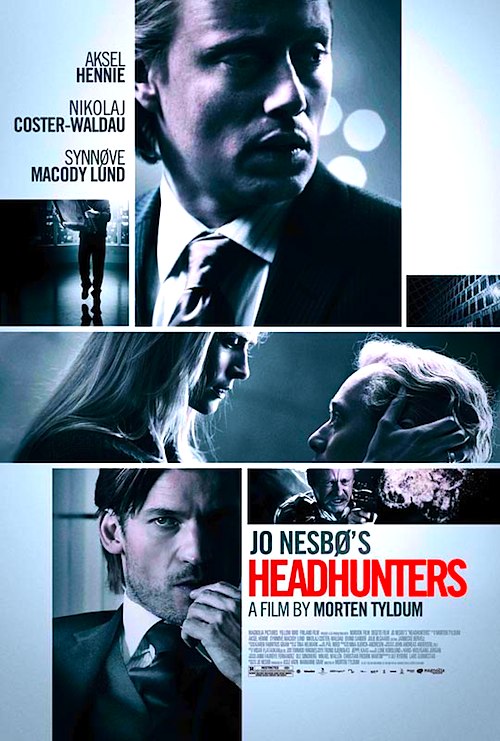
Blond Noir: LFM Reviews Headhunters

By Joe Bendel. Right now, Norway’s economy is a lot like our own. There are way more job-seekers than open positions to fill. At such times, if a recruiter sends you on an interview, you go, even though you might be leaving a few stray valuable objects d’art lying about your home unguarded. That is Roger Brown’s racket, but it turns unexpectedly deadly in Morten Tyldum’s Headhunters, which opens this Friday in New York and also screened yesterday as part of the San Francisco International Film Festival.

Brown is a man slight of stature, married to his bombshell wife, Diana. Suffering from a king-sized inferiority complex, he has allowed them to live beyond their means by burglarizing the homes of his executive search clients. With his house of cards on the brink of collapse, Brown’s prayers appear to be answered in the person of Claes Greve. Not only is the former tech CEO the perfect candidate for a plum position Brown must fill, he also owns a genuine Rubens painting of rather dodgy providence. Win-win, right?

However, when Brown starts to suspect the younger man and his wife are carrying on an affair behind his back, he sabotages Greve’s campaign for the position. At this point, Greve reacts more forcefully than Brown anticipates. Mouse, meet cat.

Headhunters is quite a nifty one-darned-thing-after-another thriller. Tyldum has a good handle on the material, constantly ratcheting-up the tension, but periodically using black comedy to release some steam. In his hands, the frequent twists are entertaining rather than forced or exhausting.

Tyldum also has a nice looking cast to focus on. Especially bankable is the presence of Game of Thrones alumnus Nikolaj Coster-Wladau, now world famous for playing Lena Headey’s brother (and other things), Ser Jaime Lannister, here perfectly cast as Greve. As Diana Brown, former model Synnøve Macody Lund certainly looks the part, but she also has some nice dramatic moments as well. In the lead, Aksell Hennie’s Brown holds the film together while coming to grief quite effectively.

Based on Norwegian mystery writer Jo Nesbø’s first book outside of his bread-and-butter series, Headhunters engages in some of the same far-fetched anti-corporate humbug undermining so many recent domestic crime dramas. However, Tyldum keeps the rollercoaster loop-de-looping at such breakneck speed, it is not so distracting. Definitely a dark but thoroughly enjoyable exercise in skullduggery, Headhunters is easily recommended and opens theatrically this Friday (4/27) in New York at the Landmark Sunshine.

Posted on April 26th, 2012 at 11:38pm.

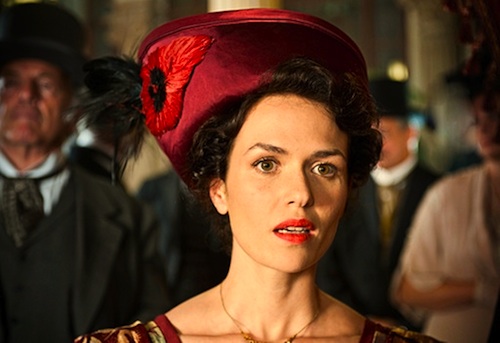
Kino! 2012: LFM Reviews The Man with the Bassoon

From "The Man with the Bassoon."

By Joe Bendel. How did an Austrian wearing a bathrobe conquer Germany? It had something to do with a Russian bassoon player. Based on crooner Udo Jürgens’ hybrid memoir-family saga novel, Miguel Alexandre’s two-part mini-series The Man with the Bassoon (trailer here) screens in its entirety tomorrow at MoMA as part of Kino!, their annual celebration of contemporary German cinema.

After completing the expected encore in his traditional white bathrobe, modern day Jürgens (playing himself) receives word from Moscow: a long lost family retainer has a significant heirloom he wishes to return to Jürgens. It is a statue of a man playing a bassoon. Thus begins the first of many flashbacks.

Jürgens’ grandfather Heinrich Bockelmann decides to immigrate to Russia after hearing the beautiful, lamenting Russian melodies of a street musician. Amassing great wealth as the Czar’s family banker, Bockelmann credits his success to that bassoon player. For their anniversary, his wife gives him a statuette of the bassoon player, which quickly becomes the guardian of the family’s good fortune. However, dark clouds are on the horizon. With socialist revolutionaries campaigning against the German economic elite, the Czarist government dispossesses and imprisons Bockelmann and his aristocratic countrymen, soon after Russia’s entry into WWI.

Escaping Russia with their children, Bockelmann’s wife eventually re-establishes the family dynasty in Austria. As viewers know from several flashbacks, Bockelmann’s son Rudi eventually becomes a provincial burgomaster and National Socialist Party member. Yet, as the war drags on, Rudi Bockelmann runs afoul of his more zealous colleagues. We know he will survive though, because in yet another flashback story-arc, we see Rudi Bockelmann is the only member of the elite Austrian family to encourage his aimless son Udo to pursue his musical ambitions.

Spanning over one hundred years, Bassoon is definitely an epic, they-don’t-make-them-like-they-used-to miniseries. While many consider the boundary fact and fiction therein to be somewhat porous, the bassoon must be true. (Anyone making this story up would have chosen a different instrument.) Though the Bockelmann family’s dark days are mostly caused by the Nazis and the Czarists, the depiction of the xenophobic and anti-Semitic Russian revolutionary factions is also an intriguing footnote within the Bassoon. In fact, the historical episodes featuring Jürgens’ father and grandfather are considerably stronger than his own rise-to-fame story. Frankly, a lot of viewers will want to see Jürgens (as he comes to be known) suffer more for his art.

From "The Man with the Bassoon."

Still, Jürgens’ music may surprise some viewers. His rendition of “There Will Never Be Another You” heard several times in Bassoon swings politely enough. Starting very squarely in a jazz bag, he became something like a cross between Sinatra and Czech vocalist Karel Gott (if that name means anything to you). Although he never really caught on here, he had his admirers, including Sammy Davis, Jr., who covered a few of his tunes.

Jürgens is also sufficiently convincing playing himself, but Christian Berkel carries the heaviest load as the Bockelmann patriarch, Heinrich. Fittingly, he somewhat resembles miniseries king Richard Chamberlain, aging decades while exuding an aura of integrity.In contrast, David Rott is a rather weak screen presence as the young Jürgens on the brink of superstardom.

A large-scale, richly detailed period production, Bassoon covers quite a bit of ground. Anyone at all intrigued by Jürgens’ sweeping family story should definitely watch it at MoMA, because it is hard to imagine there will be lot of opportunities to catch up with it in the future. Both parts one and two screen back-to-back tomorrow (4/26), with Jürgens and Alexandre appearing afterward for a session of Q&A, as well as this Saturday (4/28), as part of this year’s Kino! at MoMA.

LFM GRADE: B

Posted on April 26th, 2012 at 10:20pm.