Sundance 2012: LFM Reviews Wuthering Heights

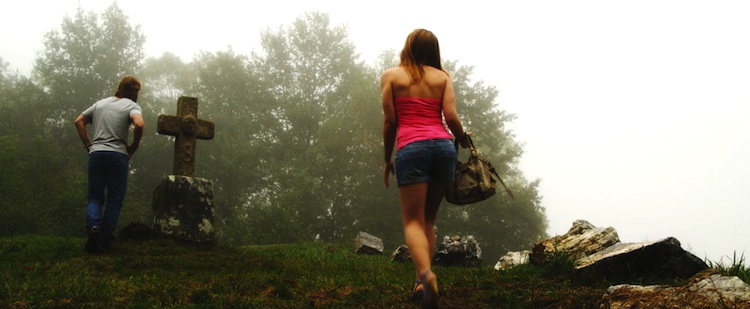
By Joe Bendel. Remember Sir Laurence Olivier and Merle Oberon in William Wyler’s adaptation of Emily Brontë’s romantic classic? If you do, you had best forget them now. Andrea Arnold radically reconceptualizes the familiar story in her mud and thatch version of Wuthering Heights (trailer above), which screens at the 2012 Sundance Film Festival.

The basic elements are still here. Heathclliff is a sullen young waif adopted by Earnshaw, a stern but charitable farmer of property. The lad forges a deep bond with his sort-of sister Catherine, but earns the enmity of Earnshaw’s son Linton, for usurping his father’s affections. When the devout farmer dies, Linton inherits the farm, stripping Heathcliff of his family standing. Now a lowly servant, Heathcliff nurses his resentments, which will lead to tragedy.

However, Arnold’s take on Brontë strips away the high costume drama romanticism, tacking an earthy, naturalistic course. Her casting of Afro-Caribbean actors as Heathcliff has garnered much attention, but that is really the least unconventional aspect of her approach. This is a highly impressionistic and ruminative film that revels in closely observed nature studies (masterfully lensed by Robbie Ryan) and relies on ambient noise rather than complimentary music and even dialogue. Set amid a harsh, unsentimentalized environment, Earnshaw’s home, Wuthering Heights, is simply a working farm, with all the muck and mire one should expect. Even Thrushcross Grange is cut down to size, nowhere near as imposing as Highclere Castle (a.k.a. Downton Abbey).

That is not to say it is not effective. As young Heathcliff and Catherine, Solomon Glave and Shannon Beer forcefully portray their characters’ animalism and instinctive defiance. Glave is a particularly electric screen presence, who largely carries the quiet film on his shoulders. By contrast, James Howson is far less dynamic as the older Heathcliff, lacking the charismatic malevolence the role demands. Frankly, he hardly looks much older than Glave.

Indeed, Arnold’s Heights is at its best during Heathcliff and Catherine’s formative years. Like most adaptations, the late chapters concerning their grown children are omitted. Since the film proceeds without a narrator, Mr. Lockwood also gets the boat. However, Heathcliff’s relationship with Isabella is shoehorned in rather awkwardly, perhaps to placate the faithful.

Heights’ spartan brutality is truly haunting. However, it is doomed to collect decidedly negative online feedback. People who go to Brontë films do not want to see something new and different. They want the “Oh, Heathcliff” scene on the moors. This is not that kind of film. It viscerally expresses a host of tactile sensations, de-emphasizing melodramatic plot turns. Despite a comparatively weaker third act, it is a bold work that really stays with you after viewing – but due to its nature, it is only recommended for adventurous, fully informed audiences. It screens again during the 2012 Sundance Film Festival today (1/28) in Salt Lake.

SUNDANCE GRADE: B

Posted on January 28th, 2012 at 3:19pm.
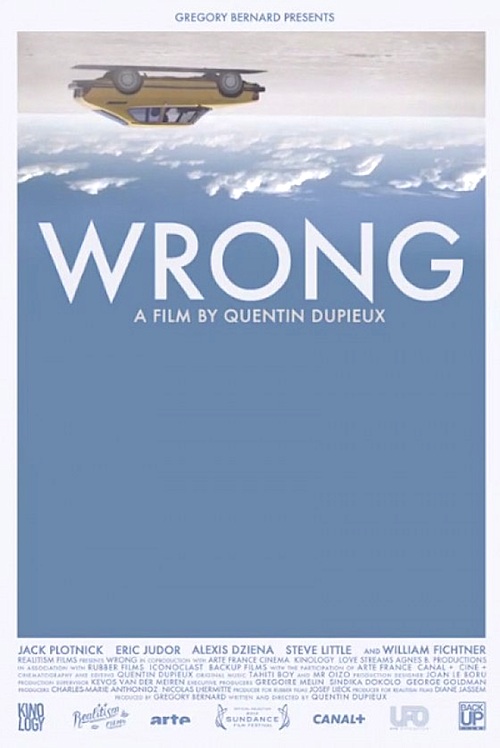
Sundance 2012: LFM Reviews Wrong

By Joe Bendel. It is the story of a man and his dog, but do not expect Lassie from provocateur Quentin Dupieux, a.k.a. Mr. Oizo. He cast off all logic-based constraints and was creatively liberated for it, to judge by the distinctively strange results in Wrong (trailer here), which screens at this year’s Sundance Film Festival.

Dolph Springer’s dog Paul has mysteriously vanished. His neighbor is less than sympathetic, because he is too busy going mad. He is not the only one. Eventually, it seems Paul was kidnapped by Master Chang, a tripped out New Age guru, for reasons that defy conventional reason, but make perfect sense in this world. Springer’s gardener, a pizzeria girl, and a detective also careen in and out of the film, in ways that cannot be explained in a lucid thumbnail description.

In his somewhat notorious Rubber (the killer tire movie), Dupieux came up with an eccentric premise and a clever twist, but seemed too hemmed in by the circumstances he created. In contrast, throughout Wrong he allows anything to happen, whether it makes objective sense or not. The resulting absurdity is quite entertaining to behold.

Jack Plotnick is a heck of a good sport. For Wrong to work, he has to play it all relatively straight, while everyone else acts insane. In fact, he brings an earnest sincerity to Springer that is rather endearing. Prison Break’s William Fichtner clearly enjoys hamming up Master Chang’s wacked out Zen, while Alexis Dziena plays Emma from the pizza shop appropriately over-the-top, like a sweetly innocent version of Fatal Attraction’s Alex Forrest.

Wrong is stylistically surreal and subversive, but rather gentle in tone, which is why it works so well. Unlike David Lynch’s Lost Highway, it never leaves viewers bereft of faith or hope. Indeed, Springer is sort of an everyman model of stick-to-itiveness that is actually sort of refreshing.

Rife with postmodern gamesmanship and goofy sight gags, Wrong is definitely aimed at a hipster audience, but it goes down way easier than one might expect. It is a funny, good-natured film, recommended for the somewhat adventurous. It screened yesterday in Park City.

SUNDANCE GRADE: B

Posted on January 28th, 2012 at 3:18pm.

Midnight at the Grand Guignol: LFM Reviews The Theatre Bizarre

From "The Theatre Bizarre."

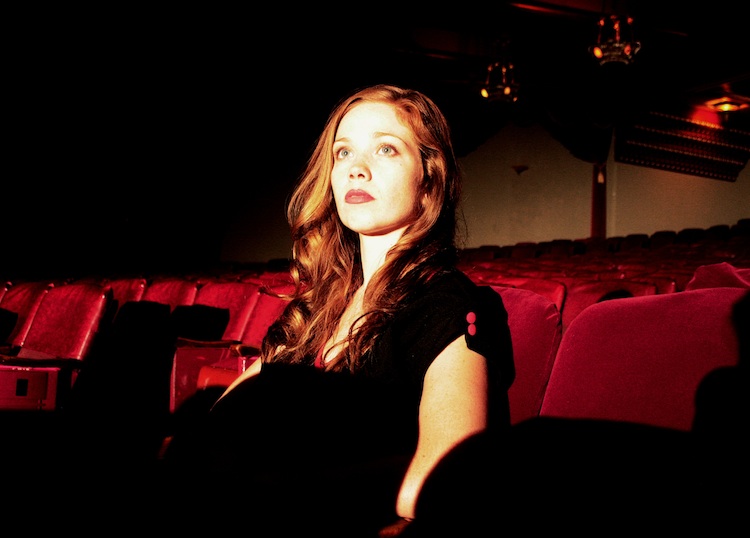
By Joe Bendel. Marionettes are creepy, especially when they look like Udo Kier. Fittingly though, that fairly well sums up Pegg Poett, the master of ceremonies for The Theatre Bizarre (trailer here), a horror anthology film screening midnights this Friday (1/27) and Saturday (1/28) in New York.

Once the reluctant audience member settles into her seat in the spooky old theater, Poett starts the show with Richard Stanley’s Mother of Toads. Effectively combining Lovecraftian themes with the eerie backdrop of the French Pyrenees, it is easily one of the film’s best looking chapters, with special credit due to the design team. It is hard not to dig a film with a “toad wrangler” credited and the appearance of Lucio Fulci regular Catriona MacColl as Mère Antoinette is a major bonus for genre fans.

Buddy Giovinazzo’s I Love You is arguably the best of show. Set within a Berlin apartment, his tale of passion and madness has a distinctive European sensibility. Giovinazzo deftly builds the tension out of the claustrophobic setting and gets a terrific lead performance from Andre M. Hennicke, a well established German actor known for supporting turns in Jerichow and A Dangerous Method.

Though gore legend Tom Savini’s Wet Dream looks rather muddy, it has its clever moments and certainly delivers what his fans expect. In contrast, Douglas Buck’s excellent The Accident is a horse of a completely different color. Sensitively portraying a young girl’s first exposure to death, it is somewhat out of place in Bizarre, but a good short film is a good short film, regardless where you find it. Indeed, Lena Kleine and Melodie Simmard are both quite natural and engaging, as the mother and daughter, respectively.

From "The Theatre Bizarre."

While it is at times very disturbing, Karim Hussain’s Vision Stains might be the most original and ambitious constituent film in Bizarre. Addressing themes of memory, consciousness, and perception, it depicts an extremely anti-social woman who steals the image-memories of dying homeless women by injecting their optic fluid into her eyes. (Yes, we see this process up close and personal.)

Unfortunately, Bizarre ends on a low note. David Gregory’s cannibalism tale Sweets is both unpleasant and predictable. Still, Bizarre’s ratio of good to bad is about four and a half to one, which is an impressive batting average for anthology films.

Bizarre covers a lot of bases, but I Love You, The Accident, and Vision Stains should all appeal to serious film patrons, while also delivering some jolts along the way. Recommended surprisingly highly for horror movie fans, it screens this Friday (1/27) and Saturday (1/28) nights in New York at the Landmark Sunshine. Troma fans take note: Wet Dreams co-star Debbie Rochon attended the first screening.

Posted on January 28th, 2012 at 12:38pm.

Happy New Year: LFM Reviews All’s Well, Ends Well 2012

From "All's Well, Ends Well 2012."

By Joe Bendel. It’s Donnie Yen as you’ve never seen him before: singing power ballads. His character might be stuck in the 1980’s, but he can still find love in Chan Hing-ka and Amy Chin’s All’s Well, Ends Well 2012 (trailer here), the sixth film of the popular HK rom-com series, which opened Friday in New York.

A frustrated divorcee creates a Craig’s List to make men useful. The payment for miscellaneous services rendered is supposed to be a simple hug, but things get much more complicated for these couples. Julie Sun, an edgy photographer, hires construction foreman Kin Holland to serve as her nude model, while Hugo, the shaggy romance novelist, agrees to explain love to Charmine, a beautiful but blind dancer. Chelsia, a former teen idol, hires would-be hair band rocker Carl Tam to pretend to be her husband at a difficult reunion dinner. Meanwhile, Richard the hardball divorce attorney acts as a surrogate father for Cecilia, an orphaned heiress, as she evaluates prospective suitors.

Naturally, Holland falls for Sun hard, but her not so much. Hugo falls for Charmine too, but he is painfully stupid when it comes to dealing with her blindness. Of course, once she gets the cornea transplant, he totally freaks. Tam just wants to rock and rebuild Chelsia’s confidence, while the attorney finally acts like the father to Cecilia that his estranged daughter has never allowed him to be.

From "All's Well, Ends Well 2012."

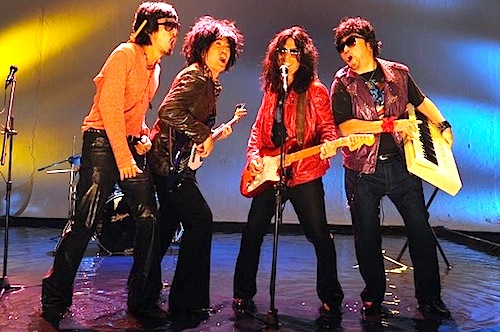
With a title like “All’s Well, Ends Well,” audiences should have a pretty good idea where it is all headed. A thematic series, several cast-members have already found love in previous installments. As an anthology film (whose characters only overlap in the final scene), Well 2012 is somewhat uneven. The best arc features co-producer and Well regular Raymond Wong appealingly co-conspiring with Yang Mi’s poor little rich girl. At the other end of the spectrum, it is a little cringy to see veterans like Donnie Yen and Sandra Ng belting out their cheesy songs as Tam and Chelsia

The other two couples fall somewhere in the middle, freely mixing broad comedy with romantic angst. In fact, Ip Man fans who can handle Yen’s over-the-hill rocker should rather enjoy seeing Lynn Xiong (billed as Lynn Hung when playing Ip’s wife) elevating the novelist and dancer story with her exquisitely fragile turn.

Evidently, the Well series is constantly reconfiguring its romance to comedy ratio. 2012 probably leans too far towards the latter, whereas a bit more of the former would travel better for American audiences. Still, it is a hard film to not have some affection for. The cast is quite attractive, most definitely including Yang Mi, Lynn Xiong, Kelly Chen as Sun, and Magic to Win’s Karena Ng, briefly appearing as Richard’s angry daughter. For the ladies, Louis Koo’s Holland is shirtless a lot (you tell me how impressive that is).

Timed as a Lunar New Year release, Well 2012 is determinedly cheerful, right down to the compulsively happy closing pop song. For fans of the series, it delivers the cute. For hipsters, it shows the sporting nature of its famous cast. For those who like their cinema sugary sweet, it opened yesterday (1/27) in New York at the AMC Empire and in San Francisco at the AMC Metreon, courtesy of China Lion Entertainment.

Posted on January 28th, 2012 at 12:37pm.

Sundance 2012: LFM Reviews Ai Weiwei – Never Sorry

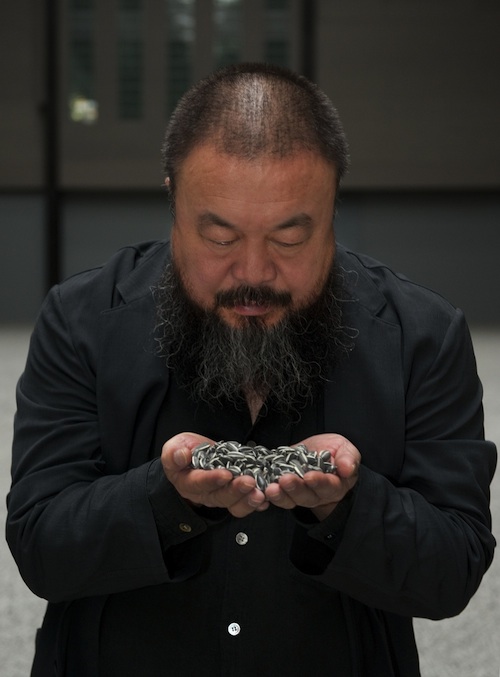
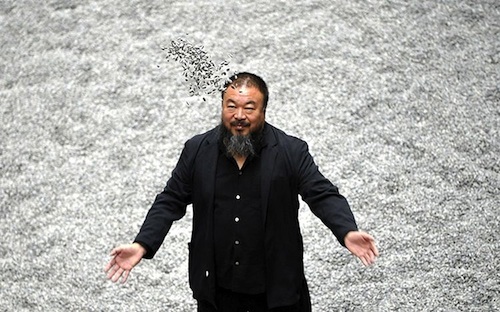
Chinese artist-activist Ai Weiwei.

By Joe Bendel. Ai Weiwei’s distinctive “Bird’s Nest” design for the Beijing National Stadium was one of the defining images of the 2008 Olympics; but Ai sought to redefine the Beijing games, forcefully decrying the tremendous suffering they caused for China’s vulnerable underclass. Choosing the struggle for Chinese human rights over a life of privilege, Ai is arguably the world’s most important activist-artist, whom Alison Klayman profiles in the fascinating and infuriating Ai Weiwei: Never Sorry (trailer here), which screens at the 2012 Sundance Film Festival well underway in Park City.

Considering the recurring middle finger motif in Ai’s work, it’s hardly surprising he is not a favorite of the regime. Yet, there is more to Ai than mere symbolic defiance. Klayman trenchantly traces the roots of Ai’s nonconformist spirit to the suffering his family experienced during the Cultural Revolution. While Ai made some noise when he repudiated the Olympics, few could hear it within China. However, his mastery of social media, specifically Twitter, would change all that. Indeed, Ai and the legions of everyday Chinese citizens he inspired through Tweets ought to put everyone following vacuous celebrities like Ashton Kutcher to shame.

Most Westerners should know that Ai was recently held incommunicado for a long stretch by the police, but the projects that earned the artist the Communist government’s wrath may come as a revelation. Most notable were his efforts to document each name of the thousands of school children who died during the Sichuan earthquake as a result of flimsy “tofu” school construction. In any transparent society, this information would be in the public record, but in China all such efforts were explicitly forbidden.

Ai Weiwei.

There are scores of lessons to be found in Sorry, including the importance of recording such tragedies for history, rather than letting the innocent victims of Sichuan fall through the Communist memory hole. At times, Ai’s public criticisms of the regime are shockingly bold. Clearly his guts are made of steel-reinforced concrete. Although Klayman largely focuses on his activism, she still conveys a vivid sense of Ai’s personality. Partly this comes out through some shrewdly edited interview segments. Yet more fundamentally, Ai just seems to be a what-you-see-is-what-you-get kind of person.

Indeed, Klayman wisely focuses squarely on her subject.  As a documentarian, she is rather blessed that Ai recorded so many of his protests and the subsequent government crackdowns for his social network followers. The word “controversial” should not really apply here. What Ai says has happened – most definitely including a notorious police assault – really did go down. He has the scars and the video to prove it. Aside from some helpful context provided by talking heads and an innocuous score, Sorry is essentially Ai’s show—and appropriately so.

We want to call a film like Sorry “inspiring.” It is a term that undeniably applies to Ai. Unfortunately, though he might be out of immediate physical danger, Ai’s relative freedoms within contemporary China remain harshly curtailed, so viewers are likely to feel several conflicting emotions when the film ends. Anger would be a good one to go with.

This documentary is important, because the international spotlight must shine with far more intensity on his situation if circumstances are ever going to change. Given the Chinese CP’s nasty habit of harassing their critics, Klayman also earns a fair amount of credit for having the guts to tackle this project in the first place. Hopefully, she will have to produce a happy postscript for Sorry sometime in the future, but surely she would not begrudge the extra work.

As it is, the efforts invested in Sorry are considerable. One of two standout documentaries at this year’s Sundance (along with The Other Dream Team), the earnestly recommended Sorry screens again this Thursday (1/26) and Saturday (1/28) in Park City, Friday (1/2/7) in Sundance Resort, and today (1/25) in Salt Lake.

SUNDANCE GRADE: A

Posted on January 25th, 2012 at 7:34pm.

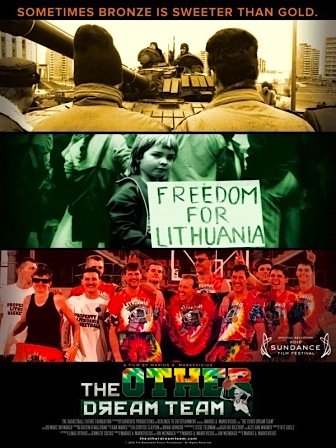
Sundance 2012: LFM Reviews The Other Dream Team

By Joe Bendel. In the late 1930’s, Lithuania twice won the European basketball championship. In 1940, it was invaded and subjugated by the Soviet Union. Yet, the tiny Baltic country’s proud sporting tradition helped sustain it during those painful decades, culminating in the newly free Lithuania’s Olympic victory over the Russian-Unified team in 1992. The incredible history of Lithuania’s break from the Soviet Union and the game that announced their independence to the world is told in Marius Markevicius’s stirring documentary The Other Dream Team, which screens during the 2012 Sundance Film Festival.

America’s 1988 Olympic loss to the Soviets was the impetus for the creation of the so-called “Dream Team” of NBA all-stars, including Michael Jordan and Patrick Ewing. However, four of the Soviet team’s starters were actually Lithuanian. In fact, warriors like Arvydas Sabonis and Šarunas Marčiulionis had dramatically mixed emotions about their 1988 gold. They were proud of their accomplishments, but the Soviet anthem was not the anthem they wanted to hear on the medal stand.

Four years later, much had changed. Sabonis and his colleagues were finally allowed to play in the NBA as a reward for their Olympic glory. At great risk, Lithuania had asserted its independence and held out against invading Soviet forces. The freshly sovereign country could field one of the best basketball teams in the world but had insufficient resources to send them to Barcelona. However, help would come from an unexpected source: the Grateful Dead.

Dream gives roughly equal time to sports and history, but each part is equally uplifting and informative. Indeed, people often forget it was Nobel Peace Laureate Mikhail Gorbachev who sent the tanks into Vilnius. In fact, independence leader Vytautas Landsbergis was just as much a protagonist as Sabonis and his teammates.

Just about all the starters from the 1992 team are heard from in great length throughout Team and each has their share of telling anecdotes. As is so often the case with survivors’ reminiscences of the Communist era, they are often simultaneously funny and sad. Yet, simply considered as a sports doc, Dream is one of the best in years. Even basketball fans who think they know the players well will learn something new here.

This is a great story, smartly constructed with rich details and full historical context. The many Grateful Dead tunes included in the soundtrack are also a nice bonus. For those looking for a movie that celebrates the spirit of freedom, Dream will get you choked-up, in a good way. Legitimately inspiring and hugely entertaining, it is one of two truly standout documentaries at Sundance this year (along with Ai Weiwei: Never Sorry).  Enthusiastically recommended, it screens again today (1/25) and Saturday (1/28) in Park City, as well as this Friday (1/27) in Salt Lake.

SUNDANCE GRADE: A+

Posted on January 25th, 2012 at 6:58pm.